

基于城市建成环境再生的风景园林知识体系拓展
|
吴尤/男/同济大学建筑与城市规划学院在读博士研究生/宾夕法尼亚大学斯图尔特·韦茨曼设计学院联合培养博士研究生/研究方向为城市建成环境再生、城市基础设施复合利用、景观都市主义 |
|
章明/男/博士/国家级人才计划特聘教授/同济大学长聘特聘教授、博士生导师、建筑与城市规划学院景观学系主任/同济大学建筑设计研究院(集团)有限公司总建筑师(景观)/研究方向为城市建成环境再生、城市基础设施复合利用、城市滨水公共空间 |
收稿日期: 2023-10-26
网络出版日期: 2025-12-15
基金资助
国家自然科学基金“‘场域基础设施’与城市公共空间耦合机制研究”(52378035)
版权
Expansion of Landscape Architecture Body of Knowledge Based on the Regeneration of Urban Built Environment
|
WU You is a Ph.D. candidate in the College of Architecture and Urban Planning (CAUP), Tongji University, and a visiting scholar enrolled in the co-cultivation program of Stewart Weitzman School of Design, University of Pennsylvania. His research focuses on regeneration of urban built environment, intergrated utilization of urban infrastructure, and landscape urbanism |
|
ZHANG Ming, Ph.D., is a distinguished professor of national talent program, a tenured professor and doctoral supervisor at Tongji University, head of the Landscape Architecture Department, the College of Architecture and Urban Planning (CAUP), Tongji University, and chief architect (landscape) of Tongji Architectural Design (Group) Co., Ltd. (TJAD). His research focuses on regeneration of urban built environment, integrated utilization of urban infrastructure, and urban waterfront public space |
Received date: 2023-10-26
Online published: 2025-12-15
Copyright
【目的】基于新时期中国城市发展阶段的模式转型,以及风景园林学科的学科定位调整,拓展面向建成环境再生的风景园林知识体系,有助于进一步发挥风景园林规划设计实践在建成环境再生中的引领作用。【方法】在理论上,结合场域理论(field theory)和景观都市主义(landscape urbanism),指出城市建成环境再生范式的三大转变,即“场域”关系的视角转变、城市更新的路径转变、设计主体的身份转变。在实践上,依托从上海“一江一河”到全国“大江大河”的滨水空间营造、街区综合环境提升,以及城市基础设施复合化与景观化的大量实践,深化建成环境再生的“六维空间再生体系”。【结果】强化理论与实践层面对风景园林知识体系拓展的影响,包括空间营造的系统性知识、历史文脉的文化性知识、基础设施的复合性知识、场景节点的建构性知识、环境修复的生态性知识和公共空间的艺术性知识。【结论】倡导“大设计观”下多学科、多领域、多工种的设计跨界与融合,优化范式转变下的风景园林知识体系的拓展路径,推动风景园林共同体为建成环境再生创造新价值、新范式。
吴尤 , 章明 . 基于城市建成环境再生的风景园林知识体系拓展[J]. 风景园林, 2024 , 31(3) : 51 -59 . DOI: 10.3724/j.fjyl.202310260483
[Objective] Based on the paradigm transformation of China’s urban development stage in the new period, and the orientation adjustment of the landscape architecture discipline, this research aims to expand the landscape architecture body of knowledge oriented to the regeneration of urban built environment, and to further promote the core areas of the landscape architecture body of knowledge based on the practice of landscape planning and design.
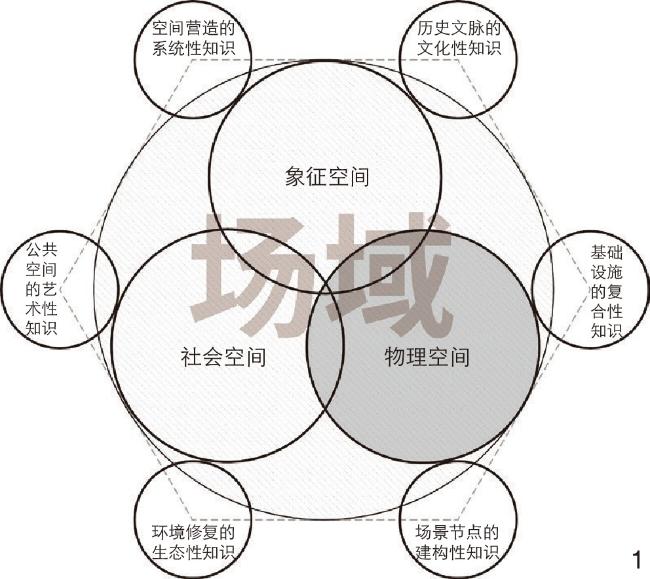
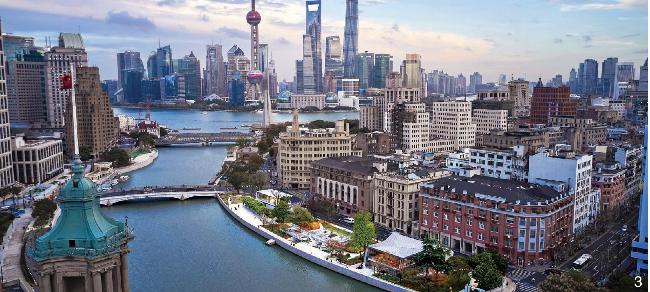
[Methods] At the theoretical level, this research combines field theory and landscape urbanism. Field theory can be regarded as a new model of urban theory, which translates the theoretical framework of field theory into “symbolic space”, “social space”, and “physical space”. Field theory provides a dynamic framework for understanding social structure and power. The elements of “field” for regenerating urban built environment include both material placemaking and non-material urban systems. Landscape architecture needs to expand its body of knowledge in two ways: First, focus on the underlying multidimensional elements; second, explore the operational mechanisms among the elements of urban built environment. Then, this research points out three major shifts in the new paradigm for regeneration of urban built environment: 1) A shift in the perspective of the “field” relationship; 2) a shift in the path of urban regeneration; 3) a shift in the identity of designer. The shift in the perspective of urban regeneration has brought about a new path adjustment, which is specifically divided into three levels, namely regeneration mode, regeneration system and practice dimension. Landscape architecture should play a leading role in urban built environment with the background of urban regeneration, and landscape architects as the main body of design should gradually play the role of coordinator and harmonizer. In practice, relying on the construction of waterfront spaces and the comprehensive improvement of built environment along the Huangpu River and the Suzhou Creek in Shanghai and other major rivers nationwide, as well as a lot of practice in integration and landscaping of urban infrastructure, a “six-dimensional spatial regeneration system” targeting the regeneration of urban built environment has been developed. From the perspective change towards the regeneration of urban built environment, to the path change of urban regeneration, and to the identity change of landscape architect, a positive feedback loop of “macro – meso – micro” realms has been constructed, and the body of knowledge required for landscape architecture has been continuously expanded.
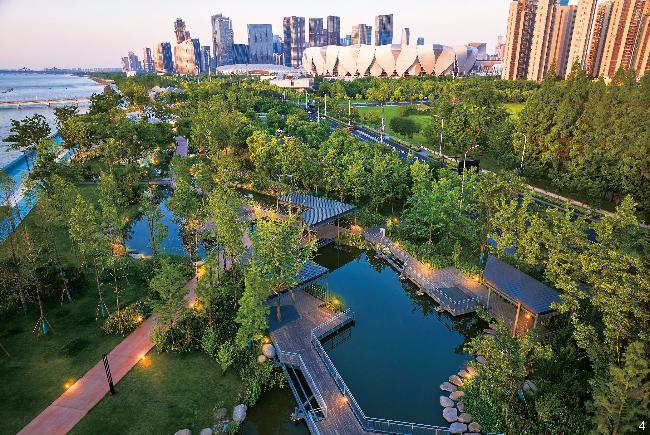
[Results] This research proposes to, by virtue of the advantages of the landscape architecture discipline, break through professional boundaries, break down departmental barriers, and integrate multiple resources to strengthen the influence of the theoretical and practical levels on the expansion of the landscape architecture body of knowledge, which involves the following six aspects. 1) Systematic knowledge of placemaking. The basic framework for the expansion of the body of knowledge towards the regeneration of built environment is constructed. For spatial construction regarding the regeneration of built environment, it is necessary to combine with urban design thinking to strengthen the comprehensive, holistic, systematic and three-dimensional integration of multiple elements. 2) Cultural knowledge of historical context. The “mixed nature” of built environment is actually the external manifestation of the richness of the city, and in the face of the complex conditions and information of the city, it is a challenging task to sort out and continue the “cultural genes” of the city, and it is necessary to take into account the historical landscape and urban life, and realize the combination of the physical environment and living scenes. 3) Integration knowledge of infrastructure. Under the stock development mode, the integration and landscaping of infrastructure is an important trend in the regeneration of urban built environment, especially in the coupling of urban infrastructure and public space, which can realize multiple benefits. 4) Constructive knowledge of scene nodes. The creation of scene nodes is indispensable for systematic spatial construction, which leads to the comprehensive enhancement of a larger area, so that different nodes together constitute a scene that serves the daily life. 5) Ecological knowledge of environmental restoration. Ecological restoration in high-density built environment faces unique environmental conditions and often faces more constraints, and landscape architecture has great potential in ecological restoration. 6) Artistic knowledge of public space. It suggests to shift from city beautifying by art to city shaping by implementing art, to give full play to the value of landscape architecture in “aesthetic education”, to implement art and culture into daily life, and to improve the quality of urban public space through comprehensive means for spatial construction.
[Conclusion] Advocating the cross-border design and multidisciplinary integration, the “whole design” concept may help optimize the path for expanding the landscape architecture body of knowledge in the context of paradigm shift, and promote the community of landscape architecture to create new values and paradigms for the regeneration of urban built environment.
表1 城市建成环境再生范式转变的3个方面及对应范畴、内涵、特点和目标Tab. 1 Three aspects of paradigm shift regeneration of urban built environment and their corresponding categories, connotations, characteristics and objectives |
| 范式转变 | 范畴 | 内涵 | 特点 | 目标 |
|---|---|---|---|---|
| “场域”关系 的视角转变 | 场域理论 | 元关系 | “资本”转化 | 机制影响 |
| 景观都市主义 | 景观作为媒介 | 动态框架 | 资源整合 | |
| 城市更新 的路径转变 | 更新模式 | 认知提升 | 政策导向 | “文化基因” |
| 再生体系 | “先试先行” | 系统性思维 | 提质、增效 | |
| 实践维度 | 多维度、多要素 | 复合、动态、协作、多元 | 方法论创新 | |
| 设计主体 的身份转变 | 身份意识 | 协同合作 | 多主体 | 平台构建 |
| 行业驱动 | 能动性 | 跨界融合 | 统筹引领 |
| [1] |
汉森, 卡斯史蒂文斯, 吴尤. 多效益基础设施: 以洛杉矶河总体规划为例[J]. 园林, 2023, 40 (3): 29-38.
HENSON J, CASSTEVENS C, WU Y. Multi-benefit Infrastructure: A Case Study of the LA River Master Plan[J]. Landscape Architecture Academic Journal, 2023, 40 (3): 29-38.
|
| [2] |
汪晓东, 刘毅, 林小溪. 让绿水青山造福人民泽被子孙: 习近平总书记关于生态文明建设重要论述综述[N/OL].人民日报, 2021-06-03[2023-10-20]. http://paper.people.com.cn/rmrb/html/2021-06/03/nw.D110000renmrb_20210603_1-01.htm.
WANG X D, LIU Y, LIN X X. Let Green Waters and Green Mountains Benefit the People and Nourish Future Generations: A Summary of General Secretary Xi Jinping’s Important Expositions on the Construction of Ecological Civilization[N/OL].人民日报, 2021-06-03[2023-10-20]. http://paper.people.com.cn/rmrb/html/2021-06/03/nw.D110000renmrb_20210603_1-01.htm.
|
| [3] |
杨锐. 风景园林学科专业发展评估、困境与突破[J]. 中国园林, 2023, 39 (1): 23-25.
YANG R. Evaluation, Dilemma and Breakthrough of the Development of Chinese Landscape Architecture Discipline[J]. Chinese Landscape Architecture, 2023, 39 (1): 23-25.
|
| [4] |
吴良镛. 人居环境科学的探索[J]. 规划师, 2001 (6): 5-8.
WU L Y. Search for the Theory of Science of Human Settlement[J]. Planners, 2001 (6): 5-8.
|
| [5] |
LANGLEY W N, CORRY R C, BROWN R D. Core Knowledge Domains of Landscape Architecture[J]. Landscape Journal, 2018, 37 (1): 9-21.
|
| [6] |
WIENER N. Cybernetics or Control and Communication in the Animal and the Machine[M]. Cambridge: MIT press, 2019.
|
| [7] |
布迪厄. 艺术的法则: 文学场的生成和结构[M].刘晖, 译. 北京: 中央编译出版社, 2011.
BOURDIEU P. The Rules of Art: Genesis and Structure of the Literary Field[M]. LIU H, translated. Beijing: Central Compilation & Translation Press, 2011.
|
| [8] |
WACQUANT L. Rethinking the City with Bourdieu’s Trialectic[J]. City, 2022, 26 5-6: 820-830.
|
| [9] |
WACQUANT L. Bourdieu in the City: Challenging Urban Theory[M]. New York: John Wiley & Sons, 2022.
|
| [10] |
韦伯斯特. 建筑师解读: 布迪厄[M].林溪, 林源, 译. 北京: 中国建筑工业出版社, 2017.
WEBSTER H. Bourdieu for Architects[M]. LIN X, LIN Y, translated. Beijing: China Architecture & Building Press, 2017.
|
| [11] |
YIĞIT-TURAN B, HELLSTRÖM-REIMER M, KERAVEL S, et al. Landscape Architecture Criticism in the Anthropocene[J]. Journal of Landscape Architecture, 2022, 17 (3): 4-5.
|
| [12] |
科纳, 赫希. 景观之想象: 詹姆斯·科纳思想文集[M].慕晓东, 吴尤, 译. 北京: 中国建筑工业出版社, 2021.
CORNER J, HIRSCH A. The Landscape Imagination: Collected Essays of James Corner 1990−2010[M]. MU X D, WU Y, translated. Beijing: China Architecture & Building Press, 2021.
|
| [13] |
上海市规划和国土资源管理局. 上海市城市总体规划(2017—2035年)[EB/OL].(2018-01-04)[2023-10-20]. https://www.shanghai.gov.cn/newshanghai/xxgkfj/2035004.pdf?eqid=80ca6cc80008783a00000004646470cc.
Shanghai Urban Planning and Land Resource Administration Bureau. Shanghai Master Plan (2017−2035)[EB/OL].(2018-01-04)[2023-10-20]. https://www.shanghai.gov.cn/newshanghai/xxgkfj/2035004.pdf?eqid=80ca6cc80008783a00000004646470cc.
|
| [14] |
章明, 鞠曦, 张姿. “八合一”理念下城市滨水空间营造的六个维度[J]. 中国园林, 2022, 38 (5): 31-38.
ZHANG M, JU X, ZHANG Z. The Six Dimensions of Urban Waterfront Space Construction with the Concept of “Integration of Eight Disciplines”[J]. Chinese Landscape Architecture, 2022, 38 (5): 31-38.
|
| [15] |
OLIN L, BROWN S. The Great Metaphor[J]. Landscape Architecture, 1996, 86 (12): 60-87.
|
| [16] |
章明, 吴尤. “场域”理念下的城市基础设施复合化转型研究[J]. 园林, 2023, 40 (3): 4-11.
ZHANG M, WU Y. Research on the Compound Transformation of Urban Infrastructure Under the “Field Theory”[J]. Landscape Architecture Academic Journal, 2023, 40 (3): 4-11.
|
| [17] |
张洁, 章明, 孙嘉龙. 城市水岸边的“弧”步舞上海白莲泾M2游船码头的形式解读[J]. 时代建筑, 2019, 37 (2): 68-77.
ZHANG J, ZHANG M, SUN J L. Arched Space at Urban Waterfront Formal Analysis of the M2 Tourist Terminal at Bailian Jing, Shanghai[J]. Time + Architecture, 2019, 37 (2): 68-77.
|
| [18] |
章明, 王绪男, 秦曙. 基础设施之用: 杨树浦水厂栈桥设计[J]. 时代建筑, 2018, 36 (2): 80-85.
ZHANG M, WANG X N, QIN S. Utilization of Infrastructure: The Design of Yangshupu Water Plant Trestle Bridge[J]. Time + Architecture, 2018, 36 (2): 80-85.
|
| [19] |
章明, 莫羚卉子, 吴尤. 基于原作实践的“场域基础设施”多维建构[J]. 时代建筑, 2023, 40 (2): 62-67.
ZHANG M, MO L H Z, WU Y. Building “Field Infrastructure” in Multiple Dimensions Insights from Original Design Studio Practice[J]. Time + Architecture, 2023, 40 (2): 62-67.
|
| [20] |
Landscape Architecture Foundation Staff. The New Landscape Declaration: A Call to Action for the Twenty-First Century[M]. Los Angeles: Rare Bird Books, 2017.
|
| [21] |
李瑞冬, 刘滨谊, 韩锋, 等. 面向新工科的同济大学风景园林本科专业教学体系[J]. 园林, 2022, 39 (9): 26-34.
LI R D, LIU B Y, HAN F, et al. Undergraduate Teaching System of Landscape Architecture in Tongji University for New Engineering[J]. Landscape Architecture Academic Journal, 2022, 39 (9): 26-34.
|
| [22] |
杨锐. 风景园林学科建设中的9个关键问题[J]. 中国园林, 2017, 33 (1): 13-16.
YANG R. Discussions on 9 Key Issues of Chinese Landscape Architecture[J]. Chinese Landscape Architecture, 2017, 33 (1): 13-16.
|
| [23] |
章明, 张姿. 城市公共空间认知维度的转变: 以上海为例[J]. 中国科学: 技术科学, 2023, 53 (5): 767-778.
ZHANG M, ZHANG Z. Transformation of the Cognitive Dimension of Urban Public Space: The Shanghai Case[J]. Scientia Sinica (Technologica), 2023, 53 (5): 767-778.
|
| [24] |
秦雯, 章明. 时间的剖断面: 上海杨树浦电厂遗迹公园[J]. 城市环境设计, 2023 (1): 315-320.
QIN W, ZHANG M. The Cross Section of Time: Yangshupu Power Plant Relics Park[J]. Urban Environment Design, 2023 (1): 315-320.
|
| [25] |
HUNT J D. Genius Loci: An Essay on the Meanings of Place[M]. London: Reaktion Books, 2022.
|
| [26] |
章明, 莫羚卉子. 城市基础设施的新日常[J]. 园林, 2023, 40 (3): 21-28.
ZHANG M, MO L H Z. A New Everyday Life of Urban Infrastructure[J]. Landscape Architecture Academic Journal, 2023, 40 (3): 21-28.
|
| [27] |
章明, 吴尤. 游目与观想: 城市公共空间复合意象构建[J]. 中国园林, 2023, 39 (5): 21-26.
ZHANG M, WU Y. Flowing View and Imagination: Construction of Complex Image for Urban Public Spaces[J]. Chinese Landscape Architecture, 2023, 39 (5): 21-26.
|
| [28] |
章明, 秦曙, 张准, 等. 燕几离合, 巧于构型: 建筑师与结构师对燕几之翼的多维解读[J]. 建筑技艺, 2022, 28 (4): 64-67.
ZHANG M, QIN S, ZHANG Z, et al. Multidimensional Interpretation of the Wing of Swallow by Architects and Structure Engineers[J]. Architecture Technique, 2022, 28 (4): 64-67.
|
| [29] |
邵钰涵, 徐欣瑜, 袁嘉. 城市荒野景观: 内涵与价值审视[J]. 景观设计学(中英文), 2021, 9 (1): 14-25.
SHAO Y H, XU X Y, YUAN J. The Intension and Values of Urban Wildscapes[J]. Landscape Architecture Frontiers, 2021, 9 (1): 14-25.
|
| [30] |
郑晓笛, 王玉鑫. 垃圾填埋场封场再生的“五要素-三阶段”跨学科合作设计途径[J]. 中国园林, 2021, 37 (6): 6-13.
ZHENG X D, WANG Y X. The 5E3P Interdisciplinary Design Approach for Landfills Closure and Regeneration[J]. Chinese Landscape Architecture, 2021, 37 (6): 6-13.
|
/
| 〈 |
|
〉 |