



北京永定河山峡段大型底栖无脊椎动物群落物种和功能多样性
|
李承霖(1999—),男,山东省滨州人,硕士研究生,从事湿地生态学研究。E-mail: rosy0252@163.com |
收稿日期: 2024-12-29
修回日期: 2025-02-24
网络出版日期: 2026-03-12
版权
Species and functional diversity of benthic macroinvertebrate communities in the mountain section of Yongding River, Beijing
Received date: 2024-12-29
Revised date: 2025-02-24
Online published: 2026-03-12
Copyright
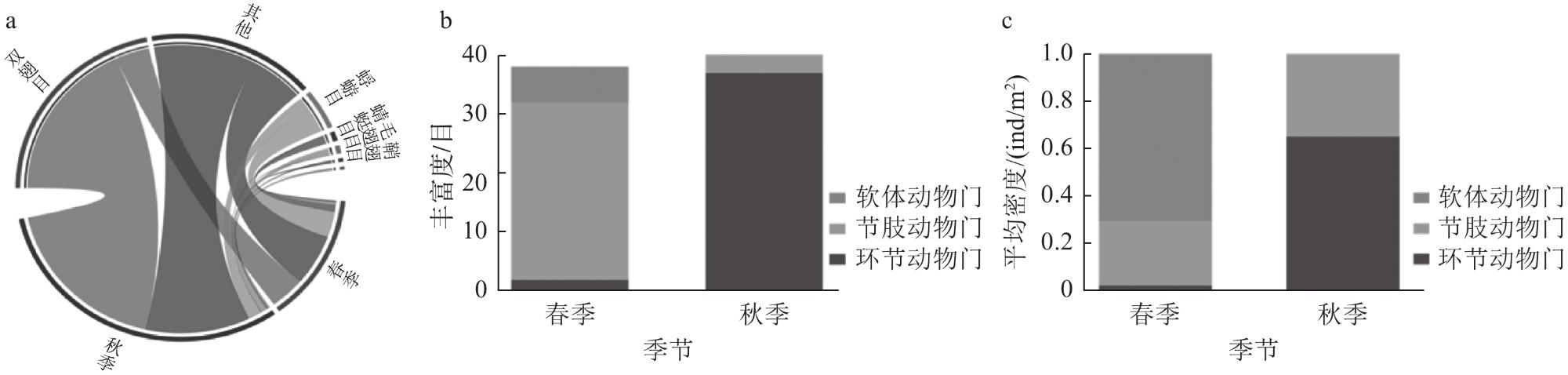
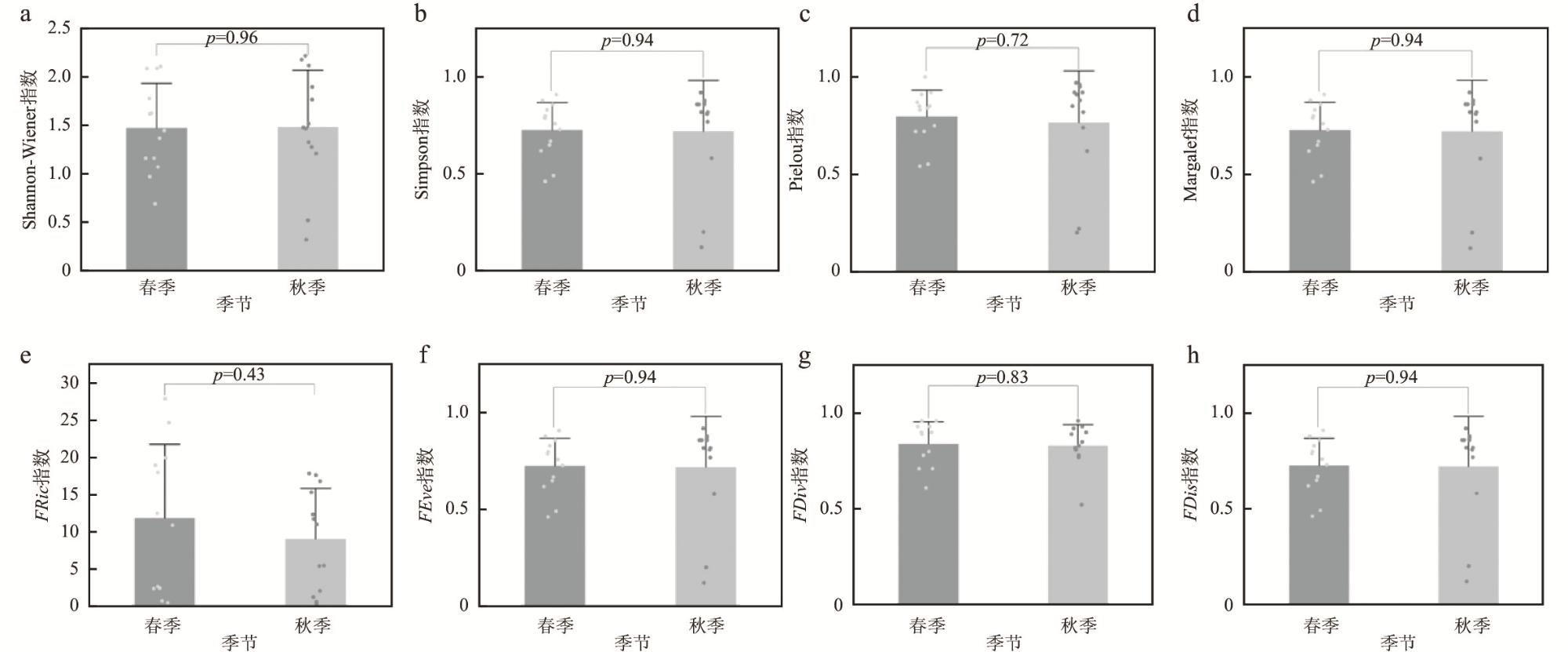
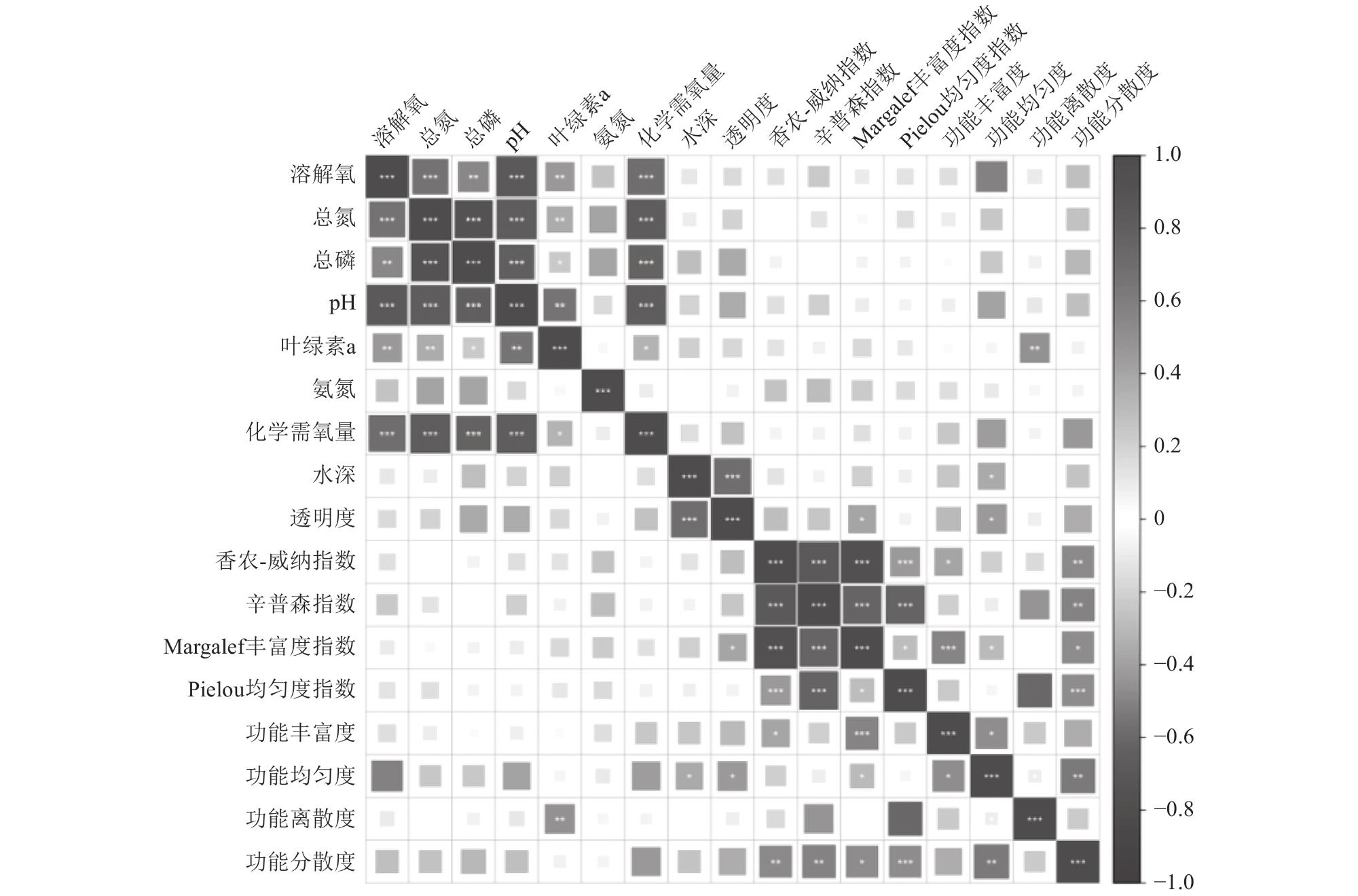
物种多样性和功能多样性反映了群落结构的变化及其对环境胁迫的响应。本研究在特大洪水发生前的春季和发生后的秋季,对北京永定河山峡段大型底栖无脊椎动物进行了调查,探讨了山地河流大型底栖无脊椎动物物种和功能多样性在不同季节的变化及其与环境变量的关系,旨在揭示山地河流大型底栖动物群落季节变化及其对洪水的响应。研究结果表明,在永定河山峡段发现大型底栖无脊椎动物76种,隶属于3门6纲18目44科60属,主要门类为节肢动物,环节动物和软体动物。永定河山峡段大型底栖无脊椎动物的物种多样性无显著的季节变化,秋季功能均匀度显著下降。相关性分析结果表明,水深、透明度和叶绿素a含量是影响本区域大型底栖无脊椎动物功能多样性的最重要因素。秋季大型底栖动物群落中优势类群为个体小、快速发育、扩散能力强的节肢动物,由于受到特大洪水影响,秋季软体动物数量锐减。本研究可以丰富对大型底栖无脊椎动物群落季节变化特征的认识,有助于更全面地理解如何维持河流生态系统功能和稳定。
李承霖 , 王玉玉 , 郭敏 , 黄赓 , 黄耘哲 . 北京永定河山峡段大型底栖无脊椎动物群落物种和功能多样性[J]. 湿地科学, 2026 , 24(1) : 132 -143 . DOI: 10.13248/j.cnki.wetlandsci.20240344
Understanding both taxonomic and functional dimensions of biodiversity is essential for revealing how aquatic communities respond to environmental disturbances. Taxonomic diversity reflects the structural attributes of a community, whereas functional diversity provides insight into ecological strategies, resource utilization patterns, and resilience mechanisms. In recent years, extreme hydrological events have become more frequent in northern China, yet the impacts of catastrophic floods on macroinvertebrate communities in mountain rivers remain insufficiently studied. We investigated benthic macroinvertebrates in the mountain section of the Yongding River in Beijing during the spring preceding the Haihe River Basin ‘23·7’ extraordinary regional flood event and during the autumn following the flood. Our objectives were to examine seasonal variations in taxonomic and functional diversity and to explore the relationships between macroinvertebrate communities and key environmental variables, thereby elucidating the response patterns of mountain river ecosystems to large-scale flood disturbances. A total of 76 species of benthic macroinvertebrates were identified across both seasons, belonging to 3 phyla, 6 classes, 18 orders, 44 families, and 60 genera. The assemblage was dominated by Arthropoda, Annelida, and Mollusca, with aquatic insects representing a major proportion of the taxa. Despite this rich composition, the results indicated no significant seasonal differences in taxonomic diversity indices. In contrast, functional diversity exhibited notable temporal variation, functional evenness showed a significant decline during autumn, suggesting a reduction in the uniformity of trait distribution within the community after the flood disturbance. Correlation analyses revealed that water depth, water transparency, and chlorophyll-a concentration were the most influential environmental factors shaping functional diversity patterns. The substantial decrease in chlorophyll-a in autumn implied reduced primary productivity, which likely constrained food resource availability for benthic consumers. Following the flood, the benthic community shifted toward strongly dominance by small-bodied, fast-developing arthropods with high dispersal capacities- traits that confer advantages for rapid recolonization and survival in unstable environments. In contrast, mollusks, which typically exhibit limited mobility and slower life-history strategies, showed a sharp decline in both abundance and diversity, reflecting their considerably slower recovery after disturbance. These findings highlight that evaluating both taxonomic and functional aspects of macroinvertebrate diversity provides a more comprehensive understanding of community dynamics under extreme hydrological disturbances. While species richness alone may mask substantial ecological shifts, functional metrics capture subtle yet ecologically meaningful changes related to species’ ecological roles, niche complementarity, and adaptive strategies. Our results further demonstrate that large floods can reorganize community structure by selectively favoring taxa with traits that enhance resilience and recolonization potential, ultimately altering functional composition even when species diversity appears unchanged. Overall, this study deepens our understanding of seasonal changes and flood responses in mountain river macroinvertebrate communities. The insights gained contribute to a more integrative perspective on maintaining ecosystem function and stability in river systems experiencing increasing hydrological variability. These findings also provide scientific support for ecological protection and restoration efforts within the Yongding River Basin and similar mountainous river ecosystems.
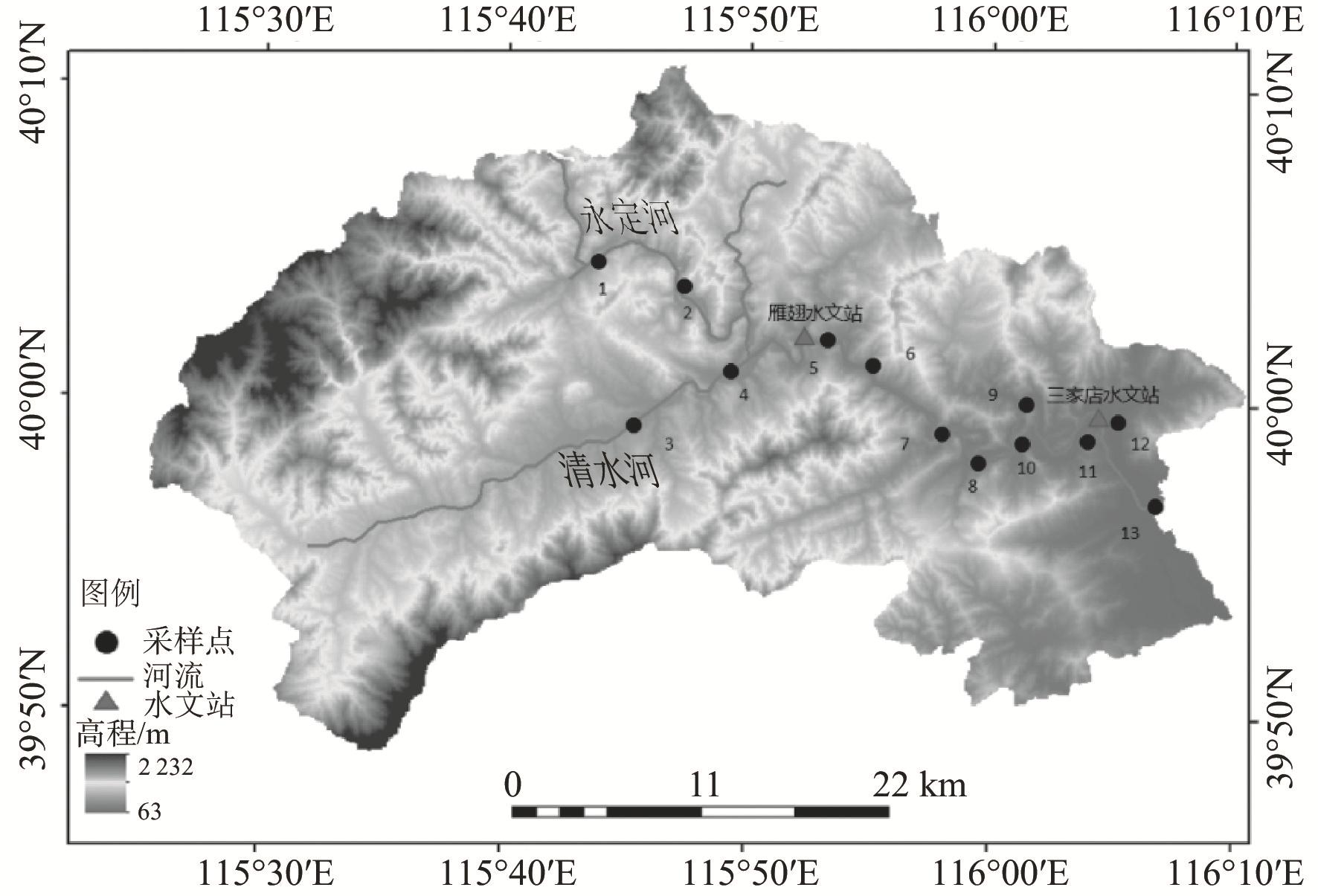
1 Habitat characteristics of sampling sites in mountain section of Yongding River永定河山峡段采样点生境特征 |
| 采样点 | 底质类型 | 河岸带植被覆盖情况 | 水流速度 |
| 1沿河城 | 漂石(粒径>256 mm)和鹅卵石(粒径2~256 mm)为主 | 覆盖度60%~80%,20种植物 | 湍急 |
| 2珠窝水库 | 鹅卵石(粒径2~256 mm)为主 | 覆盖度60%~80%,18种植物 | 较快 |
| 3东胡林 | 鹅卵石(粒径2~256 mm)为主 | 覆盖度60%~80%,15种植物 | 较慢 |
| 4青白口 | 砂(粒径0.016~2 mm)为主 | 覆盖度20%~40%,11种植物 | 较快 |
| 5雁翅吊桥 | 砂(粒径0.016~2 mm)为主 | 覆盖度60%~80%,21种植物 | 湍急 |
| 6防洪桥 | 漂石(粒径>256 mm)和鹅卵石(粒径2~256 mm)为主 | 覆盖度60%~80%,19种植物 | 较慢 |
| 7清水涧 | 漂石(粒径>256 mm)和鹅卵石(粒径2~256 mm)为主 | 覆盖度40%~60%,27种植物 | 较慢 |
| 8王平 | 砂(粒径0.016~2 mm)为主 | 覆盖度20%~40%,9种植物 | 较快 |
| 9苇甸沟 | 黏土、有机碎屑为主 | 覆盖度40%~60%,6种植物 | 较慢 |
| 10二号桥 | 鹅卵石(粒径2~256 mm)为主 | 覆盖度40%~60%,10种植物 | 较快 |
| 11戏水湾 | 漂石(粒径>256 mm)和鹅卵石(粒径2~256 mm)为主 | 覆盖度40%~60%,12种植物 | 较快 |
| 12三家店 | 黏土、有机碎屑为主 | 覆盖度60%~80%,27种植物 | 较慢 |
| 13永定楼 | 黏土、有机碎屑为主 | 覆盖度60%~80%,42种植物 | 较慢 |
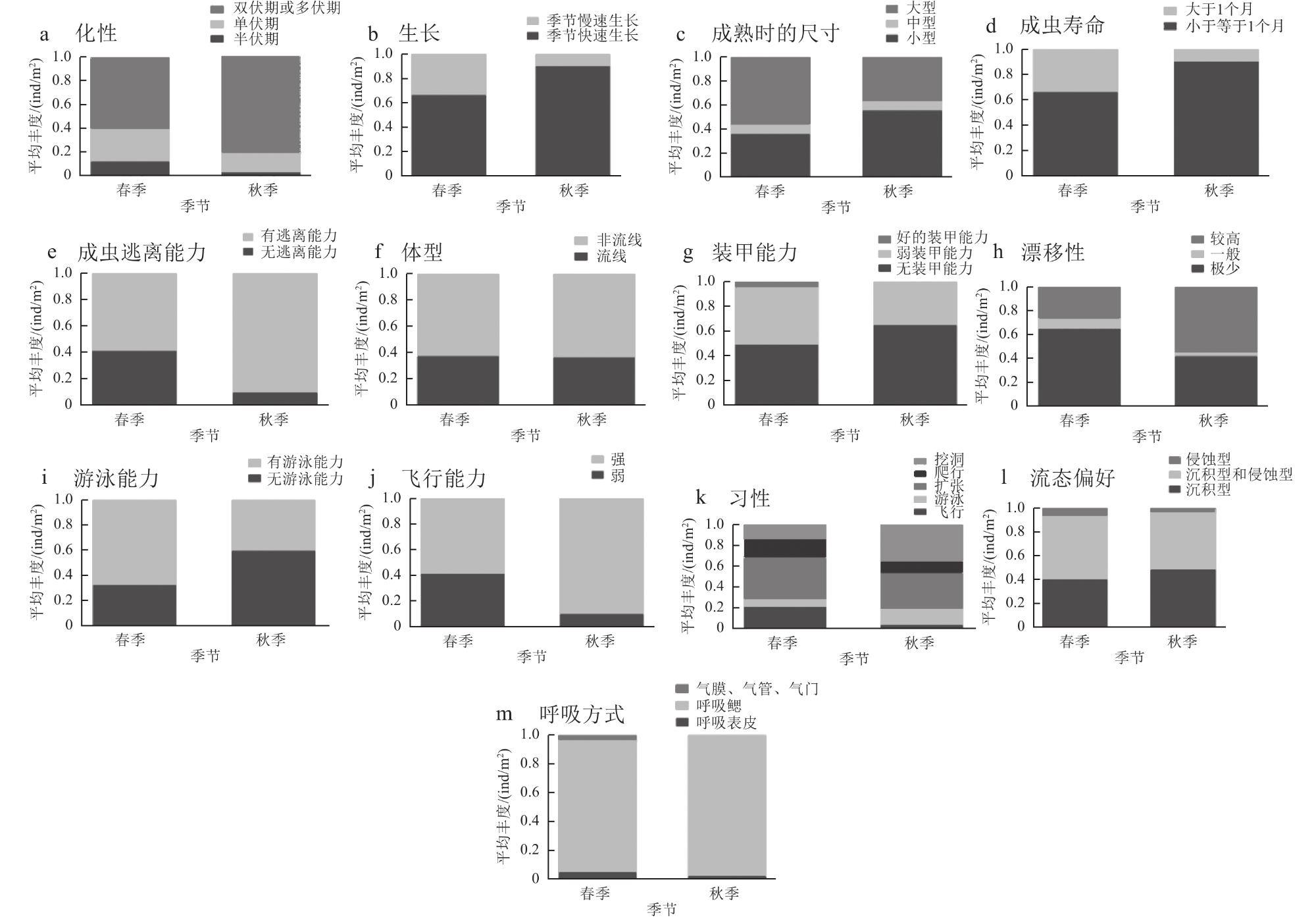
2 List of functional traits and their categories used for macroinvertebrates in this study[58]本研究中大型底栖无脊椎动物的功能性状及其分类[58] |
| 性状 | 类别 | |
| 生活史 | 化性 | 少于 1 世代/a |
| 大于1 世代/a | ||
| 生长 | 季节快速生长 | |
| 季节慢速生长 | ||
| 成熟时的尺寸 | 小型(<9 mm) | |
| 中型(9~16 mm) | ||
| 大型(>16 mm) | ||
| 成虫寿命 | 小于等于1个月 | |
| 大于1个月 | ||
| 成虫逃离能力 | 无逃离能力 | |
| 有逃离能力 | ||
| 抵抗和恢复力 | 体型 | 流线 |
| 非流线 | ||
| 装甲能力 | 无装甲能力 | |
| 弱装甲能力 | ||
| 好的装甲能力 | ||
| 漂移性 | 极少 | |
| 一般 | ||
| 较高 | ||
| 游泳能力 | 无游泳能力 | |
| 有游泳能力 | ||
| 飞行能力 | 弱 | |
| 强 | ||
| 习惯 | 飞行 | |
| 游泳 | ||
| 扩张 | ||
| 爬行 | ||
| 挖洞 | ||
| 流态偏好 | 沉积型 | |
| 沉积型和侵蚀型 | ||
| 侵蚀型 | ||
| 形态与生态性状 | 呼吸方式 | 呼吸表皮 |
| 呼吸鳃 | ||
| 气膜、气管、气门 | ||
3 Physical and chemical indicators of water bodies in the mountain section of the Yongding River in different seasons永定河山峡段不同季节水体理化指标 |
| 溶解氧质量浓度/(mg/L) | 总氮质量浓度/(mg/L) | 总磷质量浓度/(mg/L) | pH | 叶绿素a质量浓度/(mg/L) | |
| 注:表中数据为平均值±标准误差,黑体数字表示数据差异显著。 | |||||
| 春季 | 5.15±0.53 | 1.87±0.32 | 0.03±0.01 | 7.49±0.18 | 2.81±2.29 |
| 秋季 | 10.04±1.59 | 5.02±1.13 | 0.01±0.01 | 8.28±0.18 | 0.61±0.1 |
| F | 11.684 | 11.462 | 3.67 | 0.309 | 105.474 |
| p | 0.002 | 0.003 | 0.068 | 0.584 | <0.001 |
| 氨氮质量浓度/(mg/L) | 高锰酸钾指数/(mg/L) | 水深/cm | 透明度/cm | ||
| 春季 | 0.06±0.01 | 3.23±0.99 | 105.15±41.85 | 76.77±36.85 | |
| 秋季 | 0.07±0.08 | 7.73±0.19 | 98.23±45.60 | 67.85±36.48 | |
| F | 3.494 | 6.703 | 0.206 | 0.223 | |
| p | 0.074 | 0.016 | 0.654 | 0.641 | |
/
| 〈 |
|
〉 |