

基于分层固碳路径法的城市绿地碳汇效能量化解析与制图——以南京燕子矶典型地块为例
|
李哲/男/博士/东南大学建筑学院景观学系主任、教授、博士生导师/研究方向为风景园林规划与设计、数字景观理论与技术 |
|
陈海妮/女/东南大学建筑学院在读硕士研究生/研究方向为数字景观理论与技术 |
|
周正/女/硕士/华东勘测设计研究院有限公司助理设计师/研究方向为风景园林规划与设计 |
|
陈珮珺/女/东南大学建筑学院在读硕士研究生/研究方向为风景园林规划与设计 |
Copy editor: 刘颖
收稿日期: 2025-04-25
修回日期: 2025-11-24
网络出版日期: 2026-03-12
版权
Quantitative Analysis and Mapping of Carbon Sequestration Efficiency for Urban Green Space Using Layered Carbon Sequestration Path Method: A Case Study of Yanziji Blocks, Nanjing
|
LI Zhe, Ph.D., is a professor, doctoral supervisor, and director of the Department of Landscape Architecture in the School of Architecture, Southeast University. His research focuses on landscape planning and design, and theories and technologies of digital landscape |
|
CHEN Haini is a master student in the School of Architecture, Southeast University. Her research focuses on theories and technologies of digital landscape |
|
ZHOU Zheng, Master, is an assistant designer at Huadong Survey and Design Institute Co., Ltd. Her research focuses on landscape planning and design |
|
CHEN Peijun is a master student in the School of Architecture, Southeast University. Her research focuses on landscape planning and design |
Received date: 2025-04-25
Revised date: 2025-11-24
Online published: 2026-03-12
Copyright
城市绿地碳汇效能研究是“碳中和”时代背景下推进城市绿地高碳汇建设的重要内容之一,现有碳汇效能分析技术在路径体系化、测度精细化与结果可视化等方面的支撑能力有待加强,亟待开展城市绿地碳汇效能量化解析与制图研判研究。
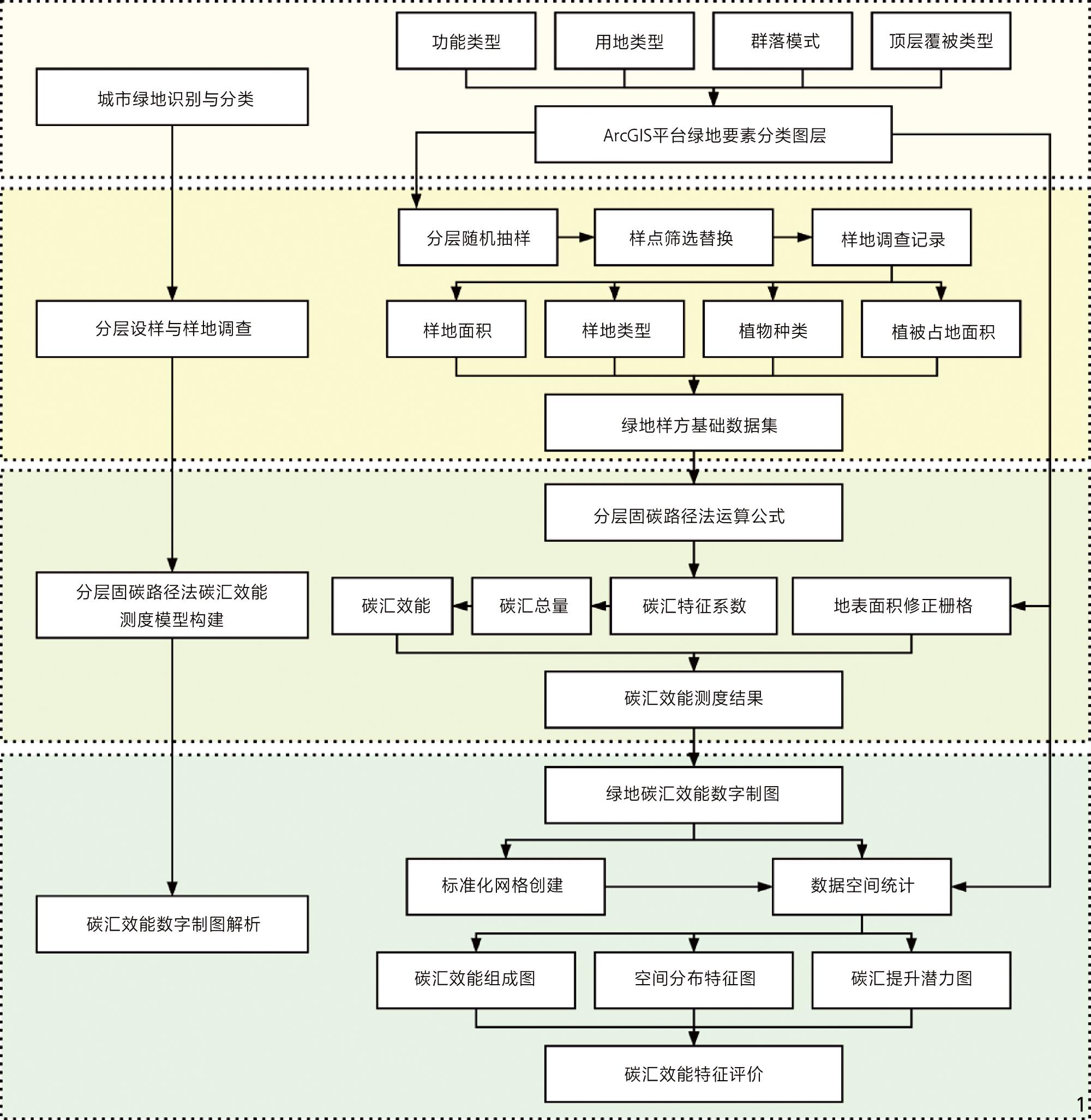
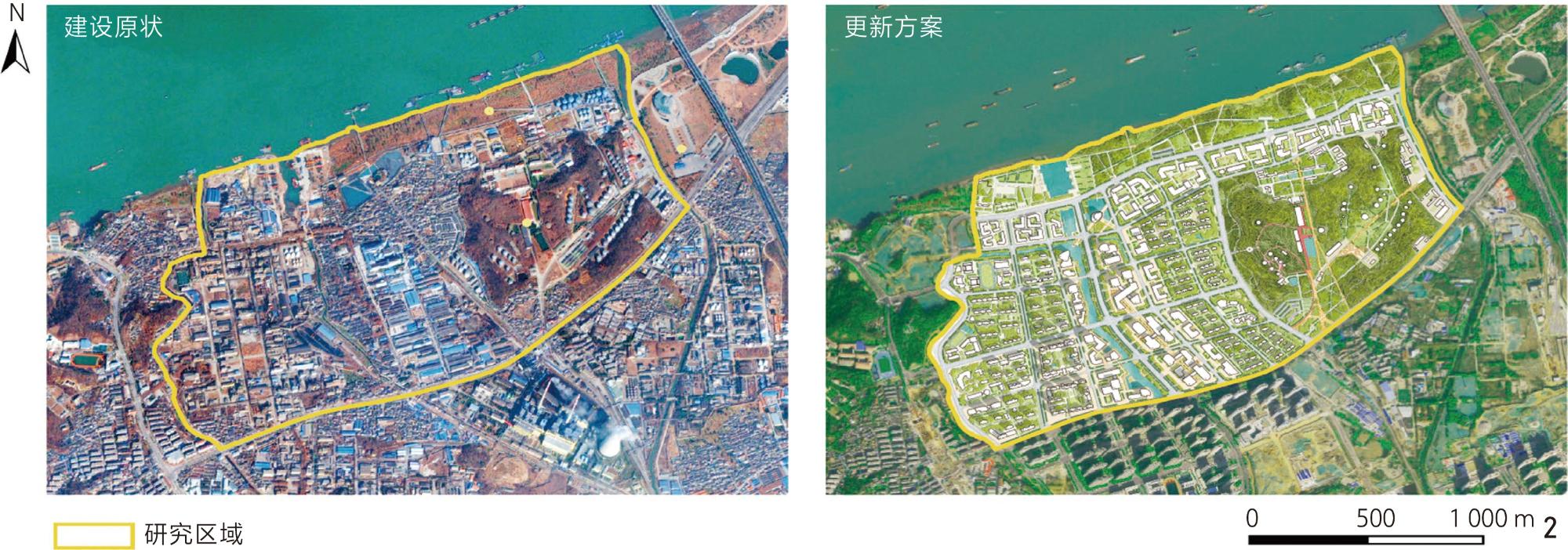
基于城市绿地碳循环与碳收支基本原理,提出“分层固碳路径法”并建立城市绿地碳汇效能量化解析体系。开展城市绿地识别与分类、分层设样与样地调查,集成碳汇效能算法构建测度模型,依托ArcGIS进行碳汇效能量化解析与数字制图。以南京市燕子矶典型地块为例,对建设原状与更新方案的碳汇效能进行对比分析。
基于分层固碳路径法的碳汇效能测度模型与数字制图技术能够精准解析各类城市绿地的碳汇效能。燕子矶地块更新方案相较于建设原状,城市绿地碳汇效能显著提升、分布格局呈均衡发展趋势、提升潜力有所降低且达饱和值。
分层固碳路径法能够针对城市绿地碳汇效能解析的需求,本研究构建了操作性强、比对分析明晰的碳汇解析路径与碳汇测算方法,实现了城市绿地碳汇效能的系统测度与数字制图,为城市绿地碳汇效能的量化解析提供技术方法参考。
李哲 , 陈海妮 , 周正 , 陈珮珺 . 基于分层固碳路径法的城市绿地碳汇效能量化解析与制图——以南京燕子矶典型地块为例[J]. 风景园林, 2026 , 33(1) : 56 -66 . DOI: 10.3724/j.fjyl.LA20250257
The construction of high-carbon-sequestration urban green space has become a key component of high-quality built environment development under the carbon neutrality strategy. Systematic quantitative analysis and digital mapping of carbon sequestration efficiency provide essential scientific and practical guidance for enhancing urban green space quality and ecological resource management. As a primary natural carbon sink, urban green space mitigates carbon emissions and improves human settlement quality. Carbon sequestration efficiency—per unit time or area—captures the spatio-temporal dynamics of carbon sequestration and serves as an integrated indicator for evaluating multi-path carbon cycle performance in landscape green spaces. Rapid urbanization and fragmented, heterogeneous green space patterns increasingly constrain urban carbon sequestration. Therefore, quantitative assessment of carbon sequestration efficiency is crucial for identifying enhancement strategies. However, traditional measurement methods often suffer from unstructured consideration of carbon paths, incomplete analytical frameworks, low accuracy, and unclear strategy guidance, highlighting the urgent need for landscape architecture oriented, layered carbon sequestration path based, fine grained, quantitative approaches to improve reliability, validity, and spatial precision in carbon sequestration analysis and visualization.
Grounded in urban green space development and layered carbon sequestration principles, this study establishes a quantitative framework for evaluating urban green space carbon sequestration efficiency and integrates the layered carbon sequestration path method into measurement modeling. The framework is applied to the Yanziji Blocks, Nanjing, under both original and redevelopment conditions. The workflow includes: 1) constructing the carbon sequestration efficiency analysis system; 2) identifying and classifying urban green spaces; 3) layered sampling and field surveys; 4) efficiency measurement using the layered carbon sequestration path algorithm; 5) digital mapping and spatial analysis. Carbon sequestration mechanisms—including carbon fixation, biomass accumulation, soil carbon storage, litter decomposition, and rhizosphere cycling—were examined to guide model development. Landscape green spaces were extracted and categorized based on carbon sequestration characteristics, forming hierarchical geospatial datasets. Layered sampling plots for vegetation, soil, and micro-habitats, supplemented by literature data, created a comprehensive plot database. Carbon sequestration coefficients were calculated using layered path formulas and combined with terrain and vegetation data to construct efficiency measurement models, supporting multi-dimensional spatial analysis. Using Yanziji Blocks as a case, grid-based spatial quantification, visual mapping, and statistical evaluation were conducted, focusing on composition, spatial distribution, contribution proportion, improvement potential, and hotspot identification.
The empirical results indicate the following three aspects. 1) The layered-path-based carbon sequestration efficiency measurement model demonstrates strong applicability for urban block-scale analysis. It enables accurate quantification of carbon sequestration characteristic coefficients, total carbon sequestration, and multi-dimensional carbon sequestration efficiency under both the original conditions and the redevelopment plan. 2) Comparative digital mapping showed that the redevelopment plan substantially improved overall carbon sequestration efficiency relative to the original conditions, transforming the spatial pattern from an uneven distribution into a more balanced and optimized one. Multiple hotspot regions emerged, reflecting enhanced spatial clustering of high-efficiency areas. Meanwhile, carbon sequestration improvement potential decreased significantly and tended toward theoretical saturation, suggesting that the redevelopment plan achieved nearly optimal carbon sequestration levels. 3) The results further demonstrate that reasonable planning—such as increasing the green space ratio, optimizing vegetation structure through multi-layered canopy configuration (tree−shrub−groundcover), and integrating vertical greening (e.g., roof gardens)—effectively enhances carbon sequestration efficiency under new urban development scenarios.
This study establishes a layered-path-based carbon sequestration efficiency analysis system, develops a fine-scale measurement model, and implements a digital mapping toolkit for urban green space carbon sequestration efficiency at the urban block scale. The proposed approach effectively addresses the limitations of low measurement accuracy, incomplete analytical frameworks, and insufficient spatial representation in current research. It significantly improves the reliability and validity of carbon sequestration efficiency quantification and visualization. The findings provide theoretical foundations, methodological guidance, and technical support for the organic renewal and redevelopment of the built environment under carbon neutrality objectives, and offer a replicable framework for the planning, evaluation, and design of high-carbon-sequestration urban green spaces.
表1 城市绿地分类体系Tab. 1 Urban green space classification system |
| 分类维度 | 具体类别 |
|---|---|
| 群落模式 | 人工配置群落、自然群落 |
| 功能类型 | 游憩绿地、附属绿地、待开发地等 |
| 用地类型 | 居住用地、公共管理与公共服务设施用地、商业金融业用地、工业用地、教育科研用地、物流仓储用地、道路与交通设施用地、村镇建设用地、道路与交通设施用地、其他用地等 |
| 顶层覆被类型 | 乔木层、灌木层、地被层 |
表2 碳汇效能制图评价相关计算式Tab. 2 Relevant calculation formulas for the evaluation of carbon sequestration efficiency |
| 分析维度 | 相关计算式 | 式注 |
|---|---|---|
| 碳汇效能组成 | | |
| 碳汇效能空间分布特征 | | |
| 碳汇效能提升潜力 | | |
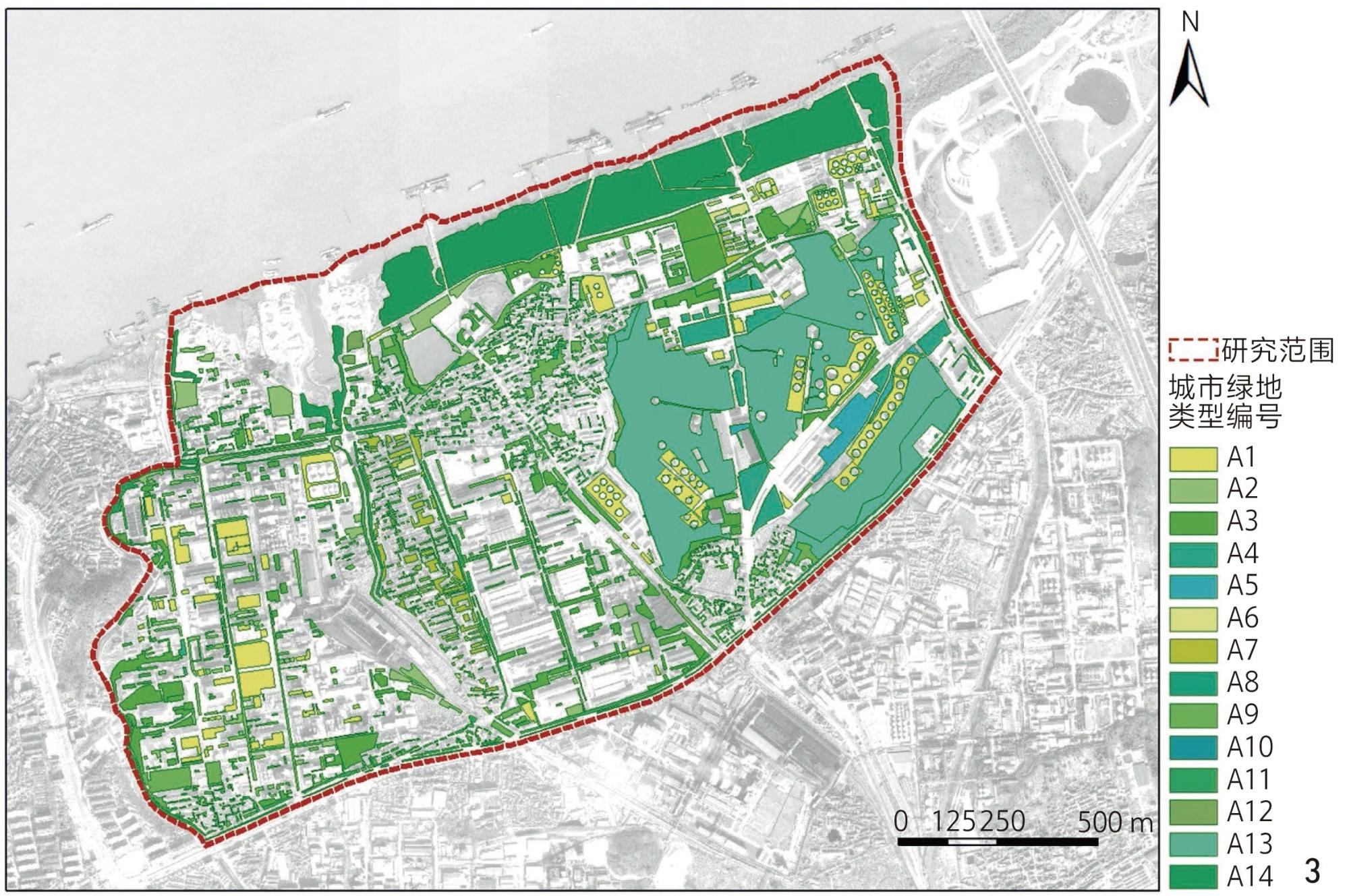
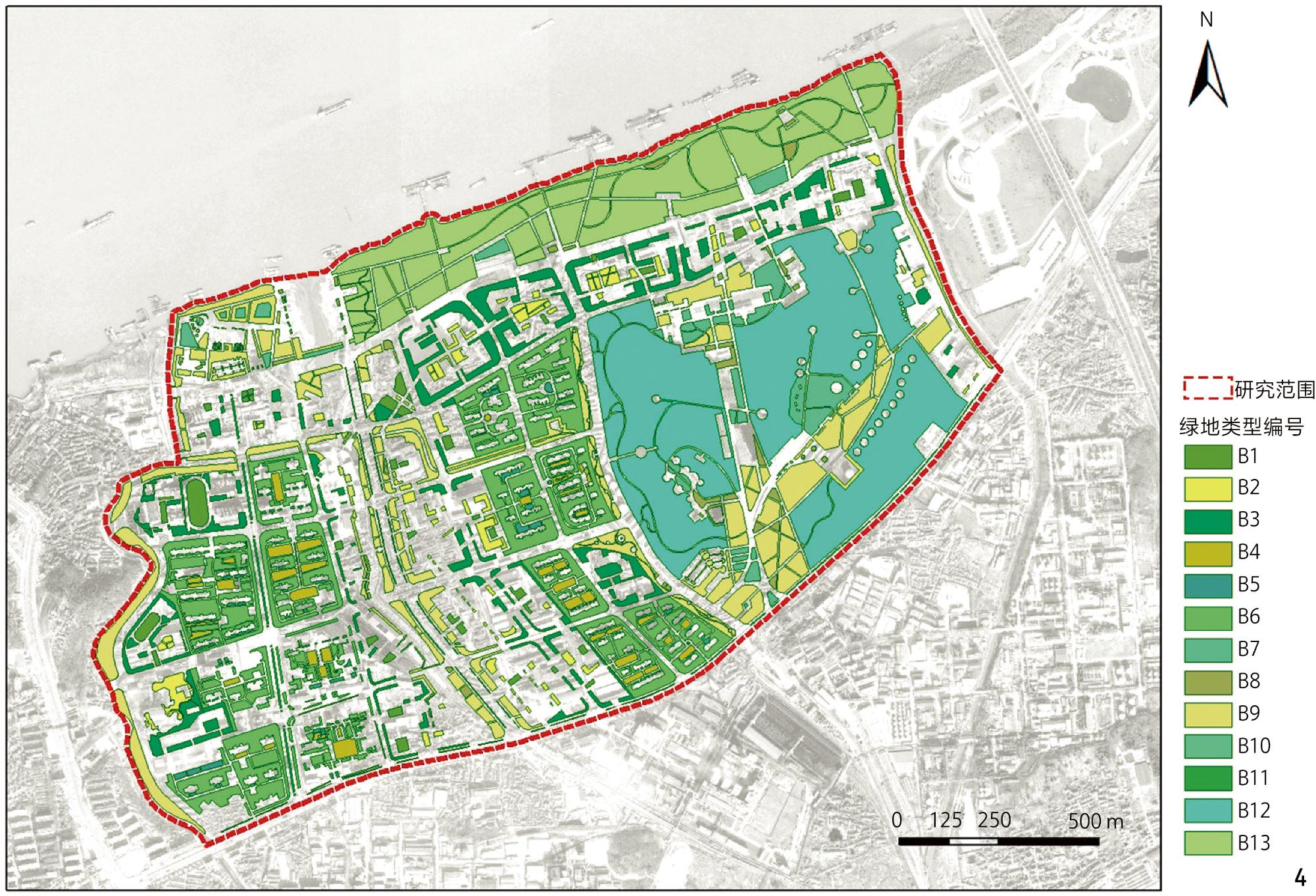
表3 燕子矶典型地块建设原状与更新方案绿地分类Tab. 3 Original conditions and redevelopment plan of the Yanziji blocks green space classification |
| 阶段 | 群落模式 | 功能类型 | 用地类型 | 顶层覆被 类型 | 城市绿地类型编号 |
|---|---|---|---|---|---|
| 注:用地类型中的代码来源于GBJ 137—1990《城市用地分类与规划建设用地标准》及CJJ/T 85—2017《城市绿地分类标准》。 | |||||
| 建设原状 | 人工配置群落 | 附属绿地(生产性单位) | 工业用地(M2/M3)、公共设施用地(U41)、物流仓储用地(C2)、特殊用地(D1) | 地被层 | A1 |
| 灌丛层 | A2 | ||||
| 乔木层 | A3 | ||||
| 附属绿地(服务性单位) | 商业金融业用地(C2)、教育科研用地(C6) | 灌丛层 | A4 | ||
| 乔木层 | A5 | ||||
| 附属绿地(城市宅间绿地) | 居住用地(R3) | 地被层 | A6 | ||
| 乔木层 | A7 | ||||
| 附属绿地(城中村宅间绿地) | 村镇建设用地(E6) | 地被层 | A8 | ||
| 乔木层 | A9 | ||||
| 附属绿地(道路绿地) | 道路与交通设施用地(S) | 灌丛层 | A10 | ||
| 乔木层 | A11 | ||||
| 自然群落 | 待开发地 | 弃置地(E7) | 乔木层 | A12 | |
| 附属绿地(山林绿地) | 特殊用地(D) | 乔木层 | A13 | ||
| 待开发地(滨江绿地) | 其他绿地(Egc) | 乔木层 | A14 | ||
| 更新方案 | 人工配置群落 | 附属绿地(服务性单位) | 商业用地(C21)、图书展览用地(C34)、旅游业用地(C25)、服务业用地(C24)、学校用地(Rec/Rea)、设施用地(U12/U21) | 地被层 | B1 |
| 灌丛层 | B2 | ||||
| 乔木层 | B3 | ||||
| 附属用地(城市宅间绿地) | 住宅混合用地(Rb)、二类居住用地(R2)、基层中心用地(Rc) | 地被层 | B4 | ||
| 灌丛层 | B5 | ||||
| 乔木层 | B6 | ||||
| 游憩绿地 | 公园(G11)、街头绿地(G12)、附属绿地(XG) | 地被层 | B7 | ||
| 灌丛层 | B8 | ||||
| 乔木层 | B9 | ||||
| 附属绿地(道路绿地) | 道路广场用地(S) | 灌丛层 | B10 | ||
| 乔木层 | B11 | ||||
| 自然群落 | 附属绿地(山林绿地) | 公园(G11) | 乔木层 | B12 | |
| 待开发地(滨江绿地) | 区域绿地(EG) | 乔木层 | B13 | ||
表4 燕子矶典型地块建设原状与更新方案碳汇特征系数Tab. 4 Carbon sequestration characteristic coefficients of original conditions and redevelopment plan in the Yanziji blocks |
| 城市绿地 类型编号 | 碳汇特征系数/ g·m−2·y−1 | 城市绿地 类型编号 | 碳汇特征系数/ g·m−2·y−1 | |
|---|---|---|---|---|
| A1 | 484.83 | B1 | 831.91 | |
| A2 | 5 037.11 | B2 | 2 687.74 | |
| A3 | 8 884.12 | B3 | 8 030.25 | |
| A4 | 1 100.38 | B4 | 1 196.77 | |
| A5 | 5 940.16 | B5 | 3 338.55 | |
| A6 | 754.14 | B6 | 6 811.62 | |
| A7 | 4 642.00 | B7 | 884.61 | |
| A8 | 1 390.21 | B8 | 1 735.42 | |
| A9 | 6 849.51 | B9 | 7 134.73 | |
| A10 | 3 301.43 | B10 | 6 824.63 | |
| A11 | 6 843.50 | B11 | 7 880.76 | |
| A12 | 1 500.80 | B12 | 3 969.16 | |
| A13 | 3 969.16 | B13 | 505.32 | |
| A14 | 505.32 |
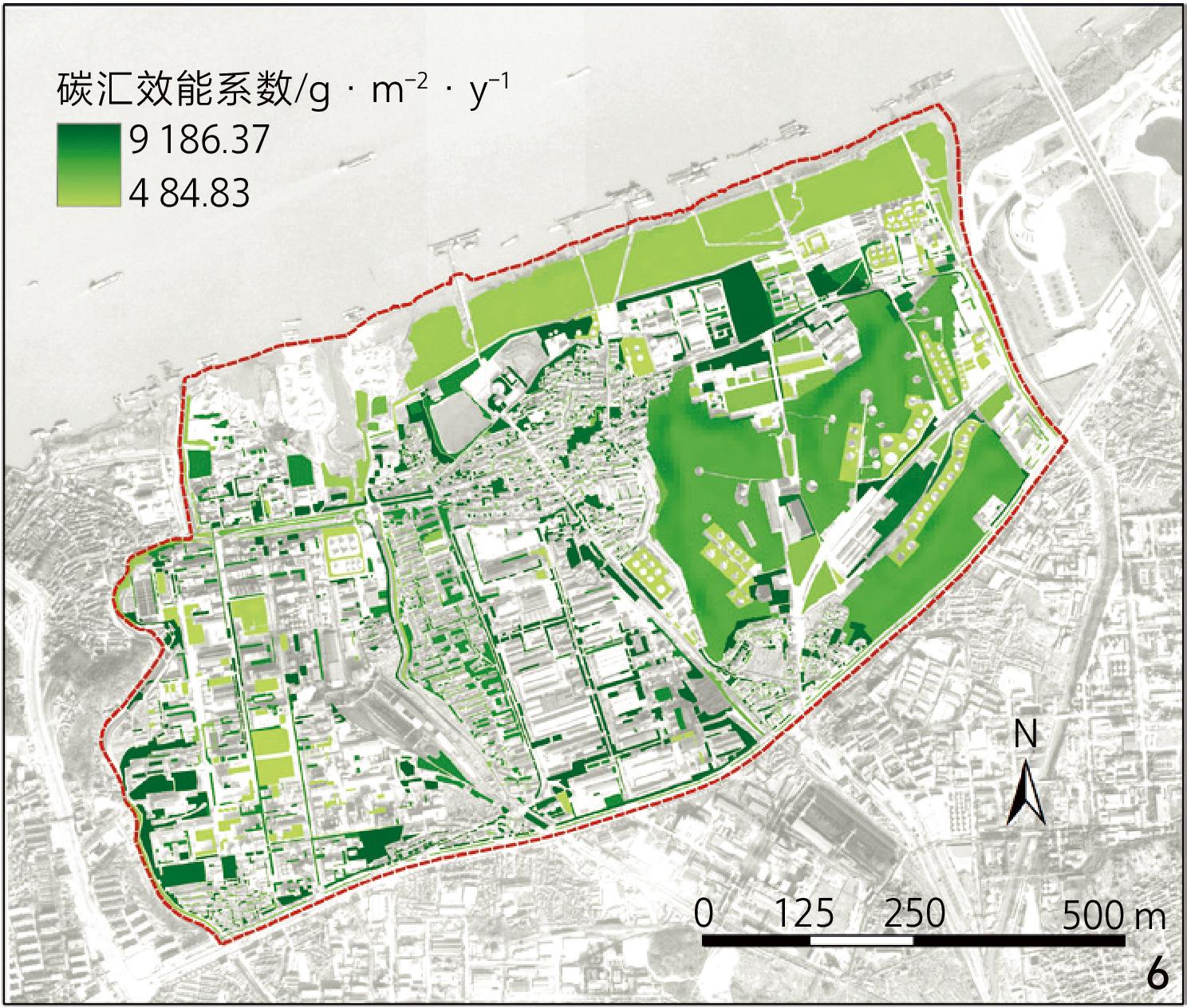
图6 建设原状碳汇效能空间量化Fig. 6 Spatial quantification of carbon sequestration efficiency under original conditions |
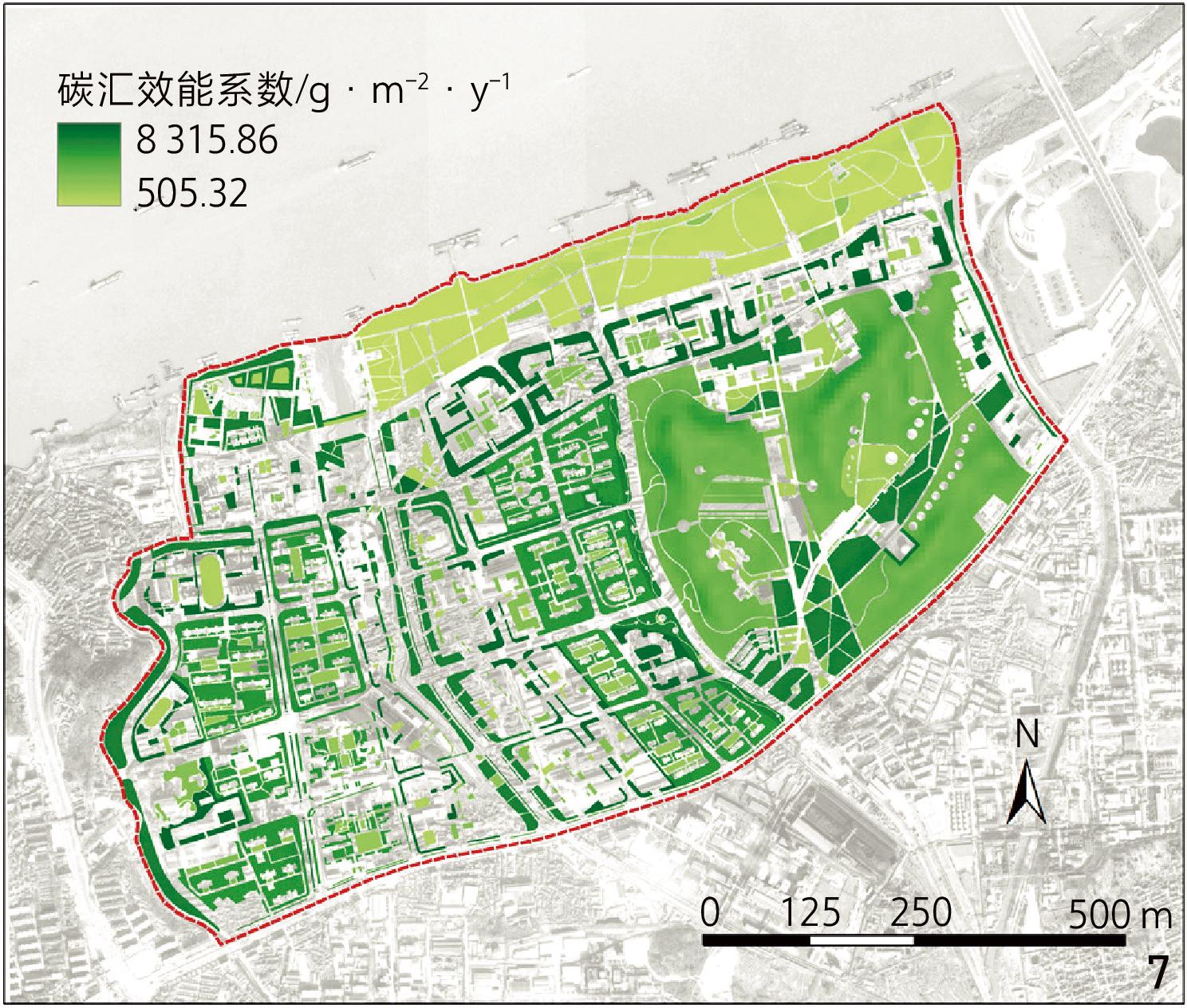
图7 更新方案碳汇效能空间量化Fig. 7 Spatial quantification of carbon sequestration efficiency under the redevelopment plan |
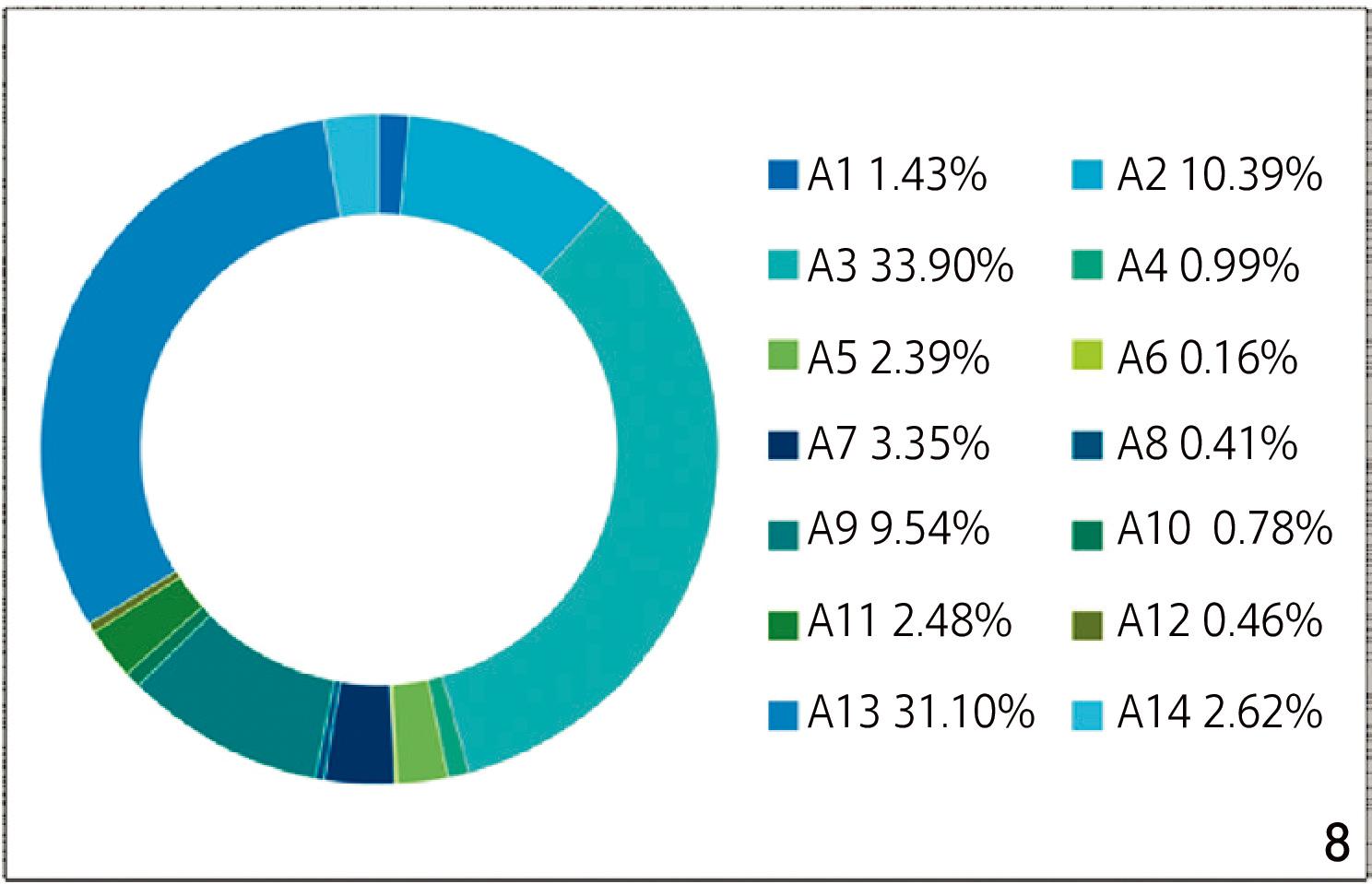
图8 建设原状碳汇效能贡献占比Fig. 8 Proportion of carbon sequestration efficiency contribution under original conditions |
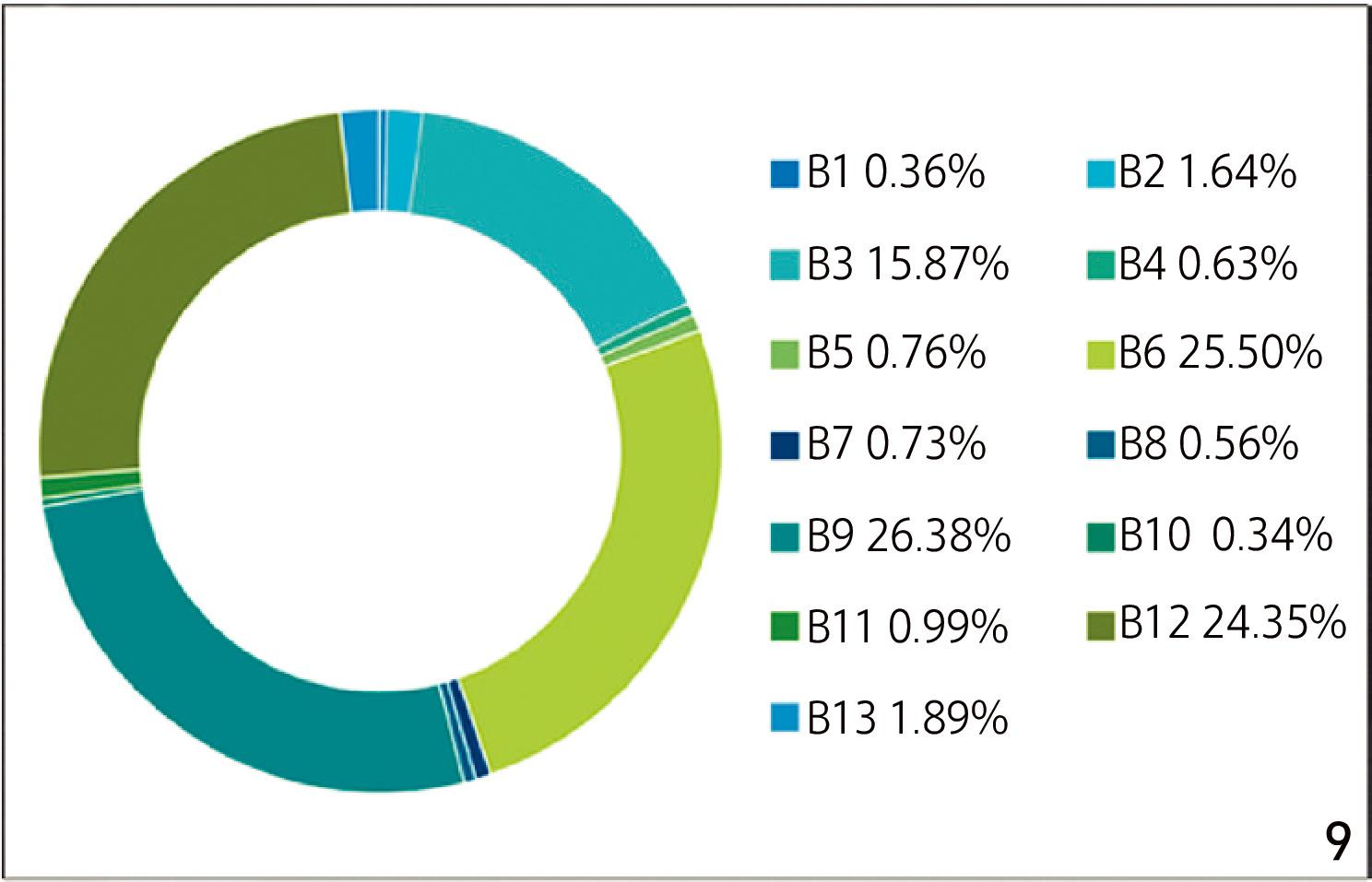
图9 更新方案碳汇效能贡献占比Fig. 9 Proportion of carbon sequestration efficiency contribution under the redevelopment plan |
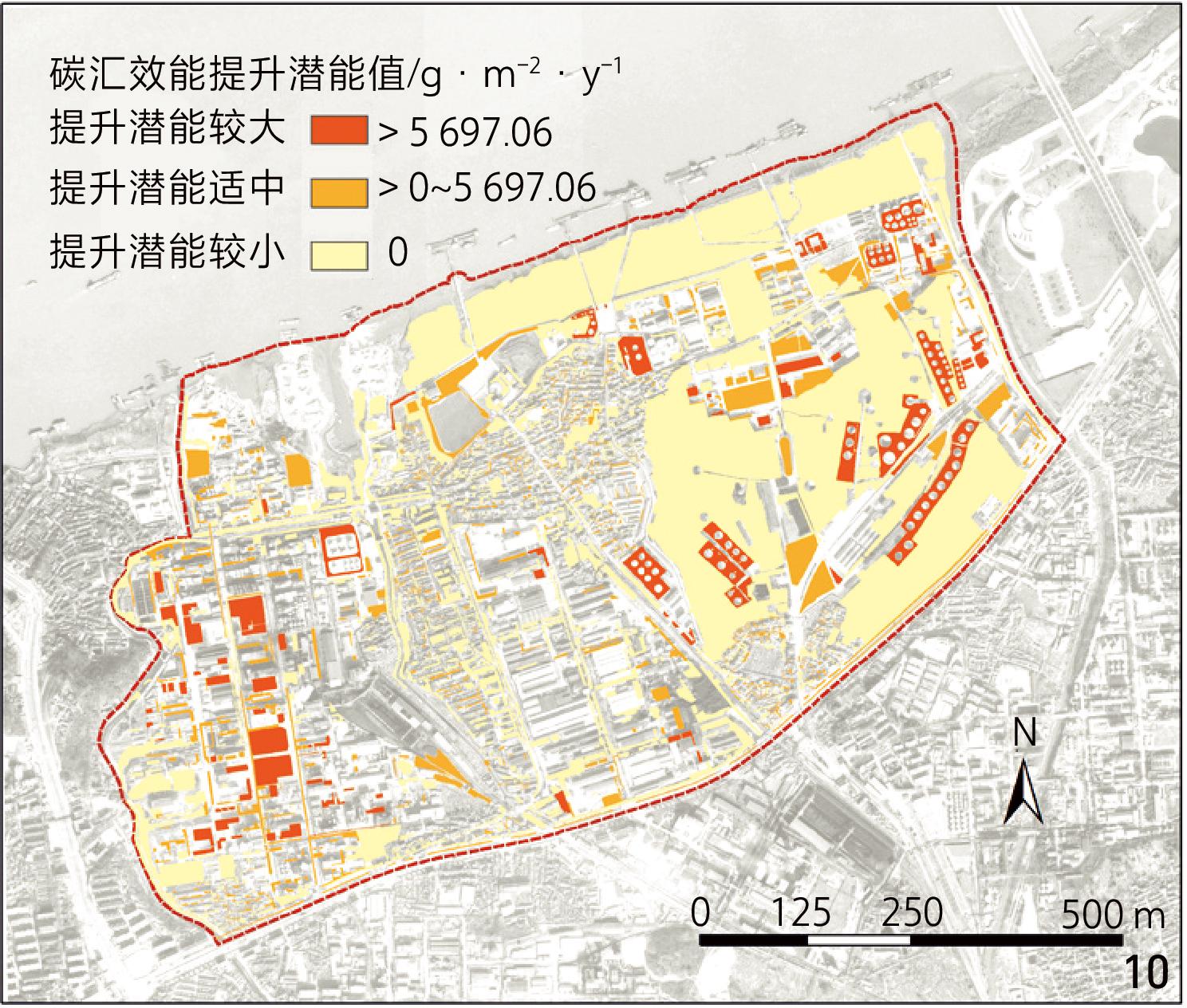
图10 建设原状碳汇效能提升潜力分级Fig. 10 Classification of carbon sequestration efficiency improvement potential under original conditions |
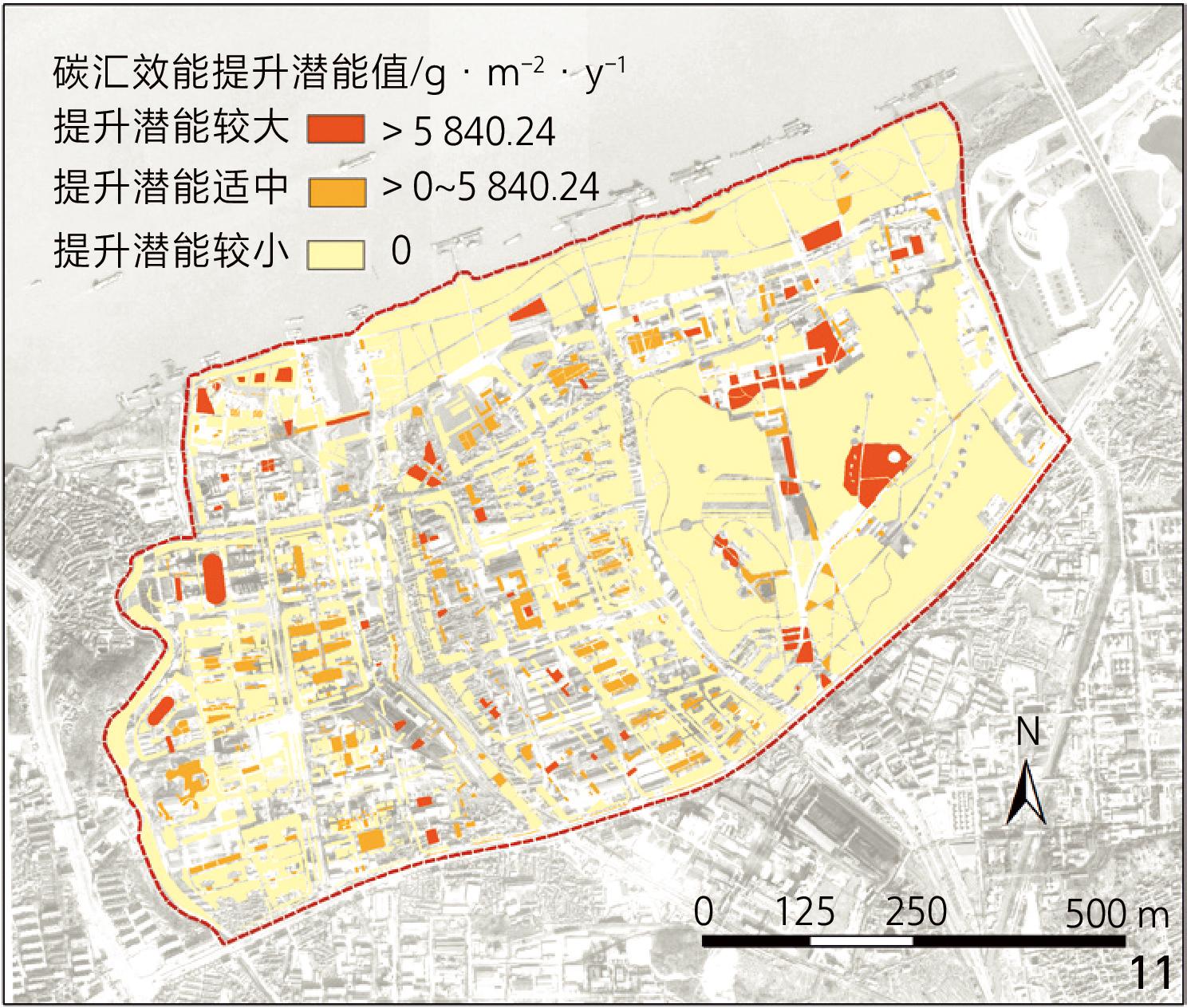
图11 更新方案碳汇效能提升潜力分级Fig. 11 Classification of carbon sequestration efficiency improvement potential under the redevelopment plan |
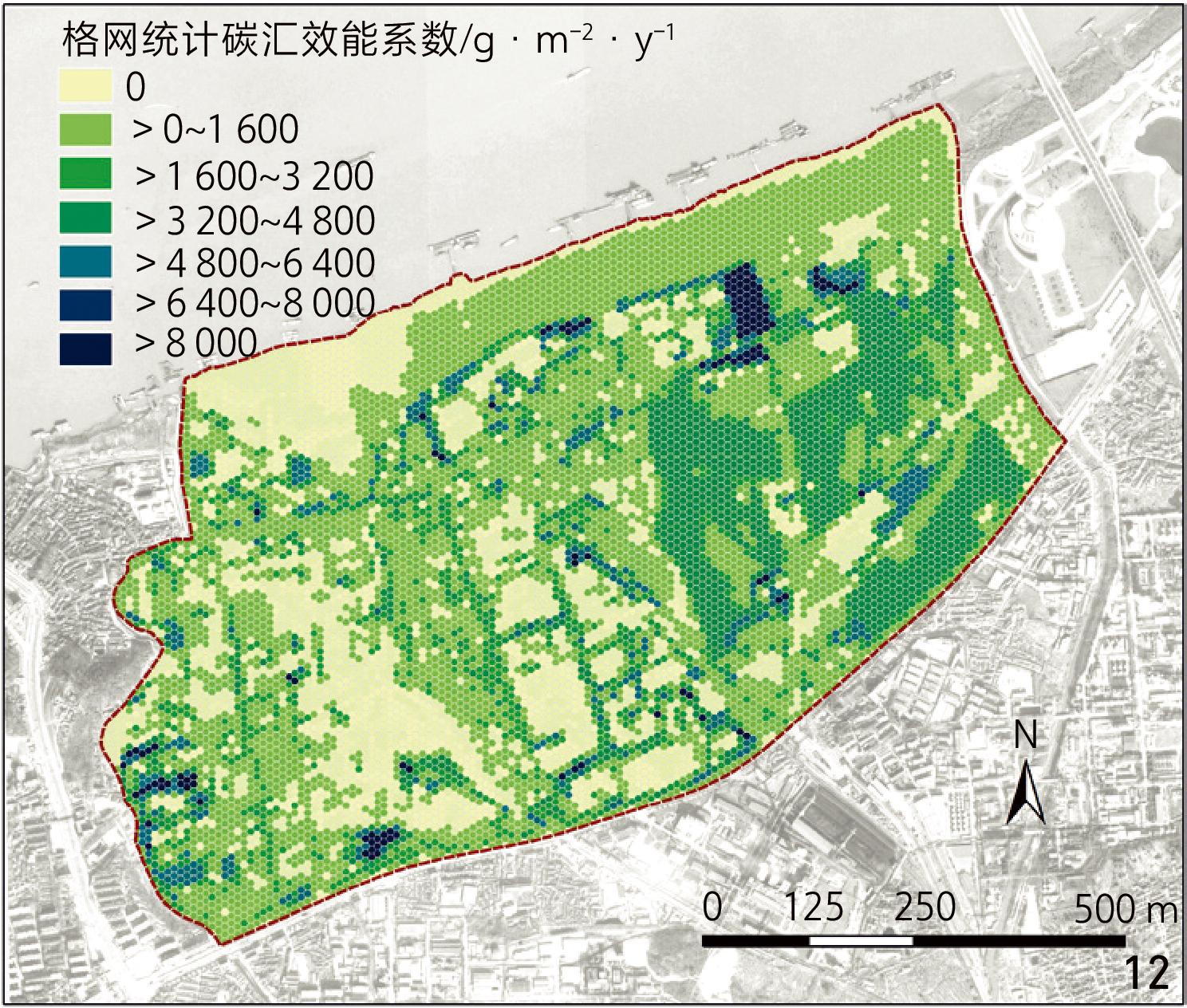
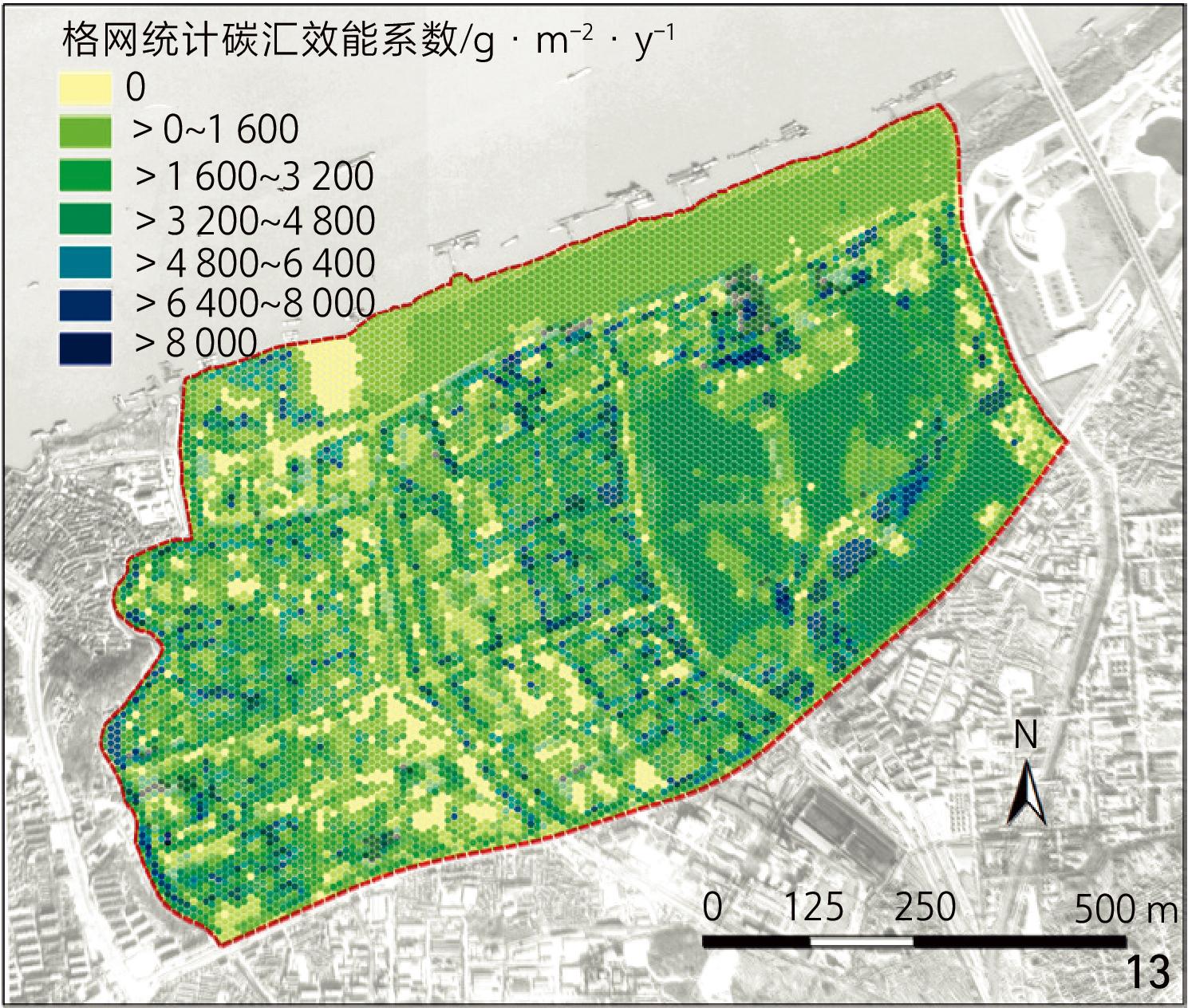
图12 建设原状碳汇效能系数空间量化格网Fig. 12 Grid-based spatial quantification of carbon sequestration efficiency coefficient under original conditions |
图13 更新方案碳汇效能系数空间量化格网Fig. 13 Grid-based spatial quantification of carbon sequestration efficiency coefficient under the redevelopment plan |
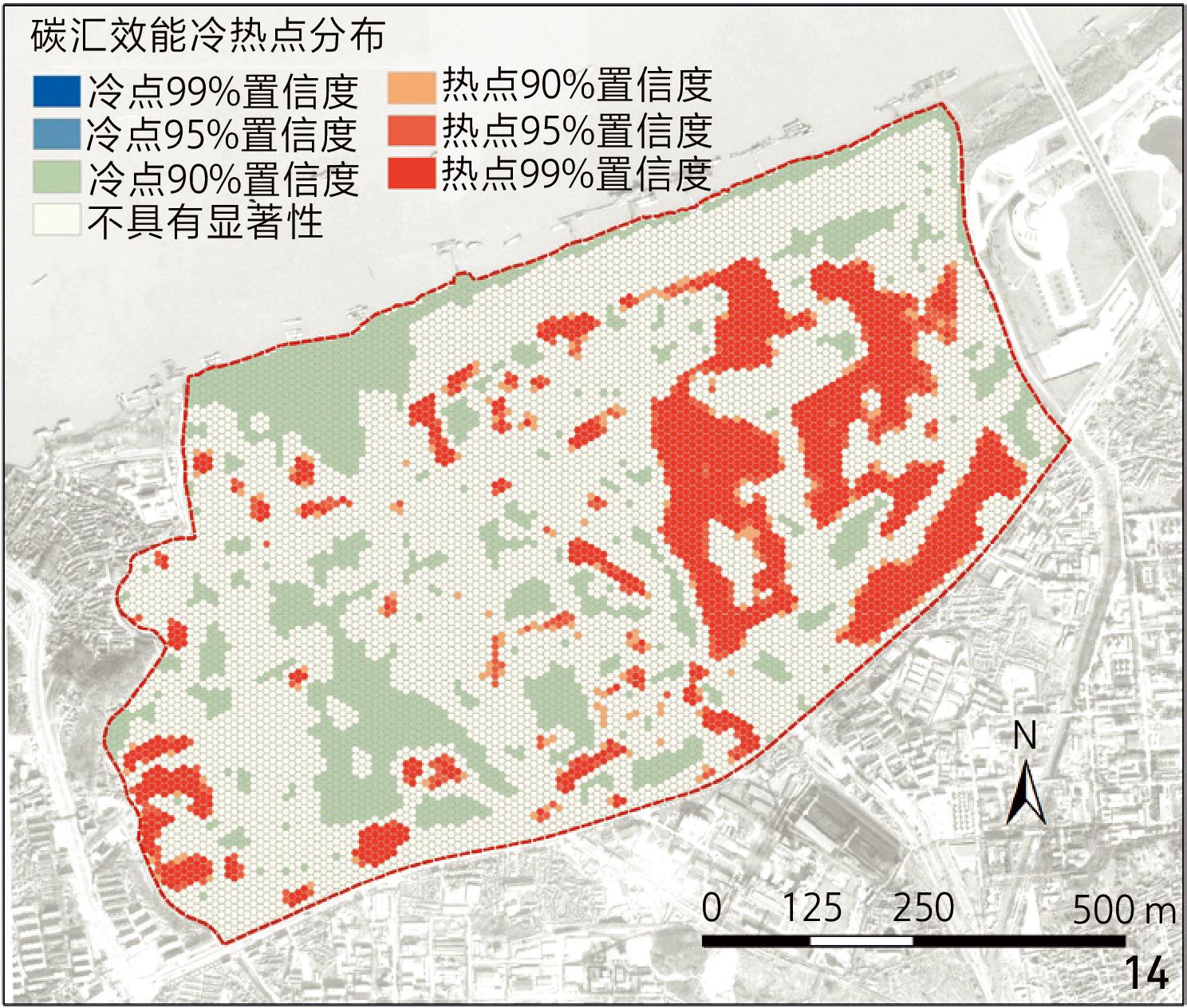
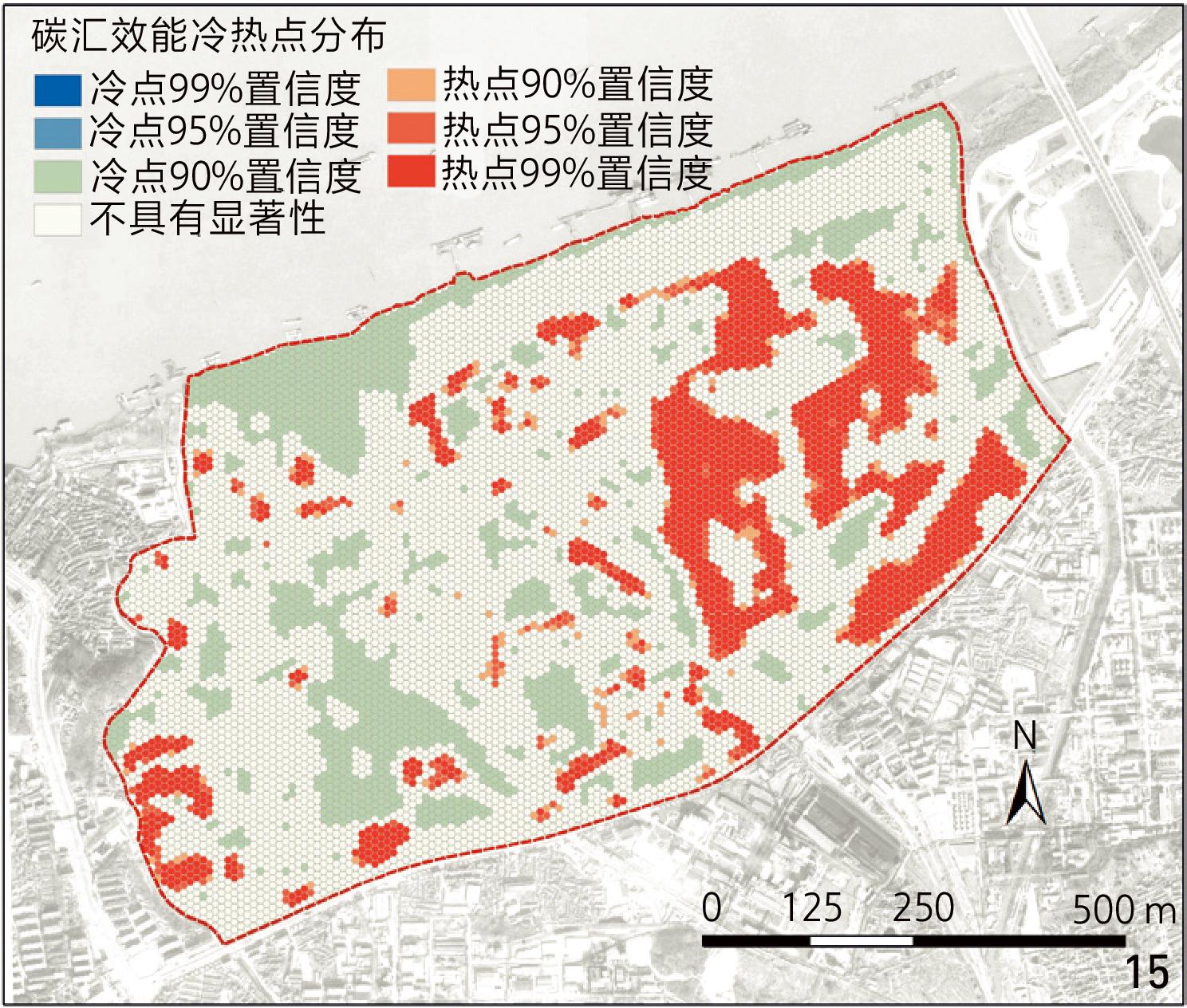
图14 建设原状碳汇效能热点分析Fig. 14 Hotspot analysis of carbon sequestration efficiency under original conditions |
1、应用分层固碳路径法开展城市绿地碳汇方法与测度技术的关联应用研究,可满足绿色低碳城市建设发展中风景园林专业碳汇分析技术的实践需求。
2、建立城市绿地碳汇效能量化解析体系与城市绿地样本分层分样采集机制,构建城市绿地碳汇效能测度模型,依托ArcGIS实现城市绿地碳汇效能数字制图,促进碳汇研究可视化发展。
3、以南京燕子矶典型地块为例,进行建设原状与更新方案碳汇测度对比,对碳汇效能数值变化、空间分布格局及提升潜力进行数字制图与量化对比分析,剖析其城市绿地碳汇效能的发展变化规律。
| [1] |
中华人民共和国商务部.中央城市工作会议在北京举行 习近平发表重要讲话[EB/OL].(2025-07-15)[2025-09-12].https://www.mofcom.gov.cn/syxwfb/art/2025/art_8b83fb94ba314a20b4fa8f3eac3bbc43.html.
Ministry of Commerce of the People’s Republic of China. Central Urban Work Conference held in Beijing, Xi Jinping delivered an important speech[EB/OL]. (2025-07-15) [2025-09-12]. https://www.mofcom.gov.cn/syxwfb/art/2025/art_8b83fb94ba314a20b4fa8f3eac3bbc43.html.
|
| [2] |
江佩宜, 戴菲. 城市绿地碳汇测算方法研究进展[J]. 中国城市林业, 2024, 22(1): 87-93.
JIANG P Y, DAI F. Research Progress in Carbon Sink Measurements for Urban Green Space[J]. Journal of Chinese Urban Forestry, 2024, 22(1): 87-93.
|
| [3] |
TAO P Y, LIN Y, WANG X, et al. Optimization of Green Spaces in Plain Urban Areas to Enhance Carbon Sequestration[J]. Land, 2023, 12(6): 1218.
|
| [4] |
王永华, 高含笑. 城市绿地碳汇研究进展[J]. 湖北林业科技, 2020, 49(4): 69-76.
WANG Y H, GAO H X. Research Progress of Urban Green Space Carbon Sink[J]. Hubei Forestry Science and Technology, 2020, 49(4): 69-76.
|
| [5] |
吴文颖. 北京延庆: 城乡生态空间碳汇功能初探[J]. 北京规划建设, 2021(5): 105-108.
WU W Y. Yanqing, Beijing: A Preliminary Study on the Carbon Sink Function of Urban and Rural Ecological Space[J]. Beijing Planning Review, 2021(5): 105-108.
|
| [6] |
戴尔阜, 黄宇, 赵东升. 草地土壤固碳潜力研究进展[J]. 生态学报, 2015, 35(12): 3908-3918.
DAI E F, HUANG Y, ZHAO D S. Review on Soil Carbon Sequestration Potential in Grassland Ecosystems[J]. Acta Ecologica Sinica, 2015, 35(12): 3908-3918.
|
| [7] |
嵇雨桐, 林添怿, 刘恋, 等. 城市公园绿地碳汇能力影响因素的网状荟萃(Meta)分析[J]. 风景园林, 2025, 32(1): 23-31.
JI Y T, LIN T Y, LIU L, et al. Network Meta-analysis of Factors Influencing the Carbon Sink Capacity of Urban Park Green Spaces[J]. Landscape Architecture, 2025, 32(1): 23-31.
|
| [8] |
马慧, 党玲, 刘阳, 等. 太原市绿地碳汇影响因素及其碳汇价值探究[J]. 环境生态学, 2024, 6(12): 25-30.
MA H, DANG L, LIU Y, et al. Study on Influencing Factors and Carbon Sink Value of Green Space in Taiyuan[J]. Environmental Ecology, 2024, 6(12): 25-30.
|
| [9] |
胡坤宁, 吴雅轩, 倪凌姗, 等. 碳中和视角下城市郊野公园风碳环境模拟的绿地结构研究[J]. 中国园林, 2024, 40(8): 118-124.
HU K N, WU Y X, NI L S, et al. Study on the Green Space Structure of Urban Country Parks Based on Wind and Carbon Environment Simulation from the Perspective of Carbon Neutrality[J]. Chinese Landscape Architecture, 2024, 40(8): 118-124.
|
| [10] |
FENG H L, ZHAO J H, KLING C L. The Time Path and Implementation of Carbon Sequestration[J]. American Journal of Agricultural Economics, 2002, 84(1): 134-149.
|
| [11] |
荆贝贝, 杜安. 上海城市绿色空间碳汇评估及提升策略[J]. 中国国土资源经济, 2022, 35(4): 64-72.
JING B B, DU A. Evaluation and Promotion Strategy of Carbon Sink of Urban Green Space in Shanghai[J]. Natural Resource Economics of China, 2022, 35(4): 64-72.
|
| [12] |
刘颂, 白钊成, 柳迪子, 等. 城市蓝绿基础设施多尺度增汇减碳能效测度研究进展和规划策略[J]. 风景园林, 2025, 32(1): 14-22.
LIU S, BAI Z C, LIU D Z, et al. Research Progress in and Planning Strategies for Multi-scale Measurement of the Efficiency of Urban Blue-Green Infrastructure in Carbon Sink Enhancement and Emission Reduction[J]. Landscape Architecture, 2025, 32(1): 14-22.
|
| [13] |
王晶懋, 王一凡, 张涛, 等. 城市街区单元绿地空间格局与植物群落碳汇效益优化研究[J]. 风景园林, 2024, 31(6): 37-45.
WANG J M, WANG Y F, ZHANG T, et al. Research on Spatial Pattern of Green Space in Urban Block Units and Optimization of Carbon Sink Benefits of Plant Communities[J]. Landscape Architecture, 2024, 31(6): 37-45.
|
| [14] |
SMITH P. An Overview of the Permanence of Soil Organic Carbon Stocks: Influence of Direct Human-Induced, Indirect and Natural Effects[J]. European Journal of Soil Science, 2005, 56(5): 673-680.
|
| [15] |
戴菲, 江佩宜, 文晨. 基于生态系统服务簇分析的城市生态空间碳汇能力综合提升[J]. 风景园林, 2023, 30(11): 96-104.
DAI F, JIANG P Y, WEN C. Integrated Enhancement of Carbon Sink Capacity for Urban Ecological Spaces Based on Ecosystem Service Cluster Analysis[J]. Landscape Architecture, 2023, 30(11): 96-104.
|
| [16] |
袁艺嘉, 陈睿智. “双碳”目标下校园绿地碳汇效益测算及优化提升[J]. 绿色科技, 2024(20): 47-53.
YUAN Y J, CHEN R Z. Calculation and Optimization of Campus Green Space Carbon Sink Benefits Under the “Double Carbon” Goal[J]. Journal of Green Science and Technology, 2024(20): 47-53.
|
| [17] |
CHEN L H, HANG Y H, LI Q F. Spatial-Temporal Characteristics and Influencing Factors of Carbon Emissions from Land Use and Land Cover in Black Soil Region of Northeast China Based on LMDI Simulation[J]. Sustainability, 2023, 15(12): 9334.
|
| [18] |
MA J, LI X T, JIA B Q, et al. Spatial Variation Analysis of Urban Forest Vegetation Carbon Storage and Sequestration in Built-Up Areas of Beijing Based on I-Tree Eco and Kriging[J]. Urban Forestry & Urban Greening, 2021, 66: 127413.
|
| [19] |
LONGCORE T, LI C, WILSON J P. Applicability of Citygreen Urban Ecosystem Analysis Software to a Densely Built Urban Neighborhood[J]. Urban Geography, 2004, 25(2): 173-186.
|
| [20] |
孙严超, 蔡俊, 王子豪, 等. 基于InVEST-PLUS-GeoDectetor模型的环杭州湾碳储量时空演变与多情景预测[J]. 南京林业大学学报(自然科学版), 2025, 49(5): 19-28.
SUN Y C, CAI J, WANG Z H, et al. Spatio-temporal Evolution and Multi-scenario Prediction of Carbon Storage Around Hangzhou Bay Based on InVEST-PLUS-GeoDectetor Model[J]. Journal of Nanjing Forestry University (Natural Sciences Edition), 2025, 49(5): 19-28.
|
| [21] |
DONG H N, CHEN Y, HUANG X C, et al. Multi-scenario Simulation of Spatial Structure and Carbon Sequestration Evaluation in Residential Green Space[J]. Ecological Indicators, 2023, 154: 110902.
|
| [22] |
吴宁, 李王鸣, 冯真, 等. 基于三维视角的城乡绿色碳汇参数化评估模型[J]. 城市规划, 2016, 40(5): 91-98.
WU N, LI W M, FENG Z, et al. A Parametric Evaluation Model of Urban-Rural Green Carbon Sinks Based on a Three-Dimensional Perspective[J]. City Planning Review, 2016, 40(5): 91-98.
|
| [23] |
李哲, 袁福甜, 王立亚, 等. 基于面积系数法的乡村景观碳模型建构及测度研究: 以直山村为例[J]. 中国园林, 2024, 40(1): 99-105.
LI Z, YUAN F T, WANG L Y, et al. Research on Carbon Model Construction and Measure of Rural Landscape Based on Area-Coefficient Method: A Case Study of Zhishan Village[J]. Chinese Landscape Architecture, 2024, 40(1): 99-105.
|
| [24] |
WU W G, ZHU Y, WANG Y F. Spatio-temporal Pattern, Evolution and Influencing Factors of Forest Carbon Sinks in Zhejiang Province, China[J]. Forests, 2023, 14(3): 445.
|
| [25] |
黄卓, 荆贝贝. 大城市楔形绿地碳汇能力评估及提升策略研究: 以上海张家浜楔形绿地为例[J]. 环境生态学, 2024, 6(3): 44-52.
HUANG Z, JING B B. Study on Assessment of Carbon Sink Capacity of Green Wedge in Large Cities and Improvement Strategies: A Case Study of Zhangjiabang Green Wedge in Shanghai[J]. Environmental Ecology, 2024, 6(3): 44-52.
|
| [26] |
李涵, 范舒欣, 董丽, 等. 基于碳汇功能提升的城市绿地植物景观营建策略[J]. 景观设计, 2024(2): 86-89.
LI H, FAN S X, DONG L, et al. Plant Landscape Construction Strategy of Urban Green Space Based on the Enhancement of Carbon Sink Function[J]. Landscape Design, 2024(2): 86-89.
|
| [27] |
郑二文, 李喆, 王萍, 等. 焦作缝山公园植被遥感监测与碳储量变化分析[J]. 水文地质工程地质, 2025, 52(4): 75-86.
ZHENG E W, LI Z, WANG P, et al. Remote Sensing Monitoring of Vegetation and Analysis of Carbon Storage Changes in Fengshan Park, Jiaozuo[J]. Hydrogeology & Engineering Geology, 2025, 52(4): 75-86.
|
| [28] |
FU D F, BU B, WU J G, et al. Investigation on the Carbon Sequestration Capacity of Vegetation Along a Heavy Traffic Load Expressway[J]. Journal of Environmental Management, 2019, 241: 549-557.
|
| [29] |
和晓彤.面向总体规划阶段的城市绿地碳汇量估算方法研究: 西安市中心城区为例[D].西安: 西安建筑科技大学, 2021.
HE X T. Research on the Estimation Method of Urban Green Space Carbon Sink Facing the Master Plan: Take Xi’an Downtown Area as an Example[D]. Xi’an: Xi’an University of Architecture and Technology, 2021.
|
| [30] |
冯婷诗, 林敏丹, 许展颖, 等. 广州大学城不同绿地类型土壤碳通量特征分析[J]. 林业与环境科学, 2022, 38(6): 150-158.
FENG T S, LIN M D, XU Z Y, et al. Characteristics of Soil Carbon Flux in Different Types of Green Spaces in Guangzhou University Town[J]. Forestry and Environmental Science, 2022, 38(6): 150-158.
|
| [31] |
吴婕, 李楠, 陈智, 等. 深圳特区城市植被的固碳释氧效应[J]. 中山大学学报(自然科学版), 2010, 49(4): 86-92.
WU J, LI N, CHEN Z, et al. The Effect of CO2 Sequestration and O2 Release of Urban Vegetation in Shenzhen Special Zone[J]. Acta Scientiarum Naturalium Universitatis Sunyatseni, 2010, 49(4): 86-92.
|
| [32] |
张彪, 谢紫霞, 高吉喜. 上海城市森林植被固碳功能及其抵消能源碳排放效果评估[J]. 生态学报, 2021, 41(22): 8906-8920.
ZHANG B, XIE Z X, GAO J X. Assessment on the Carbon Fixation of Urban Forests and Their Efficacy on Offsetting Energy Carbon Emissions in Shanghai[J]. Acta Ecologica Sinica, 2021, 41(22): 8906-8920.
|
| [33] |
黄柳菁, 张颖, 邓一荣, 等. 城市绿地的碳足迹核算和评估: 以广州市为例[J]. 林业资源管理, 2017(2): 65-73.
HUANG L J, ZHANG Y, DENG Y R, et al. The Carbon Footprint Accounting and Assessment of Urban Green Space: Taking Guangzhou as an Example[J]. Forest Resources Management, 2017(2): 65-73.
|
| [34] |
王晶懋, 齐鑫, 刘晖, 等. 基于全生命周期的城市绿地碳库构建与碳汇量化[J]. 中国城市林业, 2025, 23(3): 73-81.
WANG J M, QI X, LIU H, et al. Construction of Urban Green Space Carbon Stocks Based on the Whole Life Cycle and Carbon Sink Quantification[J]. Journal of Chinese Urban Forestry, 2025, 23(3): 73-81.
|
| [35] |
林奕成, 易扬, 张浪, 等. 基于全生命周期的城市绿地碳源/汇核算研究: 以郑州龙湖外环为例[J]. 园林, 2024(8): 140-146.
LIN Y C, YI Y, ZHANG L, et al. Research on Carbon Source/Sink Accounting of Urban Green Space Based on the Whole Life Cycle: A Case Study Within the External Circle of Zhengzhou Longhu[J]. Landscape Architecture Academic Journal, 2024(8): 140-146.
|
| [36] |
王小涵, 张桂莲, 张浪, 等. 城市绿地土壤固碳研究进展[J]. 园林, 2022, 39(1): 18-24.
WANG X H, ZHANG G L, ZHANG L, et al. Research Progress on Soil Carbon Sequestration in Urban Green Space[J]. Landscape Architecture Academic Journal, 2022, 39(1): 18-24.
|
| [37] |
宋创业, 李敏.植物科学数据规范[M].北京: 高等教育出版社, 2022.
SONG C Y, LI M. Plant Science Data Specification[M]. Beijing: Higher Education Press, 2022.
|
| [38] |
张艳丽, 费世民, 李智勇, 等. 成都市沙河主要绿化树种固碳释氧和降温增湿效益[J]. 生态学报, 2013, 33(12): 3878-3887.
ZHANG Y L, FEI S M, LI Z Y, et al. Carbon Sequestration and Oxygen Release as Well as Cooling and Humidification Efficiency of the Main Greening Tree Species of Sha River, Chengdu[J]. Acta Ecologica Sinica, 2013, 33(12): 3878-3887.
|
| [39] |
董延梅.杭州花港观鱼公园57种园林树木固碳效益测算及应用研究[D].杭州: 浙江农林大学, 2013.
DONG Y M. Research on the Measure of Carbon Fixation Benefit and Appliance of 57 Garden Species in Hangzhou Huagangguanyu Park[D]. Hangzhou: Zhejiang A & F University, 2013.
|
| [40] |
史红文, 秦泉, 廖建雄, 等. 武汉市10种优势园林植物固碳释氧能力研究[J]. 中南林业科技大学学报, 2011, 31(9): 87-90.
SHI H W, QIN Q, LIAO J X, et al. Study on Carbon Fixation and Oxygen Release Capabilities of 10 Dominant Garden Plants in Wuhan City[J]. Journal of Central South University of Forestry & Technology, 2011, 31(9): 87-90.
|
| [41] |
徐阳.上海市五种主要绿化树种三维绿量、叶面积指数等生态指标相关研究[D].北京: 北京林业大学, 2010.
XU Y. The Related Research on LAI, LVV and Other Ecological Index of 5 Kinds of Main Garden Plants in Shanghai[D]. Beijing: Beijing Forestry University, 2010.
|
| [42] |
郭雪艳.南京市常见园林植物的绿量研究[D].南京: 南京林业大学, 2009.
GUO X Y. Research on the Living Vegetation Volume of Common Landscape Plants in Nanjing[D]. Nanjing: Nanjing Forestry University, 2009.
|
| [43] |
徐玮玮.扬州古运河生态环境林绿地树种配置及环境效应研究[D].扬州: 扬州大学, 2007.
XU W W. Study on the Plant Arrangement and Environmental Effect of the Ecological Urban Forest Along Grand Canal in Yang Zhou[D]. Yangzhou: Yangzhou University, 2007.
|
| [44] |
朱燕青.常见灌木固碳释氧及降温增湿效应研究: 以长沙市为例[D].长沙: 中南林业科技大学, 2013.
ZHU Y Q. Research on Carbon Fixation and Oxygen Production and Temperature Decrease and Humidity Increase Effect of Familiar Shrub Species: With Changsha City as an Example[D]. Changsha: Central South University of Forestry & Technology, 2013.
|
| [45] |
庄大伟, 孔斌, 王小青, 等. 草坪和地被植物的叶面积指数研究[J]. 山东林业科技, 2014, 44(2): 72-73.
ZHUANG D W, KONG B, WANG X Q, et al. Study on Leaf Area Index of Lawn and Ground Cover Plants[J]. Journal of Shandong Forestry Science and Technology, 2014, 44(2): 72-73.
|
| [46] |
李辉, 赵卫智. 北京5种草坪地被植物生态效益的研究[J]. 中国园林, 1998, 14(4): 36-38.
LI H, ZHAO W Z. Research on the Ecological Benefits of Five Lawn and Groundcover Species in Beijing[J]. Chinese Landscape Architecture, 1998, 14(4): 36-38.
|
| [47] |
郝鑫杰, 李素英, 王继伟, 等. 呼和浩特市13种绿化植物固碳释氧效率的比较研究[J]. 西北植物学报, 2017, 37(6): 1196-1204.
HAO X J, LI S Y, WANG J W, et al. 13 Species of Urban Greening Plants in Hohhot Based on the Efficiency of Carbon Fixation[J]. Acta Botanica Boreali-Occidentalia Sinica, 2017, 37(6): 1196-1204.
|
| [48] |
鲁月.南京市江宁区东山街道园林绿地植物绿量与生态效益的调查研究[D].南京: 南京农业大学, 2017.
LU Y. Study on Green Volume and Eco-Efficiency of Landscape Plants of Dongshan Street in Jiangning District of Nanjing[D]. Nanjing: Nanjing Agricultural University, 2017.
|
| [49] |
赵萱, 李海梅. 11种地被植物固碳释氧与降温增湿效益研究[J]. 江西农业学报, 2009, 21(1): 44-47.
ZHAO X, LI H M. Study on Carbon-Fixing, Oxygen-Releasing, Temperature-Reducing and Humidity-Increasing Effects of 11 Ground Cover Plants[J]. Acta Agriculturae Jiangxi, 2009, 21(1): 44-47.
|
| [50] |
谭庆, 童俊, 戢小梅, 等. 武汉31种野生地被植物的固碳释氧和降温增湿研究[J]. 中国园林, 2010, 26(8): 93-95.
TAN Q, TONG J, JI X M, et al. Researches on Capability of Carbon Fixation & Oxygen Production, and Temperature Decrease & Humidity Increase in 31 Wild Groundcover Plants in Wuhan[J]. Chinese Landscape Architecture, 2010, 26(8): 93-95.
|
| [51] |
梁晶, 方海兰, 郝冠军, 等. 上海城市绿地不同植物群落土壤呼吸及因子分析[J]. 浙江农林大学学报, 2013, 30(1): 22-31.
LIANG J, FANG H L, HAO G J, et al. Soil Respiration for Different Plant Communities in an Urban Green-Belt of Shanghai[J]. Journal of Zhejiang A&F University, 2013, 30(1): 22-31.
|
| [52] |
张鸽香, 徐娇, 王国兵, 等. 南京城市公园绿地不同植被类型土壤呼吸的变化[J]. 生态学杂志, 2010, 29(2): 274-280.
ZHANG G X, XU J, WANG G B, et al. Soil Respiration Under Different Vegetation Types in Nanjing Urban Green Space[J]. Chinese Journal of Ecology, 2010, 29(2): 274-280.
|
| [53] |
叶辰, 贺斌, 瞿志.北京翠湖国家城市湿地公园碳汇绩效评估研究[J].城市建筑, 2023, 20(9): 189-193, 206.
YE C, HE B, QU Z. Study on Carbon Sink Performance Evaluation of Beijing Cuihu National Urban Wetland Park[J]. Urbanism and Architecture, 2023, 20(9): 189-193, 206.
|
| [54] |
郭欢欢, 侯少沛, 赵建霞, 等. 城市园林绿地不同群落类型碳储量研究: 以郑州市公园绿地为例[J]. 河南科学, 2019, 37(9): 1431-1437.
GUO H H, HOU S P, ZHAO J X, et al. Carbon Storage of Different Community Types in Urban Garden Ecosystem: Taking Park Green Space of Zhengzhou as Example[J]. Henan Science, 2019, 37(9): 1431-1437.
|
| [55] |
FAN L, WANG J M, HAN D, et al. Research on Promoting Carbon Sequestration of Urban Green Space Distribution Characteristics and Planting Design Models in Xi’an[J]. Sustainability, 2023, 15(1): 572.
|
| [56] |
SHAO R, LI J Q, SHAO W W, et al. Identifying Differences in Evapotranspiration and Ecosystem Water Use Efficiency Between Different Types of Urban Green Spaces: A Case Study of the Main Urban Area of Beijing[J]. Journal of Hydrology: Regional Studies, 2025, 59: 102374.
|
/
| 〈 |
|
〉 |