

苏南城镇碳汇空间时空演变与多情景模拟
|
范凌云/女/博士/苏州科技大学建筑与城市规划学院教授/研究方向为城镇化、城乡生态规划 |
|
汤宇轩/男/北京工业大学建筑与城市规划学院在读博士研究生/研究方向为城乡低碳规划与设计 |
|
田永兵/男/硕士/郑州市规划勘测设计研究院有限公司助理规划师/研究方向为城乡低碳规划与设计 |
Copy editor: 刘昱霏
收稿日期: 2025-09-01
修回日期: 2025-12-11
网络出版日期: 2026-03-12
基金资助
2024年度教育部人文社会科学研究一般项目(24YJAZH025)
江苏省第六期“333高层次人才培养工程”第二层次人才培养支持资金
江苏省研究生科研与实践创新计划项目(SJCX231699)
版权
Spatio-temporal Evolution Characteristics and Multi-scenario Simulation of Carbon Sink Spatial Patterns in Towns of Southern Jiangsu
|
FAN Lingyun, Ph.D., is a professor in the School of Architecture and Urban Planning, Suzhou University of Science and Technology. Her research focuses on urbanization and urban-rural ecological planning |
|
TANG Yuxuan is a Ph.D. candidate in the School of of Architecture and Urban Planning, Beijing University of Technology. His research focuses on low-carbon planning and design for urban and rural areas |
|
TIAN Yongbing, Master, is an assistant planner in Zhengzhou Urban Planning, Survey & Design Research Institute Co., Ltd. His research focuses on low-carbon planning and design for urban and rural areas |
Received date: 2025-09-01
Revised date: 2025-12-11
Online published: 2026-03-12
Copyright
为保护并优化高度城镇化地区的碳汇空间,有必要系统研究其时空演变特征及规律。
本研究聚焦苏南地区“城镇尺度”的碳汇空间,在研究其时空演变特征的基础上,结合斑块生成土地利用变化模拟(patch-generating land use simulation, PLUS)模型和聚类分析法研判不同城镇综合响应状态,并提出差异化的碳汇空间管控策略。
1)2000—2020年苏南地区碳汇空间面积大幅减少,减少区域高度集中于高价值碳汇空间。碳汇空间格局在城镇尺度上未因城镇化而全面瓦解,表现出较强的稳定性。2)通过对自然增长情景、碳汇保护情景、碳汇强化情景3种情景的模拟,发现加大碳汇空间保护力度能够实现高质量碳汇空间扩张,但需要警惕生态功能单一化风险,避免盲目追求“高碳汇系数”。3)在3种模拟情景下,大部分城镇碳汇空间结构较稳定,建议通过存量挖潜与功能置换等方式优化碳汇空间;而部分敏感型城镇则呈现差异化演变路径,需根据其具体风险类型,实施更具针对性的管控策略。
快速城镇化地区碳汇空间面积虽然呈现缩减趋势,但在城镇尺度表现出稳定性与敏感性共存的特征。这一特性可通过多情景模拟研判,从而为制定差异化的城镇碳汇空间管控策略提供科学依据。
范凌云 , 汤宇轩 , 田永兵 . 苏南城镇碳汇空间时空演变与多情景模拟[J]. 风景园林, 2026 , 33(1) : 23 -33 . DOI: 10.3724/j.fjyl.LA20250528
Collaboratively promoting carbon reduction, pollution reduction, green expansion, and growth, while maintaining national ecological security, has become a key focus area in national strategic planning in recent years. However, rapid urbanization has compressed carbon sink spaces such as forest land and grassland, leading to a significant decline in environmental quality and soil carbon sink capacity. Currently, existing research on carbon sink spaces is limited, and it is mostly concentrated on regional scales with superior ecological environments and rich vegetation cover. Research on rapidly urbanizing areas with poor carbon sink backgrounds is relatively scarce. Therefore, analyzing the spatio-temporal evolution characteristics of carbon sinks in highly urbanized areas with weak carbon sink backgrounds and conducting multi scenario simulation analysis. To provide a basis for optimizing the spatial layout of the country and formulating differentiated carbon sink enhancement strategies, thus contributing to maintaining regional ecological security and achieving high-quality development.
This study focuses on southern Jiangsu region, where urbanization is predominant and carbon sink spaces face intense competition with construction spaces. At the township scale, the carbon sink space is analyzed and classified using specific criteria. The PLUS (patch-generating land use simulation) model is used to analyze the spatio-temporal evolution characteristics of carbon sink space from 2000 to 2020, and proposes differentiated strategies based on simulation results of various future development scenarios.
This study focuses on the town carbon sink space in rapidly urbanizing areas, revealing that the evolution of carbon sink space in rapidly urbanizing areas is the result of the combined effects of natural factors, policy interventions, and town development stages. It has important theoretical and practical value for optimizing the national spatial pattern and achieving carbon neutrality goals, providing scientific support for the green transformation of new urbanization in developed areas. The research indicates four results. 1) From 2000 to 2020, the loss of carbon sink spaces in southern Jiangsu region was not uniform but highly concentrated in high-value carbon sink areas. 2) The structure of carbon sink spaces in southern Jiangsu region at the town scale did not completely disintegrate due to urbanization; instead, it demonstrated remarkable stability. 3) Simulation results show that different intensities of carbon sink protection measures can promote the expansion of high-quality carbon sink spaces. However, a "carbon sink enhancement scenario" is not necessarily optimal. The pursuit of a "high carbon sink coefficient" alone should be avoided, and the risk of ecological function simplification needs to be guarded against. 4) Towns in southern Jiangsu region can be categorized into three types: those with high carbon sink capacity, high carbon sink potential, and high construction intensity. Most towns have maintained their original carbon sink spatial structure characteristics under three simulated scenarios, and in the future, they can focus on exploring the potential of existing space to protect and optimize carbon sink space. For sensitive town types—those with easily fluctuating carbon sink quality, those prone to carbon sink function degradation, and those with clearly degraded carbon sink functions—more targeted strategies should be implemented based on the specific risk types.
Through multi scenario simulation, the evolution patterns of future urban carbon sink spaces can be analyzed and predicted, offering references for the protection and optimization of urban carbon sink spaces in rapidly urbanizing areas. This study can scientifically analyze the dynamic evolution laws of regional carbon sink space, explore the optimization path and has significant theoretical and practical value for optimizing territorial spatial patterns and achieving carbon neutrality goals, thus providing scientific support for the green transformation of new urbanization. This method can be widely applied to similar studies on town ecological space planning related to carbon sink enhancement, and helps other cities, especially those with rapid urbanization, to achieve coordinated and sustainable development of ecological environment and economy.
| 分类代码 | 土地利用类型 | 碳汇过程 | 净碳汇系数/tC·km−2·a−1 | 碳汇空间类型 | 参考来源 |
|---|---|---|---|---|---|
| 11 | 水田 | 植被净生态 系统生产力 | 6.70 | 一类碳汇空间 | [24][25] |
| 12 | 旱地 | 6.70 | 二类碳汇空间 | [26] | |
| 21 | 有林地 | 植被净生态 系统生产力 | 87.00 | 一类碳汇空间 | [27][28] |
| 22 | 灌木林 | 23.00 | |||
| 23 | 疏林地 | 58.00 | |||
| 24 | 其他林地 | 23.27 | |||
| 31 | 高覆盖度草地 | 植被净生态 系统生产力 | 13.80 | 一类碳汇空间 | |
| 32 | 中覆盖度草地 | 4.60 | 二类碳汇空间 | ||
| 33 | 低覆盖度草地 | 2.10 | 二类碳汇空间 | ||
| 41 | 河渠 | 碳吸收 | 67.10 | 二类碳汇空间 | [29][30][31][32] |
| 42 | 湖泊 | 30.30 | |||
| 43 | 水库坑塘 | 30.30 | |||
| 44 | 滩涂 | 235.62 | |||
| 45 | 滩地 | 56.70 | |||
| 51 | 城镇用地 | 碳排放 | 0.00 | 建设用地空间 | 无 |
| 52 | 农村居民点 | 0.00 | |||
| 53 | 其他建设用地 | 0.00 | |||
| 61 | 盐碱地 | 碳吸收 | 0.05 | 三类碳汇空间 | [33][34] |
| 62 | 沼泽地 | 0.05 | |||
| 63 | 裸土地 | 0.05 | |||
| 64 | 裸岩石质地 | 0.05 |
表2 土地利用模拟驱动因子Tab. 2 Driving factors of land use simulation |
| 数据类型 | 数据代码 | 数据名称 |
|---|---|---|
| 自然因子 | A_1 | 高程 |
| A_2 | 坡度 | |
| A_3 | 坡向 | |
| A_4 | 年均降水量 | |
| A_5 | 年平均气温 | |
| A_6 | 土壤质地 | |
| 社会因子 | B_1 | 高速公路 |
| B_2 | 一级道路 | |
| B_3 | 二级道路 | |
| B_4 | 三级道路 | |
| B_5 | 四级道路 | |
| B_6 | 镇政府、街道办 | |
| B_7 | 农村居民点 | |
| B_8 | 水面 | |
| 经济因子 | C_1 | GDP |
| C_2 | 人口密度 | |
| C_3 | 夜间灯光 |
表3 Markov模型预测的碳汇空间规模Tab. 3 Markov model predicted carbon sink spatial scale |
| 情景 | 年份 | 一类碳汇空间 | 二类碳汇空间 | 三类碳汇空间 | 建设用地空间 |
|---|---|---|---|---|---|
| 基准情景 | 2020年 | 12 727.91 | 7 902.65 | 73.65 | 7 416.51 |
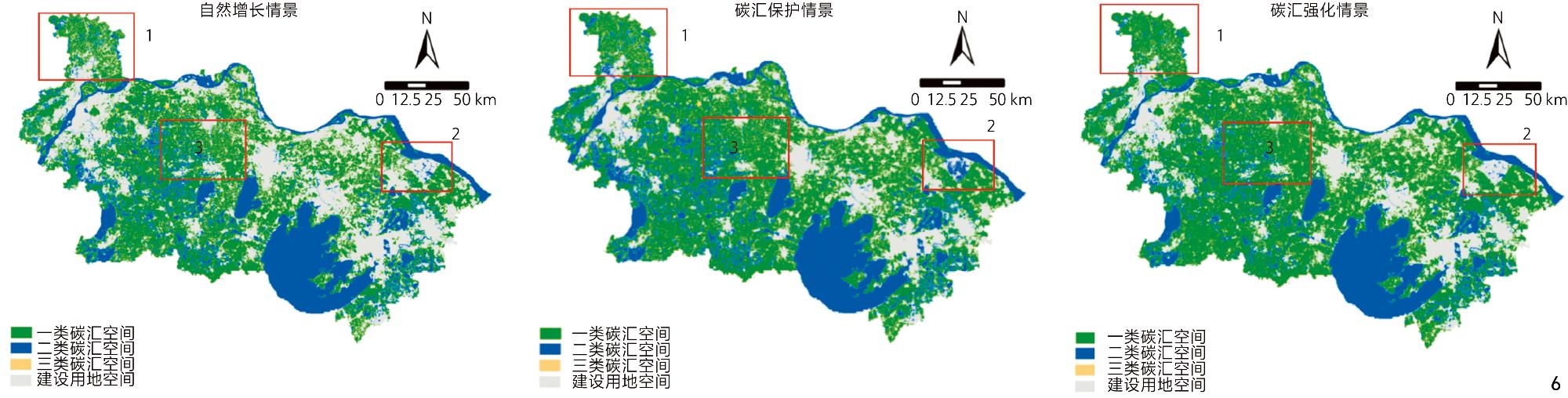
| 自然增长情景 | 2030年 | 12 224.29 | 7 689.30 | 70.50 | 8 136.62 |
| 碳汇保护情景 | 2030年 | 12 751.54 | 7 938.28 | 70.66 | 7 360.24 |
| 碳汇强化情景 | 2030年 | 12 813.64 | 8 039.25 | 63.86 | 7 203.97 |
表4 碳汇空间不同发展情景下邻域因子权重参数Tab. 4 Neighborhood factor weight parameters under different development scenarios of carbon sink space |
| 情景 | 一类碳汇空间 | 二类碳汇空间 | 三类碳汇空间 | 建设用地空间 |
|---|---|---|---|---|
| 自然增长情景 | 0.10 | 0.25 | 0.42 | 0.90 |
| 碳汇保护情景 | 0.87 | 0.90 | 0.58 | 0.10 |
| 碳汇强化情景 | 0.9 | 0.1 | 0.57 | 0.74 |
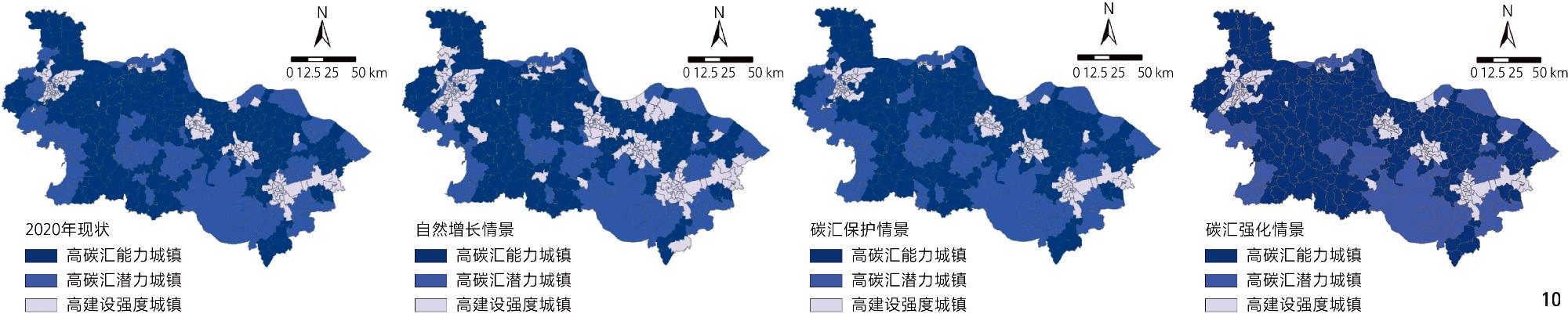
表5 苏南城镇碳汇空间结构特征聚类结果Tab. 5 Cluster results of carbon sink spatial structure characteristics in southern Jiangsu towns |
| 碳汇空间特征 | 碳汇空间类型 | 占总面积的平均百分比/% | 解释 |
|---|---|---|---|
| 高碳汇能力特征 | 一类碳汇空间 | 58.94 | 一类碳汇空间的面积占城镇总面积比例较大,具有较高的碳汇能力 |
| 二类碳汇空间 | 13.60 | ||
| 三类碳汇空间 | 0.50 | ||
| 建设用地空间 | 26.96 | ||
| 高碳汇潜力特征 | 一类碳汇空间 | 33.63 | 二类碳汇空间的面积占城镇总面积比例较大,有较好的生态环境,碳汇潜力较大,同时兼具一定的碳汇功能 |
| 二类碳汇空间 | 45.97 | ||
| 三类碳汇空间 | 0.11 | ||
| 建设用地空间 | 20.29 | ||
| 高建设强度特征 | 一类碳汇空间 | 11.84 | 建设用地空间的面积占城镇总面积比例较大,城镇化水平较高 |
| 二类碳汇空间 | 7.75 | ||
| 三类碳汇空间 | 0.05 | ||
| 建设用地空间 | 80.36 |
表6 2000—2020年碳汇空间转移矩阵Tab. 6 Spatial transfer matrix of carbon sinks from 2000 to 2020 |
| 碳汇空间类型 | 空间转移面积 | 2000年面积总计 | |||
|---|---|---|---|---|---|
| 一类碳汇 | 二类碳汇 | 三类碳汇 | 建设用地 | ||
| 一类碳汇 | 12 290.45 | 633.77 | 41.72 | 3 100.42 | 16 066.36 |
| 二类碳汇 | 232.36 | 7 206.06 | 11.26 | 668.68 | 8 118.35 |
| 三类碳汇 | 1.47 | 0.82 | 9.51 | 1.16 | 12.96 |
| 建设用地 | 203.62 | 62.01 | 11.17 | 3 646.24 | 3 923.04 |
| 2020年面积总计 | 12 727.91 | 7 902.65 | 73.65 | 7 416.51 | 28 120.72 |
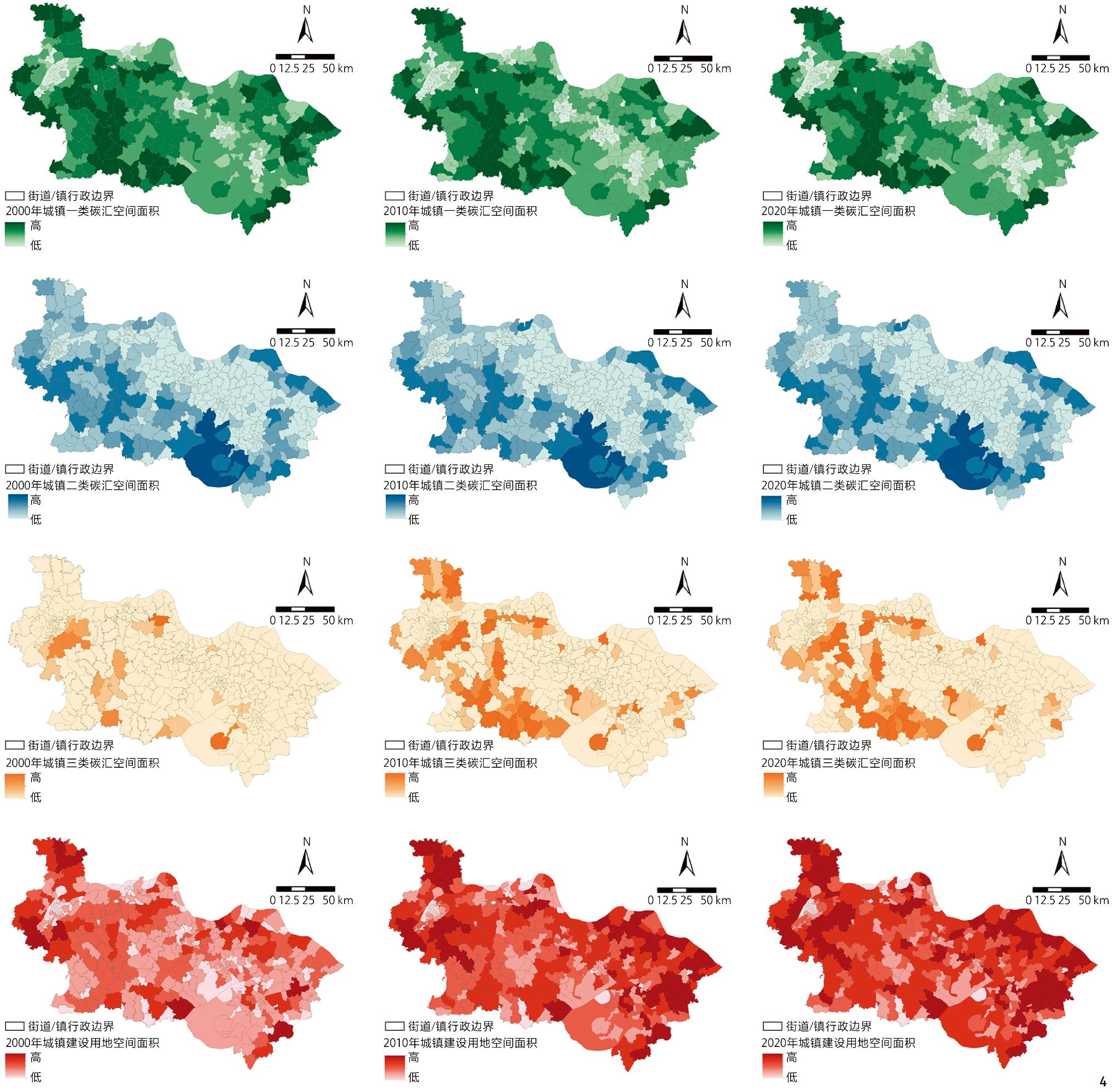
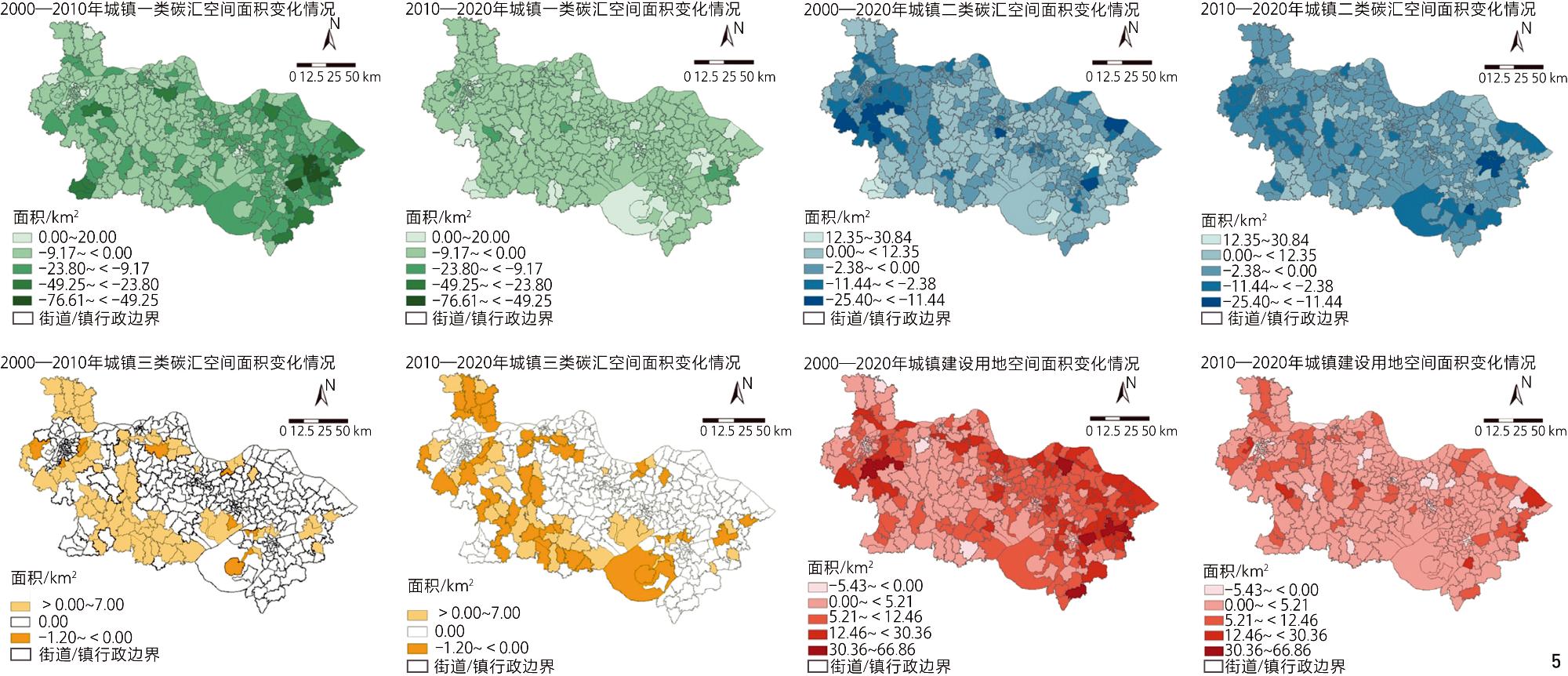
图4 2000年、2010年和2020年苏南城镇各类碳汇空间分布情况Fig. 4 Spatial distribution of various carbon sinks in towns of southern Jiangsu in 2000, 2010, and 2020 |
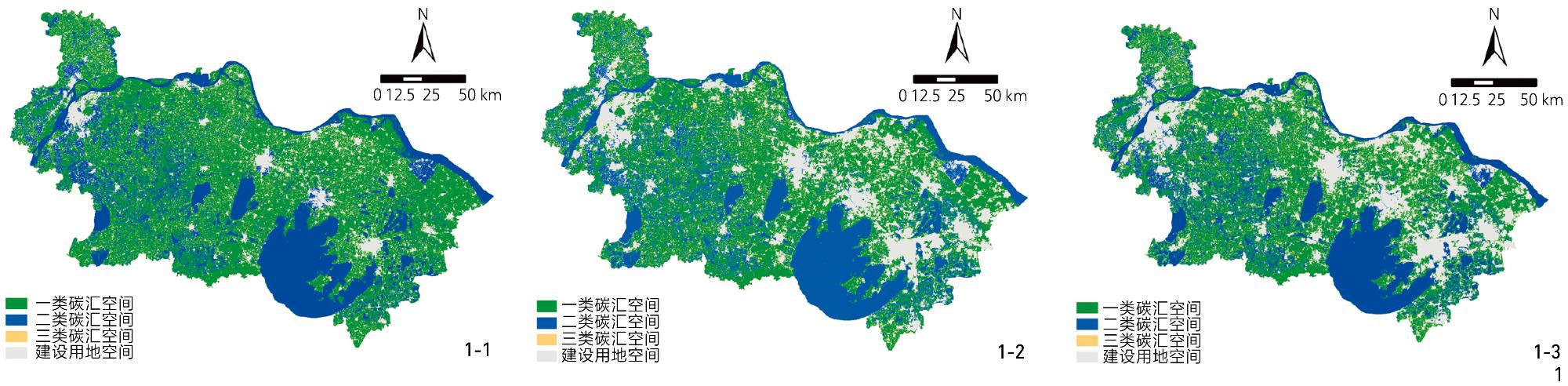
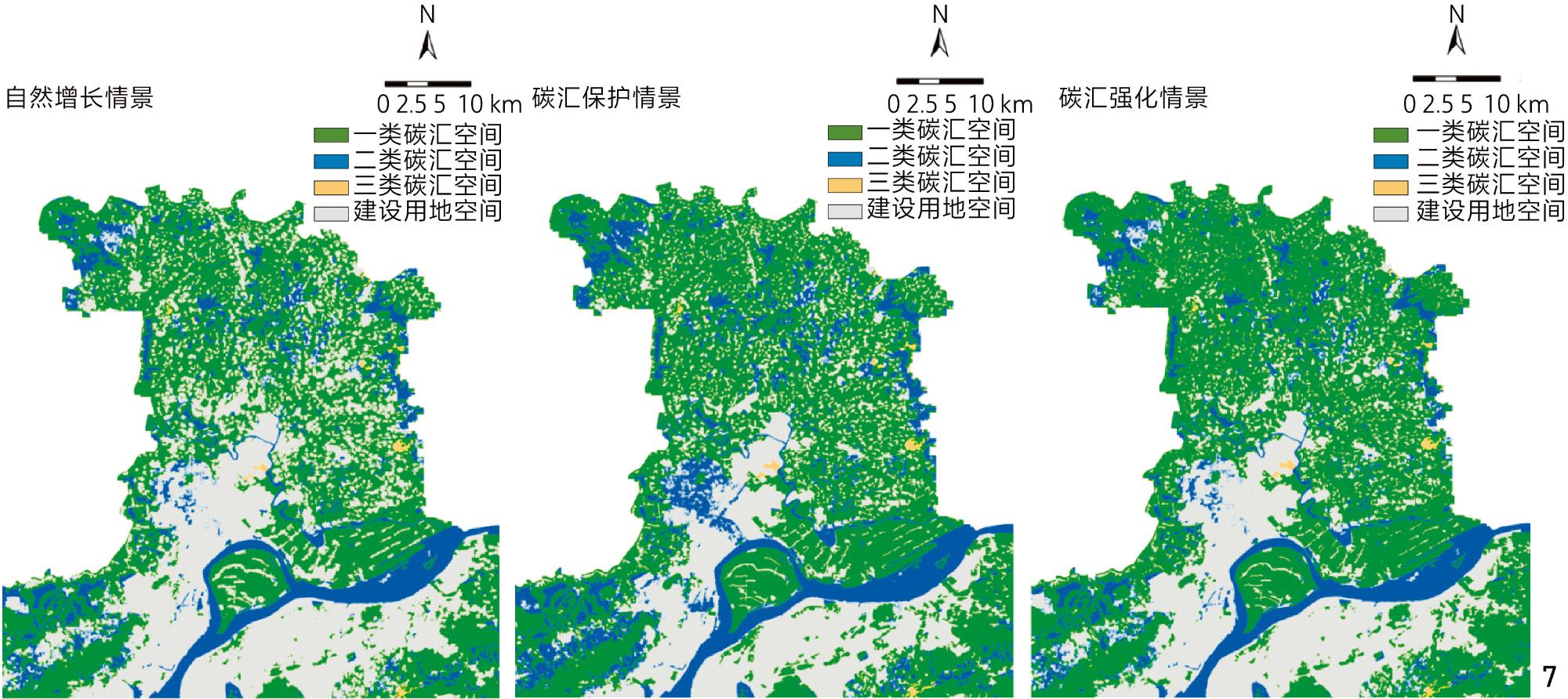
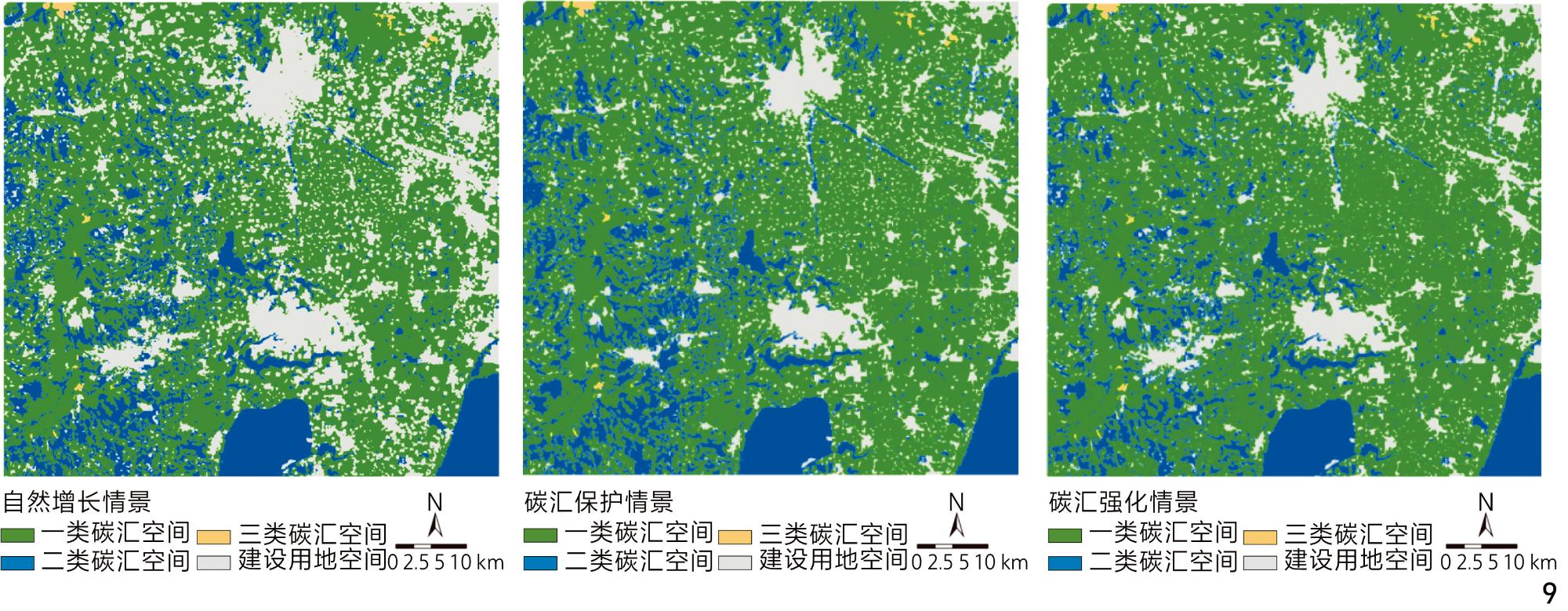
图7 2030年不同发展情景下1号区域碳汇空间模拟图Fig. 7 Spatial simulation map of carbon sink in zone 1 under different development scenarios in 2030 |
表7 苏南地区碳汇空间多情景模拟结果Tab. 7 Multi-scenario simulation results for carbon sink space in southern Jiangsu region |
| 模拟情景 | 年份 | 一类碳汇空间面积 | 二类碳汇空间面积 | 三类碳汇空间面积 | 建设用地空间面积 |
|---|---|---|---|---|---|
| 基准情景 | 2020年 | 12 727.91 | 7 902.65 | 73.65 | 7 416.51 |
| 自然增长情景 | 2030年 | 12 163.85 | 7 787.76 | 71.39 | 8 097.72 |
| 碳汇保护情景 | 2030年 | 12 751.10 | 7 937.93 | 69.16 | 7 362.53 |
| 碳汇强化情景 | 2030年 | 13 228.18 | 7 217.61 | 66.11 | 7 608.82 |
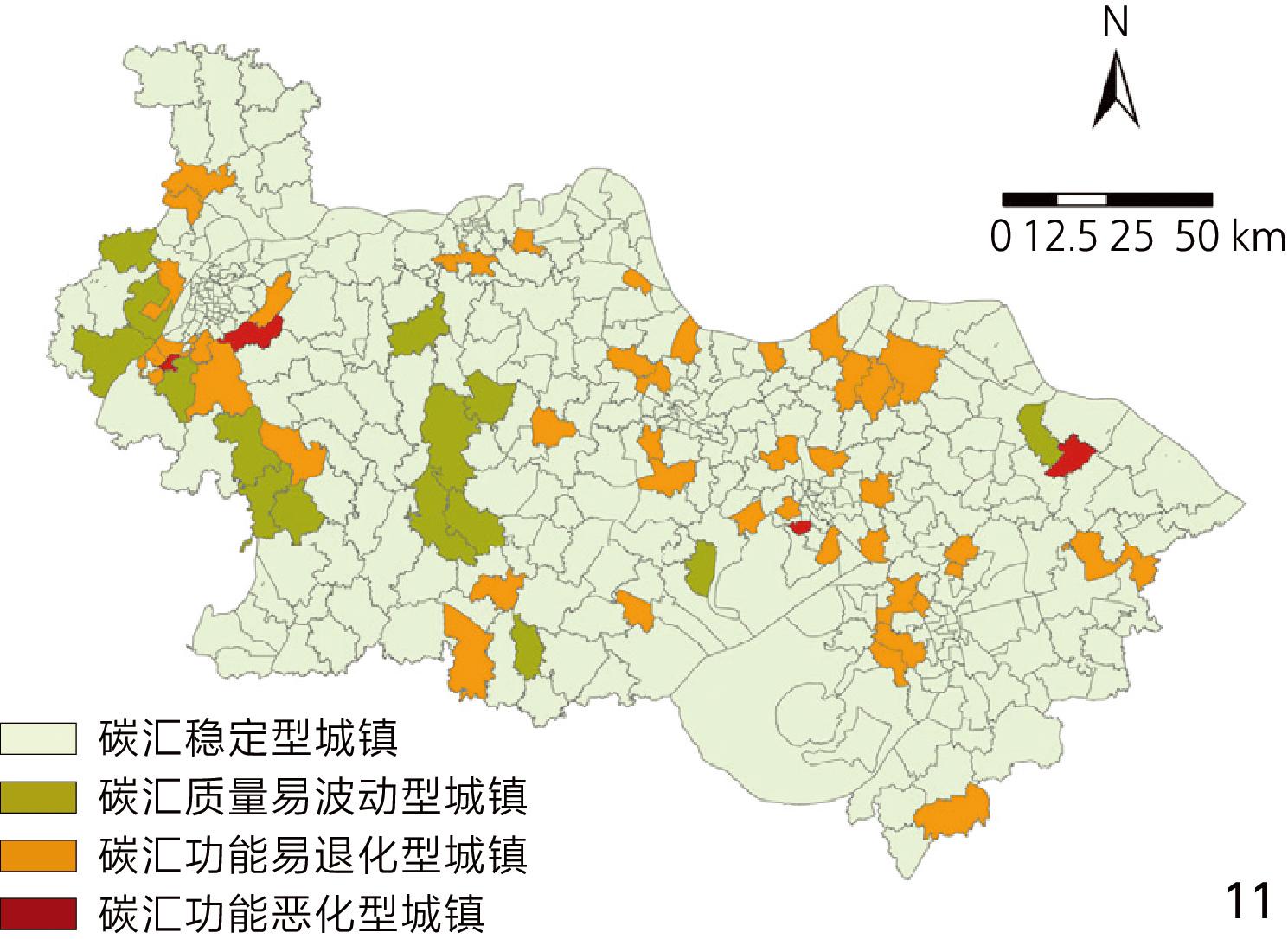
图11 稳定型城镇和3类敏感型城镇空间分布情况Fig. 11 Spatial distribution of stable towns and three types of sensitive towns |
表8 碳汇敏感型城镇及街道Tab. 8 Carbon sink sensitive towns and streets |
| 碳汇敏感类型 | 城镇及街道名称 |
|---|---|
| 碳汇质量易波动型 | 别桥镇、薛埠镇、直溪镇、竹箦镇、梅李镇、西渚镇、周铁镇、白兔镇谷里街道、洪蓝街道、江浦街道、禄口街道、桥林街道、石湫街道、永宁街道 |
| 碳汇功能易退化型 | 罗溪镇、牛塘镇、天目湖镇、薛家镇、城厢镇、浒墅关镇、木渎镇、盛泽镇、渭塘镇、胥口镇、杨舍镇、周市镇、胡埭镇、华士镇、新桥镇、周庄镇(江阴市)、春江街道、东城街道、溧城街道、南夏墅街道、板桥街道、顶山街道、葛塘街道、龙池街道、秣陵街道、麒麟街道、铁心桥街道、西善桥街道、柘塘街道、白洋湾街道、北河泾街道、安镇街道、城东街道、华庄街道、前洲街道、荣巷街道、硕放街道、夏港街道、宜城街道(宜兴市)、长安街道、谏壁街道、界牌镇、宜城街道(丹徒区) |
| 碳汇功能恶化型 | 董浜镇、东山街道、古雄街道、蠡湖街道 |
文中图表均由作者绘制,
1、聚焦快速城镇化地区整体生态系统的碳汇空间,揭示了城镇尺度各类碳汇空间的异质性演变特征。
2、基于“自然延续—保护优先—功能强化”的逻辑思路,运用PLUS模型进行多情景模拟,研判不同城镇碳汇空间的综合响应状态。
3、识别碳汇稳定型和敏感型城镇,提出差异化的城镇碳汇空间管控策略,为快速城镇化地区城镇绿色可持续发展提供借鉴参考。
| [1] |
SOKOLOV Y I. Risks of Global Climate Change[J]. Issues of Risk Analysis, 2021, 18(3): 32-45.
|
| [2] |
屈志光, 杨伯元, 胡李丹, 等. 长江经济带土地利用模拟与扩绿增长协同发展[J]. 中国环境科学, 2025, 45(1): 465-476.
QU Z G, YANG B Y, HU L D, et al. Simulation of Land Use and Synergistic Development Between Promoting Green Expansion and Economic Growth in the Yangtze River Economic Belt[J]. China Environmental Science, 2025, 45(1): 465-476.
|
| [3] |
田 云, 王骁睿, 尹忞昊, 等. 中国农业净碳汇再测算: 现状特征、时空格局及其影响因素[J]. 中国农业科学, 2024, 57(22): 4507-4521.
TIAN Y, WANG X R, YIN M H, et al. Re-evaluation of China’s Agricultural Net Carbon Sink: Current Situation, Spatial-Temporal Pattern and Influencing Factors[J]. Scientia Agricultura Sinica, 2024, 57(22): 4507-4521.
|
| [4] |
张雄, 吴昱佳, 谭秋芳. 区域土地用途转换碳效应及碳汇补偿机制研究: 以湖北省为例[J]. 国土资源科技管理, 2025, 42(1): 64-75.
ZHANG X, WU Y J, TAN Q F. On Carbon Effect of Regional Land Use Conversion and Carbon Sink Compensation Mechanism: A Case Study of Hubei Province[J]. Scientific and Technological Management of Land and Resources, 2025, 42(1): 64-75.
|
| [5] |
陈明, 李若雯. 县域绿色空间景观格局对碳汇的影响: 以长三角为例[J]. 中国园林, 2024, 40(8): 111-117.
CHEN M, LI R W. The Impact of Green Space Landscape Pattern on Carbon Sequestration at the County-Level: A Case Study of the Yangtze River Delta[J]. Chinese Landscape Architecture, 2024, 40(8): 111-117.
|
| [6] |
刘宜浩, 赵健赟, 蒋玉祥, 等.黄河流域(青海段)碳汇时空格局及影响机制[J/OL].环境科学, 2025: 1-16.(2025-06-17)[2025-09-01]. https://link.cnki.net/doi/10.13227/j.hjkx.202504043.
LIU Y H, ZHAO J Y, JIANG Y X, et al. Spatial-Temporal Pattern of Carbon Sinks in the Yellow River Basin (Qinghai Section) and Its Influencing Mechanism[J/OL]. Environmental Science, 2025: 1-16. (2025-06-17)[2025-09-01]. https://link.cnki.net/doi/10.13227/j.hjkx.202504043.
|
| [7] |
石铁矛, 王迪, 汤煜, 等. 城市生态系统碳汇固碳能力计算方法与影响因素研究进展[J]. 应用生态学报, 2023, 34(2): 555-565.
SHI T M, WANG D, TANG Y, et al. Research Progress on Calculation Method and Impact Factors of Carbon Sequestration Capacity in Urban Ecosystems[J]. Chinese Journal of Applied Ecology, 2023, 34(2): 555-565.
|
| [8] |
武振国, 潘越明, 史主生, 等. 内蒙古自治区森林碳汇核算与生态产品价值实现路径[J]. 水土保持通报, 2025, 45(5): 155-166.
WU Z G, PAN Y M, SHI Z S, et al. Accounting for Forest Carbon Sequestration and Pathways to Ecological Product Value Realization in Inner Mongolia Autonomous Region[J]. Bulletin of Soil and Water Conservation, 2025, 45(5): 155-166.
|
| [9] |
LYU X, LI X B, WANG K, et al. Strengthening Grassland Carbon Source and Sink Management to Enhance Its Contribution to Regional Carbon Neutrality[J]. Ecological Indicators, 2023, 152: 110341.
|
| [10] |
王莉, 刘莹莹, 张亚慧, 等. 河南省农田生态系统碳源/汇时空分布及影响因素分解[J]. 环境科学学报, 2022, 42(12): 410-422.
WANG L, LIU Y Y, ZHANG Y H, et al. Spatial and Temporal Distribution of Carbon Source/Sink and Decomposition of Influencing Factors in Farmland Ecosystem in Henan Province[J]. Acta Scientiae Circumstantiae, 2022, 42(12): 410-422.
|
| [11] |
王振坤, 董心悦, 邵明, 等. 国内外城乡绿色空间碳汇研究进展与展望[J]. 风景园林, 2023, 30(2): 115-122.
WANG Z K, DONG X Y, SHAO M, et al. Progress and Prospects of Research on Carbon Sink in Urban and Rural Green Spaces at Home and Abroad[J]. Landscape Architecture, 2023, 30(2): 115-122.
|
| [12] |
李建豹, 陈红梅, 张彩莉, 等. 长三角地区碳源碳汇时空演化特征及碳平衡分区[J]. 环境科学, 2024, 45(7): 4090-4100.
LI J B, CHEN H M, ZHANG C L, et al. Spatiotemporal Evolution Characteristics of Carbon Sources and Carbon Sinks and Carbon Balance Zoning in the Yangtze River Delta Region[J]. Environmental Science, 2024, 45(7): 4090-4100.
|
| [13] |
赵胤程, 覃盟琳, 庞雅月, 等. 基于FLUS-InVEST模型的北部湾城市群生态空间碳汇演变模拟及驱动因素研究[J]. 水土保持通报, 2022, 42(3): 345-355.
ZHAO Y C, QIN M L, PANG Y Y, et al. Evolution Simulation and Driving Factors of Eco-Spatial Carbon Sinks in Beibu Gulf Urban Agglomeration Based on FLUS-InVEST Model[J]. Bulletin of Soil and Water Conservation, 2022, 42(3): 345-355.
|
| [14] |
ZHAO M M, HE Z B, DU J, et al. Assessing the Effects of Ecological Engineering on Carbon Storage by Linking the CA-Markov and InVEST Models[J]. Ecological Indicators, 2019, 98: 29-38.
|
| [15] |
田多松, 傅碧天, 吕永鹏, 等. 基于SD和CLUE-S模型的区域土地利用变化对土壤有机碳储量影响研究[J]. 长江流域资源与环境, 2016, 25(4): 613-620.
TIAN D S, FU B T, LV Y P, et al. Effect of Regional Land-Use Change on Soil Organic Carbon Storage Based on SD and CLUE-S Model[J]. Resources and Environment in the Yangtze Basin, 2016, 25(4): 613-620.
|
| [16] |
LIANG X, GUAN Q F, CLARKE K C, et al. Understanding the Drivers of Sustainable Land Expansion Using a Patch-Generating Land Use Simulation (PLUS) Model: A Case Study in Wuhan, China[J]. Computers, Environment and Urban Systems, 2021, 85: 101569.
|
| [17] |
刘杰, 张浪, 余浩然. 社会-生态效益权衡下上海市中心城区绿地生态网络多情景模拟[J]. 中国园林, 2025, 41(5): 100-107.
LIU J, ZHANG L, YU H R. Multi-scenario Simulation of Green Space Ecological Network in Downtown Shanghai Under Social-Ecological Benefit Trade-Offs[J]. Chinese Landscape Architecture, 2025, 41(5): 100-107.
|
| [18] |
王春晓, 邓孟婷, 汪雪飞, 等. 基于PLUS-InVEST模型的碳储量时空演变与预测模拟[J]. 中国园林, 2024, 40(6): 70-76.
WANG C X, DENG M T, WANG X F, et al. Spatial-Temporal Evolution and Prediction Simulation of Carbon Storage Based on PLUS-InVEST Model[J]. Chinese Landscape Architecture, 2024, 40(6): 70-76.
|
| [19] |
胡丰, 张艳, 郭宇, 等. 基于PLUS和InVEST模型的渭河流域土地利用与生境质量时空变化及预测[J]. 干旱区地理, 2022, 45(4): 1125-1136.
HU F, ZHANG Y, GUO Y, et al. Spatial and Temporal Changes in Land Use and Habitat Quality in the Weihe River Basin Based on the PLUS and InVEST Models and Predictions[J]. Arid Land Geography, 2022, 45(4): 1125-1136.
|
| [20] |
范凌云. 社会空间视角下苏南乡村城镇化历程与特征分析: 以苏州市为例[J]. 城市规划学刊, 2015(4): 27-35.
FAN L Y. Analysis of Process and Characteristics of Sunan Rural Urbanization from the Perspective of Social Space: A Case Study of Suzhou[J]. Urban Planning Forum, 2015(4): 27-35.
|
| [21] |
江苏省人民政府. 省政府关于印发江苏省国土空间规划(2021—2035年)的通知[EB/OL]. (2023-08-16)[2025-08-10]. https://zrzy.jiangsu.gov.cn/gtxxgk/nrglIndex.action?type=2&messageID=2c9082548b6e0094018b6fda45ab00b9.
Jiangsu Provincial People's Government. Notice of the Provincial Government on Issuing the Jiangsu Provincial Territorial Spatial Plan (2021−2035)[EB/OL]. (2023-08-16)[2025-08-10]. https://zrzy.jiangsu.gov.cn/gtxxgk/nrglIndex.action?type=2&messageID=2c9082548b6e0094018b6fda45ab00b9.
|
| [22] |
吴隽宇, 张一蕾, 江伟康. 粤港澳大湾区生态系统碳储量时空演变[J]. 风景园林, 2020, 27(10): 57-63.
WU J Y, ZHANG Y L, JIANG W K. Spatio-temporal Evolution of Ecosystem Carbon Storage in Guangdong-Hong Kong-Macao Greater Bay Area[J]. Landscape Architecture, 2020, 27(10): 57-63.
|
| [23] |
朱梓铭.北部湾城市群碳汇空间安全格局设计与生态修复研究[D].南宁: 广西大学, 2022.
ZHU Z M. Research on the Security Pattern Design and Ecological Restoration of Carbon Sinks Space in Beibu Gulf Urban Cluster[D]. Nanning: Guangxi University, 2022.
|
| [24] |
方精云, 郭兆迪, 朴世龙, 等. 1981—2000年中国陆地植被碳汇的估算[J]. 中国科学(D辑: 地球科学), 2007, 37(6): 804-812.
FANG J Y, GUO Z D, PIAO S L, et al. Estimation of Carbon Sinks of Terrestrial Vegetation in China from 1981 to 2000[J]. Science in China (Series D: Earth Sciences), 2007, 37(6): 804-812.
|
| [25] |
方精云, 杨元合, 马文红, 等. 中国草地生态系统碳库及其变化[J]. 中国科学(生命科学), 2010, 40(7): 566-576.
FANG J Y, YANG Y H, MA W H, et al. Carbon Pool and Its Change in Grassland Ecosystem of China[J]. Scientia Sinica (Vitae), 2010, 40(7): 566-576.
|
| [26] |
叶延琼, 章家恩, 陈丽丽, 等. 广东省1996—2012年农业用地碳汇效应及时空变化特征[J]. 水土保持学报, 2014, 28(5): 139-146.
YE Y Q, ZHANG J E, CHEN L L, et al. Carbon Sequestration by Agricultural Land and Its Spatio-temporal Characteristics in Guangdong Province from 1996 to 2012[J]. Journal of Soil and Water Conservation, 2014, 28(5): 139-146.
|
| [27] |
方精云, 黄耀, 朱江玲, 等. 森林生态系统碳收支及其影响机制[J]. 中国基础科学, 2015, 17(3): 20-25.
FANG J Y, HUANG Y, ZHU J L, et al. Carbon Budget of Forest Ecosystems and Its Driving Forces[J]. China Basic Science, 2015, 17(3): 20-25.
|
| [28] |
白永飞, 陈世苹. 中国草地生态系统固碳现状、速率和潜力研究[J]. 植物生态学报, 2018, 42(3): 261-264.
BAI Y F, CHEN S P. Carbon Sequestration of Chinese Grassland Ecosystems: Stock, Rate and Potential[J]. Chinese Journal of Plant Ecology, 2018, 42(3): 261-264.
|
| [29] |
孔东升, 张灏. 张掖黑河湿地自然保护区生态服务功能价值评估[J]. 生态学报, 2015, 35(4): 972-983.
KONG D S, ZHANG H. Economic Value of Wetland Ecosystem Services in the Heihe National Nature Reserve of Zhangye[J]. Acta Ecologica Sinica, 2015, 35(4): 972-983.
|
| [30] |
张莉, 郭志华, 李志勇. 红树林湿地碳储量及碳汇研究进展[J]. 应用生态学报, 2013, 24(4): 1153-1159.
ZHANG L, GUO Z H, LI Z Y. Carbon Storage and Carbon Sink of Mangrove Wetland: Research Progress[J]. Chinese Journal of Applied Ecology, 2013, 24(4): 1153-1159.
|
| [31] |
沈欣, 欧阳志云, 段晓男, 等. 白洋淀湿地生态系统水分条件遥感监测方法[J]. 生态学报, 2008, 28(10): 5033-5038.
SHEN X, OUYANG Z Y, DUAN X N, et al. Inferring Baiyangdian Wetland Soil Moisture from Remote Sensing: Method Research[J]. Acta Ecologica Sinica, 2008, 28(10): 5033-5038.
|
| [32] |
段晓男, 王效科, 逯非, 等. 中国湿地生态系统固碳现状和潜力[J]. 生态学报, 2008, 28(2): 463-469.
DUAN X N, WANG X K, LU F, et al. Carbon Sequestration and Its Potential by Wetland Ecosystems in China[J]. Acta Ecologica Sinica, 2008, 28(2): 463-469.
|
| [33] |
赖力, 黄贤金, 刘伟良, 等. 基于投入产出技术的区域生态足迹调整分析: 以2002年江苏省经济为例[J]. 生态学报, 2006, 26(4): 1285-1292.
LAI L, HUANG X J, LIU W L, et al. Adjustment for Regional Ecological Footprint Based on Input-Output Technique: A Case Study of Jiangsu Province in 2002[J]. Acta Ecologica Sinica, 2006, 26(4): 1285-1292.
|
| [34] |
蔡亚楠, 鞠正山, 黄勤, 等. 土壤有机碳汇内涵与核算方法辨析[J]. 生态学报, 2024, 44(2): 602-611.
CAI Y N, JU Z S, HUANG Q, et al. Analysis on the Contents and Methods of Soil Organic Carbon Dink[J]. Acta Ecologica Sinica, 2024, 44(2): 602-611.
|
| [35] |
袁磊, 尹正琳.基于贡献分离法的植被碳汇能力影响因素定量评估: 以三江源区为例[J/OL].环境科学, 2025: 1-23.(2025-09-16)[2025-11-03]. https://link.cnki.net/doi/10.13227/j.hjkx.202505053.
YUAN L, YIN Z L. Quantification and Assessment the Impacts of Vegetation Carbon Sink Capacity Based on the Contribution Separation Method: A Case Study in Three-River Headwaters Region,China[J/OL]. Environmental Science, 2025: 1-23. (2025-09-16)[2025-11-03]. https://link.cnki.net/doi/10.13227/j.hjkx.202505053.
|
| [36] |
赵明月, 刘源鑫, 张雪艳. 农田生态系统碳汇研究进展[J]. 生态学报, 2022, 42(23): 9405-9416.
ZHAO M Y, LIU Y X, ZHANG X Y. A Review of Research Advances on Carbon Sinks in Farmland Ecosystems[J]. Acta Ecologica Sinica, 2022, 42(23): 9405-9416.
|
| [37] |
丁岳, 王柳柱, 桂峰, 等. 基于InVEST模型和PLUS模型的环杭州湾生态系统碳储量[J]. 环境科学, 2023, 44(6): 3343-3352.
DING Y, WANG L Z, GUI F, et al. Ecosystem Carbon Storage in Hangzhou Bay Area Based on InVEST and PLUS Models[J]. Environmental Science, 2023, 44(6): 3343-3352.
|
| [38] |
刘杰, 胡国华, 张浪. 上海市中心城区绿地生态网络演化多情景模拟及景观连接度评价[J]. 风景园林, 2024, 31(11): 70-78.
LIU J, HU G H, ZHANG L. Multi-Scenario Simulation and Landscape Connectivity Evaluation of the Evolution of Green Space Ecological Network in Central Urban Area of Shanghai[J]. Landscape Architecture, 2024, 31(11): 70-78.
|
| [39] |
田一豆, 赵先超. 基于Markov-PLUS模型的长株潭城市群建设用地扩张模拟及碳排放响应分析[J]. 生态学报, 2024, 44(1): 129-142.
TIAN Y D, ZHAO X C. Simulation of Construction Land Expansion and Carbon Emission Response Analysis of Changsha-Zhuzhou-Xiangtan Urban Agglomeration Based on Markov-PLUS Model[J]. Acta Ecologica Sinica, 2024, 44(1): 129-142.
|
| [40] |
伍丹, 朱康文, 张晟, 等. 基于PLUS模型和InVEST模型的成渝经济区碳储量演化分析[J]. 三峡生态环境监测, 2022(2): 85-96.
WU D, ZHU K W, ZHANG S, et al. Evolution Analysis of Carbon Stock in Chengdu-Chongqing Economic Zone Based on PLUS Model and InVEST Model[J]. Ecology and Environmental Monitoring of Three Gorges, 2022(2): 85-96.
|
| [41] |
江苏省人民政府关于印发江苏省生态空间管控区域规划的通知[J].江苏省人民政府公报, 2020(2): 5-26.
Notice of the People’s Government of Jiangsu Province on Issuing the Plan for Ecological Spatial Control Areas in Jiangsu Province[J]. Gazette of the People’s Government of Jiangsu Province, 2020(2): 5-26.
|
| [42] |
金一诺, 黄银洲, 尤凤, 等. 基于Markov-PLUS模型的石羊河流域土地利用及生态系统服务价值模拟[J]. 干旱区资源与环境, 2024, 38(5): 130-139.
JIN Y N, HUANG Y Z, YOU F, et al. Simulation of Land Use and Ecosystem Service Value in Shiyang River Basin Based on Markov-PLUS Model[J]. Journal of Arid Land Resources and Environment, 2024, 38(5): 130-139.
|
| [43] |
王保盛, 廖江福, 祝薇, 等. 基于历史情景的FLUS模型邻域权重设置: 以闽三角城市群2030年土地利用模拟为例[J]. 生态学报, 2019, 39(12): 4284-4298.
WANG B S, LIAO J F, ZHU W, et al. The Weight of Neighborhood Setting of the FLUS Model Based on a Historical Scenario: A Case Study of Land Use Simulation of Urban Agglomeration of the Golden Triangle of Southern Fujian in 2030[J]. Acta Ecologica Sinica, 2019, 39(12): 4284-4298.
|
| [44] |
张文彤, 董伟.SPSS统计分析高级教程[M].3版.北京: 高等教育出版社, 2018.
ZHANG W T, DONG W. Advanced Course of SPSS Statistical Analysis[M]. 3rd ed. Beijing: Higher Education Press, 2018.
|
| [45] |
罗鸿, 杨存建. 2005—2015年四川省土地利用变化及驱动力分析[J]. 生态科学, 2021, 40(1): 86-94.
LUO H, YANG C J. Analysis of Land-Use Change and Its Driving Forces in Sichuan Province from 2005 to 2015[J]. Ecological Science, 2021, 40(1): 86-94.
|
/
| 〈 |
|
〉 |