

多源大数据驱动的生态系统文化服务研究进展
|
路露/女/华南理工大学建筑学院在读硕士研究生/研究方向为生态系统服务价值评估 |
|
吴隽宇/女/博士/华南理工大学建筑学院教授/亚热带建筑与城市科学国家重点实验室固定成员/广州市景观建筑重点实验室成员/研究方向为生态系统服务价值评估、风景园林遗产保护 |
|
代色平/女/博士/广州市林业和园林科学研究院院长/研究方向为珍贵树种良种选育与应用 |
|
熊咏梅/女/硕士/广州市林业和园林科学研究院正高级工程师/研究方向为珍贵树种良种选育与应用 |
Copy editor: 刘颖
收稿日期: 2025-02-20
修回日期: 2025-12-12
网络出版日期: 2026-03-12
基金资助
广州市科技局社会发展项目“珍贵树种良种选育与应用示范共同攻关研究服务项目”(202206010058)
广东省自然科学基金项目“基于生态系统服务权衡与协同的城市群土地利用格局多目标决策研究——以粤港澳大湾区为例”(2023A1515011451)
广东省自然科学基金项目“基于绿色基础设施雨洪调节服务供需测度的城市洲岛景观格局优化——以广州为例”(2023A1515011482)
版权
Research Progress on Cultural Ecosystem Service Driven by Multi-source Big Data
|
LU Lu is a master student in the School of Architecture, South China University of Technology. Her research focuses on ecosystem service evaluation |
|
WU Juanyu, Ph.D., is a professor in the Department of Landscape Architecture, School of Architecture, South China University of Technology, a member of the State Key Laboratory of Subtropical Building and Urban Science. Her research focuses on ecosystem service evaluation and landscape architecture heritage conservation |
|
DAI Seping, Ph.D., is president of the Guangzhou Institute of Forestry and Landscape Sciences. Her research focuses on selection and application of high-quality varieties of rare tree species |
|
XIONG Yongmei, Master, is a professorate senior engineer of Guangzhou Institute of Forestry and Landscape Sciences. Her research focuses on selection and application of high-quality varieties of rare tree species |
Received date: 2025-02-20
Revised date: 2025-12-12
Online published: 2026-03-12
Copyright
本研究旨在系统解析多源大数据驱动的生态系统文化服务(cultural ecosystem service,CES)评估创新,明晰研究进展与未来方向。
以“生态系统文化服务”和“价值评估”为关键词,检索Web of Science与CNKI数据库2000—2024年的文献。从大数据类型、CES价值类型、评估对象与评估方法4个维度梳理研究成果,对当前研究机遇、挑战及未来趋势进行系统性评述,并系统性总结基于多源大数据的CES评估工作流。
1)CES评估范式呈现从传统经济核算向智能评估转型的趋势。统计表明,约70%的研究通过多源数据的应用实现了范式革新,主要体现在CES价值类型维度拓展、评估对象类型细化、评估方法应用创新3个方面。2)大数据应用突破了传统信息获取瓶颈,形成政府公开数据(生态环境数据、人口经济数据等)与用户生成数据(社交媒体数据、地图与兴趣点数据、位置服务数据等)融合的多元化格局,显著提升了CES价值解析的精度、时空覆盖度及场景适用性。3)机器学习、深度学习等人工智能技术与大数据分析手段成为新兴的CES评估方法,能进行海量数据处理与深度信息挖掘,有效提升了评估效率与准确性。
多源大数据的应用使得CES评估从传统经济核算转向智能感知分析,为CES研究提供了新依据。未来需推动评估框架的标准化,以提升研究结果的科学性和解释力。
关键词: 风景园林; 生态系统服务; 生态系统文化服务评估; 多源大数据; 社交媒体数据
路露 , 吴隽宇 , 代色平 , 熊咏梅 . 多源大数据驱动的生态系统文化服务研究进展[J]. 风景园林, 2026 , 33(1) : 100 -108 . DOI: 10.3724/j.fjyl.LA20250101
Cultural ecosystem service (CES) refer to the intangible benefits that humans obtain from ecosystems, such as spiritual satisfaction, cognitive development, and aesthetic experiences. The assessment of their value is of great significance for revealing the mechanisms of ecosystem benefits and enhancing human well-being. This research aims to systematically analyze the progress of CES assessment driven by multi-source big data, explore cutting-edge trends, and identify future directions.
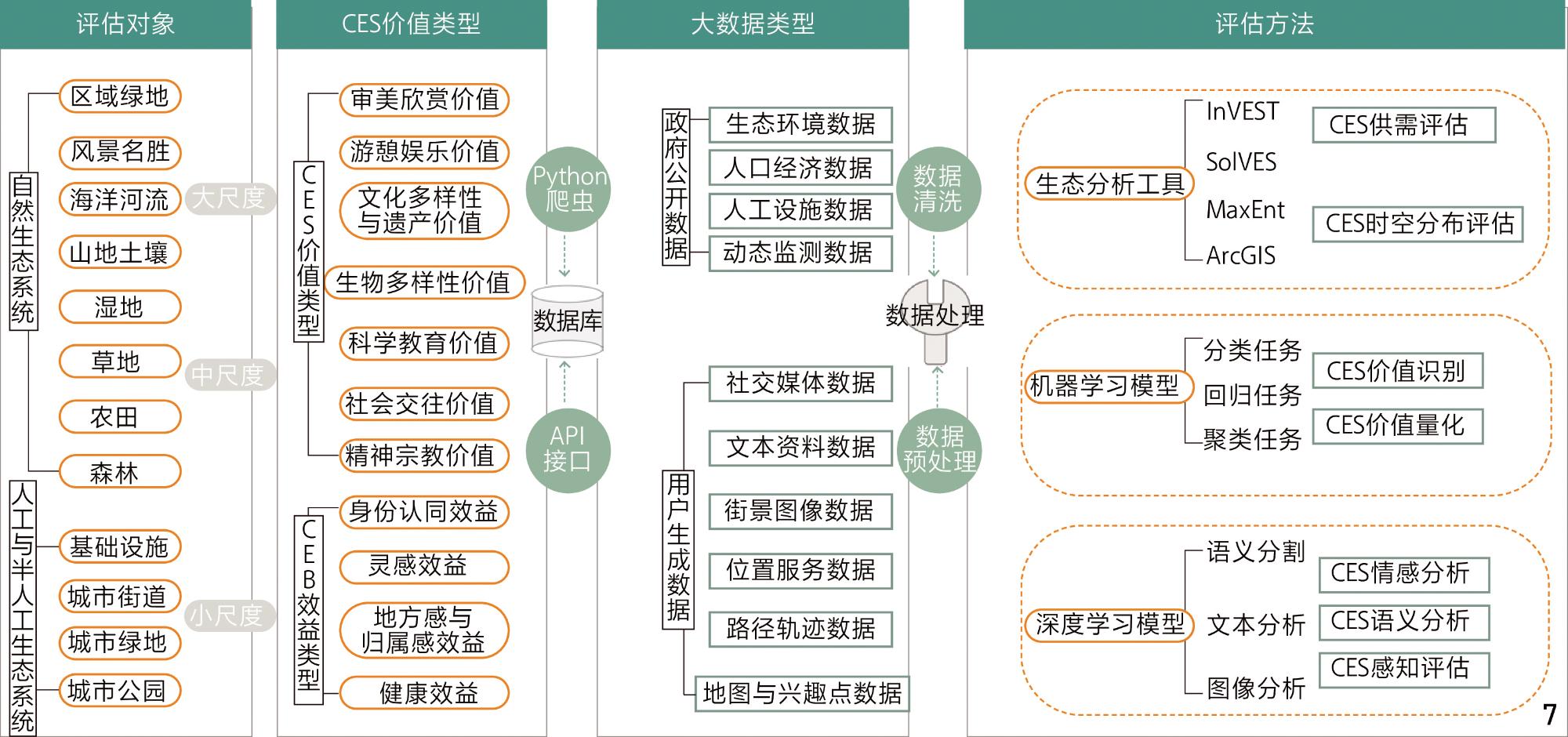
The search query for the Web of Science core database was TS = (“ecosystem*” AND “cultural service*”) AND (TS = valuation OR TS = evaluate OR TS = evaluation OR TS = assessment OR TS = quantification). The search query for the China National Knowledge Infrastructure (CNKI) database was SU%= “value assessment” and SU%= “evaluation” and SU% = “quantitative research” and SU% = “ecosystem cultural services”. We conducted separate searches for foreign-language and Chinese-language literature, manually screened the literature that applied multi-source big data for CES assessment, and ultimately obtained 273 foreign-language articles and 246 Chinese-language articles from 2000 to 2024. The study organized research findings across four dimensions: big data types, CES value types, assessment objects, and assessment methods. It also discussed current research opportunities, challenges, and future trends. Based on the literature review results, this study systematically constructed a CES assessment framework based on multi-source big data, with a core workflow comprising “assessment object−CES value type−big data type−assessment method” and four core modules.
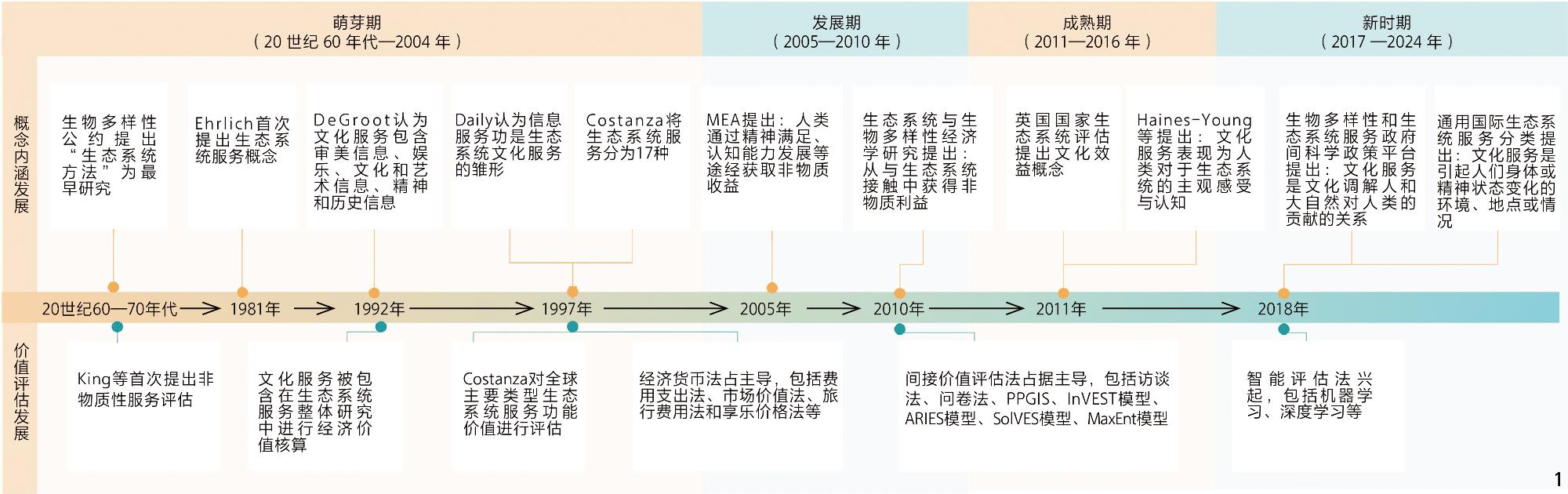
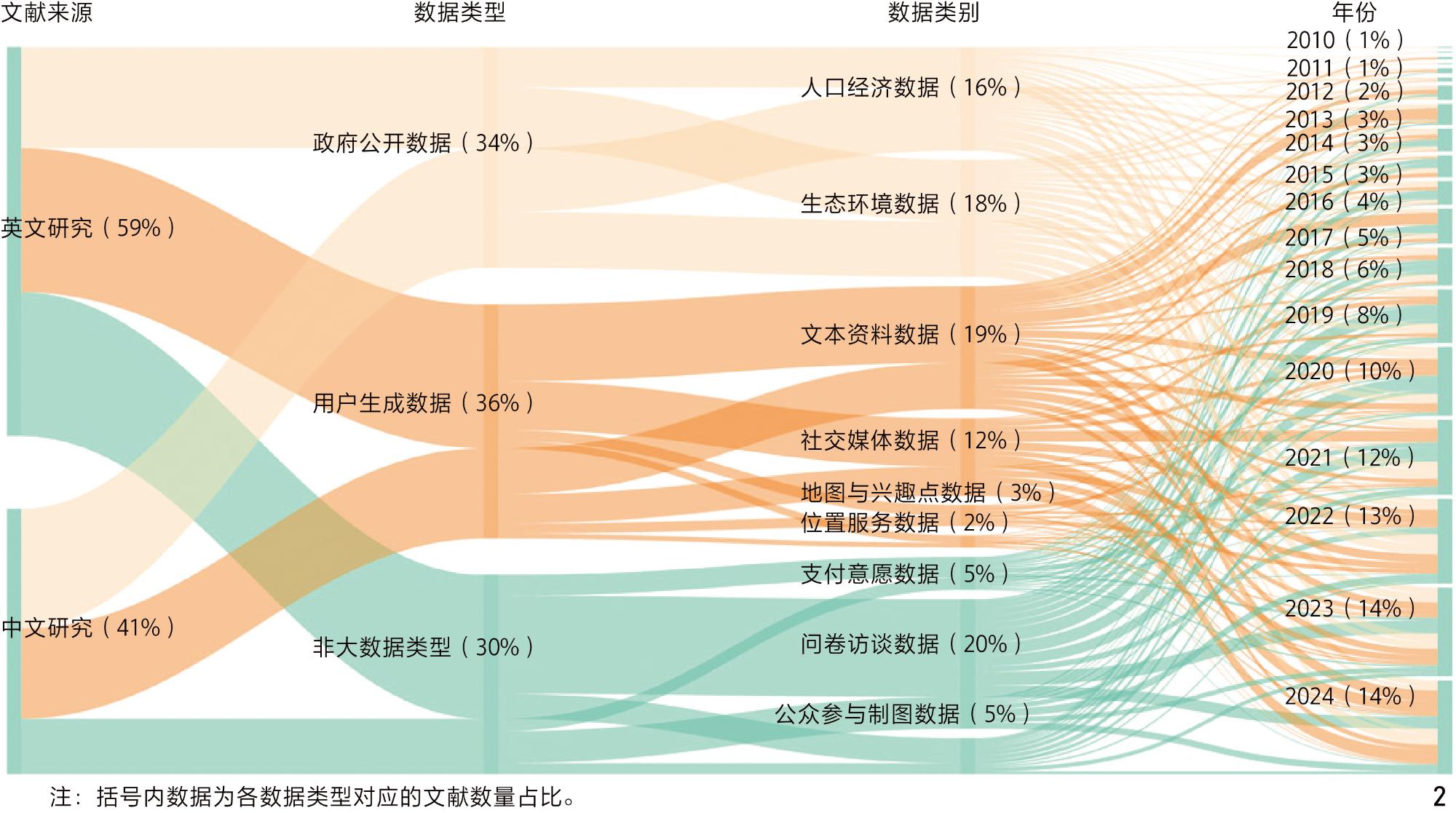
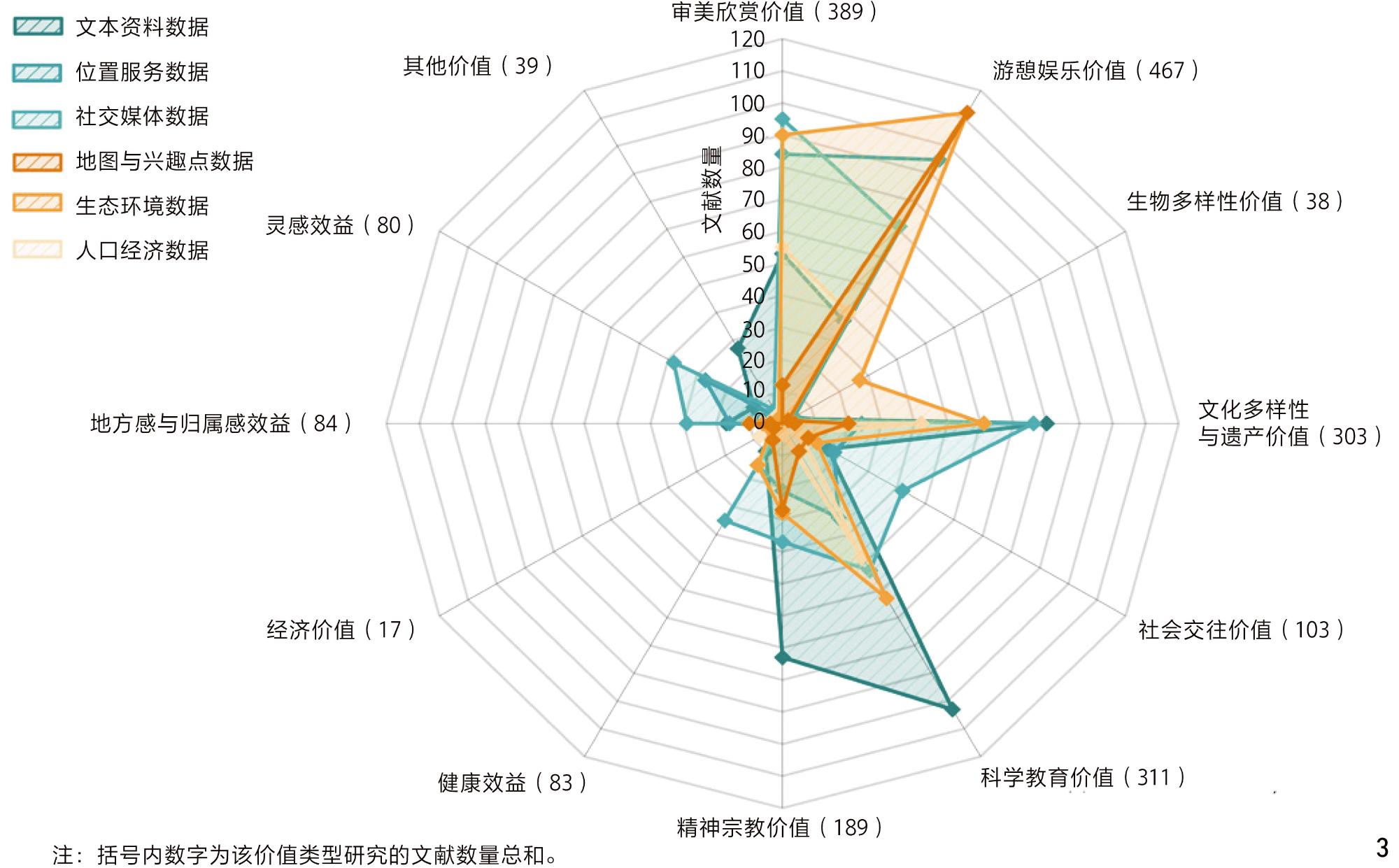
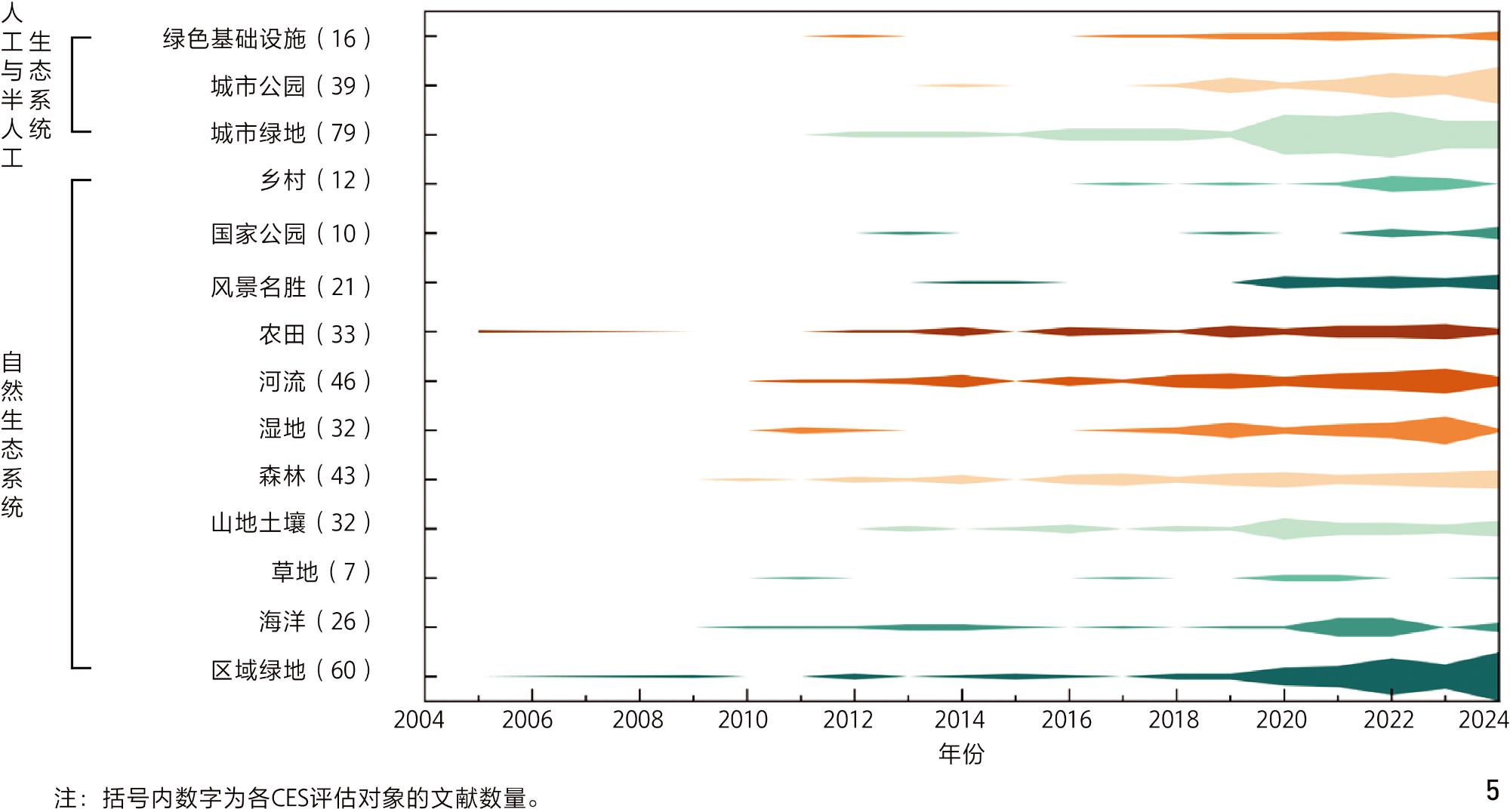
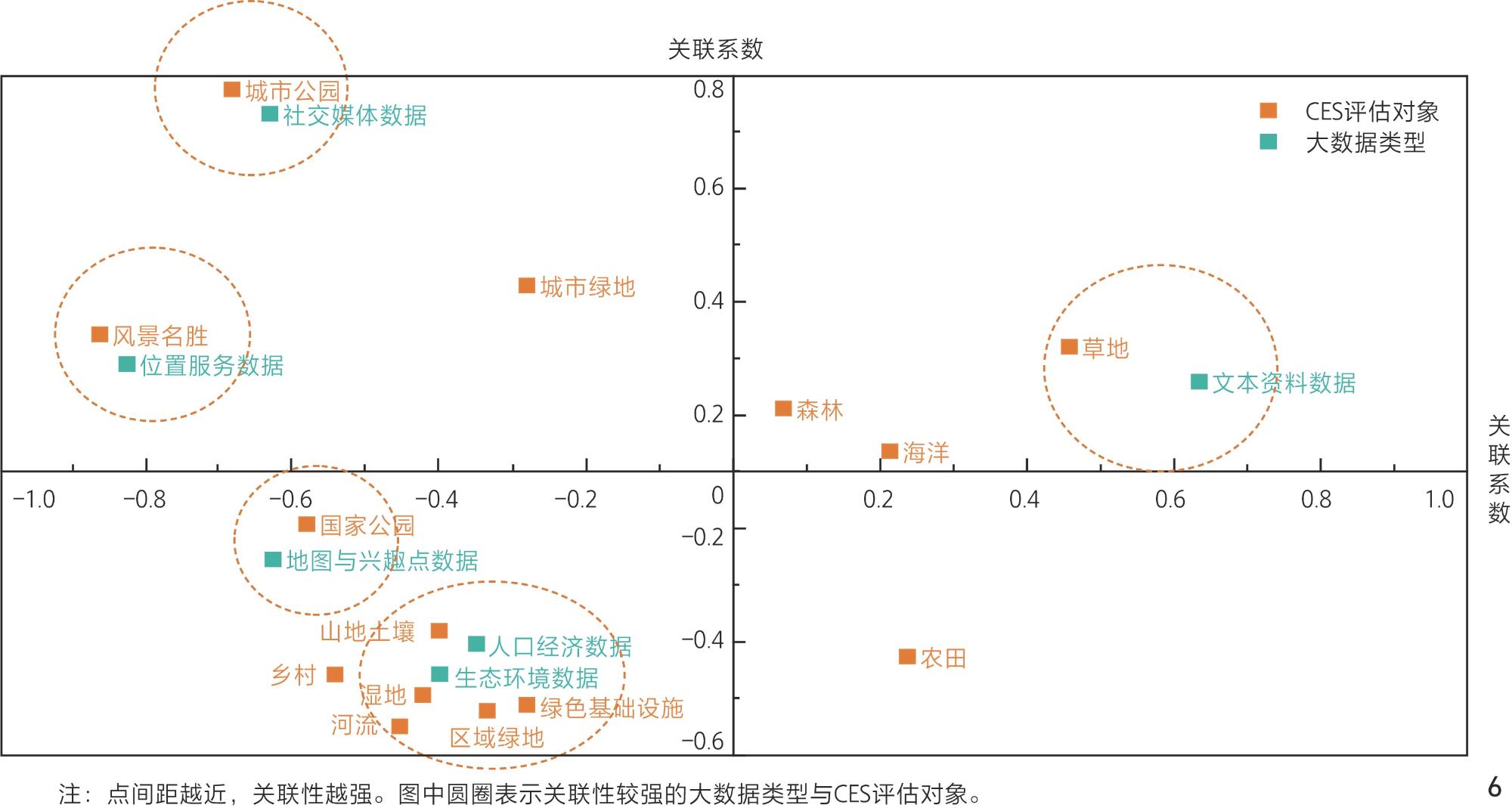
1) The CES assessment paradigm is shifting from traditional economic accounting to intelligent assessment. Statistics show that approximately 70% of CES assessment studies have achieved paradigm innovations through the application of multi-source big data, primarily manifested in four aspects: expansion of CES value types, refinement of assessment objects, and innovation in assessment methods. 2) With the widespread application of big data, the data foundation for CES assessment has broken through traditional limitations, forming a diversified landscape combining government-published data (such as ecological environment data, population and economic data, etc.) with user-generated data (such as social media data, point of interest (POI) data, location-based communication data, etc.). Research progress in CES assessment system has shown a progressive trend: from early reliance on government-disclosed data, to the expansion of user-generated data, and then to multi-modal data. This trend has significantly improved the accuracy, spatio-temporal coverage, and scenario applicability of assessment research. A deeper change lies in the fact that the diversification of data sources is driving a shift in the CES assessment paradigm from “supply-driven” to “supply-demand coordination”. 3) As the application and adaptability of multi-source big data have improved, the development of assessment objects has shown a trend toward focusing and refining the scope of research, shifting from early regional-scale natural ecosystems (farmland, forests, marine ecosystems) to urban built environments, with a focus on densely populated urban ecosystems (urban green spaces, urban parks, green infrastructure). From 2020 to 2024, urban environments closely related to daily life, such as urban communities, streets, and rooftop gardens, have become hotspots in CES research. 4) In the early stages of research, CES assessment primarily relied on monetary economic methods and manual evaluation methods. With the growing demand for big data analysis, ecological analysis models have been widely applied, and artificial intelligence technologies such as machine learning and deep learning have emerged as the latest assessment methods. When addressing the massive demand for data analysis, emerging machine learning and deep learning models facilitate the processing of large datasets and the extraction of in-depth information, significantly enhancing the efficiency and accuracy of CES assessment research. Among these, CES assessment methods based on natural language processing (NLP) and computer vision (CV) recognition technologies are particularly representative and have become a hot research focus both domestically and internationally in recent years. Specifically, classic deep learning models such as ResNet, EfficientNet, YOLO, and BERT, as well as emerging large language models like GPT and Gemini, are among the most frequently used assessment tools. 5) This study established a CES assessment framework based on big data, forming an expandable and transferable standardized assessment workflow through a cascading mechanism of “assessment object−CES value type−big data type−assessment method”, providing an innovative paradigm for ecosystem service research of different scales, scopes, and types.
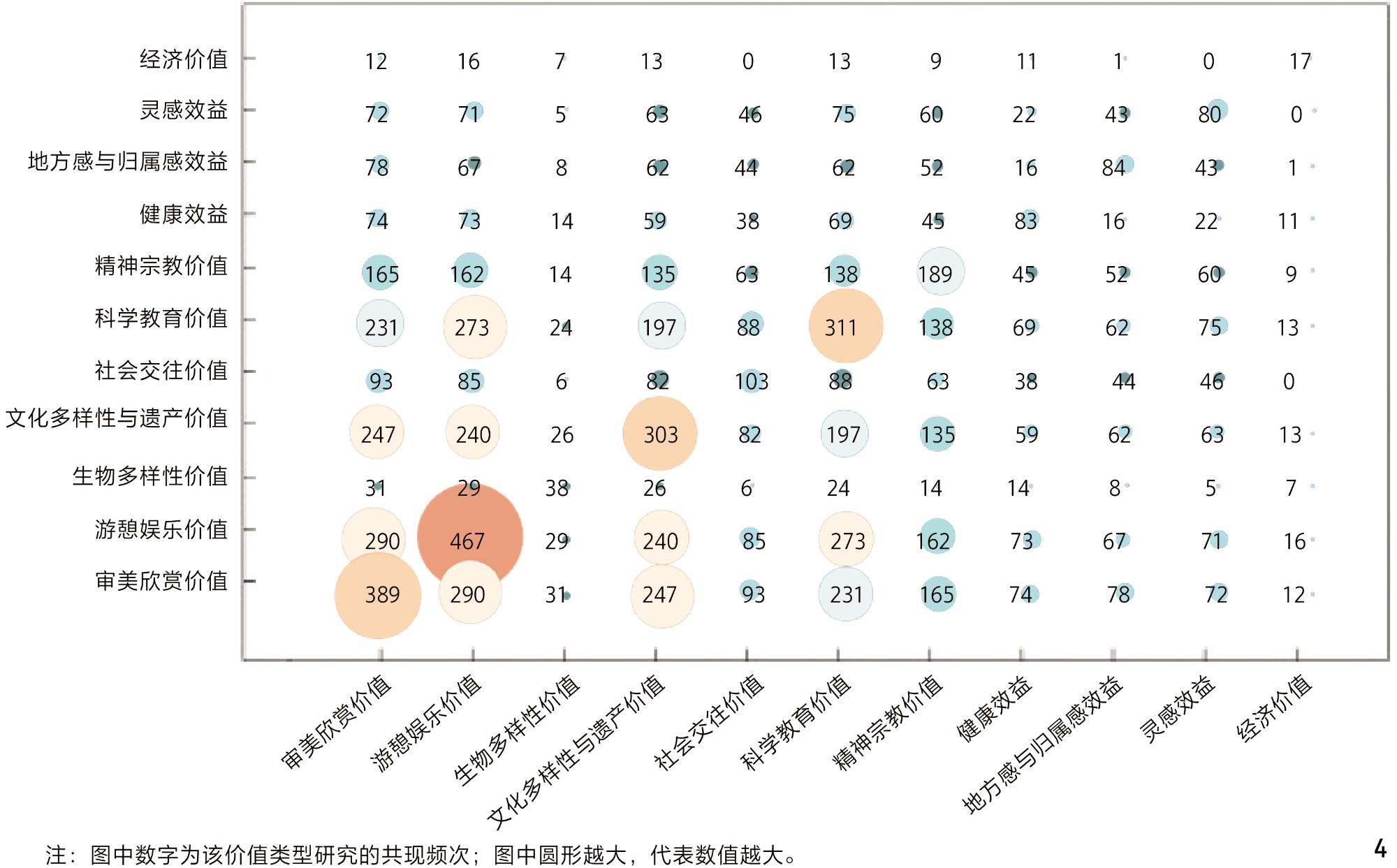
In summary, early CES research focused on economic value calculation and environmental quality assessment. With the increasing demand for high-quality human settlements, the research focus has gradually shifted to the socio-cultural dimension, emphasizing cultural benefits such as health benefits, identity recognition, and spiritual value, driving CES research into a new phase of human well-being and perception assessment. Future research should strengthen the application of multi-source big data integration and interdisciplinary methods, with a focus on constructing standardized CES assessment frameworks to enhance their theoretical explanatory power.
表1 大数据类型及研究趋势Tab. 1 Big data types and research trends |
| 类型 | 类别 | 文献数量 | 具体内容 | 研究趋势 |
|---|---|---|---|---|
| 政府公开数据 | 生态环境数据 | 150 | 自然资源信息、人文资源信息 | ① |
| 人口经济数据 | 119 | 人口统计信息、经济产业信息 | ② | |
| 用户生成数据 | 位置服务数据 | 15 | 出行轨迹信息、手机信令信息、移动位置信息、景点访问信息 | ③ |
| 地图与兴趣点数据 | 23 | 交通出行信息、兴趣点信息 | ④ | |
| 社交媒体数据 | 81 | 图像照片信息、评论文本信息、打分签到信息 | ⑤ | |
| 文本资料数据 | 131 | 网络文章信息、游记文本信息 | ⑥ | |
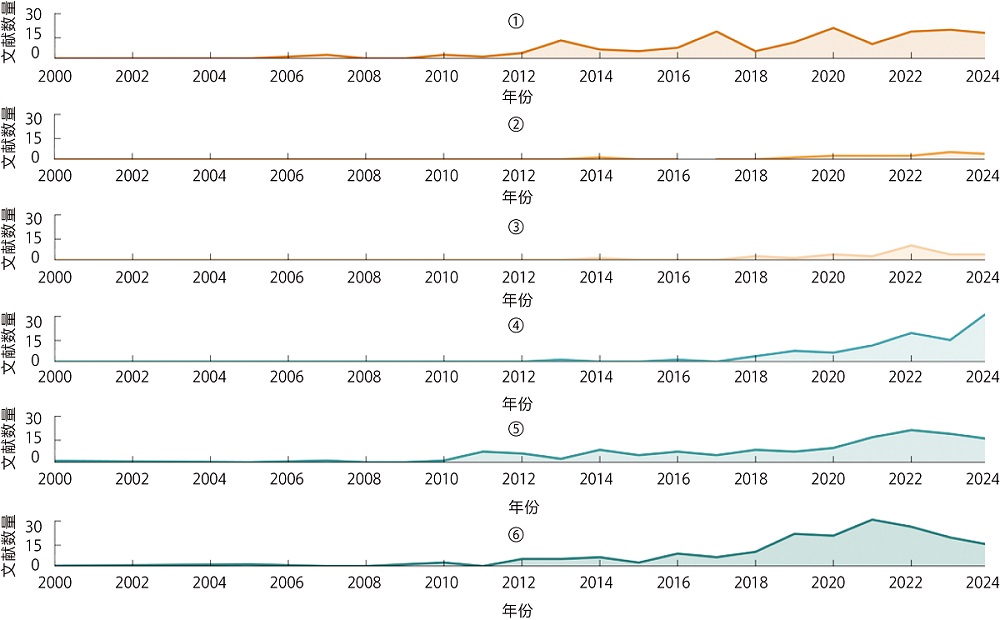 | ||||
表2 CES评估方法总结Tab. 2 Summary of CES evaluation methods |
| 类型 | 方法 | 描述 | 优劣势 |
|---|---|---|---|
| 经济货币法 | 旅行成本法、条件行为法、选择实验法、众包旅行成本法 | 将CES价值通过货币形式进行量化 | 1)优势:便于衡量游憩娱乐等物质性价值类型、便于快速计算总体价值; 2)局限:难以衡量文化多样性与遗产等非物质价值类型 |
| 受访者意见法 | 访谈法、焦点小组法、问卷法、PPGIS、Q方法、专家经验法 | 基于数据的概率分布, 通过专家知识和受访者经验进行CES评估 | 1)优势:解释性强、能获得精细化评估结果; 2)局限:仅限小规模数据分析、准确性易受研究者主观偏见影响 |
| 生态分析工具 | InVEST、SolVES、MaxEnt模型,ArcGIS、Fragstats软件 | 1)结合生态环境、人口经济数据进行价值指数计算并进行CES空间分布制图,模拟CES时空格局动态演变; 2)运用ArcGIS的核密度、线密度、最邻近距离等空间分析工具,识别CES冷热点区 | 1)优势:可视化程度高、能批量分析海量数据; 2)局限:解释力低、评估结果高度依赖输入模型的参数 |
| 机器学习模型 | 随机森林、支持向量机、主成分分析、隐含狄利克雷分布模型 | 通过构建样本数据的数学模型完成分类和回归任务 | 1)优势:可解释性强、计算成本低、处理数据高效; 2)局限:处理复杂数据能力有限 |
| 深度学习模型 | 1)CV算法:ResNet、EfficientNet、YOLO、Vision Transformer; 2)NLP算法:Transformer、BERT、LSTM、GPT、Gemini、DeepSeek大语言模型 | 1)进行图像识别、分类与语义分割任务,量化审美欣赏与游憩娱乐等CES价值,支撑CES评估中的实体要素解析; 2)通过文本语义挖掘与情感分析任务,揭示精神与宗教等非物质性CES价值,支撑CES评估中的隐性惠益量化 | 1)优势:高效处理海量数据、自动化处理与分析数据、具备CES价值动态预测能力; 2)局限:黑箱模型风险、数据与算力需求高 |
| 云计算平台 | Cloud vision服务、Clarifai平台、百度大语言模型、腾讯大语言模型 | 通过云计算平台内嵌的大模型对CES价值进行自动化评估 | 1)优势:操作难度低、模型可靠性高; 2)局限:计算成本高 |
文中图表均由作者绘制。
1、梳理了基于多源大数据的CES评估进展,从大数据类型、CES价值类型、评估对象与评估方法4个维度进行系统性评述,明晰了CES未来研究路径与创新方向。
2、总结了基于机器学习、深度学习等人工智能技术的新型评估方法,解析该评估方法应用于CES研究领域的技术进展与应用效能。
3、构建了基于多源大数据的CES评估框架,包含评估对象、CES价值类型、大数据类型与评估方法4个级联模块,提供可扩展、可迁移的标准化工作流。
| [1] |
DAILY G C. Nature’s Services: Societal Dependence on Natural Ecosystems[EB/OL]. [2024-10-14]. https://www.degruyter.com/document/doi/10.12987/9780300188479-039/html.
|
| [2] |
REID W V. Millennium Ecosystem Assessment: Ecosystems and Human Well-Being[M]. Washington, D.C.: Island Press, 2005.
|
| [3] |
FELD C K, MARTINS da SILVA P, SOUSA J P, et al. Indicators of Biodiversity and Ecosystem Services: A Synthesis Across Ecosystems and Spatial Scales[J]. Oikos, 2009, 118(12): 1862-1871.
|
| [4] |
张立伟, 傅伯杰. 生态系统服务制图研究进展[J]. 生态学报, 2014, 34(2): 316-325.
ZHANG L W, FU B J. The Progress in Ecosystem Services Mapping: A Review[J]. Acta Ecologica Sinica, 2014, 34(2): 316-325.
|
| [5] |
申佳可, 李烨, 王云才. 基于生态感知的景观生态格局构建新思路与实施框架[J]. 中国园林, 2024, 40(12): 63-69.
SHEN J K, LI Y, WANG Y C. A New Approach and Implementation Framework for Constructing Landscape Ecological Patterns Based on Ecological Perception[J]. Chinese Landscape Architecture, 2024, 40(12): 63-69.
|
| [6] |
CHAN K, SATTERFIELD T, GOLDSTEIN J. Rethinking Ecosystem Services to Better Address and Navigate Cultural Values[J]. Ecological Economics, 2012, 74: 8-18.
|
| [7] |
HAINES-YOUNG R, POTSCHIN M B. Common International Classification of Ecosystem Services (CICES): Consultation on Version 4, August-December 2012[EB/OL]. [2024-10-14]. https://www.semanticscholar.org/paper/Common-International-Classification-of-Ecosystem-on-Haines-Young-Potschin/111a98a9bd80c278d9858c0a5df3d1325a800f99.
|
| [8] |
UK National Ecosystem Assessment Follow-On: Synthesis of Key Findings[EB/OL]. [2024-10-14]. https://uwe-repository.worktribe.com/output/816416/uk-national-ecosystem-assessment-follow-on-synthesis-of-key-findings.
|
| [9] |
FISH R, CHURCH A, WILLIS C, et al. Making Space for Cultural Ecosystem Services: Insights from a Study of the UK Nature Improvement Initiative[J]. Ecosystem Services, 2016, 21: 329-343.
|
| [10] |
BRYCE R, IRVINE K N, CHURCH A, et al. Subjective Well-Being Indicators for Large-Scale Assessment of Cultural Ecosystem Services[J]. Ecosystem Services, 2016, 21: 258-269.
|
| [11] |
AJWANG’ ONDIEK R, KITAKA N, OMONDI ODUOR S. Assessment of Provisioning and Cultural Ecosystem Services in Natural Wetlands and Rice Fields in Kano Floodplain, Kenya[J]. Ecosystem Services, 2016, 21: 166-173.
|
| [12] |
DEPIETRI Y, GHERMANDI A, CAMPISI-PINTO S, et al. Public Participation GIS Versus Geolocated Social Media Data to Assess Urban Cultural Ecosystem Services: Instances of Complementarity[J]. Ecosystem Services, 2021, 50: 101277.
|
| [13] |
SMALL N, MUNDAY M, DURANCE I. The Challenge of Valuing Ecosystem Services that Have no Material Benefits[J]. Global Environmental Change, 2017, 44: 57-67.
|
| [14] |
NIST Big Data Interoperability Framework: Volume 1, Definitions, Version 2[EB/OL]. [2024-10-14]. https://nvlpubs.nist.gov/nistpubs/SpecialPublications/NIST.SP.1500-1r1.pdf.
|
| [15] |
OTEROS-ROZAS E, MARTÍN-LÓPEZ B, FAGERHOLM N, et al. Using Social Media Photos to Explore the Relation Between Cultural Ecosystem Services and Landscape Features Across Five European Sites[J]. Ecological Indicators, 2018, 94: 74-86.
|
| [16] |
CHENG Y Y, ZHAO B, PENG S Q, et al. Effects of Cultural Landscape Service Features in National Forest Parks on Visitors’ Sentiments: A Nationwide Social Media-Based Analysis in China[J]. Ecosystem Services, 2024, 67: 101614.
|
| [17] |
吴隽宇, 朱榴奕. 生态系统环境-文化服务耦合视角下的珠江河口区生态功能分区[J]. 风景园林, 2023, 30(1): 85-93.
WU J Y, ZHU L Y. Ecological Function Regionalization in Pearl River Estuary Area from the Perspective of the Coupling of Environmental and Cultural Ecosystem Services[J]. Landscape Architecture, 2023, 30(1): 85-93.
|
| [18] |
杨远丽, 李瑞, 杨火木, 等. 山地旅游区生态系统文化服务供需匹配空间格局与影响因素: 以贵州省为例[J]. 生态学报, 2024, 44(17): 7445-7460.
YANG Y L, LI R, YANG H M, et al. Spatial Pattern and Influencing Factors of Matching the Supply and Demand of Cultural Ecosystem Services in Mountainous Tourism Area: A Case Study of Guizhou Province[J]. Acta Ecologica Sinica, 2024, 44(17): 7445-7460.
|
| [19] |
ZHANG J Y, LUO Y, CAO H J, et al. Scrutinizing the Cultural Ecosystem Services of Chinese Classical Gardens: A Novel Deep Learning Approach Based on Online Reviews from a Multisensory Perspective[J]. Applied Geography, 2024, 172: 103404.
|
| [20] |
ZHANG X P, GAN X Y, HUANG Y, et al. The Renewal of Lost Space Under Overpasses in Chengdu City Based on Residents’ Requirements for Cultural Services: The Case of the Longtan Overpass[J]. Land, 2024, 13(10): 1578.
|
| [21] |
MAYER M, WOLTERING M. Assessing and Valuing the Recreational Ecosystem Services of Germany’s National Parks Using Travel Cost Models[J]. Ecosystem Services, 2018, 31: 371-386.
|
| [22] |
KIM J, SON Y. Assessing and Mapping Cultural Ecosystem Services of an Urban Forest Based on Narratives from Blog Posts[J]. Ecological Indicators, 2021, 129: 107983.
|
| [23] |
MORSHED S R, FATTAH M A, HAQUE M N, et al. Future Ecosystem Service Value Modeling with Land Cover Dynamics by Using Machine Learning Based Artificial Neural Network Model for Jashore City, Bangladesh[J]. Physics and Chemistry of the Earth, Parts A/B/C, 2022, 126: 103021.
|
| [24] |
LEE H, SEO B, KOELLNER T, et al. Mapping Cultural Ecosystem Services 2.0: Potential and Shortcomings from Unlabeled Crowd Sourced Images[J]. Ecological Indicators, 2019, 96: 505-515.
|
| [25] |
FISH R, CHURCH A, WINTER M. Conceptualising Cultural Ecosystem Services: A Novel Framework for Research and Critical Engagement[J]. Ecosystem Services, 2016, 21: 208-217.
|
| [26] |
The Economics of Ecosystems and Biodiversity: Mainstreaming the Economics of Nature: A Synthesis of the Approach, Conclusions and Recommendations of TEEB[EB/OL]. [2024-10-14]. https://www.semanticscholar.org/paper/The-Economics-of-Ecosystems-and-Biodiversity%3A-the-a-Teeb/5b9861611313fcf393224cd417c03574b617aa89.
|
| [27] |
HAVINGA I, MARCOS D, BOGAART P, et al. Understanding the Sentiment Associated with Cultural Ecosystem Services Using Images and Text from Social Media[J]. Ecosystem Services, 2024, 65: 101581.
|
| [28] |
LANGEMEYER J, GHERMANDI A, KEELER B, et al. The Future of Crowd-Sourced Cultural Ecosystem Services Assessments[J]. Ecosystem Services, 2023, 60: 101518.
|
| [29] |
李永钧, 张单阳, 王珂, 等. 乡村生态系统文化服务供需关系研究: 以浙江省湖州市为例[J]. 生态学报, 2022, 42(17): 6888-6899.
LI Y J, ZHANG D Y, WANG K, et al. Supply-Demand Relationships of Cultural Ecosystem Services in Rural Areas: A Case Study of Huzhou City, Zhejiang Province[J]. Acta Ecologica Sinica, 2022, 42(17): 6888-6899.
|
| [30] |
GAO W, WANG S Y, CHEN S T, et al. Identifying Cultural Ecosystem Services and Relevant Landscape Elements Provided by Urban Green Space Throughout History from an Information Communication Perspective[J]. Forests, 2023, 14(5): 1045.
|
| [31] |
WANG S Y, CHEN S T, GAO W. Information Services as a Method to Evaluate the Sustainability of Intangible Dimensions of a Historic Urban Landscape: A Case Study in Guangzhou, China[J]. Sustainability, 2023, 15(1): 8.
|
| [32] |
HOSSU C A, IOJĂ I C, ONOSE D A, et al. Ecosystem Services Appreciation of Urban Lakes in Romania. Synergies and Trade-Offs Between Multiple Users[J]. Ecosystem Services, 2019, 37: 100937.
|
| [33] |
KANGAS K, BROWN G, KIVINEN M, et al. Land Use Synergies and Conflicts Identification in the Framework of Compatibility Analyses and Spatial Assessment of Ecological, Socio-cultural and Economic Values[J]. Journal of Environmental Management, 2022, 316: 115174.
|
| [34] |
刘亚群, 吕昌河, 傅伯杰, 等. 中国陆地生态系统分类识别及其近20年的时空变化[J]. 生态学报, 2021, 41(10): 3975-3987.
LIU Y Q, LYU C H, FU B J, et al. Terrestrial Ecosystem Classification and Its Spatiotemporal Changes in China During Last 20 Years[J]. Acta Ecologica Sinica, 2021, 41(10): 3975-3987.
|
| [35] |
戴代新, 陈语娴. 基于情感计算的城市历史公园更新改造文化服务感知评价: 以鲁迅公园更新改造为例[J]. 同济大学学报(社会科学版), 2022, 33(3): 81-90.
DAI D X, CHEN Y X. An Evaluation of the Perception of Cultural Services of Urban Historical Park Renovation Based on Sentiment Computing Method: A Case Study of Luxun Park[J]. Journal of Tongji University (Social Science Edition), 2022, 33(3): 81-90.
|
| [36] |
尚珍宇, 程可欣, 简钰清, 等. 社交媒体文本数据分析方法对比与适用性研究: 以北京市城市公园感知为例[J]. 景观设计学(中英文), 2023, 11(5): 8-29.
SHANG Z Y, CHENG K X, JIAN Y Q, et al. Comparison and Applicability Study of Analysis Methods for Social Media Text Data: Taking Perception of Urban Parks in Beijing as an Example[J]. Landscape Architecture Frontiers, 2023, 11(5): 8-29.
|
| [37] |
HINTON G E, OSINDERO S, TEH Y W. A Fast Learning Algorithm for Deep Belief Nets[J]. Neural Computation, 2006, 18(7): 1527-1554.
|
| [38] |
CARDOSO A S, RENNA F, MORENO-LLORCA R, et al. Classifying the Content of Social Media Images to Support Cultural Ecosystem Service Assessments Using Deep Learning Models[J]. Ecosystem Services, 2022, 54: 101410.
|
/
| 〈 |
|
〉 |