

城市设计中生成式人工智能应用的进展综述
|
洪齐远/女/清华大学建筑学院在读博士研究生/研究方向为邻里和社区质量评价、规划支持技术 |
|
夏俊豪/男/清华大学建筑学院在读硕士研究生/研究方向为未来社区设计及评价 |
|
龙瀛/男/博士/清华大学建筑学院教授/研究方向为城乡规划技术科学,包括应用城市建模、城市大数据分析、数据增强设计和城市人工智能等 |
Copy editor: 王一兰
收稿日期: 2025-06-02
修回日期: 2025-10-17
网络出版日期: 2025-12-26
基金资助
国家自然科学基金面上项目“数字经济时代收缩城市空间重构的智能测度、机理认知与规划设计响应研究”(52578077)
版权
Generative Artificial Intelligence in Urban Design: A Review of Recent Applications
|
HONG Qiyuan is a Ph.D. candidate in the School of Architecture, Tsinghua University. Her research focuses on neighbourhood and community quality evaluation, and planning support technology |
|
XIA Junhao is a master student in the School of Architecture, Tsinghua University. His research focuses on design and evaluation of future communities |
|
LONG Ying, Ph.D., is a professor in the School of Architecture, Tsinghua University. His research focuses on urban and rural planning technology science, including applied urban modeling, urban big data analytics, data-enhanced design, urban artificial intelligence, etc |
Received date: 2025-06-02
Revised date: 2025-10-17
Online published: 2025-12-26
Copyright
【目的】生成式人工智能(generative artificial intelligence, GAI)正深度介入城市设计流程,为复杂任务建构、多角色参与、高效生成提供技术支持。本研究旨在识别GAI在城市设计中的主要应用类型与介入机制,分析其演化趋势与典型特征,并对关键技术挑战与未来研究方向进行梳理。【方法】通过系统检索近10年中英文主流数据库中的代表性研究与案例,纳入125篇与GAI及城市设计交叉相关的文献,构建“GAI技术类型×城市设计任务阶段”的分析框架,将模型划分为图像驱动、语言驱动、结构驱动与反馈优化4类,任务阶段划分为前期分析、方案生成、评估优化与决策、效果表达,并结合设计思维理论,采用技术接受模型(technology acceptance model, TAM)作为描述性分析视角,梳理不同模型在感知有用性/感知易用性上的表现与介入逻辑差异。【结果】研究发现,GAI已广泛嵌入城市设计各阶段任务流程,不同类型模型在多阶段任务中形成了协同耦合机制。图像驱动模型因其直观性与易用性被最早采纳,语言、结构与反馈优化模型在策略建构、规则嵌入与多目标优化中展现出更大潜力,但整体应用仍不均衡。模型组合、跨模态协同与过程迭代呈上升态势,不同模型间感知有用性与易用性的差异影响其应用比例。【结论】当前多数GAI模型仍以过程式组合为主,尚未具备生成式智能的逻辑建构能力,在城市设计中的作用主要体现为任务响应与辅助生成。模型可控性差、可解释性不足与地域数据适应性不强是制约其广泛应用的核心瓶颈。未来研究应聚焦于构建结构化的本土设计数据体系、增强模型的控制透明机制与跨模型协同能力,推动GAI从工具型介入向设计逻辑深度参与者演进。
洪齐远 , 夏俊豪 , 龙瀛 . 城市设计中生成式人工智能应用的进展综述[J]. 风景园林, 2025 , 32(12) : 24 -34 . DOI: 10.3724/j.fjyl.LA20250329
[Objective] As urban design faces increasing demands for contextual responsiveness, iterative optimization, and data-informed reasoning, integrating artificial intelligence into the design process has gained renewed relevance. Among emerging technologies, generative artificial intelligence (GAI) shows strong potential for automating content creation and simulating spatial configurations. This research provides a comprehensive review of recent developments in the application of GAI to urban design. The research identifies representative technical pathways, their respective intervention stages, and the functional mechanisms by which generative models are reshaping the design workflow. This research presents a structured, theory-informed synthesis of how different generative models contribute to tasks such as intention modeling, spatial reasoning, and performance-driven design. Building on design thinking and a descriptive lens informed by the technology acceptance model (TAM), the research examines how model type, data modality, and task characteristics affect GAI’s functional role, usability, and acceptance. Particular attention is given to mapping deployment forms, from isolated tools to coordinated multi-model workflows, and to characterizing cross-cutting challenges of controllability, transparency, and contextual adaptability in urban design settings.
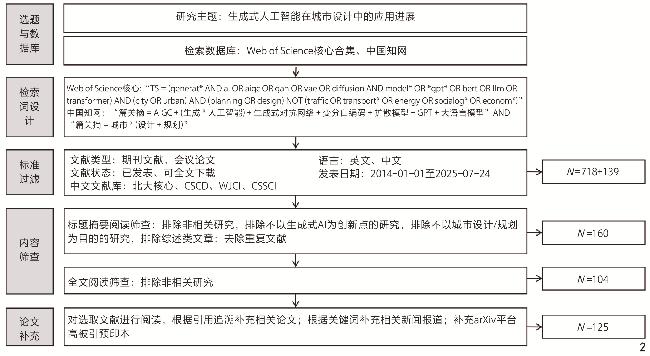
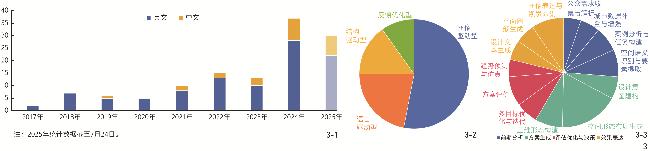
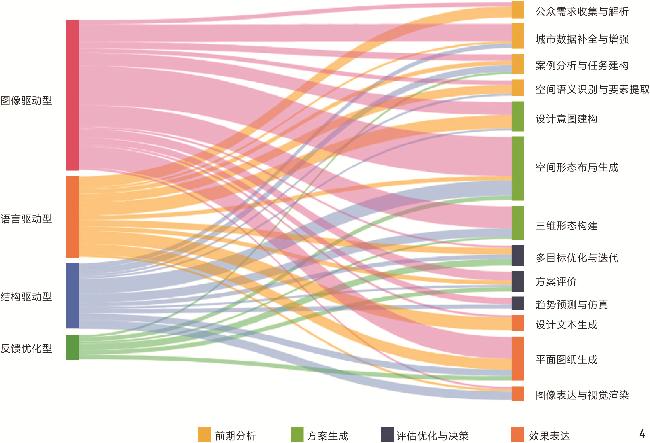
[Methods] Following the PRISMA protocol, the research conducts a multi-stage literature review combining automated search and expert screening. A total of 125 peer-reviewed articles and high-impact preprints are selected from Web of Science, CNKI, arXiv, and selected industry sources, covering the period from 2014 to July 2025. Search terms such as “generative AI”, “AIGC”, “GAN”, “diffusion model”, “variational autoencoder”, “autoregressive model”, “large language model”, and urban-related keywords are used in various combinations. Based on the collected literature, four types of generative models are summarized as image-driven, language-driven, structure-driven, and feedback-optimized models, according to their application characteristics in urban design tasks. These types are aligned with four stages of the design process: preliminary analysis, scheme generation, evaluation and decision-making, and outcome expression. On this basis, a two-dimensional framework to examine how different GAI pathways intervene across tasks is formed. To refine the mapping, each design stage is further broken down into three representative sub-tasks. Preliminary analysis includes public demand analysis, urban data enhancement, case/task framing, and spatial element recognition. Scheme generation covers design intention modeling, spatial layout generation, and 3D form construction. The evaluation and decision-making stage includes multi-objective optimization, scheme evaluation, and scenario prediction. The final expression stage involves textual documentation, 2D representation, and visual rendering. A quantitative analysis is also conducted to show the distribution of model types over design stages, identify common combinations, and trace the evolution of research focus over time. TAM informs a descriptive synthesis of perceived usefulness (PU) and perceived ease of use (PEU) across model types to illuminate adoption patterns.
[Results] The findings reveal that GAI models are increasingly integrated into urban design workflows but exhibit uneven adoption across task types and modalities. Image-driven models dominate in both early-stage analysis and final visual representation due to their high interpretability, usability, and compatibility with existing design practices. Language-driven models are commonly used in public demand analysis, participatory planning, and scenario scripting, enabled by the rise of large language models (LLMs) such as ChatGPT and DeepSeek. Structure-driven models, though less prevalent, show promise in generating street networks, land-parcel layouts, and spatial typologies using graph-based logic. Feedback-optimized models, which rely on reinforcement learning, evolutionary algorithms, and performance simulation are the least adopted, but demonstrate strong potential in multi-objective optimization and iterative decision-making. Recent research indicates an increasing use of multi-model workflows, such as text-to-image pipelines integrated with urban simulation or feedback loops. While GAI applications increasingly support design iteration, their adoption is heavily influenced by the controllability, explainability, and contextual adaptability of models. PU and PEU vary significantly by model type, with image-driven models rated highest and structure-driven and feedback-optimized models facing usability challenges due to complexity and low transparency.
[Conclusion] Although GAI has demonstrated broad applicability across the urban design process, current implementations are largely procedural and auxiliary in nature. Most models recombine existing inputs rather than construct original logic, and few possess autonomous reasoning or normative awareness. This limits their role to content augmentation rather than conceptual guidance in design development. Moreover, issues such as opaque decision logic, lack of domain-specific knowledge embedding, and poor adaptability to local planning norms hinder practical adoption. Addressing these challenges requires multi-level efforts: 1) Construct structured, regionally grounded urban design datasets; 2) improve model interpretability, controllability, and responsiveness to professional input; and 3) develop modular, multi-model systems that support seamless interaction across design stages. Human – AI collaboration mechanisms — especially those based on iterative prompts and semantic feedback-must be enhanced to enable AI not just as a tool, but as an active design partner. This review offers a comprehensive reference for scholars and practitioners seeking to understand how GAI is reshaping the logic, structure, and agency of urban design.
Key words: GAI; urban design; generative model; planning support; large language model
表1 GAI技术类型汇总Tab. 1 Summary of GAI technology types |
| 类别 | 图像驱动生成模型 | 结构驱动生成模型 | 语言驱动生成模型 | 反馈优化生成模型 |
|---|---|---|---|---|
| 输入模态 | 图像/空间图层 | 图结构/空间关系图 | 自然语言 | 状态/性能/目标函数 |
| 输出模态 | 图像 | 图结构/图像 | 文本/图像/ AD图 | 最优参数/解空间 |
| 技术代表 | GAN、diffusion model | GNN、GraphVAE、TopoStreet | GPT、T5、LLaVA、CLIP | PPO、NSGA-II、ABC |
| 图示 | 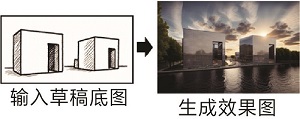 | 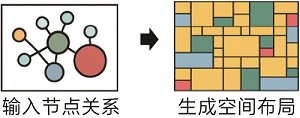 | 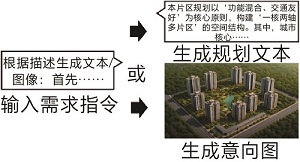 | 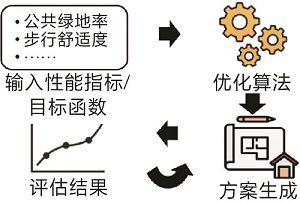 |
文中图表均由作者绘制。
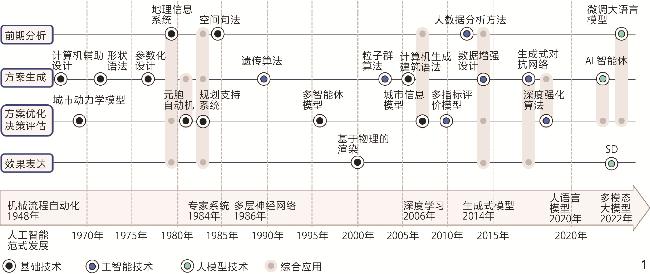
1、聚焦生成式人工智能(GAI)在城市设计中的应用研究,按PRISMA流程纳入125篇中英文文献,系统覆盖近3年代表性新模型的应用证据。
2、构建“GAI技术类型×城市设计阶段”二维框架,归纳图像、语言、结构、反馈优化4类生成模型,结合设计思维明确各阶段的介入逻辑与功能定位。
3、引入技术接受模型(TAM)量化不同技术模型采纳差异。据此提出3条改进路径:本土化数据、可解释与可控、多模型协同,支撑实践落地与后续研究。
| [1] |
LYNCH K. The Image of the City: Image of the City[M]. Cambridge: MIT Press, 1960.
|
| [2] |
JACOBS J. The Death and Life of Great American Cities[M]. New York: Vintage, 1992.
|
| [3] |
GEHL J. Cities for People[M]. Washington, D.C.: Island Press, 2010.
|
| [4] |
STEINER F R, BUTLER K, AMERICAN PLANNING ASSOCIATION. Planning and Urban Design Standards[M]. Student Edition. Hoboken: JOHN WILEY & SONS, INC., 2012.
|
| [5] |
PARISH Y I H, MÜLLER P. Procedural Modeling of Cities[C]//SIGGRAPH. Proceedings of the 28th Annual Conference on Computer Graphics and Interactive Techniques. New York: Association for Computing Machinery, 2001: 301-308.
|
| [6] |
HERR C M, KVAN T Adapting Cellular Automata to Support the Architectural Design Process[J]. Automation in Construction, 2007, 16 (1): 61.-69.
|
| [7] |
BATTY M Artificial Intelligence and Smart Cities[J]. Environment and Planning B: Urban Analytics and City Science, 2018, 45 (1): 3.-6.
|
| [8] |
吴志强, 黄晓春, 李栋, 等 “人工智能对城市规划的影响”学术笔谈会[J]. 城市规划学刊, 2018 (5): 1.-10.
WU Z Q, HUANG X C, LI D, et al Symposium on “Artificial Intelligence and Its Impacts on Urban Planning”[J]. Urban Planning Forum, 2018 (5): 1.-10.
|
| [9] |
KARRAS T, LAINE S, AILA T A Style-Based Generator Architecture for Generative Adversarial Networks[J]. IEEE Transactions on Pattern Analysis and Machine Intelligence, 2021, 43 12 4217.-4228.
|
| [10] |
华为企业业务.国地科技与华为发布国土空间规划AI一体机联合解决方案, 助力自然资源行业数智化转型[EB/OL].(2025-03-14)[2025-03-27]. https://e.huawei.com/cn/news/2025/industries/government/ai-machines-territorial-spatial-planning.
Huawei Enterprise Business. Guodi Technology and Huawei Released the Joint Solution for Territorial Spatial Planning AI Integrated Machine, Facilitating the Digital and Intelligent Transformation of the Natural Resources Industry[EB/OL]. (2025-03-14)[2025-03-27]. https://e.huawei.com/cn/news/2025/industries/government/ai-machines-territorial-spatial-planning.
|
| [11] |
JIANG F F, MA J, WEBSTER C J, et al Generative Urban Design: A Systematic Review on Problem Formulation, Design Generation, and Decision-Making[J]. Progress in Planning, 2024, 180: 100795.
|
| [12] |
SANCHEZ T W, FU X Y, YIGITCANLAR T, et al The Research Landscape of AI in Urban Planning: A Topic Analysis of the Literature with ChatGPT[J]. Urban Science, 2024, 8 (4): 197.
|
| [13] |
LIN B, JABI W, CORCORAN P, et al The Application of Deep Generative Models in Urban Form Generation Based on Topology: A Review[J]. Architectural Science Review, 2024, 67 (3): 189.-204.
|
| [14] |
OZTURK G B, SOYGAZI F. Generative AI Use in the Construction Industry[M]//LYU Z H. Applications of Generative AI. Cham: Springer International Publishing, 2024: 161-187.
|
| [15] |
XIA J H, TONG Y, LONG Y Advancements in the Application of Large Language Models in Urban Studies: A Systematic Review[J]. Cities, 2025, 165: 106142.
|
| [16] |
MOHER D, LIBERATI A, TETZLAFF J, et al Preferred Reporting Items for Systematic Reviews and Meta-analyses: The PRISMA Statement[J]. PLoS Medicine, 2009, 6 (7): e1000097.
|
| [17] |
WANG J, BILJECKI F Unsupervised Machine Learning in Urban Studies: A Systematic Review of Applications[J]. Cities, 2022, 129: 103925.
|
| [18] |
VASWANI A, SHAZEER N, PARMAR N, et al. Attention Is All You Need[C]//NIPS. Proceedings of the 31st International Conference on Neural Information Processing Systems. Red Hook: Curran Associates Inc., 2017, 30.
|
| [19] |
HUANG W X, ZHENG H. Architectural Drawings Recognition and Generation Through Machine Learning[J]. Proceedings of the 38th Annual Conference of the Association for Computer Aided Design in Architecture (ACADIA), 2018: 156-165.
|
| [20] |
RADFORD A, METZ L, CHINTALA S, et al. Unsupervised Representation Learning with Deep Convolutional Generative Adversarial Networks[EB/OL]. (2015-11-19)[2025-03-01]. https://arXiv.org/abs/1511.06434.
|
| [21] |
KEMPINSKA K, MURCIO R Modelling Urban Networks Using Variational Autoencoders[J]. Applied Network Science, 2019, 4 (1): 114.
|
| [22] |
CROITORU F A, HONDRU V, IONESCU R T, et al Diffusion Models in Vision: A Survey[J]. IEEE Transactions on Pattern Analysis and Machine Intelligence, 2023, 45 (9): 10850.-10869.
|
| [23] |
王天莲 基于人工智能生成技术的城市街道空间感知与未来风貌预测[J]. 城市发展研究, 2024, 31 (2): 9.-14.
WANG T L Urban Street Space Sensibility and Future Styles Prediction Based on AIGC Technology[J]. Urban Development Studies, 2024, 31 (2): 9.-14.
|
| [24] |
陈昱宇, 何铭, 袁磊, 等 基于AIGC的城市滨水区特色风貌营造研究: 以广州白鹅潭片区为例[J]. 城市建筑, 2025, 22 (4): 11.-13,78.
CHEN Y Y, HE M, YUAN L, et al Research on the Construction of Urban Waterfront Characteristic Landscape Based on AIGC: A Case of Bai’etan District in Guangzhou[J]. Urbanism and Architecture, 2025, 22 (4): 11.-13,78.
|
| [25] |
高云帆, 郁董卿, 王思琪, 等 大语言模型驱动的选址推荐系统[J]. 计算机研究与发展, 2024, 61 (7): 1681.-1696.
GAO Y F, YU D Q, WANG S Q, et al Large Language Model Powered Site Selection Recommender System[J]. Journal of Computer Research and Development, 2024, 61 (7): 1681.-1696.
|
| [26] |
ZHOU Z L, LIN Y M, LI Y, et al. Large Language Model Empowered Participatory Urban Planning[EB/OL]. (2024-01-24)[2025-03-01]. https://arXiv.org/abs/2402.01698.
|
| [27] |
郑雨豪, 王森章 基于扩散模型的不完整数据下细粒度城市流量推断[J]. 智能科学与技术学报, 2023, 5 (3): 389.-396.
ZHENG Y H, WANG S Z Fine-Grained Urban Flow Inference Based on Diffusion Models with Incomplete Data[J]. Chinese Journal of Intelligent Science and Technology, 2023, 5 (3): 389.-396.
|
| [28] |
FANG Z, QI J X, FAN L B, et al A Framework for Human-Computer Interactive Street Network Design Based on a Multi-stage Deep Learning Approach[J]. Computers, Environment and Urban Systems, 2022, 96: 101853.
|
| [29] |
林博, 刁荣丹, 吴依婉 基于人工智能的城市空间生成设计框架: 以温州市中央绿轴北延段为例[J]. 规划师, 2019, 35 17 44.-50.
LIN B, DIAO R D, WU Y W Urban Space Generative Design Based on Artificial Intelligence: Northern Extension of Central Green Axis, Wenzhou[J]. Planners, 2019, 35 17 44.-50.
|
| [30] |
YU S H, YANG Y, LI J M, et al Exploring Low-Carbon and Sustainable Urban Transformation Design Using ChatGPT and Artificial Bee Colony Algorithm[J]. Humanities and Social Sciences Communications, 2024, 11: 252.
|
| [31] |
RITTEL H W J, WEBBER M M Dilemmas in a General Theory of Planning[J]. Policy Sciences, 1973, 4 (2): 155.-169.
|
| [32] |
甘惟, 吴志强, 王元楷, 等 AIGC辅助城市设计的理论模型建构[J]. 城市规划学刊, 2023 (2): 12.-18.
GAN W, WU Z Q, WANG Y K, et al AIGC Assisted Urban Design: A Theoretical Model[J]. Urban Planning Forum, 2023 (2): 12.-18.
|
| [33] |
陈然, 罗晓敏, 何越衡, 等 生成式算法在风景园林生成设计中的适应性研究[J]. 风景园林, 2024, 31 (9): 12.-23.
CHEN R, LUO X M, HE Y H, et al Research on the Adaptability of Generative Algorithm in Generative Landscape Design[J]. Landscape Architecture, 2024, 31 (9): 12.-23.
|
| [34] |
ZHANG Y, KWAN M P, FANG L B An LLM Driven Dataset on the Spatiotemporal Distributions of Street and Neighborhood Crime in China[J]. Scientific Data, 2025, 12: 467.
|
| [35] |
广州市规划和自然资源局. DeepSeek如何赋能?多位大咖齐聚开麦[EB/OL].(2025-03-21)[2025-03-27]. https://mp.weixin.qq.com/s/YpfF-rJ_VREUeK0FfFRskQ.
Guangzhou Municipal Planning and Natural Resources Bureau. How DeepSeek Empowers Urban Planning: Insights from Experts[EB/OL]. (2025-03-21)[2025-03-27]. https://mp.weixin.qq.com/s/YpfF-rJ_VREUeK0FfFRskQ.
|
| [36] |
吴一凡, 孟露, 李倞 基于网络大数据与人工智能生成内容(AIGC)微调模型的绿道辅助设计路径[J]. 风景园林, 2025, 32 (7): 96.-105.
WU Y F, MENG L, LI L Aided Greenway Design Approach Based on Internet Big Data and AIGC Fine-Tuning Model[J]. Landscape Architecture, 2025, 32 (7): 96.-105.
|
| [37] |
城市象限.社绘AI: 大模型时代的城市更新公众参与工具[EB/OL].(2024-12-21)[2025-03-27]. https://mp.weixin.qq.com/s/hdeJ_BJp2XynB4XWajmLEw.
City Quadrant. Shehui AI: A Public Participation Tool for Urban Renewal in the Era of Large Models[EB/OL]. (2024-12-21)[2025-03-27]. https://mp.weixin.qq.com/s/hdeJ_BJp2XynB4XWajmLEw.
|
| [38] |
WILSON K. This Artificial Intelligence Bot Is Designing Better Streets than Some Engineers[EB/OL]. (2022-07-28)[2025-03-21]. https://usa.streetsblog.org/2022/07/28/this-artificial-intelligence-bot-is-designing-better-streets-than-some-engineers/.
|
| [39] |
杨俊宴, 朱骁 人工智能城市设计在街区尺度的逐级交互式设计模式探索[J]. 国际城市规划, 2021, 36 (2): 7.-15.
YANG J Y, ZHU X Exploration of the Step-by-Step Interactive Design Mode of Artificial Intelligence Urban Design at the Block Scale[J]. Urban Planning International, 2021, 36 (2): 7.-15.
|
| [40] |
ZHAO B, ZHANG S Z, XU C X, et al Deep Fake Geography? When Geospatial Data Encounter Artificial Intelligence[J]. Cartography and Geographic Information Science, 2021, 48 (4): 338.-352.
|
| [41] |
TANG H, XU D, YAN Y, et al. Local Class-Specific and Global Image-Level Generative Adversarial Networks for Semantic-Guided Scene Generation[C]//2020 IEEE/CVF Conference on Computer Vision and Pattern Recognition. Seattle: IEEE, 2020: 7867-7876.
|
| [42] |
BITTNER K, D’ANGELO P, KÖRNER M, et al. Automatic Large-Scale 3D Building Shape Refinement Using Conditional Generative Adversarial Networks[J]. The International Archives of the Photogrammetry, Remote Sensing and Spatial Information Sciences, 2018, XLII-2: 103-108.
|
| [43] |
GARCÍA DE SOTO D B, STREULE T, KLIPPEL M, et al Improving the Planning and Design Phases of Construction Projects by Using a Case-Based Digital Building System[J]. International Journal of Construction Management, 2020, 20 (8): 900.-911.
|
| [44] |
JOHNSEN M, BRANDT O, GARRIDO S, et al Population Synthesis for Urban Resident Modeling Using Deep Generative Models[J]. Neural Computing and Applications, 2022, 34 (6): 4677.-4692.
|
| [45] |
PARK J S, O’BRIEN J, CAI C J, et al. Generative Agents: Interactive Simulacra of Human Behavior[C]//Proceedings of the 36th Annual ACM Symposium on User Interface Software and Technology. San Francisco: ACM, 2023: 1-22.
|
| [46] |
YAN Y B, WEN H M, ZHONG S R, et al. UrbanCLIP: Learning Text-Enhanced Urban Region Profiling with Contrastive Language-Image Pretraining from the Web[C]//Proceedings of the ACM Web Conference 2024. Singapore: ACM, 2024: 4006-4017.
|
| [47] |
DANCHENKO E. The AI-Teration Method and the Role of AI in Architectural Design[C]//ARAI K, KAPOOR S, BHATIA R. Proceedings of the Future Technologies Conference (FTC) 2020: Volume 1. Cham: Springer, 2021: 525-538.
|
| [48] |
JARUGA-ROZDOLSKA A Artificial Intelligence as Part of Future Practices in the Architect’s Work: MidJourney Generative Tool as Part of a Process of Creating an Architectural Form[J]. Architectus, 2022, 3 71 95.-104.
|
| [49] |
SHANG Y, LIN Y M, ZHENG Y, et al. UrbanWorld: An Urban World Model for 3D City Generation[EB/OL]. (2024-07-16)[2025-03-01]. https://arXiv.org/abs/2407.11965.
|
| [50] |
ALBERT A, STRANO E, KAUR J, et al. Modeling Urbanization Patterns with Generative Adversarial Networks[C]//IGARSS 2018 - 2018 IEEE International Geoscience and Remote Sensing Symposium. Valencia. IEEE, 2018: 2095-2098.
|
| [51] |
HARTMANN S, WEINMANN M, WESSEL R, et al. StreetGAN: Towards Road Network Synthesis with Generative Adversarial Networks[EB/OL].[2025-03-27]. https://cg.cs.uni-bonn.de/publication/hartmann-2017-streetgan.
|
| [52] |
刘德利, 王科奇 基于pix2pix算法的建筑形态及其组合生成式设计研究[J]. 建筑科学, 2022, 38 10 260.-267.
LIU D L, WANG K Q Research on the Generative Design of Architectural Form and Combination Based on Pix2Pix Algorithm[J]. Building Science, 2022, 38 10 260.-267.
|
| [53] |
陈然, 赵晶 基于样式生成对抗网络的风景园林方案生成及设计特征识别[J]. 风景园林, 2023, 30 (7): 12.-21.
CHEN R, ZHAO J Generation and Design Feature Recognition of Landscape Architecture Scheme Based on Style-Based Generative Adversarial Network[J]. Landscape Architecture, 2023, 30 (7): 12.-21.
|
| [54] |
QUAN S J Urban-GAN: An Artificial Intelligence-Aided Computation System for Plural Urban Design[J]. Environment and Planning B: Urban Analytics and City Science, 2022, 49 (9): 2500.-2515.
|
| [55] |
刘宇波, 胡凯, 邓巧明 人工智能辅助的“基于案例设计”: 以深圳南头古城周边地区城市肌理织补为例[J]. 南方建筑, 2023 10 20.-27.
LIU Y B, HU K, DENG Q M Artificial Intelligence-Assisted Case-Based Design: A Case Study on Urban Texture Darning Surrounding the Ancient City of Nantou in Shenzhen[J]. South Architecture, 2023 10 20.-27.
|
| [56] |
DEL CAMPO M Architecture, Language and AI - Language, Attentional Generative Adversarial Networks (AttnGAN) and Architecture Design[J]. Proceedings of the 26th Conference on Computer Aided Architectural Design Research in Asia (CAADRIA), 2021, 1: 211.-220.
|
| [57] |
KIM S, PARK S, KIM H, et al Deep Floor Plan Analysis for Complicated Drawings Based on Style Transfer[J]. Journal of Computing in Civil Engineering, 2021, 35 (2): 04020066.
|
| [58] |
KELLY T, GUERRERO P, STEED A, et al FrankenGAN: Guided Detail Synthesis for Building Mass Models Using Style-Synchonized GANs[J]. ACM Transactions on Graphics, 2018, 37 (6): 1.-14.
|
| [59] |
YU D. Reprogramming Urban Block by Machine Creativity: How to Use Neural Networks as Generative Tools to Design Space[C]//WERNER L C, KOERING D. Anthropologic – Architecture and Fabrication in the Cognitive Age: Proceedings of the 38th International Conference on Education and Research in Computer Aided Architectural Design in Europe. Berlin: eCAADe, 2020: 249-258.
|
| [60] |
DENG J, CHAI W H, HUANG J S, et al. CityCraft: A Real Crafter for 3D City Generation[EB/OL]. (2024-06-07)[2025-03-01]. https://arXiv.org/abs/2406.04983.
|
| [61] |
甘惟, 王元楷, 李翔 嵌入式机器学习方法在街区形态生成设计中的应用探索[J]. 西部人居环境学刊, 2024, 39 (3): 1.-7.
GAN W, WANG Y K, LI X Practical Study on the Application of Embedded Machine Learning Method in Generative Design at Block Level[J]. Journal of Human Settlements in West China, 2024, 39 (3): 1.-7.
|
| [62] |
WANG M, XIONG Z H, ZHOU S Q, et al Integrating Generative AI and Climate Modeling for Urban Heat Island Mitigation[J]. Ecological Informatics, 2025, 90: 103284.
|
| [63] |
黄焱, 李天劼 基于景观信息模型-稳定扩散模型(LIM-SD)方法的生态工程景观设计效能评估: 以城市滨河湿地为例[J]. 景观设计学(中英文), 2024, 12 (5): 68.-81.
HUANG Y, LI T J Design Efficacy Evaluation of a Landscape Information Modeling-Stable Diffusion(LIM-SD)-Based Approach for Ecological Engineered Landscaping Design: A Case Study of an Urban River Wetland[J]. Landscape Architecture Frontiers, 2024, 12 (5): 68.-81.
|
| [64] |
LI X Q, LU W S, PENG Z Y, et al Generative Design of Walkable Urban Cool Spots Using a Novel Heuristic GAN×GAN Approach[J]. Building and Environment, 2024, 266: 112027.
|
| [65] |
SUN S T, MU L, FENG R Y, et al GAN-Based LUCC Prediction via the Combination of Prior City Planning Information and Land-Use Probability[J]. IEEE Journal of Selected Topics in Applied Earth Observations and Remote Sensing, 2021, 14: 10189.-10198.
|
| [66] |
LIU Y B, HU K, DENG Q M Evolvable Case-Based Design: An Artificial Intelligence System for Urban Form Generation with Specific Indicators[J]. Environment and Planning B: Urban Analytics and City Science, 2024, 51 (8): 1742.-1757.
|
| [67] |
周臻, 顾子渊, 曲小波, 等 城市多模式交通大模型MT-GPT: 点线面的分层技术与应用场景[J]. 中国公路学报, 2024, 37 (2): 253.-274.
ZHOU Z, GU Z Y, QU X B, et al Urban Multimodal Transportation Generative Pretrained Transformer Foundation Model: Hierarchical Techniques and Application Scenarios of Spot-Corridor-Network Decomposition[J]. China Journal of Highway and Transport, 2024, 37 (2): 253.-274.
|
| [68] |
ZHU H, ZHANG W J, HUANG N X, et al. PlanGPT: Enhancing Urban Planning with Tailored Language Model And Efficient Retrieval[EB/OL]. (2024-02-29) [2025-03-01]. https://arxiv.org/abs/2402.19273.
|
| [69] |
SHARMA D, GUPTA N, CHATTOPADHYAY C, et al. REXplore: A Sketch Based Interactive Explorer for Real Estates Using Building Floor Plan Images[C]//2018 IEEE International Symposium on Multimedia. Taichung. [S.L.]: IEEE, 2019: 61-64.
|
| [70] |
小库AI.灵感广场[EB/OL].(2024-05-04)[2025-03-04]. https://cloud.xkool.ai/pc/muse.
XKOOL. Muse Gallery[EB/OL]. (2024-05-04)[2025-03-04]. https://cloud.xkool.ai/pc/muse.
|
| [71] |
YE X Y, DU J X, YE Y MasterplanGAN: Facilitating the Smart Rendering of Urban Master Plans via Generative Adversarial Networks[J]. Environment and Planning B: Urban Analytics and City Science, 2022, 49 (3): 794.-814.
|
| [72] |
灵感AI.灵感AI官网[EB/OL].(2024-05-04)[2025-03-04]. https://ai.suapp.com/.
SUAPP AI. SUAPP AI Official Website[EB/OL]. (2024-05-04)[2025-03-04]. https://ai.suapp.com.
|
/
| 〈 |
|
〉 |