

基于人群数字画像的滨海空间活力解析与优化设计——以山东威海九龙湾为例
|
邵典/男/博士/东南大学建筑学院博士后、助理研究员/研究方向为数字化城市设计 |
|
杨俊宴/男/博士/东南大学建筑学院教授/研究方向为智能城市设计 |
|
史宜/男/博士/东南大学建筑学院副教授/研究方向为大数据与城市设计 |
|
张芷晗/女/东南大学建筑学院在读博士研究生/研究方向为景观城市设计 |
|
代鑫/男/硕士/成都市规划设计研究院注册城乡规划师/研究方向为城市设计 |
Copy editor: 王一兰
收稿日期: 2025-08-15
修回日期: 2025-10-19
网络出版日期: 2025-12-26
基金资助
中国博士后面上基金“基于时空知识图谱的高密度城区空间演替模拟与数字推演研究”(2024M750429)
版权
Analysis and Optimization Design of the Vitality of Coastal Space Based on Crowd Digital Portrait: A Case Study of Kowloon Bay in Weihai, Shandong Province
|
SHAO Dian, Ph.D., is an assistant research fellow and postdoctoral researcher in the School of Architecture, Southeast University. His research focuses on digital urban design |
|
YANG Junyan, Ph.D., is a professor in the School of Architecture, Southeast University. His research focuses on intelligent urban design |
|
SHI Yi, Ph.D., is an associate professor in the School of Architecture, Southeast University. His research focuses on big data and urban design |
|
ZHANG Zhihan is a Ph.D. candidate in the School of Architecture, Southeast University. Her research focuses on landscape urban design |
|
DAI Xin, Master, is a registered urban planner at Chengdu Institute of Urban Planning and Design. His research focuses on urban design |
Received date: 2025-08-15
Revised date: 2025-10-19
Online published: 2025-12-26
Copyright
【目的】滨海岸线赋予了城市滨海空间独特的生态景观条件,在城市的发展中扮演着越来越重要的角色。然而,受区位、形态与景观等多重影响,在城市化进程中滨海空间的“见物不见人”现象、两季性差异显著、辐射范围小等活力问题也逐渐显现出来。【方法】针对这些问题,在滨海空间活力评价维度解析的基础上建构滨海空间人群数字画像,并从吸引力、空间容量、交通可达性、形态布局等方面解析问题并提出优化策略。【结果】进而,以威海九龙湾滨海空间为实践案例,通过人群数字画像刻画滨海空间的18类典型人群,探寻滨海空间活力问题症结,提出针对不同人群的空间引导策略和优化设计方法【结论】以科学量化的方式,深度洞察滨海空间各类人群的活力特征及时空模式,为城市活力不均等现实难题的破解提供新方法。
邵典 , 杨俊宴 , 史宜 , 张芷晗 , 代鑫 . 基于人群数字画像的滨海空间活力解析与优化设计——以山东威海九龙湾为例[J]. 风景园林, 2025 , 32(12) : 35 -44 . DOI: 10.3724/j.fjyl.LA20250501
[Objective] As one of the most scarce landscape resources in cities, the coastal shoreline endows urban coastal spaces with unique ecological and landscape conditions. Meanwhile, with the development of the social economy, the expansion of urban fringes, and the improvement of living standards, coastal spaces are playing an increasingly important role in urban development. However, due to the influence of location, form, and landscape, problems such as insufficient human presence, seasonal differences, and limited radiation range in the vitality of coastal spaces have gradually emerged during the urbanization process. How to improve the quality of coastal spaces and enhance their vitality has become a widely concerned issue in both academic and industrial circles.
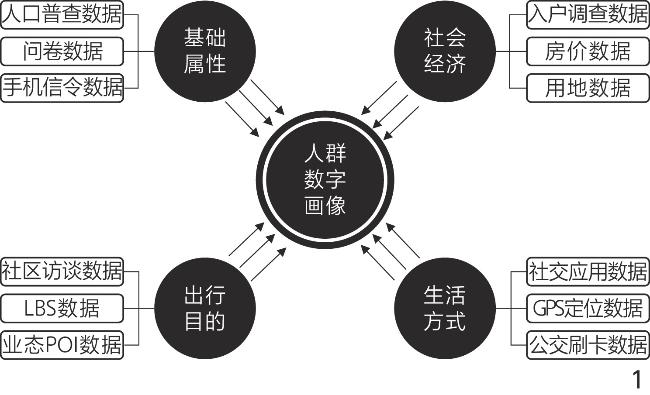
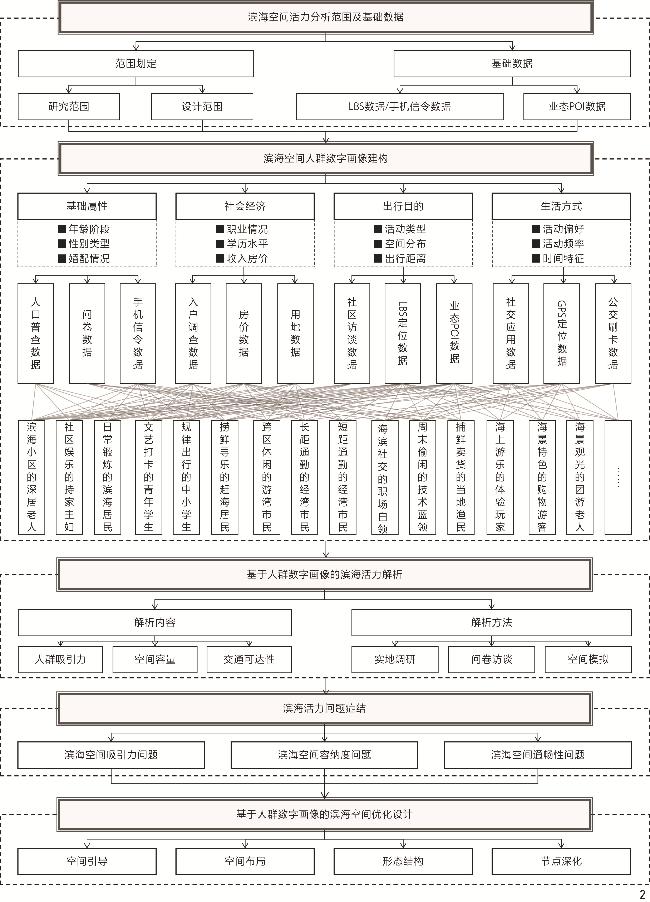
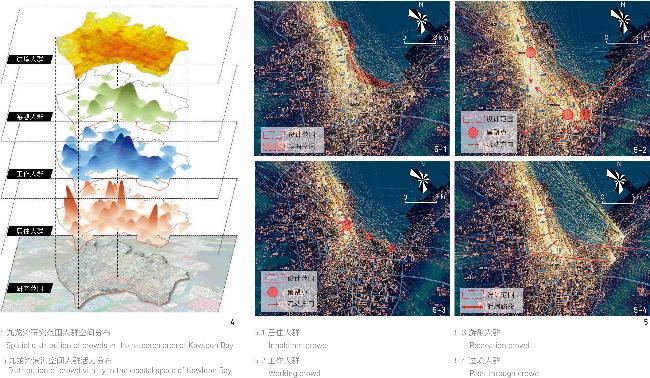
[Methods] To address this issue, this research constructs a digital portrait of different crowds in coastal spaces based on the analysis of the evaluation dimensions of the vitality of coastal spaces. The digital portrait is created through four dimensions: basic attributes, socio-economic status, travel purposes, and lifestyle. By analyzing the spatial distribution of stay points and the spatio-temporal patterns of travel trajectories of each typical crowd at different times, the vitality of coastal spaces for each crowd is further analyzed, including the attractiveness of coastal spaces to various crowds, as well as the capacity and transportation accessibility of coastal spaces. Then, through field research, questionnaire interviews, and spatial simulation analysis, the root causes of relevant problems are identified. Finally, based on the behavioral trajectories and spatio-temporal vitality differences of different crowds, optimization strategies for the spatial layout of coastal spaces are proposed. In contrast to traditional approaches, the analysis of coastal space vitality grounded in the digital profiling of crowds enables the screening of key subjects from a vast and intricate crowd. It can also pinpoint the core issues in a targeted manner, thereby effectively enhancing the vitality and quality of coastal spaces. Ultimately, by taking into account the behavioral trajectories of each crowd and their vitality variances across different time intervals, optimization strategies for traffic guidance and spatial layout within coastal spaces are put forward. Additionally, integrating the spatial distribution of crowd stop points and crowd categories, the morphological structure and spatial nodes are optimized and upgraded.
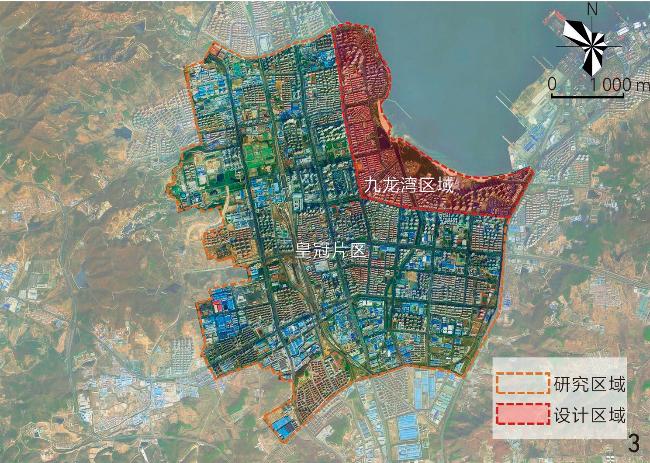
[Results] Taking the coastal space of Jiulong Bay in Weihai as an example, this research selects 18 typical crowds with the largest proportion to construct a crowd digital portrait. The research finds that the crux of the vitality issue of coastal spaces lies in three aspects: First, the closed layout and spatial fragmentation prevent people from traveling to coastal spaces; second, the lagging infrastructure construction makes it difficult for people to stay in coastal spaces; third, the long and narrow transportation system makes it difficult to disperse people in coastal spaces. In response to these three problems, this research proposes design strategies such as attracting recreation, inhibiting pass-through, promoting the integration and sharing of diverse crowds, and optimizing the form of green space nodes.
[Conclusion] The crowd digital portrait proposed in this research as a digital means of analyzing crowd activities, has the characteristic of deeply depicting and classifying the age and gender composition, behavioral purposes, activity methods, and trajectory patterns of the crowds in coastal spaces based on their geographical location, transportation environment, and landscape characteristics. It can help understand the vitality characteristics and spatio-temporal patterns of coastal spaces, and then, in combination with the form of coastal spaces, identify the crux of problems such as insufficient human presence and uneven vitality, and propose corresponding strategies.
表1 九龙湾滨海空间人群数字画像及其活力特征Tab. 1 Digital portraits and vitality characteristics of crowds in the coastal space of Kowloon Bay |
| 数字画像 | 活力特征 | |
|---|---|---|
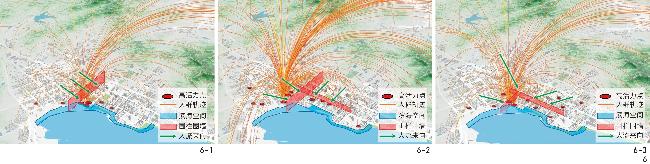
 | 滨海小区的深居老人 | 活动范围高度局限于小区内部及周边菜场,因身体原因极少利用滨海空间 |
 | 社区娱乐的持家主妇 | 日常活动集中于居住社区内部,对社区内部设施依赖度高,滨海空间到访率低 |
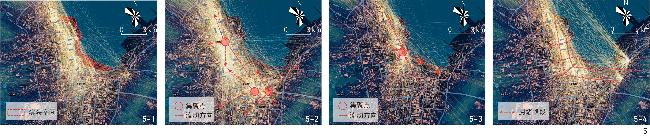
 | 日常锻炼的滨海居民 | 锻炼时间集中于早晨、午间或夜晚,锻炼地点集中在九龙湾公园西南及东南两侧及大庆路北侧室外运动场所 |
 | 规律出行的中小学生 | 极少前往滨海空间,节假日除居家外,选择去韩乐坊等大型游乐设施 |
 | 文艺打卡的青年学生 | 到访目的单一,几乎仅为特定景点打卡拍照,停留时间短,消费意愿低 |
 | 捞鲜寻乐的赶海居民 | 仅在周末、节假日偶尔去滨海空间,往往活动于特色农家乐设施附近,对其余滨海空间少有利用 |
 | 跨区休闲的游湾市民 | 相比于九龙湾公园,他们更倾向于北侧的海上公园,且游湾时间通常选择春夏两季 |
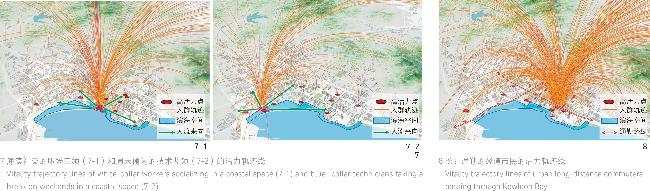
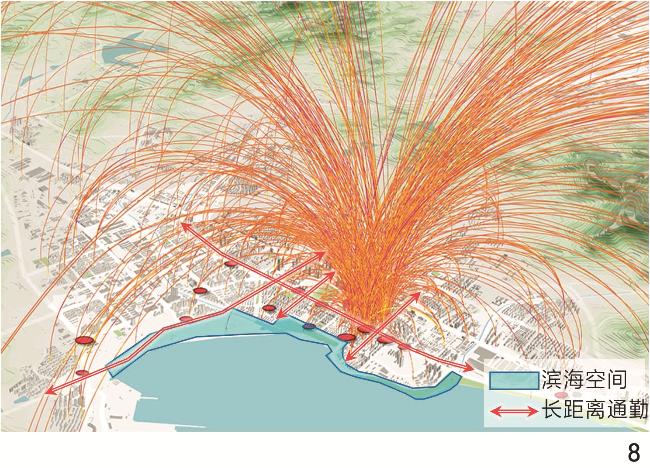
 | 长距通勤的经湾市民 | 需穿越滨海大道,常于07:00和19:00左右在部分路段形成拥堵,滨海空间到访率低 |
 | 短距通勤的经湾市民 | 通勤时间主要集中在08:00及18:00,通勤目的地多集中于东部港口 |
 | 海滨社交的职场白领 | 业余社交集中在午间或下班后;对运动场所、沿街商业设施的利用率较高,较少前往滨海的公园 |
 | 周末偷闲的技术蓝领 | 平日很少前往滨海区域,周末休息时会来到附近商业店铺稍作停留 |
 | 捕鲜卖货的当地渔民 | 居住集中在附近小区,其长期停留于滨海空间的目的是售卖海鲜 |
 | 海味寻鲜的吃货博主 | 作为跨区或外地游客,其滨海活动高度集中于特色餐饮设施,目的性极强 |
 | 海滨特色的购物游客 | 出行目的地集中于滨海南路两侧,较少到九龙湾滨海公园、沙滩等内部场所进行消费 |
 | 海上游乐的体验玩家 | 以外地游客为主,热衷于娱乐设施更齐全的悦海公园,九龙湾公园的到访率极低 |
 | 海趣拾贝的漫游旅客 | 倾向于前往海上公园活动,偶有出现在九龙湾公园,通常停留时间较长,但集中在春夏两季 |
 | 温泉疗养的保健中年 | 主要停留于邻近城市中心的洗浴健身设施,除餐饮和休息以外极少到访滨海空间 |
 | 海景观光的团游老人 | 更倾向于在九龙湾公园停留,但是夜间住宿普遍不在九龙湾区域内,交通距离相对较长 |
图6 滨海小区的深居老人(6-1)、社区娱乐的持家主妇(6-2)和规律出行的中小学生(6-3)的活力轨迹线Fig. 6 Vitality trajectory lines of the elderly living in the coastal residential area (6-1), housewives participating in community entertainment activities (6-2), and primary and secondary school students with regular travel patterns (6-3) |
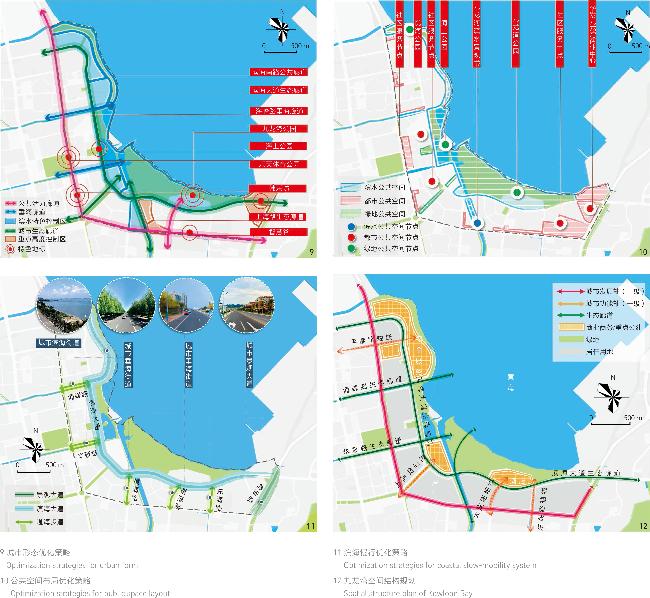
图9 城市形态(9-1)、公共空间布局(9-2)和滨海慢行(9-3)的优化策略Fig. 9 Optimization strategies for urban form (9-1), public space layout (9-2), and coastal slow-mobility system (9-3) |
文中图表均由作者绘制,其中
1、从基础属性、社会经济、出行目的及生活方式4个维度建构滨海空间人群数字画像,分析各类人群在滨海空间的活力情况,并根据人群的行为轨迹、时空活力差异,对滨海空间的空间布局形态提出优化策略。
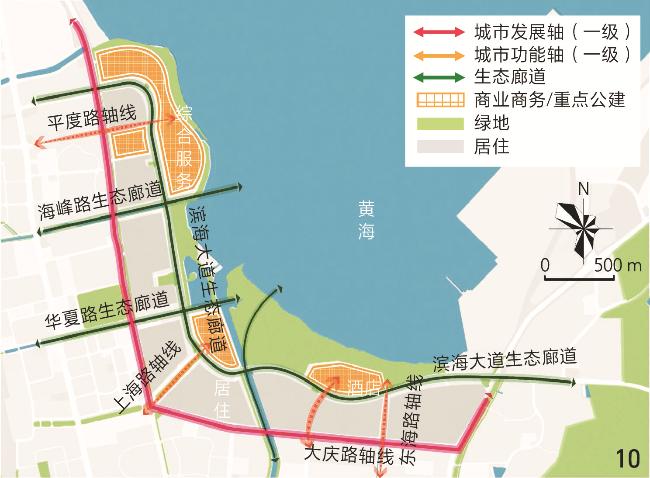
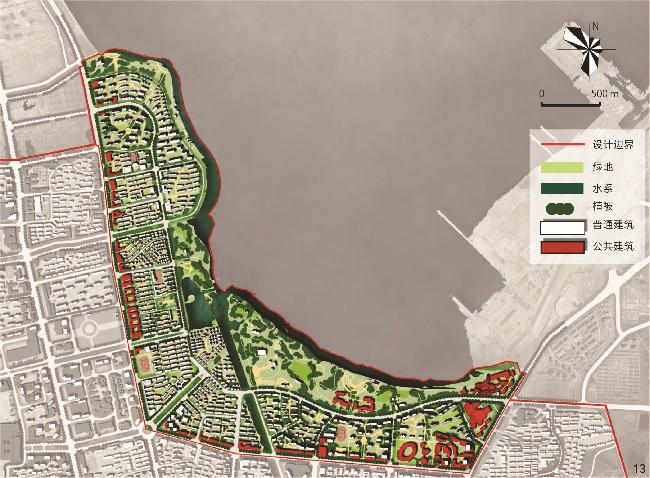
2、以威海九龙湾滨海空间为例,选择最为典型、数量占比最多的18类人群建构了人群数字画像,揭示滨海空间活力的问题症结,并提出吸引游憩、抑制过境、多元人群融合共享、绿地节点形态优化等设计策略。
| [1] |
林奇.城市意象[M].方益萍, 何晓军, 译.北京: 华夏出版社, 2001.
LYNCH K. The Image of the City[M]. FANG Y P, HE X J, translated. Beijing: Huaxia Publishing House, 2001.
|
| [2] |
铁婧.基于地域性的城市滨海游憩空间景观优化设计研究: 以青岛市南部沿海为例[D].青岛: 青岛理工大学, 2010.
TIE J. Regional Study on Urban Coastal Landscape Optimization Recreation Space: An Exampleof Qingdao City in The Southerncoastal Areas[D]. Qingdao: Qingdao University of Technology, 2010.
|
| [3] |
许文婷.城市滨海空间界面的控制与引导研究[D].广州: 华南理工大学, 2010.
XU W T. Control and Guidance Research of Urban Coastal Space Interface[D]. Guangzhou: South China University of Technology, 2010.
|
| [4] |
周长林, 邢卓 区域视角下滨海新区的空间重构[J]. 城市, 2009 (4): 24.-28.
ZHOU C L, XING Z Spatial Reconstruction of Binhai New Area from the Regional Perspective[J]. City, 2009 (4): 24.-28.
|
| [5] |
岳欢 以旅游开发为导向的滨海地区空间发展模式研究[J]. 中外建筑, 2015 (3): 78.-80.
YUE H Study on the Space Development Mode of Coastal Region Under the Guidance of Tourism Development[J]. Chinese & Overseas Architecture, 2015 (3): 78.-80.
|
| [6] |
葛曼.基于活动行为研究的滨海公共空间活力塑造[C]//中国城市规划学会.活力城乡 美好人居: 2019中国城市规划年会论文集(07城市设计).北京: 中国建筑工业出版社, 2019: 1709-1717.
GE M. Vitality Building of Coastal Public Space Based on Activity Behavior Research[C]//The Urban Planning Society of China. Proceedings of China Urban Planning Annual Conference 2019. Beijing: China Architecture & Building Press, 2019: 1709-1717.
|
| [7] |
耿雪川, 边坤, 刘阳, 等.青岛城市东岸城区滨海公共空间形态类型解析[C]//中国城市科学研究会.2020国际绿色建筑与建筑节能大会论文集.北京: 中国城市出版社, 2020: 187-190.
GEN X C, BIAN K, LIU Y, et al. Analysis on the Morphological Types of the Coastal Public Space in the East Coast of Qingdao[C]//Chinese Society for Urban Studies. Proceedings 2020 Paper Collection of International Conference on Green and Energy-Efficient Building. Beijing: China City Press, 2020: 187-190.
|
| [8] |
陈琛, 杜慧敏, 郄书恒, 等 基于数据分析下的滨海景观空间人群行为模型探究: 以八大峡广场为例[J]. 现代园艺, 2019 20 16.-17.
CHEN C, DU H M, QIE S H, et al Research on Crowd Behavior Model of Coastal Landscape Space Based on Data Analysis: A Case Study of Badaxia Square[J]. Xiandai Horticulture, 2019 20 16.-17.
|
| [9] |
李文丽, 李宏伟 城市公共空间活力的营造研究[J]. 中外建筑, 2022 (3): 83.-86.
LI W L, LI H W Research on the Construction of Urban Public Space Vitality[J]. Chinese & Overseas Architecture, 2022 (3): 83.-86.
|
| [10] |
魏迪, 陆毅, 汪原, 等 信息流介入公共空间活力营造: 基于城市公园的大数据循证分析[J]. 风景园林, 2023, 30 (7): 86.-93.
WEI D, LU Y, WANG Y, et al Intervention of Information Flow in the Creation of Public Space Vitality: An Evidence-Based Analysis of Big Data Based on Urban Parks[J]. Landscape Architecture, 2023, 30 (7): 86.-93.
|
| [11] |
GUO S H, YANG G G, PEI T, et al Analysis of Factors Affecting Urban Park Service Area in Beijing: Perspectives from Multi-source Geographic Data[J]. Landscape and Urban Planning, 2019, 181: 103.-117.
|
| [12] |
BATTY M. The New Science of Cities[M]. Cambridge: The MIT Press, 2013.
|
| [13] |
程元泽.基于大数据分析的苏州高铁新城公共空间活力评价研究[D].苏州: 苏州科技大学, 2019.
CHENG Y Z. Research on the Evaluation of Public Space Vitality of Suzhou High-Speed Railway New Town Based on Big Data Analysis[D]. Suzhou: Suzhou University of Science and Technology, 2019.
|
| [14] |
王振报, 张瑞方, 祝霜霜 邯郸市主城区街道空间活力评价与分析[J]. 建筑与文化, 2020 (8): 187.-188.
WANG Z B, ZHANG R F, ZHU S S Evaluation and Analysis of Street Spatial Vitality in Handan Core Area[J]. Architecture & Culture, 2020 (8): 187.-188.
|
| [15] |
王伟强, 马晓娇 基于多源数据的滨水公共空间活力评价研究: 以黄浦江滨水区为例[J]. 城市规划学刊, 2020 (1): 48.-56.
WANG W Q, MA X J Vitality Assessment of Waterfront Public Space Based on Multi-source Data: A Case Study of the Huangpu River Waterfront[J]. Urban Planning Forum, 2020 (1): 48.-56.
|
| [16] |
渠水静.滨海旅游公园景观活力评价研究及应用: 以胶东半岛城市为例[D].青岛: 青岛理工大学, 2020.
QU S J. Research and Application of Landscape Vitality of Coastal Tourism Park[D]. Qingdao: Qingdao University of Technology, 2020.
|
| [17] |
张悦, 郭海 健康城市理念下的城市滨水空间活力评价研究[J]. 城市住宅, 2019, 26 12 79.-84.
ZHANG Y, GUO H Study on the Evaluation for the Vitality of Space in Urban Waterfront Based on the Concept of Healthy City[J]. City & House, 2019, 26 12 79.-84.
|
| [18] |
张芳, 叶天爽, 刘奇 “空间-行为” 视野下传统滨水街区的活力营造: 以苏州古城区传统滨水街区为例[J]. 中国名城, 2020, 34 (8): 45.-51.
ZHANG F, YE T S, LIU Q Vitality Construction of Traditional Waterfront Blocks from the Perspective of “Space-Behavior”: Taking the Traditional Waterfront Blocks in the Ancient City of Suzhou as an Example[J]. China Ancient City, 2020, 34 (8): 45.-51.
|
| [19] |
翟青, 李淼, 蒋文鑫 基于多源数据的城市空间活力时空特征分析: 以南京市河西、仙林新城为例[J]. 资源开发与市场, 2021, 37 (2): 153.-160.
ZHAI Q, LI M, JIANG W X Spatial and Temporal Characteristics of Urban Spatial Vitality Based on Multi-source Data: Taking Hexi and Xianlin New Town in Nanjing City as Examples[J]. Resource Development & Market, 2021, 37 (2): 153.-160.
|
| [20] |
陈伟, 丁兰, 郑金 基于“人群画像”的武汉市江汉区核心商圈提升规划研究[J]. 中国土地, 2024 (4): 27.-29.
CHEN W, DING L, ZHENG J Research on the Improvement Planning of the Core Business District in Jianghan District, Wuhan City Based on "Crowd Portrait"[J]. China Land, 2024 (4): 27.-29.
|
| [21] |
史宜, 戴运来, 张珣, 等 基于精细时空行为测度的街道空间人群数字画像构建与分异[J]. 风景园林, 2024, 31 (9): 24.-33.
SHI Y, DAI Y L, ZHANG X, et al Research on the Construction and Differentiation Mechanism of Digital Portraits of Crowds in Street Space Based on Fine Spatiotemporal Behavior Measurement[J]. Landscape Architecture, 2024, 31 (9): 24.-33.
|
| [22] |
张洪剑, 姚月.基于特征识别与服务人群画像的绿地景观风貌规划研究: 以佛山市为例[C]//中国城市规划学会.人民城市, 规划赋能: 2022中国城市规划年会论文集(12 风景环境规划).北京: 中国建筑工业出版社, 2023: 168-174.
ZHANG H J, YAO Y. Research on Green Space Landscape Planning Based on Feature Recognition and Service Crowd Portrait: A Case Study of Foshan City[C]//China Urban Planning Society. People’s City, Planning Empowerment: Proceedings of the 2022 China Urban Planning Annual Conference (12 Landscape and Environmental Planning), 2023: 168-174.
|
| [23] |
赵一帆, 张训一, 张源铭, 等 基于人群时空行为画像的社区精准规划策略: 以南京阅江楼社区为例[J]. 规划师, 2022, 38 (9): 108.-116.
ZHAO Y F, ZHANG X Y, ZHANG Y M, et al Accurate Planning Strategies in Central District Communities Based on Residents’ Spatio-Temporal Characters[J]. Planners, 2022, 38 (9): 108.-116.
|
| [24] |
杨俊宴, 何国枫, 陈代俊, 等 城市交通拥堵地区人群数字画像解析与空间规划应对[J]. 规划师, 2021, 37 19 26.-34.
YANG J Y, HE G F, CHEN D J, et al Digital Analysis of Population Profile and Spatial Planning Response in Traffic Jammed Areas[J]. Planners, 2021, 37 19 26.-34.
|
| [25] |
杨俊宴, 张珣, 史宜 基于人本视角的城市人群数字画像建构: 理论与方法[J]. 城市规划, 2025, 49 (1): 36.-47.
YANG J Y, ZHANG X, SHI Y Constructing Digital Profiles of Urban Population from a Human-Centered Perspective: Theory and Method[J]. City Planning Review, 2025, 49 (1): 36.-47.
|
| [26] |
杨俊宴, 印舜尧, 章飙 基于多源数据耦合的老年人群数字画像及空间适老化更新策略研究: 以南京阅江楼街区为例[J]. 城市学报, 2024 (4): 33.-41.
YANG J Y, YIN S Y, ZHANG B Digital Portrait of the Elderly Population and Spatial Ageing Update Strategy Based on Multi-source Data Coupling: A Case Study on Nanjing Yuejianglou Community[J]. Journal of Urban Sciences, 2024 (4): 33.-41.
|
| [27] |
巴九灵 2018新中产人群画像[J]. 记者观察, 2018 28 22.-24.
BA J L Portrait of the New Middle Class in 2018[J]. Reporters’ Notes, 2018 28 22.-24.
|
| [28] |
张宇, 阮雪灵 大数据环境下移动用户画像的构建方法研究[J]. 中国信息化, 2020 (4): 65.-68.
ZHANG Y, RUAN X L Research on the Construction Method of Mobile User Portrait in Big Data Environment[J]. Zhongguo Xinxihua, 2020 (4): 65.-68.
|
| [29] |
张慧敏.基于生活方式转型的动态用户画像研究[D].无锡: 江南大学, 2018.
ZHANG H M. Academic Research of Trends Persona Based on Lifestyle Transformation[D]. Wuxi: Jiangnan University, 2018.
|
| [30] |
金探花.基于LBS数据的城市人群画像研究: 时空行为分异的视角[D].南京: 东南大学, 2019.
JIN T H. Portrait of Urban Population Based on Lbs Data: A Perspective of Spatial Temporal Behavioraldifferentiation[D]. Nanjing: Southeast University, 2019.
|
| [31] |
权宇澄, 吴健平 基于改进DBSCAN方法的移动对象轨迹停留分析[J]. 测绘与空间地理信息, 2016, 39 10 140.-143,146.
QUAN Y C, WU J P Moving Objects Trajectory Analysis Based on the Improved DBSCAN Method[J]. Geomatics & Spatial Information Technology, 2016, 39 10 140.-143,146.
|
| [32] |
苗壮.基于手机信令数据的数据清洗挖掘与居民职住空间分析[D].成都: 西南交通大学, 2017.
MIAO Z. Research on Data Cleaning Mining Jobs and Residential Locations Based on Mobile Phone Signaling Data[D]. Chengdu: Southwest Jiaotong University, 2017.
|
| [33] |
柳姣姣, 禹素萍, 吴波, 等 基于隐马尔科夫模型的时空序列预测方法[J]. 微型机与应用, 2016, 35 (1): 74.-76,80.
LIU J J, YU S P, WU B, et al A Method of Spatio-Temporal Sequence Prediction Based on Hidden Markov Model[J]. Microcomputer & Its Applications, 2016, 35 (1): 74.-76,80.
|
/
| 〈 |
|
〉 |