

真实与虚像:探析江南历史园林的当代复建
|
周宏俊/男/博士/同济大学建筑与城市规划学院副教授/研究方向为中日古代园林史、园林设计方法、传统风景名胜 |
|
郭真真/女/同济大学建筑与城市规划学院在读博士研究生/研究方向为风景园林历史理论与遗产保护 |
|
吴昀眙/女/硕士/同济大学建筑设计研究院(集团)有限公司景观设计师/研究方向为风景园林历史理论及规划设计 |
|
寇怀云/女/博士/同济大学建筑与城市规划学院副教授/研究方向为城乡遗产保护与社区景观治理 |
收稿日期: 2024-01-08
修回日期: 2024-06-24
网络出版日期: 2025-12-17
基金资助
国家社科基金中华学术外译项目“中国古典园林分析”(21WYSB010)
版权
Reality and Virtuality: Exploration of Contemporary Reconstruction of Jiangnan Historic Gardens
|
ZHOU Hongjun, Ph.D., is an associate professor in the College of Architecture and Urban Planning (CAUP), Tongji University. His research focuses on history of Chinese and Japanese classical gardens, garden design methods, and traditional scenic spots |
|
GUO Zhenzhen is a Ph.D. candidate in the College of Architecture and Urban Planning (CAUP), Tongji University. Her research focuses on theory and history of landscape architecture, and heritage conservation |
|
WU Yunyi, Master, is a landscape architect in Tongji Architectural Design (Group) Co., Ltd. Her research focuses on theory and history of landscape architecture, and landscape planning and design |
|
KOU Huaiyun, Ph.D., is an associate professor in the College of Architecture and Urban Planning (CAUP), Tongji University. Her research focuses on urban and rural heritage conservation and community landscape governance |
Received date: 2024-01-08
Revised date: 2024-06-24
Online published: 2025-12-17
Copyright
20世纪50年代以来,江南各地多有对残损或消失的历史园林的复建,这些园林构成了传统园林在当代延续的一部分。另外,园林的文本化、文人化特征促生了园林历史中兴废演替的一种传统方式,即由文人主导的基于文本的再造。有必要结合这一传统,厘清江南历史园林当代复建的特点与意义。
聚焦当代复建的历史园林,通过对江南地区的案例开展文献与实地调研,剖析并区分复建的动机与策略,进一步分析典型案例的复建方法。
揭示了园林传统、遗产理念、当代文化等多维度的影响,进而探讨了园林风格、园林类型、真实性等方面存在的问题与挑战。
复建园林作为历史真实的虚像,是传统园林文化的重要表征,在复建信息真实以及准确展示的基础上,可以发挥多元的价值。
周宏俊 , 郭真真 , 吴昀眙 , 寇怀云 . 真实与虚像:探析江南历史园林的当代复建[J]. 风景园林, 2024 , 31(8) : 55 -64 . DOI: 10.3724/j.fjyl.202401080019
The contemporary reconstruction of historic gardens in the Jiangnan region is a significant endeavor aimed at preserving the legacy of traditional gardens and integrating them into modern society. Since the 1950s, the reconstruction of damaged or vanished gardens has not only continued the tradition of these gardens in contemporary times, but also reflected a literati-led tradition of text-based re-creation. Through literature review and field investigation, this research collects several cases of garden reconstruction in the Jiangnan region, based on which it analyzes the motives and strategies for garden reconstruction, explores the influence of multidimensional factors such as garden traditions, heritage concepts, and contemporary cultures on garden reconstruction, and discusses relevant problems and challenges in such aspects as garden style, garden type, and authenticity.
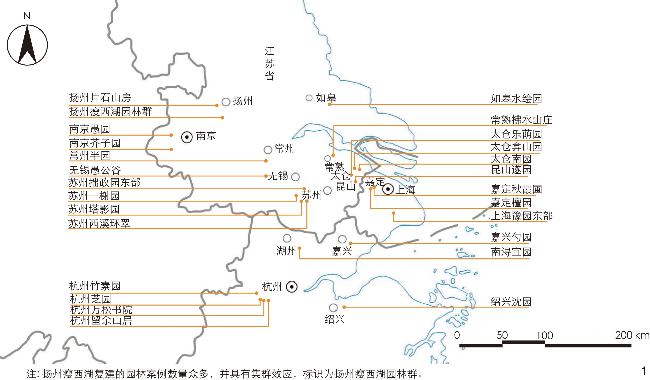
The research first reviews the literati characteristics and textual traditions of traditional Chinese gardens. The reconstruction of gardens is often based on relevant texts and images created by literati, and typically integrates the concepts of the reconstructors and the garden styles of the time, thus gradually forming an important tradition. Next, the research provides an overview of the contemporary reconstruction of Jiangnan historic gardens. Through literature review and field investigation, it is found that over 30 gardens in the Jiangnan region have been reconstructed in contemporary times. The main period of reconstruction started in the 1980s, reflecting the impact of social development on garden construction. The research further analyzes different types of reconstructed gardens, including the early tourism-oriented reconstruction, the continuation of the tradition of literati-led garden construction, the impact of authenticity, and the drive of cultural demands. The research particularly points out that Chen Congzhou, with his traditional literati approach to garden reconstruction, continues the tradition of literati garden construction.
The research uncovers a variety of motivations behind garden reconstruction, including the revival of historical aesthetics, enhancement of cultural tourism, and fulfillment of public recreational needs. Strategically, reconstructed gardens often pursue stylistic and typological integrity, with a focus on material authenticity and historical accuracy. However, an overemphasis on style has sometimes resulted in standardized and homogenized garden designs. The construction approach has shifted from traditional long-term cultivation to modern systematic design and construction. Additionally, issues with the interpretation of reconstructed gardens are common, such as the lack of detailed explanations or the conflation of reconstruction with history, leading to potential misunderstandings among the public. When discussing the authenticity of reconstructed gardens, the research points out that while international documents like theVenice Charter emphasize material authenticity, theBeijing Document and thePrinciples for the Conservation of Heritage Sites in China affirm the significance and methods of reconstruction to some extent. This indicates that perceptions of reconstructed gardens are evolving amidst the integration of international concepts with Chinese traditional culture and reality. The introduction of the concept of “spiritual authenticity” highlights that the authenticity of garden heritage is primarily reflected in the spiritual authenticity of the overall environment, rather than mere material authenticity. The research also addresses the impact of cultural demands on garden reconstruction. Collective social cognition regards gardens as more than legacies of literati writings; they are emblematic of profound cultural significance. Consequently, garden reconstruction, to cater to cultural demands, places substantial value on gardens as a cultural product, characterized by distinctive style and completeness. This demand has spurred various reconstruction methods, such as the completion of scenic spots, relocation reconstruction, naming borrowing, and hybrid integration. Despite the challenges, reconstructed gardens play a constructive role in inheriting garden construction arts and skills and in reinforcing a sense of local identity. As a virtual image of historical reality, they can realize multiple values based on the authenticity of reconstruction information and precise interpretation. The research advocates for in-depth research and cautious practice in the reconstruction process, emphasizing the importance of detailed research and interpretation of style, form, craftsmanship, and other elements to achieve effective reconstruction.
Finally, the research summarizes the status of reconstructed gardens between heritage and non-heritage, as well as the different attitudes of theVenice Charter and thePrinciples for the Conservation of Heritage Sites in China toward reconstruction. The research emphasizes that the value of reconstructed gardens is based on the authenticity of information, and the importance of display and interpretation cannot be overlooked. Reconstructed gardens, as virtual images of historical reality, can exert their diverse values based on the authenticity and accurate interpretation of reconstruction information. In summary, the reconstruction of Jiangnan historic gardens is a complex and multidimensional process involving aspects such as historical heritage protection, cultural inheritance, artistic innovation, and social demands. Through in-depth research and prudent practice, reconstructed gardens can serve as an important bridge connecting the past with the present, and tradition with modernity, thus providing contemporary society with rich cultural value and artistic enjoyment.
表1 江南历史园林的当代复建时间Table 1 Contemporary reconstruction time of Jiangnan historic gardens |
| 复建完成时期 | 园林复建实例(完成年份) |
| 注:个别复建案例经历了几期建设和增补改造,本表所标注完成时间为园林整体格局初成之时间。 | |
| 20世纪50—60年代 | 无锡愚公谷(1959)、苏州拙政园东部(1960) |
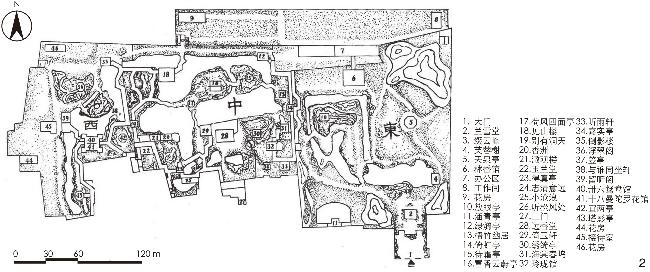
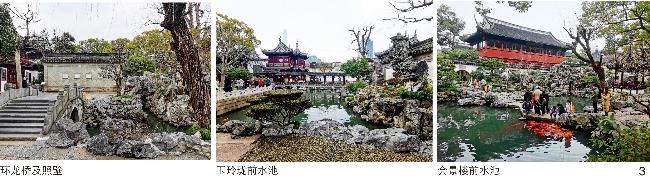
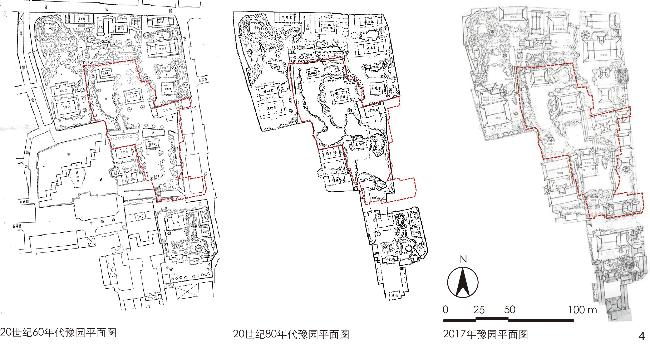
| 20世纪80年代 | 太仓乐荫园(1982)、瘦西湖西园曲水(1984)、昆山遂园(1985)、瘦西湖白塔晴云(1985)、上海秋霞圃(1987)、上海豫园东部(1989)、瘦西湖卷石洞天(1989) |
| 20世纪90年代 | 扬州片石山房(1990)、瘦西湖春台明月(1990)、瘦西湖静香书屋(1992)、如皋水绘园(1993)、绍兴沈园(1995)、杭州竹素园(1996)、瘦西湖虹桥修禊(1997)、太仓南园(1998) |
| 21世纪00年代 | 杭州芝园(1999)、杭州万松书院(2002)、太仓弇山园(2003)、苏州西溪环翠(2003)、杭州留余山居(2004)、瘦西湖趣园(2005)、瘦西湖石壁流淙(2007)、瘦西湖锦泉花屿(2009) |
| 21世纪10年代 | 常熟拂水山庄(2010)、上海檀园(2011)、南京愚园(2012)、绍兴勺园(2012)、苏州一榭园(2015)、南浔宜园(2019)、南京芥子园(2019) |
| 21世纪20年代 | 苏州塔影园(2022)、常州半园(2022) |
| [1] |
商伟.题写名胜: 从黄鹤楼到凤凰台[M].北京: 生活·读书·新知三联书店, 2020: 180-190.
SHANG W. Written Places of Interest: From Huanghe Tower to Fenghuang Terrace[M]. Beijing: SDX Joint Publishing Company, 2020: 180-190
|
| [2] |
洪泉, 唐慧超. 曲院风荷变迁图考[J]. 北京林业大学学报(社会科学版), 2015, 14(3): 34-41.
HONG Q, TANG H C. A Pictorial Research on the Evolution of “Breeze-Reffled Lotus Beside the Winery”[J]. Journal of Beijing Forestry University (Social Sciences), 2015, 14(3): 34-41.
|
| [3] |
许亦农.作为文化记忆的苏州园林(11—19世纪)[M]//柯南, 陈望衡.城市与园林园林对城市生活和文化的贡献.武汉: 武汉大学出版社, 2006: 389.
XU Y N. Suzhou Gardens as Cultural Memory (11th to 19th Century)[M]//CONAN M, CHEN W H. City and Graden: The Contribution of Gardens to Urban Life and Culture. Wuhan: Wuhan University Press, 2006: 389.
|
| [4] |
陈薇. 中国古典园林何以成为传统: 苏州沧浪亭的情、景、境、意[J]. 建筑师, 2016(6): 80-86.
CHEN W. Why a Traditional Classical Gardens: Cang Lang Pavilion: Sentiments, Scenes, Aura and Meaning[J]. The Architect, 2016(6): 80-86.
|
| [5] |
陈曦.建筑遗产保护思想的演变[M].上海: 同济大学出版社, 2016: 183.
CHEN X. The Evolution of Architectural Heritage Protection Thought[M]. Shanghai: Tongji University Press, 2016: 183.
|
| [6] |
梁思成. 闲话文物建筑的重修与维护[J]. 文物, 1963(7): 5-10.
LIANG S C. The Restoration and Maintenance of Historical Buildings[J]. Cultural Relics, 1963(7): 5-10.
|
| [7] |
巫鸿.废墟的故事: 中国美术和视觉文化中的“在场”与“缺席”[M].肖铁, 译.上海: 上海人民出版社, 2017: 16.
WU H. The Story of Ruins: Presence and Absence in Chinese Art and Visual Culture[M]. XIAO T, translated. Shanghai: Shanghai People’s Publishing House, 2017: 16.
|
| [8] |
XU Y N. Interplay of Image and Fact: The Pavilion of Surging Waves, Suzhou[J]. Studies in the History of Gardens & Designed Landscape, 1999(19): 288-301.
|
| [9] |
周向频, 王庆. 明清水绘园与陈从周当代复建[J]. 中国园林, 2018, 34(11): 57-61.
ZHOU X P, WANG Q. Shuihui Garden in the Ming and Qing Dynasties and Its Reconstruction by Chen Congzhou[J]. Chinese Landscape Architecture, 2018, 34(11): 57-61.
|
| [10] |
周宏俊, 邹旻玥. 豫园东部重修历程及理景分析[J]. 园林, 2022, 39(10): 11-19.
ZHOU H J, ZOU M Y. A Study on the Reconstruction and Landscape Design of Yuyuan Garden (East)[J]. Landscape Architecture Academic Journal, 2022, 39(10): 11-19.
|
| [11] |
顾至欣, 张青萍. 国外历史园林复建研究系统综述[J]. 中国园林, 2019, 35(9): 140-144.
GU Z X, ZHANG Q P. Restoration of Historic Gardens: A Systematic Review of Oversea Literature[J]. Chinese Landscape Architecture, 2019, 35(9): 140-144.
|
| [12] |
李格非, 范成大.洛阳名园记: 桂海虞衡志[M].北京: 文学古籍刊行社, 1955: 13.
LI G F, FAN C D. Records of the Famous Gardens of Luoyang: Yuheng Zhi of Guihai [M]. Beijing: Literature and Antiquities Publishing House, 1955: 13.
|
| [13] |
苏州市园林和绿化管理局.拙政园志[M].北京: 文汇出版社, 2012: 1-13.
Bureau of Gardens and Greening Suzhou. Annals of the Humble Administrator’s Garden[M]. Beijing: Wenhui Publishing House, 2012: 1-13.
|
| [14] |
刘敦桢.苏州古典园林[M].北京: 中国建筑工业出版社, 2005: 59.
LIU D Z. Suzhou Classical Gardens[M]. Beijing: China Architecture & Building Press, 2005: 59.
|
| [15] |
陈从周.说园 中国名园[M]//蔡达峰, 宋凡圣, 编.陈从周全集.江苏: 江苏文艺出版社, 2013.
CHEN C Z. On Chinese Gardens[M]//CAI D F, SONG F S, ed. The Complete Works of Chen Congzhou. Jiangsu: Jiangsu Literary Publishing House 2013.
|
| [16] |
王劲韬.苏州私家园林保护刍议[C]//中国风景园林学会.中国风景园林学会2010年会论文集.北京: 中国建筑工业出版社, 2010.
WANG J T. On Preservation of Suzhou Private Gardens[C]//Chinese Society of Landscape Architecture. Proceedings of the 2010 Annual Conference of the Chinese Society of Landscape Architecture. Beijing: Beijing Forestry University, Tsinghua University, 2010: 6.
|
| [17] |
赵纪军. 新中国园林政策与建设60年回眸(四)园林革命[J]. 风景园林, 2009, 16(5): 75-79.
ZHAO J J. Sixty Years of Landscape Policies and Development in China (4) Garden Revolution[J]. Landscape Architecture, 2009, 16(5): 75-79.
|
| [18] |
同济大学景观学系.陈从周造园三章[M].上海: 同济大学出版社, 2018.
Department of Landscape Architecture, Tongji University. Three Chapters of Gardening by Chen Congzhou[M]. Shanghai: Tongji University Press, 2018.
|
| [19] |
段建强. 陈从周先生与豫园修复研究: 口述史方法的实践[J]. 南方建筑, 2011(4): 28-32.
DUAN J Q. Chen Congzhou and the Preservation of Yuyuan Garden: The Practice of Oral History Research[J]. South Architecture, 2011(4): 28-32.
|
| [20] |
周宏俊, 王婷, 李佳佳. 陈从周的园林修复与营造及其理念[J]. 建筑遗产, 2021(4): 35-45.
ZHOU H J, WANG T, LI J J. Chen Congzhou’s Philosophy and Practice of Garden Restoration and Construction[J]. Heritage Architecture, 2021(4): 35-45.
|
| [21] |
International Council on Monuments and Sites (ICOMOS). International Charter for the Conservation and Restoration of Monuments and Sites (the Venice Charter 1964)[EB/OL]. (2011-12-11)[2023-12-20].https://www.icomos.org/en/179-articles-en-francais/ressources/charters-and-standards/157-the-venice-charter
|
| [22] |
全国人民代表大会常务委员会.中华人民共和国文物保护法[EB/OL].(1982-11-19)[2023-12-20].http://www.npc.gov.cn/zgrdw/wxzl/gongbao/2000-12/06/content_5004416.htm
Standing Committee of the National People’s Congress. Law of the People’s Republic of China on the Protection of Cultural Relics[EB/OL]. (1982-11-19) [2023-12-20].http://www.npc.gov.cn/zgrdw/wxzl/gongbao/2000-12/06/content_5004416.htm
|
| [23] |
林佳, 王其亨.中国建筑遗产保护的理念与实践[M].北京: 中国建筑工业出版社, 2017: 300-311.
LIN J, WANG Q H. The Concept and Practice of Chinese Architectural Heritage Conservation[M]. Beijing: China Architecture & Building Press, 2017: 300-311.
|
| [24] |
朱光亚, 王涛.传统园林的生命力及其衍射: 兼谈绍兴沈园的文化环境工程[C]//中国文物学会传统建筑园林委员会.中国文物学会传统建筑园林委员会第十四届学术研讨会会议文件.[出版地不详: 出版者不详], 2001: 4.
ZHU G Y, WANG T. The Vitality and Diffraction of Traditional Garden: on the Cultural Environment Project of Shenyuan Garden in Shaoxing[C]//Chinese Society of Cultural Relics, Traditional Architecture and Garden Committee. Conference Documents of the 14th Academic Seminar of Traditional Architecture and Garden Committee of the Chinese Society of Cultural Relics. [S.l.: s.n.], 2001: 4.
|
| [25] |
高念华.胡雪岩故居修复研究[M].北京: 文物出版社, 2002: 138-245
GAO N H. Study on Reconstruction of Hu Xueyan’s Mansion[M]. Beijing: Cultural Relics Press, 2002: 138-245.
|
| [26] |
高念华编著.胡雪岩故居修复前后[M].杭州: 浙江古籍出版社, 2018: 40-87.
GAO N H. Hu Xueyan’s Mansion Before and After Restoration[M]. Hangzhou: Zhejiang Ancient Books Press, 2018: 40-87.
|
| [27] |
北京文件: 关于东亚地区文物建筑保护与修复[N].中国文物报, 2007-06-15.
Beijing Document on the Protection and Restoration of Cultural Heritage Buildings in East Asia[N]. China Cultural Relics News, 2007-06-15.
|
| [28] |
国际古迹遗址理事会中国国家委员会.2015中国文物古迹保护准则[EB/OL].(2015-06-25) [2023-12-20].http://www.iicc.org.cn/Publicity1Detail.aspx?aid=882.
ICOMOS China National Committee. 2015 Guidelines for the Conservation of Cultural Relics and Monuments in China[EB/OL]. (2015-06-25) [2023-12-20].http://www.iicc.org.cn/Publicity1Detail.aspx?aid=882.
|
| [29] |
东南大学建筑设计研究院有限公司.东南大学建筑设计研究院有限公司50周年庆作品选: 遗产·文化2005—2015[M].南京: 东南大学出版社, 2015: 103.
Architects & Engineers Co., Ltd. of Southeast University. Architects & Engineers Co., Ltd. of Southeast University 50th Anniversary Selected Works: Heritage ∙ Culture 2005–2015[M]. Nanjing: Southeast University Press, 2015: 103.
|
| [30] |
陈薇.流变与新建: 南京愚园重建记[J].建筑学报, 2016(9): 96-101.
CHEN W. Evolution and Reconstruction Notes on the Project of Yuyuan Garden in Nanjing[J]. Architectural Journal, 2016(9): 96-101.
|
| [31] |
许若菲. 近代南浔宜园修复研究[J]. 风景园林, 2017, 24(2): 47-56.
XU R F. Study on the Restoration of Yi Garden in Nanxun[J]. Landscape Architecture, 2017, 24(2): 47-56.
|
| [32] |
沈复.浮生六记[M].汪海洋, 译.南京: 译林出版社, 2015: 99.
SHEN F. Six Records of a Floating Life[M]. WANG H Y, translated. Nanjing: Yilin Publishing House, 2015: 99.
|
| [33] |
吴肇钊, 陈艳, 吴迪.瘦西湖园林群历史、艺术与营造[M].北京: 中国建筑工业出版社, 2015: 191-234.
WU Z Z, CHEN Y, WU D. History, Art and Construction of Gardens Nearby Slender West Lake[M]. Beijing: China Architecture & Building Press, 2015: 191-234.
|
| [34] |
童寯.江南园林志[M].北京: 中国建筑工业出版社, 1984: 35
TONG J. Annals of Jiangnan Gardens[M]. Beijing: China Architecture & Building Press, 1984: 35.
|
| [35] |
陆肇域, 任兆麟.虎阜志: 10卷首1卷[M].[出版地不详: 出版者不详], 1985: 1-10.
LU Z Y, REN Z L. Hufu Zhi: 1st Volume in 10 Volumes[M]. [S.l.: s.n.], 1985: 1-10.
|
| [36] |
文肇祉.塔影园次皇甫司勋[M]//文肇祉.文氏五家集: 卷12.上海: 商务印书馆, 1934.
WEN Z Z. Pagoda Shadow Garden Second Huangfu Si Xun [M]//WEN Z Z. Wen’s Five Families Collection: Volume 12. Shanghai: The Commercial Press, 1934.
|
| [37] |
沈德潜.塔影园记[M]//陈从周, 蒋启霆.园综上册.赵厚均, 校订/注释.上海: 同济大学出版社, 2011: 226-227.
SHEN D Q. The Garden of Pagoda Shadows[M]//CHEN C Z, JIANG Q T. Garden Synthesis: The First Volume. ZHAO H J, revised and annotated. Shanghai: Tongji University Press, 2011: 226-227.
|
| [38] |
朱光亚, 余惟佳. 中国传统园林遗产保护的理念初探[J]. 建筑遗产, 2021(4): 1-8.
ZHU G Y, YU W J. Theoretical Thinkings on the Conservation of Traditional Garden Heritage in China[J]. Heritage Architecture, 2021(4): 1-8.
|
| [39] |
孙筱祥. 生境·画境·意境: 文人写意山水园林的艺术境界及其表现手法[J]. 风景园林, 2013, 20(6): 26-33.
SUN X X. Habitat Painting Meaning: The Artistic Realm of Literati Scriptural Landscape Garden and Its Expression Methods[J]. Landscape Architecture, 2013, 20(6): 26-33.
|
/
| 〈 |
|
〉 |