

社区蓝绿空间生态系统服务供需研究进展
|
张楚晗/女/西安建筑科技大学建筑学院在读博士研究生/中国城市建设研究院工程师/研究方向为城市设计、风景园林规划与设计 |
|
王国玉/男/硕士/中国城市建设研究院有限公司绿色发展设计研究中心副主任、教授级高级工程师/研究方向为风景园林工程与技术、国土景观保护与生态修复、海绵城市 |
Copy editor: 李清清
收稿日期: 2023-12-11
修回日期: 2024-10-18
网络出版日期: 2025-12-16
基金资助
十四五国家重点研发计划项目(2022YFC3802601)
版权
Research Progress in Supply and Demand of Ecosystem Services in Blue and Green Spaces in Urban Communities
|
ZHANG Chuhan is a Ph.D. candidate in the School of Architecture, Xi’an University of Architecture and Technology, and an engineer in China Urban Construction Design & Research Institute Co., Ltd. Her research focuses on urban design, and landscape planning and design |
|
WANG Guoyu, Master, is deputy director and professorate senior engineer of Green Development Design Research Center, China Urban Construction Design & Research Institute Co., Ltd. His research focuses on landscape architecture engineering and technology, territorial landscape protection and ecological restoration, and sponge city |
Received date: 2023-12-11
Revised date: 2024-10-18
Online published: 2025-12-16
Copyright
社区作为城市人居环境的最小社会空间单元,其蓝绿空间是居民体验自然和享受生态系统服务(ecosystem services, ES)供应的重要载体。现有研究多集中于城市尺度的蓝绿空间ES供需研究及其评价,缺乏对社区尺度下不同类型ES供需特征、影响因素及评价方法的揭示。
以社区蓝绿空间的定义、ES类型和供需为检索主题,利用CiteSpace对Web of Science和中国知网核心数据库共计455篇国内外相关论文进行研究热点和趋势分析,选取其中62篇作为核心案例进行系统回顾和梳理。
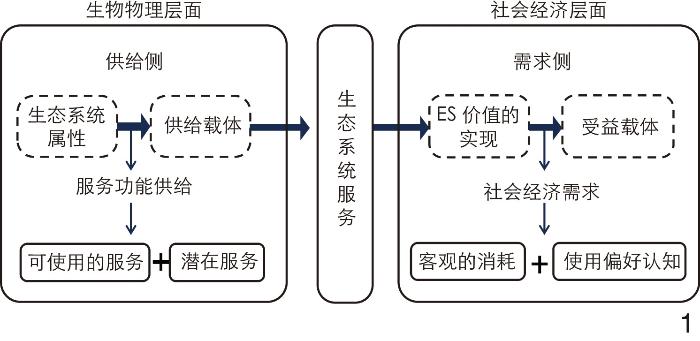
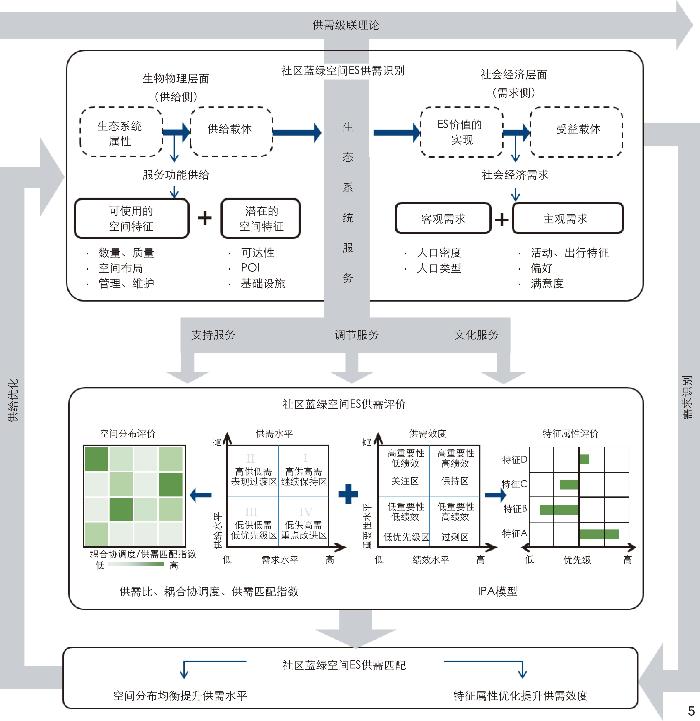
社区蓝绿空间ES供需研究在全球范围内持续增长,研究热点因区域而异。供给主要受生物物理特征影响,如植被面积、类型和结构;需求受人口规模、密度等客观因素和居民偏好、满意度等主观因素影响。基于供需水平和供需效度2个方面,对供需关系评价方法进行梳理,提出了以供需关系识别、评价、匹配为核心的社区蓝绿空间ES供需级联研究概念框架。
构建的供需研究概念框架可为系统性研究社区蓝绿空间ES供需关系提供思路借鉴,有助于促进社区蓝绿空间的资源优化配置和空间高效利用,助力社区美好环境与幸福生活的共同缔造。
张楚晗 , 王国玉 . 社区蓝绿空间生态系统服务供需研究进展[J]. 风景园林, 2024 , 31(12) : 121 -129 . DOI: 10.3724/j.fjyl.202312110554
Community blue and green space (BGS), such as parks, greenways, and pocket parks, are vital components of urban living environments, providing residents with opportunities to experience nature and benefit from ecosystem services (ES). This research aims to explore the main factors influencing the supply and demand of ES in community BGS, identify research hotspots and methodologies, and develop a supply – demand evaluation framework to enhance the effectiveness of ES in these spaces.
A comprehensive literature review is conducted using the Web of Science (WoS) and China National Knowledge Infrastructure (CNKI) databases, with a focus on research published between 2010 and 2023. Keywords include ES types relevant to community scales, community BGS types, and element characteristics. Upon exclusion of unrelated research, 455 papers are finally selected. Citespace software is employed for bibliometric and hotspot analyses. Additionally, 62 empirical case studies closely related to community BGS are systematically reviewed to extract key factors influencing the supply and demand of various ES types, with a focus on quantification methods and significant influences. The supply – demand relationship is evaluated from the two perspectives of supply – demand level and effectiveness, based on which a cascading research framework aimed at achieving supply – demand matching goals is developed.
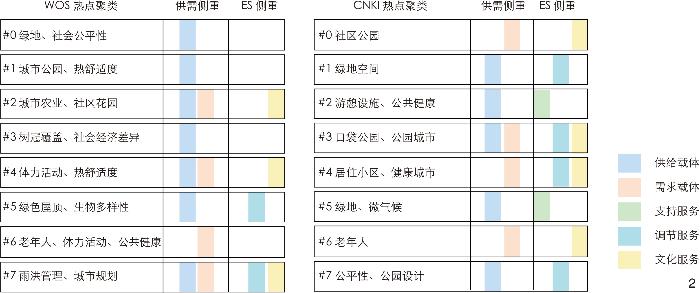
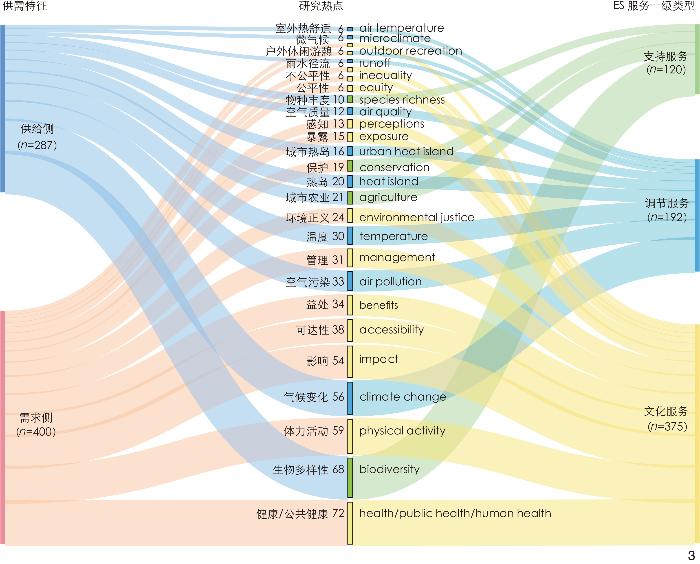
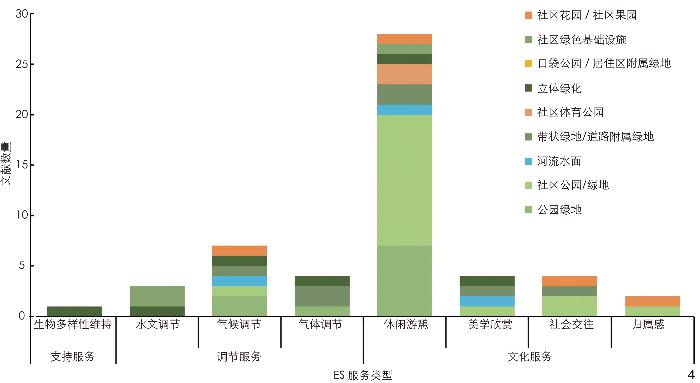
The analysis reveals a global increase in research on community BGS and ES since 2012, with significant growth after 2017, reflecting a growing interest in optimizing ES in urban communities. Research hotspots vary by region. In China, research focuses on spatial distribution equity and residents’ health and well-being, emphasizing BGS layout optimization. In the United States, research emphasizes environmental justice and the impact of built environments on ES, mainly aiming to explore relationships between socioeconomic factors and the supply and demand of community green space. European countries concentrate on urban green spaces and biodiversity conservation, while Australia and Canada focus on sustainable urban planning and BGS management. Different types of community BGS exhibit varying research emphases on ES. Community parks and green spaces are the most popular research subjects, particularly concerning cultural services like recreation and social interaction. Research on support and regulatory services often focuses on linear green spaces, vertical greening, and vegetation elements, utilizing ecological modeling methods (e.g., ENVI-met, SWMM) for supply quantification. Key findings indicate that the supply side of ES is primarily influenced by biophysical characteristics such as the area, type, and structure of vegetation, and the availability and quality of physical spaces. Larger and higher-quality green spaces and the presence of water bodies can enhance ES provision. Cultural services are additionally influenced by accessibility factors, including vegetation type, park facility distribution, and microclimate conditions. On the demand side, objective demand is influenced by demographic and socioeconomic factors like population size and density, GDP per capita, and points of interest (POI) density. Subjective demand, especially for cultural services, is shaped by residents’ activity patterns, travel characteristics, personal preferences, and satisfaction levels. Socio-demographic factors such as gender, age, income, occupation, and education level affect subjective preferences and perceived needs. The supply – demand cascading research framework developed in this research emphasizes the connection between the biophysical attributes of supply spaces and the socioeconomic attributes of demand spaces. This framework facilitates the identification and evaluation of supply – demand mismatches, guiding the optimization of resource allocation and spatial utilization in community BGS. By applying this framework, areas with high demand but low supply can be targeted for improvements, thus enhancing ES provision where it is most needed. Conversely, areas with excess supply can be managed strategically for future development and community enhancement, thus ensuring efficient resource allocation and maximizing benefits for residents.
The findings provide valuable insights for systematically studying the supply – demand relationship of ES in community BGS. The proposed framework offers a scientific basis for optimizing resource allocation and spatial efficiency, which can contribute to the construction of sustainable community environments and the improvement of residents’ quality of life. Future research should focus on identifying and evaluating the fragmented characteristics of community BGS, especially in urban areas with high spatial heterogeneity; exploring the diverse needs of different population groups within communities by considering demographic characteristics, socioeconomic status, and cultural preferences; and evaluating supply – demand effectiveness at micro and meso scales by integrating multiple data sources and employing advanced analytical methods. Moreover, participatory approaches are important in understanding and meeting residents’ needs. Engaging community members in BGS planning and management can ensure the alignment of services with their preferences, thereby enhancing their well-being. This collaborative approach can help build more sustainable and resilient communities, thus maximizing ES benefits and mitigating the negative impacts of urbanization. In conclusion, this research provides a robust framework for evaluating and improving the supply – demand dynamics of ES in community BGS. The insights gained can guide policymakers, urban planners, and community stakeholders in making informed decisions that promote sustainable development and enhance the quality of life for urban residents. Continuous improvement of ES in community BGS will contribute significantly to achieving broader urban sustainability goals and creating livable, healthy, and vibrant communities.
表1 社区蓝绿空间包含的用地及功能类型Tab. 1 Land and function types involved in Community BGS |
| 《国土空间调查、规划、用途管制用地用海分类指南》 | 《社区“十五分钟生活圈”绿色开放空间规划设计指南》 | ||||
| 一级类 | 二级类 | 三级类 | 功能类型 | 空间尺度 | |
| 注:“—”表示无对应分类结果或数据。*其他类型主要包括城市特殊空间和特色社区绿色开放空间2种:前者为包括屋顶花园、立体绿化、慢行街巷等各类小微公共活动空间,特征为利用屋顶、桥下、空中、建筑周边等各类城市特殊空间建设的绿色开放空间;后者为不同特色功能的各类社区绿色开放空间,如康复花园、社区花园、社区菜园、宠物公园等。详见参考文献[8]。 | |||||
| 绿地与开敞空间用地 | 公园绿地 | 综合公园 | — | ≥10.0 hm2 | |
| 社区公园 | 大型社区公园 | 3.0~<10.0 hm2 | |||
| 中型社区公园 | 1.0~<3.0 hm2 | ||||
| 小型社区公园 | 0.2~<1.0 hm2 | ||||
| 防护绿地 | — | — | — | ||
| 广场 | — | — | — | ||
| 陆地水域 | 河流水面 | — | — | — | |
| 坑塘水面 | — | — | — | ||
| 沟渠 | — | — | — | ||
| 道路与交通设施 | 城镇道路用地 | 专用人行道 | 社区绿道 | ≥4 km | |
| 附属绿地 | — | — | |||
| 公共管理与公共服务设施用地 | 体育用地 | 运动场地 | 大型社区体育公园 | 0.6~<1.0 hm2 | |
| 中型社区体育公园 | 0.3~<0.6 hm2 | ||||
| 小型社区体育公园 | 0.08~<0.3 hm2 | ||||
| 居住用地 | 城镇住宅用地 | 住宅建筑用地 | 其他类型* [8] | — | |
| 附属道路 | 其他类型* [8] | — | |||
| 附属绿地 | 口袋公园 | <0.2 | |||
表2 社区BGS-ES供需的研究方法、影响因素、量化指标Tab. 2 Research methods, main influencing factors and quantification indicators regarding the ES supply and demand of community BGS-ES |
| 一级类型 | 二级类型 | 研究方法 | 影响因素 | 量化指标 | |||
| 供给 | 需求 | 供给 | 需求 | ||||
| 支持服务 | 生物多样性维持 | 实地调查采样 | 斑块面积、连接度、形状、植被类型 | 偏好、认知 | 物种丰度 | 维护意愿 | |
| 调节服务 | 水文调节 | 生态模型法(SWMM模型、U-water模型)、参与式调查法 | 竖向特征、下垫面类型、植被类型、雨水基础设施分布和数量 | 降雨量特征、竖向特征、下垫面类型、财产易损性、居民意愿 | 估算径流减少和峰值流量减少潜力;径流量和调蓄量 | 洪涝灾害危险性、内涝淹没损失、建设绿色基础设施的必要性和意愿 | |
| 气候调节 | 生态模型法(ENVI-met模型)、经验公式法 | 气候类型、下垫面类型、植被类型及组合 | 温度差值、 人口(老年人)数量、 生理当量温度 | 模拟不同下垫面类型在不同气候条件下的冷却效应、基于植被类型权重计算降温效益、热负荷(范围内地表温度与区域平均值的偏差)、模拟不同植物空间组合的气候调节效益 | 生理当量温度与舒适度差值、暴露在极端温度下的人口百分比、最大冷却能力(与最小地表温度偏差) | ||
| 文化服务 | 休闲游憩、 美学欣赏、 归属感 | 基于ArcGIS的空间制图法(两步移动搜索法、网络分析法)、街景图片语义分割法、参与式调查法、IPA模型 | 绿地面积、规模、结构,绿地空间特征,人视点蓝绿空间可视量,路网,出入口位置和数量 | 人口密度、活动、出行特征与规律,居民偏好、认知 | 可达性、绿地人均面积,基于数量、可达性的综合供给指数,公园绿地综合吸引力、形成吸引力的景观特征数量、蓝/绿视率 | 最低绿化面积空间、实际访问公园人数与公园可承载容量的差值、居民满意程度、基于Huff模型的居民选择公园绿地概率、活动和使用频次 | |
| [1] |
中共中央办公厅、国务院办公厅.《民政部关于在全国范围内推进城市社区建设的意见》[EB/OL].(2000-11-19)[2024-10-21]. http://www.reformdata.org/2000/1119/21297.shtml.
General Office of the CPC Central Committee, General Office of the State Council of the People's Republic of China. Opinions of the Ministry of Civil Affairs on Promoting Urban Community Construction Nationwide[EB/OL]. (2000-11-19) [2024-10-21]. http://www.reformdata.org/2000/1119/21297.shtml.
|
| [2] |
U.S. Green Building Council. LEED v4.1 Cities and Communities: Existing Guide[EB/OL]. (2024-02) [2024-10-21]. https://www.usgbc.org/leed/rating-systems/leed-for-cities-communities.
|
| [3] |
程蓉. 以提品质促实施为导向的上海15分钟社区生活圈的规划和实践[J]. 上海城市规划, 2018 (2): 84-88
CHEN R. Planning and Practice of a 15-Minute Community Living Circle in Shanghai Guided by Promoting Implementation[J]. Shanghai Urban Planning Review, 2018 (2): 84-88.
|
| [4] |
赵丹羽. 上海市社区规划师制度初探: 以《徐汇区社区规划师制度实施办法》为例[J]. 建筑技艺, 2019 (11): 28-31
ZHAO D Y. The System of Community Planner in Shanghai: Take the Implementation Measures of Community Planner System in Xuhui District as an Example[J]. Architecture Technique, 2019 (11): 28-31.
|
| [5] |
吴岩, 贺旭生, 杨玲, 等. 国土空间规划体系背景下市县级蓝绿空间系统专项规划的编制构想[J]. 风景园林, 2020, 27 (1): 30-34
WU Y, HE X S, YANG L, et al. Compilation Conception of City and County Level Blue-Green Space System Specialized Planning under National Territory Spatial Planning System[J]. Landscape Architecture, 2020, 27 (1): 30-34.
|
| [6] |
自然资源部.国土空间调查、规划、用途管制用地用海分类指南[EB/OL].(2020)[2024-10-21]. https://www.gov.cn/zhengce/zhengceku/2020-11/22/content_5563311.htm.
Ministry of Natural Resources of the People's Republic of China. Guidelines for the Classification of Land and Sea Use for Territorial Spatial Survey, Planning, and Use Control [EB/OL]. (2020) [2024-10-21]. https://www.gov.cn/zhengce/zhengceku/2020-11/22/content_5563311.htm.
|
| [7] |
中国勘察设计协会. 社区“十五分钟生活圈”绿色开放空间规划设计指南: T/CECA 20021—2022[S]. 北京: 中国建筑工业出版社, 2021: 8-10.
China Engineering & Consulting Association. Guidance for Green Open Space Planning and Design in 15-minute Community Life Circle: T/CECA 20021-2022[S]. Beijing: China Architecture & Building Press, 2021: 8-10.
|
| [8] |
REID W V. Millennium Ecosystem Assessment: Ecosystems and Human Well-Being[R]. Washington, D.C.: Island Press, 2005.
|
| [9] |
HAINES-YOUNG R, POTSCHIN M. The Links Between Biodiversity, Ecosystem Services and Human Well-Being[M]//RAFFAELLI D G, FRID C. Ecosystem Ecology: A New Synthesis. Cambridge: Cambridge University Press, 2010: 110.
|
| [10] |
CASTRO A J, VERBURG P H, MARTÍN-LÓPEZ B, et al. Ecosystem Service Trade-Offs from Supply to Social Demand: A Landscape-Scale Spatial Analysis[J]. Landscape and Urban Planning, 2014, 132: 102-110
|
| [11] |
BURKHARD B, KROLL F, NEDKOV S, et al. Mapping Ecosystem Service Supply, Demand and Budgets[J]. Ecological Indicators, 2012, 21: 17-29
|
| [12] |
闫水玉, 唐俊. 城市绿色空间生态系统服务供需匹配评估方法: 研究进展与启示[J]. 城市规划学刊, 2022 (2): 62-68
YAN S Y, TANG J. Methods to Evaluate Supply and Demand Matching of Urban Green Space Ecosystem Services: Research Progress and Reflections[J]. Urban Planning Forum, 2022 (2): 62-68.
|
| [13] |
DUNFORD R, HARRISON P, SMITH A, et al. Integrating Methods for Ecosystem Service Assessment: Experiences from Real World Situations[J]. Ecosystem Services, 2018, 29: 499-514.
|
| [14] |
WEI H J, FAN W G, WANG X C, et al. Integrating Supply and Social Demand in Ecosystem Services Assessment: A Review[J]. Ecosystem Services, 2017, 25: 15-27
|
| [15] |
刘童. 社区公园使用者行为模式与游憩设施布局研究[D].北京: 北京林业大学, 2017.
LIU T. A Study on the Users’ Behavior Pattern and Layout of Recreational Facilities in the Community Parks[D]. Beijing: Beijing Forestry University, 2017.
|
| [16] |
KOAY W I, DILLON D. Community Gardening: Stress, Well-Being, and Resilience Potentials[J]. International Journal of Environmental Research and Public Health, 2020, 17(18): 6740.
|
| [17] |
孙文书, 于冰沁. 社区公园环境对漂族老人健康行为活动的影响研究[J]. 风景园林, 2021, 28 (5): 86-91
SUN W S, YU B Q. Study on the Influences of Community Park Environment on Health Behavior Activities of the Floating Elderly[J]. Landscape Architecture, 2021, 28 (5): 86-91.
|
| [18] |
PLIENINGER T, DIJKS S, OTEROS-ROZAS E, et al. Assessing, Mapping, and Quantifying Cultural Ecosystem Services at Community Level[J]. Land Use Policy, 2013, 33: 118-129
|
| [19] |
GLENNIE C. Growing Together: Community Coalescence and the Social Dimensions of Urban Sustainability[J]. Sustainability, 2020, 12 (22): 9680
|
| [20] |
ARNBERGER A, EDER R. The Influence of Green Space on Community Attachment of Urban and Suburban Residents[J]. Urban Forestry & Urban Greening, 2012, 11 (1): 41-49.
|
| [21] |
ZENG J J, HUANG G R, LUO H W, et al. First Flush of Non-Point Source Pollution and Hydrological Effects of LID in a Guangzhou Community[J]. Scientific Reports, 2019, 9 (1): 13865.
|
| [22] |
OH R R Y, RICHARDS D R, YEE A T K. Community-Driven Skyrise Greenery in a Dense Tropical City Provides Biodiversity and Ecosystem Service Benefits[J]. Landscape and Urban Planning, 2018, 169: 115-123.
|
| [23] |
LIU W, CHEN W P, PENG C. Assessing the Effectiveness of Green Infrastructures on Urban Flooding Reduction: A Community Scale Study[J]. Ecological Modelling, 2014, 291: 6-14
|
| [24] |
CHEN P Y, TUNG C P, LIN W C, et al. Spatial Optimization Procedure for Land-Use Arrangement in a Community Based on a Human Comfort Perspective[J]. Paddy and Water Environment, 2016, 14: 71-83
|
| [25] |
MILCU A I, HANSPACH J, ABSON D, et al. Cultural Ecosystem Services: A Literature Review and Prospects for Future Research[J]. Ecology and Society, 2013, 18 (3): 153394316
|
| [26] |
OLIVER R L. A Cognitive Model of the Antecedents and Consequences of Satisfaction Decisions[J]. Journal of Marketing Research, 1980, 17 (4): 460-469.
|
| [27] |
DERKZEN M L, VAN TEEFFELEN A J A, VERBURG P H. Quantifying Urban Ecosystem Services Based on High-Resolution Data of Urban Green Space: An Assessment for Rotterdam, the Netherlands[J]. Journal of Applied Ecology, 2015, 52 (4): 1020-1032
|
| [28] |
中华人民共和国住房和城乡建设部.城市居住区热环境设计标准: JGJ 286—2013[S].北京: 中国建筑工业出版社, 2013.
Ministry of Housing and Urban-Rural Development of the People's Republic of China. Design Standard for Thermal Environment of Urban Residential Areas: JGJ 286−2013[S]. Beijing: Chinese Architecture & Building Press, 2013.
|
| [29] |
中华人民共和国住房和城乡建设部.绿色建筑评价标准: GB/T 50378—2019[S].北京: 中国建筑工业出版社, 2019.
Ministry of Housing and Urban-Rural Development of the People’s Republic of China, State Administration for Market Regulation. Assessment Standard for Green Building: GB/T 50378−2019[S]. Beijing: China Architecture & Building Press, 2019.
|
| [30] |
WANG J, CASTRO-GARCIA L, JENERETTE G D, et al. Resolving and Predicting Neighborhood Vulnerability to Urban Heat and Air Pollution: Insights from a Pilot Project of Community Science[J]. GeoHealth, 2022, 6 (5): e2021GH000575
|
| [31] |
丛楷昕, 金云峰, 邹可人, 等. 人民城市建设下上海市中心城区社区公共绿地供需匹配与优化研究: 以虹口区为例[C]//中国风景园林学会.中国风景园林学会2022年会论文集.上海: 同济大学建筑与城市规划学院, 2023: 10.
CONG K X, JIN Y F, ZOU K R, et al. Research on the Matching and Optimization of Supply and Demand of Community Public Green Space in Central Shanghai Under the Construction of a People's City: A Case Study of Hongkou District[C]//Chinese Society of Landscape Architecture. Proceedings of the 2022 Annual Conference of the Chinese Society of Landscape Architecture. Shanghai: College of Architecture and Urban Planning, Tongji University, 2023: 10.
|
| [32] |
曹雅琴, 陈樟昊, 黄甘霖, 等. 城市绿地格局与居民社会经济特征关系研究进展[J]. 应用生态学报, 2019, 30 (10): 3303-3315
CAO Y Q, CHEN Z H, HUANG G L, et al. Research Progress on Relationship Between Urban Greenspace Distribution and the Socioeconomic Characteristics of Residents[J]. Chinese Journal of Applied Ecology, 2019, 30 (10): 3303-3315.
|
| [33] |
LARONDELLE N, LAUF S. Balancing Demand and Supply of Multiple Urban Ecosystem Services on Different Spatial Scales[J]. Ecosystem Services, 2016, 22: 18-31
|
| [34] |
BAPTISTE A K, FOLEY C, SMARDON R. Understanding Urban Neighborhood Differences in Willingness to Implement Green Infrastructure Measures: A Case Study of Syracuse, NY[J]. Landscape and Urban Planning, 2015, 136: 1-12.
|
| [35] |
何琪潇, 谭少华. 社区公园中自然环境要素的恢复性潜能评价研究[J]. 中国园林, 2019, 35 (8): 67-71
HE Q X, TAN S H. Evaluation of the Restorative Potential of Natural Environmental Factors in Community Parks[J]. Chinese Landscape Architecture, 2019, 35 (8): 67-71.
|
| [36] |
翟宇佳, 黎东莹, 王德. 社区公园对老年使用者体力活动参与和情绪改善的促进作用: 以上海市15座社区公园为例[J]. 中国园林, 2021, 37 (5): 74-79
ZHAI Y J, LI D Y, WANG D. The Role of Urban Community Park in Promoting Seniors’ Physical Activity and Positive Emotion: A Case Study of 15 Shanghai Community Parks[J]. Chinese Landscape Architecture, 2021, 37 (5): 74-79.
|
| [37] |
李红, 塔娜. 不同类型社区绿地规模和结构对居民心理健康的影响: 以上海市郊区为例[J]. 热带地理, 2022, 42 (12): 2031-2041
LI H, TA N. The Effects of Green Space Scale and Structure on Mental Health from the Perspective of Neighborhood Differentiation[J]. Tropical Geography, 2022, 42 (12): 2031-2041.
|
| [38] |
杨硕冰. 上海社区公园居民游憩需求分析及优化提升对策研究[D]. 上海: 上海交通大学, 2014.
YANG S B. Analysis on Residents' Recreation Demand and Optimizing Strategies in Shanghai Community Parks: Case Study on Fu Xing Park, Xin Cheng Park, Songjiang Central Park[D]. Shanghai: Shanghai Jiaotong University, 2014
|
| [39] |
DAI P, ZHANG S, CHEN Z, et al. Perceptions of Cultural Ecosystem Services in Urban Parks Based on Social Network Data[J]. Sustainability, 2019, 11 (19): 5386.
|
| [40] |
葛韵宇, 刘子晴, 端木珅, 等. 社区公园小气候调节与游憩服务协同性评价[J]. 风景园林, 2022, 29 (12): 92-99
GE Y Y, LIU Z Q, DUANMU K, et al. Evaluation on Synergy Between Microclimate Regulation and Recreation Services Provided by Community Parks[J]. Landscape Architecture, 2022, 29 (12): 92-99.
|
| [41] |
卢喆, 金云峰, 陈栋菲.新时代“美好生活”要求下我国社区绿地休闲功能的优化策略研究: 以芬兰为经验借鉴[C]//中国风景园林学会.中国风景园林学会2018年会论文集.贵阳: 中国风景园林学会, 2018.
LU Z, JIN Y F, CHEN D F. Research on the Optimization Strategy of Community Green Space Leisure Function in China Under the Requirement of “Better Life” in the New Era: A Case Study of Finland[C]//Chinese Society of Landscape Architecture. 2018 Annual Meeting of Chinese Society of Landscape Architecture. Guiyang: Chinese Society of Landscape Architecture, 2018.
|
| [42] |
MAO Q Z, WANG L, GUO Q H, et al. Evaluating Cultural Ecosystem Services of Urban Residential Green Spaces from the Perspective of Residents' Satisfaction with Green Space[J]. Frontiers in Public Health, 2020, 8: 226.
|
| [43] |
胡昂, 刘洋洋, 戴维维, 等. 基于改进两步移动搜索法的城市公园绿地供需评价: 以成都市三环内为例[J]. 风景园林, 2022, 29 (9): 92-98
HU A, LIU Y Y, DAI W W, et al. Urban Park Green Space Supply and Demand Evaluation Based on Improved Two-Step Floating Catchment Area Method: A Case Study of the Area Within the Third Ring Road in Chengdu[J]. Landscape Architecture, 2022, 29 (9): 92-98.
|
| [44] |
WOLFF S, SCHULP C J E, VERBURG P H. Mapping Ecosystem Services Demand: A Review of Current Research and Future Perspectives[J]. Ecological Indicators, 2015, 55: 159-171
|
| [45] |
骆天庆, 傅玮芸. 人口老龄化背景下的社区公园活动空间和游憩设施配置: 上海实例研究[J]. 风景园林, 2016, 23 (4): 96-101
LUO T Q, FU W Y. How to Provide Recreational Spaces and Facilities in Local Parks for Aged Communities: A Case Study in Shanghai, China[J]. Landscape Architecture, 2016, 23 (4): 96-101.
|
| [46] |
ZHANG R, ZHANG C Q, CHENG W, et al. The Neighborhood Socioeconomic Inequalities in Urban Parks in a High-Density City: An Environmental Justice Perspective[J]. Landscape and Urban Planning, 2021, 211: 104099.
|
| [47] |
杨硕冰, 于冰沁, 谢长坤, 等. 人群职业分异对社区公园游憩需求的影响分析[J]. 中国园林, 2015, 31 (1): 101-105
YANG S B, YU B Q, XIE C K, et al. Analysis on the Impact of Residents’ Professional Differentiation on Recreation Demands in Urban Community Park[J]. Chinese Landscape Architecture, 2015, 31 (1): 101-105
|
| [48] |
周宗润. 社区公园日常游憩服务供需匹配研究[D]. 重庆: 重庆大学, 2020.
ZHOU Z R. Research on The Supply and Demand Matching of Daily Recreational Services in Community Parks A Case Study of Chongqing Dongbu Park[D]. Chongqing: Chongqing University, 2020.
|
| [49] |
骆天庆, 傅玮芸, 夏良驹. 基于分层需求的社区公园游憩服务构建: 上海实例研究[J]. 中国园林, 2017, 33 (2): 113-117
LUO T Q, FU W Y, XIA L J. How to Provide Recreational Services in Local Parks: A Case Study in Shanghai, China[J]. Chinese Landscape Architecture, 2017, 33 (2): 113-117
|
| [50] |
颜文涛, 黄欣, 王云才. 绿色基础设施的洪水调节服务供需测度研究进展[J]. 生态学报, 2019, 39 (4): 1165-1177
YAN W T, HUANG X, WANG Y C. Measurements of the Supply and Demand for the Flood Regulation Ecosystem Services of Green Infrastructure: A Review[J]. Acta Ecologica Sinica, 2019, 39 (4): 1165-1177.
|
| [51] |
DEELY J, HYNES S. Blue-Green or Grey, How Much Is the Public Willing to Pay?[J]. Landscape and Urban Planning, 2020, 203.
|
| [52] |
LIU Y Q, WANG R Y, LU Y, et al. Natural Outdoor Environment, Neighbourhood Social Cohesion and Mental Health: Using Multilevel Structural Equation Modelling, Streetscape and Remote-Sensing Metrics[J]. Urban Forestry & Urban Greening, 2020, 48: 126576
|
| [53] |
徐振, 周霜, 陈飞, 等. 浙江省绍兴市街景蓝绿空间多维度评价[J]. 风景园林, 2022, 29 (7): 111-117
XU Z, ZHOU S, CHEN F, et al. Multi-dimensional Evaluation of Streetscape Blue and Green Spaces in Shaoxin, Zhejiang[J]. Landscape Architecture, 2022, 29 (7): 111-117.
|
| [54] |
CUI Q W, HUANG Y T, YANG G, et al. Measuring Green Exposure Levels in Communities of Different Economic Levels at Different Completion Periods: Through the Lens of Social Equity[J]. International Journal of Environmental Research and Public Health, 2022, 19 (15): 9611
|
| [55] |
邱明, 王敏. 面向不同年龄社区生活圈的公园绿地服务供需关系评价: 以上海某中心城区为例[C]//中国风景园林学会.中国风景园林学会2018年会论文集.贵阳: 中国风景园林学会, 2018.
QIU M, WANG M. The Demand-Supply Relation Analysis of Park Services of a Central Distriction in Shanghai Based on Community Life Circle of Different Groups[C]//Chinese Society of Landscape Architecture. 2018 Annual Meeting of Chinese Society of Landscape Architecture. Guiyang: Chinese Society of Landscape Architecture, 2018.
|
| [56] |
LI X, HUANG Y, MA X D. Evaluation of the Accessible Urban Public Green Space at the Community-Scale with the Consideration of Temporal Accessibility and Quality[J]. Ecological Indicators, 2021, 131: 108231.
|
| [57] |
王忙忙, 王云才. 平衡还是匹配?生态智慧引导下的公园绿地供需关系多情景分析与优化[J]. 中国园林, 2021, 37 (7): 37-42
WANG M M, WANG Y C. Balance or Match? Multi-scenario Analysis and Optimization of Supply and Demand of Park Green Space with Ecological Wisdom[J]. Chinese Landscape Architecture, 2021, 37 (7): 37-42.
|
| [58] |
刘炳熙, 田宇, 王蕾, 等. 基于网格尺度的公园绿地供需时空差异: 以哈尔滨主城区为例[J]. 风景园林, 2022, 29 (10): 115-121
LIU B X, TIAN Y, WANG L, et al. Spatio-Temporal Disparity Between Supply and Demand of Park Green Spaces Based on Grid Scale: A Case Study of the Main Urban Area of Harbin[J]. Landscape Architecture, 2022, 29 (10): 115-121.
|
| [59] |
脱斌锋. 居民日常户外休闲空间供需耦合及布局优化研究[D].西安: 西北大学, 2023.
TUO B F. Research on Supply and Demand Coupling and Layout Optimization of Residents’ Daily Outdoor Leisure Space: A Case Study of Qujiang New District of Xi’an City[D]. Xi’an: Northwest University, 2023
|
| [60] |
DE MANUEL B F, MÉNDEZ-FERNÁNDEZ L, PEÑA L, et al. A New Indicator of the Effectiveness of Urban Green Infrastructure Based on Ecosystem Services Assessment[J]. Basic and Applied Ecology, 2021, 53: 12-25.
|
| [61] |
白杨, 王敏, 李晖, 等. 生态系统服务供给与需求的理论与管理方法[J]. 生态学报, 2017, 37 (17): 5846-5852
BAI Y, WANG M, LI H, et al. Ecosystem Service Supply and Demand: Theory and Management Application[J]. Acta Ecologica Sinica, 2017, 37 (17): 5846-5852.
|
| [62] |
章露. 供需匹配视角下社区公园支持邻里游憩活动的环境因子特征研究[D].重庆: 重庆大学, 2021.
ZHANG L. A Study on Characteristics of Environmental Factors Supporting Neighborhood Recreation Activities in Community Parks from the Perspective of Supply and Demand Matching[D]. Chongqing: Chongqing University, 2021.
|
| [63] |
刘颂, 杨莹, 颜文涛, 等. 基于生态系统文化服务供需平衡的公园绿地配置研究框架[J]. 中国城市林业, 2021, 19 (3): 14-18
LIU S, YANG Y, YAN W T. Research Framework of Green Space Allocation in Parks Based on Cultural Ecosystem Services Supply-Demand Balance[J]. Chinese Urban Forestry, 2021, 19 (3): 14-18
|
| [64] |
YU B Q, CHE S Q, XIE C K, et al. Understanding Shanghai residents’ perception of Leisure Impact and Experience Satisfaction of Urban Community Parks: An Integrated and IPA Method[J]. Sustainability, 2018, 10 (4): 1067.
|
| [65] |
KEITH S J, BOLEY B B. Importance-Performance Analysis of Local Resident Greenway Users: Findings from Three Atlanta BeltLine Neighborhoods[J]. Urban Forestry & Urban Greening, 2019, 44: 126426
|
/
| 〈 |
|
〉 |