

城市闲置地内自生植物形成的荒野景观特征研究
|
尹豪/男/博士/北京林业大学园林学院教授/城乡生态环境北京实验室成员/研究方向为城乡生态人居环境 |
|
李金诺/女/朝鲜族/北京林业大学园林学院在读硕士研究生/研究方向为景观规划与生态修复 |
|
吴晓妍/女/北京林业大学学士/研究方向为风景园林规划与设计 |
|
程娴辞/女/北京林业大学园林学院在读硕士研究生/研究方向为国土景观规划与生态修复 |
Copy editor: 边紫琳
收稿日期: 2024-06-19
修回日期: 2024-09-18
网络出版日期: 2025-12-16
版权
Research on the Characteristics of Wilderness Landscape Formed by Spontaneous Plants in Urban Vacant Lands
|
YIN Hao, Ph.D., is a professor in the School of Landscape Architecture, Beijing Forestry University, and a member of the Beijing Laboratory for Urban and Rural Ecology. His research focuses on urban and rural eco-habitat |
|
LI Jinnuo (Korean) is a master student in the School of Landscape Architecture, Beijing Forestry University. Her research focuses on landscape planning and ecological restoration |
|
WU Xiaoyan gained her bachelor degree in Beijing Forestry University. Her research focuses on landscape planning and design |
|
CHENG Xianci is a master student in the School of Landscape Architecture, Beijing Forestry University. Her research focuses on territorial landscape planning and ecological restoration |
Received date: 2024-06-19
Revised date: 2024-09-18
Online published: 2025-12-16
Copyright
闲置地由于人为干扰程度较低,自然演替和生态过程得以发生,形成了以自生植物为主导的荒野景观,该过程增强了城市生态功能的稳定性。因此,探究城市闲置地自生植物的生长规律与群落特征,有助于为此类特殊生境的生态修复提供科学依据并指导城市荒野景观的营造与更新。
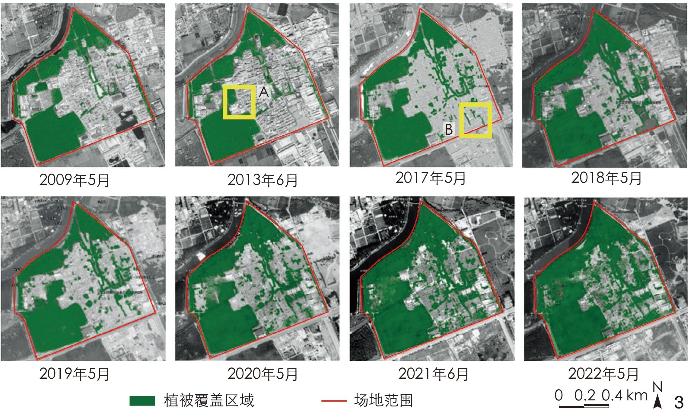
以北京西玉河村闲置地为例,对该区域2009—2022年的卫星影像进行解译,分析拆建前后植被覆盖率的变化趋势。于2023年3—5月对39个样方内的自生植物进行了全面调查,计算其相对频度、相对盖度、相对多度、相对优势度和重要值5个评价指标。
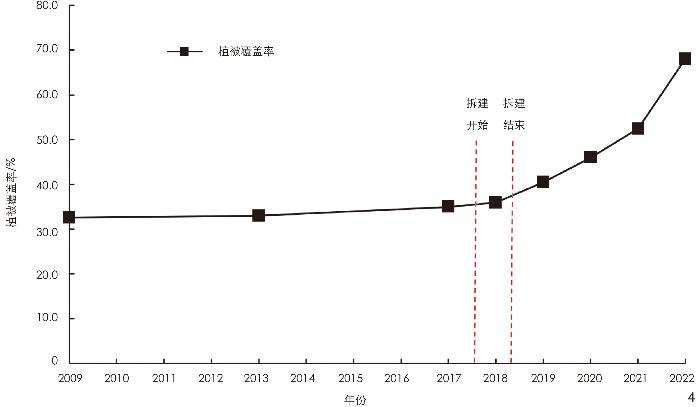
1)拆建前(2009—2017年),场地植被覆盖率整体变化不显著;在建筑拆除后的第1年内(2017—2018年),乔木植被覆盖率未发生显著变化;拆建后(2018—2022年)植被覆盖率显著上升,年均增幅约8.0%。2)场地内共记录到植物24科、41属、44种,其中自生植物39种,以菊科为主,占自生植物种类总数的28.95%;草本植物种类占自生植物种类总数的69.23%。3)传播型为风传播的自生植物占比为43.59%;优势种包括藜(Chenopodium album )、黄花蒿(Artemisia annua)和尖裂假还阳参(Crepidiastrum sonchifolium)等,共形成11种优势植物群落。4)自生草本植物多在3月集中萌发,4月开花,部分花期延续至5月,个体观赏性强的植物有地黄(Rehmannia glutinosa)、蒲公英(Taraxacum mongolicum)、翅果菊(Lactuca indica)等,整体观赏性由群落质感决定。5)葎草(Humulus scandens)、藜和尖裂假还阳参表现出明显的种间竞争。
科学地保留和利用自生植物为在闲置地营造荒野景观提供了新途径,未来应进一步探究降低人为干扰、维持生态平衡的景观营造方法以及植被恢复初期的管理措施等内容。
尹豪 , 李金诺 , 吴晓妍 , 程娴辞 . 城市闲置地内自生植物形成的荒野景观特征研究[J]. 风景园林, 2024 , 31(11) : 31 -37 . DOI: 10.3724/j.fjyl.202406190330
The relatively low level of human interference in most of the vacant lands allows natural succession and ecological processes to take place to a certain extent, thus forming wilderness landscapes dominated by spontaneous plants and enhancing the stability of urban ecological functions. Therefore, revealing the community characteristics and growth pattern of spontaneous plants in such special habitats can provide some support for ecological restoration of vacant land and guide the construction and renewal of wilderness landscape.
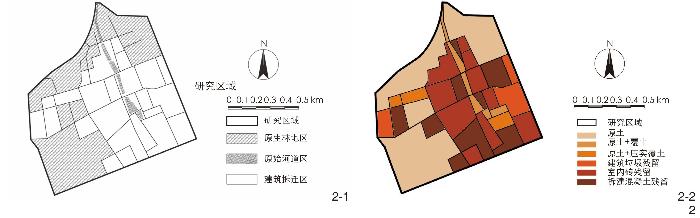
Taking the Xiyuhe Village construction and demolition site in Beijing as an example, this research comprehensively adopts the satellite image analysis method and the field survey method to visually interpret and statistically analyze the trend of vegetation coverage and the change of vegetation growth distribution before and after the construction and demolition as shown in eight historical satellite images spanning the period from 2009 to 2022. Using the grid distribution sampling method, the research area is divided into native forest area, primitive river area, and construction and demolition area. During the period from March to May in 2023, the investigation of spontaneous plants was repeated 10 times targeting the 39 quadrats selected, and the evaluation indexes such as relative frequency, relative cover, relative density, relative dominance, and importance value were calculated using SPSS 26.0.
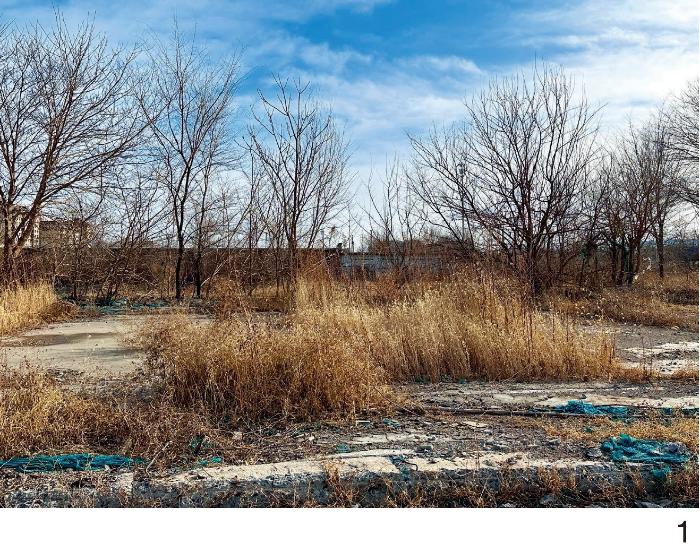
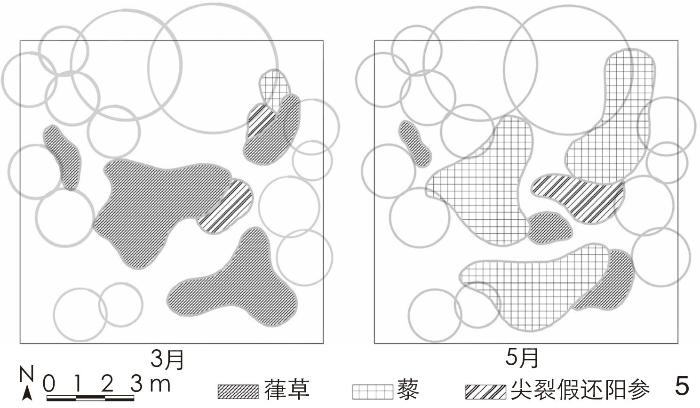
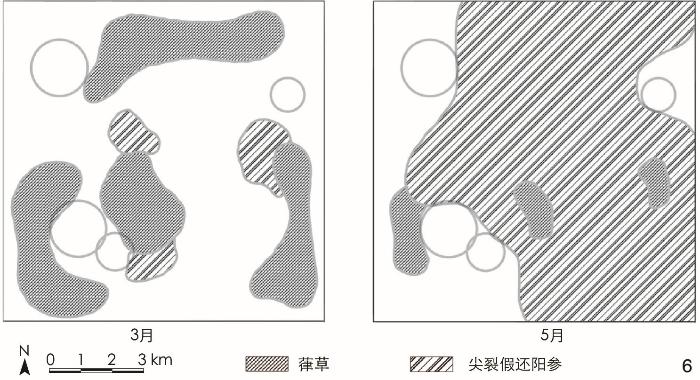
1) In terms of vegetation coverage, before construction and demolition and within one year of demolition (2009–2018), the vegetation coverage did not change significantly, with coverage change mainly concentrated in the vacant open space at the forest edge on the west side of the research site and in the area of building demolition on the south side, and newborn plants mainly appearing in the vicinity of the primary vegetation. While after construction and demolition (2018–2022), the vegetation coverage increased significantly, with an average annual increase of about 8%. It is clearly observed that during this period, a large number of plants began to grow at the gaps left by hard paving, in which woody plants grew and spread rapidly, most of the secondary trees grew in the area with more fertile soil and no hard concrete block residues near the primary trees, and the growth range of herbaceous plants was enlarged. 2) In terms of spontaneous plant species, a total of 44 species of plants classified into 24 families under 41 genera are recorded at the research site, including 39 species of spontaneous plants, of which herbaceous plant species are the most numerous, accounting for 69.23%, mainly dominated by Asteraceae (11 species in total), accounting for 28.95% of the total number of spontaneous plants. In addition to the Asteraceae family, the rest families mostly comprise 1 – 2 species each, such as Zygophyllaceae, Gramineae, Labiatae, Cheloniaceae, Coriandrum, Ledebouriaceae, Cruciferae, and Syzygium. 3) In terms of the propagation type of spontaneous plants, wind propagation serves as the dominant propagation type, accounting for 43.59%, which can achieve long-distance propagation of plant seeds by the action of wind, making plant seeds more widely distributed. In addition, animal propagation accounts for 17.95%, autochthonous propagation accounts for 5.13%, the combination of animal propagation and wind propagation accounts for 10.26%, and the combination of wind propagation and autochthonous propagation accounts for 17.59%. In terms of dominant species of spontaneous plants, the dominant species include Chenopodium album, Artemisia annua, Crepidiastrum sonchifolium, Setaria viridis, Humulus scandens, Ulmus pumila, Lactuca indica, etc. The distribution of spontaneous plants in different regions varies locally, with a total of eleven dominant plant communities being formed, such as Ixeris chinensis, Lactuca indica, Humulus scandens, Ulmus pumila, Broussonetia papyrifera, Salix matsudana, Chenopodium album, Salix matsudana, Broussonetia papyrifera, Crepidiastrum sonchifolium, and Artemisia annua. 4) In terms of the ornamentality of spontaneous plants, the herbaceous spontaneous plants typically sprout in March, and bloom in April, with the blooming period of some plants extending to May. Of these spontaneous plants, those with more obvious ornamentality include Rehmannia glutinosa, Taraxacum mongolicum, Lactuca indica, etc. For spontaneous herbaceous plants with unremarkable ornamentality, such as Ixeris chinensis, Crepidiastrum sonchifolium, and Viola philippica, they often also have ornamental flower organs, but due to the small flower volume and sparse inflorescences, it is difficult for them to form an outstanding ornamental effect. Generally, such herbaceous spontaneous plants have strong ornamentality when arranged together, which may compensate for their poor individual ornamentality, and they also play a more important role in autochthonous plant community landscapes. 5) In terms of competition among spontaneous plant species, Humulus scandens, Chenopodium album and Crepidiastrum sonchifolium acuminata show obvious competition. Humulus scandens grows rapidly from March to April, with their number of leaf blades, plant height, and fluffy diameter growing to the maximum extent then, while Chenopodium album and Crepidiastrum sonchifolium still maintain rapid growth from April to May, with Chenopodium album performing best.
The scientific retention and use of spontaneous plants may provide a new idea for creating wilderness landscapes in unused land. In the future, we still need to carry out in-depth research on the reduction of human interference, the ecological balance of wilderness landscapes, and the management measures in the early stage of vegetation restoration.
表1 各样方植被覆盖度变化Tab. 1 Vegetation coverage change in each quadrat |
| 调查日期 | 植被覆盖度/% | |||||||||
| A-1 | A-2 | A-3 | A-4 | A-5 | A-6 | A-7 | A-8 | A-9 | A-10 | |
| 2023年3月6日 | 2.1 | 1.3 | 2.0 | 0.1 | 0.0 | 1.0 | 1.1 | 1.0 | 0.0 | 2.0 |
| 2023年3月21日 | 10.2 | 15.0 | 12.3 | 8.1 | 7.0 | 10.1 | 11.4 | 9.0 | 4.2 | 8.0 |
| 2023年4月5日 | 22.0 | 23.2 | 22.4 | 17.1 | 14.0 | 19.3 | 18.1 | 14.0 | 9.3 | 15.2 |
| 2023年4月20日 | 40.2 | 49.0 | 41.3 | 23.2 | 21.1 | 34.2 | 28.9 | 22.1 | 18.4 | 35.3 |
| 2023年5月6日 | 67.9 | 76.1 | 69.2 | 28.0 | 28.5 | 55.4 | 53.1 | 48.0 | 26.2 | 68.2 |
| 2023年5月20日 | 83.3 | 92.1 | 78.3 | 37.4 | 30.0 | 76.1 | 66.0 | 58.0 | 32.1 | 84.1 |
表2 样地植物名录Tab. 2 List of plants in each sample plot |
| 生活型 | 种名 | 拉丁名 | 科属 | 原有或自生 |
| 常绿乔木 | 圆柏 | Juniperus chinensis | 柏科刺柏属 | 原有 |
| 侧柏 | Platycladus orientalis | 柏科侧柏属 | 原有 | |
| 落叶乔木 | 银杏 | Ginkgo biloba | 银杏科银杏属 | 原有 |
| 榆 | Ulmus pumila | 榆科榆属 | 原有+自生 | |
| 旱柳 | Salix matsudana | 杨柳科柳属 | 原有+自生 | |
| 美桐 | Platanus occidentalis | 悬铃木科悬铃木属 | 原有 | |
| 构 | Broussonetia papyrifera | 桑科构属 | 原有+自生 | |
| 臭椿 | Ailanthus altissima | 苦木科臭椿属 | 原有+自生 | |
| 毛樱桃 | Prunus tomentosa | 蔷薇科李属 | 原有+自生 | |
| 毛白杨 | Populus tomentosa | 杨柳科杨属 | 原有+自生 | |
| 黑杨 | Populus nigra | 杨柳科杨属 | 原有+自生 | |
| 落叶灌木 | 连翘 | Forsythia suspensa | 木樨科连翘属 | 原有 |
| 荆条 | Vitex negundo var. heterophylla | 唇形科牡荆属 | 自生 | |
| 木质藤本 | 杠柳 | Periploca sepium | 夹竹桃科杠柳属 | 自生 |
| 多年生 草质藤本 | 茜草 | Rubia cordifolia | 茜草科茜草属 | 自生 |
| 鹅绒藤 | Cynanchum chinense | 夹竹桃科鹅绒藤属 | 自生 | |
| 葎草 | Humulus scandens | 大麻科葎草属 | 自生 | |
| 一年生 草本 | 黄花蒿 | Artemisia annua | 菊科蒿属 | 自生 |
| 马齿苋 | Portulaca oleracea | 马齿苋科马齿苋属 | 自生 | |
| 藜 | Chenopodium album | 苋科藜属 | 自生 | |
| 狗尾草 | Setaria viridis | 禾本科狗尾草属 | 原有+自生 | |
| 打碗花 | Calystegia hederacea | 旋花科打碗花属 | 自生 | |
| 地肤 | Bassia scoparia | 苋科沙冰藜属 | 自生 | |
| 斑种草 | Bothriospermum chinense | 紫草科斑种草属 | 自生 | |
| 泥胡菜 | Hemisteptia lyrata | 菊科泥胡菜属 | 自生 | |
| 一或二年生 草本 | 苦苣菜 | Sonchus oleraceus | 菊科苦苣菜属 | 自生 |
| 点地梅 | Androsace umbellata | 报春花科点地梅属 | 自生 | |
| 朝天委陵菜 | Potentilla supina | 蔷薇科委陵菜属 | 自生 | |
| 诸葛菜 | Orychophragmus violaceus | 十字花科诸葛菜属 | 原有+自生 | |
| 翅果菊 | Lactuca indica | 菊科莴苣属 | 自生 | |
| 独行菜 | Lepidium apetalum | 十字花科独行菜属 | 自生 | |
| 二年生草本 | 附地菜 | Trigonotis peduncularis | 紫草科附地菜属 | 自生 |
| 多年生 草本 | 菊芋 | Helianthus tuberosus | 菊科向日葵属 | 自生 |
| 芦苇 | Phragmites australis | 禾本科芦苇属 | 原有+自生 | |
| 刺儿菜 | Cirsium arvense var. integrifolium | 菊科蓟属 | 自生 | |
| 地黄 | Rehmannia glutinosa | 列当科地黄属 | 自生 | |
| 尖裂假还阳参 | Crepidiastrum sonchifolium | 菊科假还阳参属 | 自生 | |
| 中华苦荬菜 | Ixeris chinensis | 菊科苦荬菜属 | 自生 | |
| 紫花地丁 | Viola philippica | 堇菜科堇菜属 | 自生 | |
| 野艾蒿 | Artemisia lavandulifolia | 菊科蒿属 | 自生 | |
| 夏至草 | Lagopsis supina | 唇形科夏至草属 | 自生 | |
| 车前草 | Plantago depressa | 车前科车前属 | 原有+自生 | |
| 蒲公英 | Taraxacum mongolicum | 菊科蒲公英属 | 原有+自生 | |
| 阴地蒿 | Artemisia sylvatica | 菊科蒿属 | 自生 |
表3 自生植物的传播型组成Tab. 3 Composition of propagation types of spontaneous plants |
| 传播型 | 植物种数量 | 比例/% |
| 动物传播 | 7 | 17.95 |
| 风传播 | 17 | 43.59 |
| 自体传播 | 2 | 5.13 |
| 动物传播+自体传播 | 2 | 5.13 |
| 动物传播+风传播 | 4 | 10.26 |
| 风传播+自体传播 | 7 | 17.95 |
表4 自生植物优势种Tab. 4 Dominant species of spontaneous plants |
| 编号 | 物种名 | 相对频度 | 相对多度 | 重要值 |
| 1 | 藜 | |||
| 2 | 黄花蒿 | |||
| 3 | 尖裂假还阳参 | |||
| 4 | 狗尾草 | |||
| 5 | 葎草 | |||
| 6 | 榆 | |||
| 7 | 翅果菊 | |||
| 8 | 旱柳 | |||
| 9 | 刺儿菜 | |||
| 10 | 构 |
表5 主要自生植物春季物候Tab. 5 Spring phenology of major spontaneous plants |
| 编号 | 物种名 | 3月上旬 | 3月中旬 | 3月下旬 | 4月上旬 | 4月中旬 | 4月下旬 | 5月上旬 | 5月中旬 |
| 注:▲代表未萌发期;■代表绿叶期;●代表开花期。 | |||||||||
| 1 | 毛樱桃 | ■ | ■ | ● | ● | ■ | ■ | ■ | ■ |
| 2 | 荆条 | ▲ | ■ | ■ | ■ | ■ | ■ | ■ | ■ |
| 3 | 狗尾草 | ▲ | ▲ | ▲ | ■ | ■ | ■ | ■ | ■ |
| 4 | 打碗花 | ▲ | ▲ | ■ | ■ | ● | ● | ● | ■ |
| 5 | 斑种草 | ▲ | ▲ | ■ | ■ | ■ | ● | ● | ■ |
| 6 | 泥胡菜 | ▲ | ▲ | ▲ | ▲ | ▲ | ■ | ● | ■ |
| 7 | 点地梅 | ▲ | ▲ | ■ | ■ | ● | ● | ● | ■ |
| 8 | 朝天委陵菜 | ▲ | ▲ | ■ | ■ | ■ | ● | ● | ■ |
| 9 | 诸葛菜 | ▲ | ■ | ■ | ● | ● | ● | ● | ● |
| 10 | 翅果菊 | ▲ | ● | ● | ● | ● | ● | ● | ■ |
| 11 | 独行菜 | ▲ | ▲ | ▲ | ▲ | ■ | ● | ● | ■ |
| 12 | 菊芋 | ▲ | ▲ | ● | ● | ● | ● | ● | ■ |
| 13 | 刺儿菜 | ▲ | ▲ | ■ | ■ | ■ | ■ | ● | ● |
| 14 | 地黄 | ▲ | ▲ | ■ | ■ | ● | ● | ■ | ■ |
| 15 | 尖裂假还阳参 | ▲ | ■ | ■ | ■ | ● | ● | ● | ● |
| 16 | 中华苦荬菜 | ▲ | ■ | ■ | ■ | ● | ● | ● | ● |
| 17 | 紫花地丁 | ▲ | ■ | ■ | ● | ● | ■ | ■ | ■ |
| 18 | 野艾蒿 | ▲ | ■ | ■ | ■ | ● | ● | ■ | ■ |
| 19 | 夏至草 | ▲ | ▲ | ■ | ■ | ■ | ● | ● | ■ |
| 20 | 车前草 | ▲ | ■ | ■ | ■ | ■ | ■ | ■ | ● |
| 21 | 蒲公英 | ▲ | ▲ | ■ | ● | ● | ● | ● | ● |
图5 样方A-1中葎草、藜、尖裂假还阳参生长范围对比Fig. 5 Comparison of the growth ranges of Humulus scandens, Chenopodium album, and Crepidiastrum sonchifolium in quadrat A-1 |
文中图表均由作者拍摄与绘制。
| [1] |
王向荣. 城市荒野与城市生境[J]. 风景园林, 2019, 26 (1): 4-5
WANG X R. Urban Wilderness and Urban Habitat[J]. Landscape Architecture, 2019, 26 (1): 4-5.
|
| [2] |
李晓鹏, 董丽, 关军洪, 等. 北京城市公园环境下自生植物物种组成及多样性时空特征[J]. 生态学报, 2018, 38 (2): 581-594
LI X P, DONG L, GUAN J H, et al. Temporal and Spatial Characteristics of Spontaneous Plant Composition and Diversity in a Beijing Urban Park[J]. Acta Ecologica Sinica, 2018, 38 (2): 581-594.
|
| [3] |
SANAMI L N, GHORBANI J, VAHABZADEH G, et al. Spontaneous Growth of Plants Enhances Phytoextraction on Abandoned Coal Mine Wastes in Central Alborz Coalfield, Iran[J]. International Journal of Phytoremediation, 2024, 1-9.
|
| [4] |
YUAN H Q, GUO Z L, WANG S C, et al. Drivers and Mechanisms of Spontaneous Plant Community Succession in Abandoned PbZn Mining Areas in Yunnan, China[J]. Science of The Total Environment, 2023, 904: 166871.
|
| [5] |
HUANG Y, ZHAO Y, LI S, et al. The Effects of Habitat Area, Vegetation Structure and Insect Richness on Breeding Bird Populations in Beijing Urban Parks[J]. Urban Forestry & Urban Greening, 2015, 14 (4): 1027-1039.
|
| [6] |
NEFFAR S, CHENCHOUNI H, BACHIR S A. Floristic Composition and Analysis of Spontaneous Vegetation of Sabkha Djendli in North-East Algeria[J]. Plant Biosystems, 2016, 150 (3): 396-403
|
| [7] |
HOLMES P M, ESLER K J, WILGEN B W, et al. Ecological Restoration of Ecosystems Degraded by Invasive Alien Plants in South African Fynbos: Is Spontaneous Succession a Viable Strategy[J]. Transactions of the Royal Society of South Africa, 2020, 75 (2): 111-139
|
| [8] |
PRACH K, PYŠEK P, BASTL M. Spontaneous Vegetation Succession in Human-Disturbed Habitats: A Pattern Across Seres[J]. Applied Vegetation Science, 2001, 4 (1): 83-88
|
| [9] |
ROBINSON L S, LUNDHOLM T J. Ecosystem Services Provided by Urban Spontaneous Vegetation[J]. Urban Ecosystems, 2012, 15 (3): 545-557
|
| [10] |
RILEY B C, PERRY I K, ARD K, et al. Asset or Liability? Ecological and Sociological Tradeoffs of Urban Spontaneous Vegetation on Vacant Land in Shrinking Cities[J]. Sustainability, 2018, 10 (7): 2139-2139
|
| [11] |
李一为.京西矿业废弃地生境特征及植被演替研究[D].北京: 北京林业大学, 2007.
LI Y W. Study on the Habitat Characteristic and Vegetation Succession of Mined Wastelands in the West of Beijing[D]. Beijing: Beijing Forestry University, 2007.
|
| [12] |
孙玉真, 王志泰, 包玉, 等. 城市遗存山体植被群落特征对不同人为干扰方式及强度的响应[J]. 生态学报, 2023, 43 (11): 4632-4650
SUN Y Z, WANG Z T, BAO Y, et al. Response of Plant Community Characteristics of Urban Remnant Mountains to Different Ways and Intensity of Artificial Disturbance[J]. Acta Ecologica Sinica, 2023, 43 (11): 4632-4650.
|
| [13] |
尹豪, 罗婧, 宁雅萱, 等. 城市闲置地块的生态自我修复特征研究: 以北京林业大学校园为例[J]. 景观设计学, 2021, 9 (1): 40-51
YIN H, LUO J, NING Y X, et al. The Characteristics of Ecological Self-Restoration in Urban Idle Lands: A Case Study of Beijing Forestry University[J]. Landscape Architecture Frontiers, 2021, 9 (1): 40-51
|
| [14] |
宋永昌.植被生态学[M].北京: 高等教育出版社, 2017.
SONG Y C. Vegetation Ecology[M]. Beijing: Higher Education Press, 2017.
|
| [15] |
汪劲武.种子植物分类学[M].北京: 高等教育出版社, 1985.
WANG J W. Spermatophyte Taxonomy[M]. Beijing: Higher Education Press, 1985.
|
| [16] |
刘金平, 欧阳梅. 成熟度与贮藏期对野生葎草种子发芽力的影响[J]. 安徽农业科学, 2010, 38 (4): 1817-1818
LIU J P, OUYANG M. Effects of Maturity Degree and Storage Time on the Seed Germinating Ability of Wild Humulus seandens[J]. Journal of Anhui Agricultural Sciences, 2010, 38 (4): 1817-1818.
|
| [17] |
陈雅.白菜型油菜田藜-密花香薷种间关系研究[D].青海: 青海大学, 2023.
CHEN Y. Study on Interspecific Relationship Between Chenopodium album and Elsholtzia densa in Chinese Brassia campestris Field[D]. Qinghai: Qinghai University, 2023.
|
| [18] |
张庆费, 贾熙璇, 郑思俊, 等. 城市工业区野境植物多样性与群落结构研究: 以原上海溶剂厂再野化为例[J]. 中国园林, 2021, 37 (12): 14-19
ZHANG Q F, JIA X X, ZHENG S J, et al. Research on Plant Diversity and Plant Community Structure of Wildness in Urban Industrial Area: Taking the Rewilding of Shanghai Solvent Factory as an Example[J]. Chinese Landscape Architecture, 2021, 37 (12): 14-19.
|
| [19] |
李江文, 何邦印, 张晓曦, 等. 荒漠草原异常降水对不同载畜率植物群落物种组成及多样性的影响[J]. 生态学报, 2023, 43 (15): 6433-6442
LI J W, HE B Y, ZHANG X X, et al. Effects on Plant Species Composition and Diversity of Community Under Different Stocking Rates by Abnormal Precipitations in the Desert Steppe[J]. Acta Ecologica Sinica, 2023, 43 (15): 6433-6442.
|
| [20] |
李旭佳, 蒙小英. 城市中的荒野景观[J]. 华中建筑, 2016, 34 (12): 37-40
LI X J, MENG X Y. Wilderness Landscape in Urban[J]. Huazhong Architecture, 2016, 34 (12): 37-40.
|
| [21] |
尤其, 商妞, 代挽玉, 等. 城市闲置地自生植物种间联结及土壤因子分析: 以郑州北龙湖公园为例[J]. 西北林学院学报, 2023, 38 (5): 270-278
YOU Q, SHANG N, DAI W Y, et al. Interspecific Associations and Soil Factors of Volunteer Plants in Urban Vacant Land: A Case Study of Zhengzhou Beilonghu Park[J]. Journal of Northwest Forestry University, 2023, 38 (5): 270-278.
|
| [22] |
郑晓笛, 吴熙. 棕地再生中的生态思辨[J]. 中国园林, 2020, 36 (6): 17-22
ZHENG X D, WU X. Ecological Discourse and Speculation of Brownfield Regeneration[J]. Chinese Landscape Architecture, 2020, 36 (6): 17-22.
|
| [23] |
王冰玉, 韩舒先, 郭婷婷, 等. 基于景观偏好理论的草本自生植物应用潜力研究[J]. 浙江农业科学, 2024, 65 (3): 633-640
WANG B Y, HAN S X, GUO T T, et al. Research on the Potential Application of Herbaceous Spontaneous Plants Based on Landscape Preference Theory[J]. Journal of Zhejiang Agricultural Sciences, 2024, 65 (3): 633-640.
|
| [24] |
张梦园, 李坤, 邢小艺, 等. 北京温榆河-北运河生态廊道自生植物多样性对城市化的响应[J]. 生态学报, 2022, 42 (7): 2582-2592
ZHANG M Y, LI K, XING X Y, et al. Responses of Spontaneous Plant Diversity to Urbanization in Wenyu River-North Canal Ecological Corridor, Beijing[J]. Acta Ecologica Sinica, 2022, 42 (7): 2582-2592.
|
| [25] |
包钰婷, 黄瑞. 成都10个城市公园自生植物物种组成与多样性研究[J]. 绿色科技, 2023, 25 (17): 53-57
BAO Y T, HUANG R. Study on the Species Composition and Diversity of Spontaneous Plants in Urban Parks[J]. Journal of Green Science and Technology, 2023, 25 (17): 53-57.
|
| [26] |
刘昌, 邢韶华, 姚扬, 等. 北京城区自生植物分布格局及其影响因素[J]. 生态学报, 2024, 44 (2): 544-558
LIU C, XING S H, YAO Y, et al. Spatial Distribution Pattern and Influencing Factors of Spontaneous Plants Within the Built-Up Areas of Beijing, China[J]. Acta Ecologica Sinica, 2024, 44 (2): 544-558.
|
| [27] |
包钰婷, 李晓鹏, 黄瑞. 成都四环路内工业废弃地自生植物生境及物种多样性[J]. 风景园林, 2024, 31 (1): 103-111
BAO Y T, LI X P, HUANG R. The Habitat and Diversity of Spontaneous Plants in Industrial Wasteland in the Fourth Ring Road of Chengdu[J]. Landscape Architecture, 2024, 31 (1): 103-111
|
/
| 〈 |
|
〉 |