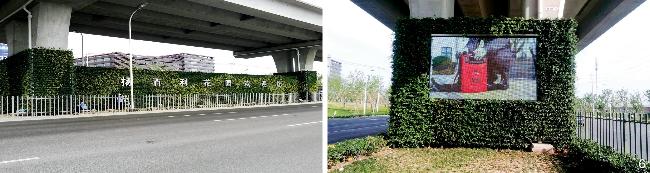


城市高架桥下新自然生境重建模式及维持策略——以上海市为例
|
邢强/男/上海辰山植物园高级工程师/复旦大学生命科学学院在读博士研究生/研究方向为城市生态、城市园艺技术研发与推广 |
|
刘静/女/博士/上海应用技术大学化学与环境工程学院讲师/研究方向为水污染控制和微生物技术 |
|
胡永红/男/博士/上海辰山植物园教授级高级工程师/研究方向为城市园艺和观赏园艺 |
收稿日期: 2024-02-29
修回日期: 2024-08-07
网络出版日期: 2025-12-16
基金资助
上海市绿化和市容管理局科研专项“根域体积限制对植物根系构型及生理功能的影响”(G242422)
国家自然科学基金面上项目“光绿组合模式下的屋面绿化夏季调温综合效能及其影响因素研究”(52378072)
上海市科委“科技创新行动计划”“城市低光照区域立体绿化技术集成”(16DZ1204900)
版权
Research on Reconstruction Patterns and Maintenance Strategies of New Natural Habitats Under the Shade of Urban Viaducts: A Case Study of Shanghai City
|
XING Qiang is a senior engineer in Shanghai Chenshan Botanical Garden, and a Ph.D. candidate in the School of Life Sciences, Fudan University. His research focuses on urban ecology, and research and promotion of urban horticultural technology |
|
LIU Jing, Ph.D., is a lecturer in the School of Chemical and Environmental Engineering, Shanghai Institute of Technology. Her research focuses on water pollution control, and microbial technology |
|
HU Yonghong, Ph.D., is a professorate senior engineer in Shanghai Chenshan Botanical Garden. His research focuses on urban horticulture, and ornamental horticulture |
Received date: 2024-02-29
Revised date: 2024-08-07
Online published: 2025-12-16
Copyright
【目的】城市高架桥下低光照、高污染、强干旱的特殊生境,严重影响了植物健康生长。构建高架桥“植物筛选—生境营造—可持续运维”的立体绿化体系,重建城市高架桥下新自然生境,可以有效改善城市高架桥下生境与人居环境,提高城市生物多样性。【方法】基于生境相似性原理,运用适应性、观赏性、功能性3层过滤模式筛选适生植物;制定“建筑-设施-介质”一体化策略;提出实现高架桥下立体绿化自维持运营的创新模式。【结果】筛选出了27种适宜种植于高架桥下特殊生境的抗性强的适生植物,丰富了高架桥下特殊生境的植物多样性,使植物单次更换周期延长至5年以上;研发出集适生植物、轻型栽培介质、叠垒式种植容器、浇灌系统、雨水收集净化设施于一体的新型立体绿化模块,支撑植物长期保持良好的生长状态,同时实现了雨水资源化利用、污染源头控制和城市雨水消纳等多重目标;在景观形式上,将平面绿化拓展到立体绿化,复合利用大量已建成的城市灰色空间来增绿、填绿,预期可为上海市增加0.3 m2的人均绿化面积;创新性地提出以“绿”促“商”、以“商”养“管”的运维模式,建立了上海虹梅高架桥下立体绿化新模式示范段。【结论】通过研发城市典型的低光照区域立体绿化技术,集成了新型立体绿化模块,将覆盖面广、连通性强的城市狭长污染线——城市高架桥下空间转型为生命景观线、生物多样性廊道,为城市可持续发展提供重要的生态、经济效益。
邢强 , 刘静 , 胡永红 . 城市高架桥下新自然生境重建模式及维持策略——以上海市为例[J]. 风景园林, 2024 , 31(9) : 86 -93 . DOI: 10.3724/j.fjyl.202402290125
[Objective] Urbanization has led the development of cities in the direction of “high population density” and “high-rise buildings”, causing social and environmental problems. The improvement of urban carrying capacity and the mixed use of public space become the main strategies for solving “urban diseases” such as heat island, waterlogging, and biodiversity loss. Nature-based Solutions (NbS) are proposed for urban greening by using modern technologies to enhance the adaptability of plants in cities and increase the comfort of urban environments. Urban viaducts can provide convenient transportation and efficient travel for high-density cities, but at the same time generate ecological and spatial problems. A three-dimensional greening system of “plant screening – habitat construction – sustainable operation and maintenance” for viaducts is constructed to explore the feasibility of reconstructing urban viaducts into a network of new natural habits, aiming to improve the habitat of urban hard space and enhance urban biodiversity.
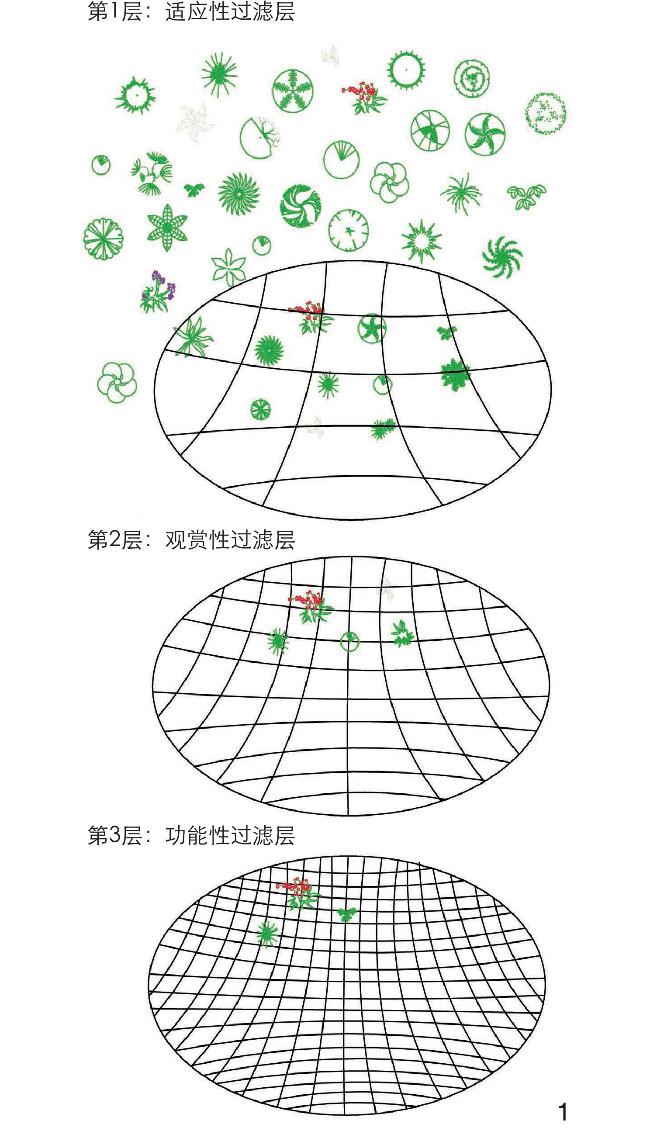
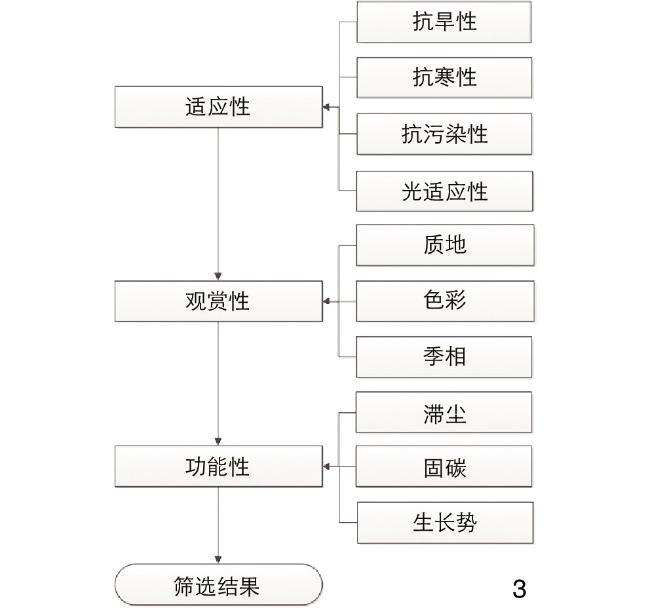
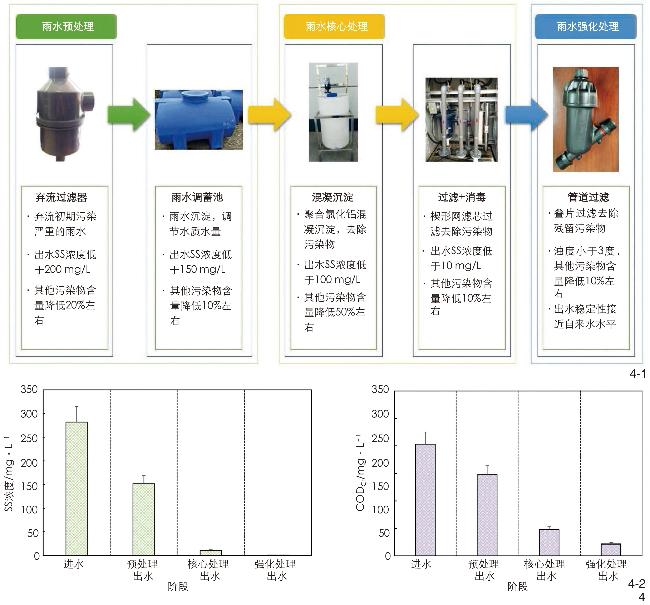
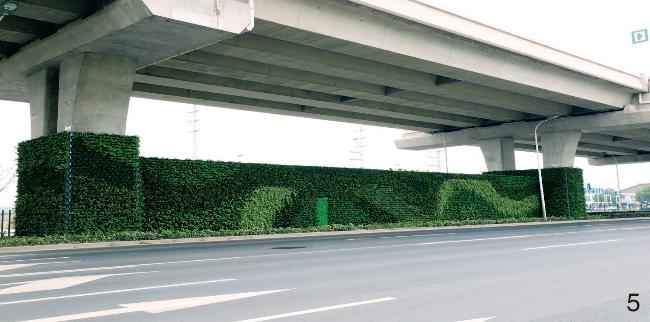
[Methods] Shanghai Censhan Botanical Garden develops a planting plan from three dimensions of species selecting, habitat optimization, and commercial development, to achieve the construction of a new nature in the city. Based on field investigation, this research has established a resource base of 120 plant candidates that may be adapted to three-dimensional greening in low-light areas. We set up a three-factor and four-level test of shading, drought, and low temperature, counted the survival rate of different plants, and recorded the phenological and physical appearance characteristics with a focus on the testing and calculation of plants. The research focuses on testing and calculating plants’ photosynthetic indexes, and assisting in testing physiological indexes, so as to establish a three-dimensional greening plant evaluation model for low-light areas.The research applies a three-layer filtering sieve of ecological adaptability, ornamentality, and functionality to screen suitable plants. The research establishes an integrated greening facility system using PP resin. The load of the system can be reduced by improving the shape and size of planting modules. The research explores the stability of the irrigation system with a focus on the stacked base cultivation containers and the water storage and infiltration watering integration module. With acrylic acid and kaolin as raw materials, high water-absorbent materials are prepared by the aqueous solution polymerisation method and then mixed and co-mingled with other matrix materials in different forms. Additionally, a four-factor and three-level orthogonal test is adopted to prepare lightweight and high-quality media formulations, which satisfy the soil conditions required for long-term growth of plants. The research also explores the relationship between rainwater volume of viaducts and the supply and demand of water for three-dimensional greening in the shade of viaducts, and realizes the rapid purification of rainwater from viaducts through the triple purification steps of “pre-processing – core processing – enhanced processing”. The screening results of comprehensive resistant plants suitable for low-light areas, research and development of new lightweight containers, formulation of new and superior media, and integration technology are demonstrated in the 1,012.6 m2 demonstration project, which integrates various technologies to give full play to the functionality of the overall system.
[Results] After nearly three years of teamwork, 27 species of shade-tolerant plants are screened, which extends the single replacement cycle of plants to more than 5 years. The 2nd generation of modular support facilities can help increase the rainwater interception and storage utilization rate to 45%, and realize multiple goals such as rainwater resource utilization, source pollution control and urban flooding alleviation. In terms of landscape form, plane greening is expanded to three-dimensional greening, which is expected to increase the per capita greening area of Shanghai by 0.3 m2. Meanwhile, based on the construction of a technology system for iterative greening of special habitats, the commercial development of three-dimensional greening, the research makes it possible to promote business through greening, thus realizing the goal of complementation between business development and greening management.
[Conclusion] In combination with NbS, this research establishes an integrated three-dimensional greening module through the research and development of three-dimensional greening technology suitable for typical low-light urban areas, the utilization of strongly resistant plants and lightweight containers and media, and the adoption of a complementary commercial mode for integrated long-term greening, making it possible to transform the narrow and long pollution lines under urban viaducts with wide coverage and strong connectivity into life landscape lines and biodiversity corridors, thus providing important ecological, social and economic benefits for sustainable urban development.
表1 高架桥下特殊生境与自然生境的对应关系[30]Tab. 1 Correspondence between special habitats and natural habitats under viaducts[30] |
| 高架桥下特殊生境 | 生境特点 | 对应的自然生境 | |
| 上层(檐口) | 全日照、温差大、湿度低、风速大、土层薄 | 多石山顶南坡 | |
| 中层 (桥柱及横断面) | 南墙 | 全日照、温差较大、湿度低、土层薄 | 南侧悬崖 |
| 北墙 | 背阴、温差较小、湿度一般、土层薄 | 北侧悬崖 | |
| 西墙 | 西晒突出、湿度低、土层薄 | 西侧悬崖 | |
| 东墙 | 光照一般、湿度较低、土层薄 | 东侧悬崖 | |
| 墙垣顶 | 光照强、温差较大、湿度低、风速大、土层薄 | 悬崖顶 | |
| 下层(架空层) | 半日照或背阴、温差小、湿度低、穿堂风明显、土层薄 | 山北坡 | |
表2 实验筛选的植物综合评价Tab. 2 Comprehensive evaluation of experimentally screened plants |
| 种名 | 拉丁名 | 科 | 适应性评分 | 观赏性评分 | 综合分值 |
| 红叶石楠 | Photinia × fraseri | 蔷薇科 | 5.00 | 4.15 | 4.83 |
| 海桐 | Pittosporum tobira | 海桐科 | 4.85 | 3.20 | 4.52 |
| 茶梅 | Camellia sasanqua | 山茶科 | 4.30 | 4.45 | 4.33 |
| 日本花柏 | Chamaecyparis pisifera | 柏科 | 4.40 | 3.80 | 4.28 |
| 檵木 | Loropetalum chinense | 金缕梅科 | 4.25 | 4.20 | 4.24 |
| 小叶蚊母树 | Distylium buxifolium | 金缕梅科 | 4.65 | 2.50 | 4.22 |
| 络石 | Trachelospermum jasminoides | 夹竹桃科 | 4.25 | 3.70 | 4.14 |
| 齿叶冬青 | Ilex crenata | 冬青科 | 4.65 | 2.05 | 4.13 |
| 锦熟黄杨 | Buxus sempervirens | 黄杨科 | 4.30 | 3.35 | 4.11 |
| 日本女贞 | Ligustrum japonicum | 木樨科 | 4.25 | 3.35 | 4.07 |
| 女贞叶忍冬 | Lonicera ligustrina | 忍冬科 | 4.45 | 2.40 | 4.04 |
| 金钱蒲 | Acorus gramineus | 菖蒲科 | 4.10 | 3.70 | 4.02 |
| 大花糯米条 | Abelia × grandiflora | 忍冬科 | 3.80 | 4.80 | 4.00 |
| 胡颓子 | Elaeagnus pungens | 胡颓子科 | 4.10 | 3.45 | 3.97 |
| 柊树 | Osmanthus heterophyllus | 木樨科 | 4.30 | 2.40 | 3.92 |
| 常春藤 | Hedera nepalensis var. sinensis | 五加科 | 4.30 | 2.40 | 3.92 |
| 南天竹 | Nandina domestica | 小檗科 | 3.75 | 4.50 | 3.90 |
| 六月雪 | Serissa japonica | 茜草科 | 4.05 | 3.25 | 3.89 |
| 密枝南天竹 | Nandina domestica var. Compacta | 小檗科 | 3.80 | 4.00 | 3.84 |
| 美丽野扇花 | Sarcococca confusa | 黄杨科 | 4.10 | 2.50 | 3.78 |
| 羽脉野扇花 | Sarcococca hookeriana | 黄杨科 | 4.10 | 2.50 | 3.78 |
| 多枝紫金牛 | Ardisia sieboldii | 报春花科 | 4.10 | 2.20 | 3.72 |
| 欧洲枸骨 | Ilex aquifolium | 冬青科 | 3.95 | 2.05 | 3.57 |
| 加拿利常春藤 | Hedera canariensis | 五加科 | 3.85 | 2.05 | 3.49 |
| 小蜡 | Ligustrum sinense | 木樨科 | 3.35 | 3.70 | 3.42 |
| 小叶黄杨 | Buxus sinica var. parvifolia | 黄杨科 | 3.35 | 3.00 | 3.28 |
| 冬青卫矛 | Euonymus japonicus | 卫矛科 | 3.00 | 3.70 | 3.14 |
表3 高架桥下立体绿化轻型栽培介质类型、配方及理化性质Tab. 3 Types, formulas, and physico-chemical properties of lightweight cultivation media for three-dimensional greening under viaducts |
| 类型 | 配方 | 容重/ g·cm−3 | EC值/ mS·cm−1 | pH值 | 有机质含量/ g·kg−1 | 全氮含量/ g·kg−1 | 速效磷含量/ mg·kg−1 | 速效钾含量/ mg·kg−1 |
| 1 | 有机质木屑66%+2号保水剂2%+3号EM菌2%~3%+珍珠岩20%+椰丝10% | 0.18 | 172.1 | 7.3 | 310 | 10.73 | 119.33 | |
| 2 | 木屑26.4%+竹屑26.4%+草炭13.2%+2号保水剂2%~3%+3号EM菌2%+珍珠岩20%+椰丝10% | 0.24 | 174.3 | 7.2 | 328 | 11.14 | 119.87 | |
| [1] |
CARDINALI M, DUMITRU A, VANDEWOSTIJNE S, et al. Evaluating the Impact of Nature-Based Solutions: A Summary for Policy Makers[M]. Luxembourg: Publications Office of the European Union, 2021.
|
| [2] |
EGGERMONT H, BALIAN E, AZEVEDO J M N, et al. Nature-Based Solutions: New Influence for Environmental Management and Research in Europe[J]. GAIA-Ecological Perspectives for Science and Society, 2015, 24(4): 243-248.
|
| [3] |
林良任, 陈莉娜, 福铭. 增进城市地区生物多样性: 以新加坡模式为例[J]. 风景园林, 2019, 26(8): 25-34.
LIN L R, CHEN L N, HOCK BENG L A. Enhancing Biodiversity in Urban Areas: The Singapore Mode[J]. Landscape Architecture, 2019, 26(8): 25-34.
|
| [4] |
新加坡国家公园局.新加坡城市多样性指数[EB/OL].(2015-07-23)[2024-01-29]. https://www.nparks.gov.sg/-/media/nparks-real-content/biodiversity/singapore-index/singapore-index-users-manualchinese-translation.pdf?hash=AAB479254452B910A863523F3E84B93076C612CB.
National Parks Board of Singapore. Singapore Urban Diversity Index[EB/OL]. (2015-07-23)[2024-01-29]. https://www.nparks.gov.sg/-/media/nparks-real-content/biodiversity/singapore-index/singapore-index-users-manualchinese-translation.pdf?hash=AAB479254452B910A863523F3E843076C612CB.
|
| [5] |
东京都政府.都民ファーストでつくる「新しい東京」[R].东京: 东京都政策企画局, 2015.
Tokyo Metropolitan Government. A “New Tokyo” Created by the Tokyo Metropolitan Government[R]. Tokyo: Policy Planning Bureau, Tokyo Metropolitan Government, 2015.
|
| [6] |
Greenspace Information for Greater London ClC. Borough Planning Stats[EB/OL]. [2024-01-29]. https://www.gigl.org.uk/our-data-holdings/planning-for-nature/boroughstats/.
|
| [7] |
BLASIO B D. One New York: The Plan for a Strong and Just City[EB/OL]. [2024-01-29]. https://g-city.sass.org.cn/_upload/article/files/11/39/cec93dce4e50964389897791d9b7/bbe921bc-949c-4abb-af3d-7bcebcd8914e.pdf.
|
| [8] |
吴未, 冯佳凝, 欧名豪. 基于景观功能性连接度的生境网络优化研究: 以苏锡常地区白鹭为例[J]. 生态学报, 2018, 38(23): 8336-8344.
WU W, FENG J N, OU M H. Habitat Network Optimization Using Landscape Functional Connectivity: A Case Study of the Little Egret (Egretta Garzetta) in the Su-Xi-Chang Area, China[J]. Acta Ecologica Sinica, 2018, 38(23): 8336-8344.
|
| [9] |
谭瑛, 姚青杉.基于生境网络的山水城市生态格局模式研究[J].中国园林, 2015, 31(5): 92-96.
TAN Y, YAO Q S. Research on the Ecological Pattern of Shan-Shui Cities Based on Habitat Network[J]. Chinese Landscape Architecture, 2015, 31(5): 92:96.
|
| [10] |
干靓. 城市建成环境对生物多样性的影响要素与优化路径[J]. 国际城市规划, 2018, 33(4): 67-73.
GAN J. Built Environment Factors Affecting Urban Biodiversity and Planning Optimization Approaches[J]. Urban Planning International, 2018, 33(4): 67-73.
|
| [11] |
王小明, 杨刚, 荣艳, 等. 走向“新自然”: “自然”概念的现代变迁与重构[J]. 科学教育与博物馆, 2022, 8(6): 1-7.
WANG X M, YANG G, RONG Y, et al. Toward “New Nature”: The Modern Change and Reconstruction of the Concept of “Nature”[J]. Science Education and Museums, 2022, 8(6): 1-7.
|
| [12] |
埃亨, 王晓宇. 新城市生态系统城市“新自然”的起源、进化和管理[J]. 风景园林, 2016, 23(8): 81-90.
AHERN J, WANG X Y. Novel Urban Ecosystems Origins, Evolution and Management of “New Nature” in Cities[J]. Landscape Architecture, 2016, 23(8): 81-90.
|
| [13] |
安德森.谈构建风景园林新自然观的重要性[J].风景园林, 2024, 31(1): 80-88.
ANDERSON S L. The Necessity for a New View of Nature[J]. Landscape Architecture, 2024, 31(1): 80-88.
|
| [14] |
徐毅, 彭震伟. 1980—2010年上海城市生态空间演进及动力机制研究[J]. 城市发展研究, 2016, 23(11): 1-10.
XU Y, PENG Z W. Study on Spatial Evolution and Dynamic Mechanism of Shanghai Urban Ecospace in 1980−2010[J]. Urban Development Studies, 2016, 23(11): 1-10.
|
| [15] |
郭淳彬, 徐闻闻. 上海市基本生态网络规划及实施研究[J]. 上海城市规划, 2012(6): 55-59.
GUO C B, XU W W. Studies on the Planning and Implementation of Shanghai Basic Ecological Network[J]. Shanghai Urban Planning Review, 2012(6): 55-59.
|
| [16] |
阎凯, 王宝强, 沈清基. 上海市生态网络体系评价方法研究[J]. 上海城市规划, 2017(2): 82-89.
YAN K, WANG B Q, SHEN Q J. Research on Evaluation and Construction of Ecological Network System in Shanghai[J]. Shanghai Urban Planning Review, 2017(2): 82-89.
|
| [17] |
上海市绿化和市容管理局.上海园林绿化改革发展概况1978—2010[M].上海: 上海社会科学院出版社, 2021.
Shanghai Municipal Administration of Greening and Amenities. Overview of the Reform and Development of Shanghai’s Landscaping 1978−2010[M]. Shanghai: Shanghai Academy of Social Sciences Press, 2021.
|
| [18] |
李阎魁. 高架路与城市空间景观建设: 上海城市高架路带来的思考[J]. 规划师, 2001(6): 48-52.
LI Y K. Overhead Road and Urban Landscape: Consideration of Shanghai Overhead Road[J]. Planners, 2001(6): 48-52.
|
| [19] |
SHEN Y Y, SUN F Y, CHE Y. Public Green Spaces and Human Well-Being: Mapping the Spatial Inequity and Mismatching Status of Public Green Space in the Central City of Shanghai[J]. Urban Forestry & Urban Greening, 2017, 27: 59-68.
|
| [20] |
王雪莹, 辛雅芬, 宋坤, 等. 城市高架桥荫光照特性与绿化的合理布局[J]. 生态学杂志, 2006, 25(8): 938-943.
WANG X Y, XIN Y F, SONG K, et al. Characteristics of Light Condition Under Viaduct and Suitable Greening Distribution in City[J]. Chinese Journal of Ecology, 2006, 25(8): 938-943.
|
| [21] |
殷利华.基于光环境的城市高架桥下桥阴绿地景观研究: 以武汉城区高架桥为例[D].武汉: 华中科技大学, 2012.
YIN L H. Research of Shaded Green Space Landscape Based on Natural Light Environment Under the Urban Viaducts: Case Study on Viaducts in Wuhan City[D]. Wuhan: Huazhong University of Science & Technology, 2012.
|
| [22] |
陈敏, 傅徽楠. 高架桥阴地绿化的环境及对植物生长的影响[J]. 中国园林, 2006, 13(9): 68-72.
CHEN M, FU H N. A Study on the Environment of the Viaduct Shadow and Its Influence on the Plant Growth[J]. Chinese Landscape Architecture, 2006, 13(9): 68-72.
|
| [23] |
程江, 徐启新, 杨凯, 等. 国外城市雨水资源利用管理体系的比较及启示[J]. 中国给水排水, 2007, 23(12): 68-72.
CHENG J, XU Q X, YANG K, et al. Comparison of Foreign Urban Rainwater Resource Utilization Management Systems and Some Inspirations[J]. China Water & Wastewater, 2007, 23(12): 68-72.
|
| [24] |
李树逊. 上海某高架道路降雨径流的生态处理工程示范[J]. 中国给水排水, 2013, 29(11): 57-60.
LI S X. Demonstration of Ecological Treatment Project of Elevated Highway Runoff in Shanghai[J]. China Water & Wastewater, 2013, 29(11): 57-60.
|
| [25] |
王珏. 城市雨水资源化及其策略探讨: 以上海市为例[J]. 给水排水, 2010, 46(7): 12-17.
WANG J. Discussion on Urban Rainwater Resource Utilization and Its Strategy: Taking Shanghai as an Example[J]. Water & Wastewater Engineering, 2010, 46(7): 12-17.
|
| [26] |
MCINTYRE J K, DAVIS J W, HINMAN C, et al. Soil Bioretention Protects Juvenile Salmon and Their Prey from the Toxic Impacts of Urban Stormwater Runoff[J]. Chemosphere, 2015, 132: 213-219.
|
| [27] |
LI Y, HELMEREICH B. Simultaneous Removal of Organic and Inorganic Pollutants from Synthetic Road Runoff Using a Combination of Activated Carbon and Activated Lignite[J]. Separation and Purification Technology, 2014, 122: 6-11.
|
| [28] |
叶子易, 胡永红. 2010年世博主题馆植物墙的设计和核心技术[J]. 中国园林, 2012, 28(2): 76-79.
YE Z Y, HU Y H. Design and the Core Technologies of the Plant-Wall for the Theme Pavilion in Expo 2010[J]. Chinese Landscape Architecture, 2012, 28(2): 76-79.
|
| [29] |
吴兴国, 韩继征.“城市双修”理念下藏北高原城市更新改造: 以西藏那曲为例[C]//中国城市规划学会.共享与品质: 2018中国城市规划年会论文集(02城市更新).北京: 中国建筑工业出版社, 2018.
WU X G, HAN J Z. Urban Renewal and Rehabilitation in Northern Tibetan Plateau Under the Concept of “Urban Dual Repair”: The Case of Nagqu, Tibet[C]// Urban Planning Society of China. Sharing and Quality: Proceedings of 2018 China Urban Planning Annual Conference (02 Urban Renewal). Beijing: China Architecture & Building Press, 2018.
|
| [30] |
刘晖, 吴小辉, 李仓拴. 生境营造的实验性研究(二): 场地生境类型划分与分区[J]. 中国园林, 2017, 33(7): 46-53.
LIU H, WU X H, LI C S. An Experimental Research Approach on Habitat-Site Design (Ⅱ): Study on Habitat-Site Types and Zoning in Urban Green Space[J]. Chinese Landscape Architecture, 2017, 33(7): 46-53.
|
| [31] |
宋爱春, 董丽, 晏海. 基于AHP的北京地区观赏海棠景观价值评价[J]. 中国园林, 2013, 29(6): 65-70.
SONG A C, DONG L, YAN H. AHP-Based Landscape Evaluation of Malus Species in Beijing Area[J]. Chinese Landscape Architecture, 2013, 29(6): 65-70.
|
| [32] |
王红兵, 秦俊, 胡永红. 保持中度生长势成为建筑外表面绿化的选择策略[J]. 上海师范大学学报(自然科学版), 2017, 46(5): 702-706.
WANG H B, QIN J, HU Y H. Keeping Potential of Intermediate Growth as an Optimal Strategy of Greening on Building Exterior Surface[J]. Journal of Shanghai Normal University (Natural Sciences), 2017, 46(5): 702-706.
|
| [33] |
邢强, 秦俊, 胡永红, 等.一种高架桥下的立体绿化方法及装置: CN201810662529.8[P].2018-10-26.
XING Q, QIN J, HU Y H, et al. A Three-Dimensional Greening Method and Device Under Viaduct: CN201810662529.8[P]. 2018-10-26.
|
| [34] |
刘静, 张帆, 杨骐华, 等. 上海高架道路径流污染特征及雨水资源化利用技术[J]. 应用技术学报, 2017, 17(4): 304-308.
LIU J, ZHANG F, YANG Q H, et al. Characteristics of Runoff Pollution and Rainwater Resources Utilization Technology in Shanghai Elevated Road[J]. Journal of Technology, 2017, 17(4): 304-308.
|
| [35] |
季赛, 舒梦婷, 许永静, 等. 聚丙烯酸/高岭土复合高吸水树脂的制备及结构性能研究[J]. 合成纤维工业, 2018, 41(2): 11-15.
JI S, SHU M T, XU Y J, et al. Preparation and Characterization of Polyacrylic Acid/Kaolin Composite Superabsorbent Resin[J]. China Synthetic Fiber Industry, 2018, 41(2): 11-15.
|
| [36] |
邢强, 秦俊, 胡永红, 等.一种含竹粉的栽培基质及其制备方法: CN201710878285.2[P].2018-01-26.
XING Q, QIN J, HU Y H, et al. A Cultivation Substrate Containing Bamboo Powder and Its Preparation Method: CN201710878285.2[P]. 2018-01-26.
|
| [37] |
吴海林, 袁跃祖.一种带有电子显示屏的远程控制智能立体绿化结构: CN201721778952.1[P].2019-01-18.
WU H L, YUAN Y Z. A Kind of Remote Control Intelligent Three-Dimensional Green Structure with Electronic Display Screen: CN201721778952.1[P]. 2019-01-18.
|
/
| 〈 |
|
〉 |