

基于全生命周期的城市公园可持续更新支撑技术体系及应用——以上海中山公园为例
|
汪洁琼/女/博士/同济大学建筑与城市规划学院副教授、博士生导师、景观学系副主任/高密度人居环境生态与节能教育部重点实验室水绿生态智能分实验中心联合创始人/自然资源部大都市区国土空间生态修复工程技术创新中心成员/研究方向为水绿生态智能、景观生态规划与设计、水生态、生态系统服务、城市生态修复工程技术与设计 |
|
胡梦雨/女/同济大学建筑与城市规划学院在读硕士研究生/研究方向为数字景观与工程技术 |
|
刘颂/女/博士/同济大学建筑与城市规划学院教授、博士生导师/高密度人居环境生态与节能教育部重点实验室负责人/上海城市困难立地绿化工程技术研究中心副主任/研究方向为城乡绿地系统规划、景观规划技术方法 |
|
李瑞冬/男/博士/同济大学建筑与城市规划学院讲师/研究方向为风景园林教育、风景园林工程、风景园林规划设计 |
收稿日期: 2024-02-24
修回日期: 2024-07-29
网络出版日期: 2025-12-16
基金资助
上海市科委社发专项“基于生物多样性的城市困难立地高质量园林绿化智能技术及示范”(22dz1202200)
同济大学建筑设计研究院(集团)有限公司自主课题“基于生物多样性的高密度城区高质量生境智能营造技术”(2023J-JB02)
自然资源部大都市区国土空间生态修复工程技术创新中心开放性项目“上海郊野乡村空间湿地复合生境修复与再野化策略研究”(CXZX202401)
版权
Supporting Technology System for Sustainable Renewal of Urban Park Based on Full Life Cycle and Application Thereof: A Case Study of Shanghai Zhongshan Park
|
WANG Jieqiong, Ph.D., is an associate professor and doctoral supervisor in and deputy director of the Department of Landscape Architecture, College of Architecture and Urban Planning (CAUP), Tongji University, a co-founder of Eco-SMART LAB attached to the Key Laboratory of Ecology and Energy-Saving Study of Dense Habitat, Ministry of Education, and a member of the Technology Innovation Center for Land Spatial Eco-restoration in Metropolitan Area, Ministry of Natural Resources. Her research focuses on water-green ecological intelligence, landscape ecological planning and design, water ecology, ecosystem service, and technology and design of urban ecological restoration project |
|
HU Mengyu is a master student in the College of Architecture and Urban Planning (CAUP), Tongji University. Her research focuses on digital landscape and engineering technology |
|
LIU Song, Ph.D., is a professor and doctoral supervisor in the College of Architecture and Urban Planning (CAUP), Tongji University, person in charge of the Key Laboratory of Ecology and Energy-Saving Study of Dense Habitat, Ministry of Education, and deputy director of Shanghai Engineering Research Center of Landscaping on Challenging Urban Sites. Her research focuses on planning of urban and rural green space systems, and techniques and methods for landscape planning |
|
LI Ruidong, Ph.D., is a lecturer in the College of Architecture and Urban Planning (CAUP), Tongji University. His research focuses on landscape architecture education, landscape architecture engineering, and landscape planning and design |
Received date: 2024-02-24
Revised date: 2024-07-29
Online published: 2025-12-16
Copyright
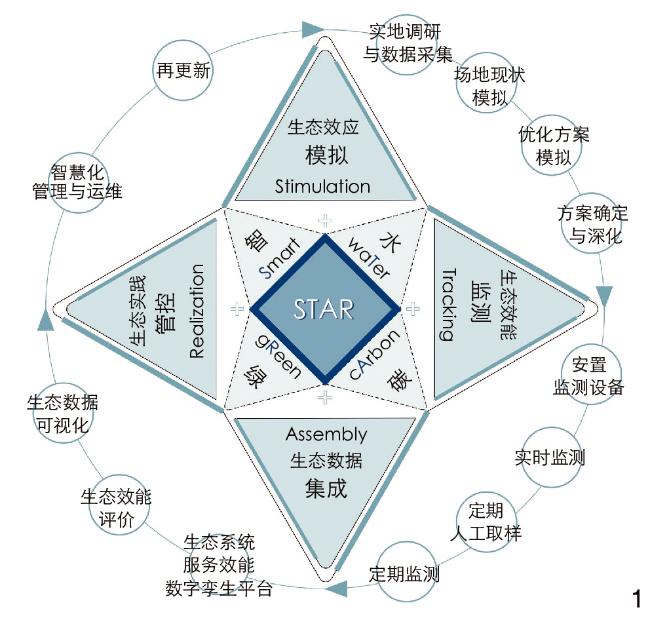
【目的】在中国城市存量更新的背景下,提出以生态系统服务为导向、以全生命周期管控为核心、以数智赋能为技术支撑的技术体系是实现城市公园可持续更新的重要途径。【方法】以上海中山公园为实证案例,获取“智”“水”“绿”“碳”4个维度的生态数据,依托城市公园数字孪生技术,构建以“模拟—设计—建设—监测—评估—再更新”为核心路径的城市公园可持续更新支撑技术体系——STAR体系,实现城市公园更新的全生命周期管控。【结果】阐明了上海中山公园可持续更新在生态效应模拟(Stimulation)、生态效能监测(Tracking)、生态数据集成(Assembly)、生态实践管控(Realization)4个模块的具体内容,厘清了STAR体系技术框架的要点。【结论】可为城市公园可持续更新与高密度人居环境生态系统服务能级提升提供一定的技术支撑。
汪洁琼 , 胡梦雨 , 刘颂 , 李瑞冬 . 基于全生命周期的城市公园可持续更新支撑技术体系及应用——以上海中山公园为例[J]. 风景园林, 2024 , 31(9) : 69 -75 . DOI: 10.3724/j.fjyl.202402240105
[Objective] The urbanization development in China has shifted from incremental construction to stock renewal, positioning urban renewal as a national strategy. According to the Guidelines for Park City Planning and Construction in Shanghai, Shanghai aims to have over 1,000 parks by 2025, emphasizing the need to enhance the comprehensive service functions of parks at all levels. This signifies both quantitative growth of urban parks and qualitative improvement of existing parks, which is conducive to fostering high-quality development. In addition, the application of digital twin technology in landscape architecture has become crucial. In this context, this research proposes three key approaches for achieving sustainable renewal of urban parks: Focusing on ecosystem services, centralizing lifecycle management, and leveraging digital intelligence as technical support.
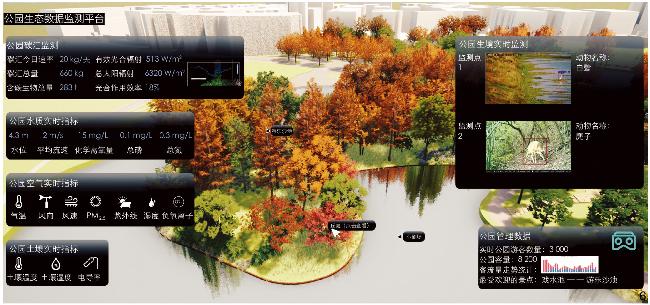
[Methods] Taking Shanghai Zhongshan Park as an example, the research acquires ecological data in four dimensions: Intelligence, water, greenery, and carbon. Based on the digital twin technology for urban parks, the research constructs the STAR system, which comprises four modules: Ecological effect simulation (Simulation), ecological efficiency monitoring (Tracking), ecological data integration (Assembly), and ecological practice management and control (Realization). 1) Simulation: In the early intervention stage, quantitatively simulate design possibilities, and achieve comprehensive assessments of site conditions and precise predictions of design proposals, so as to obtain the optimal planning and design scheme. 2) Tracking: In the middle and later stages, evaluate the ecological efficiency presented after design implementation, through regular and real-time monitoring. 3) Assembly: Supported by the digital twin technology for landscapes, establish a digital twin platform to visualize and display ecological data. 4) Realization: Based on the monitoring data, provide scientific foundations for precise interventions in subsequent intelligent operations and maintenance. This includes subsequent intelligent management and operations, and targeted management decisions based on evaluation results to maintain or achieve higher ecological efficiency. Integrating various monitoring and simulation technologies, the STAR system can enable the full life cycle management of urban park renewal.
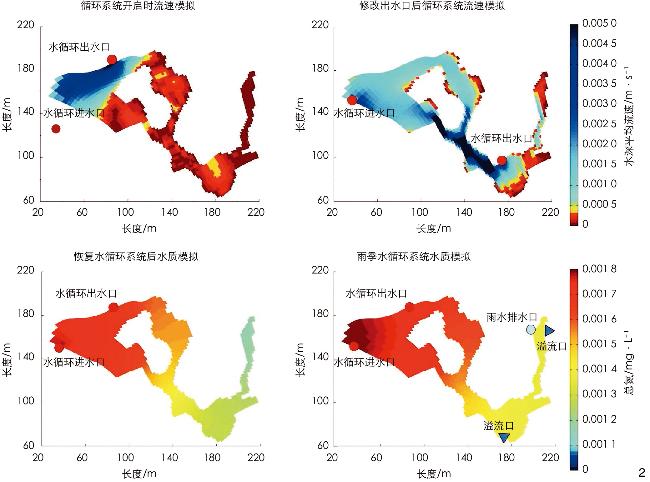
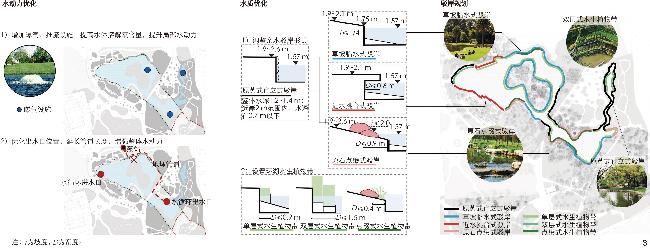
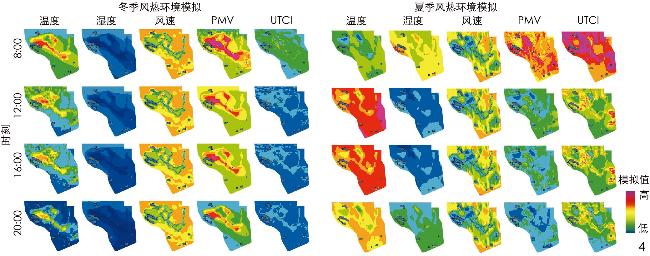
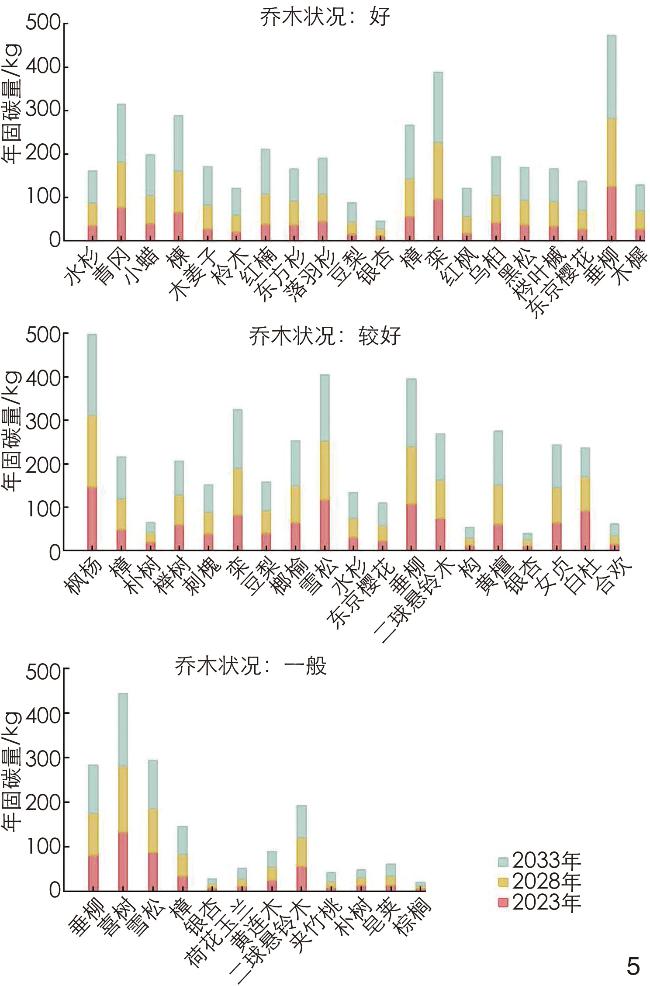
[Results] The case study of Shanghai Zhongshan Park elucidates the specific contents and outlines the key points of the technology framework of the STAR system. In the simulation phase, results from simulating the hydrodynamics and water quality of Chenjiachi Pond in Shanghai Zhongshan Park, modeling microclimate and cooling effects, and estimating the carbon sequestration efficiency of Peacock Island in Chenjiachi Pond are used to propose improvements in hydrodynamics and water quality, comfort improvement schemes for the wharf area, and vegetation configuration adjustment strategies for Peacock Island, so as to enhance the ecological efficiency of Shanghai Zhongshan Park. Monitoring ecological efficiency involves close monitoring of all relevant factors, including regular and real-time monitoring of water quality and hydrodynamics, real-time monitoring of the microclimate using negative ion monitoring stations, and all-day biodiversity monitoring with sound recognition equipment and infrared-triggered cameras for wildlife. Regular and detailed measurements of the carbon sequestration efficiency of plants allow real-time and precise evaluation of the ecological efficiency of the renovated Shanghai Zhongshan Park. The digital twin platform can visualize all aspects of water, greenery, and carbon ecological data, based on which a dynamic ecological efficiency evaluation platform driven by AI and big data can be built for processing multimodal data and assessing ecological spatial benefits. This can create an ecological space with high-efficiency ecosystem services such as source pollution control, water quality regulation, biodiversity support, and carbon sequestration regulation, providing various risk warnings and scientific support for subsequent ecological practice management.
[Conclusion] The practical application of the STAR system in Shanghai Zhongshan Park can further clarify the technical points of its technology framework, thus validating the feasibility, typicality, and universality of the practical approach. The STAR system can support the sustainable renewal of urban parks and the improvement of ecosystem services in high-density human settlement environments.
| [1] |
徐吉羽, 刘志强, 余慧, 等. 中国大陆高密度城市公园建设水平演变特征分析: 从1996年到2019年[J]. 上海城市规划, 2022(6): 82-88.
XU J Y, LIU Z Q, YU H, et al. Evolution Characteristics of High-Density Cities’ Park Construction in China’s Mainland from 1996 to 2019[J]. Shanghai Urban Planning Review, 2022(6): 82-88.
|
| [2] |
汪洁琼, 李心蕊, 王敏. 城市滨水空间生态系统服务供需匹配的空间智慧[J]. 风景园林, 2019, 26(6): 47-52.
WANG J Q, LI X R, WANG M. Spatial Wisdom of Matching Ecosystem Services Supply and Demand In Urban Waterfront Areas[J]. Landscape Architecture, 2019, 26(6): 47-52.
|
| [3] |
王敏, 朴世英, 汪洁琼. 城市滨水空间生态感知的景观要素偏好分析: 以上海后滩公园与虹口滨江绿地为例[J]. 建筑与文化, 2020, 17(11): 157-159.
WANG M, PIAO S Y, WANG J Q. Factors Analysis of Landscape Preference in the Ecological Perception of Urban Waterfront Spaces: Case Studies of Houtan Park and Hongkou Riverside Park in Shanghai[J]. Architecture & Culture, 2020, 17(11): 157-159.
|
| [4] |
刘畅, 唐立娜. 景感生态学在城市生态系统服务中的应用研究: 以城市公园景观设计为例[J]. 生态学报, 2020, 40(22): 8141-8146.
LIU C, TANG L N. Application of Landsenses Ecology in Urban Ecosystem Services: A Case Study of Urban Park Landscape Design[J]. Acta Ecologica Sinica, 2020, 40(22): 8141-8146.
|
| [5] |
WU J. Landscape Sustainability Science: Ecosystem Services and Human Well-Being in Changing Landscapes[J]. Landscape Ecology, 2013, 28(6): 999-1023.
|
| [6] |
肖华斌, 何心雨, 王玥, 等. 城市绿地与居民健康福祉相关性研究进展: 基于生态系统服务供需匹配视角[J]. 生态学报, 2021, 41(12): 5045-5053.
XIAO H B, HE X Y, WANG Y, et al. Research Progress on the Correlation Between Urban Green Space and Residents’ Physical and Mental Well-Being from a Perspective of Matching Ecosystem Services Supply and Demand[J]. Acta Ecologica Sinica, 2021, 41(12): 5045-5053.
|
| [7] |
景晓栋, 田贵良, 班晴晴, 等. 基于文献计量的21世纪以来我国生态系统服务研究现状及发展趋势[J]. 生态学报, 2023, 43(17): 7341-7351.
JING X D, TIAN G L, BAN Q Q, et al. Current Status and Development Trend of Ecosystem Service Research in China Since the 21st Century Based on Bibliometrics[J]. Acta Ecologica Sinica, 2023, 43(17): 7341-7351.
|
| [8] |
梁佳宁, 李文竹, 李伟健, 等. 数字技术驱动的城市景观应用场景与实践路径[J]. 风景园林, 2023, 30(7): 29-35.
LIANG J N, LI W Z, LI W J, et al. Application Scenario and Practice Path of Urban Landscape Driven by Digital Technology[J]. Landscape Architecture, 2023, 30(7): 29-35.
|
| [9] |
刘颂, 章舒雯. 数字景观技术研究进展: 国际数字景观大会发展概述[J]. 中国园林, 2015, 31(2): 45-50.
LIU S, ZHANG S W. Review on Digital Landscape Technology Research: Study on Digital Landscape Architecture Conference[J]. Chinese Landscape Architecture, 2015, 31(2): 45-50.
|
| [10] |
CANTRELL B E, HOLZMAN J. Responsive Landscapes: Strategies for Responsive Technologies in Landscape Architecture[M]. London: Routledge, 2015.
|
| [11] |
成玉宁, 樊柏青. 数字景观进程[J]. 中国园林, 2023, 39(6): 6-12.
CHENG Y N, FAN B Q. Digital Landscape Process[J]. Chinese Landscape Architecture, 2023, 39(6): 6-12.
|
| [12] |
成实, 张潇涵, 成玉宁. 数字景观技术在中国风景园林领域的运用前瞻[J]. 风景园林, 2021, 28(1): 46-52.
CHENG S, ZHANG X H, CHENG Y N. Prospect of the Application of Digital Landscape Technology in the Field of Landscape Architecture in China[J]. Landscape Architecture, 2021, 28(1): 46-52.
|
| [13] |
袁弘毅, 杨根明, 张立云, 等. 数字孪生虚拟设计在公园城市智能建造中的应用与实践[J]. 四川建筑, 2021, 41(6): 58-59.
YUAN H Y, YANG G M, ZHANG L Y, et al. Application and Practice of Digital Twin Virtual Design in Smart Construction of Park Cities[J]. Sichuan Architecture, 2021, 41(6): 58-59.
|
| [14] |
王一宇, 夏舫, 刘松, 等. 基于深度学习的鸟声识别技术研究: 以北京翠湖国家城市湿地公园为例[J]. 园林, 2024, 41(4): 19-26.
WANG Y Y, XIA F, LIU S, et al. Research on Bird Sound Recognition Technology Based on Deep Learning: Taking Beijing Cuihu National Urban Wetland Park as an Example[J]. Landscape Architecture Academic Journal, 2024, 41(4): 19-26.
|
| [15] |
吴涛, 杜江, 李海亭. 新型智慧游园系统的设计与实现: 以杭州市劳模工匠文化公园为例[J]. 城市勘测, 2022(6): 24-28.
WU T, DU J, LI H T. The Design and Implementation of New Type Smart Park System Taking the Hangzhou Model Worker Craftsman Cultural Park as an Example[J]. Urban Geotechnical Investigation & Surveying, 2022(6): 24-28.
|
| [16] |
冯暄越, 杜若兮. 虚实共生: 数字技术下的智慧遗址公园未来探索[J]. 建筑与文化, 2023, 20(5): 242-244.
FENG X Y, DU R X. Symbiosis of Reality and Virtuality: Future Exploration of Smart Heritage Park Under Digital Technology[J]. Architecture & Culture, 2023, 20(5): 242-244.
|
| [17] |
俞孔坚, 李迪华. 可持续景观[J]. 城市环境设计, 2007, 4(1): 7-12.
YU K J, LI D H. Sustainable Landscape[J]. Urban Environment Design, 2007, 4(1): 7-12.
|
| [18] |
邓毅, 蔡凌, 李桔. 可持续城市景观的动态集成规划设计体系[J]. 中国园林, 2012, 28(9): 52-56.
DENG Y, CAI L, LI J. Framework of Dynamic Integrated Planning System for Sustainable Urban Landscape[J]. Chinese Landscape Architecture, 2012, 28(9): 52-56.
|
| [19] |
汪洁琼, 陈奕, 毛永青, 等. 基于Delft3D污染物扩散模拟的城市湖泊景观水体三维形态循证设计[J]. 中国园林, 2021, 37(5): 44-49.
WANG J Q, CHEN Y, MAO Y Q, et al. Evidence-Based Design for Three-Dimensional Form of Landscape Water Body of Urban Lake via Delft3D Pollutant Diffusion Simulation[J]. Chinese Landscape Architecture, 2021, 37(5): 44-49.
|
| [20] |
李添雨, 李振华, 黄炳彬, 等. 基于MIKE21模型的沙河水库水量水质响应模拟研究[J]. 环境科学学报, 2021, 41(1): 293-300.
LI T Y, LI Z H, HUANG B B, et al. Simulation on Water Quantity and Quality of Shahe Reservoir by MIKE21 Model[J]. Acta Scientiae Circumstantiae, 2021, 41(1): 293-300.
|
| [21] |
徐欢, 朱珈仪, 李红. 基于ENVI-met模拟的城市校园绿地夏季微气候适应性优化设计[J]. 现代城市研究, 2023, 30(7): 101-106.
XU H, ZHU J Y, LI H. Optimization Design of Summer Microclimate Adaptability of Urban Campus Green Space Based on ENVI-met Simulation[J]. Modern Urban Research, 2023, 30(7): 101-106.
|
| [22] |
BELHORMA H, CHACHOUA M, MAHDI K. Taking into Account Climate Change Adaptation in Urban Area Through the CFD FLUENT Simulation Model Example: An Urban Sector of the ORAN Agglomeration[C]// IOP. IOP Conference Series: Earth and Environmental Science. Bristol: IOP Publishing Ltd., 2018.
|
| [23] |
张雪, 孙海燕, 贺坤, 等. 基于i-Tree Eco模型的校园树木生态效益评估研究[J]. 城市建筑, 2023, 20(6): 15-18.
ZHANG X, SUN H Y, HE K, et al. Study on Ecological Benefit Evaluation of Campus Trees Based on i-Tree Eco Model[J]. Urbanism and Architecture, 2023, 20(6): 15-18.
|
| [24] |
许晓青, 蒲宝婧, 余楚萌, 等. 声学手段辅助自然保护地生物多样性监测现状及应用建议[J]. 自然保护地, 2023, 3(4): 34-44.
XU X Q, PU B J, YU C M, et al. Situtaion of Acoustic Tools to Assist Biodiversity Monitoring in Nature Reserves and Application Recommendations[J]. Natural Protected Areas, 2023, 3(4): 34-44.
|
| [25] |
赵萱, 李海梅. 11种地被植物固碳释氧与降温增湿效益研究[J]. 江西农业学报, 2009, 21(1): 44-47.
ZHAO X, LI H M. Study on Carbon-Fixing, Oxygen-Releasing, Temperature-Reducing and Humidity-Increasing Effects of 11 Ground Cover Plants[J]. Acta Agriculturae Jiangxi, 2009, 21(1): 44-47.
|
/
| 〈 |
|
〉 |