

成都自生草本植物屋顶绿化夏季气候适应性研究
|
胡锐/女/西南交通大学建筑学院在读硕士研究生/研究方向为风景园林规划与设计、屋顶绿化 |
|
陈睿智/女/博士/西南交通大学建筑学院副教授/研究方向为气候适应性设计、生态景观 |
收稿日期: 2023-05-15
网络出版日期: 2025-12-15
基金资助
四川省科技计划项目“基于自然的解决方案(NbS)视角下城市自生植物立体绿化精细化管控研究”(2023JDR0266)
版权
Research on Summer Climate Adaptability of Spontaneous Vegetation for Roof Greening in Chengdu
|
HU Rui is a master student in the School of Architecture, Southwest Jiaotong University. Her research focuses on landscape planning and design, and roof greening |
|
CHEN Ruizhi, Ph.D., is an associate professor in the School of Architecture, Southwest Jiaotong University. Her research focuses on climate adaptive design, and ecological landscape |
Received date: 2023-05-15
Online published: 2025-12-15
Copyright
【目的】针对夏季城市热岛效应加剧、园林屋顶绿化养护管理成本高及景观同质化严重等问题,探讨自生草本植物在屋顶绿化中的夏季气候适应性,以期丰富屋顶绿化植物种类,构建低维护植物景观来缓解城市热岛效应。【方法】通过构建绿色屋顶容器式实验平台,采用实验验证法对成都市16种常见的自生草本植物开展为期3个月的适应性观测,分析自生草本植物的生长高度、地面覆盖度、植物存活期等相关数据。【结果】求米草、狗牙根、白茅、山莴苣、马兰、薄荷、马蹄金、车前、铁苋菜9种植物在极端高温、干旱的气候条件下长势较好,适宜成都市屋顶绿化的夏季气候条件,具有应用优势。水芹、荩草、狗尾草、淡竹叶、鱼眼草、犁头尖、龙葵无法适应屋顶绿化气候环境,不适合成都市屋顶绿化植物造景应用。【结论】研究结果为城市屋顶绿化应用提供多样植物选择依据,创新了屋顶绿化材料运用,自生植物更适宜低维护、可持续植物景观,具有重要的社会价值、生态价值。
胡锐 , 陈睿智 . 成都自生草本植物屋顶绿化夏季气候适应性研究[J]. 风景园林, 2024 , 31(4) : 104 -110 . DOI: 10.3724/j.fjyl.202305150231
[Objective] The rapid development of global urbanization leads to the intensification of urban heat island effect, which poses a potential threat to human health and life safety. Roof greening can give full play to the ecological benefits of green space to alleviate urban heat island effect, but it faces some problems such as high maintenance and management cost and serious homogeneity of landscape. Spontaneous vegetation with high ecological value, low maintenance and vigorous spontaneous growth have the potential to become urban plantscape. Chengdu has the advantages of early development of roof greening, abundant species of wild plants, and support of roof greening policies. Therefore, this research took Chengdu as an example to discuss the climate adaptability of spontaneous vegetation in roof greening in summer, with a view to enriching types of roof greening plants at low cost and alleviating urban heat island effect.
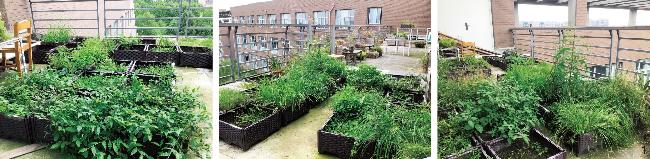
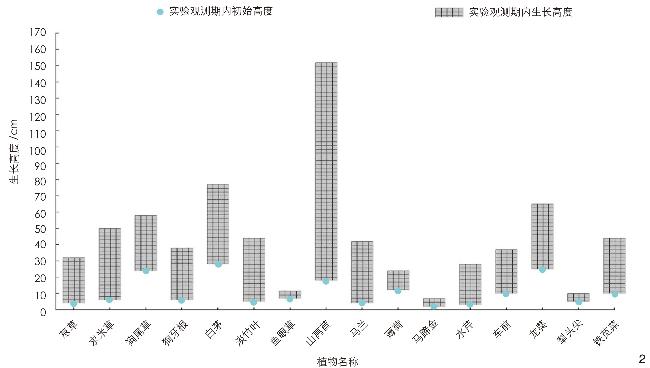
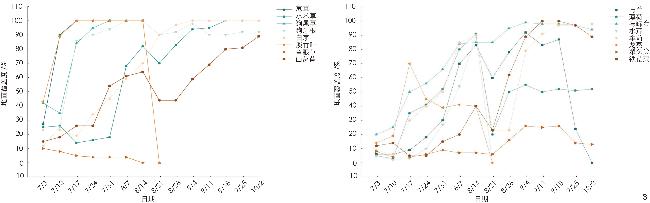
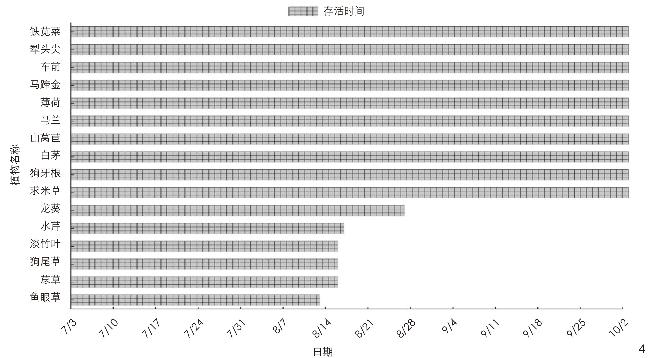
[Methods] The habitat types of spontaneous vegetation in urban areas are determined by literature review, supplemented by data on 30 m fine land cover of Chengdu in 2020 provided by the geographic big data cloud platform (mainly referring to the distribution range of irrigated farmland to guide the collection of spontaneous vegetation). The classification and zoning of investigation for spontaneous vegetation is conducted through a comprehensive literature review and the application of big data analysis. The research contents include the variety types, morphological characteristics, root length and ornamental value of spontaneous vegetation. Finally, the collection of spontaneous vegetation and the experimental planting on the roof are carried out. According to the occurrence frequency, growth and reproduction of spontaneous vegetation identified during the investigation, 16 species of spontaneous vegetation are selected. Experimental verification method is used to construct a green roof module experiment platform with soil depth less than 10 cm which is on the sixth floor of a teaching building in Southwest Jiaotong University (Xipu Campus). Continuous adaptive observation was carried out during the period with the highest summer temperature from July to September, 2022, with the starting time of observation being determined as 9:00-10:00 a.m. to effectively avoid the strong exposure to sunlight at noon or afternoon that is likely to make plants soft and short and thus affect the observation data. The climate adaptive growth height of the spontaneous vegetation is recorded respectively at the beginning and the end of the experiment, and the ground coverage is recorded every 7 days. Such indicators as plant survival period, regeneration and spontaneous growth are continuously monitored during the experimental observation period. The observation data of growth height, ground coverage and survival rate of spontaneous vegetation in summer in roof greening are presented graphically using Origin to facilitate the comparison of results, and the regeneration and spontaneous growth of spontaneous vegetation are described in words.
[Results] According to the experimental results, the climate adaptation of various species of spontaneous vegetation to roof greening in summer is significantly different, and 10 species of spontaneous vegetation, such as Oplismenus undulatifolius, Cynodon dactyIon, Imperata cylindrica, Lactuca indica, Aster indicus, Mentha canadensis, Dichondra micrantha, Plantago asiatica and Acalypha australis grow well under the climate conditions of extreme high temperature and drought, and are thus deemed suitable for roof greening. Oenanthe javanica, Arthraxon hispidus, Setaria viridis, Lophatherum gracile, Dichrocephala integrifolia, Typhonium blumei and Solanum nigrum fail to adapt to the climate environment of roof greening, and are thus deemed unsuitable for roof greening in Chengdu City. In the process of adaptability experiment, it is found that high temperature, diseases and pests may have a negative impact on spontaneous vegetation. High temperature may cause the leaves of plants to turn yellow, curl or fall off, and diseases and pests may make the leaves mottled, curled, convex, etc., both of which may lead to plant death or poor ornamental effect. Rain and artificial irrigation can promote plant growth. Spontaneous vegetation such as Oenanthe javanica and Plantago asiatica will be revitalized after rain, enabling them to send out new shoots, and be less affected by pests and diseases. The vegetation species selected in this research can provide reference for not only the application of spontaneous vegetation in roof greening under the concept of low-maintenance plantscape, but also the introduction of spontaneous vegetation in the concept of new naturalistic ecological planting design.
[Conclusion] This research focuses on the climate adaptability of spontaneous vegetation in roof greening, which is seldom involved in the exploration on the application of spontaneous vegetation in urban landscape. Spontaneous vegetation plays an important role in the maintenance of landscape in urban bare and waste lands, which can effectively make up for the lack of ornamental value and ecological value of garden plants. From the perspective of building roof greening landscape at low cost and replacing single types of roof greening plants, spontaneous vegetation may serve as the key material for constructing pristine and wild low-maintenance landscape. The evaluation and screening of urban spontaneous vegetation with application potential may provide a basis for the selection of various plants that can be applied in urban roof greening, innovate the use of roof greening materials, and help to create sustainable low-maintenance plantscape.
表1 自生草本植物调研场地Tab. 1 Research sites of spontaneous vegetation |
| 类型 | 区域名称 | 区位(方位) |
|---|---|---|
| 校园 | 西南交通大学犀浦校区 | 三环外(西北) |
| 居住区 | 西南交通大学九里校区南园住宅区 | 三环内到二环外(正北) |
| 公园 | 青龙湖湿地公园 | 三环外(东南) |
| 工业废弃地 | 成都电力金具总厂 | 三环内到二环外(正南) |
| 绿道 | 锦城绿道江家艺苑 | 三环外(东南) |
| 农田 | 成都市犀浦镇 | 三环外(西北) |
表2 采集的自生草本植物基本特征Tab. 2 Basic characteristics of spontaneous vegetation collected |
| 序号 | 中文名 | 拉丁学名 | 科 | 属 | 花色(花期) | 观赏特征 |
|---|---|---|---|---|---|---|
| 注:自生草本植物基本特征来源于四川省植物资源信息网(www.scpri.ac.cn/mplant/#!/pages/plantnews)。 | ||||||
| 1 | 荩草 | Arthraxon hispidus | 禾本科 | 荩草属 | 紫色或红色(8—10月) | 观叶 |
| 2 | 求米草 | Oplismenus undulatifolius | 禾本科 | 求米草属 | 淡紫色(7—11月) | 观叶 |
| 3 | 狗尾草 | Setaria viridis | 禾本科 | 狗尾草属 | 绿色(5—10月) | 观花 |
| 4 | 狗牙根 | Cynodon dactyIon | 禾本科 | 狗牙根属 | 灰绿色或淡紫色(5—11月) | 观叶 |
| 5 | 白茅 | Imperata cylindrica | 禾本科 | 白茅属 | 白色(5—12月) | 观花 |
| 6 | 淡竹叶 | Lophatherum gracile | 禾本科 | 淡竹叶属 | 绿色(7—8月) | 观叶 |
| 7 | 鱼眼草 | Dichrocephala integrifolia | 菊科 | 鱼眼草属 | 黄绿色(全年) | 观花 |
| 8 | 山莴苣 | Lactuca indica | 菊科 | 莴苣属 | 淡黄色(7—9月) | 观花 |
| 9 | 马兰 | Aster indicus | 菊科 | 马兰属 | 浅紫色(5—9月) | 观花 |
| 10 | 薄荷 | Mentha canadensis | 唇形科 | 薄荷属 | 淡紫色(7—10月) | 观花 |
| 11 | 马蹄金 | Dichondra micrantha | 旋花科 | 马蹄金属 | 黄色(5—6月) | 观叶 |
| 12 | 水芹 | Oenanthe javanica | 伞形科 | 水芹属 | 白色(6—7月) | 观叶 |
| 13 | 车前 | Plantago asiatica | 车前科 | 车前属 | 绿白色(6—9月) | 观叶 |
| 14 | 龙葵 | Solanum nigrum | 茄科 | 茄属 | 白色(6—7月) | 观花、观果 |
| 15 | 犁头尖 | Typhonium blumei | 天南星科 | 犁头尖属 | 淡绿色(5—8月) | 观叶 |
| 16 | 铁苋菜 | Acalypha australis | 大戟科 | 铁苋菜属 | 鲜红色(5—7月) | 观叶 |
文中图表均由作者拍摄和绘制。
| [1] |
向炀, 周志翔. 蓝绿空间景观格局对城市热岛的影响[J]. 中国园林, 2023, 39 (1): 105-110.
XIANG Y, ZHOU Z X. Influence of Blue-Green Spatial Landscape Pattern on Urban Heat Island[J]. Chinese Landscape Architecture, 2023, 39 (1): 105-110.
|
| [2] |
张德军, 杨世琦, 祝好, 等. 重庆市主城都市区热岛效应定量评估[J]. 应用气象学报, 2023, 34 (1): 91-103.
ZHANG D J, YANG S Q, ZHU H, et al. Quantitative Evaluation of Heat lsland Effect in Chongging Metropolitan Circle[J]. Journal of Applied Meteorological Science, 2023, 34 (1): 91-103.
|
| [3] |
李丹宁, 刘东云, 王鑫, 等. 缓解城市热岛效应的硬质景观设计方法研究综述[J]. 风景园林, 2022, 29 (8): 71-78.
LI D N, LIU D Y, WANG X, et al. A Review of Research on Hard Landscape Design Methods to Mitigate Urban Heat Island Effect[J]. Landscape Architecture, 2022, 29 (8): 71-78.
|
| [4] |
王永衡, 李春林, 王昊, 等. 绿色基础设施的生态环境领域研究现状及热点[J]. 生态学报, 2022, 42 (6): 2510-2521.
WANG Y H, LI C L, WANG H, et al. Ecological Environment of Green Infrastructure Research Status and Hotspots[J]. Acta Ecologica Sinica, 2022, 42 (6): 2510-2521.
|
| [5] |
陆芸. 绿色屋顶的生态效益研究[D]. 北京: 北京林业大学, 2016.
LU Y. Study on Ecological Benefits of the Green Roofs[D]. Beijing: Beijing Forestry University, 2016.
|
| [6] |
成都市公园城市建设管理局. 成都市公园城市建设管理局印发《成都市公园城市建设发展“十四五”规划》[EB/OL].(2022-08-26)[2023-03-08].https://cdbpw.chengdu.gov.cn/cdslyj/c110447/2022-08/26/content_2499d57df99a4337b29bb0193c72ab2f.shtml.
Chengdu Park City Construction Administration Bureau. Chengdu Park City Construction Administration Issued the 14th Five-Year Plan for the Construction and Development of Chengdu Park City[EB/OL]. (2022-08-26)[2023-03-08]. https://cdbpw.chengdu.gov.cn/cdslyj/c110447/2022-08/26/content_2499d57df99a4337b29bb0193c72ab2f.shtml.
|
| [7] |
付勇, 江涛, 陈果, 等. 探索中前行的成都屋顶绿化[J]. 中国园林, 2018, 34 (1): 73-78.
FU Y, JIANG T, CHEN G, et al. Explorative and Progressive Development of Roof Greening in Chengdu[J]. Chinese Landscape Architecture, 2018, 34 (1): 73-78.
|
| [8] |
彭毓. 屋顶绿化植物配置与养护技术分析[J]. 南方农业, 2021, 15 (27): 71-72.
PENG Y. Analysis of Plant Configuration and Maintenance Technology for Green Roof[J]. South China Agriculture, 2021, 15 (27): 71-72.
|
| [9] |
陈芳文, 黎曦. 浅析屋顶绿化发展现状及建议[J]. 南方农业, 2018, 12 (21): 116,118.
CHEN F W, LI X. Analysis of The Development and Suggestions of Green Roof[J]. South China Agriculture, 2018, 12 (21): 116,118.
|
| [10] |
金亚璐, 楼晋盼, 姚兴达, 等. 京杭大运河(杭州主城区段)河岸带不同生境自生植物物种组成与多样性特征[J]. 中国园林, 2022, 38 (10): 110-115.
JIN Y L, LOU J P, YAO X D, et al. Species Composition and Diversity Characteristics of Spontaneous Vegetation in Different Habitats in the Riparian Zone of Urban Channelized Rivers: A Case Study of the Beijing-Hangzhou Grand Canal in the Main Section of Hangzhou[J]. Chinese Landscape Architecture, 2022, 38 (10): 110-115.
|
| [11] |
SCHRIEKE D, SZOTA C, WILLIAMS N S. G, et al. Evaluating the Effectiveness of Spontaneous Vegetation for Stormwater Mitigation on Green Roofs[J]. The Science of the Total Environment, 2023, 898: 165643.
|
| [12] |
李晓鹏, 董丽. 北京不同公园自生植物物种组成特征及群落类型[J]. 风景园林, 2020, 27 (4): 42-49.
LI X P, DONG L. Species Composition and Community Types of Spontaneous Plants in Various Parks of Beijing[J]. Landscape Architecture, 2020, 27 (4): 42-49.
|
| [13] |
邱园, 冯志坚, 翁殊斐, 等. 广州滨水绿地自生植物群落调查与园林应用潜力分析[J]. 广东园林, 2022, 44 (6): 18-22.
QIU Y, FENG Z J, WENG S F, et al. Analysis of Spontaneous Vegetation and Potential Landscape Use on Waterfront Green Space of Guangzhou[J]. Guangdong Landscape Architecture, 2022, 44 (6): 18-22.
|
| [14] |
李君, 林晨. 浅析屋顶绿化植物的选择应用[J]. 园林, 2018, 35 (10): 58-61.
LI J, LIN C. Analysis on the Selection and Application of Roof Greening Plants[J]. Landscape Architecture Academic Journal, 2018, 35 (10): 58-61.
|
| [15] |
孟郝蕾, 毛颖, 何婧怡, 等. 成都市墙体自生植物资源调查及应用研究[J]. 四川林业科技, 2022, 43 (5): 58-65.
MENG H L, MAO Y, HE J Y, et al. Investigation and Application Research of Wall Spontaneous Plant Resources in Chengdu City[J]. Journal of Sichuan Forestry Science and Technology, 2022, 43 (5): 58-65.
|
| [16] |
陈春谛. 被遗忘的城市“生境”: 重庆市墙体自生植物调查分析[J]. 生态学报, 2020,40 (2): 473-483.
CHEN C D. Forgotten Urban Habitats: Analysis of Spontaneous Vegetation on the Urban Walls of Chongqing City[J]. Acta Ecologica Sinica, 2020,40 (2): 473-483.
|
| [17] |
陈程, 李林, 和太平, 等. 广西大学校园自生植物多样性调查与分析[J]. 热带农业科学, 2023, 43 (2): 83-89.
CHEN C, LI L, HE T P, et al. Investigation and Analysis of Spontaneous Vegetation Resources at Guangxi University[J]. Chinese Journal of Tropical Agriculture, 2023, 43 (2): 83-89.
|
| [18] |
郑焯玲, 廖舒茗, 欧倩鹭, 等. 华南农业大学校园绿地自生植物研究[J]. 热带农业科学, 2021, 41 (2): 142-147.
ZHENG Z L, LIAO S M, OU Q L, et al. Spontaneous Vegetation in the Green Space of Campus of South China Agricultural University[J]. Chinese Journal of Tropical Agriculture, 2021, 41 (2): 142-147.
|
| [19] |
李晓鹏, 张思凝, 冯黎, 等. 成都城区河流廊道自生植物的生境及物种多样性[J]. 风景园林, 2022, 29 (1): 64-70.
LI X P, ZHANG S N, FENG L, et al. Habitat and Species Diversity of Spontaneous Plants on Both Sides of River Corridor in Chengdu Urban Area[J]. Landscape Architecture, 2022, 29 (1): 64-70.
|
| [20] |
姚兴达, 李浩铭, 金亚璐, 等. 杭州西溪国家湿地公园草本层自生植物多样性及群落组分研究[J]. 中国园林, 2021, 37 (10): 123-128.
YAO X D, LI H M, JIN Y L, et al. Study on the Diversity and Community Composition of Spontaneous Vegetation in Herb Layer in Hangzhou Xixi National Wetland Park[J]. Chinese Landscape Architecture, 2021, 37 (10): 123-128.
|
| [21] |
张庆费, 贾熙璇, 郑思俊, 等. 城市工业区野境植物多样性与群落结构研究: 以原上海溶剂厂再野化为例[J]. 中国园林, 2021, 37 (12): 14-19.
ZHANG Q F, JIA X X, ZHENG S J, et al. Research on Plant Diversity and Plant Community Structure of Wildness in Urban Industrial Area: Taking the Rewilding of Shanghai Solvent Factory as an Example[J]. Chinese Landscape Architecture, 2021, 37 (12): 14-19.
|
| [22] |
刘璨, 李玉菲, 刘家琳, 等. 湿热地区轻薄绿色屋顶不同种植基质中植被生长表现绩效研究[J]. 中国园林, 2022, 38 (4): 115-120.
LIU C, LI Y F, LIU J L, et al. Performance of Vegetation Growth in Different Substrates on Extensive Green Roof in Hot and Humid Area[J]. Chinese Landscape Architecture, 2022, 38 (4): 115-120.
|
| [23] |
NTOULAS N, NEKTARIOS P A, CHARALAMBOUS E, et al. Zoysia Matrella Cover Rate and Drought Tolerance in Adaptive Extensive Green Roof Systems[J]. Urban Forestry & Urban Greening, 2013, 12 (4): 522-531.
|
| [24] |
王晶. 豆科牧草根腐病菌种筛选试验[J]. 畜牧兽医科学(电子版), 2019 24: 7-8.
WANG J. Screening Test of Root Rot Fungus in Leguminous Forages[J]. Graziery Veterinary Sciences (Electronic Version), 2019 24: 7-8.
|
| [25] |
刘雄, 吴双桃, 朱慧, 等. 几种入侵植物在粤东地区屋顶绿化中的应用研究[J]. 黑龙江农业科学, 2014 10: 83-86.
LIU X, WU S T, ZHU H, et al. Study on Application of Invasive Plants in East Guangdong for Green Roof[J]. Heilongjiang Agricultural Sciences, 2014 10: 83-86.
|
| [26] |
王云霄, 闫淑君, 马雯雯, 等. 福州国家森林公园草坪自生植物调查分析[J]. 中国城市林业, 2021, 19 (6): 94-98.
WANG Y X, YAN S J, MA W W, et al. Investigation and Analysis of Lawn Spontaneous Plant in Fuzhou National Forest Park[J]. Journal of Chinese Urban Forestry, 2021, 19 (6): 94-98.
|
| [27] |
朱金儒, 孙晓光. 河北农业大学西校区早春开花植物调查研究[J]. 河北林业科技, 2015 (1): 40-43.
ZHU J R, SUN X G. Investigation on Early Spring Flowering Plants in West Campus of Hebei Agricultural University[J]. Journal of Hebei Forestry Science and Technology, 2015 (1): 40-43.
|
/
| 〈 |
|
〉 |