

天津旧城更新中日常景观的记忆挖掘及空间转化
|
张春彦/男/博士/天津大学建筑学院副院长、教授、博士生导师/研究方向为风景园林历史与理论、风景园林文化遗产保护 |
|
张新翊/女/天津大学建筑学院在读博士研究生/研究方向为风景园林文化遗产保护 |
|
侯天颖/女/硕士/天津市城市规划设计研究总院有限公司景观设计师/研究方向为风景园林规划和设计 |
收稿日期: 2024-06-26
修回日期: 2025-01-13
网络出版日期: 2025-12-12
版权
Memory Mining and Spatial Transformation of Daily Landscape in Renewal of Tianjin Old City
|
ZHANG Chunyan, Ph.D., is vice dean of and a professor and doctoral supervisor in the School of Architecture, Tianjin University. His research focuses on history and theory of landscape architecture, and landscape culture heritage protection |
|
ZHANG Xinyi is a Ph.D. candidate in the School of Architecture, Tianjin University. Her research focuses on landscape culture heritage protection |
|
HOU Tianying, Master, is a landscape designer in Tianjin Urban Planning & Design Institute Co., Ltd. Her research focuses on landscape planning and design |
Received date: 2024-06-26
Revised date: 2025-01-13
Online published: 2025-12-12
Copyright
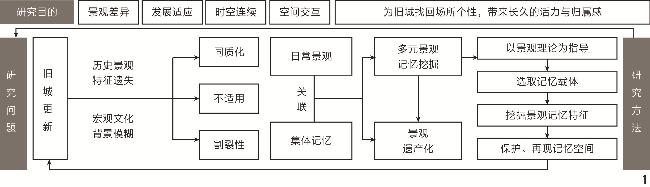
存量时期下的旧城更新中,城市日常景观承载着丰富的地域文化和集体记忆,但因旧城更新进程滞后于民生设施建设,旧城景观丢失了重要的历史特征,同时因缺少宏观文化背景的指导,旧城更新存在同质化和割裂性等问题。需要寻找城市日常景观中不同时期记忆的多元载体,并针对不同载体进行记忆挖掘,建立记忆与日常景观空间的关联。
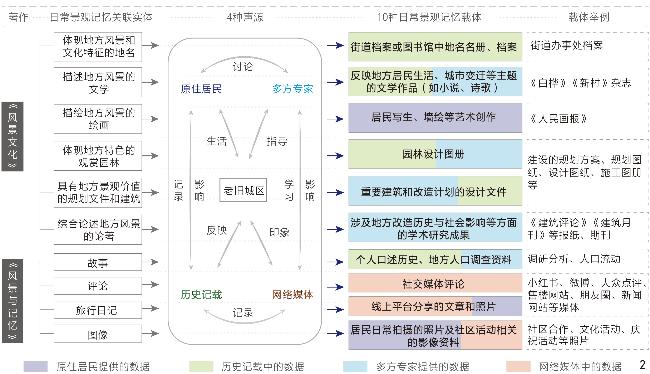
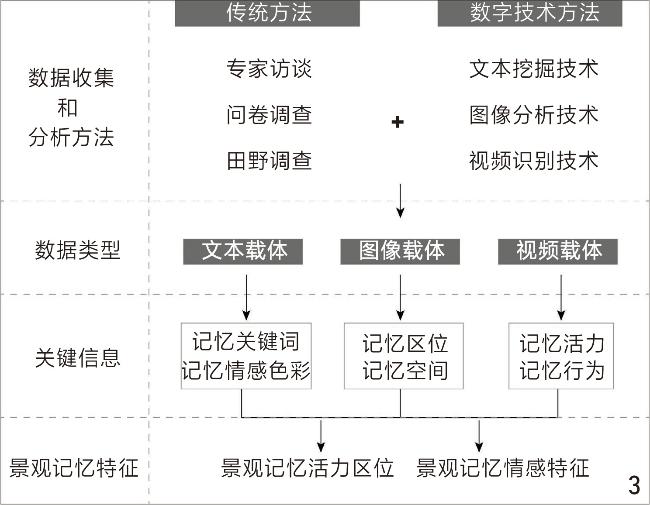
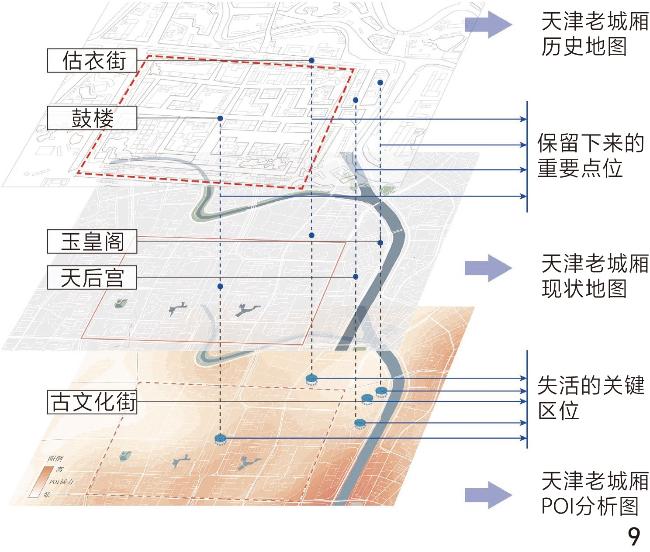
以《欧洲风景公约》为理论基础,结合多维度的景观记忆关联实体,全面梳理老旧城区多种日常景观记忆载体,提出“10种载体,4种声源,3类数据”的多元景观记忆挖掘方法。将传统调研方法和数字技术结合,分析各时期旧城日常景观的活力分布及记忆情感,进而通过叙事景观呈现城区多重记忆。以天津老城厢为例进行日常景观记忆挖掘和空间转化分析。
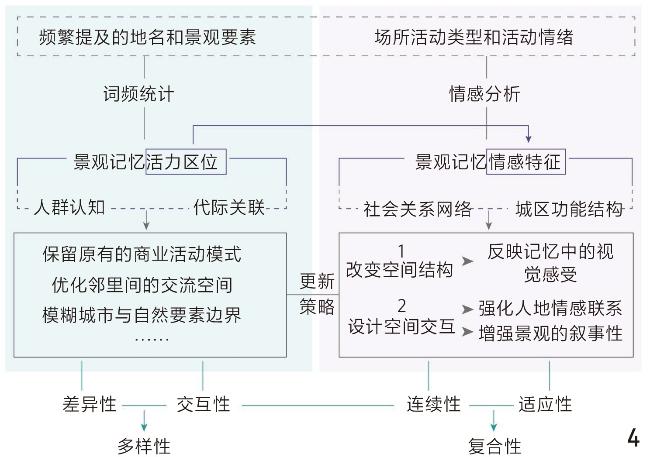
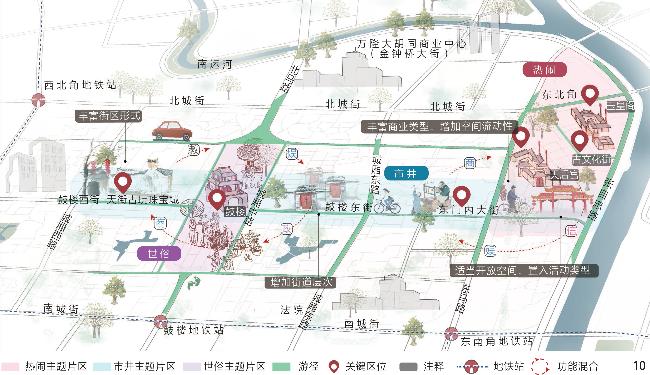
分析得到“热闹境”“市井气”“世俗地”3 种情感空间的分布规律及景观特征,并结合城区发展现状,提出具有景观差异性、发展适应性、时空连续性和空间交互性的更新策略。
老旧城区日常景观承载了集体对生活空间的景观性记忆,是一种共享的遗产。在旧城更新中,通过对日常景观记忆的挖掘和空间转化,提出日常景观遗产化的路径,促进场地文化和记忆的延续,为可持续的城市空间优化提供新方法。
张春彦 , 张新翊 , 侯天颖 . 天津旧城更新中日常景观的记忆挖掘及空间转化[J]. 风景园林, 2025 , 32(3) : 23 -31 . DOI: 10.3724/j.fjyl.202406260347
As urban development transitions from rapid expansion to quality enhancement, urban daily landscapes, as carriers of collective memory and historical culture. However, the involvement of the landscape architecture discipline in urban renewal remains insufficient, underutilizing its capacity to address complex issues such as invigorating social vitality and balancing economic growth with environmental sustainability. Additionally, the preservation of daily landscapes often lags behind the provision of basic public services, while urban renewal initiatives frequently disregard the broader regional cultural and historical context. This disregard reduces the role of daily landscapes in preserving historical memory and conveying spatial narratives. Consequently, redeveloped old urban areas often lose their unique cultural identity, exhibit issues of homogenization, functional inadequacy, and spatial fragmentation. To address these challenges, this research aims to explore various carriers of urban daily landscape memory across different historical periods, systematically excavate the embedded memories, and establish meaningful connections between these memories and the spatial characteristics of daily landscapes, so as to strengthen residents sense of cultural identity, facilitate the co-development of urban vitality through the empathetic power of daily landscapes.
1) Selection basis for landscape memory entities: The research is grounded in the integrated perception of landscape and human interaction articulated in the European Landscape Convention. The research adopts perspectives from such works as La Pensée Paysagère and Landscape and Memory, emphasizing the authenticity of landscapes and the construction of memory. These foundations inform a systematic classification of the diverse types and origins of daily landscape memory entities. 2) Develop a mining framework: Based on the selected memory entities, the research develops a comprehensive framework for diversified memory mining, termed as “Ten Carriers, Four Voices, and Three Data Types”. The framework identifies ten memory carriers of daily landscapes from four sources — local residents, multidisciplinary experts, historical records, and online media. These carriers include local chronicles, literary works, poems, paintings, photographs, oral histories, recorded videos, etc, encompassing the three data modalities of textual, visual, and audiovisual formats. 3) Data collection and quantitative analysis: This research combines traditional research methods with digital technologies, including text mining, semantic sentiment analysis, and data visualization. This integrated approach facilitates the mining and quantification of vast memory fragments, enabling the identification of vitality distribution and emotional characteristics of daily landscapes in old urban areas across different historical periods. 4) Narrative expression of daily landscapes: Considering the current development status of old urban areas, the spatial characteristics of regional landscape memory identified through analysis are recreated in urban renewal projects using narrative landscapes. This approach ensures the preservation of memory and the continuation of site-specific identity.
A case study focused on the old city of Tianjin illustrates the practical application of this framework. Three novels by renowned Tianjin author Feng Jicai — Yin-Yang Eight Trigams, Three-Inch Golden Lotus, and Faces in the Crowd — are selected as primary data sources. Through text mining and semantic sentiment analysis, these works reveal three distinct emotional characteristics of daily landscapes. 1) Bustling Scenes: Positive emotional spaces, such as religious sites and venues associated with traditional artisans and eccentric figures, reflect the region’s commitment to preserving traditions and fostering a sense of collective enjoyment. These spaces embody the residents’ emotional attachment to communal and celebratory activities. 2) Marketplace Atmosphere: The dynamic and vibrant commercial streets of historical neighborhoods exhibit a balanced emotional characteristic of both joy and sorrow, highlighting the residents' reliance on fluid commerce and interconnected alleyways. These spaces demonstrate the community’s recognition of mobility and commercial adaptability as integral to Tianjin’s urban fabric. 3) Spaces of Conflict and Tension: Negative emotional spaces, associated with activities such as haggling and public deliberation, are primarily concentrated in enclosed administrative areas and monotonous commercial streets. These spaces reveal a complex emotional attachment to social dynamics characterized by tension and confrontation. Based on these findings, renewal strategies are proposed to enhance landscape differentiation, adaptability, spatio-temporal continuity, and spatial interaction. Recommendations include incorporating sensory elements such as the auditory landscapes of street vendors’ calls and the olfactory appeal of Tianjin’s signature snacks, as well as fostering interactive platforms for the exchange of intangible cultural heritage.
The daily landscapes in old urban areas encapsulate collective landscape memories of living spaces and, similar to other officially recognized cultural heritage, represent a form of shared heritage. By aligning the memory subject (human character) with the memory object (spatial characteristics) through narrative landscapes, this research achieves the heritagization of daily landscapes, emphasizes the continuity of site culture and memory, and promotes the diversity and multifunctionality of urban areas. Additionally, the research revitalizes spatial vitality through renewal efforts and provides a novel method for sustainable urban spatial optimization.
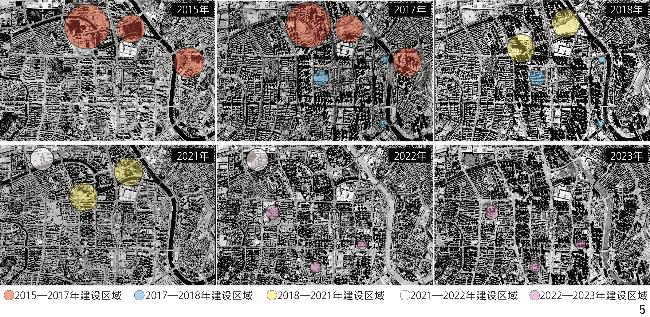
| 时间 | 更新情况 | 参与主体 | 建设目标 |
| 1949—1978年 | 维护、改扩建居住区和市政设施,重点改造棚户区和危房 | 政府、工厂 | 充分利用、逐步改造 |
| 1979—1997年 | 扩大旧城改造规模,进行里弄、街坊式有机更新 | 政府主导 | 优化空间功能、改善基础设施 |
| 1998—2010年 | 改善居住环境、集约利用土地、更新老工业区、创新文化产业 | 政府、开发商主导 | 提高更新的系统性、创新性 |
| 2011—2021年 | 以微更新为主导,低效用地再开发 | 政府、企业、公众 | 改善民生、城市双修、以人为本 |
| 2021年至今 | 全面进入微更新发展模式,逐步科学化、系统化、制度化 | 重视空间发展的多维价值、多元模式 |
表2 《风景文化》和《风景与记忆》中的风景观念[24-25]Table 2 Concept of landscape in La Pens é e Paysag è re and Landscape and Memory [24-25] |
| 作者 | 著作 | 出版年份 | 风景观念 | 日常景观记忆关联实体 |
| 边留久 | 《风景文化》 | 2008年 | 景观风貌是具有文化意涵的环境,是地方群体对地方风景和文化的综合认知、表达 | 体现地方风景和文化特征的地名、描述地方风景的文学、描绘地方风景的绘画、体现地方特色的观赏园林、具有地方景观价值的规划文件和建筑、综合论述地方风景的论著 |
| 西蒙·沙玛 | 《风景与记忆》 | 1996年 | 风景是一种精神层面的存在,承载着历史、故事和集体经验,反映了人们对地方、自然和文化的认知 | 故事、评论、旅行日记、图像 |
表3 日常景观记忆挖掘方法比较Table 3 Comparison of mining methods for daily landscape memory |
| 方法类型 | 挖掘方法 | 数据类型及内容 | 数据处理方法 | 分析结果 |
| 传统 | 专家访谈、问卷调查、田野调查等 | 专家语录和观点、问卷结果、照片 | 层次分析法、多准则决策法等 | 景观特征重要性量化数据 |
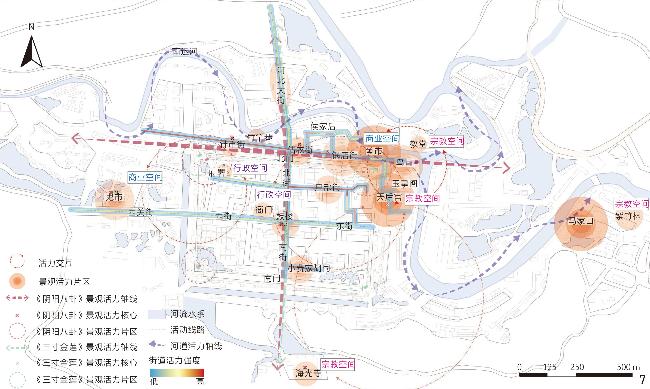
| 数字技 | 文本挖掘 | 口述史:历史本土居民的记忆 | 运用词频统计、语义分析等技术,进行数据清洗、词频分析和情感判断 | 区域热点词、关键词、景观情感特征 |
| 社交媒体数据:年轻群体对场地的记忆 | ||||
| 文本档案、著作等:各类专家的记忆 | ||||
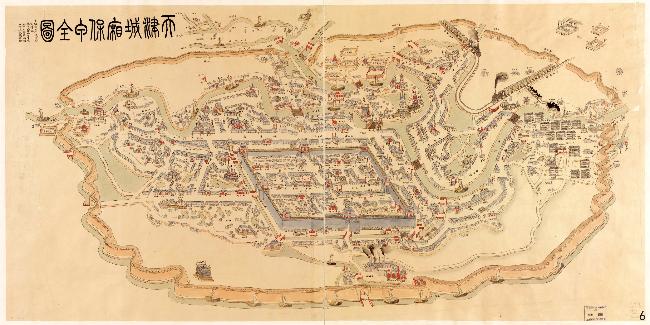
| 图像分析 | 地图:空间布局和演变 | 根据图像描绘的不同内容分类、分析 | 空间落位底图 | |
| 场所照片:活动类型和强度 | 活动类型、场所氛围 | |||
| 视频识别 | 记录视频:活动流线 | 根据视频拍摄手法分类、分析 | 空间流动模式 | |
| 新闻视频:热点信息 | 人群活动类型分布图 |
表4 日常景观记忆情感特征分析Table 4 Analysis of emotional characters of daily landscape memory |
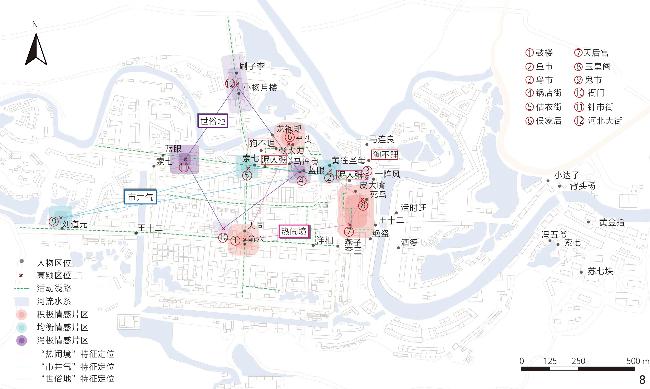
| 情感类型 | 情感描述 | 情感特征定位 | 空间区位 | 空间结构布局 | 活动类型 | 人群身份关系 |
| 积极情感 | 愉悦、惬意、满足等 | 热闹境 | 天后宫、玉皇阁、鼓楼、侯家后 | 宽敞、开放的广场 | 祈福、庙会、观赏、变戏法、聚会 | 信源和信众;传统工艺人、奇人与观赏者;朋友熟人 |
| 均衡情感 | 喜忧参半 | 市井气 | 鱼市、鬼市、估衣街 | 流动、灵活的街区 | 商业活动(卖鱼、小玩意,衣铺等) | 买卖双方 |
| 消极情感 | 悲伤、难过、激动、气愤等 | 世俗地 | 针市街、锅店街、河北大街、鸟市及衙门 | 围合的建筑与单向的街道空间 | 商业活动(药房、典当等);民事纠纷;消遣活动等 | 买卖关系;管理者与居民;服务与被服务者 |
| [1] |
阳建强.城市更新理论与方法[M].北京: 中国建筑工业出版社, 2021.
YANG J Q. Urban Renewal Theory and Methods[M]. Beijing: China Architecture & Building Press, 2021.
|
| [2] |
孙世界, 熊恩锐. 空间生产视角下旧城文化空间更新过程与机制: 以南京大行宫地区为例[J]. 城市规划, 2021, 45(8): 87-95.
SUN S J, XIONG E R. Regeneration Process and Mechanism of Cultural Space in Old City from the Perspective of Space Production: A Case Study of Daxinggong Area in Nanjing[J]. City Planning Review, 2021, 45(8): 87-95.
|
| [3] |
周春山. 实现老旧城区改造高质量发展: 问题与对策[J]. 国家治理, 2021(47): 30-34.
ZHOU C S. Achieving High-Quality Development in the Renovation of Old Urban Areas: Problems and Countermeasures[J]. Governance, 2021(47): 30-34.
|
| [4] |
付迎春, 郭碧云, 王敏, 等. 社会—生态系统适应性治理视角下绿地空间恢复力的演化: 广州旧城区更新案例[J]. 自然资源学报, 2022, 37(8): 2118-2136.
FU Y C, GUO B Y, WANG M, et al. Spatial Resilience Evolution of Green Space from the Perspective of Social-Ecological System Adaptive Governance: A Case Study for Urban Renewal in Guangzhou, China[J]. Journal of Natural Resources, 2022, 37(8): 2118-2136.
|
| [5] |
彭翀, 邹祖钰, 洪亮平, 等. 旧城区风热环境模拟及其局部性更新策略研究: 以武汉大智门地区为例[J]. 城市规划, 2016, 40(8): 16-24.
PENG C, ZOU Z Y, HONG L P, et al. Numerical Simulation of Wind and Thermal Environment in Inner Cities and Strategies for Partial Renewal: A Case Study of Dazhimen, Wuhan[J]. City Planning Review, 2016, 40(8): 16-24.
|
| [6] |
张慎, 王义凡, 李昀, 等. 基于LBM-LES的不同尺度城市街区模型风环境对比分析[J]. 建筑科学, 2024, 40(2): 248-257.
ZHANG S, WANG Y F, LI Y, et al. Comparative Analysis of Wind Environment Between Different-Scale Urban Block Models Based on LBM-LES[J]. Building Science, 2024, 40(2): 248-257.
|
| [7] |
盖若玫. 城市更新过程中老旧城区的公共景观提质: 以海口三角池为例[J]. 中国园林, 2021, 37(S1): 156-160.
GAI R M. The Public Landscape Improvement of Old Area in the Process of Urban Renewal: A Case Study of Sanjiaochi Area in Haikou[J]. Chinese Landscape Architecture, 2021, 37(S1): 156-160.
|
| [8] |
周蜀秦. “弹性城市”视角下的大都市旧城区更新治理策略[J]. 南京社会科学, 2015(12): 70-77.
ZHOU S Q. The Regenerated Governing Strategy to the Polarizing Dilemma of Metropolitan Old City: From the Perspective of Resilient City[J]. Nanjing Journal of Social Sciences, 2015(12): 70-77.
|
| [9] |
XU X, XUE D, HUANG G. The Effects of Residents' Sense of Place on Their Willingness to Support Urban Renewal: A Case Study of Century-Old East Street Renewal Project in Shaoguan, China[J]. Sustainability, 2022, 14(3): 1385.
|
| [10] |
RICHARD R, YVES L, JEAN-FRANÇOIS S, et al. Les Atlas de Paysages Méthode Pour l’Identification, la Caractérisation et la Qualificationdes Paysages[R]. Paris: Ministère de l’Écologie, du Développement Durable et de l’Énergie, 2015.
|
| [11] |
张侃, 姚栋. 共享(街道)空间在旧城商业街更新中的应用研究: 基于重庆市八一路的实证调查[J]. 西部人居环境学刊, 2022, 37(2): 31-38.
ZHANG K, YAO D. The Application Research of Shared Space in Old Downtown Commercial Street Regeneration: An Evidence-Based Analysis of Bayi Road in Chongqing[J]. Journal of Human Settlements in West China, 2022, 37(2): 31-38.
|
| [12] |
李青. 治理视角下旧城微更新实践: 以武汉市汉口“八七会址”片历史街区为例[J]. 规划师, 2024, 40(S1): 162-166.
LI Q. The Practice of Micro-Regeneration of Old Cities from the Perspective of Governance: Taking the Historic District of the “August 7th District” Historical Area in Hankou, Wuhan as an Example[J]. Planners, 2024, 40(S1): 162-166.
|
| [13] |
涂慧君, 陶成强, 周聪. 城市更新背景下的大城市传统社区适老化更新策划研究: 以上海工人新村为例[J]. 建筑学报, 2021(S1): 92-96.
TU H J, TAO C Q, ZHOU C. Research on Renovation Programming of Traditional Urban Communities in the Context of Urban Renewal Take Shanghai Workers Village as an Example[J]. Architectural Journal, 2021(S1): 92-96.
|
| [14] |
邬樱, 李爱群. 北京老旧小区更新改造政策梳理与柔性化策略研究: 双重老龄化视角[J]. 城市发展研究, 2022, 29(5): 73-79.
WU Y, LI A Q. Research on Renovation and Reconstruction Policies and Flexibility Strategies of Old Residential Areas in Beijing: A Dual Aging Perspective[J]. Urban Development Studies, 2022, 29(5): 73-79.
|
| [15] |
陆小成. 城市更新视域下低碳创新型社会构建研究: 以北京为例[J]. 生态经济, 2024, 40(1): 63-69.
LU X C. Research on the Construction of Low Carbon Innovative Society from the Perspective of Urban Renewal: Taking Beijing as an Example[J]. Ecological Economy, 2024, 40(1): 63-69.
|
| [16] |
刘珂秀, 刘滨谊. “景观记忆”在城市文化景观设计中的应用[J]. 中国园林, 2020, 36(10): 35-39.
LIU K X, LIU B Y. The Application of “Landscape Memory” in Urban Cultural Heritage Landscape Design[J]. Chinese Landscape Architecture, 2020, 36(10): 35-39.
|
| [17] |
党欣, 高静. 基于景观记忆视角的平遥古城历史文化景观活态保护研究[J]. 建筑与文化, 2020(7): 213-215.
DANG X, GAO J. Research on the Historical and Cultural Landscape Living Protection of the Ancient City of Pingyao Based on the Perspective of Landscape Memory[J]. Architecture & Culture, 2020(7): 213-215.
|
| [18] |
DING Q, ZHANG T, ZHU X, et al. Impact of Perceived Value and Community Attachment on Smart Renovation Participation Willingness for Sustainable Development of Old Urban Communities in China[J]. Sustainability. 2022; 14(18):11675.
|
| [19] |
LI W, LI Q, LIU Y, et al. Decision-Making Factors for Renovation of Old Residential Areas in Chinese Cities Under the Concept of Sustainable Development[J]. Environmental Science and Pollution Research International, 2023, 30(14): 39695-39707.
|
| [20] |
曹永茂, 李和平. 历史城镇保护中的历时性与共时性: “城市历史景观”的启示与思考[J]. 城市发展研究, 2019, 26(10): 13-20.
CAO Y M, LI H P. Diachrony and Synchronism in the Protection of Historical Towns: Enlightenment and Thought of “Historic Urban Landscape”[J]. Urban Development Studies, 2019, 26(10): 13-20.
|
| [21] |
鲍梓婷, 周剑云. 《欧洲风景公约》及其实施导则解析: 迈向综合整体的风景园林规划管理[J]. 中国园林, 2019, 35(2): 104-109.
BAO Z T, ZHOU J Y. The Study of Europe Landscape Convention and Its Implementation Guidelines: Towards Integrated Landscape Planning and Management[J]. Chinese Landscape Architecture, 2019, 35(2): 104-109.
|
| [22] |
BERCOVITZ R. L’Invention de la Médiation Paysagère: Contribution à Une Analyse Critique d’Expériences Entre Recherche et Action Mises en Œuvre Dans les Territoires Ruraux (1990–2010)[J]. Projets de Paysage, 2022(26): 1-28.
|
| [23] |
张春彦, 王玫, 褚俊民, 等. 风景记忆与国土景观风貌规划保护[J]. 城市环境设计, 2023(1): 286-290.
ZHANG C Y, WANG M, CHU J M, et al. Landscape Memory and Territorial Landscape Features Planning and Preservation[J]. Urban Environment Design, 2023(1): 286-290.
|
| [24] |
BERQUE A. La Pensée Paysagère[M]. Paris: Archibooks, 2008.
|
| [25] |
SCHAMA S. Landscape and Memory[M]. New York: Alfred A. Knopf, 1996.
|
| [26] |
JULLIEN F. La Pensée Chinoise en Vis-à Vis de Laphilosophie[M]. Paris: Gallimard, 2019: 376.
|
| [27] |
诺伯舒兹.场所精神: 迈向建筑现象学[M].施植明, 译. 武汉: 华中科技大学出版社, 2010.
NORBERG-SCHULZ C. Genius Loci: Towards a Phenomenology of Architecture[M]. SHI Z M, translated. Wuhan: Huazhong University of Science & Technology Press, 2010.
|
| [28] |
罗, 科特.拼贴城市[M].童明, 译.北京: 中国建筑工业出版社, 2003.
ROWE C, KOETTER F. Collage City[M]. TONG M, translated. Beijing: China Architecture & Building Press, 2003.
|
| [29] |
侯天颖.文学视角下天津老城厢地区景观研究: 以清末民初时期为例[D].天津: 天津大学, 2019.
HOU T Y. Landscape Studies of the Old Quarters of Tianjin in the Perspective of Literature: Taking the Period of the Late Qing Dynasty and the Early Republic China as an Example[D]. Tianjin: Tianjin University, 2019.
|
| [30] |
郭义超, 樊红. 基于中文文本分析的微博情感地图的制作[J]. 计算机系统应用, 2017, 26(2): 25-29.
GUO Y C, FAN H. Approach to Make Mood Maps Based on Sentiment Analysis of Chinese Micro-Blog[J]. Computer Systems & Applications, 2017, 26(2): 25-29.
|
/
| 〈 |
|
〉 |