

基于自生植物的城市公园草本层养护管理优化策略——以北京市西城区为例
|
张丽丽/女/北京林业大学园林学院在读硕士研究生/研究方向为园林植物应用与园林生态、植物景观规划设计 |
|
郝培尧/女/博士/北京林业大学园林学院副教授、硕士生导师/研究方向为园林生态、植物景观规划设计 |
|
董丽/女/博士/北京林业大学园林学院教授、博士生导师/本刊编委/研究方向为园林植物应用、植物景观规划设计、园林生态效益及生态修复 |
|
王应临/ 女/ 博士/ 北京林业大学园林学院副教授/城乡生态环境北京实验室成员/ 研究方向为风景园林遗产保护与管理、风景园林历史与理论 |
收稿日期: 2023-08-26
修回日期: 2024-04-18
网络出版日期: 2025-12-12
基金资助
国家重点研发计划课题“城市绿地空间格局优化与目标物种筛选管护技术”(2023YFF1304602)
版权
Optimization Strategy for Maintenance Management of Herbaceous Layer in Urban Parks Based on Spontaneous Plants: A Case Study of Xicheng District, Beijing
|
ZHANG Lili is a master student in the School of Landscape Architecture, Beijing Forestry University. Her research focuses on landscape plant application and landscape ecology, and plantscape planning and design |
|
HAO Peiyao, Ph.D., is an associate professor and master supervisor in the School of Landscape Architecture, Beijing Forestry University. Her research focuses on landscape ecology, and plantscape planning and design |
|
DONG Li, Ph.D., is a professor and doctoral supervisor in the School of Landscape Architecture, Beijing Forestry University, and a member of editorial board of this journal. Her research focuses on landscape plant application, plantscape planning and design, and landscape eco-efficiency and ecological restoration |
|
WANG Yinglin, Ph.D., is an associate professor in the School of Landscape Architecture, Beijing Forestry University, a member of Beijing Laboratory of Urban and Rural Ecological Environment. Her research focuses on protection and management of landscape architecture heritage, and history and theory of landscape architecture |
Received date: 2023-08-26
Revised date: 2024-04-18
Online published: 2025-12-12
Copyright
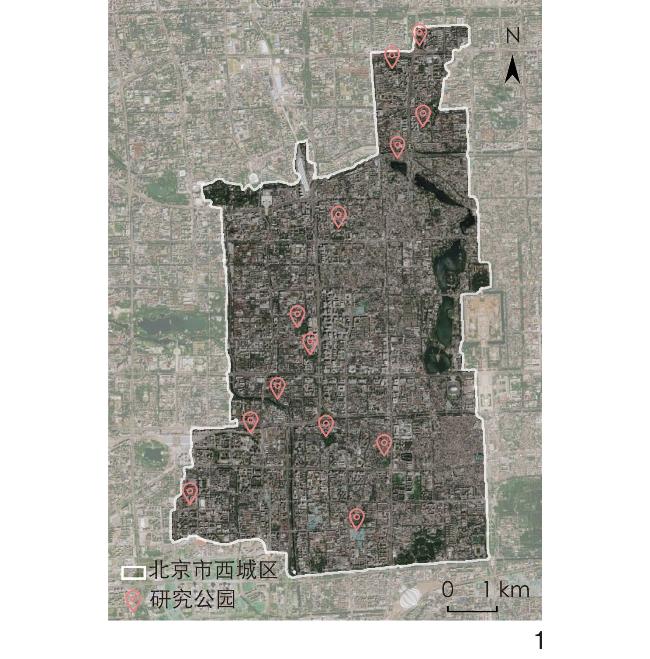
【目的】中国城市绿地建设迎来低碳发展的关键时期,自生植物的应用为解决城市公园植物景观养护管理成本高昂及生物多样性下降等问题提供了有效途径。然而,关于自生植物与城市公园养护管理之间相互影响关系及相应管理策略的研究尚不足。【方法】以北京市西城区13个城市公园为例,在梳理国内外养护管理政策及发展现状的基础上,通过文献收集和实地踏勘,分析不同类型公园养护管理差异对自生植物物种组成、多样性及群落组成的影响。【结果】1)城市公园养护管理措施因公园类型而存在差异,主要体现在除草和修剪措施上;2)实地踏勘共记录自生植物17科32属36种,近自然公园物种数最多;不同公园养护管理差异对于自生植物丰富度和多样性的影响无显著差异;但对均匀度的影响存在显著差异,大型传统公园的均匀度最高;此外,近自然公园以多年生植物群落为主,传统公园以一、二年生植物群落为主;3)城市公园养护管理面临缺乏差异化的养护管理技术措施、亟须重视自生植物群落的应用两大问题;4)提出适用于不同类型公园的养护管理工作优化策略。【结论】研究结果可以为城市公园养护管理工作变革提供新的思路和方向,有效促进城市低碳可持续发展建设。
张丽丽 , 郝培尧 , 董丽 , 王应临 . 基于自生植物的城市公园草本层养护管理优化策略——以北京市西城区为例[J]. 风景园林, 2024 , 31(6) : 46 -54 . DOI: 10.3724/j.fjyl.202308260384
【Objective】With climate change and other environmental problems becoming increasingly severe, the construction of China’ s ecological civilization has entered a critical period of green, low-carbon and circular development. Although garden plants are a key link in the carbon cycle of urban ecosystems, most of the plants cultivated in urban parks are ornamental ones that entail long-term, high-intensity maintenance management, which often consumes a large amount of resources and makes it difficult to balance the carbon emissions generated by human life. In this context, how to obtain maximum ecological benefits with minimum resource consumption has become an urgent task for the transformation and development of urban green space, and the resource saving rate and energy saving and emission reduction benefits of urban parks have become the focus of attention. Near-natural parks, as an effective solution, typically select low-maintenance or even self-maintained native plants with compound, heterogeneous and mixed community structures, and these parks only entail low-maintenance management. Meanwhile, self-maintained plants, as widespread urban native plants, do not require much maintenance management, and this feature, combined with the concept of low-cost management, has made them the ideal plant material used in near-natural parks and the focus of attention in traditional parks. The emergence of low-carbon gardens has put forward new ideas to meet the needs of low-carbon development, and near-natural parks are an important practice of low-carbon gardens that aim to explore the high carbon sink benefits of spontaneous plants during the planting, maintenance, and construction of plantscape dominated by native plant communities. Spontaneous plants are usually regarded as weeds, existing in areas of spontaneous growth in urban parks without proper care and management, and are the main targets for gardeners to remove.【Methods】Taking the 13 urban parks in Xicheng District, Beijing as an example, this research, on the basis of combing domestic and international maintenance management policies and the current development situation, analyzes the impacts of the differences in the maintenance management of different types of parks on the species composition, diversity and community composition of spontaneous plants through the research methods of literature collection and field investigation, and puts forward a maintenance management system that is suitable for different types of parks.【Results】Research findings are summarized as follows. 1) Urban parks in Xicheng District differ in terms of maintenance management strategies depending on the type of park. Near-natural parks and traditional parks differ primarily in terms of weeding and pruning, with the former not doing so to preserve the natural state of plants and the latter doing so on a regular basis to preserve the overall landscape effect. At other levels, such as irrigation, fertilizer application, and pest control, there are no appreciable differences between the two types of parks. 2) A total of 36 species of spontaneous plants classified into 32 genera under 17 families are recorded, with the near-natural parks having the highest number of species; under the influence of varying maintenance management, there is no discernible difference in the richness and diversity of spontaneous plants among the various park types, with the near-natural parks having the highest mean value; the spontaneous plant communities are impacted by the differences in maintenance management in terms of the composition of plant species, with traditional parks being dominated by annual or biannual plant communities and near-natural parks dominated by perennial plant communities; nevertheless, there is a significant difference in the homogeneity of the spontaneous plants, with large-scale traditional parks having the largest mean value. 3) Urban park maintenance management has two primary problems and difficulties: First, it is challenging to meet the needs of low-carbon development in urban parks due to the lack of specialized technical solutions for maintenance management and the obvious shortcomings in the application of policy measures in maintenance management; second, all types of parks contain spontaneous plants, which have large potential for gardening uses. It is critical to focus on applying spontaneous plant communities along with various maintenance management techniques and strategies to create plant communities that are appropriate for various environments. Based on the above findings, the research proposes the following optimization strategies for maintenance management applicable to different types of parks: clarify the maintenance management system; modify the species composition of plant communities; improve technical measures for maintenance management.【Conclusion】This research emphasizes the key role of spontaneous plants in the maintenance management of urban parks, and the research results may provide new ideas and directions for the reform of park management, thus effectively promoting the low-carbon sustainable urban development.
表1 国内外城市公园草本层养护管理措施[32-40]Tab. 1 Maintenance management measures for herbaceous plants in city parks at home and abroad[32-40] |
| 城市 | 养护管理措施 | ||||||||
| 灌溉频率 | 修剪 | 除草 | 施肥频率 | 引入其他植物 | 清除凋落物 | ||||
| 修剪时间和频率 | 修剪高度 | ||||||||
| 注:“—”表示相关信息无法获得。 | |||||||||
| 国外 | 英国伦敦 | — | 分区交错修剪, 通常于秋季实施 | 草地10~15 cm | 保留少数杂草, 清除有害杂草 | — | 将混合的野花种子添加到草坪中 | 清除大量插条及叶子,保留少量叶子 | |
| 德国柏林 | 无需浇水 | 最多3次,需错开 区域和时间 | 景观草坪6~10 cm; 草地及草甸10~15 cm | 清除入侵的优势植物 | 一般情况不施肥 | 必须使用本土物种 | 收集落叶并妥善利用 | ||
| 美国罗阿诺克 | — | 植物生长季1次/14 d,低维护区3次/年 | — | 与修剪结合 | 不超过2次 | — | 清除树枝、岩石及碎屑等 | ||
| 加拿大渥太华 | 草坪以5~7 d为宜 | — | 草坪不短于6.35~7.62 cm,修剪不超过1/3的叶片 | 清除入侵植物 | — | 增加本土物种 | 将草屑留在草坪上作为天然肥料 | ||
| 国内 | 北京 | 冷季型草坪10~25次/年,暖季型草坪5~12次/年 | 冷季型草坪7~18次/年,暖季型草坪1~5次/年 | 依据草种、季节等而定,冷季型草保持6~10 cm | 主要分为中耕除草和打孔除草,依草坪类型和等级而定 | 冷季型草坪2~5次/年,暖季型草坪1~3次/年 | — | 及时清理绿化生产垃圾(如树叶、草屑等) | |
| 南京 | 根据立地、季节等条件浇灌 | 一般草坪和杂草型草坪每年应修剪 5 次以上,越冬前应重修剪 1 次 | 冷季型草坪留茬高度不超过 6~7 cm,暖季型草坪留茬高度不超过4~5 cm | 一级、二级和三级草地杂草率不大于10% | 根据草坪品种、长势情况和气候条件进行施肥 | — | 及时清理修剪后的草屑 | ||
| 广州 | 根据天气情况合理浇水 | 一级、二级和三级草坪分别为8次/年、 4次/年、2次/年 | 一般保持在1.5~6.0 cm | 一级、二级和三级草坪的杂草率分别不超过2%、5%和8% | 一级、二级和三级草坪分别为4次/年、 2次/年、1次/年 | — | 一级、二级草坪随剪随清,三级草坪日剪日清 | ||
表2 研究样地分类及基本信息[24, 47-48]Tab. 2 Classification and basic information of the research site [24, 47-48] |
| 公园类型 | 建设理念 | 建植方式 | 公园名称 | 面积/hm2 |
| 近自然公园 | 营建具有森林的景观外貌及结构特征,同时集生态防护、景观提升、康养运动、休闲游憩等多功能于一体的绿地空间 | 1)基于多样化植物组成和自然种植点配置,形成乔灌草复层植物群落; 2)以乡土植物为主,选择节水耐旱型乡土草本;多以人工播种结合自然传播为主,形成近自然景观效果 | 常乐坊城市森林公园 | 0.66 |
| 逸清园城市森林公园 | 0.68 | |||
| 广阳谷城市森林公园 | 3.30 | |||
| 传统公园 | 营建具有基本的游憩和服务设施,主要为一定社区范围内居民就近开展日常休闲活动服务的绿地空间 | 1)以草坪、花境和花带等形式为主,形成植物丰富的景观空间; 2)主要以大乔木、色叶乔木做背景,花灌木做中景,草花地被做前景,构成不同特色的景观效果 | 官园公园(小型) | 1.60 |
| 南礼士路公园(小型) | 2.33 | |||
| 德胜公园(小型) | 3.16 | |||
| 玫瑰公园(小型) | 4.50 | |||
| 万寿公园(大型) | 5.10 | |||
| 白云公园(大型) | 5.50 | |||
| 双秀公园(大型) | 6.40 | |||
| 宣武艺园(大型) | 7.37 | |||
| 月坛公园(大型) | 8.12 | |||
| 人定湖公园(大型) | 9.20 |
表3 近自然公园和传统公园的养护管理措施频度差异Tab. 3 Differences in the frequency of maintenance management measures in near-natural and traditional parks |
| 公园类型 | 养护管理措施 | |||||
| 灌溉频率 | 修剪 | 除草 | 施肥频率 | 有害生物防治 | ||
| 修剪时间和频率 | 修剪高度 | |||||
| 近自然公园 | 据实际天气而定,春季一般间隔3~5 d | 一般不修剪 | 保持植物的自然生长高度 | 一般不除草,清除不属于人工栽植的自生植物 | 1~2次/年 | 1~2次/年 |
| 小型传统公园 | 据实际天气而定,春季一般间隔4~6 d | 一般不修剪 | 保持植物的自然生长高度 | 一般随见随除,无集中除草 | 1~2次/年 | 1~2次/年 |
| 大型传统公园 | 据实际天气而定,春季一般每隔3~7 d | 集中在夏季, 一般5~10次/年 | 高度在3~6 cm | 在5—6月大规模集中除草,5~ 10次/年 | 1~2次/年 | 3~4次/年 |
表4 近自然公园和传统公园自生植物群落的比较Tab. 4 Comparison of spontaneous plant communities in near-natural and traditional parks |
| 公园类型 | 序号 | 植物群落 | 群落数量 | 所占该类公园比例(%) |
| 近自然公园 | 1 | 绢毛委陵菜 | 23 | 38.98 |
| 2 | 绢毛委陵菜+紫花地丁(Viola philippica) | 5 | 8.47 | |
| 3 | 诸葛菜(Orychophragmus violaceus)+蒲公英(Taraxacum mongolicum) | 4 | 6.78 | |
| 4 | 绢毛委陵菜+马兰(Kalimeris indica) | 4 | 6.78 | |
| 5 | 绢毛委陵菜+活血丹 | 3 | 5.08 | |
| 6 | 绢毛委陵菜+诸葛菜 | 3 | 5.08 | |
| 7 | 活血丹 | 2 | 3.39 | |
| 8 | 绢毛委陵菜+蓟(Cirsium japonicum) | 2 | 3.39 | |
| 9 | 绢毛委陵菜+刺儿菜(Cephalanoplos segetum) | 2 | 3.39 | |
| 10 | 诸葛菜+艾(Artemisia argyi) | 2 | 3.39 | |
| 11 | 紫花地丁+射干(Belamcanda chinensis) | 1 | 1.69 | |
| 12 | 紫花地丁+蒲公英(Taraxacum mongolicum) | 1 | 1.69 | |
| 13 | 紫花地丁+藜(Chenopodium album) | 1 | 1.69 | |
| 14 | 绢毛委陵菜+藜+紫花地丁 | 1 | 1.69 | |
| 15 | 绢毛委陵菜+荆芥(Nepeta cataria) | 1 | 1.69 | |
| 16 | 蒲公英+艾+诸葛菜 | 1 | 1.69 | |
| 17 | 蒲公英+艾 | 1 | 1.69 | |
| 18 | 藜+艾 | 1 | 1.69 | |
| 19 | 地肤( Kochia scoparia )+抱茎苦荬菜(Crepidiastrum sonchifolium) | 1 | 1.69 | |
| 小型传统公园 | 1 | 荠菜 | 26 | 48.15 |
| 2 | 荠菜+附地菜 | 6 | 11.11 | |
| 3 | 附地菜 | 5 | 9.26 | |
| 4 | 藜 | 3 | 5.56 | |
| 5 | 荠菜+藜 | 2 | 3.70 | |
| 6 | 荠菜+蒲公英 | 2 | 3.70 | |
| 7 | 荠菜+车前(Plantago depressa) | 2 | 3.70 | |
| 8 | 附地菜+蒲公英 | 2 | 3.70 | |
| 9 | 附地菜+打碗花 | 2 | 3.70 | |
| 10 | 荠菜+紫花地丁 | 1 | 1.85 | |
| 11 | 地肤+荠菜 | 1 | 1.85 | |
| 12 | 马齿苋(Portulaca oleracea)+蒲公英 | 1 | 1.85 | |
| 13 | 紫花地丁+艾 | 1 | 1.85 | |
| 大型传统公园 | 1 | 附地菜 | 8 | 13.79 |
| 2 | 附地菜+蒲公英 | 6 | 10.34 | |
| 3 | 附地菜+草地早熟禾(Poa annua) | 6 | 10.34 | |
| 4 | 荠菜 | 5 | 8.62 | |
| 5 | 荠菜+蒲公英 | 4 | 6.90 | |
| 6 | 车前+紫花地丁 | 3 | 5.17 | |
| 7 | 附地菜+诸葛菜 | 3 | 5.17 | |
| 8 | 附地菜+荠菜 | 3 | 5.17 | |
| 9 | 附地菜+泥胡菜(Hemistepta lyrata) | 2 | 3.45 | |
| 10 | 附地菜+萹蓄(Polygonum aviculare) | 2 | 3.45 | |
| 11 | 车前+附地菜 | 2 | 3.45 | |
| 12 | 车前 | 2 | 3.45 | |
| 13 | 萹蓄+紫花地丁 | 2 | 3.45 | |
| 14 | 紫花地丁 | 1 | 1.72 | |
| 15 | 紫花地丁+蒲公英 | 1 | 1.72 | |
| 16 | 蒲公英+茜草(Rubia cordifolia) | 1 | 1.72 | |
| 17 | 车前+蒲公英 | 1 | 1.72 | |
| 18 | 荠菜+中华苦荬菜(Ixeris chinensis) | 1 | 1.72 | |
| 19 | 诸葛菜+荠菜 | 1 | 1.72 | |
| 20 | 藜+附地菜 | 1 | 1.72 | |
| 21 | 蛇莓(Duchesnea indica) | 1 | 1.72 | |
| 22 | 地肤+荠菜 | 1 | 1.72 | |
| 23 | 绢毛委陵菜 | 1 | 1.72 |
表5 城市公园自生植物群落组合模式参考Tab. 5 Referential combination mode for spontaneous plant communities in urban parks |
| 公园类型 | 组合模式 |
| 近自然公园 | 绢毛委陵菜+紫花地丁;诸葛菜+蒲公英;绢毛委陵菜+马兰;绢毛委陵菜+活血丹;绢毛委陵菜+蓟 |
| 小型传统公园 | 荠菜+附地菜;附地菜+蛇莓;荠菜+藜;荠菜+蒲公英;荠菜+车前;附地菜+蒲公英 |
| 大型传统公园 | 附地菜+蒲公英;荠菜+蒲公英;车前+紫花地丁;附地菜+诸葛菜;附地菜+荠菜 |
表6 城市公园养护管理技术措施优化建议Tab. 6 Optimization suggestions for technical measures for urban park maintenance management |
| 技术措施 | 近自然公园 | 传统公园 |
| 灌溉 | 建植初期根据植物需求确定浇水频率,后期逐渐降低频率 | 草坪一般以5~7 d为宜,最长可达10 d;草地如无必要可不进行浇水 |
| 施肥 | 对贫瘠土壤定期实行多样化施肥,2~3次/年 | 根据实际情况施肥,1~2次/年 |
| 修剪 | 除生长势过旺外,其余不进行修剪 | 草坪在生长季节需要修剪频率14 d/次,留茬高度较正常标准增加2~3 cm;草地保证10~15 cm的高度 |
| 除草 | 清除恶性杂草,适当清除部分优势物种 | 清除影响景观效果等的恶性杂草,保留自生植物 |
| 清除凋 落物 | 清除多数枯枝落叶,保留少数以改善土壤质量和促进植物生长 | 及时清理所有枯枝落叶,保证绿地整洁 |
| 引入其他植物 | 定期引入具有良好观赏特性及生态效益的乡土物种 | 斑秃草坪区域可引入部分生长速度适中的自生植物进行改善;需改造的草地可引入多年生自生草本植物逐步代替原有物种 |
| [1] |
ARONSON M F J, LEPCZYK C A, EVANS K L, et al. Biodiversity in the City: Key Challenges for Urban Green Space Management[J]. Frontiers in Ecology and the Environment, 2017, 15(4): 189-196.
|
| [2] |
KLAUS J. Encyclopedic Dictionary of Landscape and Urban Planning[M]. Berlin: Springer Verlag, 2010.
|
| [3] |
张梦园, 李坤, 邢小艺, 等. 北京温榆河—北运河生态廊道自生植物多样性对城市化的响应[J]. 生态学报, 2022, 42(7): 2582-2592.
ZHANG M Y, LI K, XING X Y, et al. Rensponses of Spontaneous Plant Diversity to Urbanization in Wenyu River-North Canal Ecological Corridor, Beijing[J]. Acta Ecologica Sinica, 2022, 42(7): 2582-2592.
|
| [4] |
BONTHOUX S, VOISIN L, BOUCHÉ-PILLON S, et al. More Than Weeds: Spontaneous Vegetation in Streets as a Neglected Element of Urban Biodiversity[J]. Landscape and Urban Planning, 2019, 185: 163-172.
|
| [5] |
El BERKAOUI M, El ADNANI M, HAKKOU R, et al. Assessment of the Transfer of Trace Metals to Spontaneous Plants on Abandoned Pyrrhotite Mine: Potential Application for Phytostabilization of Phosphate Wastes[J]. Plants, 2022, 11 (2): 179.
|
| [6] |
BOECHAT C L, PISTÓA V C, GIANELO C, et al. Accumulation and Translocation of Heavy Metal by Spontaneous Plants Growing on Multi-metal-contaminated Site in the Southeast of Rio Grande do Sul State, Brazil[J]. Environmental Science and Pollution Research, 2016, 23(3): 2371-2380.
|
| [7] |
DENG H J, JIM C Y. Spontaneous Plant Colonization and Bird Visits of Tropical Extensive Green Roof[J]. Urban Ecosyst, 2017, 20: 337-352.
|
| [8] |
SÄUMEL I, WEBER F, KOWARIK I. Toward Livable and Healthy Urban Streets: Roadside Vegetation Provides Ecosystem Services Where People Live and Move[J]. Environmental Science & Policy, 2016, 62: 24-33.
|
| [9] |
PHILLIPS B B, BULLOCK J M, OSBORNE J L, et al. Ecosystem Service Provision by Road Verges[J]. Journal of Applied Ecology, 2020, 57(3): 488-501.
|
| [10] |
RUDOLPH M, VELBERT F, SCHWENZFEIER S, et al. Patterns and Potentials of Plant Species Richness in High- and Low-Maintenance Urban Grasslands[J]. Applied Vegetation Science, 2017, 20(1): 18-27.
|
| [11] |
金亚璐, 楼晋盼, 姚兴达, 等. 京杭大运河(杭州主城区段)河岸带不同生境自生植物物种组成与多样性特征[J]. 中国园林, 2022, 38(10): 110-115.
JIN Y L, LOU J P, YAO X D, et al. Species Composition and Diversity Characteristics of Spontaneous Vegetation in Different Habitats in the Riparian Zone of Urban Channelized Rivers: A Case Study of the Beijing-Hangzhou Grand Canal in the Main Section of Hangzhou[J]. Chinese Landscape Architecture, 2022, 38(10): 110-115.
|
| [12] |
LI X P, FAN S X, GUAN J H, et al. Diversity and Influencing Factors on Spontaneous Plant Distribution in Beijing Olympic Forest Park[J]. Landscape and Urban Planning, 2019, 181: 157-168.
|
| [13] |
ANDERSON E C, MINOR E S. Assessing Social and Biophysical Drivers of Spontaneous Plant Diversity and Structure in Urban Vacant Lots[J]. Science ot the Total Environment, 2019, 653: 1272-1281.
|
| [14] |
OMAR M, Al SAYED N, BARRÉ K, et al. Drivers of the Distribution of Spontaneous Plant Communities and Species Within Urban Tree Bases[J]. Urban Forestry & Urban Greening, 2018, 35: 174-191.
|
| [15] |
LI X P, FAN S X, HAO P Y, et al. Temporal Variations of Spontaneous Plants Colonizing in Different Type of Planted Vegetation: A Case of Beijing Olympic Forest Park[J]. Urban Forestry & Urban Greening, 2019, 46: 126459.
|
| [16] |
刘昌, 邢韶华, 姚扬, 等. 北京城区自生植物分布格局及其影响因素[J]. 生态学报, 2024, 44(2): 544-558.
LIU C, XING S H, YAO Y, et al. Spatial Distribution Pattern and Influencing Factors of Spontaneous Plants Within the Built-Up Areas of Beijing, China[J]. Acta Ecologica Sinica, 2024, 44(2): 544-558.
|
| [17] |
CHENG X L, NIZAMANI M M, JIM C Y, et al. Using SPOT Data and FRAGSTAS to Analyze the Relationship Between Plant Diversity and Green Space Landscape Patterns in the Tropical Coastal City of Zhanjiang[J]. China, Remote Sensing, 2020, 12 (21): 3477.
|
| [18] |
李慧, 李春义, 何伟. 自然野态的植物景观营造的理论与方法[J]. 中国园林, 2018, 34(5): 94-98.
LI H, LI C Y, HE W. Theories and Methods of Natural Wild Planting Design[J]. Chinese Landscape Architecture, 2018, 34(5): 94-98.
|
| [19] |
SEHRT M, BOSSDORF O, FREITAG M, et al. Less is More! Rapid Increase in Plant Species Richness After Reduced Mowing in Urban Grasslands[J]. Basic and Applied Ecology, 2020, 42: 47-53.
|
| [20] |
RUDOLPH M, VELBERT F, SCHWENZFEIER S, et al. Patterns and Potentials of Plant Species Richness in High- and Low-Maintenance Urban Grasslands[J]. Applied Vegetation Science, 2017, 20(1): 18−27.
|
| [21] |
刘瑞雪, 许晓雪, 袁磊. 新自然主义生态种植设计理念下的城市墙体自生植物在垂直绿化中的应用[J]. 中国园林, 2020, 36(4): 111-116.
LIU R X, XU X X, YUAN L. Application of Urban Wall Autogenous Plants in Vertical Greening Based on New Naturalistic Ecological Planting Design[J]. Chinese Landscape Architecture, 2020, 36(4): 111-116.
|
| [22] |
SMITH L S, FELLOWES M D E. The Grass-Free Lawn: Management and Species Choice for Optimum Ground Cover and Plant Diversity[J]. Urban Forestry & Urban Greening, 2014, 13(3): 433-442.
|
| [23] |
王沫, 刘畅, 李晓璐, 等. 近自然社区公园的生物多样性特征: 以北京市中心城区为例[J]. 生态学报, 2022, 42(20): 8254-8264.
WANG M, LIU C, LI X L, et al. Biodiversity Characteristics in Near-Natural Community Parks: A Case Study in the Central Area of Beijing[J]. Acta Ecologica Sinica, 2022, 42(20): 8254-8264.
|
| [24] |
中华人民共和国住房和城乡建设部. 城市绿地分类标准: CJJ/T85—2017[S].北京: 中国建筑工业出版社, 2018.
Ministry of Housing and Urban-Rural Development of the People’s Republic of China. Criteria for Categorizing Urban Green Spaces: CJJ/T85−2017[S]. Beijing: China Architecture & Building Press, 2018.
|
| [25] |
杨玉萍, 周志翔. 城市近自然园林的理论基础与营建方法[J]. 生态学杂志, 2009, 28(3): 516-522.
YANG Y P, ZHOU Z X. Theoretical Basis and Construction Method of Urban Near-Approximating Landscape Architecture[J]. Chinese Journal of Ecology, 2009, 28(3): 516-522.
|
| [26] |
胡运宏, 葛诗唯, 颜麒. 新中国城市园林绿化政策的历史演进研究: 基于1949—2021年政策文本的量化分析[J]. 中国园林, 2023, 39(4): 133-138.
HU Y H, GE S W, YAN Q. Research on the Historical Evolution of Urban Landscaping Policy Since the Founding of New China: Quantitative Analysis Based on Policy Texts from 1949 to 2021[J]. Chinese Landscape Architecture, 2023, 39(4): 133-138.
|
| [27] |
National Parks Board (Singapore). Introduction to Community Gardening[EB/OL]. (2023-11-02)[2024-03-03]. https://gardeningsg.nparks.gov.sg/get-involved/community-gardens/.
|
| [28] |
CHONG K Y, TAN H T W, CORLETT R T. A Checklist of the Total Vascular Plant Flora of Singapore: Native, Naturalized and Cultivated Species[R]. Singapore: Raffles Museum of Biodiversity Research, Singapore National University of Singapore, 2009.
|
| [29] |
London City Hall. The London Plan 2021[EB/OL]. (2021-03-01)[2024-03-03]. https://www.london.gov.uk/programmes-strategies/planning/london-plan/new-london-plan/london-plan-2021.
|
| [30] |
London City Hall. London Urban Forest Plan[EB/OL]. (2020-11-23)[2024-03-03]. https://www.london.gov.uk/sites/default/files/londonurbanforestplan_final.pdf.
|
| [31] |
San Francisco Recreation Parks. FY22 Park Evaluation Standards[EB/OL]. (2022-09-26)[2024-03-03]. https://sfrecpark.org/DocumentCenter/View/18951/SFRPD-Park-Evaluation-Standards-FY22.
|
| [32] |
Senate Department for Mobility, Transport, Climate Protection and Environment. Handbuch Gute Pflege (HGP): Pflegestandards für die Berliner Grün-und Freiflächen[EB/OL]. (2019-11-19)[2024-03-03]. https://www.berlin.de/sen/uvk/natur-und-gruen/stadtgruen/pflegen-und-unterhalten/handbuch-gute-pflege/.
|
| [33] |
The RSPB. Advanced Lawn Care and Management[EB/OL]. (2019-11-19)[2023-02-09]. https://www.rspb.org.uk/get-involved/activities/nature-on-your-doorstep/garden-activities/stop-mowing-your-lawn-for-nature/.
|
| [34] |
Roanoke Parks and Recreation. Comprehensive Parks Maintenance and Operations Plan[EB/OL]. [2023-02-09]. http://faculty.wiu.edu/P-Schlag/supplemental/pdfs/13-01%20Parks%20Maintenance%20and%20Operations%20Plan,%20Roanoke.pdf.
|
| [35] |
Government of Canada. From Field to Forest[EB/OL]. (2018-06-07)[2023-02-09]. https://parks.canada.ca/agence-agency/bib-lib/rapports-reports/core-2018/ontario/on1.
|
| [36] |
City of Ottawa. City of Ottawa Urban Forest Management 2018−2037[EB/OL]. (2017-08)[2024-03-03]. https://documents.ottawa.ca/en/files/urban-forest-management-plan-2018-2037-0.
|
| [37] |
北京市园林绿化局.城镇绿地养护技术规范: DB11/T 213—2022[EB/OL]. (2022-07-01)[2024-03-03]. https://yllhj.beijing.gov.cn/sdlh/ylkj/bzgf/202207/t20220701_2757537.shtml.
Beijing Gardening and Greening Bureau. Technical Specifications for Maintenance of Urban Green Space: DB11/T 213−2022[EB/OL]. (2022-07-01)[2024-03-03]. https://yllhj.beijing.gov.cn/sdlh/ylkj/bzgf/202207/t20220701_2757537.shtml.
|
| [38] |
江苏省住房和城乡建设厅. 省住房和城乡建设厅关于印发江苏省城市园林绿化养护管理规范及分级标准的通知[EB/OL]. (2015-09-06)[2024-03-03]. http://jsszfhcxjst.jiangsu.gov.cn/art/2020/3/15/art_49384_9016385.html.
Jiangsu Provincial Department of Housing and Urban-Rural Development. Provincial Housing and Urban-Rural Construction Department on the Issuance of Jiangsu Province, Urban Landscaping Maintenance Management Norms and Grading Standards Notice [EB/OL]. (2015-09-06)[2024-03-03]. http://jsszfhcxjst.jiangsu.gov.cn/art/2020/3/15/art_49384_9016385.html.
|
| [39] |
广州市林业和园林局.园林绿化养护管理技术规范: DB44 T 268—2005[EB/OL]. (2009-02-13)[2023-04-19]. http://lyylj.gz.gov.cn/zcfg/flfggz/content/post_3034167.html.
Bureau of Forestry and Landscaping of Guangzhou Municipality. Technical Code for Management of Landscape Greening: DB44 T 268−2005[EB/OL]. (2009-02-13)[2023-04-19]. http://lyylj.gz.gov.cn/zcfg/flfggz/content/post_3034167.html.
|
| [40] |
广州市林业和园林局.园林绿地养护管理技术规范: DB4401/T 6—2018[EB/OL]. (2018-08-01)[2023-02-09]. http://lyylj.gz.gov.cn/zhzx/bmdt/content/post_5290975.html.
Bureau of Forestry and Landscaping of Guangzhou Municipality. Technical Code for Conservation and Management of Green Space: DB4401/T 6−2018[EB/OL]. (2018-08-01)[2023-02-09]. http://lyylj.gz.gov.cn/zhzx/bmdt/content/post_5290975.html.
|
| [41] |
中华人民共和国住房和城乡建设部. 住房城乡建设部关于发布行业标准《园林绿化养护标准》的公告[EB/OL]. (2019-04-01)[2023-02-09]. https://www.mohurd.gov.cn/gongkai/zhengce/zhengcefilelib/201902/20190228_239604.html.
Ministry of Housing and Urban-Rural Development of the People's Republic of China. Announcement of the Ministry of Housing and Urban-Rural Development on the Publication of the Industry Standard Standard for Maintenance of Landscaping [EB/OL]. (2019-04-01)[2023-02-09]. https://www.mohurd.gov.cn/gongkai/zhengce/zhengcefilelib/201902/20190228_239604.html.
|
| [42] |
北京市园林绿化局.关于进一步加强野草管理工作的通知[EB/OL]. (2021-10-26)[2023-02-09]. http://yllhj.beijing.gov.cn/zwgk/fgwj/qtwj/202110/t20211029_2524514.shtml.
Beijing Gardening and Greening Bureau. Notice of Beijing Municipal Bureau of Landscape Architecture and Greening on Further Strengthening the Management of Weeds[EB/OL]. (2021-10-26)[2023-02-09]. http://yllhj.beijing.gov.cn/zwgk/fgwj/qtwj/202110/t20211029_2524514.shtml.
|
| [43] |
北京市园林绿化局.关于印发《绿隔地区公园高质量发展三年行动计划(2023年—2025 年)》的通知[EB/OL]. (2023-01-30)[2023-04-19].http://yllhj.beijing.gov.cn/zwgk/fgwj/qtwj/202304/t20230420_3062000.shtml.
Beijing Gardening and Greening Bureau. Notice of the Issuance of the Three-Year Action Plan for the High-Quality Development of Green Separation Area Parks (2023−2025)[EB/OL]. (2023-01-30)[2023-04-19]. http://yllhj.beijing.gov.cn/zwgk/fgwj/qtwj/202304/t20230420_3062000.shtml.
|
| [44] |
北京市规划和自然资源管理委员会.北京城市总体规划(2016年—2035年)[R/OL].(2017-09-29)[2024-03-03]. http://ghzrzyw.beijing.gov.cn/zhengwuxinxi/zxzt/bjcsztgh20162035/.
Beijing Municipal Commission of Planning and Natural Resources. Beijing Urban Master Plan (BUMP) (2016−2035)[R/OL]. (2017-09-29)[2024-03-03]. http://ghzrzyw.beijing.gov.cn/zhengwuxinxi/zxzt/bjcsztgh20162035/.
|
| [45] |
北京市园林绿化局.新一轮百万亩造林绿化建设开局良好[EB/OL]. (2018-11-02)[2023-04-19]. https://yllhj.beijing.gov.cn/zwgk/fgwj/zcjd/201911/t20191123_529700.shtml.
Beijing Gardening and Greening Bureau. The New Round of One Million Acres of Afforestation and Greening Construction is off to a Good Start[EB/OL]. (2018-11-02)[2023-04-19]. https://yllhj.beijing.gov.cn/zwgk/fgwj/zcjd/201911/t20191123_529700.shtml.
|
| [46] |
GAO Z W, SONG K, et al. Drivers of Spontaneous Plant Richness Patterns in Urban Green Space Within a Biodiversity Hotspot[J]. Urban Forestry & Urban Greening, 2021, 61: 127098.
|
| [47] |
北京市园林绿化局.北京市城市森林建设指导书(试行)[EB/OL]. (2019-11-19)[2023-02-09]. http://yllhj.beijing.gov.cn/zwgk/fgwj/qtwj/201911/t20191130_766758.shtml.
Beijing Gardening and Greening Bureau. Beijing Urban Forestry Construction Guidelines (Trial) [EB/OL]. (2019-11-19)[2023-02-09]. http://yllhj.beijing.gov.cn/zwgk/fgwj/qtwj/201911/t20191130_766758.shtml.
|
| [48] |
北京市园林绿化局.城市森林营建技术导则: DB11/T 1637—2019[EB/OL]. (2019-07-18)[2023-02-09]. http://yllhj.beijing.gov.cn/sdlh/ylkj/bzgf/201911/t20191130_2606635.shtml.
Beijing Gardening and Greening Bureau. Technical Guideline for Urban Forest Construction: DB11/T 1637−2019[EB/OL]. (2019-07-18)[2023-02-09]. http://yllhj.beijing.gov.cn/sdlh/ylkj/bzgf/201911/t20191130_2606635.shtml
|
| [49] |
王阔.北京城市化环境下自生草本植物现状及园林应用研究[D].北京: 北京林业大学, 2014.
WANG K. Research on the Spontaneous Herbaceous Plants in Beijing Urban Area[D]. Beijing: Beijing Forestry University, 2014.
|
| [50] |
方精云, 王襄平, 沈泽昊, 等. 植物群落清查的主要内容、方法和技术规范[J]. 生物多样性, 2009, 17(6): 533-548.
FANG J Y, WANG X P, SHEN Z H, et al. Methods and Protocols for Plant Community Inventory[J]. Biodiversity Science, 2009, 17(6): 533-548.
|
| [51] |
潘妮, 闵钰婷, 赵娟娟, 等.城市建成区自生草本植物群落的物种多样性与功能多样性: 以深圳市为例[J/OL].生态学报, 2024(9): 1-16[2023-06-20].https://doi.org/10.20103/j.stxb.202308101725.
PAN N, MIN Y T, ZHAO J J, et al. Species and Functional Diversity of Spontaneous Herb Communities in Urban Built-up Areas: A Case Study of Shenzhen City[J/OL]. Acta Ecologica Sinica,2024(9):1-16[2023-06-20]. https://doi.org/10.20103/j.stxb.202308101725.
|
| [52] |
陈晓双, 梁红, 宋坤, 等. 哈尔滨城区杂草群落多样性及其分类体系[J]. 应用生态学报, 2014, 25(8): 2221-2228.
CHEN X S, LIANG H, SONG K, et al. Diversity and Classification System of Weed Community in Harbin City, China[J]. Chinese Journal of Applied Ecology, 2014, 25(8): 2221-2228.
|
| [53] |
李晓鹏, 董丽, 关军洪, 等.北京城市公园环境下自生植物物种组成及多样性时空特征[J].生态学报, 2018, 38(2): 581-594.
LI X P, DONG L, GUAN J H, et al. Temporal and Spatial Characteristics of Spontaneous Plant Composition and Diversity in a Beijing Urban Park[J]. Acta Ecologica Sinica, 2018, 38(2) : 581-594.
|
| [54] |
赵娟娟, 孙小梅, 陈珊珊, 等. 城市野生草本植物种类构成的特征: 以宁波市为例[J]. 生态环境学报, 2016, 25(1): 43-50.
ZHAO J J, SUN X M, CHEN S S, et al. Characteristics of Species Composition for Urban Spontaneous Herbs, with Ningbo, China as a Case Study[J]. Ecology and Environmental Sciences, 2016, 25(1): 43-50.
|
| [55] |
管斐斐. 植物多样性对城市绿地生态系统功能的影响及评价[J]. 分子植物育种, 2023, 21(17): 5901-5905.
GUAN F F. Impacts and Assessment of Plant Diversity on Urban Green Space Ecosystem Functioning[J]. Molecular Plant Breeding, 2023, 21(17): 5901-5905.
|
| [56] |
张金屯.数量生态学(第二版)[M].北京: 科学出版社, 2011.
ZHANG J T. Quantitative Ecology (Second Edition)[M]. Beijing: Science Press, 2011
|
| [57] |
HWANG Y H, SEE S C, PATIL M A. Short-Term Vegetation Changes in Tropical Urban Parks: Patterns and Design-Management Implications[J]. Urban Forestry & Urban Greening, 2021, 64: 127240.
|
| [58] |
王阔, 李战修, 董天翔, 等. 以木为本, 林鸟相依: 广阳谷城市森林[J]. 风景园林, 2018, 25(4): 70-74.
WANG K, LI Z X, DONG T X, et al. Based on Indigenous Trees to Achieve a Harmonious Symbiosis of Trees and Birds: The Guangyanggu Urban Forest[J]. Landscape Architecture, 2018, 25(4): 70-74.
|
| [59] |
KNAPP S, DINSMORE L, FISSORE C, et al. Phylogenetic and Functional Characteristics of Household Yard Floras and Their Changes Along an Urbanization Gradient[J]. Ecology, 2012, 93 (8): S83-S98.
|
| [60] |
李仓拴, 刘晖, 程爱云, 等. 尊重自然力启示下的城市自生群落改良设计实验[J]. 风景园林, 2018, 25(6): 58-63.
LI C S, LIU H, CHENG A Y, et al. Respect for Natural Forces Inspired Urban Spontaneous Community Improvement Design Experiment[J]. Landscape Architecture, 2018, 25(6): 58-63.
|
| [61] |
YUAN J, ZHANG G X, et al. Experiment Using Semi-Natural Meadow Vegetation for Restoration of River Revetments: A Case Study in the Upper Reaches of the Yangtze River[J]. Ecological Engineering, 2020, 159: 106095.
|
| [62] |
李仓拴, 刘晖, 程爱云, 等. 让自然参与设计: 一种基于自然演替的城市自生群落改良设计途径[J]. 中国园林, 2019, 35(7): 118-123.
LI C S, LIU H, CHENG A Y, et al. Let Nature Participate in Design: An Approach to Improve the Design of Urban Spontaneous Community Based on Natural Succession[J]. Chinese Landscape Architecture, 2019, 35(7): 118-123.
|
| [63] |
陈春谛. 被遗忘的城市“生境”: 重庆市墙体自生植物调查分析[J]. 生态学报, 2020, 40(2): 473-483.
CHEN C D. Forgotten Urban Habitats: Analysis of Spontaneous Vegetation on the Urban Walls of Chongqing City[J]. Acta Ecologica Sinica, 2020, 40(2): 473-483.
|
| [64] |
BENINDE J, VEITH M, HOCHKIRCH A. Biodiversity in Cities Needs Space: A Meta-Analysis of Factors Determining Intra-Urban Biodiversity Variation[J]. Ecology Letters, 2015, 18(6): 581-592.
|
| [65] |
WANG X, SWENSON N G, WIEGAND T, et al. Phylogenetic and Functional Diversity Area Relationships in Two Temperate Forests[J]. Ecography, 2013, 36(8): 883-893.
|
| [66] |
蒋亚蓉, 袁涛, 吴璐瑶. 基于CSR理论的草花混播种类选择及混播群落构建[J]. 中国园林, 2022, 38(10): 104-109.
JIANG Y R, YUAN T, WU L Y. Species Selection and Community Construction of Flower Meadows Based on CSR Theory[J]. Chinese Landscape Architecture, 2022, 38(10): 104-109.
|
| [67] |
北京市园林绿化局.园林绿化种植土壤技术要求: DB11T 864—2020[EB/OL]. (2021-02-05)[2023-02-09]. http://yllhj.beijing.gov.cn/sdlh/ylkj/bzgf/202102/t20210207_2606610.shtml.
Beijing Gardening and Greening Bureau. Soil Requirements for Landscaping Use: DB11T 864−2020[EB/OL]. (2021-02-05)[2023-02-09]. http://yllhj.beijing.gov.cn/sdlh/ylkj/bzgf/202102/t20210207_2606610.shtml.
|
| [68] |
北京市园林绿化局.园林绿化用地土壤质量提升技术规程: DB11 T 1604—2018[EB/OL]. (2019-01-17)[2023-02-09]. http://yllhj.beijing.gov.cn/sdlh/ylkj/bzgf/201911/t20191130_2606643.shtml.
Beijing Gardening and Greening Bureau. Technical Regulations for Improving of Landscaping and Greening Soil Quality: DB11 T 1604−2018[EB/OL]. (2019-01-17)[2023-02-09]. http://yllhj.beijing.gov.cn/sdlh/ylkj/bzgf/201911/t20191130_2606643.shtml.
|
/
| 〈 |
|
〉 |