

基于多源数据的社区公园游憩规律及其空间特征关联研究——以上海为例
|
邵钰涵/女/博士/同济大学建筑与城市规划学院学术发展部主任、副教授、博士生导师/教育部生态化城市设计国际合作联合实验室恢复性城市研究分实验中心(RURC)负责人/本刊青年编委/研究方向为景观感知、健康景观、海岸带景观 |
|
卢慧霖/女/同济大学建筑与城市规划学院在读硕士研究生/研究方向为城市绿地健康行为、恢复性景观规划与设计 |
Copy editor: 李清清
收稿日期: 2023-10-29
修回日期: 2023-12-25
网络出版日期: 2025-12-11
基金资助
国家自然科学基金“城市自然景观视觉舒适度感应机理研究”(51808393)
国家重点研发计划重点专项“宜居城市环境品质提升关键技术研究与应用”(2023YFC3805300)
科技部外传项目“恢复性城市景观理论、方法与实践研究”(G2022133023L)
上海市城市更新及其空间优化技术重点实验室课题“城市街道视觉疗愈与经济活力平衡调控系统研究”(CAUP-UD-06)
版权
Research on Correlation Between Recreation Rules and Spatial Features of Community Parks Based on Multi-Source Data: A Case Study of Shanghai
|
SHAO Yuhan, Ph.D., is director of and an associate professor and doctoral supervisor in the Department of Academic Development, College of Architecture and Urban Planning (CAUP), Tongji University, and director of Restorative Urbanism Research Centre (RURC) of Joint International Research Laboratory of Eco-Urban Design, Ministry of Education, and a young editorial board member of this journal. Her research focuses on landscape perception, health landscape, and costal landscape |
|
LU Huilin is a master student in the College of Architecture and Urban Planning (CAUP), Tongji University. Her research focuses on healthy behavior in urban green space, and planning and design of restorative landscape |
Received date: 2023-10-29
Revised date: 2023-12-25
Online published: 2025-12-11
Copyright
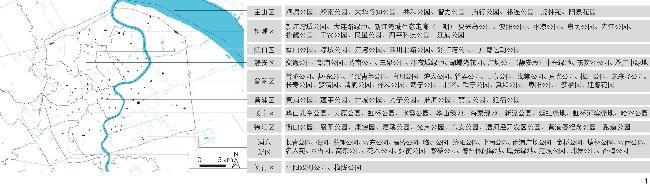
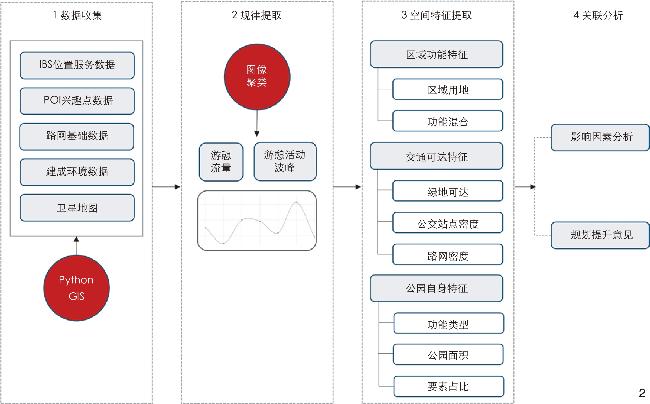
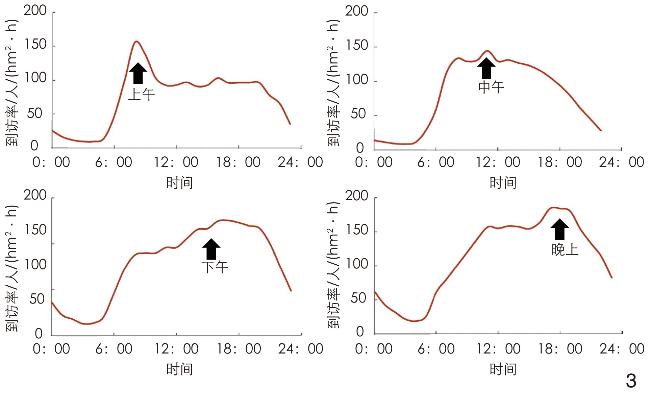
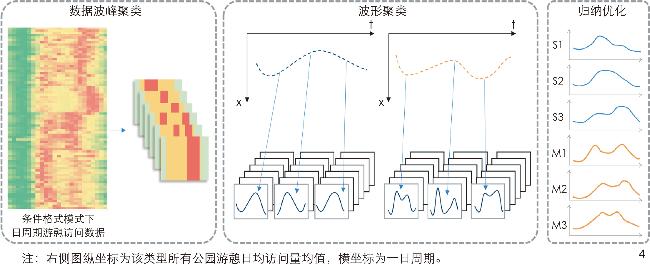
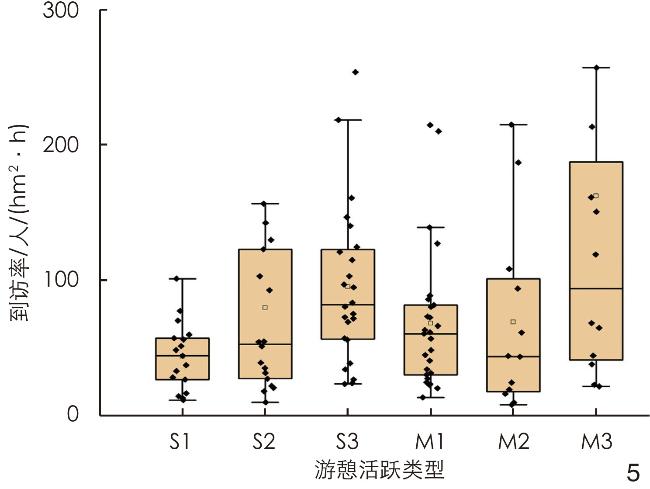
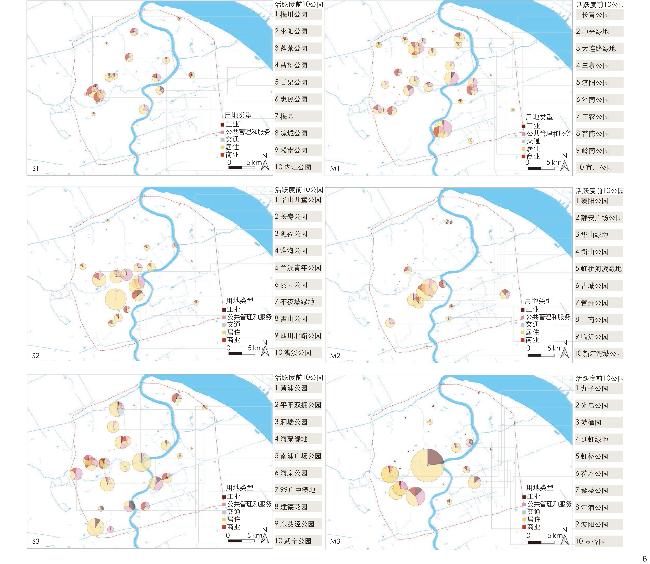
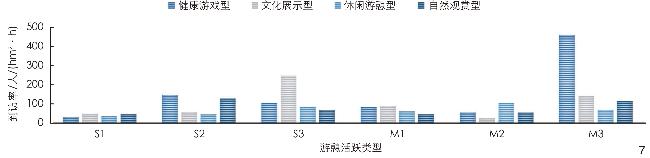
【目的】对社区公园进行精细化游憩规律分类,并探索游憩规律与空间特征的关系,对社区公园游憩效率的提升具有指导意义。【方法】对上海市中心城区110个社区公园进行研究,基于手机信令数据,识别社区公园绿地周期游憩活跃规律并进行频谱聚类;结合多源数据,提取区域功能、交通可达性和公园空间特征并与游憩到访率进行关联。【结果】社区公园日周期游憩规律可分为单波峰活跃型和多波峰活跃型2类,包括晨间、午间、晚间波峰活跃型和早晚间、中下午、中晚间波峰活跃型,活跃类型与周边用地功能呈现直接关联。游憩到访率与空间特征要素的关联中,总体与周边空间商业用地占比、公交站点密度、道路密度呈现强相关,不同游憩活跃类型中也各呈现出与公共管理用地占比、绿地可达性、公园面积、硬质景观占比等指标的相关性。【结论】各游憩活跃类型的绿地游憩效率提升应结合游憩规律考虑不同的指标,例如中晚间波峰活跃型绿地宜更加关注绿地可达性、硬质活动场地的面积等。这些发现为研究城市社区公园游憩时空行为、精准提升社区公园服务水准提供了新视角。
邵钰涵 , 卢慧霖 . 基于多源数据的社区公园游憩规律及其空间特征关联研究——以上海为例[J]. 风景园林, 2024 , 31(2) : 32 -40 . DOI: 10.3724/j.fjyl.202310290487
[Objective] The growing demand for meticulous green space allocation has made the intensive utilization of urban community parks an imperative nowadays. Nonetheless, prevailing community park planning tends to be expansive and lacks the adept integration of efficiency nuances arising from diverse usage behaviors. The classification of recreational patterns within community parks, coupled with an exploration of their correlation with spatial features, presents substantial potential for precisely steering the augmentation of recreational efficiency in community parks[Methods] This research conducts a comprehensive investigation encompassing 110 community parks in Shanghai. Leveraging location based service (LBS) data, the research identifies patterns of recreational activities within community parks across distinct time periods. Employing spectral clustering based on visit frequency, peak counts, and peak time periods, the research amalgamates data from diverse sources, including built environment data and urban transportation data. The primary objective is to extract three pivotal feature categories: regional functionality, transportation accessibility, and green space features. These features undergo meticulous scrutiny for their correlation with recreational visit efficiency. Regional functional features encompass parameters such as proportion of industrial land, public management and service land, residential land, transportation land, and commercial land, and the functional mix of parkland. Transportation accessibility features comprise metrics such as green space accessibility, bus stop density, and road network density. Green space features include park area, green coverage, hard surface ratio, and water area proportion. The synthesis of these features provides a nuanced understanding of the factors influencing recreational visit efficiency in community parks. [Results] The recreational activity patterns in community parks are successfully categorized into single-peak and multi-peak types, including morning, noon, and evening peak activity types, as well as morning and evening, noon and afternoon, and noon and evening peak activity types. These patterns exhibit a direct association with the surrounding land use functions. In the analysis of spatial features influencing recreational visit efficiency in community parks, the research finds a strong correlation of recreational visit efficiency with the overall percentage of commercial land, bus stop density, and road density. Additionally, different recreational activity types show significant correlations with the proportion of public management land, green space accessibility, park area, and hard surface ratio. For instance, the recreational visit frequency of morning peak activity types is correlated with the mix of functions around the park, while the recreational visit frequency of noon peak activity types is related to green space accessibility, park area, and hard surface ratio. The recreational visit frequency of evening peak activity types is correlated with the mix of functions around the park and road network density. The recreational visit frequency of morning and evening peak activity types is more related to the proportion of public management and service land, green space accessibility, bus stop density, and park area. The recreational visit frequency of noon and afternoon peak activity types is more related to the proportion of commercial land and bus stop density. The recreational visit frequency of noon and evening peak activity types is correlated with green space accessibility and hard surface ratio. [Conclusion] To enhance recreational visit efficiency, it is crucial to consider different indicators based on recreational patterns. For community parks with morning and evening peak activities, strategies such as strengthening surrounding public management and service functions, optimizing transportation accessibility and bus stop density, and refining park area are recommended. Conversely, for community parks with evening peak activities, placing more emphasis on green space accessibility and the area of hard activity surfaces may be more suitable. The research further reveals that surrounding functionality plays a key role in determining people’s behavioral tendencies, with commercial functionality significantly influencing overall efficiency and providing daily recreational activities for surrounding residents. The enhancement of functional diversity has a greater impact on morning and evening peak activity types. Moreover, adequate bus station facilities, a sparse road network, and high accessibility are considered factors that promote the use of green space parks. The layout of a small road network is crucial for the accessibility of evening active walking. In terms of planning and design, it is recommended to consider the rational layout of surrounding road networks to facilitate walking and reduce dependence on transportation. This is especially important during the evening peak and noon to evening peak periods when people typically prefer walking. Providing convenient walking paths and facilities can alleviate traffic congestion and improve travel efficiency. Additionally, it is suggested to fully consider supporting services such as surrounding bus stations, especially in communities with early evening commuting peaks and afternoon recreation needs. The research also indicates that larger park area may contribute to the increased visit efficiency of green spaces during noon and evening peak activity types. Therefore, in areas with busy midday and evening pedestrian traffic, providing sufficient space is essential. The research further provides directions for precisely improving recreational visit efficiency in community parks, such as offering ample children’s games and health and fitness facilities for midday and evening peak activity types, which are crucial for improving the usage paths of such activity types. These findings offer a new perspective for researching the temporal and spatial behaviors of urban community green spaces, thus providing insights for the precise enhancement of community green space services.
| 类别 | 空间特征(单位) | 数据来源 | 数据说明 | |
| 区域功能特征 | 区域用地比例 (%)[13] | 工业用地 | 高德地图API | 公园周边1 000 m缓冲区 工业用地所占比例 |
| 公共服务用地 | 公园周边1 000 m缓冲区 公共服务用地所占比例 | |||
| 居住用地 | 公园周边1 000 m缓冲区 居住用地所占比例 | |||
| 交通用地 | 公园周边1 000 m缓冲区 交通用地所占比例 | |||
| 商业用地 | 公园周边1 000 m缓冲区 商业用地所占比例 | |||
| 公园周边功能混合度[14, 30] | 高德地图API | 公园所处区域网格(200 m×200 m)POI数据的熵指数平均值 | ||
| 交通可达特征 | 绿地可达性[31] | OpenStreetMap、安居客 | 以1 000 m为分析距离,利用高斯函数分析得到的可达性 | |
| 公交站点密度(个/km2)[32] | OpenStreetMap | 公园周边500 m缓冲区 公交站点数量 | ||
| 道路网密度(m/km2)[33] | OpenStreetMap | 公园周边1 000 m缓冲区 道路网密度 | ||
| 公园自身特征 | 功能类型 | 大众点评等网络信息 | 场所功能主导类型 | |
| 公园面积(m2)[34] | QGIS Maptiler | 公园占地面积 | ||
| 绿化覆盖率(%)[35] | 卫星地图 | 绿化垂直投影面积之和 与公园占地面积的比率 | ||
| 硬质景观占比(%) | 卫星地图 | 建筑和广场等硬质景观面积之和 与公园占地面积的比率 | ||
| 水域占比(%) | 卫星地图 | 水域面积之和与公园占地面积的比率 | ||
表2 社区公园游憩日均到访率与空间特征要素相关性Tab. 2 Correlation between average daily recreational visit rate and spatial feature elements of community parks |
| 空间特征 | 全部社区公园 | S1社区公园 | S2社区公园 | S3社区公园 | M1社区公园 | M2社区公园 | M3社区公园 |
| 注:*代表sig值小于0.05,**代表sig值小于0.001,表明相关性显著。 | |||||||
| 工业用地占比 | -0.164 | -0.235 | -0.252 | -0.326 | -0.121 | -0.232 | -0.277 |
| 公共管理和服务用地占比 | 0.054 | -0.127 | -0.174 | 0.306 | 0.388* | 0.092 | -0.227 |
| 居住用地占比 | -0.189 | 0.193 | 0.352 | -0.174 | -0.369 | -0.479 | 0.045 |
| 交通用地占比 | -0.057 | -0.298 | 0.043 | -0.097 | 0.021 | 0.130 | -0.113 |
| 商业用地占比 | 0.347** | 0.067 | 0.004 | 0.275 | 0.251 | 0.696* | 0.323 |
| 公园周边功能混合度 | 0.214 | 0.447 | 0.05 | 0.507* | 0.077 | 0.267 | -0.053 |
| 绿地可达性 | 0.095 | -0.040 | 0.617** | -0.020 | 0.561** | -0.110 | 0.753** |
| 公交站点密度 | 0.309** | 0.359 | 0.373 | 0.393 | 0.469* | 0.579* | 0.576 |
| 道路网密度 | 0.414** | 0.339 | -0.037 | 0.654** | 0.440* | -0.088 | 0.765** |
| 公园面积 | 0.013 | -0.155 | 0.493* | -0.134 | 0.422* | -0.335 | -0.127 |
| 绿化覆盖率 | -0.120 | 0.146 | -0.331 | 0.159 | 0.200 | -0.017 | -0.372 |
| 硬质景观占比 | 0.178 | -0.223 | 0.507* | -0.042 | -0.140 | -0.101 | 0.727* |
| 水域占比 | -0.053 | 0.124 | 0.042 | -0.402 | -0.172 | 0.348 | -0.161 |
文中图表均由作者绘制。
| [1] |
中华人民共和国住房和城乡建设部.城市绿地分类标准: CJJ/T85—2017[S].北京: 中国建筑工业出版社, 2017: 2.
Ministry of Housing and Urban-Rural Development of People’s Republic of China. Urban Green Space Classification Standard: CJJ/T85 − 2017[S]. Beijing: China Architecture & Building Press, 2017: 2.
|
| [2] |
李雄, 张云路. 新时代城市绿色发展的新命题: 公园城市建设的战略与响应[J]. 中国园林, 2018, 34(5): 38-43.
LI X, ZHANG Y L. A New Approach in Urban Green Development for the New Era: Strategies for Building Park Cities[J]. Chinese Landscape Architecture, 2018, 34(5): 38-43.
|
| [3] |
方舟, 刘骏. 存量背景下重庆市沙坪坝老城区社区公园布局优化研究[J]. 园林, 2021, 38(3): 55-62.
FANG Z, LIU J. Research on the Layout Optimization of Community Parks in the Old District of Shapingba in Chongqing Under the Background of Stock[J]. Landscape Architecture Academic Journal, 2021, 38(3): 55-62.
|
| [4] |
刘颂, 杨莹, 贾虎, 等. 基于手机信令数据的上海市社区公园服务半径及影响因素研究[J]. 风景园林, 2021, 28(6): 88-93.
LIU S, YANG Y, JIA H, et al. Research on Service Radius and Influencing Factors of Community Parks in Shanghai Based on Mobile Phone Signaling Data[J]. Landscape Architecture, 2021, 28(6): 88-93.
|
| [5] |
吴志强, 刘朝晖. “和谐城市”规划理论模型[J]. 城市规划学刊, 2014(3): 12-19.
WU Z Q, LIU Z H. “Harmonious City”: A General Urban Planning Theory[J]. Urban Planning Forum, 2014(3): 12-19.
|
| [6] |
邹锦, 杜春兰. 引导过程的主动介入式设计模式: 生态智慧启发下的方法探索[J]. 中国园林, 2018, 34(7): 59-63.
ZOU J, DU C L. Process-Oriented Active Intervention Design Patten: An Exploration of the Method Inspired by Ecological Wisdom[J]. Chinese Landscape Architecture, 2018, 34(7): 59-63.
|
| [7] |
ZHANG J G, YU Z W, CHENG Y Y, et al. Evaluating the Disparities in Urban Green Space Provision in Communities with Diverse Built Environments: The Case of a Rapidly Urbanizing Chinese City[J]. Building and Environment, 2020, 183: 107170
|
| [8] |
上海市绿化和市容管理局.上海市城市公园实施分类分级管理指导意见[EB/OL].(2021-09-07)[2023-10-02]. https://lhsr.sh.gov.cn/ysqzzdgk/20160317/0039-DF079156-6BD7-4390-9898-01A95E4D33D4.html.
Shanghai Landscaping & City Appearance Administrative Bureau. Guiding Opinions on the Implementation of Classified and Graded Management of Urban Parks in Shanghai[EB/OL]. (2021-09-07)[2023-10-02]. https://lhsr.sh.gov.cn/ysqzzdgk/20160317/0039-DF079156-6BD7-4390-9898-01A95E4D33D4.html.
|
| [9] |
DE JALÓN S G, CHIABAI A, QUIROGA S, et al. The Influence of Urban Green Spaces on People’s Physical Activity: A Population-Based Study in Spain[J]. Landscape and Urban Planning, 2021, 215: 104229
|
| [10] |
张玲玲, 杨绍亮. 社区公共空间居民活动行为特征及空间布局关联性初探: 以苏州园区邻里中心为例[J]. 华中建筑, 2018, 36(8): 82-86.
ZHANG L L, YANG S L. Exploring Behavioral Patterns in Community Public Space and the Correlation with Spatial Arrangement: A Case Study of Neighborhood Centers in Soochow[J]. Huazhong Architecture, 2018, 36(8): 82-86.
|
| [11] |
EKKEL E D, DE VRIES S. Nearby Green Space and Human Health: Evaluating Accessibility Metrics[J]. Landscape and Urban Planning, 2017, 157: 214-220.
|
| [12] |
陈义勇. 城市社区公共空间活动量的影响因素[J]. 深圳大学学报(理工版), 2016, 33(2): 180-187.
CHEN Y Y. Influential Factors of the Amount of Community Open Space Activity[J]. Journal of Shenzhen University (Science and Engineering), 2016, 33(2): 180-187.
|
| [13] |
童滋雨.城市绿地配置的量化方法研究[D].南京: 南京大学, 2010.
TONG Z Y. The Study of Quantification Method on Urban Greenspace Configuration[D]. Nanjing: Nanjing University, 2010.
|
| [14] |
KIMPTON A. A Spatial Analytic Approach for Classifying Greenspace and Comparing Greenspace Social Equity[J]. Applied Geography, 2017, 82: 129-142.
|
| [15] |
周海波, 郭行方. 国土空间规划体系下的绿地系统规划创新趋势[J]. 中国园林, 2020, 36(2): 17-22.
ZHOU H B, GUO X F. Innovative Trends of Green Space System Planning in Territorial Spatial Planning System[J]. Chinese Landscape Architecture, 2020, 36(2): 17-22.
|
| [16] |
WHYTE W H. The Social Life of Small Urban Spaces[M]. New York: Project for Public Spaces, Inc, 2001.
|
| [17] |
PARK K, EWING R. The Usability of Unmanned Aerial Vehicles (Uavs) for Measuring Park-Based Physical Activity[J]. Landscape and Urban Planning, 2017, 167: 157-164.
|
| [18] |
赵晓龙, 徐靖然, 刘笑冰, 等. 基于无人机(UAV)观测的寒地城市公园冬季体力活动及空间分布研究: 以哈尔滨四个公园为例[J]. 中国园林, 2019, 35(12): 40-45.
ZHAO X L, XU J R, LIU X B, et al. Observations of Winter Physical Activities in Urban Parks Using UAVs: A Case Study of Four City Parks in Harbin[J]. Chinese Garden, 2019, 35(12): 40-45.
|
| [19] |
MATISZIW T C, NILON C H, STANIS S A W, et al. The Right Space at the Right Time: The Relationship Between Children’s Physical Activity and Land Use/Land Cover[J]. Landscape and Urban Planning, 2016, 151: 21-32.
|
| [20] |
HOLLENSTEIN L, PURVES R. Exploring Place Through User-Generated Content: Using Flickr Tags to Describe City Cores[J]. Journal of Spatial Information Science, 2010(1): 21-48.
|
| [21] |
READES J, CALABRESE F, SEVTSUK A, et al. Cellular Census: Explorations in Urban Data Collection[J]. IEEE Pervasive computing, 2007, 6(3): 30-38.
|
| [22] |
王波, 甄峰, 张浩, 等. 基于签到数据的城市活动时空间动态变化及区划研究[J]. 地理科学, 2015, 35(2): 151-160.
WANG B, ZHEN F, ZHANG H, et al. Research on Spatial Dynamic Changes and Zoning of Urban Activities Based on Check-In Data[J]. Scientia Geographica Sinica, 2015, 35(2): 151-160.
|
| [23] |
木皓可, 高宇, 王子尧, 等. 供需平衡视角下城市公园绿地服务水平与公平性评价研究: 基于大数据的实证分析[J]. 城市发展研究, 2019, 26(11): 10-15.
MU H K, GAO Y, WANG Z Y, et al. Equity Evaluation of Park Green Space Service Level from the Perspective of Supply and Demand Balance: An Empirical Analysis Based on Big Data[J]. Urban Development Studies, 2019, 26(11): 10-15.
|
| [24] |
李晟, 曹悦, 曲俊翰, 等. 武汉市游憩空间分布质量与服务能力研究: 基于 POI与LBS签到数据[J]. 中国建筑装饰装修, 2020(6): 80-81.
LI S, CAO Y, QU J H, et al. Research on the Distribution Quality and Service Capacity of Recreational Space in Wuhan City: Based on POI and LBS Check-In Data[J]. Interior Architecture of China, 2020(6): 80-81.
|
| [25] |
ROBERTS H, SADLER J, CHAPMAN L. Using Twitter to Investigate Seasonal Variation in Physical Activity in Urban Green Space[J]. Geo: Geography and Environment, 2017, 4(2): e00041
|
| [26] |
刘海荣, 胡妍妍, 梁发辉, 等. 天津滨海新区夏季街旁绿地使用者游憩行为研究[J]. 北京农学院学报, 2013, 28(1): 74-77.
LIU H R, HU Y Y, LIANG F H, et al. Research on Users’ Recreation Action in Rroadside Green Space of Binhai New Area in Summer[J]. Journal of Beijing University of Agriculture, 2013, 28(1): 74-77.
|
| [27] |
杨戈. 基于行为观察的湖泊型公园游憩行为研究[J]. 建筑与文化, 2018(5): 171-172.
YANG G. Study on Recreational Behavior of Urban Lake Park Based on Behavior Observation[J]. Architecture & Culture, 2018(5): 171-172.
|
| [28] |
杨博, 殷明, 郑思俊, 等. 基于手机信令和POI大数据的高密度城市公园绿地日夜游憩活跃度研究: 以上海市典型公园绿地为例[J]. 园林, 2023, 40(7): 35-42.
YANG B, YIN M, ZHENG S J, et al. Research on the Day and Night Recreation Activity Degree of Urban Park Green Space Based on Mobile Signaling and POl Big Data: Taking Typical Park Green Space in Shanghai as an Example[J]. Landscape Architecture Academic Journal, 2023, 40(7): 35-42.
|
| [29] |
胡昕宇, 李婷婷. 基于活力视角的城市公园人群时空分布特征研究: 以苏州中心城区为例[J]. 园林, 2022, 39(7): 90-97.
HU X Y, LI T T. Study on Temporal and Spatial Distribution Characteristics of Urban Park Population from the Perspective of Vitality: Taking the Central Urban Area of Suzhou as an Example[J]. Landscape Architecture Academic, 2022, 39(7): 90-97.
|
| [30] |
李敏稚, 怀露. 15分钟生活圈视角下城市公共绿地服务评价[J]. 南方建筑, 2023(6): 32-41.
LI M Z, HUAI L. Service Evaluation of Urban Public Green Land from the Perspective of a 15-Minute Living Circle[J]. Southern Architecture, 2023(6): 32-41.
|
| [31] |
谢云慧, 毕凌岚, 李荷.供需平衡视角下城市小型公园绿地公平性研究: 以成都市金牛区为例[C]//中国城市规划学会, 成都市人民政府.面向高质量发展的空间治理: 2021中国城市规划年会论文集(12风景环境规划).北京: 中国建筑工业出版社, 2021.
XIE Y H, BI L L, LI H. Research on the Equity of Urban Small Park Green Space from the Perspective of Supply and Demand Balance: Taking Jinniu District, Chengdu as an Example[C]//Chinese Society of Urban Planning, Chengdu Municipal People’s Government. Spatial Governance for High-Quality Development: Proceedings of the 2021 China Urban Planning Annual Conference (12 Landscape Environmental Planning). Beijing: China Architecture & Building Press, 2021.
|
| [32] |
许家雄, 陈晓利, 刘柯良, 等. 社区建成环境对老年人活力出行的空间异质效应[J]. 北京交通大学学报, 2023, 47(3): 103-11.
XU J X, CHEN X L, LIU K L, et al. The Impact of Spatial Heterogeneity in Community Built Environment on the Elderly’s Active Travel[J]. Journal of Beijing Jiaotong University, 2023, 47(3): 103-11.
|
| [33] |
梁娟珠, 郭琛琛.基于多模式高斯距离衰减函数改进的两步移动搜索方法: 202111084924[P/OL].2021-12-14[2023-12-20]. https://cprs.patentstar.com.cn/Search/Detail?ANE=7DCA9GFC9DEA5BDA9EHD5AEA9FFB9DAC9GEFAIAA9GIH9AID
LIANG J Z, GUO C C. Improved Two-Step Mobile Search Method Based on Multi-Mode Gaussian Distance Attenuation Function, 202111084924[P/OL]. 2021-12-14[2023-12-20]. https://cprs.patentstar.com.cn/Search/Detail?ANE=7DCA9GFC9DEA5BDA9EHD5AEA9FFB9DAC9GEFAIAA9GIH9AID
|
| [34] |
TU X Y, HUANG G L, WU J G, et al. How Do Travel Distance and Park Size Influence Urban Park Visits?[J]. Urban Forestry & Urban Greening, 2020, 52: 126689
|
| [35] |
BEYER K M, KALTENBACH A, SZABO A, et al. Exposure to Neighborhood Green Space and Mental Health: Evidence from the Survey of the Health of Wisconsin[J]. International Journal of Environmental Research and Public Health, 2014, 11(3): 3453-3472.
|
| [36] |
王姗, 成林莉, 邱文, 等. 基于多源数据的福州市晋安区公园绿地可达性研究[J]. 西北林学院学报, 2023, 38(1): 257-265.
WANG S, CHENG L L, QIU W, et al. Accessibility of Park and Green Spaces in Jin’an District of Fuzhou City Based on Multi-Source Data[J]. Journal of Northwest Forestry University, 2023, 38(1): 257-265.
|
| [37] |
杨静, 吴可, 张红亮, 等. 基于土地利用及客流特征的地铁车站分类[J]. 交通运输系统工程与信息, 2021, 21(5): 228-234.
YANG J, WU K, ZHANG H L, et al. Classification of Subway Stations Based on Land Use and Passenger Flow Characteristics[J]. Journal of Transportation Systems Engineering and Information Technology, 2021, 21(5): 228-234.
|
| [38] |
刘慧, 吕志坤, 王嘉楠, 等. 城市小微绿地居民出行意愿及其游憩功能影响范围[J]. 合肥师范学院学报, 2019(6): 9-11.
LIU H, LU Z K, WANG J N, et al. Travel Intention of Urban Micro-Green Space Residents and the Scope of Their Recreational Functions[J]. Journal of Hefei Normal University, 2019(6): 9-11.
|
| [39] |
张金光, 余兆武, 赵兵, 等. 城市绿地促进人群健康的作用途径: 理论框架与实践启示[J]. 景观设计学, 2020, 8(4): 104-113.
ZHANG J G, YU Z W, ZHAO B, et al. Impact Mechanism of Urban Green Spaces in Promoting Public Health: Theoretical Framework and Inspiration for Practical Experiences[J]. Landscape Architecture Frontiers, 2020, 8(4): 104-113.
|
| [40] |
章露.供需匹配视角下社区公园支持邻里游憩活动的环境因子特征研究[D].重庆: 重庆大学, 2021.
ZHANG L. A Study on Characteristics of Environmental Factors Supporting Neighborhood Recreation Activities in Community Parks from the Perspective of Supply and Demand Matching[D]. Chongqing: Chongqing University, 2021.
|
| [41] |
吴嘉铭.支持邻里集体活动的社区公园空间适宜性特征研究: 以重庆主城区9个社区公园为例[D].重庆: 重庆大学, 2021.
WU J M. Research on the Space Suitability Characteristics of Community Parks Supporting Neighbors’ Collective Activities: A Case Study of 9 Community Parks in the Main Urban Area of Chongqing[D]. Chongqing: Chongqing University, 2021.
|
| [42] |
邵钰涵, 薛贞颖, 斯韦茨, 等. 人本视角下的公众参与式方法探索: 感知引导法[J]. 风景园林, 2020, 27(11): 116-122.
SHAO Y H, XUE Z Y, THWAITES K, et al. Exploration of Public Participation Method from the Humanistic Perspective: Perception Stimulation[J]. Landscape Architecture, 2020, 27(11): 116-122.
|
/
| 〈 |
|
〉 |