

景观—社会学视角下的北京高密度城区儿童游戏专属和发现空间
|
(英)海伦·伍利/女/谢菲尔德大学风景园林系主任、教授/英国皇家风景园林协会成员/GUIC国际研究组中国研究组组长/研究方向为城市公共绿色空间,重点关注儿童的户外空间 |
|
汤湃/女/博士/同济大学建筑与城市规划学院博士后/GUIC国际研究组成员/研究方向为儿童友好型城市环境营造 |
Copy editor: 李清清
收稿日期: 2023-11-21
修回日期: 2024-01-03
网络出版日期: 2025-12-11
基金资助
中国科技部外国专家项目“恢复性城市景观理论、方法与实践研究”(G2022133023L)
版权
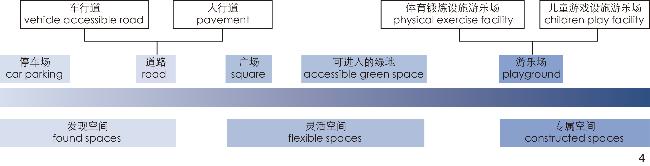
【目的】在任何地方进行游戏是儿童的天性。以北京中心城区高密度城市环境为例,深入探究儿童如何创造性地使用城市户外公共空间。【方法】从景观—社会学视角,通过半构建访谈、照片访谈和行为观察等方法收集儿童户外活动空间数据。【结果】将儿童使用的多样户外空间分为专属空间和发现空间,以及介于两者之间的灵活空间3种类别。深入探究不同类别的活动空间的特点发现,配置有固定游戏设备的儿童专属游乐场所提供的游戏机会单一,无法满足全龄儿童进行多样户外游戏的需求,但专属空间为儿童提供了最为正式且相对安全的游戏环境;儿童广泛使用的灵活空间,如广场和可进入的绿地,其开放性为更为广泛的年龄群体提供了可供奔跑、跳跃和骑车等高强度活动的机会,但营造公平且友好的共享公共环境是灵活空间面临的挑战;发现空间的设计初衷并非为儿童使用,因此儿童在使用这类空间的过程中普遍存在潜在安全隐患。【结论】针对高密度城市环境中有限的公共空间提出了更加包容且儿童友好的营造方式以及优化设计建议,期望为提升高密度城市公共空间服务效能、实现城市可持续发展提供一定科学参考。
(英)海伦·伍利 , 汤湃 . 景观—社会学视角下的北京高密度城区儿童游戏专属和发现空间[J]. 风景园林, 2024 , 31(2) : 19 -31 . DOI: 10.3724/j.fjyl.202311210526
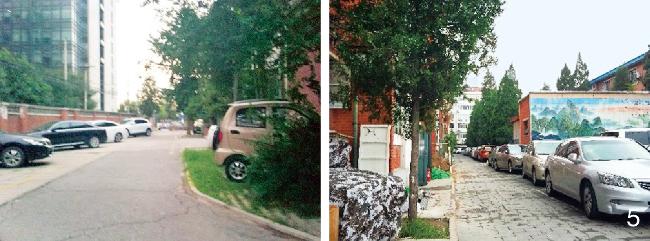
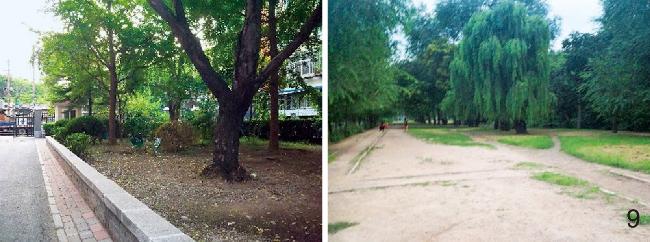
图5 儿童拍摄的停车场作为户外活动场地的照片Fig. 5 Photos taken by children showing car parking as play spaces |
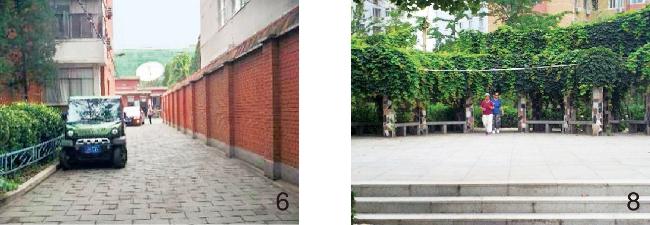
图6 由儿童拍摄的车行道路作为户外活动场地的照片Fig. 6 Photos taken by children showing vehicle accessible road as play spaces |
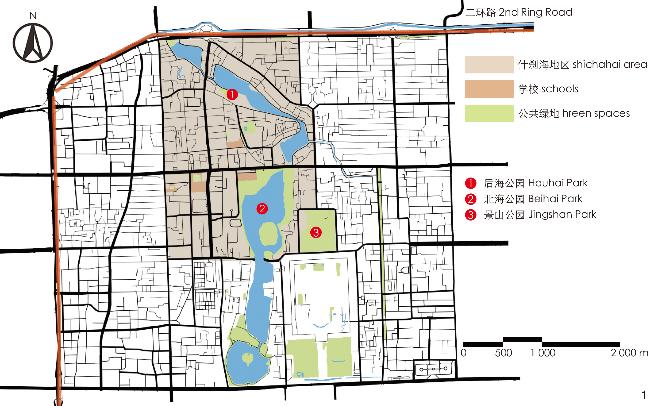
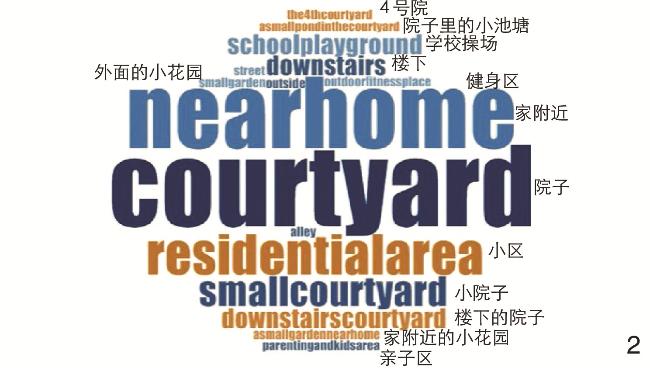
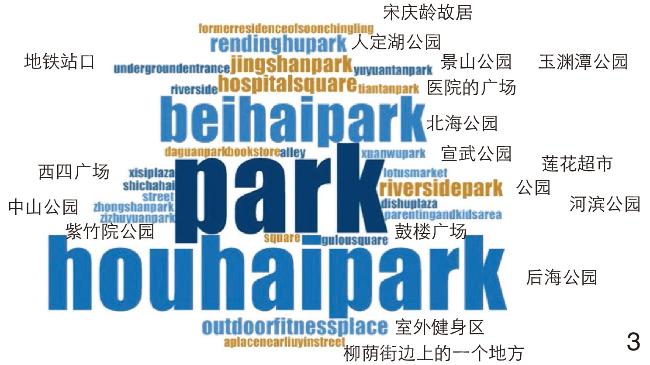
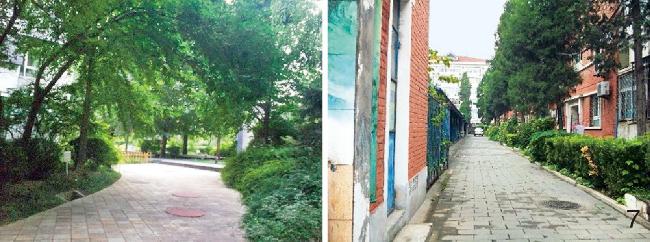
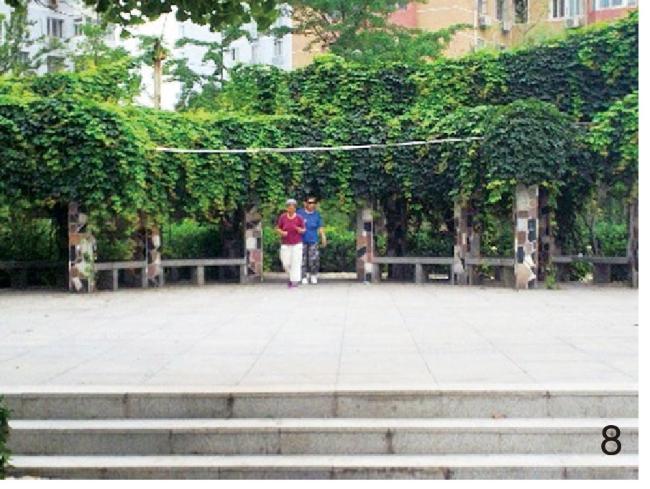
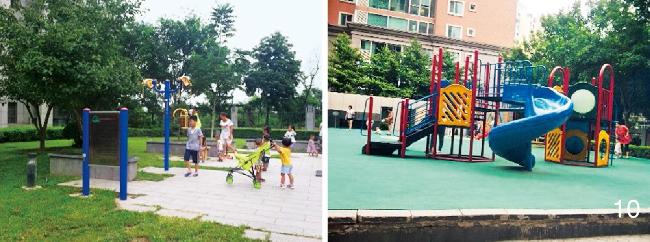
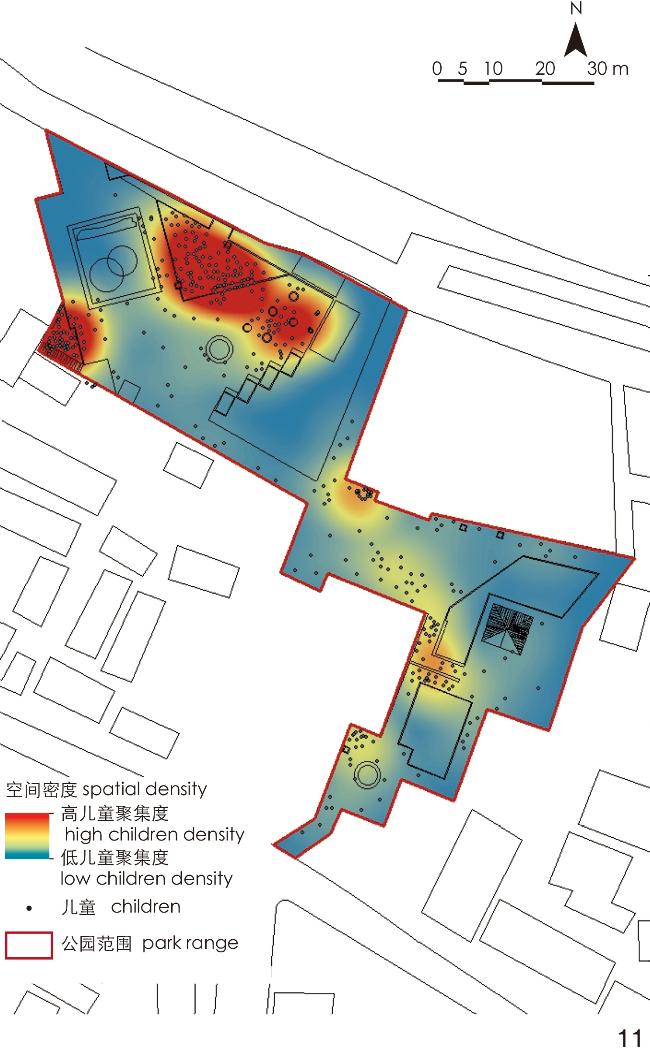
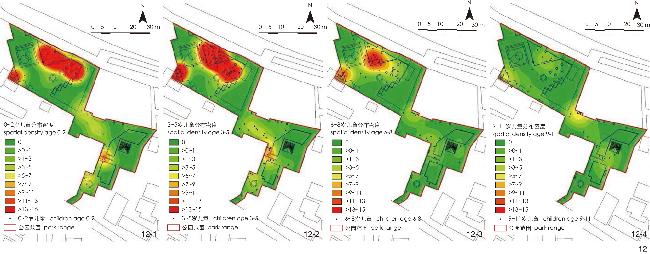
图1~4、11、12由作者绘制;图5~10由受访儿童拍摄。
| [1] |
AARON D, WINAWER B P. Child’s Play: A Creative Approach to Playspaces for Today’s Children[M]. London: Harper & Row, 1965.
|
| [2] |
BISHOP J C, CURTIS M. Play Today in the Primary School Playground: Life, Learning and Creativity[M]. Buckingham: Open Univerisity Press, 2001: 1-19.
|
| [3] |
OPIE I, OPIE P. Children’s Game in Street and Playground[M]. Oxford: Oxford University Press, 1969.
|
| [4] |
HART R. Containing Children: Some Lessons on Planning for Play from New York City[J]. Environment & Urbanization, 2002, 14(2): 135-148.
|
| [5] |
JENKINS N E. “You Can’t Wrap Them up in Cotton Wool!” Constructing Risk in Young People’s Access to Outdoor Play[J]. Health, Risk and Society, 2006(4): 379-393.
|
| [6] |
HILLMAN M, ADAMS J, WHITELEGG J. One False Move: A Study of Children’s Independent Mobility[M]. London: PSI, 1990.
|
| [7] |
KARSTEN L. It all Used to be Better? Different Generations on Continuity and Change in Urban Children’s Daily Use of Space[J]. Children’s Geographies, 2005, 3(3): 275-290.
|
| [8] |
SKÅR M, KROGH E. Changes in Children’s Nature-Based Experiences Near Home: From Spontaneous Play to Adult-Controlled, Planned and Organised Activities[J]. Children’s Geographies, 2009, 7(3): 339-354.
|
| [9] |
KINOSHITA I. Charting Generational Differences in Conceptions and Opportunities for Play in a Japanese Neighborhood[J]. Journal of Intergenerational Relationships, 2009, 7(1): 53-77.
|
| [10] |
WOOLLEY H E, GRIFFIN E. Decreasing Experiences of Home Range, Outdoor Spaces, Activities and Companions: Changes Across Three Generations in Sheffield in North England[J]. Children’s Geographies, 2015, 13(6): 677-691.
|
| [11] |
HESELTINE P, HOLBORN J. Playgrounds: The Planning, Design and Construction of Play Environments[M]. New York: Nichols Publishing Company , 1987.
|
| [12] |
WOOLLEY H, LOWE A. Exploring the Relationship Between Design Approach and Play Value of Outdoor Play Spaces[J]. Landscape Research, 2013, 38(1): 53-74.
|
| [13] |
WOOLLEY H. Children and Young People’s Spatial Agency[M]//HACKETT A, PROCTER L, SEYMOUR J. Children’s Spatialities. Houndmills: Palgrave Macmillan, 2015: 163-178.
|
| [14] |
GIBSON J. The Ecological Approach to Visual Perception[M]. Hillsdale: Lawrence Erlbaum Associates, 1986.
|
| [15] |
KYTTÄ M. Affordances of Children’s Environments in the Context of Cities, Small Towns, Suburbs and Rural Villages in Finland and Belarus[J]. Journal of Environmental Psychology, 2002, 22(1-2): 109-123.
|
| [16] |
BROWN S L, GRAVIL M, JACOBI-VESSELS J. Planning and Building Children’s Outdoor Play Zones for Multiple Affordances: A Community-Engaged Process[J]. International Journal of Early Childhood Environmental Education, 2022, 10(1): 3-13.
|
| [17] |
SANDO O J, SANDSETER E B H. Affordances for Physical Activity and Well-Being in the ECEC Outdoor Environment[J]. Journal of Environmental Psychology, 2020, 69: 101430
|
| [18] |
STORLI R, HAGEN T L. Affordances in Outdoor Environments and Children’s Physically Active Play in Pre-School[J]. European Early Childhood Education Research Journal, 2010, 18(4): 445-456.
|
| [19] |
TANG P, WOOLLEY H. Optimizing Urban Children’s Outdoor Play Spaces: Affordances, Supervision, and Design Dynamics[J]. Sustainability, 2023, 15(20): 14661
|
| [20] |
YATIMAN N A, AZIZ N F, SAID I. Affordances of Homeschool Journey in Rural Environment for Children’s Performances[J]. Procedia-Social and Behavioral Sciences, 2012, 68: 395-405.
|
| [21] |
RUTKAUSKAITE R, GISLADOTTIR T, PIHU M, et al. Schoolyard Affordances for Physical Activity: A Pilot Study in 6 Nordic-Baltic Countries[J]. Sustainability (Switzerland), 2021, 13(21).
|
| [22] |
新华社.中华人民共和国国民经济和社会发展第十四个五年规划和2035年远景目标纲要[N].人民日报, 2021-03-13(1).
Xinhua News Agency. Outline of the 14th Five-Year Plan for the National Economic and Social Development of the People’s Republic of China and the Long Range Objectives for 2035[N]. People’s Daily, 2021-03-13(1).
|
| [23] |
国家发展改革委, 国务院妇儿工委办公室, 住房城乡建设部, 等.关于推进儿童友好城市建设的指导意见[EB/OL].(2021-09-30)[2023-10-20]. https://www.gov.cn/zhengce/zhengceku/2021-10/21/content_5643976.htm.
General Office of the National Development and Reform Commission, Office of the Women and Children’s Working Commission of The State Council, General Office of the Ministry of Housing and Urban-Rural Development, et al. Guiding Opinions on Promoting the Construction of Child-Friendly Cities[EB/OL]. (2021-09-30)[2023-10-20]. https://www.gov.cn/zhengce/zhengceku/2021-10/21/content_5643976.htm.
|
| [24] |
YIN R K. Case Study Research: Design and Methods[M]. Los Angeles: SAGE, 2014.
|
| [25] |
LOEBACH J, GILLILAND J. Child-Led Tours to Uncover Children’s Perceptions and Use of Neighborhood Environments[J]. Children Youth and Environments, 2010, 20(201): 52-90.
|
| [26] |
WILSON N, MARTIN A C, WANG C C. Engaging Young Adolescents in Social Action Through Photovoice: The Youth Empowerment Strategies (YES!) Project[J]. Journal of Early Adolescence, 2007, 27(2): 241-261.
|
| [27] |
SUTTON-BROWN C A. Photovoice: A Methodological Guide[J]. Photography and Culture, 2014, 7(2): 169-185.
|
| [28] |
ROBSON C. Real World Research[M]. 2nd ed. Oxford: Blackwell Publishers, 2002.
|
| [29] |
WOOLLEY H, KINOSHITA I. Space, People, Interventions and Time (SPIT): A Model for Understanding Children’s Outdoor Play in Post-Disaster Contexts Based on a Case Study from the Triple Disaster Area of Tohoku in North-East Japan[J]. Children and Society, 2015, 29(5): 434-450.
|
| [30] |
LESTER S, RUSSELL W. Play for a Change. Play, Policy and Practice: A Review of Contemporary Perspectives[R/OL]. (2008-09)[2023-10-30]. https://www.researchgate.net/publication/263087151_Play_for_a_Change_Play_Policy_Practice_A_Review_of_Contemporary_Perspectives.
|
| [31] |
MATTHEWS H, LIMB M. Defining an Agenda for the Geography of Children[J]. Progress in Human Geography, 1999, 23(1): 61-90.
|
| [32] |
LAYNE M R. Supporting Intergenerational Interaction: Affordance of Urban Public Space[D]. Raleigh: North Carolina State University, 2009.
|
| [33] |
KYTTÄM. Children in Outdoor Contexts: Affordances and Independent Mobility in the Assessment of Environmental Child Friendliness[J]. Helsinki University of Technology, 2003.
|
| [34] |
KYTTÄ M, OLIVER M, IKEDA E, et al. Children as Urbanites: Mapping the Affordances and Behavior Settings of Urban Environments for Finnish and Japanese Children[J]. Children’s Geographies, 2018, 16(3): 319-332.
|
| [35] |
BROBERG A, KYTTÄ M, FAGERHOLM N. Child-friendly Urban Structures: Bullerby Revisited[J]. Journal of Environmental Psychology, 2013, 35: 110-120.
|
/
| 〈 |
|
〉 |