

石崇金谷园及其园林历史想象——人造自然的观念再造
|
潘逸炜/男/天津大学建筑学院在读博士研究生/研究方向为风景园林历史与理论 |
|
张春彦/男/博士/天津大学建筑学院副院长、教授、博士生导师/研究方向为风景园林历史与理论、风景园林文化遗产保护 |
Copy editor: 刘昱霏
收稿日期: 2023-05-31
修回日期: 2023-12-01
网络出版日期: 2025-12-11
基金资助
国家自然科学基金重点项目“基于中华语境‘建筑—人—环境’融贯机制的当代营建体系重构研究”(52038007)
版权
Shi Chong’s Jingu Garden and Its Historical Imagination: Conceptual Reconstruction of Man-Made Nature
|
PAN Yiwei is a Ph.D. candidate in the School of Architecture, Tianjin University. His research focuses on history and theory of landscape architecture |
|
ZHANG Chunyan, Ph.D., is vice president of and a professor and doctoral supervisor in the School of Architecture, Tianjin University. His research focuses on history and theory of landscape architecture, and landscape culture heritage protection |
Received date: 2023-05-31
Revised date: 2023-12-01
Online published: 2025-12-11
Copyright
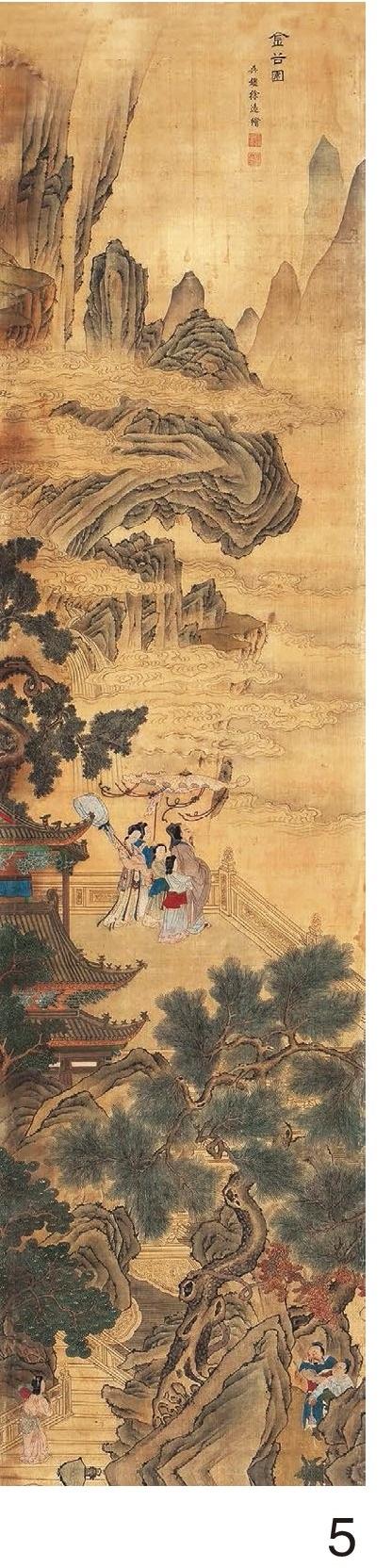
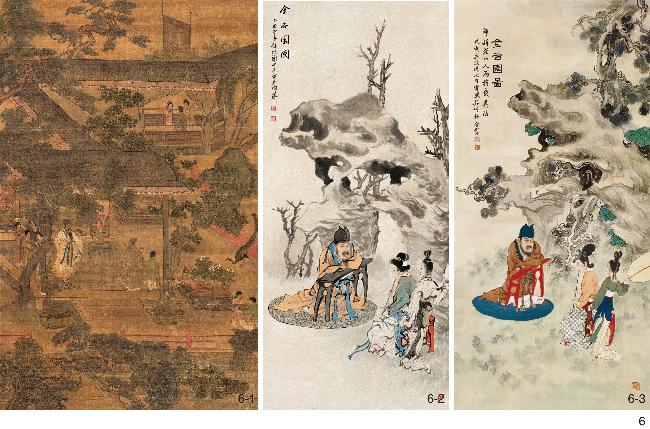
【目的】作为魏晋时期私家园林的代表,石崇金谷园在物质空间湮灭后仍持续出现在诗文和绘画中,以观念再造的形式呈现。金谷园形象的时代流变反映了自然观念的变迁,进而引发对园林史料认识和历史叙述构建的反思。【方法】通过梳理和区分西晋时期一手文献和后代文献,考察其中对金谷园特征的描述,阐述对金谷园认识和评价所具有的集体特征,结合自唐至清的金谷园绘画,进一步佐证对园林认知观念的变迁。【结果】发现自西晋到明清时期,文人对金谷园的描述逐渐从全景式的描写转向对楼阁建筑的关注,进而聚焦到陈设物,山石植物退为配景。这一过程中,金谷园从自然进入观念,逐渐成为文学意象和文化共识。【结论】提出金谷园的形象通过文人诗、文、画的不断重现和更新,由此指向对时间理解的再思考。文学和绘画作品是作者在其当下对过去的感知和重构,其中金谷园在诗文绘画中的不断重现保证了园林意象的绵延,对其时代性的解释更新赓续了园林的生命力。
潘逸炜 , 张春彦 . 石崇金谷园及其园林历史想象——人造自然的观念再造[J]. 风景园林, 2024 , 31(2) : 120 -128 . DOI: 10.3724/j.fjyl.202305310252
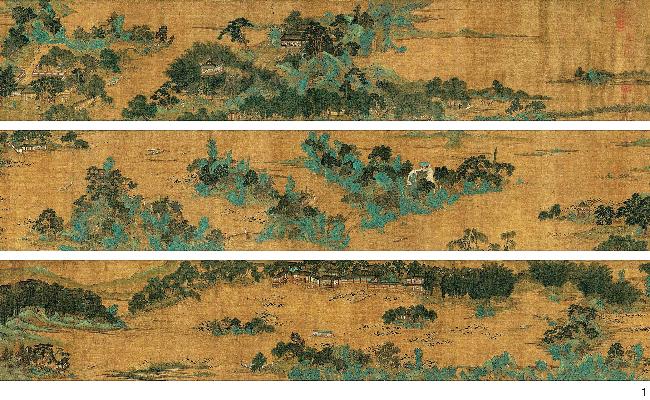
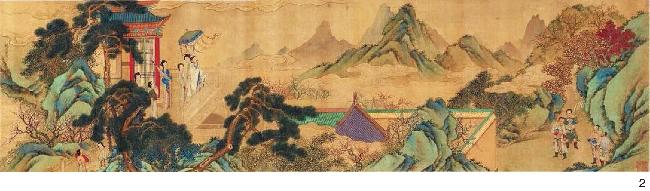
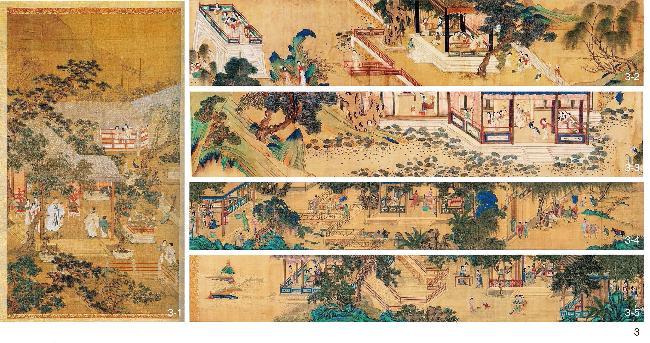
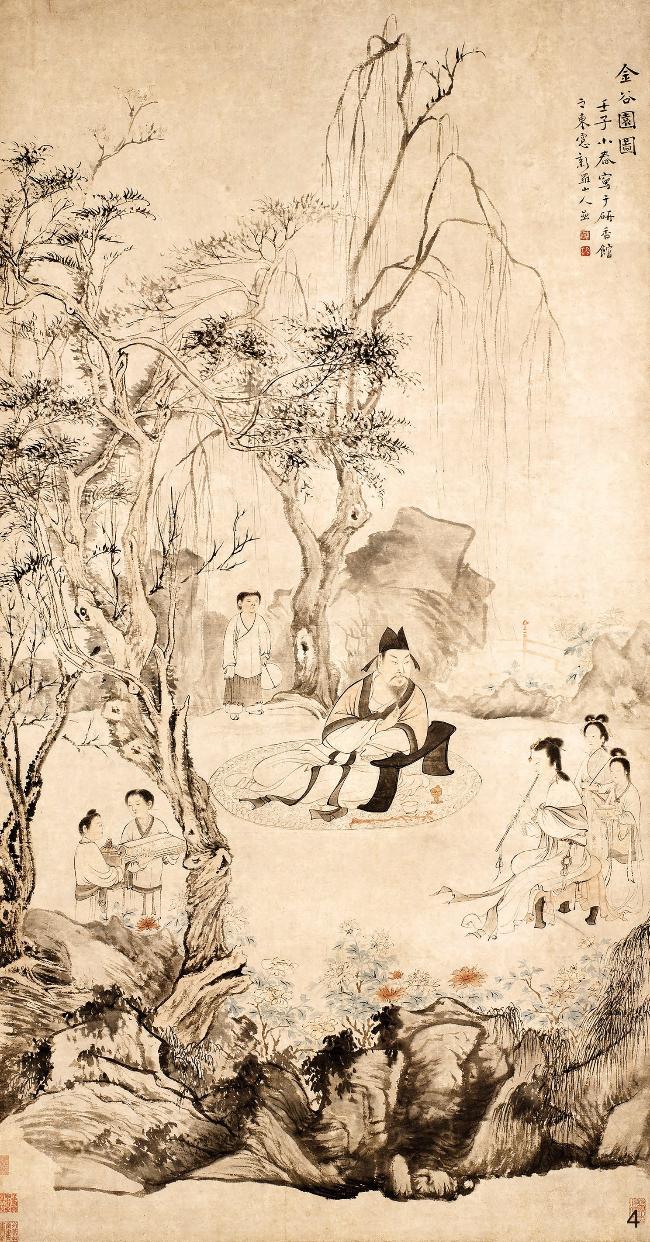
[Objective] Jingu Garden, or the Golden Valley Garden, is a representative of Chinese private gardens in Wei and Jin dynasties. Current works on Chinese garden history mostly discuss the objects in Jingu Garden by using relevant historical documents. The garden disappeared in AD 300 due to the execution of its owner Shi Chong (249−300). But for over 1,500 years thereafter, the image of Jingu Garden continued to appear in poetry and paintings in the form of conceptual reconstruction. The transformation of the image of Jingu Garden reflects temporal changes in the view of nature. It also helps evoke the rethinking on historical documents and narratives of Chinese gardens. The case Jingu Garden guides us to think about how those disappeared gardens are reconstructed through perception and memory, and how nature as a concept interacts with the present beyond physical time. This research aims to further explore the possible path of understanding Chinese garden history beyond linear narrative. [Methods] This research is essentially a case study focusing on the in-depth exploration and analysis of the particular case Jingu Garden. By sorting out and distinguishing first-hand literature of Western Jin Dynasty and second-hand literature in later dynasties, the research examines the descriptions of Jingu Garden in various periods and finds out the common features of the understanding and evaluation of the garden. The research also analyzes paintings of Jingu Garden spanning the period from Tang Dynasty to Qing Dynasty, in order to provide a further proof for changes in the understanding of the garden. [Results] It is found that although there exists only a small quantity of first-hand literature of Western Jin Dynasty, such literature provides an objective description of the natural environment of Jingu Garden including terrain, plants, pavilions, tower and outside scenery. After the garden’s destruction, several second-hand literature quoted in a number of famous historical works such as Shiyi Ji, Shishuo Xinyu and Jinshu appeared as a supplement to the first-hand literature, further enriching the scenery descriptions, characters and stories of the garden. Actually, they provide resources for later literati to imagine the garden. From Northern and Southern Dynasties to early Tang Dynasty, the spatial imagination of Jingu Garden in poetry and literature mainly focuses on waters, trees, flowers and fruits, which continues the description of Jingu Garden’s natural environment in Western Jin literature. From the flourishing Tang Dynasty to Song Dynasty, the tone of nostalgia for the past and present became increasingly strong, with tower and spring flowers becoming the core elements in the imagination of Jingu Garden, and the soundscape of bamboo-pipe music typically seen in the remembrances about the garden. During Yuan, Ming and Qing dynasties, the imagination of Jingu Garden gradually shifted from landscape scenery to special furnishings such as red coral and brocade screen, with mountains, stones and plants serving as supporting roles. At this time, Jingu Garden formed a relatively fixed literary allusion. During this process, the imagery of gardens continues to condense, with that of Jingu Garden shifting from nature to concept, becoming a cultural imagery and common consensus. This process corresponds to the interest of miniaturization in Chinese garden aesthetics. Meanwhile, the focus of paintings of Jingu Garden also shifts from grand scenes to some certain characters and events, with the overall natural environment of the garden gradually fading out of the painters’ imagination with the passing of time, the physical environment being condensed into a particular literary allusion and imagery group, and the depiction of nature gradually shifting from panoramic depiction to the background of narrative, which is generally consistent with the changes in the imagination and concept of Jingu Garden reflected in literary works. [Conclusion] The image of Jingu Garden is constantly reproduced and updated through literati’s poetry, literature, and paintings. For traditional literati, when recollecting the scenes of Jingu Garden, they attempt to collect information from fragments of the previous generations as ideal resources. They combine their own life experiences and emotions to construct those scenes of the garden that have passed away. Compared with the historians’ rigorous work on documents, literati prefer not to distinguish the authenticity or objectivity of the information they collect. This research reminds contemporary researchers in the field of Chinese garden history to realize that the relationship between historical facts and events objectively exists, which, however, can hardly be fully observed. It’s an inevitably futile attempt to find out the authentic and comprehensive historical landscape from imaginative reconstruction of disappeared garden. Instead of striving to build objective historical narratives, it is better to change the paradigm of the understanding of “time”. As “cognitive resources”, literary works and paintings show the authors’ perception and reconstruction of the past based on their current experience. Similarly, the work of garden history research is to observe the past from the present perspective, experience “the past of the past” through past materials, and understand and continue the cognition of garden based on such observation and experience. The continuous reappearance of Jingu Garden guarantees the continuation of this garden, and the updating interpretation continues its vitality.
① 曹摅《赠石崇诗(其三)》中云“得厕大歙,屡蒙宾延”,证明石崇曾屡次组织宴集,诗中亦无直接证据指向该诗作于元康六年的这次宴集。枣腆《赠石季伦诗》亦如此。
② 此事在《晋书》中被认为是王恺之事而非石崇,见《晋书》卷九十八·列传第三十八。
③ 《拾遗记》向来以虚构成分过多而受到批评,且多载谶纬之事,影响力远在《世说新语》和《晋书》之下。
| [1] |
严可均. 全晋文[M]. 北京: 商务印书馆, 1999: 335.
YAN K J. Quan Jin Wen[M]. Beijing: The Commercial Press, 1999: 335.
|
| [2] |
房玄龄, 等. 晋书[M]. 北京: 中华书局, 1974: 837-1008.
FANG X L, et al. Jinshu[M] Beijing: Zhonghua Book Company, 1974: 837-1008.
|
| [3] |
汪菊渊. 中国古代园林史纲要[R]. 北京: 北京林学院园林系, 1980: 32-33.
WANG J Y. Outline of the History of Ancient Chinese Gardens[R]. Beijing: Department of Landscape Architecture, Beijing Forestry University, 1980: 32-33.
|
| [4] |
张家骥. 中国造园史[M]. 哈尔滨: 黑龙江人民出版社, 1987: 72-73.
ZHANG J J. The History of China’s Gardening[M]. Harbin: Heilongjiang People’s Publishing House, 1987: 72-73.
|
| [5] |
周维权. 中国古典园林史[M]. 北京: 清华大学出版社, 1990: 44-46.
ZHOU W Q. History of Chinese Classical Gardens[M]. Beijing: Tsinghua University Press, 1990: 44-46.
|
| [6] |
陈植. 中国造园史[M]. 北京: 中国建筑工业出版社, 2006: 55-56.
CHEN Z. The History of China’s Gardening[M]. Beijing: China Architecture & Building Press, 2006: 55-56.
|
| [7] |
傅晶, 王其亨. 魏晋南北朝园林史探析[M]. 天津: 天津大学出版社, 2018: 219-220.
FU J, WANG Q H. Research of Traditional Garden History of Wei-Jin-Southern & Northern Dynasties[M]. Tianjin: Tianjin University Press, 2018: 219-220.
|
| [8] |
萧统. 文选[M]. 李善, 注. 北京: 中华书局, 1977: 642.
XIAO T. Wen Xuan[M]. LI S, annotated. Beijing: Zhonghua Book Company, 1977: 642.
|
| [9] |
郦道元. 水经注校证[M]. 陈桥驿, 校证. 北京: 中华书局, 2007: 393.
LI D Y. Emendation of Shui Jing Zhu[M]. CHEN Q Y, proofread. Beijing: Zhonghua Book Company, 2007: 393.
|
| [10] |
柯律格. 蕴秀之域: 中国明代园林文化[M]. 孔涛, 译. 郑州: 河南大学出版社, 2019: 41-43.
CLUNAS C. Fruitful Sites: Garden Culture in Ming Dynasty China[M]. KONG T, translated. Zhengzhou: Henan University Press, 2019: 41-43.
|
| [11] |
郑元勋. 媚幽阁文娱·杂文[M]. 陈继儒, 定, 郑元化, 订.明崇祯刻本.[出版地不详: 出版者不详], [1630]: 54a.
ZHENG Y X. Meiyou Ge Wenyu: Essays[M]. CHEN J R, determined, ZHENG Y H, revised. block-printed edition in Chongzhen Period in Ming Dynasty. [S.l.: s.n.], [1630]: 54a.
|
| [12] |
张金耀. 金谷游宴人物考[J]. 复旦学报(社会科学版), 2001(2): 128-132.
ZHANG J Y. Textual Research on the Characters of Jingu Garden Banquet[J]. Fudan Journal (Social Science), 2001(2): 128-132.
|
| [13] |
逯钦立. 先秦汉魏晋南北朝诗[M]. 北京: 中华书局, 1983: 632-633, 751, 772.
LU Q L. Poetry from Pre-Qin, Han, Wei to Six Dynasties[M]. Beijing: Zhonghua Book Company, 1983: 632-633, 751, 772.
|
| [14] |
陈婉玲. 论石崇及“金谷园意象”的形成与衍化[M]. 新北: 花木兰文化出版社, 2015.
CHEN W L. The Formation and Evolution of Shi Chong and the Imagery of Jingu Garden[M]. New Taipei City: Hua Mulan Culture Press, 2015.
|
| [15] |
王嘉. 拾遗记译注[M]. 孟庆祥, 商微姝, 译注.哈尔滨: 黑龙江人民出版社, 1988: 260-263.
WANG J. Vernacular Transform and Annotation of Shiyi Ji[M]. MENG Q X, SHANG W S, translated and annotated. Harbin: Heilongjiang People’s Publishing House, 1988: 260-263.
|
| [16] |
刘义庆. 世说新语[M].朱碧莲, 沈海波, 译注.北京: 中华书局, 2011: 627, 882-887, 889-890.
LIU Y Q. Shishuo Xinyu[M]. ZHU B L, SHEN H B, translated and annotated. Beijing: Zhonghua Book Company, 2011: 627, 882-887, 889-890.
|
| [17] |
苏轼. 东坡全集·卷十四[M]//清乾隆文渊阁四库全书. 北京: [出版者不详], 1782: 12a.
SU S. Collected Works of Dongpo, Volume 14[M]// Wenyuange Siku Quanshu of Qianlong Period in Qing Dynasty. Beijing: [s.n.], 1782: 12a.
|
| [18] |
曹学佺. 石仓历代诗选·卷二百五十六[M]// 清乾隆文渊阁四库全书. 北京: [出版者不详], 1782: 10a.
CAO X Q. Poems of Previous Dynasties Selected by Shicang, Volume 256[M]// Wenyuange Siku Quanshu of Qianlong Period in Qing Dynasty. Beijing: [s.n.], 1782: 10a.
|
| [19] |
朱彝尊. 明诗综·卷七十一[M]. 六峰阁刻本. [出版地不详: 出版者不详], 1705: 15b.
ZHU Y Z. Mingshi Zong, Volume 71[M]. block-printed edition of Liufengge, [S.l.: s.n.], 1705: 15b.
|
| [20] |
韦苏州集·卷九[M]// 清乾隆文渊阁四库全书.北京: [出版者不详], 1782: 5a.
WEI Y W. Collected Works of Wei Suzhou, Volume 9[M]// Wenyuange Siku Quanshu of Qianlong Period in Qing Dynasty. Beijing: [s.n.], 1782: 5a.
|
| [21] |
刘辰翁. 须溪集·卷二[M]// 清乾隆文渊阁四库全书. 北京: [出版者不详], 1782: 29b.
LIU C W. Collected Works of Xuxi, Volume 2[M]// Wenyuange Siku Quanshu of Qianlong Period in Qing Dynasty. Beijing: [s.n.], 1782: 29b.
|
| [22] |
汤球. 九家旧晋书辑本[M]. 杨朝明, 校补.郑州: 中州古籍出版社, 1991: 37.
TANG Q. Collection of Nine Editions of Old Jinshu[M]. YANG C M, proofread. Zhengzhou: Zhongzhou Ancient Books Publishing House, 1991: 37.
|
| [23] |
御定全唐诗·卷四百七十四[M]// 清乾隆文渊阁四库全书. 北京: [出版者不详], 1782: 13a.
Quan Tang Shi Authorized by the Emperor, Volume 474[M]// Wenyuange Siku Quanshu of Qianlong Period in Qing Dynasty. Beijing: [s.n.], 1782: 13a.
|
| [24] |
北京大学古文献研究所. 全宋诗 第72册[M]. 北京: 北京大学出版社, 1998: 45387.
Center for Ancient Chinese Classics & Archives, Peking University. Quan Song Shi, Volume 72[M]. Beijing: Peking University Press, 1998: 45387.
|
| [25] |
邹守愚. 河南通志·卷五十二[M]// 清乾隆文渊阁四库全书. 北京: [出版者不详], 1782: 14a.
ZOU S Y. Gazetteer of Henan, Volume 52[M]. Wenyuange Siku Quanshu of Qianlong Period in Qing Dynasty. Beijing: [s.n.], 1782: 14a.
|
| [26] |
沈雅文. 金谷园在宋代园林诗歌中的文化意蕴[J]. 有凤初鸣年刊, 2012(8): 147-167.
SHEN Y W. Cultural Connotation of Jingu Garden in Song Dynasty Garden Poetry[J]. Annual of Graduate School of Chinese Literature Soochow University, 2012(8): 147-167.
|
| [27] |
马吉照, 李国新. 石崇、绿珠和唐诗中的金谷园意象[J]. 玉林师范学院学报, 2019, 40(6): 24-28.
MA J Z, LI G X. Shi Chong, Green Pearl and the Image of Golden Valley in Tang Poetry[J]. Journal of Yulin Normal University (Philosophy & Social Science), 2019, 40(6): 24-28.
|
| [28] |
欧阳询. 艺文类聚[M]. 汪绍楹, 校.上海: 上海古籍出版社, 1982: 172, 1235, 1472.
OUYANG X. Yiwen Leiju[M]. WANG S Y, proofread. Shanghai: Shanghai Classics Publishing House, 1982: 172, 1235, 1472.
|
| [29] |
庾信. 庾子山集注[M]. 倪璠, 注 .北京: 中华书局, 1980: 259, 303.
YU X. Annotation of Collected Works of Yu Zishan[M]. NI F, annotated. Beijing: Zhonghua Book Company, 1980: 259, 303.
|
| [30] |
严可均. 全北齐文; 全后周文[M]. 史建桥, 审订.北京: 商务印书馆, 1999.
YAN K J. Quan Beiqi Wen; Quan Houzhou Wen[M]. SHI J Q, authorized. Beijing: The Commercial Press, 1999.
|
| [31] |
御定全唐诗·卷一百七十五[M]// 清乾隆文渊阁四库全书. 北京: [出版者不详], 1782: 7b.
Quan Tang Shi Authorized by the Emperor, Volume 175[M]. Wenyuange Siku Quanshu of Qianlong Period in Qing Dynasty. Beijing: [s.n.], 1782: 7b.
|
| [32] |
辛弃疾. 稼轩词·卷四[M]// 清乾隆文渊阁四库全书. 北京: [出版者不详], 1782: 30a.
XIN Q J. Jiaxuan Ci, Volume 4[M]// Wenyuange Siku Quanshu of Qianlong Period in Qing Dynasty. Beijing: [s.n.], 1782: 30a.
|
| [33] |
御定全唐诗·卷二百九十三 [M]// 清乾隆文渊阁四库全书. 北京: [出版者不详], 1782: 3b.
Quan Tang Shi Authorized by the Emperor, Volume 293 [M]. Wenyuange Siku Quanshu of Qianlong Period in Qing Dynasty. Beijing: [s.n.], 1782: 3b.
|
| [34] |
御定全唐诗·卷二百七十七 [M]// 清乾隆文渊阁四库全书. 北京: [出版者不详], 1782: 9b.
Quan Tang Shi Authorized by the Emperor, Volume 277[M]. Wenyuange Siku Quanshu of Qianlong Period in Qing Dynasty. Beijing: [s.n.], 1782: 9b.
|
| [35] |
御定全唐诗·卷三百五十八[M]// 清乾隆文渊阁四库全书. 北京: [出版者不详], 1782: 21a.
Quan Tang Shi Authorized by the Emperor, Volume 358[M]. Wenyuange Siku Quanshu of Qianlong Period in Qing Dynasty. Beijing: [s.n.], 1782: 21a.
|
| [36] |
胡奎. 斗南老人集·卷五[M]// 清乾隆文渊阁四库全书. 北京: [出版者不详], 1782: 59a.
HU K. Collected Works of Dounan Laoren, Volume 5[M]. Wenyuange Siku Quanshu of Qianlong Period in Qing Dynasty. Beijing: [s.n.], 1782: 59a.
|
| [37] |
陈梦雷. 古今图书集成(三五)·方舆汇编·山川典[M]. 扬州: 广陵书社, 2011.
CHEN M L. Gujin Tushu Jicheng (35), Collection of the Earth, Work of Mountains and Rivers[M]. Yangzhou: Guangling Publishing House, 2011.
|
| [38] |
邹守愚. 河南通志·卷七十四[M]// 清乾隆文渊阁四库全书.北京: [出版者不详], 1782: 89a.
ZOU S Y. Gazetteer of Henan, Volume 74[M]// Wenyuange Siku Quanshu of Qianlong Period in Qing Dynasty. Beijing: [s.n.], 1782: 89a.
|
| [39] |
广西通志·卷一百十七[M]// 清乾隆文渊阁四库全书. 北京: [出版者不详], 1782: 15b-16b.
Gazetteer of Guangxi, Volume 117[M]// Wenyuange Siku Quanshu of Qianlong Period in Qing Dynasty. Beijing: [s.n.], 1782: 15b-16b.
|
| [40] |
顾友泽, 袁昕澄. 经典的共生与殊途: 论金谷宴集与兰亭雅集的经典化过程与接受差异[J]. 江海学刊, 2021, 335(5): 212-221.
GU Y Z, YUAN X C. Symbiosis and Different Paths of Classics: On Classicization Process and Reception Differences of Jingu Banquet and Lanting Collections[J]. Jianghai Academic Journal, 2021, 335(5): 212-221.
|
| [41] |
李昉, 等. 文苑英华·卷七十一[M]// 清乾隆文渊阁四库全书. 北京: [出版者不详], 1782: 7a.
LI F, et al. Wenyuan Yinghua, Volume 71[M]// Wenyuange Siku Quanshu of Qianlong Period in Qing Dynasty. Beijing: [s.n.], 1782: 7a.
|
| [42] |
御定全唐诗·卷四百五十九[M]// 清乾隆文渊阁四库全书. 北京: [出版者不详], 1782: 3b.
Quan Tang Shi Authorized by the Emperor, Volume 459[M]. Wenyuange Siku Quanshu of Qianlong Period in Qing Dynasty. Beijing: [s.n.], 1782: 3b.
|
| [43] |
毛九苞. 重编东坡先生外集·卷五十[M]. 康丕扬维扬府署刻本. [出版地不详: 出版者不详], 1608: 9b-10b.
MAO J B. Revised Unofficial Collected Works of Dongpo Xiansheng, Volume 50[M]. Block-Printed Edition of Kang Piyang in Weiyang State. [S.l.: s.n.], 1608: 9b-10b.
|
| [44] |
桑世昌. 兰亭考·卷八[M]// 清乾隆文渊阁四库全书. 北京: [出版者不详], 1782: 8a.
SANG S C. Lanting Kao (Textual Research on Lanting), Volume 8[M]. Wenyuange Siku Quanshu of Qianlong Period in Qing Dynasty. Beijing: [s.n.], 1782: 8a.
|
| [45] |
陈从周, 蒋启霆. 园综: 新版.上册[M]. 赵厚均, 校订注释.上海: 同济大学出版社, 2011: 114, 193, 226.
CHEN C Z, JIANG Q T. Yuan Zong: New Edition. Volume 1[M]. ZHAO H J, proofread and annotated. Shanghai: Tongji University Press, 2011: 114, 193, 226.
|
| [46] |
陈从周, 蒋启霆. 园综: 新版.下册[M]. 赵厚均, 校订注释.上海: 同济大学出版社, 2011: 142-143.
CHEN C Z, JIANG Q T. Yuan Zong: New Eedition. Volume 2[M]. ZHAO H J, proofread and annotated.Shanghai: Tongji University Press, 2011: 142-143.
|
| [47] |
张彦远. 历代名画记[M]. 俞剑华, 注释.上海: 上海人民美术出版社, 1964: 120.
ZHANG Y Y. Lidai Minghua Ji (Records of Famous Paintings in the Past)[M]. YU J H, annotated. Shanghai: Shanghai People’s Fine Arts Publishing House, 1964: 120.
|
| [48] |
潘天寿. 中国绘画史[M]. 上海: 上海人民美术出版社, 1988: 28.
PAN T S. History of Chinese Painting[M]. Shanghai: Shanghai People’s Fine Arts Publishing House, 1988: 28.
|
| [49] |
黃休复. 益州名画录·卷上[M]// 清乾隆文渊阁四库全书. 北京: [出版者不详], 1782: 10b.
HUANG X F. Yizhou Minghua Lu (Records of Famous Paintings in Yizhou), Volume 1[M]. Wenyuange Siku quanshu of Qianlong period in Qing Dynasty. Beijing: [s.n.], 1782: 10b.
|
| [50] |
汪砢玉. 珊瑚网·卷四十七[M]// 清乾隆文渊阁四库全书. 北京: [出版者不详], 1782: 38a.
WANG K Y. Shanhu Wang, Volume 47[M]// Wenyuange Siku Quanshu of Qianlong Period in Qing Dynasty. Beijing: [s.n.], 1782: 38a.
|
| [51] |
裴景福. 壮陶阁书画录·册四[M]. 丁鹤庐, 校订. 上海: 中华书局, 1937: 12a-13a.
PEI J F. Zhuangtaoge Shuhua Lu (Records of Calligraphies and Paintings of Zhuangtaoge)[M]. DING H L, proofread and revised. Shanghai: Zhonghua Book Company, 1937:12a-13a.
|
| [52] |
宇文所安. 追忆: 中国古典文学中的往事再现[M]. 郑学勤, 译. 北京: 生活·读书·新知三联书店, 2014.
OWEN S. Remembrances: The Experience of Past in Classical Chinese Literature[M]. ZHENG X Q, translated. Beijing: SDX Joint Publishing Company, 2014.
|
| [53] |
程抱一. 中国诗画语言研究[M]. 涂卫群, 译. 南京: 江苏人民出版社, 2006: 17.
CHENG F. Vide et Plein: Le Langage Pictural Chinois[M]. TU W Q, translated. Nanjing: Jiangsu People’s Publishing House, 2006: 17.
|
| [54] |
顾彬. 中国文人的自然观[M]. 马树德, 译. 上海: 上海人民出版社, 1990: 183.
KUBIN W. Der Durchsichtige Berg : Die Entwicklung der Naturanschauung in der Chinesischen Literatu[M]. MA S D, translated. Shanghai: Shanghai People’s Publishing House, 1990: 183.
|
| [55] |
MCTAGGART J E. The Unreality of Time[J]. Mind, New Series, 1908, 17(68): 457-474.
|
| [56] |
GELL A. The Anthropology of Time[M]. New York: Routledge, 2020: 160
|
/
| 〈 |
|
〉 |