

开放共享背景下城市公园绿地建设举措与路径探索
|
阎姝伊/女/博士/北京林业大学园林学院讲师/研究方向为风景园林规划与设计、绿地健康 |
|
李晓溪/女/北京林业大学园林学院在读博士研究生/研究方向为风景园林规划与设计、生物多样性保护 |
|
李婷/女/北京林业大学园林学院在读博士研究生/研究方向为风景园林规划与设计、生物多样性保护 |
|
郑曦/男/博士/北京林业大学园林学院教授、博士生导师/本刊主编/研究方向为风景园林规划与设计 |
Copy editor: 李清清
收稿日期: 2024-01-02
修回日期: 2024-01-12
网络出版日期: 2025-12-11
基金资助
中央高校基本科研业务费专项资金项目(BLX202206)
版权
Exploration of Construction Measures and Paths for Urban Parks and Green Spaces Under the Background of Opening and Sharing
|
YAN Shuyi, Ph.D., is a lecturer in the School of Landscape Architecture, Beijing Forestry University. Her research focuses on landscape planning and design, and green space health |
|
LI Xiaoxi is a Ph.D. candidate in the School of Landscape Architecture, Beijing Forestry University. Her research focuses on landscape planning and design, and biodiversity conservation |
|
LI Ting is a Ph.D. candidate in the School of Landscape Architecture, Beijing Forestry University. Her research focuses on landscape planning and design, and biodiversity conservation |
|
ZHENG Xi, Ph.D., is a professor and doctoral supervisor in the School of Landscape Architecture, Beijing Forestry University, and editor-in-chief of this journal. His research focuses on landscape planning and design |
Received date: 2024-01-02
Revised date: 2024-01-12
Online published: 2025-12-11
Copyright
【目的】城市绿地开放共享已成为新时代城市人居环境发展的重要趋势,但现阶段尚未充分发挥公园开放共享的最大价值,因此探索公园绿地的建设举措与路径,对于推动中国城市绿地建设落地实践意义重大。【方法/过程】通过分析开放共享发展背景,总结当前公园绿地开放共享工作,结合当前试行的四大举措及潜在提升方向,从空间、养护、管理、运营4个方面提出新时代开放共享的公园绿地精细化建设路径。【结果/结论】开放共享的公园绿地将成为城市建设中绿色生态价值转化的重要驱动力。从空间打开边界连通共享、养护科学精准、管理多方共建共治、运营满足供需诉求等优化升级,为公园绿地开放共享工作提供了理论参考和借鉴,为城市公园绿地的高质量建设、高品质使用和高效能治理提供科学支撑和指引。
阎姝伊 , 李晓溪 , 李婷 , 郑曦 . 开放共享背景下城市公园绿地建设举措与路径探索[J]. 风景园林, 2024 , 31(2) : 12 -18 . DOI: 10.3724/j.fjyl.202401020003
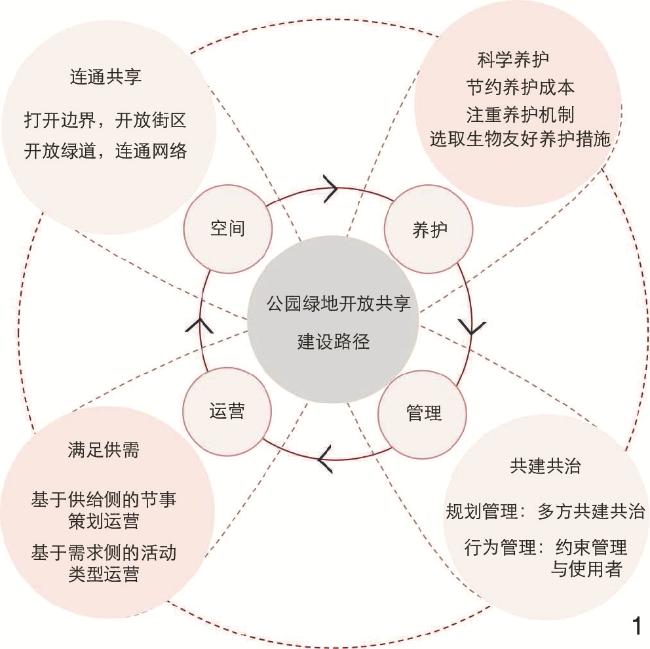
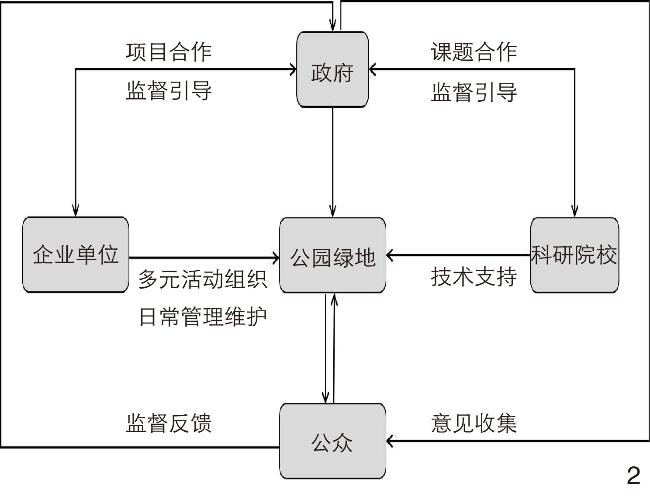
[Objective] Currently, urban built-up areas have a good green coverage rate, and urban development has entered a new stage of stock improvement from incremental expansion. In view of this, how should we better promote the integration of urban parks, boost the harmonious coexistence between human and nature, and meet the new needs and expectations of the people for getting close to nature and better enjoying leisure and recreation as well as sports and fitness in high-density environments? The opening and sharing of urban green spaces has become an important trend in the development of urban living environment in the new era, and the exploration of the concept of opening and sharing and the construction path for urban parks and green spaces is of important practical significance and theoretical value. Since its implementation at the beginning of the year, park opening and sharing has received quite positive response, but in the initial stage, the maximum value of park opening and sharing has not been fully realized. Therefore, summarizing the construction measures and paths for parks and green spaces is of great significance for promoting the practical implementation of urban green space construction in China. [Methods/process] With the continuous growth of urban population, available recreational spaces have become increasingly scarce, especially in high-density environments where open spaces such as parks and green spaces have become scarce resources, which endows the current opening and sharing of parks and green spaces with great significance. Based on the four major measures currently implemented and potential improvement directions, this research proposes a fine construction path for parks and green spaces in the new era from the four aspects of space, maintenance, management, and operation, which is hereby described as follows. 1) Further open green spaces by opening up space boundaries, and create park-like scenes. The existing open green spaces are mainly concentrated in large urban parks, and the service radius of parks in high-density urban areas is insufficient to achieve green welfare for all in the city. Therefore, more open green space is needed in limited construction areas. In order to achieve accessible and experiential green spaces opened to and shared by all, it is supposed to open up space boundaries and create a green space connectivity network. 2) Ensure more scientific maintenance with a focus on maintenance mechanisms and means to promote harmonious coexistence between human and nature. In addition to the existing maintenance methods of land improvement, regular fertilization, and pest control, for accessible open lawns and green spaces, scientific considerations need to be made in terms of maintenance cost, mechanism, and method. 3) Achieve more precise management that emphasizes multi-party co-construction and co-governance and follows the people-centered concept, to widely absorb social forces and attract the public to participate in green space construction. Adhering to the people-centered approach and fully mobilizing public participation in the management and organization of parks and green spaces is an important way to comprehensively coordinate social interests in green space construction. Multi-party co-construction and co-governance is conducive to enhancing the sense of participation, belonging and responsibility of citizens, and promoting the sustainable development of urban parks and green spaces. 4) Operate more reasonably, transform management and maintenance concepts and methods, and enable park operations to drive urban development. To achieve this, it is supposed to optimize the spatial layout of supply, increase diverse festival planning, and improve supporting infrastructure during park operations, and incorporate the construction of park-like scenarios into event operations following the principle of benefiting all age groups in a full-time manner. [Results/conclusion] The opening and sharing of parks and green spaces is a new starting point for the harmonious coexistence between human and nature in the Chinese road to modernization. With the improvement of the opening level and development of parks and green spaces, various provinces and cities in China will also optimize and upgrade their construction paths based on spatial opening, boundary connectivity and sharing, scientific and precise maintenance, multi-party co-construction and co-governance and park operation to meet supply and demand needs under current important measures. This will achieve the scientific, standardized, and rational opening and sharing of urban green spaces, so that parks and green spaces can not only deepen the people-centered concept, but also become an important means to support the high-quality development of cities, thus achieving harmonious coexistence between human and nature, and highlighting the important value of parks and green spaces as public welfare and public products. This research may provide theoretical reference and guidance for the opening and sharing of parks and green spaces across the country, provide scientific support and guidance for the high-quality construction and use and efficient governance of urban parks and green spaces, and provide positive support for the sustainable development of cities. In the future, the opening and sharing of parks and green spaces will not be limited to the provision of leisure and entertainment space for citizens, but will also assist cities in achieving industrial transformation and incubation in combination with such contents as economic layout, intelligent digital technology, optimization and upgrading of green space layout, and operation management.
表1 2023年以来部分省市城市公园绿地开放共享情况Tab. 1 Opening and sharing of urban parks and green spaces in some provinces and cities since 2023 |
| 省/市 | 政策/条例 | 开放共享地图 | 管理规范 | ||
| 共享数量及面积 | 绿地类型 | 开放区域 | |||
| 注:*空闲地包括城市疏解腾退空间、老旧厂房等闲置用地。 | |||||
| 北京市 | 《北京市无界公园三年行动计划(2023—2025年)》 | 全市完成量不少于20个 | 公园绿地 | 公园边界 | 《关于规范引导帐篷露营地发展的意见(试行)》《门头沟区帐篷露营地建设和管理指引(试行)》 |
| 上海市 | 《关于推进上海市公园城市建设的指导意见)》《上海市“十四五”期间公园城市建设实施方案》 | 24小时全天候开放的公园绿地达到250座以上;“十四五”末期推动100处以上单位附属空间对社会开放,总开放面积约100万 m2 | 公园绿地、 附属绿地 | 林下空间、 草坪区、 空闲地* | 《上海市城市公园实行24小时开放管理指引(试行)》《上海市城市公园帐篷区管理指引(试行)》《上海市帐篷露营地管理指引(征求意见稿)》 |
| 重庆市 | 《城市公园绿地开放共享试点工作实施方案》 | 首批开放35个公园绿地,第二批开放43个公园绿地 | 公园绿地 | 草坪区、 滨水空间 | 《南川区露营营地建设和服务指南》 |
| 江西省 | 《江西省2023年开展城市公园绿地开放共享试点工作方案》 | 开放全省面积10 hm2以上的综合公园 | 公园绿地 | 林下空间、 空闲地 | |
| 山东省 | 《关于公布山东省第一批城市公园绿地开放共享试点名单的通知》 | 首批开放33个市、县(市、区)城市公园绿地 | 公园绿地 | 林下空间、 草坪区 | 《2023“好客山东”露营地图》 |
| 安徽省 | 《关于发布我省首批开放共享城市绿地试点清单的通知》 | 开放共享304处,总面积约1 472.65 万 m2 | 公园绿地 | 林下空间、 草坪区、 空闲地 | |
| 湖北省 | 《关于组织开展湖北省城市公园绿地开放共享试点工作的通知》 | 开放共享302处,总面积约543万 m2 | 公园绿地 | 林下空间、 草坪区 | |
| 江苏省 | 《江苏省城市公园绿地开放共享试点工作实施方案》 | 划定33个市、县为首批省级试点城市,首批开放共享585处,总面积超1 000万 m2 | 公园绿地、 附属绿地、 区域绿地 | 林下空间、 草坪区、 滨水区、 空闲地 | 《江苏省公园绿地+乐享场景建设管理指南》《张家港市公园绿地开放共享点位管理指引(试行)》 |
| 浙江省 | 《关于印发连云港城市公园绿地开放共享试点实施方案的通知》 | 在17个城市开放共享95个试点公园,总面积约5 424.99万 m2 | 公园绿地 | 林下空间、 草坪区、 空闲地 | |
| 浙江省 杭州市 | 《杭州市公园绿地开放共享地图》 | 首批开放10个城市公园,开放的绿地和空间将不少于1 000处,总面积约3 738万 m2 | 公园绿地、 附属绿地 | 林下空间、 草坪区 | 《杭州市公园绿地开放共享管理导则 (试行)》 |
| 江西省 上饶市 | 《上饶市城市公园绿地开放共享试点实施方案》 | 开放37个公园、227块绿地,总面积约 82.9万 m2 | 公园绿地、 附属绿地 | 林下空间、 草坪区 | |
| 江苏省 无锡市 | 《无锡市公园绿地开放共享工作导则(试行)》 | 首批开放试点52处(其中市区32处、江阴宜兴20处) | 公园绿地 | 林下空间、 草坪区 | |
| 湖北省 荆门市 | 《荆门市公园绿地开放共享地图》 | 首批开放12处公园绿地,总面积约4.2万 m2 | 公园绿地 | 林下空间、 草坪区、 空闲地 | |
| 安徽省 合肥市 | 《合肥市公园绿地开放共享地图》 | 开放43处绿地,总面积约253万 m2 | 公园绿地 | 林下空间、 草坪区 | 《全市帐篷露营地规范化管理提升行动实施方案》 |
| 山东省 济南市 | 《济南市公园绿地开放共享地图》 | 首批开放47处公园绿地,共计70余处试点区域,总面积约31.4万 m2 | 公园绿地、 附属绿地 | 林下空间、 草坪区、 空闲地 | |
| 河北省 石家庄市 | 《石家庄市公园绿地开放共享地图》 | 开放草坪903块,总面积约171.84万 m2;有开放条件的林下空间485片,总面积 383.12万 m2 | 公园绿地 | 草坪区、 林下空间 | |
| 广东省 广州市 | 《广州市公园绿地开放共享区域 名单》 | 开放绿地草坪及林下空间112个 | 公园绿地 | 林下空间、 草坪区 | 《广州市城市公园开放草坪的管理指引》(第二版)、《广州市公园绿地开放草坪维护管理技术指引》 |
| 四川省 成都市 | 《成都市公园绿地开放共享地图》 | 开放共享绿地52处,总面积约100万 m2 | 公园绿地 | 林下空间、 草坪区 | 《成都市公园(绿道)阳光帐篷区开放试点方案》《成都市公园(绿道)阳光帐篷区管理指引(试行)》 |
| 河南省 郑州市 | 《河南省科学绿化试点示范省建设实施方案》 | 开放共享绿地71处,总面积约24万 m2 | 公园绿地 | 林下空间、 草坪区、 空闲地 | |
| 吉林省 吉林市 | 《吉林市城市管理行政执法局开展公园绿地开放共享试点实施方案》 | 开放共享绿地7处,总面积约5.13万 m2 | 公园绿地 | 林下空间、 草坪区、 空闲地 | |
① 纽约布莱恩公园官网:https://bryantpark.org。
| [1] |
全国绿化委员会.全国国土绿化规划纲要(2022—2030年)[EB/OL].(2022-09-13)[2023-10-13]. https://www.gov.cn/xinwen/2022-09/13/content_5709591.htm.
National Greening Committee. Outline of the National Land Greening Plan (2022—2030)[EB/OL]. (2022-09-13)[2023-10-13]. https://www.gov.cn/xinwen/2022-09/13/content_5709591.htm.
|
| [2] |
李雄, 张云路. 新时代城市绿色发展的新命题: 公园城市建设的战略与响应[J]. 中国园林, 2018, 34(5): 38-43.
LI X, ZHANG Y L. A New Proposition of Urban Green Development in the New Era: The Strategy and Response of Park City Construction[J]. Chinese Landscape Architecture, 2018, 34(5): 38-43.
|
| [3] |
陈朝晖, 李帅, 林宛婷. 首善之谋: 北京西城区花园城市建设路径探索[J]. 风景园林, 2023, 30(11): 21-27.
CHEN Z H, LI S, LIN W T. The Strategy of the First Good: An Exploration of the Construction Path of Garden City in Xicheng District, Beijing[J]. Landscape Architecture, 2023, 30(11): 21-27.
|
| [4] |
李倞, 杨璐. 后疫情时代风景园林聚焦公共健康的热点议题探讨[J]. 风景园林, 2020, 27(9): 10-16.
LI L, YANG L. Discussion on Hot Issues Focusing on Public Health in Landscape Architecture in the Post Epidemic Era[J]. Landscape Architecture, 2020, 27(9): 10-16.
|
| [5] |
姚亚男, 李树华. 基于公共健康的城市绿色空间相关研究现状[J]. 中国园林, 2018, 34(1): 118-124.
YAO Y N, LI S H. Current Status of Research on Urban Green Spaces Based on Public Health[J]. Chinese Landscape Architecture, 2018, 34(1): 118-124.
|
| [6] |
阎姝伊, 郑曦. 促进身心健康: 社区公共空间对社会凝聚力影响研究[J]. 城市发展研究, 2021, 28(2): 117-124.
YAN S Y, ZHENG X. Promoting Physical and Mental Health: A Study on the Impact of Community Public Spaces on Social Cohesion[J]. Urban Development Research, 2021, 28(2): 117-124.
|
| [7] |
WANG C Y, PAN R Y, WAN X Y, et al. Immediate Psychological Responses and Associated Factors During the Initial Stage of the 2019 Coronavirus Disease (COVID-19) Epidemic Among the General Population in China[J]. International Journal of Environmental Research and Public Health, 2020, 17(5): 1729
|
| [8] |
赵警卫, 唐婷. 游人密度及道路宽度对城市绿地游览体验的影响 [J]. 风景园林, 2020, 27 (10): 106-111.
ZHAO J W, TANG T. The Impact of Tourist Density and Road Width on Urban Green Space Tourism Experience[J] Landscape Architecture, 2020, 27(10): 106-111.
|
| [9] |
国家体育总局.2022国民健身趋势报告[EB/OL].(2022-08-22)[2023-11-04]. https://www.sport.gov.cn/n20001280/n20001265/n20066978/c24565130/content.html.
General Administration of Sport of China. China 2022 National Fitness Trends Report[EB/OL]. (2022-08-22)[2023-11-04]. https://www.sport.gov.cn/n20001280/n20001265/n20066978/c24565130/content.html.
|
| [10] |
王维奇, 刘晨晖, 陈延菲, 等. 公园城市目标下城市公园绿地开放共享理念的核心要义和科学路径[J]. 风景园林, 2023, 30(11): 28-34.
WANG W Q, LIU C H, CHEN Y F, et al. The Core Essence and Scientific Path of the Concept of Open Sharing of Urban Park Green Spaces Under the Goal of Park City[J]. Landscape Architecture, 2023, 30(11): 28-34.
|
| [11] |
赵晓龙, 汤奕子, 卞晴, 等. 基于公众参与地理信息系统的城市绿地体力活动与建成环境特征相关性研究: 以哈尔滨市为例 [J]. 风景园林, 2021, 28 (3): 101-106.
ZHAO X L, TANG Y Z, BIAN Q, et al. Research on the Correlation Between Physical Activity and Built Environment Characteristics of Urban Green Spaces Based on Public Participation in Geographic Information Systems: A Case Study of Harbin City[J]. Landscape Architecture, 2021, 28 (3): 101-106.
|
| [12] |
叶洁楠, 章烨, 王浩. 新时期人本视角下公园城市建设发展新模式探讨[J]. 中国园林, 2021, 37(8): 24-28.
YE J N, ZHANG Y, WANG H. Exploration of New Models of Park City Construction and Development from a Humanistic Perspective in the New Era[J]. Chinese Landscape Architecture, 2021, 37(8): 24-28.
|
| [13] |
杭州市人民政府.市建委今年新建改造绿道336公里 打造民生共享全域品质绿道网[EB/OL].(2022-12-16)[2023-10-16]. https://www.hangzhou.gov.cn/art/2022/12/16/art_812262_59070598.html.
Hangzhou Municipal People’s Government. This Year, the Municipal Construction Commission Will Build and Renovate 336 Kilometers of Greenways to Create a Comprehensive Quality Greenway Network for People’s Livelihood Sharing[EB/OL]. (2022-12-16) [2023-10-16]. https://www.hangzhou.gov.cn/art/2022/12/16/art_812262_59070598.html.
|
| [14] |
程筱洁. 开放式公园绿地管理模式与养护对策探讨[J]. 南方农业, 2021, 15(11): 63-64.
CHENG X J. Exploring the Management Mode and Maintenance Strategies of Open Park Green Spaces[J] Southern Agriculture, 2021, 15 (11): 63-64.
|
| [15] |
国家林业和草原局. 城市绿地草坪建植与管理技术规程: 第1部分 城市绿地草坪建植技术规程: GB/T 19535.2-2004[S]. 北京: 中国归家标准化管理委员会, 2004: 9.
National Forestry and Grassland Administration. Technical Guidelines for Urban Lawn Establishment and Maintenance — Part 1: Technical Specification for Urban Lawn Construction: GB/T 19535.2-2004[S]. Beijing: China Homecoming Standardization Administration, 2004: 9.
|
| [16] |
北京市园林绿化局.生态保育小区建设指南: DB11/T 2091—2023[S/OL]. (2023-03-30)[2023-10-18]. http://bzh.scjgj.beijing.gov.cn/bzh/apifile/file/2023/20230505/4d7040b1-6929-49d6-8660-231e7c54c9b1.pdf.
Beijing Municipal Bureau of Landscaping and Landscaping. Guidelines for the Construction of Ecological Conservation Communities: DB11/T 2091−2023[S/OL]. (2023-03-30)[2023-10-18]. http://bzh.scjgj.beijing.gov.cn/bzh/apifile/file/2023/20230505/4d7040b1-6929-49d6-8660-231e7c54c9b1.pdf.
|
| [17] |
达良俊. 基于本土生物多样性恢复的近自然城市生命地标构建理念及其在上海的实践[J]. 中国园林, 2021, 37(5): 20-24.
DA L J. The Concept of Construction of Near-Natural Urban Life Landmark Based on the Restoration of Native Biodiversity and Its Practice in Shanghai[J]. Chinese Landscape Architecture, 2021, 37(5): 20-24.
|
| [18] |
李帅, 彭震伟. 基于多元主体的城市绿地空间协作规划实施机制研究: 以奥地利维也纳都市花园为例[J]. 国际城市规划, 2022, 37(6): 97-105.
LI S, PENG Z W. Research on the Implementation Mechanism of Urban Green Space Collaborative Planning Based on Multiple Subjects: A Case Study of Vienna Urban Garden in Austria[J]. International Urban Planning, 2022, 37(6): 97-105.
|
| [19] |
杨鑫, 黄智鹏, 马健, 等. 精细化尺度下的城市绿地建设公众参与途径: 以柏林、伦敦“植树计划”为例[J]. 中国园林, 2022, 38(7): 109-114.
YANG X, HUANG Z P, MA J, et al. Public Participation Pathways in Urban Green Space Construction at a Refined Scale: A Case Study of the “Tree Planting Plan” in Berlin and London[J]. Chinese Landscape Architecture, 2022, 38(7): 109-114.
|
| [20] |
胡建兵, 李鑫欣.“百园百师工作营”为绿隔公园补短板[J].绿化与生活, 2023(10): 26.
HU J B. LI X X. The “Hundred Gardens and Hundred Teachers Work Camp” Fills the Gaps in the Green Separation Park. Greening and Life, 2023 (10): 26.
|
| [21] |
廖姜. 城市更新中的公共空间塑造与运营初探: 以纽约高线公园为例[J]. 交通节能与环保, 2023, 19(1): 95-98.
LIAO J. Exploring the Shaping and Operation of Public Space in Urban Renewal: A Case Study of New York High Line Park[J]. Transportation Energy Conservation and Environmental Protection, 2023, 19(1): 95-98.
|
| [22] |
李彻丽格日. 基于从供给侧和需求侧两端发力的市级国土空间总体规划编制的思考[J]. 住宅与房地产, 2023(33): 24-26.
LI C L G R. Reflection on the Overall Planning of Municipal Land Space Based on the Efforts from Both the Supply and Demand Sides[J]. Residential and Real Estate, 2023(33): 24-26.
|
| [23] |
WHO. Global Age-Friendly Cities: A Guide[M]. Geneva: World Health Organization Press, 2007.
|
/
| 〈 |
|
〉 |