

公众认知下的成都城市荒野景观价值
|
席丹丹/女/四川农业大学风景园林学院在读硕士研究生/研究方向为风景园林规划设计、城市荒野景观、植被再野化 |
|
刘斯/女/四川农业大学风景园林学院在读硕士研究生/研究方向为环境艺术设计、西蜀园林 |
|
柳钰/女/四川农业大学风景园林学院在读硕士研究生/研究方向为风景园林规划设计、城市荒野景观、西蜀园林 |
|
孙大江/男/博士/四川农业大学风景园林学院教授/研究方向为风景园林规划设计、西蜀园林、川西林盘 |
Copy editor: 刘玉霞
收稿日期: 2023-06-19
修回日期: 2023-11-06
网络出版日期: 2025-12-11
基金资助
国家自然科学基金面上项目“慈竹风景林生态康养效益时空耦合机制循证研究”(32271944)
版权
Values of Chengdu Urban Wilderness Landscape Under Public Cognition
|
XI Dandan is a master student in the College of Landscape Architecture, Sichuan Agricultural University. Her research focuses on landscape planning and design, urban wilderness landscape, and vegetation rewilding |
|
LIU Si is a master student in the College of Landscape Architecture, Sichuan Agricultural University. Her research focuses on environmental art design, and Xishu garden |
|
LIU Yu is a master student in the College of Landscape Architecture, Sichuan Agricultural University. Her research focuses on landscape planning and design, urban wilderness landscape, and Xishu garden |
|
SUN Dajiang, Ph.D., is a professor in the College of Landscape Architecture, Sichuan Agricultural University. His research focuses on landscape planning and design, Xishu garden, and Linpan in western Sichuan |
Received date: 2023-06-19
Revised date: 2023-11-06
Online published: 2025-12-11
Copyright
【目的】不同于以往单纯的理论研究,通过构建多元化的评估体系并进行实地调研,了解公众对城市荒野的认知状况,提出符合实际的解决策略,为成都市荒野化公园的后续发展及公园城市生态景观建设提供参考。【方法】通过文献研究法和专家咨询法建立评估体系,采用公众参与地理信息系统(public participation geographic information system, PPGIS)法对500名公众进行实地访谈并获取人口统计学特征、价值认知及空间定位数据,之后对数据进行信度与效度检验、相关性分析以及核密度、空间占比分析。【结果】1)公众对城市荒野(景观)概念的了解程度及总体认知偏低,与人口统计学特征具有相关性;2)价值因子之间呈现出不同的空间特征,分布较为分散;3)公众认为中等质量荒野的景观价值最高,高等质量荒野的景观价值最低,与荒野质量等级存在关联性。【结论】后续应着重提升公众对荒野景观的了解程度,平衡荒野公园自然要素与人工要素的占比,保留或营造不同质量的荒野景观,并根据受众的差异制定不同的改造策略,以更好地指导成都市荒野化公园的转型和更新。
关键词: 城市荒野; 景观价值; 公众认知; 公众参与地理信息系统; 青龙湖湿地公园
席丹丹 , 刘斯 , 柳钰 , 孙大江 . 公众认知下的成都城市荒野景观价值[J]. 风景园林, 2024 , 31(1) : 97 -102 . DOI: 10.3724/j.fjyl.202306190281
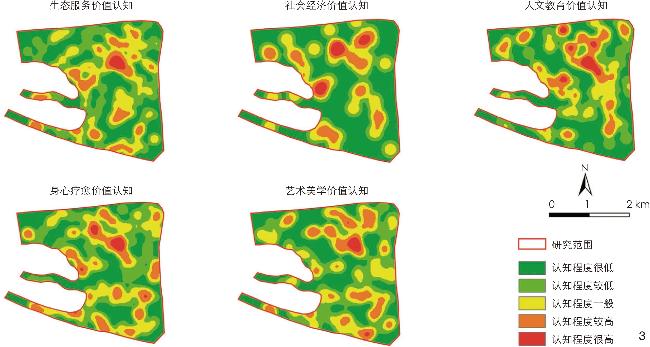
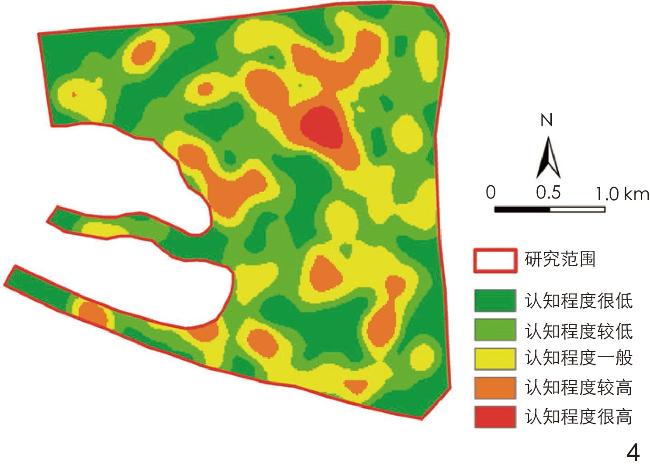
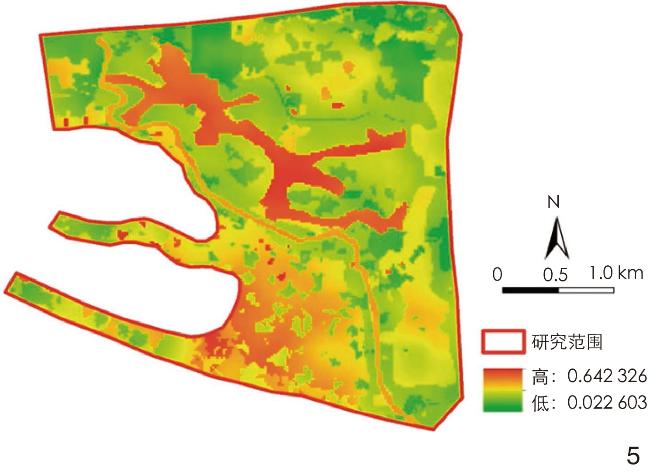
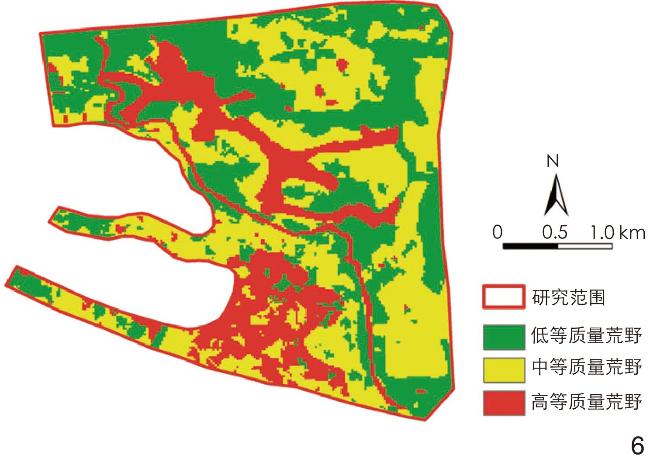
[Objective] Most of the existing park green spaces in Chengdu City are facing problems such as lack of care and serious wilderness, and the ability to gain public awareness of urban wilderness landscape is of great significance for the transformation of such green spaces. However, scholars at home and abroad have conducted very few empirical studies on urban wilderness landscape, and there is a serious lack of basic surveys on the distribution, use, and public preferences thereof. Therefore, this research constructs a diversified value assessment system for urban wilderness landscape on the basis of previous researches on the value of urban wilderness landscape purely at the theoretical level, with a view to providing suggestions and strategies for transformation of parks presenting a tendency of wildness, and providing theoretical references for the formulation of urban wilderness protection policies through field research, thus guiding the transformation and renewal of wilderness parks in Chengdu City. [Method] Firstly, this research extracts the indicators for evaluating the value of urban wilderness landscape from a large amount of existing literature, and adopts the expert consultation method to construct an urban wilderness value assessment indicator system applicable to the characteristics of Chengdu City itself. Secondly, the research adopts the method of public participation geographic information system (PPGIS) , in combination with questionnaires, rating scales, and semi-structured interviews, interview 500 citizens in Qinglong Lake Wetland Park in Chengdu, and finally collects a total of 480 pieces of valid data, including data on value cognition and spatial positioning of the interviewees. Subsequently, the research statistically analyzes the data collected using Excel, and tests data reliability and validity, as well as the correlation between demographic characteristics variables and factors influencing the values of urban wilderness landscape with SPSS 26.0 software. Finally, the research draws visual drawings with ArcGIS 10.8 software, conducts area measurement with AutoCAD 2020 software, and analyzes the spatial distribution characteristics of the values of urban wilderness landscape and the correlations thereof with different levels of wilderness landscape based on the results. [Results] 1) In terms of public cognition, the public’s understanding and overall cognition of the concept of urban wilderness (landscape) is quite poor. Demographic variables are correlated with the public cognition of the values of urban wilderness landscape, and there are differences in the cognition of different values among different social groups. 2) From the perspective of spatial distribution, the five values of urban wilderness landscape present different spatial distribution characteristics, and the distribution of cognition degree is relatively decentralized. The concentrated area is dominated by natural elements such as water bodies, hillsides, and plants. Artificial elements such as stations, seats, roads and street lights are also important factors influencing public cognition. 3) In terms of spatial proportion, different grades of wilderness also have a certain influence on public cognition, and the public’s cognition of the quality grades of urban wilderness is dominated by medium quality and low quality, and they believe that the landscape value of medium-quality wilderness is the highest, while that of high-quality wilderness is the lowest. This is different from the conclusion of judging the values of urban wilderness landscape solely from an ecological perspective or a humanistic perspective, and the perspective of this research provides a more comprehensive overview of the values of urban wilderness landscape based on the diversified value evaluation systems mentioned above. [Conclusions] The public’s cognition of the values of urban wilderness landscape is revealed in terms of conceptual understanding, cognitive rating, and spatial distribution. Subsequent research should focus on improving the degree of understanding, balancing the proportion of natural and artificial elements, preserving or creating wilderness landscape of different qualities, and formulating different transformation strategies for different audiences, in order to better guide the transformation and renewal of the wilderness parks in Chengdu City.
表1 城市荒野景观价值类别及评估体系Tab. 1 Categories of and assessment system for values of urban wilderness landscape |
| 价值类别 | 单项指标 | 对应公众易于理解的语句 |
| 生态服务价值 | 1)提供生态系统服务 | 1)为人类提供食物和其他生产、生活原料 |
| 2)提供生境与栖息地 | 2)给城市许多野生动植物提供生存场地 | |
| 3)丰富城市生物多样性 | 3)野生动植物丰富,随处可见 | |
| 4)连接景观生态网络 | 4)周围很多绿地,互相连接 | |
| 5)调节城市小气候 | 5)感觉这里的夏天比城市内部凉快 | |
| 6)充当缓冲绿地功能 | 6)阻挡汽车噪声、减少沙尘 | |
| 社会经济价值 | 1)降低绿化经济投入 | 1)不用花钱买植物种子、买肥料 |
| 2)减少人力管理成本 | 2)不需要人打理,节约管理费 | |
| 3)提高绿色低碳效益 | 3)环保、生态、低碳 | |
| 4)增加野生资源经济 | 4)可以采摘野生果子、挖野生草药 | |
| 人文教育价值 | 1)促进生态文明建设 | 1)感觉自己比以前更喜欢自然环境 |
| 2)延续场地自然风貌 | 2)能看到以前存在的树、石头 | |
| 3)展示城市人文历史 | 3)能唤醒以前的回忆,看到这里就想到了家乡 | |
| 4)提升公众科普教育 | 4)可以在这里认识植物、鸟类、昆虫 | |
| 5)促进自然科学研究 | 5)经常看到有人调研、学习、采样 | |
| 身心疗愈价值 | 1)提供荒野游憩体验 | 1)可以在这里散步、爬山、郊游、露营等 |
| 2)提供自然精神依赖 | 2)在这里待得久了就不想离开 | |
| 3)满足“逃离都市”心理需求 | 3)喜欢接触植物、踩水、坐石头上 | |
| 4)营造荒野疗法场所 | 4)心情不好的时候来这里待一会儿,心情会好很多 | |
| 艺术美学价值 | 1)形成绿地荒野艺术 | 1)很原始、独特,别有韵味 |
| 2)激发艺术创造力 | 2)在这里写生、作诗、摄影更有灵感 | |
| 3)提升公众审美观念 | 3)以前觉得不好看,但现在很喜欢 | |
| 4)完善荒野美学体系 | 4)以前没听说过荒野美学,今天有了解到这个概念 |
表2 受访者人口统计学特征Tab. 2 Demographic characteristics of interviewees |
| 人口统计学特征 | 分组 | 样本数/人 | 比例/% | 人口统计学特征 | 分组 | 样本数/人 | 比例/% | |
| 性别 | 男性 | 201 | 41.87 | 职业 | 学生 | 111 | 23.13 | |
| 女性 | 279 | 58.13 | 公司职员 | 174 | 36.25 | |||
| 年龄/岁 | <18 | 30 | 6.25 | 公职人员 | 15 | 3.12 | ||
| 18~25 | 96 | 20.00 | 个体经营户 | 69 | 14.38 | |||
| 26~30 | 102 | 21.25 | 农民 | 24 | 5.00 | |||
| 31~40 | 123 | 25.62 | 离退休人员 | 36 | 7.50 | |||
| 41~50 | 75 | 15.63 | 其他 | 51 | 10.62 | |||
| 51~60 | 36 | 7.50 | 是否为园林及其相关行业 | 是 | 78 | 16.25 | ||
| >60 | 18 | 3.75 | 不是 | 402 | 83.75 | |||
| 客源地 | 本地人 | 369 | 76.88 | 月收入/元 | <3 000 | 147 | 30.62 | |
| 外地人 | 111 | 23.12 | 3 001~7000 | 204 | 42.50 | |||
| 受教育程度 | 初中及以下 | 63 | 13.13 | 7 001~10 000 | 96 | 20.00 | ||
| 高中或中专 | 120 | 25.00 | >10 001 | 33 | 6.88 | |||
| 到场地次数 | 1 | 48 | 10.00 | |||||
| 大专 | 108 | 22.50 | 2 | 102 | 21.25 | |||
| 本科 | 168 | 35.00 | 3 | 126 | 26.25 | |||
| 研究生 | 21 | 4.37 | ≥4 | 204 | 42.50 |
表3 公众对城市荒野(景观)概念了解程度Tab. 3 Level of public cognition of the concept of urban wilderness (landscape) |
| 概念了解程度 | 样本数/人 | 比例/% |
| 从未听说过 | 192 | 40.00 |
| 听说过,但不了解 | 231 | 48.13 |
| 比较了解 | 54 | 11.25 |
| 非常了解 | 3 | 0.62 |
表4 公众对城市荒野景观价值因子的认知评分Tab. 4 Scoring of public cognition of factors influencing the values of urban wilderness landscape |
| 价值因子 | 认知评分 | 均值 |
| 生态服务价值 | 4.24 | 3.86 |
| 社会经济价值 | 3.28 | |
| 人文教育价值 | 3.92 | |
| 身心疗愈价值 | 4.04 | |
| 艺术美学价值 | 3.83 |
表5 人口统计学特征变量和城市荒野景观价值的相关性Tab. 5 Correlation between demographic characteristics variables and values of urban wilderness |
| 变量 | 生态服务价值 | 社会经济价值 | 人文教育价值 | 身心疗愈价值 | 艺术美学价值 |
| 注:*表示在置信度(双侧)为0.05时相关性显著,**表示在置信度(双侧)为0.01时相关性显著。 | |||||
| 性别 | -0.075 | -0.052 | 0.034 | 0.065 | 0.195** |
| 年龄 | 0.032 | -0.123** | -0.049 | -0.249** | -0.067 |
| 受教育程度 | 0.048 | 0.090* | 0.159** | 0.252** | 0.154** |
| 职业 | -0.009 | -0.003 | -0.012 | -0.157** | 0.015 |
| 是否为园林及其相关行业 | -0.175** | -0.219** | -0.143** | -0.242** | -0.089* |
| 月收入 | 0.044 | 0.005 | 0.164** | 0.028 | 0.049 |
| 客源地 | -0.003 | 0.201** | 0.013 | 0.055 | 0.061 |
表6 不同荒野质量等级与价值认知程度的空间占比Tab. 6 Spatial proportion of various wilderness quality grade and value cognition degree |
| 等级 | 低等质量荒野 | 中等质量荒野 | 高等质量荒野 | 合计 |
| 认知程度很低 | 8.63 | 12.00 | 4.28 | 24.91 |
| 认知程度较低 | 12.64 | 11.67 | 14.16 | 38.47 |
| 认知程度一般 | 12.96 | 11.48 | 1.07 | 25.51 |
| 认知程度较高 | 3.50 | 5.91 | 0.53 | 9.94 |
| 认知程度很高 | 0.42 | 0.69 | 0.06 | 1.17 |
| 合计 | 38.15 | 41.75 | 20.10 | 100.00 |
① 调查到场地次数更多的是为了说明受访者对于青龙湖湿地公园的熟悉程度,在这里不做重点分析。
② 归一化处理:指对图像进行一系列标准化处理的过程,本研究是将各个指标定为同向取值,取值范围为0~1。
文中所有图表均由作者拍摄、绘制。
| [1] |
JORGENSEN A, KEENAN R. Urban Wildscapes[M]. New York: Routledge, 2012.
|
| [2] |
CAO Y, CARVER S, YANG R. Mapping Wilderness in China: Comparing and Integrating Boolean and WLC Approaches[J]. Landscape and Urban Planning, 2019, 192: 103-136.
|
| [3] |
邵钰涵, 徐欣瑜, 袁嘉. 城市荒野景观: 内涵与价值审视[J]. 景观设计学, 2021, 9(1): 14-25.
SHAO Y H, XU X Y, YUAN J. The Intension and Values of Urban Wildscapes[J]. Landscape Architecture Frontiers, 2021, 9(1): 14-25.
|
| [4] |
王晞月, 王向荣. 风景园林视野下的城市中的荒野[J]. 中国园林, 2017, 33(8): 40-47.
WANG X Y, WANG X R. Urban Wilderness Based on the View of Landscape Architecture[J]. Chinese Landscape Architecture, 2017, 33(8): 40-47.
|
| [5] |
曹越, 马丁, 杨锐. 城市野境: 城市区域中野性自然的保护与营造[J]. 风景园林, 2019, 26(8): 20-24.
CAO Y, MARTIN V G, YANG R. Urban Wildness: Protection and Creation of Wild Nature in Urban Areas[J]. Landscape Architecture, 2019, 26(8): 20-24.
|
| [6] |
姜宏, 邵龙. 基于PPGIS的场所依恋综合测量方法探索: 以长春水文化生态园为例[J]. 中国园林, 2021, 37(12): 64-69.
JIANG H, SHAO L. Mapping and Measuring Place Attachment Basedon Public Participation GIS: A Case Study of Changchun Culture of Water Ecology Park[J]. Chinese Landscape Architecture, 2021, 37(12): 64-69.
|
| [7] |
戴代新, 谢民. 公众参与地理信息系统在风景园林规划中的应用[J]. 风景园林, 2016, 24(7): 98-104.
DAI D X, XIE M. The application of Public Participation Geographic Information Systems in Landscape Architecture[J]. Landscape Architecture, 2016, 24(7): 98-104.
|
| [8] |
曹越, 杨锐. 从全球到中国的荒野地识别: 荒野制图研究综述与展望[J]. 环境保护, 2017, 45(14): 39-44.
CAO Y, YANG R. Identification of Wilderness Areas from Global to China: Review and Prospect on Wilderness Mapping[J]. Environmental Protection, 2017, 45(14): 39-44.
|
| [9] |
卡佛, 曹越. 西方经验: 荒野制图技术发展及其在中国和东南亚的应用潜力[J]. 中国园林, 2017, 33(6): 20-25.
CARVER S, CAO Y. Lessons from the West: Developing Wilderness Mapping Techniques and Their Potential in China and SE Asia[J]. Chinese Landscape Architecture, 2017, 33(6): 20-25.
|
| [10] |
吴颖. 生态视角下的荒野景观[J]. 大众文艺, 2018(24): 124-125.
WU Y. Wilderness Landscape from an Ecological Perspective[J]. Popular Literature and Art, 2018(24): 124-125.
|
| [11] |
陈望衡, 郝娉婷, 齐君. 荒野与园林: “生态园林主义”建构的思考[J]. 中国园林, 2016, 32(10): 50-53.
CHEN W H, HAO P T, QI J. Wilderness and Landscape: The Thinking of Conceptualizing Ecological Landscape-ism[J]. Chinese Landscape Architecture, 2016, 32(10): 50-53.
|
| [12] |
迟姗.城市荒野景观的保护与更新研究[D].沈阳: 沈阳建筑大学, 2021.
CHI S. Study on the Protection and Renewal of Urban Wilderness Landscape[D]. Shenyang: Shenyang Jianzhu University, 2021.
|
| [13] |
袁蕾.广州市城市公园建设中荒野型景观保护与利用[D].广州: 广州大学, 2016.
YUAN L. The Conservation and Utilization of Wilderness Landscape in Guangzhou City Park[D]. Guangzhou: Guangzhou University, 2016.
|
| [14] |
翟欲彤.城市区域中荒野景观的保护与营造研究: 以浏阳市凤凰山公园为例[D].北京: 北京林业大学, 2021.
ZHAI Y T. Research on the Protection and Construction of Wilderness Landscape in Urban Areas: Taking Fenghuangshan Park in Liuyang City as an Example[D]. Beijing: Beijing Forestry University, 2021.
|
| [15] |
董晨, 王梓, 李雪萍. 城市荒野景观营造策略研究: 以江洋畈生态公园为例[J]. 现代园艺, 2020, 43(15): 167-168.
DONG C, WANG Z, LI X P. Research on Strategies for Creating Urban Wilderness Landscape: Taking Jiangyangfan Ecological Park as an Example[J]. Modern Horticulture, 2020, 43(15): 167-168.
|
| [16] |
孙月月.国家公园的荒野保护理念研究[D].南京: 东南大学, 2018.
SUN Y Y. The Idea of Wilderness Conservation of National Park[D]. Nanjing: Southeast University, 2018.
|
| [17] |
张晶晶.天津历史公园的发展变迁和景观价值认知研究[D].天津: 天津大学, 2018.
ZHANG J J. The Development of Historic Parks in Tianjin and the Cognition of Landscape Value[D]. Tianjin: Tianjin University, 2018.
|
| [18] |
黄燕, 赵振斌, 张铖, 等. 旅游社区价值空间构成与人群差异[J]. 旅游学刊, 2016, 31(9): 80-90.
HUANG Y, ZHAO Z B, ZHANG C, et al. Spatial Constitution and Group Differences in Landscape Values in the Tourism Community[J]. Tourism Tribune, 2016, 31(9): 80-90.
|
| [19] |
CARVER S, COMBER A, MCMORRAN R, et al. A GIS Model for Mapping Spatial Patterns and Distribution of Wild Land in Scotland[J]. Landscape and Urban Planning, 2011, 104(3): 395-409.
|
| [20] |
李雄, 张云路. 新时代城市绿色发展的新命题: 公园城市建设的战略与响应[J]. 中国园林, 2018, 34(5): 38-43.
LI X, ZHANG Y L. A New Approach in Urban Green Development for the New Era: Strategies for Building Park Cities[J]. Chinese Landscape Architecture, 2018, 34(5): 38-43.
|
| [21] |
曹越, 杨锐. 2020年后全球生物多样性框架下中国荒野地的系统性保护策略[J]. 中国园林, 2022, 38(8): 6-9.
CAO Y, YANG R. Systematic Conservation Strategies of China’s Wilderness Areas Under the Background of the Post-2020 Global Biodiversity Framework[J]. Chinese Landscape Architecture, 2022, 38(8): 6-9.
|
/
| 〈 |
|
〉 |