

如何描述山地景观的复杂性:英国国家公园景观特征评估案例比较
|
(马来西亚)陈巧遴/女/北京林业大学园林学院在读硕士研究生/研究方向为风景园林规划与设计 |
|
李正/男/博士/北京林业大学园林学院副教授/本刊青年编委/研究方向为城市山地景观保护与利用 |
Copy editor: 边紫琳
收稿日期: 2023-09-04
修回日期: 2023-11-17
网络出版日期: 2025-12-11
基金资助
北京市社会科学基金“北京西山永定河文化带的山地景观特征研究”(22LSC015)
国家自然科学基金“基于绘图学的北京小西山道路文化景观遗产的分类、评价和管理研究”(31800607)
版权
Characterizing Mountain Landscape Complexity: Comparison of Landscape Character Assessment in the National Parks of the United Kingdom
|
Yeng Xuan Tan is a master student in the School of Landscape Architecture, Beijing Forestry University. Her research focuses on landscape planning and design |
|
LI Zheng, Ph.D., is an associate professor in the School of Landscape Architecture, Beijing Forestry University, and a young editorial board member of this journal. His research focuses on urban mountain landscape preservation and development |
Received date: 2023-09-04
Revised date: 2023-11-17
Online published: 2025-12-11
Copyright
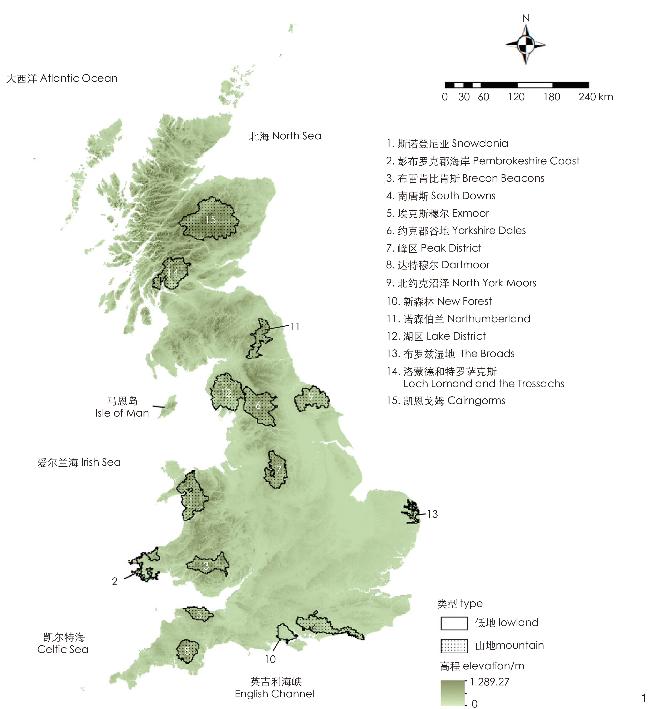
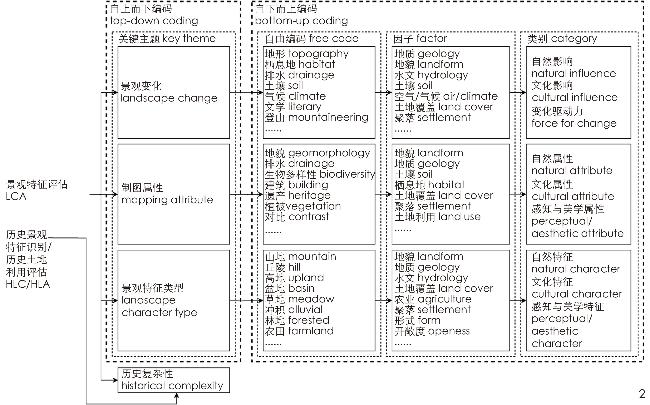
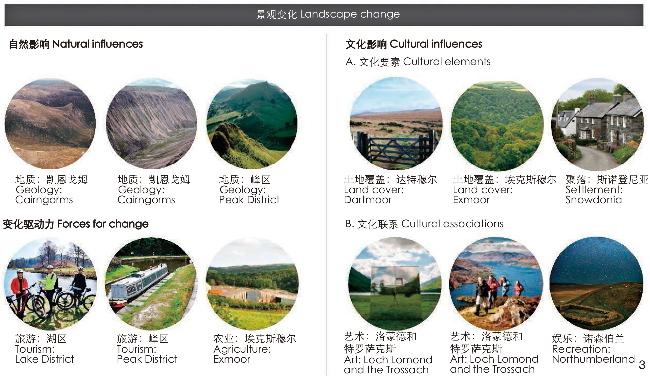
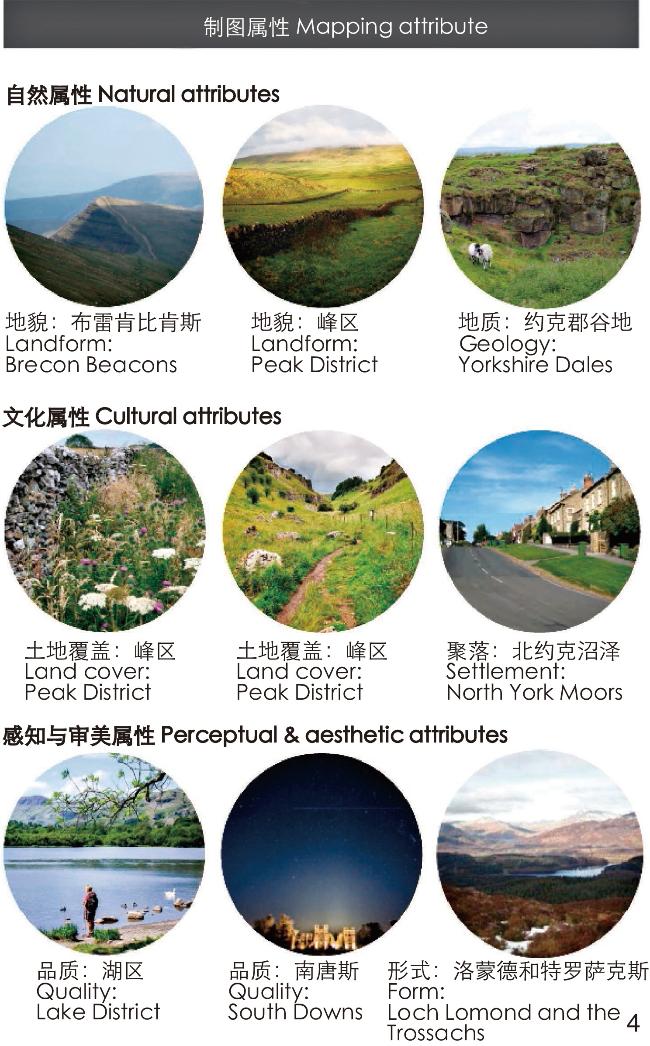
【目的】景观特征描述旨在对具有相似要素组合模式的区域进行分类和描述,将无限的景观复杂性简化为易于管理的空间单元。现有文献倾向于探索适用于所有景观的概念和框架,重点关注如何提高过程的透明度,并将历史复杂性纳入通用的技术路线中,但尚未根据不同的地貌类型进行针对性研究。阐明山地景观特征的描述是否有别于低地景观特征,并找出解释山地文化景观复杂性的方法,有助于加深对山地文化景观中自然和文化元素之间复杂关系的理解,可为今后的管理提供更有针对性的方法。【方法】重点收集15个国家公园的景观特征描述相关文件,包括20份景观特征评估(landscape character assessment, LCA)、10份历史景观特征识别(historic landscape characterisation, HLC)和2份历史土地利用评估(historic land-use assessment, HLA)。对于LCA文件,采用内容分析法,基于NVivo软件对重复出现的类型及其频率进行分类统计。编码综合采用自上而下、自下而上2种方法。参考相关的HLC和HLA文件分析LCA文件中对历史复杂性的处理,但由于英国在此方面缺乏统一的评估方法而没有进行编码。【结果】在景观变化方面,共识别出41个相关因子,并将它们划分为自然影响、文化影响和变化驱动力三大类;共识别出21个与制图属性相关的因子,并将它们划分为自然属性、文化属性、感知与审美属性三大类。景观特征类型的复合名称被分解成一系列单词,这些单词可归纳为24个因子,涉及自然特征、文化特征、感知与审美特征三大类。在历史复杂性处理方面,虽然所有英国国家公园LCA都按照历史分期描述了景观变化,但主要以自然属性、现状土地利用和实地形态作为景观特征分类的标准,在景观特征类型的命名中很少包含时间信息。只有个别LCA将历史信息纳入景观特征分类,如威尔士LCA。为了弥补LCA过度简化时间深度的缺点,英格兰和苏格兰的许多国家公园在考古学家和历史学家的主导下创建了单独的HLC或HLA。研究结果揭示了山地和低地国家公园之间的差异,发现不同国家公园对历史复杂性的处理方法主要受所在行政区域的影响,而非公园类型。尽管山地和低地的LCA可能会使用类似的研究框架和技术路线,但自然地形条件会对LCA产生重大影响。【结论】加深了人们对英国国家公园评估模式的理解,同时也为全球山地国家公园的文化LCA提供了启示,可为未来全面理解英国国家公园景观特征评估模式奠定基础,也为具有山地景观的类似地区提供指引。
(马来西亚)陈巧遴 , 李正 . 如何描述山地景观的复杂性:英国国家公园景观特征评估案例比较[J]. 风景园林, 2024 , 31(1) : 39 -55 . DOI: 10.3724/j.fjyl.202309040392
[Objective] Landscape characterisation aims at categorizing and describing areas with similar patterns of element combination, simplifying infinite landscape complexity into manageable spatial units. Existing relevant literature tends to explore concepts and frameworks applicable to all landscapes, focusing on how to enhance process transparency and incorporating historical complexity within universal technical routes, and has yet to be differentiated according to different landform types. This paper seeks to clarify whether mountain landscape characterisation different from that of lowlands and identify ways of interpreting the complexity of cultural landscapes in mountainous areas. The findings will contribute to a deeper understanding of the complex relationships between natural and cultural elements in mountain cultural landscapes, as well as to a more targeted approach to future management. [Methods] This study focuses on collecting documents related to landscape characterization of 15 national parks, including 20 landscape character assessments (LCA), 10 historic landscape characterisations (HLC), and 2 historic land-use assessments (HLA). For the LCA documents, this study adopts a content analysis method to categorizing and analyzing recurring the type and frequency based on NVivo software. Two coding approaches are adopted and integrated. This study also analyzes the treatment of historical complexity in the LCA documents of the national parks with reference to the relevant HLC and HLA documents, but without coding due to the lack of a consistent assessment methodology across U.K. in this aspect. [Results] In terms of landscape change, a total of 41 factors were identified in the relevant LCAs, which can be grouped into 3 broad categories, including natural influence, cultural influence, and force for change. A total of 21 mapping attribute related factors were identified and grouped into 3 categories, including natural attribute, cultural attribute, and perceptual and aesthetic attribute. The compound names of landscape character types are broken down into a series of words, which are grouped into 24 factors that fall into 3 categories, including as natural character, cultural character, and perceptual and aesthetic character. As far as the treatment of historical complexity is concerned, although all U.K. National Parks LCAs describe landscape changes according to historical phasing, they mainly use natural attributes, current land use and field morphology as the criteria for landscape character categorization, and they seldom include temporal information in the naming of landscape character types. Only a few LCAs incorporate historical information into landscape character classification, such as the Wales LCAs. To compensate for the disadvantage of over-simplifying the temporal depth of LCA, many national parks in England and Scotland create separate HLCs or HLAs, led by archaeologists and historians. [Conclusion] This study reveals variations between mountain and lowland national parks. The approach to historical complexity in different national parks is primarily influenced by the administrative system of the region in which they are located, rather than the type of park. Natural topographic conditions can have a significant impact on landscape character assessment, even though similar research frameworks and technical routes may be used for landscape character assessment in mountains and lowlands. [Conclusion] The findings enhance understanding of UK National Park assessment models, they also offer insights for characterizing cultural landscapes in mountainous national parks globally. The study provides a foundation for future research to comprehensively interpret the landscape characterisation models in UK national parks and guide similar regions with mountainous landscapes.
Key words: cultural landscape; characterisation; mountain; complexity; national park
表1 本研究使用的英国国家公园LCA、HLC、HLA文件Tab. 1 The LCA, HLC, and HLA documents of the U.K. national parks used by this study |
| 地区 | 国家公园 | 文件 | 年份 | 作者 |
| 英格兰 | 诺森伯兰国家公园 | 《诺森伯兰国家公园LCA更新》 | 2019 | 诺森伯兰国家公园管理局、Alison Farmer事务所 |
| 《诺森伯兰HLC》 | 2008 | 诺森伯兰郡议会、诺森伯兰国家公园、英国遗产 | ||
| 湖区国家公园 | 《湖区国家公园LCA和指南》 | 2021 | 湖区国家公园管理局、湖区之友、自然英格兰、自然信托基金 | |
| 《坎布里亚HLC:湖区国家公园》 | 2007 | 湖区国家公园管理局、坎布里亚郡议会、英格兰遗产 | ||
| 北约克沼泽国家公园 | 《北约克沼泽地LCA》 | 2003 | 北约克沼泽国家公园管理局、White Young Green事务所 | |
| 《北约克沼泽国家公园LCA更新》 | 2021 | 北约克沼泽国家公园管理局、Fiona Fyfe事务所 | ||
| 《北约克郡和下蒂斯河谷HLC》 | 2010 | 北约克郡议会、英国遗产 | ||
| 约克郡谷地国家公园 | 《LCA:约克郡山谷国家公园》 | 2020 | 约克郡山谷国家公园管理局、剑桥工作室 | |
| 《北约克郡和Lower Tees河谷HLC》 | 2010 | 北约克郡议会、英国遗产 | ||
| 峰区国家公园 | 《峰区景观战略和行动计划》 | 2009 | 峰区国家公园管理局、谢菲尔德大学、自然英格兰、德比郡议会和山顶区之友组织 | |
| 《峰区国家公园景观的历史特征》 | 2003 | 峰区国家公园考古处 | ||
| 布罗兹湿地国家公园 | 《布罗兹“治愈灵魂的呼吸空间”》 | 2016 | 诺维奇市议会、布罗兹管理局 | |
| 埃克斯穆尔国家公园 | 《埃克斯穆尔LCA》 | 2018 | 埃克斯穆尔国家公园管理局、Fiona Fyfe事务所、乡村景观、Alison Farmer事务所、Julie Martin事务所 | |
| 《萨默塞特和埃克斯穆尔HLC》 | 2018 | 萨默塞特郡议会、英国遗产 | ||
| 南唐斯国家公园 | 《南唐斯LCA》 | 2020 | 南唐斯国家公园管理局、土地使用顾问 | |
| 《HLC报告(汉普郡):南唐斯国家公园》 | 2017 | 汉普郡议会 | ||
| 《苏塞克斯HLC》 | 2010 | 苏塞克斯郡议会、Brighton & Hove统一管理局、英国遗产局 | ||
| 达特穆尔国家公园 | 《达特穆尔国家公园LCA》 | 2017 | 达特穆尔国家公园管理局、土地使用顾问 | |
| 《达特穆尔伙伴关系计划2021—2026:达特穆尔国家公园管理计划》 | 2021 | 达特穆尔国家公园管理局 | ||
| 《德文郡HLC》 | 2004 | 德文郡议会、英格兰遗产、达特穆尔国家公园管理局 | ||
| 新森林国家公园 | 《新森林LCA》 | 2015 | 新森林国家公园管理局 | |
| 《汉普郡HLA》 | 1999 | 汉普郡议会、英国遗产 | ||
| 苏格兰 | 凯恩戈姆国家公园 | 《凯恩戈姆国家公园LCA》 | 2009 | 凯恩戈姆国家公园管理局、英国地质调查局 |
| 《苏格兰自然遗产国家LCA》 | 2019 | 自然苏格兰 | ||
| 《LCA回顾:凯恩戈姆的景观演变和影响因素》 | 2019 | 自然苏格兰 | ||
| 《凯恩戈姆的历史景观》 | 2001 | 历史悠久的苏格兰、苏格兰古迹和历史遗迹皇家委员会 | ||
| 洛蒙德和特罗萨克斯国家公园 | 《洛蒙德和特罗萨克斯LCA》 | 2005 | 苏格兰自然遗产 | |
| 《洛蒙德和特罗萨克斯的历史景观》 | 2000 | 历史悠久的苏格兰、苏格兰古迹和历史遗迹皇家委员会 | ||
| 威尔士 | 斯诺登尼亚国家公园 | 《补充规划指南:埃里的景观和海景》 | 2014 | 斯诺登尼亚国家公园管理局 |
| 《国家景观特征06:斯诺登尼亚》 | 2014 | 威尔士自然资源部 | ||
| 彭布罗克郡海岸国家公园 | 《彭布罗克郡海岸国家公园:景观特色补充规划指南》 | 2020 | 彭布罗克郡海岸、国家公园管理局、社区服务部 | |
| 布雷肯比肯斯国家公园 | 《布雷肯比肯斯国家公园LCA》 | 2012 | 布雷肯比肯斯国家公园管理局、 Fiona Fyfe事务所 |
表2 英国15个国家公园LCA中列出的景观变化因子Tab. 2 Factors of landscape change listed in the LCAs of 15 U.K. national parks |
| 类别 | 山地国家公园 | 低地国家公园 | ||||
| 因子 | 频率 | 因子 | 频率 | |||
| 自然影响 | 地质 | 19 | 地质 | 3 | ||
| 地貌 | 12 | 水文 | 1 | |||
| 水文 | 11 | 空气与气候 | 1 | |||
| 土壤 | 6 | |||||
| 空气与气候 | 3 | |||||
| 文化影响 | 文化要素 | 土地覆盖 | 12 | 聚落 | 14 | |
| 聚落 | 8 | 水利工程 | 14 | |||
| 农业 | 6 | 农业 | 12 | |||
| 交通 | 4 | 交通 | 4 | |||
| 地标 | 1 | |||||
| 文化联系 | 艺术 | 14 | 娱乐 | 3 | ||
| 娱乐 | 11 | |||||
| 经济 | 3 | |||||
| 变化驱动力 | 旅游 | 12 | 气候变化 | 3 | ||
| 农业 | 11 | 发展 | 2 | |||
| 发展 | 8 | 保护 | 2 | |||
| 气候变化 | 8 | 疾病 | 1 | |||
| 林业 | 6 | 旅游 | 1 | |||
| 交通 | 6 | 传统土地管理 | 1 | |||
| 人口 | 4 | 地方独特性 | 1 | |||
| 疾病 | 3 | |||||
| 保护 | 2 | |||||
| 态度 | 1 | |||||
| 全球化 | 1 | |||||
| 所有权 | 1 | |||||
| 政策 | 1 | |||||
表3 英国15个国家公园LCA中列出的制图属性Tab. 3 Mapping attributes listed in the LCAs of 15 U.K. national parks |
| 类别 | 山地国家公园 | 低地国家公园 | |||
| 因子 | 频率 | 因子 | 频率 | ||
| 自然属性 | 地貌 | 10 | 地貌 | 2 | |
| 地质 | 9 | 水文 | 2 | ||
| 土壤 | 5 | 地质 | 1 | ||
| 栖息地 | 3 | 栖息地 | 1 | ||
| 水文 | 2 | ||||
| 文化属性 | 土地覆盖 | 15 | 土地覆盖 | 2 | |
| 聚落 | 12 | 土地利用 | 2 | ||
| 土地利用 | 6 | 聚落 | 1 | ||
| 时间深度 | 4 | ||||
| 交通 | 3 | ||||
| 感知与审美属性 | 品质 | 6 | 形式 | 3 | |
| 形式 | 5 | 品质 | 1 | ||
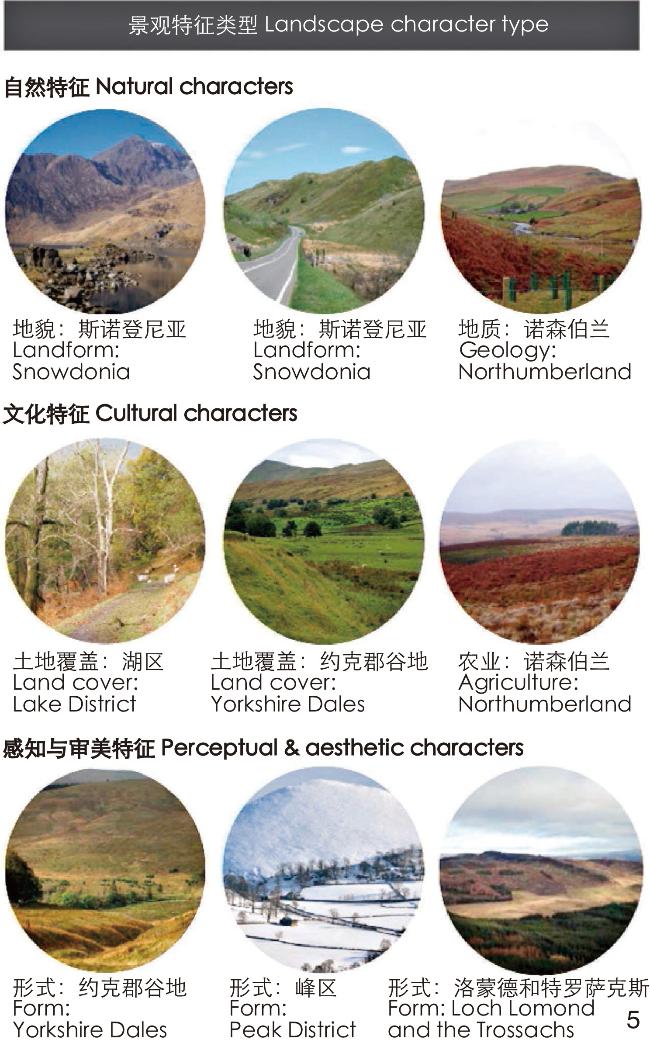
表4 英国15个国家公园LCA中列出的景观特征类型名称用词Tab. 4 Words in the names of the landscape character types listed in the LCAs of the 15 U.K. national parks |
| 类别 | 山地国家公园 | 低地国家公园 | |||||
| 因子 | 频率 | 高频词 | 因子 | 频率 | 高频词 | ||
| 自然特征 | 地貌 | 127 | 山谷、山脉、丘陵 | 地貌 | 14 | 山谷、高地、沙丘 | |
| 地质 | 62 | 高地、山谷、峭壁 | 栖息地 | 12 | 耕地、沼泽 | ||
| 水文 | 16 | 盆地、湖泊、河流 | 水文 | 8 | 河流、洪泛区、洪泛区 | ||
| 栖息地 | 7 | 草地、沼泽、绿色 | 地质 | 2 | 白垩 | ||
| 土壤 | 3 | 冲积层、黏土 | 土壤 | 1 | 泥炭 | ||
| 文化特征 | 土地覆盖 | 45 | 森林、林地、荒地 | 聚落 | 20 | 边缘、地产、城市 | |
| 农业 | 33 | 农田、公地、种植园 | 工业 | 9 | 矿物、砾石开采 | ||
| 聚落 | 32 | 庄园、城市、边缘 | 农业 | 7 | 农田、种植园 | ||
| 工业 | 1 | 工业 | 时间深度 | 3 | 古代、历史 | ||
| 感知与审美特征 | 形式 | 51 | 弧形、起伏、平行 | 形式 | 10 | 上、小、大 | |
| 开放度 | 9 | 开放 | 开放度 | 1 | 开放 | ||
| 纹理 | 7 | 光滑、镶嵌、峭壁 | |||||
| 尺度 | 2 | 升高 | |||||
文中图表均由作者绘制。其中图1高程数据来源于Edinburgh DataShare网站(datashare.ed.ac.uk),英格兰国家公园边界来源于自然英格兰(www.data.gov.uk),苏格兰国家公园边界来源于苏格兰政府地理信息科学与分析团队(hub.arcgis.com),威尔士国家公园边界来源于威尔士自然资源局(datamap.gov.wales);
| [1] |
WILSON C, GROTH P E. Everyday America: Cultural Landscape Studies After JB Jackson[M]. Univ of California Press, 2003.
|
| [2] |
PAGE R R, GILBERT C, DOLAN S. A Guide to Cultural Landscape Reports: Contents, Process, and Techniques[M]. Washington, D.C.: US Department of the Interior, 1998.
|
| [3] |
XU W T. Ecological Integrity Evaluation of Organically Evolved Cultural Landscape[J]. Mobile Information Systems, 2022: 1-11.
|
| [4] |
FAIRCLOUGH G, HERLIN I S, SWANWICK C. Routledge Handbook of Landscape Character Assessment: Current Approaches to Characterisation and Assessment[M]. London: Routledge, 2018.
|
| [5] |
SWANWICK C. Landscape Character Assessment: Guidance for England and Scotland[M]. Gloucestershire: Countryside Agency, 2002.
|
| [6] |
SIMENSEN T, HALVORSEN R, ERIKSTAD L. Methods for Landscape Characterisation and Mapping: A Systematic Review[J]. Land Use Policy, 2018, 75: 557-569.
|
| [7] |
VAN EETVELDE V, ANTROP M. A Stepwise Multi-Scaled Landscape Typology and Characterisation for Trans-regional Integration, Applied on the Federal State of Belgium[J]. Landscape and Urban Planning, 2009, 91(3): 160-170.
|
| [8] |
OLWIG K R, DALGLISH C, FAIRCLOUGH G, et al. Introduction to a Special Issue: The Future of Landscape Characterisation, and the Future Character of Landscape: Between Space, Time, History, Place and Nature[J]. Landscape Research, 2016, 41(2): 169-174.
|
| [9] |
CLARK J, FAIRCLOUGH G J, DARLINGTON J. Using Historic Landscape Characterisation[M]. London: English Heritage, 2004.
|
| [10] |
WARNOCK S, GRIFFITHS G. Landscape Characterisation: The Living Landscapes Approach in the U.K.[J]. Landscape Research, 2015, 40(3): 261-278.
|
| [11] |
ALDRED O, FAIRCLOUGH G. Historic Landscape Characterisation: Taking Stock of the Method[M]. London: English Heritage, 2003.
|
| [12] |
LAMBRICK G, HIND J, WAIN I. Historic Landscape Characterisation in Ireland: Best Practice Guidance[M]. Dublin: The Heritage Council, 2013.
|
| [13] |
KOLEN J, RENES H, HERMANS R. Landscape Biographies: Geographical, Historical and Archaeological Perspectives on the Production and Transmission of Landscapes[M]. Amsterdam: Amsterdam University Press. 2015.
|
| [14] |
ROYMANS N, GERRITSEN F, VAN DER HEIJDEN C, et al. Landscape Biography as Research Strategy: The Case of the South Netherlands Project[J]. Landscape Research, 2009, 34(3): 337-359.
|
| [15] |
SHAKESPEARE E, RUSSELL-O’CONNOR J. A Biographical Approach to Ireland’s Landscape: Creating a New Methodology[J]. Landscape Research, 2022, 47(1): 10-24.
|
| [16] |
FAIRCLOUGH G, HERRING P. Lens, Mirror, Window: Interactions Between Historic Landscape Characterisation and Landscape Character Assessment[J]. Landscape Research, 2016, 41(2): 186-198.
|
| [17] |
刘文平, 宇振荣. 北京市海淀区景观特征类型识别及评价[J]. 生态学杂志, 2016, 35(5): 1338-1344.
LIU W P, YU Z R. Identification and Assessment of Landscape Character of Haidian District, Beijing[J]. Chinese Journal of Ecology, 2016, 35(5): 1338-1344.
|
| [18] |
谢雨婷, 诺尔夫. 长三角大都市区文化景观特征评估[J]. 中国园林, 2020, 36(12): 73-78.
XIE Y T, NOLF C. Cultural Landscape Characterization in the Metropolitan Areas of the Yangtze River Delta[J]. Chinese Landscape Architecture, 2020, 36(12): 73-78.
|
| [19] |
汪伦, 张斌. 景观特征评估: LCA体系与HLC体系比较研究与启示[J]. 风景园林, 2018, 25(5): 87-92.
WANG L, ZHANG B. Comparative Study of Landscape Character Assessment and Historic Landscape Characterisation and Its Inspiration to China[J]. Landscape Architecture, 2018, 25(5): 87-92.
|
| [20] |
鲍梓婷, 周剑云, 黄铎, 等. 省域多尺度景观特征分类体系的建立: 以广西多民族自治区为例[J]. 中国园林, 2021, 37(4): 52-57.
BAO Z T, ZHOU J Y, HUANG D, et al. The Establishment of Provincial Multi-Scale Landscape Character Classification System in Guangxi Autonomous Region Province[J]. Chinese Landscape Architecture, 2021, 37(4): 52-57.
|
| [21] |
孙乔昀, 张玉钧. 自然区域景观特征识别及其价值评估: 以青海湖流域为例[J]. 中国园林, 2020, 36(9): 76-81.
SUN Q Y, ZHANG Y J. Landscape Character Identification and Its Value Assessment in Natural Areas: A Case Study of Qinghai Lake Basin[J]. Chinese Landscape Architecture, 2020, 36(9): 76-81.
|
| [22] |
LI G, ZHANG B. Identification of Landscape Character Types for Trans-regional Integration in the Wuling Mountain Multi-Ethnic Area of Southwest China[J]. Landscape and Urban Planning, 2017, 162: 25-35.
|
| [23] |
YANG D C, GAO C, LI L Y, et al. Multi-Scaled Identification of Landscape Character Types and Areas in Lushan National Park and Its Fringes, China[J]. Landscape and Urban Planning, 2020, 201: 103844
|
/
| 〈 |
|
〉 |