

中国古代镇山的地理想象及空间建构
|
毛华松/男/博士/重庆大学建筑城规学院教授、博士生导师/山地城镇建设与新技术教育部重点实验室核心成员/本刊青年编委/研究方向为风景园林历史与理论、城市设计 |
|
汤思琦/女/重庆大学建筑城规学院在读博士研究生/研究方向为风景园林历史与理论 |
|
程语/女/重庆大学建筑城规学院在读博士研究生/研究方向为风景园林历史与理论 |
|
魏玲玲/女/博士/浙江农林大学生态文明研究院副研究员/研究方向为生态文化、林业史 |
Copy editor: 边紫琳
收稿日期: 2023-06-08
修回日期: 2023-11-27
网络出版日期: 2025-12-11
版权
Geographical Imagination and Spatial Construction of Zhenshan in Ancient China
|
MAO Huasong, Ph.D., is a professor and doctoral supervisor in the Faculty of Architecture and Urban Planning, Chongqing University, a core member of the Key Laboratory of New Technology for Construction of Cities in Mountain Area, Ministry of Education, and a young editorial board member of this journal. His research focuses on history and theory of landscape architecture, and urban design |
|
TANG Siqi is a Ph.D. candidate in the Faculty of Architecture and Urban Planning, Chongqing University. Her research focuses on history and theory of landscape architecture |
|
CHENG Yu is a Ph.D. candidate in the Faculty of Architecture and Urban Planning, Chongqing University. Her research focuses on history and theory of landscape architecture |
|
WEI Lingling, Ph.D., is an associate research fellow in the Institute of Ecological Civilization, Zhejiang A&F University. Her research focuses on ecological culture, and forestry history |
Received date: 2023-06-08
Revised date: 2023-11-27
Online published: 2025-12-11
Copyright
【目的】镇山是中国传统风景营建中自然与文化紧密融合的优秀产物,是多尺度视野下的典型地理想象结果。发掘其中的传统自然价值观、知识体系及空间文化体系,可为当下相关遗产的保护与“城-山”空间体系的发扬提供历史理论依据。【方法】基于爱如生中国方志库量化分析镇山历史信息,结合对图文史料的解析,梳理镇山地理想象内涵的历史变迁,总结镇山地理空间体系构成,归纳城市镇山空间的构建理法。【结果】梳理了镇山地理想象内涵从国家到地方、从神性到世俗、从政治宣扬到政治教化的嬗变历程,总结了宇宙镇山、国家镇山、区域镇山、城市镇山4个层次的地理空间体系差序构成部分,归纳了城市镇山的选取特征及空间秩序组织特征。【结论】镇山文化模式及空间组织具有耦合关系,通过地理想象的视角可以深入探寻其中的内涵,从而推动镇山文化与空间的保护与传承。
毛华松 , 汤思琦 , 程语 , 魏玲玲 . 中国古代镇山的地理想象及空间建构[J]. 风景园林, 2024 , 31(1) : 121 -129 . DOI: 10.3724/j.fjyl.202306080265
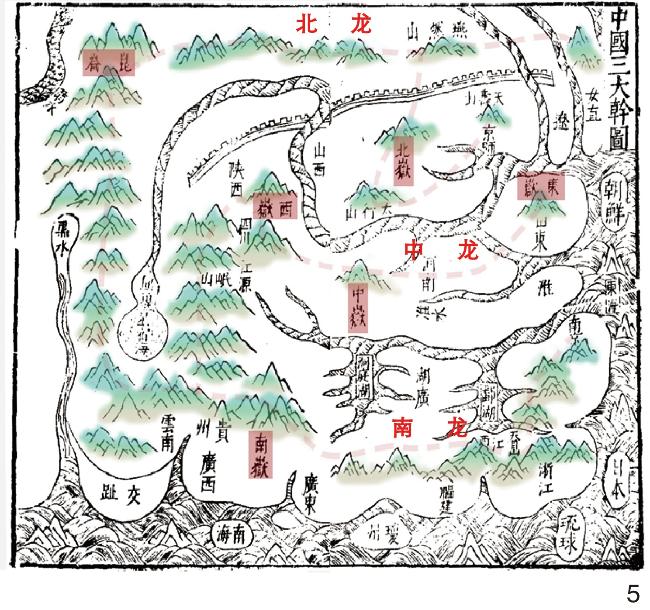
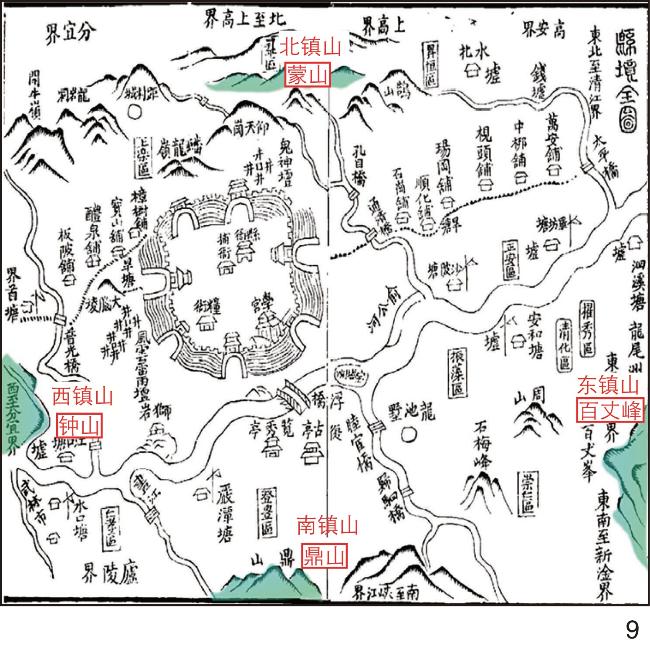
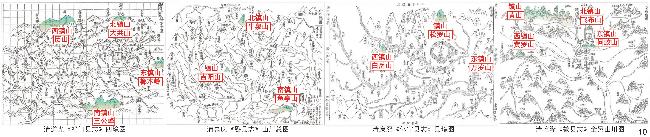
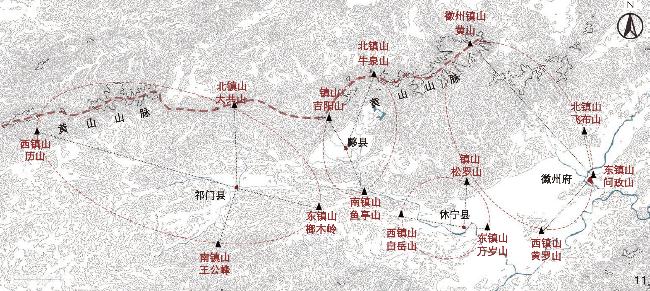
[Objective] Zhenshan is an important component of China’s mountainous geographical system and an excellent product of the close integration of nature and culture in traditional Chinese landscape construction. Related to both geography and humanity, Zhenshan is a typical result of geographical imagination. The current research on Zhenshan involved the traditional Chinese state ritual system of sacrifice to mountain and water spirits has provided detailed textual research and interpretation of the concept and cultural connotations of Zhenshan. In the construction of urban landscape, urban Zhenshan is a typical cultural element that shapes urban landscape pattern. As a common phenomenon in urban and rural spaces, urban Zhenshan lacks in-depth research compared to national sacrificial Zhenshan in terms of their respective values. Therefore, there is a certain gap in the current research on Zhenshan between national sacrificial Zhenshan and urban Zhenshan. Only by fully revealing the historical evolution process of Zhenshan can a complete knowledge system and spatial cultural system of Zhenshan be constructed. Meanwhile, it is also important to explore the identification and protection of cultural resources and the establishment of a theoretical system for traditional “city – mountain” landscape construction in combination with the interpretation of the humanistic connotation of Zhenshan, the induction of the composition of the geographical spatial system of Zhenshan, and the summary of the principles for spatial order and construction of Zhenshan, natural landforms and cultural elements, which is an important way to elucidate China’s traditional natural values and promote the excellent experience of traditional spatial practice. [Methods] Based on Erudition Chinese Local Chronicles Database of 6,000 volumes of chronicles spanning a period from Song Dynasty to the Republic of China, this research conducts a quantitative analysis of the historical information about Zhenshan Moreover, combined with the analysis of graphic and textual historical materials, the research sorts out historical changes in the connotation of Zhenshan’s geographical imagination, summarizes the composition of Zhenshan’s geographical spatial system, and generalizes the principles for spatial construction of urban Zhenshan. [Results] Zhenshan has gone through a journey from divinity to secularity, and from nationality to locality, driven by spatial imagination such as perception and political intention in different historical periods, in the form of enduring mountains and rivers. The development of Zhenshan in China experienced political propaganda in the pre-Qin period, and during the period from Han Dynasty to Tang Dynasty, the focus of Zhenshan shifted from propaganda to education, followed by the widespread rise of local Zhenshan after Tang Dynasty. In this process, the geographical imagination connotation of Zhenshan shows a transformation from political propaganda to political education, and from top-down to bottom-up discourse influence. With the evolution of the connotation of Zhenshan, Zhenshan in geographical space can be summarized into four levels: cosmic Zhenshan, national Zhenshan, regional Zhenshan, and urban Zhenshan. The gradual shift of Zhenshan’s focus from the universe and the world to a region and a city has formed a multi-scale and multi-level geographical spatial system. The ancients recognized such geographical characteristics of national mountains as node identification, overall context and fractal, and projected such humanistic order as patriarchal norms and ritual hierarchy thereon. The geographical spatial system of Zhenshan is a typical embodiment of the aforesaid geographical imagination of national mountains. From cosmic Zhenshan to national and regional Zhenshan, and finally to urban Zhenshan, there are cultural and political differences between Zhenshan at different levels and scales. Local Zhenshan is mostly located in branch ranges, while national Zhenshan and regional Zhenshan are mostly located in main ranges, with Kunlun serving as the home to cosmic Zhenshan, the top-level Zhenshan, thus forming a hierarchical and differentiatial recognition system of Zhenshan. The spatial construction of urban Zhenshan is a practice of constructing abstract conceptual spaces based on specific perceptual spaces at the settlement scale. According to existing local chronicles, there were a total of 299 cities in Song and Qing dynasties with their own urban Zhenshan. The spatial construction of urban Zhenshan is unified within the same political demands and cultural models, forming a certain paradigm of Zhenshan space and the “city – mountain” spatial construction principle. Meanwhile, Zhenshan is widely distributed in different terrains and landforms, forming an organic and adaptable spatial construction of Zhenshan. [Conclusion] Geographical imagination under different geographical and cultural backgrounds affects the construction of different ethnic and regional spaces. Under the Western concept of nature, Westerners view nature from a functional perspective, look inward at cities, and treat nature with little humanized or poetic imagination, forming differentiated geographical imagination and spatial practice results. Chinese people, on the other hand, look outward at cities, take nature as a yardstick for political and spatial construction, and establish the “man – nature” order of cities based on natural elements. The cultural mode and spatial organization of Zhenshan have a coupling relationship, and from the perspective of geographical imagination, the connotation of Zhenshan can be deeply explored to promote the protection and inheritance of Zhenshan space and culture.
① 韦昭注:“封,大也;崇,高也。”
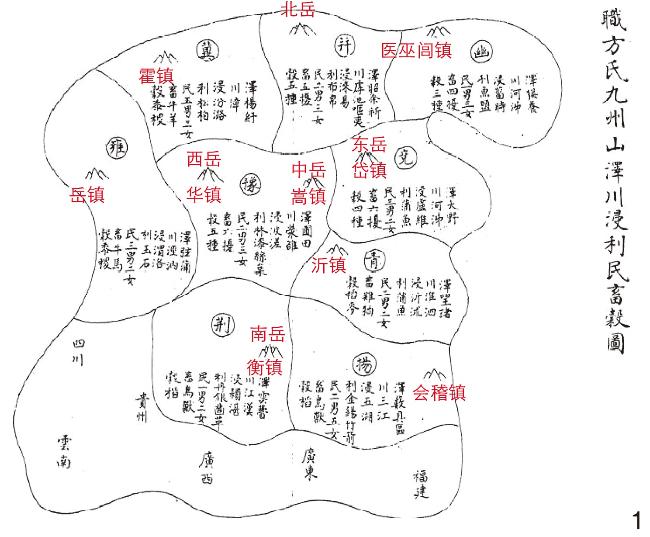
② 《周礼·职方氏》记载:“东南曰扬州,其山镇曰会稽……正南曰荆州,其山镇曰衡山……河南曰豫州,其山镇曰华山……正东曰青州,其山镇曰沂山……河东曰兖州,其山镇曰岱山……正西曰雍州,其山镇曰岳山……东北曰幽州,其山镇曰医无闾……河内曰冀州,其山镇曰霍山……正北曰并州,其山稹曰恒山……”
③ 部分历史观点称《周礼》中的“华山”为“嵩山”,如钱穆论:“古书上说豫州有华山,豫州现在是河南省,所说的华山,在洛水东边,大概就是现在的嵩山,现在的登封、禹、密数县间,古人称做华,这里是夏朝的兴起地”(出自钱穆《黄帝》一书)。
| [1] |
林耿, 潘恺峰. 地理想象: 主客之镜像与建构[J]. 地理科学, 2015, 35(2): 137-143.
LIN G, PAN K F. Geographical Imagination: The Mirroring Construction Between the Objective and Subjective Bodies[J]. Geographic Science, 2015, 35(2): 137-143.
|
| [2] |
WRIGHT J. Terrae Incognitae: The Place of the Imagination in Geography[J]. Annals of the Association of American Geographers, 1947, 37(1): 1-15.
|
| [3] |
FOUCAULT M. Fantasia of the Library in Bouchard[M]. New York: Cornell University Press, 1977: 87-109.
|
| [4] |
LEFEBVRE H. The Production of Space[M]. Oxford: Blackwell, 1991.
|
| [5] |
程国宇, 顾伟刚, 刘云刚. 博物馆中的南海知识生产与地理想象[J]. 人文地理, 2022, 37(3): 72-80.
CHENG G Y, GU W G, LIU Y G. Geographical Imagination of the South China Sea Based on the Museum Knowledge Production[J]. Human Geography, 2022, 37(3): 72-80.
|
| [6] |
王元林, 张目. 国家祭祀体系下的镇山格局考略[J]. 社会科学辑刊, 2011(1): 181-185.
WANG Y L, ZHANG M. A Brief Study of the Zhenshan Pattern Under the National Sacrifice System[J]. Social Sciences Journal, 2011(1): 181-185.
|
| [7] |
牛敬飞.五岳祭祀演变考论[D].北京: 清华大学, 2012.
NIU J F. Research on the Evolvement of the Sacrifice to the Five Marchmounts[D]. Beijing: Tsinghua University, 2012.
|
| [8] |
崔向东. 论医巫闾山文化内涵及其特点[J]. 社会科学战线, 2015(2): 112-119.
CUI X D. On Culture and Characteristics of Yiwulu Mountain[J]. Social Science Front, 2015(2): 112-119.
|
| [9] |
杜爽, 韩锋. 自然的赋值: 先秦至西汉宗教名山序列的人文空间构想与实践[J]. 中国园林, 2018, 34(3): 129-135.
DU S, HAN F. Valuing Nature: Humanistic Blueprint and Practice of the Sequence of Sacred Mountains from Pre-Qin to Western Han[J]. Chinese Landscape Architecture, 2018, 34(3): 129-135.
|
| [10] |
沈旸, 周小棣, 梁勇. 镇山与镇庙: 古代山川崇拜中的建筑与景观呈现[J]. 中国园林, 2015, 31(7): 92-96.
SHEN Y, ZHOU X D, LIANG Y. Five Sacred Mountains & Temple: The Ancient Worship of Mountains and Rivers in the Landscape[J]. Chinese Landscape Architecture, 2015, 31(7): 92-96.
|
| [11] |
张杰.中国古代空间文化溯源[M].北京: 清华大学出版社, 2016: 447.
ZHANG J. Cultural Gene of Ancient Chinese Space[M]. Beijing: Tsinghua University Press, 2016: 447.
|
| [12] |
孙诗萌.自然与道德: 古代永州地区城市规划设计研究[M].北京: 中国建筑工业出版社, 2019.
SUN S M. Nature and Morality: The Planning and Design of Cities in Historic Yongzhou Region[M]. Beijing: China Architecture & Building Press, 2019.
|
| [13] |
吴然.四川盆地山水城市营造的文化传统与景观理法研究[D].北京: 北京林业大学, 2016.
WU R. Research on the Cultural Tradition and Landscape Planning of the Shanshui Cities in Sichuan Basin[D]. Beijing: Beijing Forestry University, 2016.
|
| [14] |
王世舜.尚书[M].王翠叶, 译注.北京: 中华书局, 2018: 494.
WANG S S. Shangshu[M]. WANG C Y, translated and annotated. Beijing: Zhonghua Book Company, 2018: 494.
|
| [15] |
郑樵.通志·地理略序[M].北京: 中华书局, 1987, 541.
ZHENG Q. Preface to Geography in General Annals[M]. Beijing: Zhonghua Book Company, 1987, 541.
|
| [16] |
蔡沈.书集传[M].北京: 中国书店, 1985: 23.
CAI S. Book Collection Biography[M]. Beijing: China Bookstore, 1985: 23.
|
| [17] |
孔颖达.宋本尚书正义[M].北京: 国家图书馆出版社, 2017: 254.
KONG Y D. The Song Dynasty Version of Shang Shu Zheng Yi[M]. Beijing: National Library Press, 2017: 254.
|
| [18] |
左丘明.国语[M].太原: 三晋出版社, 2008: 240.
ZUO Q M. Guo Yu[M]. Taiyuan: Sanjin Publishing House, 2008: 240.
|
| [19] |
许慎.说文解字[M].秦向前, 编译.南京: 江苏凤凰美术出版社, 2018: 344.
XU S. Shuo Wen Jie Zi[M]. QIN X Q, edited and translated. Nanjing: Jiangsu Phoenix Fine Arts Publishing House, 2018: 344.
|
| [20] |
曹宪.广雅[M].北京: 国家图书馆出版社, 2014.
CAO X. Guangya[M]. Beijing: National Library Press, 2014.
|
| [21] |
司马迁.史记[M].谢冰欣, 选注.成都: 四川人民出版社, 2019: 240.
SIMA Q. Historical Records[M]. XIE B X, selected and annotated. Chengdu: Sichuan People’s Publishing House, 2019: 240.
|
| [22] |
郑玄.周礼注疏[M].上海: 上海古籍出版社, 2010: 1745.
ZHENG X. Annotations on Zhou Li[M]. Shanghai: Shanghai Chinese Classics Publishing House, 2010: 1745.
|
| [23] |
管仲.管子[M].北京: 民主与建设出版社, 2020.
GUAN Z. Guan Zi[M]. Beijing: Democratic and Construction Publishing House, 2020.
|
| [24] |
董仲舒.春秋繁露[M].北京: 中华书局, 2011: 236.
DONG Z S. Spring and Autumn Fan Lu[M]. Beijing: Zhonghua Book Company, 2011: 236.
|
| [25] |
徐正英.周礼[M]常佩雨, 译注.北京: 中华书局, 2014: 585.
XU Z Y. Rites of the Zhou[M]. CHANG P Y, translated and annotated. Beijing: Zhonghua Book Company, 2014: 585.
|
| [26] |
张目.古代国家镇山祭祀格局初探[D].珠海: 暨南大学, 2012.
ZHANG M. The Structure Investigation on Sacrifice of Ancient National Chief Mountains[D]. Zhuhai: Jinan University, 2012.
|
| [27] |
徐应秋.玉芝堂谈荟[M].上海: 上海古籍出版社, 1993: 879.
XU Y Q. Yu Zhi Tang Tan Hui[M]. Shanghai: Shanghai Chinese Classics Publishing House, 1993: 879.
|
| [28] |
王应电.周礼图说[M].北京: 商务印书馆, 2013: 894.
WANG Y D. Zhou Li Tu Shuo[M]. Beijing: Commercial Press, 2013: 894.
|
| [29] |
任洛.嘉靖辽东志[M].刻本.[出版地不详: 出版者不详], 1537(明嘉靖十六年).
REN L. Chronicles of Liaodong in Jiajing Period in Ming Dynasty[M]. Block-Printed Edition. [S.l.: s.n.], 1537 (the 16th Year of Jiajing in Ming Dynasty).
|
| [30] |
张元忭.浙江省会稽县志[M].刻本.[出版地不详: 出版者不详], 1575(明万历三年).
ZHANG Y B. Chronicles of Kuaiji County, Zhejiang Province[M]. Block-Printed Edition. [S.l.: s.n.], 1575 (the 3th Year of Wanli in Ming Dynasty).
|
| [31] |
陈宏, 刘沛林. 风水的空间模式对中国传统城市规划的影响[J]. 城市规划, 1995(4): 18-21.
CHEN H, LIU P L. The Spacial Pattern of Fengshui and Its Impact on Chinese Traditional Urban Planning[J]. City Planning Review, 1995(4): 18-21.
|
| [32] |
东方朔.海内十洲记[M].上海: 上海古籍出版社, 2012.
DONGFANG S. A Record of the Ten Continents in the Sea[M]. Shanghai: Shanghai Chinese Classics Publishing House, 2012.
|
| [33] |
王守亮. 《河图括地象》考论[J]. 齐鲁师范学院学报, 2013(1): 74-78.
WANG S L. Observing and Studying on Hetu Kuodixiang[J]. Journal of Qilu Normal University, 2013(1): 74-78.
|
| [34] |
萧统, 李善.昭明文选[M].北京: 京华出版社, 2000: 571.
XIAO T, LI S. Works of Zhaoming[M]. Beijing: Jinghua Publishing House, 2000: 571.
|
| [35] |
维城, 胡震亨.天启海盐县图经[M].杭州: 浙江人民出版社, 1988.
WEI C, HU Z H. Chronicles of Haiyan County in Tianqi Period in Ming Dynasty[M]. Hangzhou: Zhejiang People’s Publishing House, 1988.
|
| [36] |
李敬.光绪费县志[M].香港: 中国国际文化出版社有限公司, 2016.
LI J. Chronicles of Fei County in Guangxu Period in Qing Dynasty[M]. Hong Kong: China International Culture Press Co., Ltd., 2016.
|
| [37] |
和宁.嘉庆回疆通志[M].杭州: 浙江人民出版社, 1988.
HE N. The Hui Ethnic Frontier Chronicles in Jiajing Period in Ming Dynasty[M]. Hangzhou: Zhejiang People’s Publishing House, 1988.
|
| [38] |
沈婉婷. 昆仑龙脉观念溯源[J]. 民俗研究, 2019(4): 59-68.
SHENG W T. A Retrospective Study of the Kunlun Dragon Vein Concept[J]. Folklore Studies, 2019(4): 59-68.
|
| [39] |
王圻, 王思义.三才图会[M].上海: 上海古籍出版社, 1988: 872.
WANG Q, WANG S Y. Sancai Tuhui[M]. Shanghai: Shanghai Chinese Classics Publishing House, 1988: 872.
|
| [40] |
王成组.中国地理学史 先秦至明代[M].北京: 商务印书馆, 2017: 429.
WANG C Z. History of Chinese Geography from Pre Qin to Ming Dynasty[M]. Beijing: Commercial Press, 2017: 429.
|
| [41] |
杨柳.风水思想与古代山水城市营建研究[D].重庆: 重庆大学, 2005.
YANG L. Feng Shui Thought and Research on the Construction of Ancient Landscape Cities[D]. Chongqing: Chongqing University, 2005.
|
| [42] |
李懋桧.万历六安州志[M].北京: 中国书店出版社, 1992.
LI M H. Chronicles of Lu’an in Wanli Period in Ming Dynasty[M]. Beijing: China Bookstore Publishing House, 1992.
|
| [43] |
吕不韦.吕氏春秋[M].北京: 中华书局, 2007: 288.
LYU B W. LYU Shi Chun Qiu[M]. Beijing: Zhonghua Book Company, 2020: 378.
|
| [44] |
毛华松, 程语. 辨方正位, 体国经野: 《周礼》营国制度中的山水风景意象及其历史影响研究[J]. 中国园林, 2020, 36(4): 16-21.
MAO H S, CHENG Y. Identifying the Region and Rectifying the Order, and Shaping the Cities and Countryside: Study on Landscape Imagery and Historical Influence of Capital Construction System in Rites of the Zhou[J]. Chinese Landscape Architecture, 2020, 36(4): 16-21.
|
| [45] |
陆尧春.道光新喻县志[M].台北: 成文出版社, 1989.
LU Y C. Chronicles of Xinyu County in Daoguang Period in Qing Dynasty[M]. Taipei: Chengwen Publishing House, 1989.
|
| [46] |
王树声.中国城市人居环境历史图典: 江西卷[M].北京: 科学出版社, 2015: 374.
WANG S S. Historical Atlas of Urban Human Settlements in China: Jiangxi Volume[M]. Beijing: Science Press, 2015: 374.
|
| [47] |
何东序, 汪尚宁.嘉靖徽州府志[M].台北: 成文出版社, 1985.
HE D X, WANG S N. Chronicles of Huizhou Prefecture in Jiajing Period in Ming Dynasty[M]. Taipei: Chengwen Publishing House, 1985.
|
| [48] |
王让.道光祁门县志[M].台北: 成文出版社, 1985.
WANG R. Chronicles of Qimen County in Daoguang Period in Qing Dynasty[M]. Taipei: Chengwen Publishing House, 1985.
|
| [49] |
吴甸华.嘉庆黟县志[M].台北: 成文出版社, 1985.
WU D H. Chronicles of Yi County in Jiaqing Period in Qing Dynasty[M]. Taipei: Chengwen Publishing House, 1985.
|
| [50] |
廖腾煃.康熙休宁县志[M].刻本.[出版地不详: 出版者不详], 1693(清康熙三十二年).
LIAO S K. Chronicles of Xiuning County in Kangxi Period in Qing Dynasty[M]. Block-Printed Edition. [S.l.: s.n.], 1693 (the 32th Year of Kangxi in Qing Dynasty).
|
| [51] |
张佩芳.乾隆歙县志[M].刻本.[出版地不详: 出版者不详], 1771(清乾隆三十六年).
ZHANG P F. Chronicles of She County in Qianlong Period in Qing Dynasty[M]. Block-Printed Edition. [S.l.: s.n.], 1771 (the 36th Year of Qianlong in Qing Dynasty).
|
| [52] |
盛时泰.牛首山志[M].南京: 南京出版社, 2010.
SHENG S T. Chronicles of Niushou Mountain[M]. Nanjing: Nanjing Publishing House, 2010.
|
| [53] |
黄志璋.康熙麻阳县志[M].刻本.[出版地不详: 出版者不详],[1685].
HUANG Z Z.Chronicles of Mayang County in Kangxi Period in Qing Dynasty[M]. Block-Printed Edition. [S.l.: s.n.], [1685].
|
| [54] |
戴肇辰, 史澄.光绪广州府志[M].广州: 粤秀书院, 1879.
DAI Z C, SHI C. Chronicles of Guangzhou Prefecture in Guangxu Period in Qing Dynasty[M]. Guangzhou: Yuexiu Academy, 1879.
|
| [55] |
王世选, 梅文昭.宁安县志[M].台北: 成文出版社, 1974.
WANG S X, MEI W Z. Chronicles of Ning’an County[M]. Taipei: Chengwen Publishing House, 1974.
|
| [56] |
暴大儒, 廖其观.同治峡江县[M].刻本.[出版地不详: 出版者不详], 1871(清同治十年).
BAO D R, LIAO Q G. Chronicles of Xiajiang County in Tongzhi Period in Qing Dynasty[M]. Block-Printed Edition. [S.l.: s.n.], 1871 (the 10th Year of Tongzhi in Qing Dynasty).
|
| [57] |
刘权之, 张世范.乾隆池州府志[M].台北: 成文出版社, 1985.
LIU Q Z, ZHANG S F. Chronicles of Chizhou Prefecture in Qianlong Period in Qing Dynasty[M]. Taipei: Chengwen Publishing House, 1985.
|
| [58] |
夏良胜.正德建昌府志[M].上海: 上海古籍书店, 1964.
XIA L S. Chronicles of Jianchang Prefecture in Zhengde Period in Ming Dynasty[M]. Shanghai: Shanghai Chinese Classics Publishing House, 1964.
|
| [59] |
杨循吉.嘉靖吴邑志[M].刻本.[出版地不详: 出版者不详], 1529(明嘉靖八年).
YANG X J. Chronicles of Wu County in Jiajing Period in Ming Dynasty[M]. Block-Printed Edition. [S.l.: s.n.], 1529 (the 8th Year of Jiajing in Ming Dynasty).
|
/
| 〈 |
|
〉 |