

城市公园市场化运营主要模式和优化路径
|
李妍汀/女/深圳市蕾奥规划设计咨询股份有限公司副总规划师/研究方向为公园规划设计、公园运营、公园经济 |
|
杨巧婉/女/硕士/深圳市蕾奥规划设计咨询股份有限公司高级设计师/研究方向为公园规划设计、公园运营 |
Copy editor: 李清清
收稿日期: 2025-02-25
修回日期: 2025-05-06
网络出版日期: 2025-12-10
版权
Exploration of the Main Models and Optimization Paths for the Market-Oriented Operation of Urban Parks
|
LI Yanting is Deputy Chief Planner of Shenzhen Lay-Out Planning Consultants Co., Ltd. Her research focuses on park planning and design, park operation, and park economy |
|
YANG Qiaowan, Master, is a senior designer in Shenzhen Lay-Out Planning Consultants Co., Ltd. Her research focuses on planning and design, and park operation |
Received date: 2025-02-25
Revised date: 2025-05-06
Online published: 2025-12-10
Copyright
【目的】在生态文明建设和人民美好生活需要的双重驱动下,城市公园正从传统休闲场所逐步演化为融合生态涵养、公共服务、经济运营等多维功能的城市活力中心。但长期以来由政府主导的管理和运营模式极度依赖财政投入,运维资金缺口持续扩大,市场化的运营模式在现行管理体制下存在不少困难,公共服务有效供给不足。在此背景下,对现有运营模式进行分析并开展创新路径研究对于探索城市公园提质增效具有重要参考意义。【方法】对当前4类常见的涉及公园用地的市场化运营模式进行分类梳理,对比不同利益主体的盈利模式、激励约束条件及市场反馈情况,系统解析现有运营模式的制度瓶颈与实施难点。【结果】通过构建“公园时空资产一张图”量化公园多重价值、设计轻资产运营产品矩阵释放公园流量和文化潜力、探索多元化融资渠道破解资金难题。【结论】因此,应通过制度设计和市场引导层面的创新,提出实施路径,来探索如何化解公园公共属性与商业属性的矛盾、平衡公园的短期利益与长期生态效益,为公园主管部门和运营执行单位提供实践参考。
李妍汀 , 杨巧婉 . 城市公园市场化运营主要模式和优化路径[J]. 风景园林, 2025 , 32(6) : 23 -28 . DOI: 10.3724/j.fjyl.LA20250111
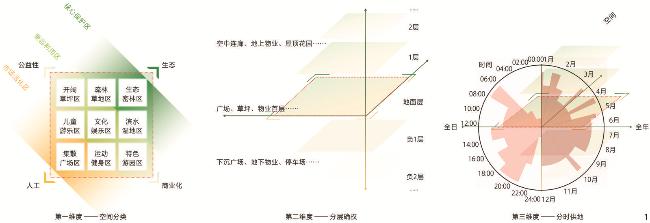
[Objective] Against the backdrop of ecological civilization construction and driven by the people’s demand for a better life, urban parks, as representatives of green spaces, are no longer merely for “scenic appreciation”. Instead, they have gradually evolved from traditional places of leisure into urban vitality centers that integrate multiple functions, including ecological conservation, public services, and economic operation. However, over the past few decades, parks have mainly been constructed and managed by the government, heavily relying on fiscal input. They have been in a state of focusing on construction while neglecting management and operation, resulting in a single type of public product. In recent years, with the tightening of policy and fiscal funds, the funding gap for park management and maintenance has been continuously expanding. Many cities have been trying to adopt market-oriented approaches by introducing diverse investment and operation entities. However, under the current management system, market-oriented operation models face many difficulties. The policy details have not yet been issued, market investment confidence is insufficient, and the market is still in its infancy, making it very difficult to implement the aforesaid operation models, consequently resulting in insufficient effective supply of public services. Under this background, analyzing the existing operation models and conducting research on innovative paths is of great reference significance for exploring the improvement and efficiency enhancement of urban parks. [Methods] At present, research on park operation in China is still in its infancy, with few results. Some cities have some sporadic practices and experiences. Based on the above background, this research has preliminarily sorted out the park operation models currently implemented in China. The research includes not only the operation and management models of park green spaces themselves but also the operation cases of urban areas involving park green spaces. These include the model of integrating park property management and commercial operation as a whole package, the model of sharing risks and profits between the government and enterprises, the model of innovative mixed land use in cultural and tourist attractions, and the model of overall operation of urban areas led by urban operators. The profit models, incentive and constraint conditions, and market feedback of different stakeholders in these four models are compared. The institutional bottlenecks and implementation difficulties of the existing operation models are systematically analyzed. The current dilemma of balancing the public welfare and commercial aspects of parks as a public product is put forward together with the difficulties involved in park management, such as the complexity of cross-departmental coordination, and the lack of detailed policy basis and effective profit distribution system. [Results] By constructing an “all-in-one map” of spatio-temporal park assets to achieve three-dimensional quantification of spatial assets, an inventory of the land, buildings, and facilities within parks is conducted, park plan is spatially classified, and in combination with the demand for mixed land use featuring the combination of dominance by public welfare and flexible compatibility”, park space is divided into core conservation areas, compatible utilization areas, and market revitalization areas. At the same time, the method of layered ownership confirmation can be achieved by superimposing underground space, multi-story properties, skywalks, etc. Attempts are made to establish property ownership division rules and rent assessment for the same space at different elevations, and to manage the three-dimensional space more precisely. In addition, time-sharing land supply methods for the same site at different times are considered, and cyclical business activities are carried out. The public welfare and openness are emphasized during non-business hours, while the commercial value of space is explored during business hours, ultimately forming the baseline of parks’ spatial assets. A light-asset operation product matrix is customized according to the characteristics of parks to release the traffic and cultural potential of parks. For large theme parks with specific amusement products, the physical space limitations can be broken. Immersive experiences and new consumption models can be created using AR/VR technology. Digital collectibles can be developed, and online concerts and cultural exhibitions can be held. Linkages with game, film, and other IPs can be established to create cross-border experiences and diverse commercial ecosystems for parks. With cultural and digital assets as the core to activate low-cost and high-efficiency sustainable operations, diversified financing channels are explored. Based on the “all-in-one map” of spatio-temporal park assets, the future income rights of park business assets are packaged into standardized financial products to attract medium and long-term capital investment. The data assets, cultural assets, and IP copyrights of park activities can be traded on digital platforms to realize the value of virtual assets. The greening area and carbon sequestration capacity of parks can be monetized through the carbon trading market. By transforming static spatial assets into financial targets with stable cash flow, the government debt pressure is reduced. A closed loop of “physical space operation − digital asset appreciation − financial tools feedback” is constructed, forming a sustainable development paradigm for the market-oriented operation of public welfare assets. [Conclusion] When cities enter the era of refined operation, park operation is no longer a simple proposition based on public green spaces, but a complex system project involving public finance, spatial economy, and social governance. At present, many cities in China have been actively exploring and innovating in the field of market-oriented park operation, but they have also faced many contradictions. The public welfare of parks as a public product restricts the release of commercial potential, policy barriers increase transaction costs, and imbalanced profit distribution intensifies the game between the government and enterprises. How to respond to these difficulties and explore solutions is not only related to the improvement of urban governance efficiency but also to the deepening of the practice of the “people’s city” concept. Only through systematic design can the problem be solved. On this basis, through innovation in institutional design and market guidance, implementation paths are proposed to explore how to resolve the contradictions between the public and commercial attributes of parks and balance the short-term interests of parks with long-term ecological benefits, providing practical references for park authorities and operation implementation units.
Key words: urban park; park operation; market-oriented operation; park asset
文中图片由作者绘制。
| [1] |
王维奇, 刘晨晖, 陈延菲, 等. 公园城市目标下城市公园绿地开放共享理念的核心要义和科学路径[J]. 风景园林, 2023, 30(11): 28-34.
WANG W Q, LIU C H, CHEN Y F, et al. Core Meaning and Scientific Path of the Concept of Open Sharing of Urban Park Green Spaces Under the Goal of Park City[J]. Landscape Architecture, 2023, 30(11): 28-34.
|
| [2] |
宗敏. Park-PFI制度在日本城市公园建设管理中的应用: 以南池袋公园为例[C]//中国城市规划学会.中国城市规划学会年会论文集.北京: 中国建筑工业出版社, 2021: 123-130.
ZONG Min. Application of Park-PFI System in Urban Park Management in Japan: A Case Study of Minami-Ikebukuro Park[C]//China Urban Planning Society. Proceedings of the Annual Conference of China Urban Planning Society. Beijing: China Architecture & Building Press, 2021: 123-130.
|
| [3] |
牛萌, 付甜甜, 达周才让. 公园城市背景下城市公园的运营模式研究[J]. 建设科技, 2024(14): 65-68.
NIU M, FU T T, DAZHOU C R. Research on Operation Mode of Urban Parks in Context of Park Cities[J]. Construction Science and Technology, 2024(14): 65-68.
|
| [4] |
深圳市公园管理中心.深圳市公园管理中心园博园运改维一体化改革试点项目2024年采购公告[EB/OL].(2024-06-17)[2025-03-12]. https://m.bidcenter.com.cn/news-1-291403194.html.
Shenzhen Park Management Center. 2024 Procurement Announcement for the Integrated Operation, Renovation, and Maintenance Pilot Project of Yuanbo Park by Shenzhen Park Management Center[EB/OL]. (2024-06-17)[2025-03-12]. https://m.bidcenter.com.cn/news-1-291403194.html.
|
| [5] |
刘薇. PPP模式理论阐释及其现实例证[J]. 公共管理学报, 2019, 16(3): 45-56.
LIU W. Theoretical Interpretation of PPP Mode and Its Practical Evidence[J]. Journal of Public Management, 2019, 16(3): 45-56.
|
| [6] |
李妍, 徐甜甜, 孔晧. 基于多方演化博弈的PPP模式风险分担政府监管研究[J]. 昆明理工大学学报(自然科学版), 2023, 48(5): 211-223.
LI Y, XU T T, KONG H. Government Regulation of Risk Sharing in PPP Mode Based on Multi-party Evolutionary Game[J]. Journal of Kunming University of Science and Technology (Natural Science), 2023, 48(5): 211-223.
|
| [7] |
龙岗城管. 龙岗儿童公园一岁啦!龙岗趣玩新地标, 交出亮眼成绩单[EB/OL]. (2024-12-27)[2025-03-12]. https://mp.weixin.qq.com/s/N4mtV8OjFVHINZ9Uszeshg.
Longgang Urban Management Bureau. Longgang Children’s Park Celebrates Its First Anniversary! New Landmark of Fun Releases Outstanding Achievements[EB/OL]. (2024-12-27)[2025-03-12].https://mp.weixin.qq.com/s/N4mtV8OjFVHINZ9Uszeshg.
|
| [8] |
樊建伟. 基于城市开发视角的EOD生态引领发展模式研究: 以浙江海山茅埏岛开发和保护为例[J]. 中国物价, 2021(11): 12-15.
FAN J W. Research on EOD Ecological Leading Development Model from the Perspective of Urban Development: Taking the Development and Protection of Maoyan Island in Haishan, Zhejiang Province as an Example[J]. China Price, 2021(11): 12-15.
|
| [9] |
祝思圆, 叶雪, 易勇. 公园城市时代下的城市公园盈利性运营策略探讨[J]. 现代园艺, 2024(19): 193-195.
ZHU S Y, YE X, YI Y. Discussion on the Profitable Operation Strategy of Urban Parks in the Era of Park City[J]. Contemporary Horticulture, 2024(19): 193-195.
|
| [10] |
李黎. 谁为公园付费?: 从公共物品理论看公园的供给和收费[J]. 当代财经, 2003(11): 37-40.
LI L. Who Pays for the Park?: Looking at the Supply and Charging of Parks From the Perspective of Public Goods Theory[J]. Contemporary Finance & Economics, 2003(11): 37-40.
|
/
| 〈 |
|
〉 |