

老年人绿地感知与活动特征的非线性关系
|
吴元晶/女/福建农林大学风景园林与艺术学院在读博士研究生/研究方向为风景园林规划与设计 |
|
游永熠/男/硕士/广东省城乡规划设计研究院有限责任公司规划二所工程师/研究方向为城市视觉智能 |
|
周卫/男/福建农林大学风景园林与艺术学院在读博士研究生/研究方向为风景园林规划与设计 |
|
兰思仁/男/博士/福建农林大学校长/福建农林大学风景园林与艺术学院教授、博士生导师/研究方向为风景园林规划与设计、国家公园 |
Copy editor: 李禹潺 边紫琳
收稿日期: 2024-09-20
修回日期: 2025-01-26
网络出版日期: 2025-12-10
基金资助
国家林业和草原局补助项目“国家林业局森林公园工程技术研究中心运行补助”(115-KHD18102A)
福建省自然科学基金项目“高湿高热地区城市滨水空间对老年人多维健康的影响及其作用机制研究”(2023J05193)
国家自然科学基金“老旧小区非正式绿地对居民情感与恢复性的影响机制及其更新策略”(32401642)
福建省中青年科研项目“城市滨海景观促进健康的景感特征及空间优化研究”(JAT220220)
版权
Nonlinear Relationship Between the Elderly’s Perception of Green Spaces and Their Activity Characteristics
|
WU Yuanjing is a Ph.D. candidate in the College of Landscape Architecture and Art, Fujian Agriculture and Forestry University. Her research focuses on landscape planning and design |
|
YOU Yongyi, Master, is an engineer in Guangdong Urban-Rural Planning and Design Research Institute Technology Group Co., Ltd. His research focuses on urban visual intelligence |
|
ZHOU Wei is a Ph.D. candidate in the College of Landscape Architecture and Art, Fujian Agriculture and Forestry University. His research focuses on landscape planning and design |
|
LAN Siren, Ph.D., is president of Fujian Agriculture and Forestry University, and a professor and doctoral supervisor in the College of Landscape Architecture and Art, Fujian Agriculture and Forestry University. His research focuses on landscape planning and design, and national parks |
Received date: 2024-09-20
Revised date: 2025-01-26
Online published: 2025-12-10
Copyright
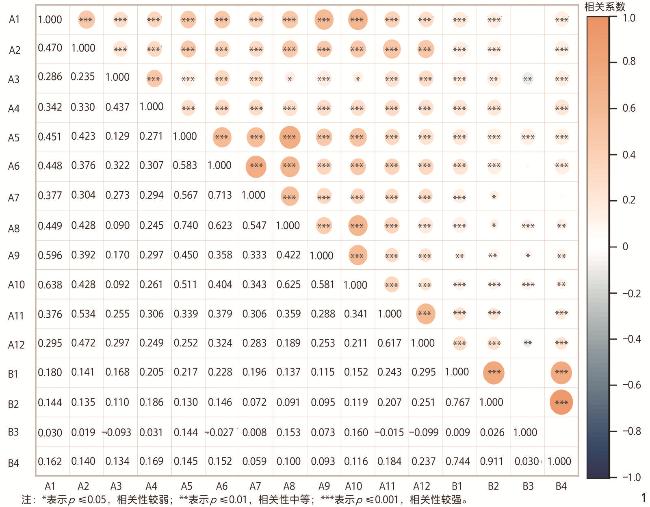
【目的】探究老年人在城市公园中的绿地感知与绿地活动特征间的非线性关系,旨在为公园适老化建设和设计提供科学依据。【方法】在福州市的5个城市公园绿地中,对具有一定思考和语言表达能力的老年人进行关于绿地感知与绿地活动特征的问卷调查,对收集到的有效数据进行相关性分析,并基于XGBoost可解释性机器学习算法构建模型,探究绿地感知各指标对绿地活动特征各指标的相对重要性及指标间的非线性关系。【结果】1)空间归属感、生态环境质量、空气质量、休憩设施合理性、健身设施合理性和绿地品质是影响老年人绿地活动特征的重要因素;2)老年人在城市公园绿地中的每周活动频率、时长、活动类型丰富度及活动总量与情感、物理环境、设施三大感知特征之间存在显著的非线性关系;3)揭示了变量间复杂的非线性关系,明确了不同变量的边际效应和临界值,例如生态环境质量对老年人绿地活动每周活动时长、每周活动总量的倒U型效应。【结论】从非线性视角明确了各绿地感知指标在老年人绿地活动特征中的权重及边际效应,为理解老年人绿地活动的驱动机制提供了新的理论视角,拓展了环境舒适度与绿地活动特征关联性的研究框架。同时,为城市公园绿地的适老化设计与优化提供了实践建议,有助于推动城市公园的适老化更新,促进绿色空间的高质量建设,并最终推动老年人健康福祉与社会可持续发展。
吴元晶 , 游永熠 , 周卫 , 兰思仁 . 老年人绿地感知与活动特征的非线性关系[J]. 风景园林, 2025 , 32(5) : 96 -104 . DOI: 10.3724/j.fjyl.202409200552
[Objective] Urban parks, as essential components of urban green spaces, serve as important venues for the elderly, supporting both physical and mental well-being. Compared to other age groups, the elderly show a higher demand for engaging in activities within green spaces, and their perception of these environments plays a key role in shaping their activity patterns. Understanding how these perceptions influence behavior is crucial for addressing the needs of aging populations in rapidly urbanizing societies. While previous studies have examined the influence of green spaces on the elderly, most have emphasized objective environmental characteristics — such as vegetation coverage, facility distribution, and spatial accessibility — while largely overlooking subjective perceptions that often guide behavior more directly. Subjective experiences such as comfort, attachment, and satisfaction with environmental quality may serve as critical mediators between green space features and health-promoting behaviors. To address this gap, this research employs the extreme gradient boosting (XGBoost) model to investigate the nonlinear relationship between the elderly’s perception of urban park green spaces and their activity characteristics, aiming to inform age-friendly park design and evidence-based green space planning strategies. [Methods] This research is based on 779 valid questionnaires collected from five representative urban parks in Fuzhou, a city experiencing rapid demographic aging and urban expansion. The independent variable — the elderly’s perception of green spaces — includes 12 key indicators: accessibility, safety, rationality of fitness and recreational facilities, sanitation, green space quality, maintenance, ecological environment, acoustic comfort, air quality, sense of attachment, and sense of place. These factors are measured using a standardized 7-point Likert scale, ensuring comparability and internal consistency. The dependent variable covers four dimensions of activity level: weekly activity frequency, average activity duration, diversity of activity types, and total weekly activity amount. Descriptive statistics and Spearman correlation analyses are conducted using Excel 2013 and SPSS 26.0 to identify initial associations between variables. Based on significant correlations, an interpretable XGBoost machine learning model is constructed to explore variable importance and detect potential nonlinear relationships between perception indicators and activity outcomes. [Results] 1) The elderly generally hold positive perceptions of park environments, particularly in terms of air quality and the ecological environment, indicating a high baseline satisfaction with environmental conditions in the research areas. Differences in perception across gender and age subgroups are found to be minimal, suggesting that subjective evaluations of park environments are relatively consistent among demographic segments. In contrast, total activity levels show substantial variation, which may be attributed to individual factors such as physical condition, recreational preferences, social habits, and park accessibility. 2) Among the perception indicators, sense of place and sense of attachment emerges as the strongest predictors of activity frequency, underscoring the psychological dimensions of green space use. Ecological environment and green space quality significantly influence activity duration, reflecting the importance of natural aesthetics and environmental quality in sustaining longer park visits. Air quality is found to be the most influential factor driving activity diversity, while ecological environment has the greatest overall impact on total activity engagement. 3) The XGBoost model reveals significant nonlinear relationships between perception indicators and all four activity measures. Sense of place, ecological environment, and green space quality shows the most robust effects. Notably, the ecological environment exhibits an inverted U-shaped influence, indicating that while moderate improvements in ecological features promote engagement, excessive environmental complexity or overdesign may reduce activity levels beyond a certain threshold. Additionally, air quality and acoustic comfort play important roles in enhancing activity frequency and diversity, highlighting the value of environmental comfort for encouraging outdoor participation among the elderly. [Conclusion] This research demonstrates the effectiveness of the XGBoost model in capturing the complex and nonlinear associations between the elderly’s perception of green spaces and their activity behaviors. Key influencing factors include sense of place, ecological environment, air quality, rationality of park facilities, and overall green space quality. The findings show that both insufficient and excessive facility provision may suppress activity participation, pointing to the need for balanced design strategies. These results contribute to a broader theoretical understanding of how subjective environmental perceptions shape behavioral patterns among the elderly. The research also emphasizes the practical relevance of environmental comfort — particularly air and acoustic quality — in facilitating diverse and frequent outdoor activities. Despite limitations in sample coverage and cross-sectional design, this research provides valuable insights and empirical evidence for optimizing the design and renovation of age-friendly parks. It also lays a methodological foundation for future longitudinal and cross-regional studies exploring behavioral responses to green space interventions. Ultimately, this research supports the high-quality development of urban green spaces and advances policy goals centered on healthy aging and sustainable urban living.
表1 研究区域概况Tab. 1 Overview of the research area |
| 公园名称 | 建成年份 | 所属区域 | 面积/hm2 | 实景照片 |
| 西湖公园 | 1914 | 鼓楼区 | 42.51 | ① |
| 左海公园 | 1990 | 鼓楼区 | 35.47 | ② |
| 闽江公园 | 2000 | 仓山区 | 71.64 | ③ |
| 金山公园 | 2004 | 仓山区 | 30.90 | ④ |
| 茶亭公园 | 1986 | 台江区 | 3.57 | ⑤ |
 | ||||
表2 样本描述性统计Tab. 2 Descriptive statistics of samples |
| 项目 | 分类 | 人数 | 占比/% |
| 性别 | 男 | 412 | 52.9 |
| 女 | 367 | 47.1 | |
| 年龄 | 60~70岁 | 427 | 54.81 |
| 71~80岁 | 247 | 31.71 | |
| 81~90岁 | 96 | 12.32 | |
| 90岁以上 | 9 | 1.16 |
表3 老年人绿地感知特征分析Tab. 3 Analysis of the characteristic of the elderly’s perception of green spaces |
| 样本类型 | 平均值(标准差) | |||||||||||
| A1可达性 | A2安全感 | A3健身设 施合理性 | A4休憩设 施合理性 | A5卫生 情况 | A6绿地 品质 | A7维护 情况 | A8生态环 境质量 | A9声环境 舒适性 | A10空气 质量 | A11空间 依恋感 | A12空间 归属感 | |
| 总样本 | 5.89(1.12) | 5.80(1.22) | 5.23(1.54) | 5.44(1.37) | 5.83(1.30) | 5.77(1.12) | 5.64(1.25) | 5.95(1.26) | 5.75(1.27) | 6.02(1.23) | 5.61(1.26) | 5.37(1.37) |
| 男 | 5.90(1.12) | 5.77(1.26) | 5.20(1.55) | 5.33(1.39) | 5.77(1.35) | 5.75(1.13) | 5.59(1.28) | 5.91(1.28) | 5.74(1.29) | 6.02(1.24) | 5.56(1.30) | 5.38(1.40) |
| 女 | 5.89(1.13) | 5.83(1.19) | 5.26(1.53) | 5.56(1.34) | 5.90(1.25) | 5.78(1.17) | 5.70(1.22) | 6.00(1.24) | 5.75(1.25) | 6.03(1.22) | 5.68(1.20) | 5.35(1.34) |
| 60~70岁 | 5.83(1.18) | 5.76(1.25) | 5.16(1.59) | 5.41(1.14) | 5.83(1.29) | 5.74(1.15) | 5.68(1.25) | 5.93(1.28) | 5.70(1.28) | 5.96(1.25) | 5.55(1.26) | 5.29(1.39) |
| 71~80岁 | 5.96(1.06) | 5.86(1.17) | 5.31(1.45) | 5.50(1.25) | 5.85(1.29) | 5.81(1.03) | 5.63(1.15) | 5.99(1.21) | 5.78(1.24) | 6.13(1.15) | 5.71(1.21) | 5.42(1.31) |
| 81岁及以上 | 5.97(1.00) | 5.79(1.24) | 5.34(1.54) | 5.44(1.47) | 5.80(1.41) | 5.73(1.23) | 5.50(1.46) | 5.97(1.33) | 5.86(1.32) | 6.01(1.27) | 5.67(1.33) | 5.60(1.40) |
表4 老年人绿地活动特征分析Tab. 4 Analysis of the elderly’s activity characteristics in green spaces |
| 样本类型 | 平均值(标准差) | |||
| B1每周活动频率 | B2每周活动时长 | B3每周活动类型丰富度 | B4每周活动总量 | |
| 总样本 | 5.85(3.02) | 10.48(9.83) | 3.58(1.46) | 25.74(24.27) |
| 男 | 5.92(2.90) | 11.14(10.35) | 3.44(1.41) | 27.20(25.78) |
| 女 | 5.77(3.16) | 9.74(9.15) | 3.73(1.50) | 24.11(22.36) |
| 60~70岁 | 5.66(2.98) | 10.90(11.43) | 3.56(1.47) | 26.28(26.37) |
| 71~80岁 | 6.18(3.02) | 10.24(7.77) | 3.54(1.46) | 26.13(23.22) |
| 81岁及以上 | 5.84(3.17) | 9.34(6.44) | 3.71(1.45) | 22.63(16.44) |
表5 老年人绿地感知对绿地活动特征的相对重要性Tab. 5 Relative importance of the elderly’s perception of green spaces to their activity characteristics in green spaces |
| 变量 | 模型1:B1每周活动 频率 | 模型2:B2每周活动 时长 | 模型3:B3每周活动 类型丰富度 | 模型4:B4每周活动 总量 | |||||||
| 排序 | 相对重要性/% | 排序 | 相对重要性/% | 排序 | 相对重要性/% | 排序 | 相对重要性/% | ||||
| 注:空白表示该模型无此变量。 | |||||||||||
| A1可达性 | 10 | 6.9 | 12 | 4.7 | 11 | 6.3 | |||||
| A2安全感 | 9 | 7.1 | 7 | 7.6 | 4 | 9.7 | |||||
| A3健身设施合理性 | 5 | 8.0 | 6 | 8.6 | 4 | 17.0 | 5 | 9.7 | |||
| A4休憩设施合理性 | 3 | 8.8 | 8 | 7.4 | 3 | 9.8 | |||||
| A5卫生情况 | 12 | 6.7 | 11 | 6.0 | 6 | 13.0 | 10 | 6.7 | |||
| A6绿地品质 | 8 | 7.5 | 3 | 9.4 | 7 | 9.1 | |||||
| A7维护情况 | 6 | 7.9 | 9 | 6.9 | |||||||
| A8生态环境质量 | 7 | 7.5 | 1 | 14.0 | 3 | 17.0 | 1 | 11.1 | |||
| A9声环境舒适性 | 11 | 6.7 | 10 | 6.8 | 2 | 17.0 | 6 | 9.4 | |||
| A10空气质量 | 4 | 8.4 | 4 | 9.2 | 1 | 18.0 | 9 | 8.7 | |||
| A11空间依恋感 | 2 | 10.0 | 5 | 8.6 | 8 | 8.9 | |||||
| A12空间归属感 | 1 | 14.0 | 2 | 11.0 | 5 | 17.0 | 2 | 10.7 | |||
文中图表均由作者绘制。
| [1] |
HUANG B S, HUANG C Y, FENG Z Q, et al. Association Between Residential Greenness and General Health Among Older Adults in Rural and Urban Areas in China[J]. Urban Forestry & Urban Greening, 2021, 59: 126907
|
| [2] |
JIANG H, LIU Z X. Community Home Elderly Care Services, Multi-dimensional Health and Social Participation of Chronically Ill Elderly-Empirical Analysis Based on Propensity Score Matching and Multiple Mediation Analysis[J]. Frontiers in Public Health, 2023, 11: 1121909
|
| [3] |
ENSSLE F, KABISCH N. Urban Green Spaces for the Social Interaction, Health and Well-Being of Older People: An Integrated View of Urban Ecosystem Services and Socio-environmental Justice[J]. Environmental Science & Policy, 2020, 109: 36-44.
|
| [4] |
PARK K. Park and Neighborhood Attributes Associated with Park Use: An Observational Study Using Unmanned Aerial Vehicles[J]. Environment and Behavior, 2020, 52(5): 518-543.
|
| [5] |
赵晓龙, 邱璇, 徐靖然, 等. 绿色空间中使用行为与环境认知研究方法综述[J]. 风景园林, 2020, 27(3): 56-62.
ZHAO X L, QIU X, XU J R, et al. Review of Research Methods for Green Spatial Behavioral Activities and Environmental Cognition[J]. Landscape Architecture, 2020, 27(3): 56-62.
|
| [6] |
TAN Z, LAU K K, ROBERTS A C, et al. Designing Urban Green Spaces for Older Adults in Asian Cities[J]. International Journal of Environmental Research and Public Health, 2019, 16(22): 4423
|
| [7] |
LAU K K, YUNG C C, TAN Z. Usage and Perception of Urban Green Space of Older Adults in the High-Density City of Hong Kong[J]. Urban Forestry & Urban Greening, 2021, 64: 127251
|
| [8] |
罗立杰, 丁晨旸, 王纪云, 等. 基于结构方程模型的城市公园绿地适老性评价[J]. 科学技术与工程, 2022, 22(23): 10230-10237.
LUO L J, DING C Y, WANG J Y, et al. Evaluation of Adaptation of Urban Park Green Space for the Elderly on Structural Equation Model[J]. Science Technology and Engineering, 2022, 22(23): 10230-10237.
|
| [9] |
LI J T, AN X Q, LI Q Y, et al. Application of XGBoost Algorithm in the Optimization of Pollutant Concentration[J]. Atmospheric Research, 2022, 276: 106238
|
| [10] |
赵怡霖, 王兰爽, 陈兰双, 等. 社区绿化感知特征与老年人主观幸福感: 社区依恋的中介作用和家庭亲密度的调节作用[J]. 心理与行为研究, 2023, 21(5): 682-690.
ZHAO Y L, WANG L S, CHEN L S, et al. Perceived Characteristics of Neighborhood Greening and Subjective Well-Being of the Elderly: The Mediating Effect of Neighborhood Attachment and the Moderating Effect of Family Cohesion[J]. Studies of Psychology and Behavior, 2023, 21(5): 682-690.
|
| [11] |
COHEN D A, MARSH T, WILLIAMSON S, et al. Parks and Physical Activity: Why Are Some Parks Used More Than Others?[J]. Preventive Medicine, 2010, 50: S9-S12.
|
| [12] |
SUGIYAMA T, THOMPSON C W. Older People’s Health, Outdoor Activity and Supportiveness of Neighbourhood Environments[J]. Landscape and Urban Planning, 2007, 83(2-3): 168-175.
|
| [13] |
周卫, 范少贞, 闫晨, 等. 城市公园老年人休闲活动参与度对幸福感的影响机制[J]. 风景园林, 2023, 30(7): 109-116.
ZHOU W, FAN S Z, YAN C, et al. Influencing Mechanism of Leisure Participation on Well-Being of the Elderly in Urban Parks[J]. Landscape Architecture, 2023, 30(7): 109-116.
|
| [14] |
KWEON B S, SULLIVAN W C, WILEY A R. Green Common Spaces and the Social Integration of Inner-City Older Adults[J]. Environment and Behavior, 1998, 30(6): 832-858.
|
| [15] |
郑凌予, 王华嵩, 伍夏, 等. 基于邻里空间感知的老年人群绿地活动水平比较研究: 以重庆典型社区为例[J]. 园林, 2022, 39(8): 45-52.
ZHENG L Y, WANG H S, WU X, et al. A Comparative Study on Green Space Activity Level of Elderly People in Open and Closed Communities Based on Neighborhood Space Perception: A Case Study of Downtown Chongqing[J]. Landscape Architecture Academic Journal, 2022, 39(8): 45-52.
|
| [16] |
LI Y Y, YATSUYA H, HANIBUCHI T, et al. Positive Association of Physical Activity with Both Objective and Perceived Measures of the Neighborhood Environment Among Older Adults: The Aichi Workers’ Cohort Study[J]. International Journal of Environmental Research and Public Health, 2020, 17(21): 7971
|
| [17] |
PETERSEN E, SCHOEN G, LIEDTKE G, et al. Relevance of Urban Green Space for Physical Activity and Health-Related Quality of Life in Older Adults[J]. Quality in Ageing and Older Adults, 2018, 19(3): 158-166.
|
| [18] |
郑凌予, 杨淑梅, 伍夏, 等. 基于空间感知的社区绿色暴露指数对活动行为影响研究[J]. 中国园林, 2023, 39(1): 92-97.
ZHENG L Y, YANG S M, WU X, et al. Study on the Impact of Community Green Exposure Index on Activity Behavior Based on Spatial Perception[J]. Chinese Landscape Architecture, 2023, 39(1): 92-97.
|
| [19] |
WILT G E, ROSCOE C J, HU C R, et al. Minute Level Smartphone Derived Exposure to Greenness and Consumer Wearable Derived Physical Activity in a Cohort of US Women[J]. Environmental Research, 2023, 237: 116864
|
| [20] |
HUANG X Q, MA W P, LAW C, et al. Importance of Applying Mixed Generalized Additive Model (MGAM) as a Method for Assessing the Environmental Health Impacts: Ambient Temperature and Acute Myocardial Infarction (AMI), Among Elderly in Shanghai, China[J]. PLoS One, 2021, 16(8): e0255767
|
| [21] |
杨红, 申犁帆, 胡议文, 等. 老年人地铁出行时空特征及与建成环境非线性关系: 以武汉市为例[J]. 地理科学进展, 2023, 42(3): 491-504.
YANG H, SHEN L F, HU Y W, et al. Spatial and Temporal Characteristics of Elderly People’s Metro Travel Behavior and Its Non-linear Relationship with the Built Environment: A Case Study of Wuhan City[J]. Progress in Geography, 2023, 42(3): 491-504.
|
| [22] |
王小月, 杨东峰. 建成环境如何影响老年人绿地使用频率: 基于可达性和吸引力双重视角[J]. 中国园林, 2020, 36(11): 62-66.
WANG X Y, YANG D F. How the Built Environment Affect the Frequency of Green Space Used by the Elderly: Based on the Dual Perspective of Accessibility and Attractiveness[J]. Chinese Landscape Architecture, 2020, 36(11): 62-66.
|
| [23] |
吴莞姝, 马子迎, 郭金函, 等. 建成环境对街道活力的非线性效应: 基于XGBoost模型的多源大数据分析[J]. 中国园林, 2022, 38(12): 82-87.
WU W S, MA Z Y, GUO J H, et al. Nonlinear Effect of Built Environment on Street Vitality: A Multi-source Big Data Analysis Based on XGBoost Model[J]. Chinese Landscape Architecture, 2022, 38(12): 82-87.
|
| [24] |
GRAHN P, STIGSDOTTER U K. The Relation Between Perceived Sensory Dimensions of Urban Green Space and Stress Restoration[J]. Landscape and Urban Planning, 2010, 94(3-4): 264-275.
|
| [25] |
王梓蒙, 刘艳芳, 罗璇, 等. 基于多源数据的城市活力与建成环境非线性关系研究: 以双休日武汉市主城区为例[J]. 地理科学进展, 2023, 42(4): 716-729.
WANG Z M, LIU Y F, LUO X, et al. Nonlinear Relationship Between Urban Vitality and the Built Environment Based on Multi-source Data: A Case Study of the Main Urban Area of Wuhan City at the Weekend[J]. Progress in Geography, 2023, 42(4): 716-729.
|
| [26] |
陈春, 唐弋. 建成环境对老年行人出行安全的非线性影响研究: 以重庆市渝中区为例[J]. 科学技术与工程, 2023, 23(16): 7112-7119.
CHEN C, TANG Y. Nonlinear Effects of Built Environment on Travel Safety of the Elderly Pedestrians: A Case in Yuzhong District, Chongqing[J]. Science Technology and Engineering, 2023, 23(16): 7112-7119.
|
| [27] |
邱俊强, 杨俊超, 路明月, 等. 中国健康成年人身体活动能量消耗参考值[J]. 中国运动医学杂志, 2022, 41(5): 335-349.
QIU J Q, YANG J C, LU M Y, et al. Compilation of Physical Activities of Healthy Chinese Adults: Reference Values for Energy Expenditure[J]. Chinese Journal of Sports Medicine, 2022, 41(5): 335-349.
|
| [28] |
WU Y J, ZHOU W, ZHANG H M, et al. Relationships Between Green Space Perceptions, Green Space Use, and the Multidimensional Health of Older People: A Case Study of Fuzhou, China[J]. Buildings, 2024, 14(6): 1544
|
| [29] |
戴颖宜, 朱战强, 周素红. 绿色空间对休闲性体力活动影响的社区分异: 以广州市为例[J]. 热带地理, 2019, 39(2): 237-246.
DAI Y Y, ZHU Z Q, ZHOU S H. The Effects of Green Space on Leisure Time Physical Activities from the Perspective of Community Differentiation: A Case Study of Guangzhou, China[J]. Tropical Geography, 2019, 39(2): 237-246.
|
| [30] |
TUAN Y F. Topophilia: A Study of Environmental Perception, Attitudes, and Values[M]. New York: Columbia University Press, 1990.
|
| [31] |
吴蓉, 潘卓林, 李志刚, 等. 城市绿地对居民地方依恋的影响研究: 以广州市为例[J]. 地理科学进展, 2021, 40(3): 441-456.
WU R, PAN Z L, LI Z G, et al. Effect of Green Space on Residents’ Place Attachment: A Case Study of Guangzhou City[J]. Progress in Geography, 2021, 40(3): 441-456.
|
| [32] |
于文婷, 朴正浩, 张玲玲, 等. 住区建成环境对老年人生活品质影响的实证研究: 以大连市既有住区为例[J]. 西部人居环境学刊, 2024, 39(2): 15-20.
YU W T, PIAO Z H, ZHANG L L, et al. An Empirical Study on the Impact of Residential Built Environment on the Quality of Life of Older People: A Case Study of Existing Residential Areas in Dalian[J]. Journal of Human Settlements in West China, 2024, 39(2): 15-20.
|
| [33] |
KESKINEN K E, RANTAKOKKO M, SUOMI K, et al. Nature as a Facilitator for Physical Activity: Defining Relationships Between the Objective and Perceived Environment and Physical Activity Among Community-Dwelling Older People[J]. Health & Place, 2018, 49: 111-119.
|
| [34] |
YU S W, GUO N, ZHENG C M, et al. Investigating the Association Between Outdoor Environment and Outdoor Activities for Seniors Living in Old Residential Communities[J]. International Journal of Environmental Research and Public Health, 2021, 18(14): 7500
|
| [35] |
DZHAMBOV A M, MARKEVYCH I, TILOV B, et al. Pathways Linking Residential Noise and Air Pollution to Mental Ill-Health in Young Adults[J]. Environmental Research, 2018, 166: 458-465.
|
| [36] |
申依宁. 老年人冬季绿地活动情况与心理健康关系研究: 以石家庄市典型社区公园为例[J]. 石家庄职业技术学院学报, 2023, 35(4): 42-46.
SHEN Y N. The Relationship Between Activities in Green Space and Mental Health of the Elderly in Winter[J]. Journal of Shijiazhuang University of Applied Technology, 2023, 35(4): 42-46.
|
/
| 〈 |
|
〉 |