

“旧观仍复”:拙政园沿革中清代蒋氏复园景境重修考
|
边谦/男/博士/北京建筑大学建筑与城市规划学院讲师/研究方向为风景园林历史与理论 |
Copy editor: 王一兰
收稿日期: 2023-12-14
修回日期: 2024-12-06
网络出版日期: 2025-12-07
基金资助
教育部人文社会科学研究青年基金项目“基于明清历史园林语境的‘城市山林’概念研究”(23YJC760003)
版权
“Restoration of the Past Scenery-Realm”: A Research on the Scenery-Realm Restoration of Jiang’s Fu Garden During Qing Dynasty in the Historical Revolution of the Humble Administrator’s Garden
|
BIAN Qian, Ph.D., is a lecturer in the School of Architecture and Urban Planning, Beijing University of Civil Engineering and Architecture. His research focuses on history and theory of landscape architecture |
Received date: 2023-12-14
Revised date: 2024-12-06
Online published: 2025-12-07
Copyright
【目的】因对创园初期旨趣的回归以及对后世园林重修活动的示范,清代苏州蒋氏复园在拙政园整体景境存续过程中尤显意义非凡,深入考证该园重修后的景境书写,不仅有助于贴近拙政园历史变迁的复杂真相,还能丰富对中国园林重修传统的历史认知,然而以往研究尚未就此园所“复”为何、园又何以为“复”的关键问题作出更有效的揭示。【方法】通过对相关文字、图像材料的分类统计与关联分析,梳理了复园重修后的景境线索与基本特征,明确了对此园图解复原的可能与限度,由此展开对关键史料的精读。【结果】1)对于所“复”为何:景的方面,揭示了池上山林这一复园景象经营的核心特征,继而归纳了与之密切相关的建筑、花木及动物要素的营景效果与感官体验;境的方面,以短时的复合感知与长期的互动寄情切入,辨析了此园典型综合体验与情思活动的生成与差异。2)对于何以为“复”:以“远香堂”这一核心景境的考辨与比较为例探讨复园重修的价值取向,提出了复园之“复”的真正指归。【结论】综上,对历史园林景境特征的析取方法与中国园林重修传统的认识路径进行了再思考。
边谦 . “旧观仍复”:拙政园沿革中清代蒋氏复园景境重修考[J]. 风景园林, 2025 , 32(2) : 129 -137 . DOI: 10.3724/j.fjyl.202312140565
[Objective] The Humble Administrator’s Garden in Suzhou, initially constructed during the reign of Emperor Zhengde in Ming Dynasty, has undergone a series of transformations and periods of decline and revival. While academic discourse has established a foundational understanding of the garden’s historical evolution, further examination of its renovations and changes across different eras is still warranted. Concurrently, as the preservation of Chinese garden heritage garners increasing attention, researchers are increasingly focused on gaining indigenous insights from the restoration tradition of ancient Chinese gardens. It is therefore evident that the Humble Administrator’s Garden, which has retained its reputation and is still considered to partially maintain its original design intent and forms after hundreds of years, merits further research on its restoration events. The Jiang’s Fu Garden play a prominent role in the historical narratives of the Humble Administrator’s Garden during Qing Dynasty. Furthermore, the Fu Garden’s return to the original design intent of the Humble Administrator’s Garden and its role as a model for subsequent garden restorations endow it with exceptional significance in the context of the overall preservation of the scenery-realm of the Humble Administrator’s Garden. Consequently, an in-depth examination of the Fu Garden’s scenery-realm narratives in alignment with its restoration not only facilitates the approximation of the intricate truths of the historical evolution of the Humble Administrator’s Garden, but also enriches the historical understanding of the restoration tradition of ancient Chinese gardens. Previous research on the historical evolution of the Humble Administrator’s Garden also highlighted the significance of the Fu Garden’s “Jiu Guan Reng Fu” (restoration of the past scenery-realm). However, due to the limitations imposed by the differences in research subjects and the insufficiency of historical materials before, the key questions of what had been “fu” (restored) in this garden and what qualified the garden as a “fu” (restoration) of the past scenery-realm have not been sufficiently elucidated.
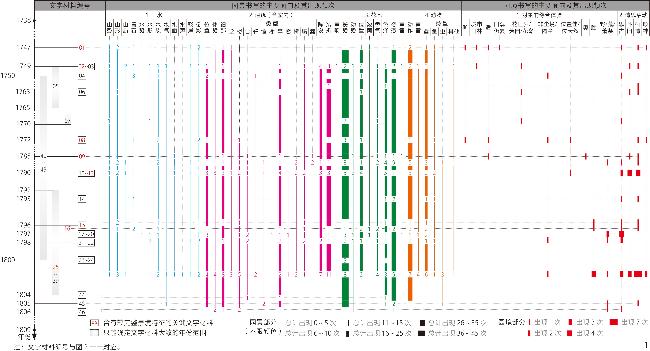
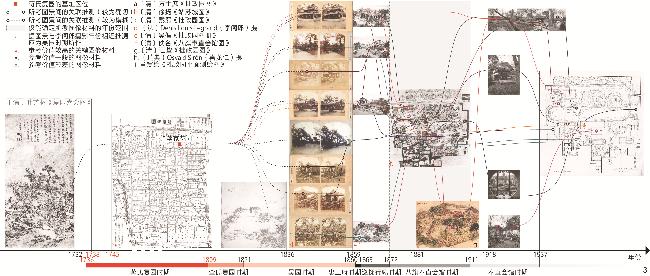
[Methods] This research employs targeted searches within the Suzhou Library’s Ancient Book Database to augment the existing corpus of literature pertaining to Jiang’s Fu Garden. Concurrently, a typological approach is employed to classify and illustrate the elements of “j ǐ ng” (scenery), the experience of “jìng” (realm), and the temporal distribution of the written content present in the aforementioned literature. This is done with the objective of elucidating the clues and basic characteristics of the Fu Garden’s scenery-realm subsequent to its restoration. Subsequently, image materials either directly and indirectly related to the garden in question are collected and organized. By identifying and correlating the content of the images, the potential and limitations of schematic layout recovery of the Fu Garden are elucidated, and the distinctive significance of a core scenic area named Yuanxiang Hall within the garden for understanding the value orientation of the Fu Garden’s restoration is highlighted, as well as the feasible conditions for its research. Based on the above macroscopic understanding of textual and image materials, a further step is to conduct a close reading and analysis of key historical materials in order to answer the key questions.
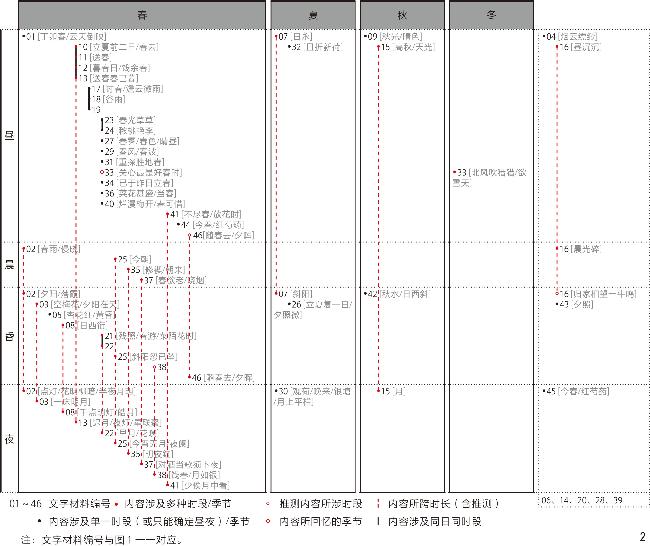
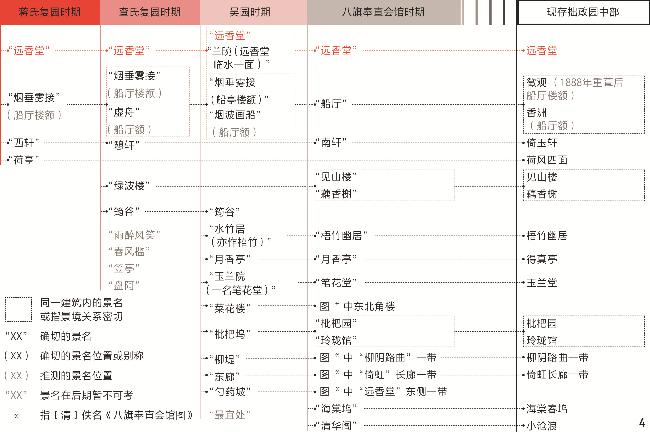
[Results] 1) In response to the question of what had been restored, it can be said that there are two aspects to consider: The construction of scenery and the experience of realm. In terms of scenery construction, the research reveals the “Chi Shang Shan Lin” (hills and groves above the pool) as the core characteristic of the garden’s scenery, and the interaction between and transformation of various scenes within this core scenery provide the key basis for achieving the garden’s realm experience of “Shan Lin Zhi Xing” (nature of hills and groves) and “Xian Kuang Zhi Yu” (leisurely and spacious domain). Subsequently, the effects and sensory experience of other closely related elements of the core scenery constructed are summarized. These include the natural positioning and appropriate utility of the garden’s architectures, the continuous fragrance and seasonal scenery of flowers and trees, and the scene where animals, like birds and fish, return to their dwellings and are naturally drawn toward humans. In terms of realm experience, the research analyzes the generation of typical comprehensive experience and emotional activities in the garden from the perspectives of “Dong You Jian Jing Can” (roaming in motion and meditation in stillness) and “Ya Ji Yu Yuan Ju” (elegant gathering and garden dwelling), pointing out that the former, in short-term composite perceptions, is more likely to form differentiated results due to changes in mood, season, and combinations of dynamic and static appreciation, while the latter, through long-term interactive attachment and more nuanced examinations over time, can make the emotional sustenance of guests in the garden more genuine and varied. 2) In response to the question of what qualified the garden as a restoration of the past scenery-realm, the focus is on the “Yuanxiang Hall” area as a clue to explore the value orientation of the Fu Garden’s restoration. In particular, the starting point is the schematic layout recovery of this area. Then, a comparison of the design intent and scenery-realm between this area and its predecessor named “Ruoshu Hall” in the Wang’s Humble Administrator’s Garden, reveals that the character “fu” (restoration) in the name of the Fu Garden not only refers to the actual restoration of the scenery-realm, but also emphasizes the continuation of the deeper intentions of the garden design.
[Conclusion] The research reviews the research process, rethinks the methods of extracting features of the scenery-realm of historical gardens, and considers the approaches to understanding the restoration tradition of ancient Chinese gardens.
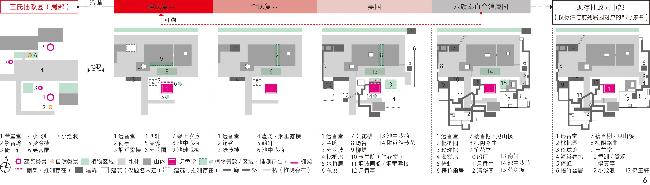
图3 蒋氏复园相关图像材料中图景内容的关联分析Fig. 3 Correlation analysis of scenery contents in images related to Jiang’s Fu Garden |
 红蓼间,凉飙所过,拂拂送香。陂塘徐回,余韵木歇,炎歊干净息,清意盈襟。‘以风格高,而及人者,靡尽也。’”[29]可以看到,此处“远香”意取周敦颐“香远益清”之说。具体而言,因拂拂送香、不易解散、清意盈襟等特点,莲香常被用来与高格作比,故“香远益清”一如人以高格远播、影响不尽(“以风格高,而及人者,靡尽也”)。若以这一释读为基础,再结合园记中沈氏对此前“竞豪侈、饰土木者”改园行径的批判,以及对蒋棨不弃名区、修复废园用心之厚的赞扬,或可推测堂额除状景之用,更有以“远香”喻高品,继而彪炳园主珍视前园“殚心规画者”,力行重修,恢复旧观的深层寄寓。由是观之,对于故园景境记忆的追摹,可能同样是理解远香堂景意的突出线索。
| [1] |
魏嘉瓒. 苏州古典园林史[M]. 上海: 上海三联书店, 2005.
WEI J Z. History of Suzhou Classical Gardens[M]. Shanghai: Shanghai Joint Publishing Company, 2005.
|
| [2] |
乐志.从拙政园的变迁史看当代的传统园林遗产保护[C]//张青萍.传承·交融: 陈植造园思想国际研讨会暨园林规划设计理论与实践博士生论坛论文集.北京: 中国林业出版社, 2009: 129-132.
YUE Z. Chinese Garden Heritage Reservation Study Based on the History of Zhuozheng Garden[C]//ZHANG Q P. Inheritance and Integration: Proceedings of the International Symposium on Chen Zhi's Gardening Thought and the Doctoral Forum on the Theory and Practice of Garden Planning and Design. Beijing: China Forestry Publishing House, 2009: 129-132.
|
| [3] |
童寯.江南园林志: 典藏版[M].2版.北京: 中国建筑工业出版社, 2014: 61.
TONG J. Record of Jiangnan Gardens: Collector’s Edition[M]. 2nd ed. Beijing: China Architecture & Building Press, 2014: 61.
|
| [4] |
蒋德骅.娄关蒋氏本支录右编: 卷九[M].苏州: 吴县蒋氏, 1905(清光绪三十一年).
JIANG D H. Louguan Jiangshi Benzhilu Youbian: Vol. 9[M]. Suzhou: Wuxianjiangshi, 1905.
|
| [5] |
沈德潜.复园记[M]//沈德潜.沈归愚诗文全集: 卷四.清刻本.[出版地不详]: 教忠堂, [1764].
SHEN D Q. Fuyuan Ji[M]//SHEN D Q. Shen Guiyu Shiwen Quanji: Vol. 4. Qing Dynasty’s Block-Printed Edition. [S.l.]: Jiaozhong Tang, [1764].
|
| [6] |
叶廷琯.鸥陂渔话: 卷三[M].刻本. [出版地不详: 出版者不详], 1870(清同治九年).
YE T G. Oubei Yuhua: Vol. 3[M]. Block-Printed Edition. [S.l.: s.n.], 1870.
|
| [7] |
金学诗.播琴堂诗集: 卷十一[M].清乾隆刻本.[出版地不详: 出版者不详], [1786].
JIN X S. Boqin Tang Shiji: Vol. 11[M]. Block-Printed Edition in Qianlong Period of Qing Dynasty. [S.l.: s.n.], [1786].
|
| [8] |
李绳.耘圃诗钞: 壬编[M].刻本.长洲: 芸业斋, 1794(清乾隆五十九年).
LI S. Yunpu Shichao: Renbian[M]. Block-Printed Edition. Changzhou: Yunye Zhai, 1794.
|
| [9] |
沈钦韩. 过复园作[M]//沈钦韩.幼学堂诗稿: 卷七.续刻本. [出版地不详: 出版者不详], 1828(清道光八年).
SHEN Q H. Guo Fuyuan Zuo[M]//SHEN Q H. Youxue Tang Shigao: Vol. 7. Continued Block-Printed Edition. [S.l.: s.n.], 1828.
|
| [10] |
查元偁.复园十咏[M]//查元偁.臶斋诗余.刊本. [出版地不详: 出版者不详], 1871(清同治十年).
ZHA Y C. Fuyuan Shiyong[M]//ZHA Y C. Jian Zhai Shiyu. Block-Printed Edition. [S.l.: s.n.], 1871.
|
| [11] |
顾凯. 中国传统园林中的景境观念与营造[J]. 时代建筑, 2018 4): 24-31
GU K. The Conception and Making of Scenery and Poetic World in Traditional Chinese Gardens[J]. Time + Architecture, 2018 4): 24-31.
|
| [12] |
温子申, 冯仕达. 园林体验的再理解: 《文衡山拙政园诗画册》探读[J]. 中国园林, 2021, 37(4): 30-35
WEN Z S, FUNG S. Rethinking Landscape Experience: Preliminary Reading of a Painted Album of the Garden of Artless Administration by Wen Zhengming[J]. Chinese Landscape Architecture, 2021, 37(4): 30-35.
|
| [13] |
陆磊, 范颖佳, 金荷仙, 等. 时景起源与变迁研究[J]. 中国园林, 2024, 40(5): 40-48
LU L, FAN Y J, JIN H X, et al. Research on the Origin and Changes of Shi Jing[J]. Chinese Landscape Architecture, 2024, 40(5): 40-48.
|
| [14] |
张英霖.对乾隆姑苏城图的一些探索[M]//曹婉如.中国古代地图集(清代).北京: 文物出版社, 1997: 131-137.
ZHANG Y L. Some Explorations of the Qianlong Gusucheng Tu[M]//CAO W R. Ancient Chinese Atlas (Qing Dynasty). Beijing: Cultural Relics Press, 1997: 131-137.
|
| [15] |
李翰文.八旗奉直会馆四宪创建记[M]//王稼句.苏州园林历代文钞.上海: 上海三联书店, 2008: 44.
LI H W. Baqi Fengzhi Huiguan Sixian Chuangjian Ji[M]//WANG J J. Selected Literary Works of Suzhou Gardens Through the Dynasties. Shanghai: Shanghai Joint Publishing Company, 2008: 44.
|
| [16] |
谢元淮.养默山房诗稿: 卷二十七[M].刻本. [出版地不详: 出版社不详], 1875(清光绪元年).
XIE Y H. Yangmo Shanfang Shigao: Vol. 27[M]. Block-Printed Edition. [S.l.: s.n.], 1875.
|
| [17] |
翁心存.翁心存日记[M].北京: 中华书局, 2011: 646.
WENG X C. WENG Xincun’s Diary. Beijing: Zhonghua Book Company, 2011: 646.
|
| [18] |
范君博. 吴门园墅文献新编(下)[M]. 上海: 文汇出版社, 2019.
FAN J B. New Compilation of Literatures of Wumenyuanshu (Volume 2)[M]. Shanghai: Wenhui Press, 2019.
|
| [19] |
毛曙.过复园作园构于前代后经荒废迩年有力者得而新之故以复名焉[M]//毛曙.野客斋诗集: 卷八.续刻本. [出版地不详: 出版者不详], 1776(清乾隆四十一年).
MAO S. Guo Fuyuan Zuo Yuan Gouyu Qiandai Houjing Huangfei Er’nian Youlizhe De Er Xinzhi Gu Yi Fu Ming Yan[M]//MAO S. Yeke Zhai Shiji: Vol. 8. Continued Block-Printed Edition. [S.l.: s.n.], 1776.
|
| [20] |
王芑孙.渊雅堂编年诗稿: 卷十三[M].刻本. [出版地不详: 出版者不详], 1803(清嘉庆八年).
WANG Q S. Yuanya Tang Biannian Shigao: Vol. 13[M]. Block-Printed Edition. [S.l.: s.n.], 1803.
|
| [21] |
陈基.味清堂诗补钞[M].刻本. [出版地不详: 出版者不详], [1750—1800].
CHEN J. Weiqing Tang Shi Buchao[M]. Block-Printed Edition. [S.l.: s.n.], [1750−1800].
|
| [22] |
潘奕藻.同陆谨廷默斋弟云浦游复园作[M]//潘奕藻.听雨楼诗稿: 卷三.刻本.苏州: 吴门毛上珍局, 1816(清嘉庆二十一年).
PAN Y Z. Tong Lu Jinting Mozhai Di Yunfu You Fuyuan Zuo[M]//PAN Y Z. Tingyu Lou Shigao: Vol. 3. Block-Printed Edition. Suzhou: Wumen Maoshangzhenju, 1816.
|
| [23] |
范烟桥. 拙政园志: 集诗附词[M].稿本. 苏州: 范烟桥, 1964.
FAN Y Q. Zhuozheng Yuan Zhi: Jishi Fuji[M]. Manuscript Edition. Suzhou: Fan Yanqiao, 1964.
|
| [24] |
蒋业晋.信夫叔棨雅集复园赋呈[M]//蒋业晋.立厓诗钞: 卷二.刻本.苏州: 交翠堂, 1799(清嘉庆四年).
JIANG Y J. Xinfu Shu Qi Yaji Fuyuan Fucheng[M]//JIANG Y J. Liya Shichao: Vol. 2. Block-Printed Edition. Suzhou: Jiaocui Tang, 1799.
|
| [25] |
顾日新.复园[M]//顾日新.寸心楼诗集: 卷十五.清嘉庆刻本.[出版地不详: 出版者不详], [1812].
GU R X. Fuyuan[M]//GU R X. Cunxin Lou Shiji: Vol. 15. Block-Printed Edition in Jiaqing Period of Qing Dynasty. [S.l.: s.n.], [1812].
|
| [26] |
尤兴诗.延月舫初集: 卷三[M].清刻本.[出版地不详: 出版者不详], [1805].
YOU X S. Yanyue Fang Chuji: Vol. 3. Qing Dynasty’s Block-Printed Edition. [S.l.: s.n.], [1805].
|
| [27] |
鲁安东. 解析避居山水: 文徵明1533年《拙政园图册》空间研究[J]. 建筑文化研究, 2011, 269(324): 269-324.
LU A D. Deciphering the Reclusive Landscape: A Study of Wen Zhengming's 1533 Album of the Garden of the Unsuccessful Politician[J]. Studies of Architecture & Culture, 2011, 269(324): 269-324.
|
| [28] |
黄晓, 刘珊珊, 周宏俊. 明代沈周《东庄图》图式源流探析[J]. 风景园林, 2017, 24(12): 44-51
HUANG X, LIU S S, ZHOU H J. The Source and Influence of Schemata in Shen Zhou’s Dongzhuang Painting in Ming Dynasty[J]. Landscape Architecture, 2017, 24(12): 44-51.
|
| [29] |
沈德潜.远香亭记[M]//沈德潜.归愚文钞: 卷九.清刻本. [出版地不详]: 教忠堂, [1764].
SHEN D Q. Yuanxiang Ting Ji[M]//SHEN D Q. Guiyu Wenchao: Vol. 9. Qing Dynasty’s Block-Printed Edition. [S.l.]: Jiaozhong Tang, [1764].
|
/
| 〈 |
|
〉 |