



|
彭文英(1967-),女,博士,教授,主要从事区域经济、土地资源管理研究. E-mail: pengwenying0316@163.com |
收稿日期: 2024-09-11
修回日期: 2024-11-06
网络出版日期: 2026-03-11
基金资助
北京市社会科学基金重大项目(19ZDA03)
Measurement and obstacle factors of ecological level of new quality productive forces in the Yellow River Basin
Received date: 2024-09-11
Revised date: 2024-11-06
Online published: 2026-03-11
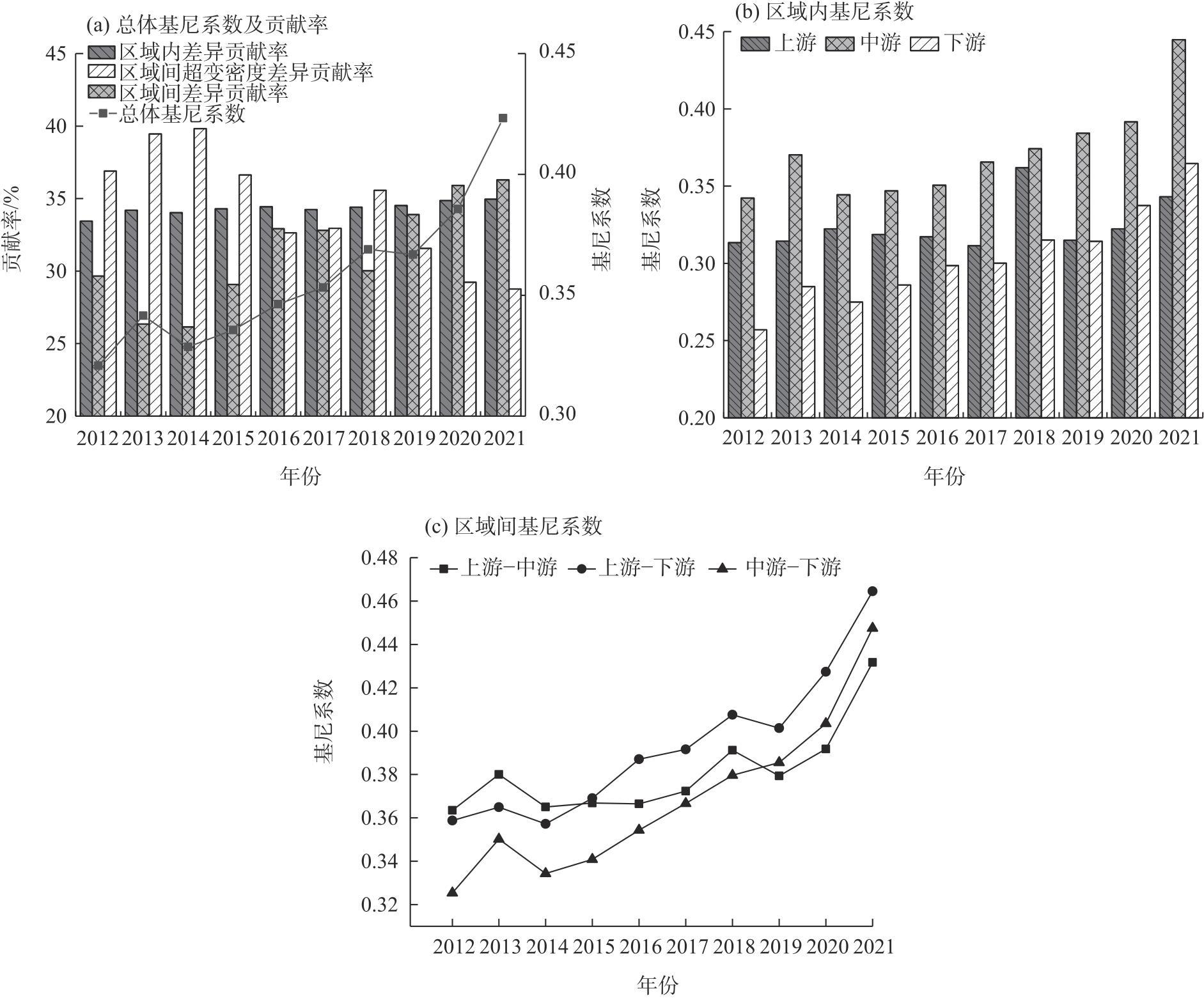
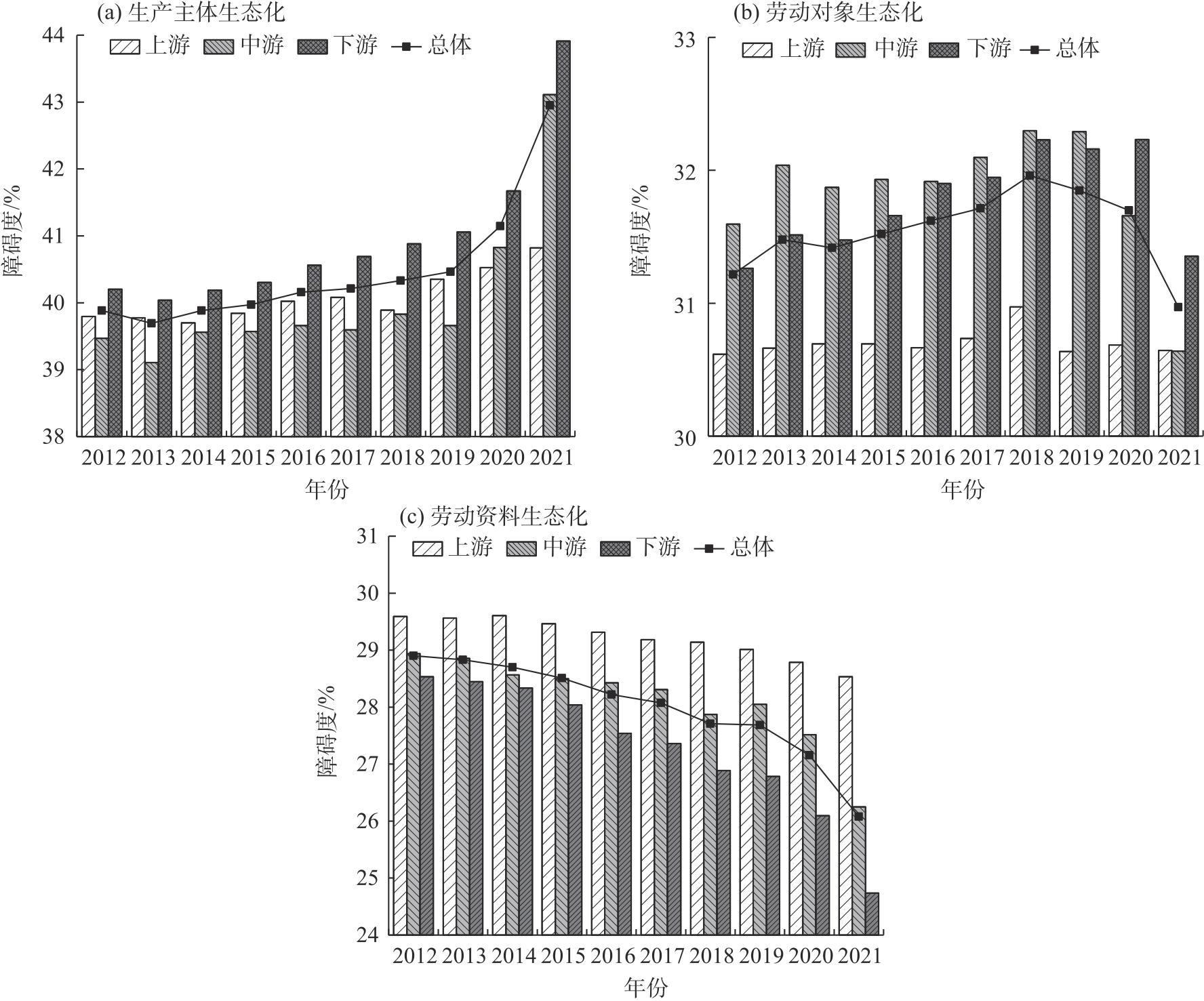
新质生产力本身就是绿色生产力,绿色发展、生态现代化对于推进构建新质生产力具有重要意义。基于生产力理论的生态思想,构建了包含生产主体生态化、劳动资料生态化、劳动对象生态化的新质生产力生态化水平测度指标体系,利用2012—2021年黄河流域地级市面板数据,采用熵值法、基尼系数分解法、障碍度模型,考察了黄河流域新质生产力生态化水平及其障碍因素。 结果表明:(1) 黄河流域新质生产力生态化水平整体呈上升趋势,新质生产力生态化水平区域差异不断增大,上、中、下游间差异对总体区域差异的影响最大。(2) 生产主体生态化障碍度最大,且呈现逐年上升的趋势,劳动资料生态化、劳动对象生态化障碍度呈现下降趋势,战略性新兴产业一直是阻碍新质生产力生态化水平提升的最大障碍因子。(3) 黄河流域发展新质生产力应重视生态化路径,加大科技创新投入,努力培养高素质创新型人才,增强劳动者的生态意识和生态科技创新能力,加快发展生态战略性新兴产业,促进上、中、下游之间的协调发展,有效推动黄河流域新质生产力发展。
彭文英 , 赵爽 , 单子溢 , 陈泽宇 . 黄河流域新质生产力生态化水平测度与障碍因子[J]. 干旱区地理, 2025 , 48(9) : 1648 -1659 . DOI: 10.12118/j.issn.1000-6060.2024.543
Green productivity is a new type of productive force, and green development and ecological modernization are important for the construction of new types of productive forces. Based on the ecological thinking of productivity theory, a measurement index system for the ecological level of the new type of productive forces, including the ecological transformation of production subjects, labor materials, and labor objects, was constructed. Panel data from prefecture-level cities in the Yellow River Basin of China from 2012 to 2021 were used to examine the ecological level of new quality productive forces in the Yellow River Basin and its obstacle factors. The entropy method, Gini coefficient decomposition, and the obstacle degree model were used. The results indicate that: (1) The overall ecological level of new quality productive forces in the Yellow River Basin is on the rise, and regional differences in ecological level of new quality productive forces are constantly increasing. The differences among upstream, midstream, and downstream show the greatest impact on overall regional differences. (2) The degree of the obstacle of the ecological transformation of production subjects is the highest and shows an increasing trend year by year, whereas the obstacle degree of the ecological transformation of labor materials and labor objects shows a decreasing trend. Emerging strategic industries have always been the main obstacle to the improvement of the ecological level of new quality productive forces. (3) The development of new quality productive forces in the Yellow River Basin should attach importance to the ecological path, increase investment in scientific and technological innovation, strive to cultivate high-quality innovative talent, enhance workers’ ecological awareness and ecological technology innovation ability, accelerate the development of ecological strategic emerging industries, promote coordinated development between upstream, midstream, and downstream, and effectively promote the development of new quality productive forces in the Yellow River Basin.
表1 新质生产力生态化水平测度指标体系Tab. 1 Index system for measuring the ecological level of new quality productive forces |
| 准则层 | 二级指标 | 表征指标 | 指标测度 | 权重 | 属性 |
|---|---|---|---|---|---|
| 生产主体生态化 | 高素质人才 | 受教育程度(X1) | 普通高等学校在校生数 | 0.1528 | + |
| 知识密集型人员(X2) | 信息传输、软件和信息技术服务业与 科学研究和技术服务业人数 | 0.1856 | + | ||
| 生态意识 | 环保投入(X3) | 节能环保支出 | 0.0569 | + | |
| 劳动资料生态化 | 能源利用生态化 | 能源节约利用(X4) | 单位GDP能源消耗量 | 0.0063 | - |
| 设施先进性 | 数字基础设施(X5) | 互联网宽带接入用户数 | 0.0711 | + | |
| 科技创新性 | 数字化水平(X6) | 数字经济指数 | 0.0280 | + | |
| 绿色创新水平(X7) | 绿色专利授权总量 | 0.1889 | + | ||
| 劳动对象生态化 | 生态科技产业 | 战略性新兴产业(X8) | 人工智能企业数量 | 0.2584 | + |
| 产业结构高级化(X9) | 第三产业增加值/第二产业增加值 | 0.0328 | + | ||
| 生态生产过程 | 绿色清洁生产(X10) | 工业固体废物综合利用率 | 0.0140 | + | |
| 生态环境 | 绿化情况(X11) | 建成区绿化覆盖率 | 0.0052 | + |
注:“+”表示正向指标;“-”表示负向指标。 |
表2 黄河流域新质生产力生态化水平提升的主要障碍因子Tab. 2 Main obstacles to the improvement of ecological level of new quality productive forces in the Yellow River Basin |
| 年份 | 区域 | 障碍因子(障碍度/%) | ||||
|---|---|---|---|---|---|---|
| 第1障碍因子 | 第2障碍因子 | 第3障碍因子 | 第4障碍因子 | 第5障碍因子 | ||
| 2012 | 上游 | X8(26.92) | X7(19.65) | X2(18.83) | X1(15.26) | X5(7.26) |
| 中游 | X8(27.64) | X7(19.99) | X2(18.45) | X1(15.15) | X5(7.06) | |
| 下游 | X8(27.74) | X7(19.91) | X2(19.32) | X1(15.00) | X5(6.86) | |
| 2018 | 上游 | X8(27.48) | X7(19.82) | X2(18.56) | X1(15.58) | X5(6.99) |
| 中游 | X8(28.24) | X7(19.94) | X2(18.53) | X1(15.49) | X5(6.53) | |
| 下游 | X8(28.70) | X2(19.82) | X7(19.59) | X1(15.35) | X5(5.98) | |
| 2019 | 上游 | X8(27.35) | X7(19.76) | X2(19.03) | X1(15.54) | X5(6.91) |
| 中游 | X8(28.29) | X7(20.20) | X2(18.63) | X1(15.35) | X5(6.45) | |
| 下游 | X8(28.80) | X7(19.82) | X2(19.79) | X1(15.43) | X3(5.84) | |
| 2020 | 上游 | X8(27.37) | X7(19.66) | X2(19.10) | X1(15.58) | X5(6.82) |
| 中游 | X8(27.68) | X7(19.82) | X2(19.23) | X1(15.72) | X5(6.32) | |
| 下游 | X8(28.73) | X2(19.81) | X7(19.07) | X1(15.61) | X3(6.25) | |
| 2021 | 上游 | X8(27.15) | X7(19.45) | X2(19.25) | X1(15.66) | X5(6.78) |
| 中游 | X8(25.97) | X2(19.13) | X7(18.81) | X1(17.06) | X3(6.93) | |
| 下游 | X8(27.63) | X2(20.81) | X7(18.05) | X1(16.26) | X3(6.84) | |
| [1] |
人民日报社. 中央经济工作会议在北京举行[N]. 人民日报, 2023-12-13(001).
[
|
| [2] |
习近平. 发展新质生产力是推动高质量发展的内在要求和重要着力点[J]. 求是, 2024(11): 4-8.
[
|
| [3] |
周成, 赵亚玲, 张旭红, 等. 黄河流域城市生态韧性与效率时空演化特征及协调发展分析[J]. 干旱区地理, 2023, 46(9): 1514-1523.
[
|
| [4] |
李小建, 文玉钊, 李元征, 等. 黄河流域高质量发展: 人地协调与空间协调[J]. 经济地理, 2020, 40(4): 1-10.
[
|
| [5] |
刘建华, 闫静, 王慧扬, 等. 黄河流域新质生产力水平的动态演进及障碍因子诊断[J]. 人民黄河, 2024, 46(4): 1-7, 14.
[
|
| [6] |
黄群慧, 盛方富. 新质生产力系统: 要素特质、结构承载与功能取向[J]. 改革, 2024(2): 15-24.
[
|
| [7] |
赵峰, 季雷. 新质生产力的科学内涵、构成要素和制度保障机制[J]. 学习与探索, 2024(1): 92-101, 175.
[
|
| [8] |
李政, 廖晓东. 发展“新质生产力”的理论、历史和现实“三重”逻辑[J]. 政治经济学评论, 2023, 14(6): 146-159.
[
|
| [9] |
刘伟. 科学认识与切实发展新质生产力[J]. 经济研究, 2024, 59(3): 4-11.
[
|
| [10] |
沈坤荣, 程果, 赵倩. 以新质生产力增强高质量发展新动能[J]. 学术研究, 2024(4): 87-93.
[
|
| [11] |
廖小明, 杨懿. 唯物史观视域下新质生产力的生态意涵探赜[J]. 理论与改革, 2024(5): 24-39, 161-162.
[
|
| [12] |
李敦瑞. 新质生产力的生态意蕴和推进路向[J]. 山东师范大学学报 (社会科学版), 2024, 69(2): 92-103.
[
|
| [13] |
朱富显, 李瑞雪, 徐晓莉, 等. 中国新质生产力指标构建与时空演进[J]. 工业技术经济, 2024, 43(3): 44-53.
[
|
| [14] |
张哲, 李季刚, 汤努尔·哈力克. 中国新质生产力发展水平测度与时空演进[J]. 统计与决策, 2024, 40(9): 18-23.
[
|
| [15] |
卢江, 郭子昂, 王煜萍. 新质生产力发展水平、区域差异与提升路径[J]. 重庆大学学报 (社会科学版), 2024, 30(3): 1-17.
[
|
| [16] |
韩文龙, 张瑞生, 赵峰. 新质生产力水平测算与中国经济增长新动能[J]. 数量经济技术经济研究, 2024, 41(6): 5-25.
[
|
| [17] |
中共中央宣传部. 习近平总书记系列重要讲话读本[M]. 北京: 人民出版社, 2016: 123.
[Publicity Department of the CPC Central Committee. Reader of general secretary Xi Jinping’s series of important speeches[M]. Beijing: People’s Publishing House, 2016: 123.]
|
| [18] |
|
| [19] |
李茜, 胡昊, 李名升, 等. 中国生态文明综合评价及环境、经济与社会协调发展研究[J]. 资源科学, 2015, 37(7): 1444-1454.
[
|
| [20] |
薛超凯, 陈凯华, 王全景, 等. 黄河流域产业发展现状、问题与对策建议[J]. 中国科学院院刊, 2024, 39(6): 971-984.
[
|
/
| 〈 |
|
〉 |