



|
石卓达(2000-),男,硕士研究生,主要从事经济统计研究. E-mail: shizhuoda@xjshzu.com |
收稿日期: 2024-09-01
修回日期: 2024-11-26
网络出版日期: 2026-03-11
基金资助
国家社会科学基金项目(20XJY013)
Measurement and influencing factors of high-quality development of tourism economy: A case of Xinjiang
Received date: 2024-09-01
Revised date: 2024-11-26
Online published: 2026-03-11
石卓达 , 杨宏伟 . 旅游经济高质量发展测度及影响因素分析——以新疆为例[J]. 干旱区地理, 2025 , 48(7) : 1233 -1242 . DOI: 10.12118/j.issn.1000-6060.2024.523
As the ninth largest industry cluster in Xinjiang, the high-quality development of the tourism economy plays a leading role in the region’s modernization in China. This study constructs a seven-dimensional measurement system to evaluate the high-quality development of the tourism economy based on three perspectives: quality, efficiency, and tourist experience. The level of high-quality development in Xinjiang’s tourism economy from 2008 to 2023 is measured, employing geographic information systems spatial visualization to analyze its spatial and temporal evolution characteristics. In addition, the study identifies obstacle sources using the obstacle degree model and explores influencing factors through factor analysis and gray correlation analysis. The results indicate the following. (1) The initial level of high-quality development of the tourism economy in Xinjiang is low, but it has improved rapidly since the introduction of the “tourism to develop Xinjiang” strategy in 2018. (2) Significant spatial and temporal differences in the level of high-quality development are observed within Xinjiang’s tourism economy. The overall trend shows strong development in the north and weaker development in the south, with the east and west exhibiting coherence. This is specifically reflected in the cities of Urumqi, the Ili Kazakh Autonomous Prefecture, the Altay Prefecture, and the Kashgar Prefecture, demonstrating a “four-wheel drive” evolution and a “core of three points” symbiotic development pattern. (3) The overall high-quality development of the tourism economy in Xinjiang is primarily constrained by regional innovation capacity. Regions with lower levels of high-quality development face challenges due to a lack of tourism market attractiveness and underdeveloped cultural and tourism resources. (4) Key factors affecting the high-quality development of Xinjiang’s tourism economy include information services, economic support, and tourism transportation, whereas resource elements and tourism services are considered secondary factors. Notably, factors such as increased Internet accessibility, rising disposable incomes, higher fixed-asset investment in the tertiary industry, and expanded highway infrastructure significantly affect the high-quality development of Xinjiang’s tourism economy.
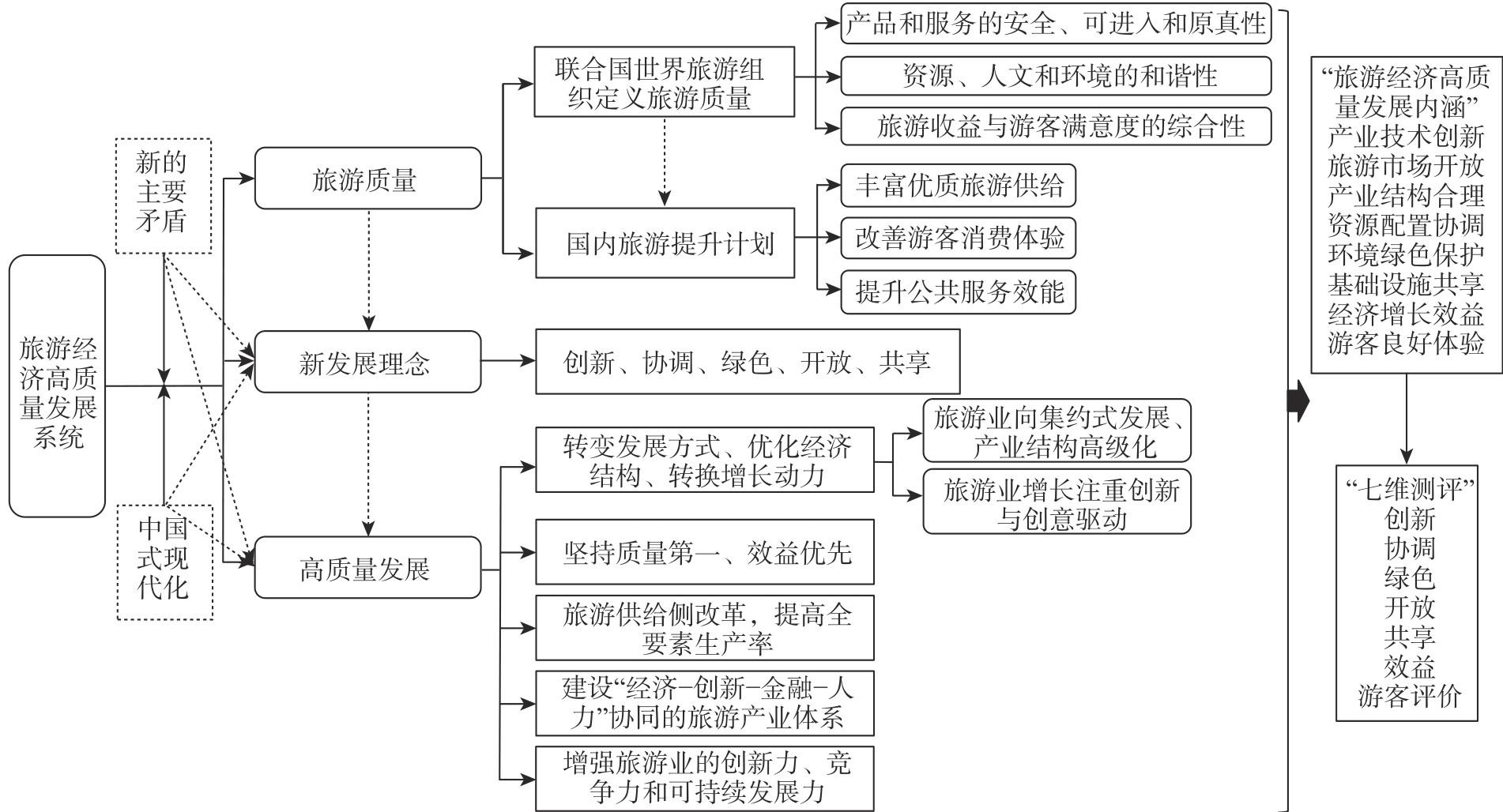
表1 旅游经济高质量发展水平的测度体系Tab. 1 Measurement system of high-quality development level of the tourism economy |
| 目标层 | 维度层 | 指标层 | 具体指标 | 指标属性 | 参考依据 |
|---|---|---|---|---|---|
| 旅游经济高质量发展 | 创新 | 创新投资 | 旅游业R&D经费投入 | 正 | [7,19-20] |
| 创新人才 | 旅游院校在校学生数 | 正 | |||
| 业态创新 | 体育旅游基地数 | 正 | |||
| 康养旅游项目数 | 正 | ||||
| 智慧旅游 | 智慧旅游景区数 | 正 | |||
| 协调 | 区域旅游发展协调 | 地区旅游总收入/全国旅游总收入 | 正 | [4,6,21] | |
| 旅游经济供需协调 | 旅游总收入/第三产业经济生产总值 | 正 | |||
| 住宿与餐饮业收入/旅游总收入 | 负 | ||||
| 绿色 | 旅游生态环境 | 人均绿化面积 | 正 | [8,10,21-22] | |
| 空气质量优良率 | 正 | ||||
| 旅游污染减排 | 废气排放总量×旅游收入/GDP | 负 | |||
| 废水排放总量×旅游收入/GDP | 负 | ||||
| 区域垃圾处理能力 | 生活垃圾处理率 | 正 | |||
| 开放 | 入境旅客 | 入境旅游者人数/总旅游者人数 | 正 | [6,16,20] | |
| 旅游外汇 | 旅游创汇收入/GDP | 正 | |||
| 入境旅客消费水平 | 入境旅客日均消费额 | 正 | |||
| 外商投资 | 外商投资/GDP | 正 | |||
| 共享 | 文化资源共享 | 美术馆、博物馆和文化馆数量 | 正 | [7,9,16,21] | |
| 旅游就业贡献 | 旅游直接从业人员占比 | 正 | |||
| 旅游交通服务 | 水陆空客运总量 | 正 | |||
| 游憩资源共享 | 公园绿地面积/地区人口数 | 正 | |||
| 效益 | 旅游收入 | 旅游总收入/GDP | 正 | [8,16,20,23-24] | |
| 旅游经济增长 | 旅游收入增长率 | 正 | |||
| 旅游市场 | 旅游人次增长率 | 正 | |||
| 旅游业劳动生产率 | 旅游总收入/旅游从业人数 | 正 | |||
| 旅游资本产出率 | 旅游业总收入/旅游业固定资产投资 | 正 | |||
| 游客评价 | 游客游后满意度 | 游客积极情感倾向评论占比 | 正 | [17-18] | |
| 3A级以上旅游景区日均客流量 | 正 | ||||
| 3A级以上旅游景区大众点评评分 | 正 | ||||
| 3A级以上旅游景区去哪儿旅行网评分 | 正 |
表2 2008—2023年新疆旅游经济高质量发展水平Tab. 2 High-quality development levels of tourism economy in Xinjiang from 2008 to 2023 |
| 年份 | 创新水平 | 协调水平 | 绿色水平 | 开放水平 | 共享水平 | 效益水平 | 游客评价指数 | 综合水平 |
|---|---|---|---|---|---|---|---|---|
| 2008 | 2.171 | 2.796 | 7.625 | 3.561 | 1.919 | 0.824 | 2.007 | 2.289 |
| 2009 | 1.921 | 3.448 | 7.136 | 4.213 | 1.634 | 1.388 | 1.828 | 2.334 |
| 2010 | 2.641 | 3.079 | 6.699 | 3.851 | 1.972 | 1.918 | 1.983 | 2.556 |
| 2011 | 3.020 | 3.208 | 6.096 | 4.338 | 2.252 | 2.271 | 2.170 | 2.791 |
| 2012 | 2.203 | 4.092 | 5.490 | 4.288 | 1.312 | 2.524 | 2.093 | 2.577 |
| 2013 | 2.534 | 5.617 | 4.324 | 4.304 | 1.895 | 4.623 | 1.927 | 3.103 |
| 2014 | 2.316 | 6.070 | 2.450 | 3.963 | 3.253 | 5.885 | 2.140 | 3.492 |
| 2015 | 1.828 | 3.353 | 3.785 | 3.272 | 2.646 | 6.335 | 1.930 | 3.206 |
| 2016 | 1.850 | 2.525 | 3.707 | 3.872 | 6.663 | 6.206 | 1.911 | 3.804 |
| 2017 | 2.916 | 2.766 | 4.137 | 2.578 | 6.292 | 6.776 | 1.912 | 3.929 |
| 2018 | 5.853 | 3.765 | 4.483 | 3.240 | 7.490 | 6.653 | 2.123 | 4.684 |
| 2019 | 7.017 | 4.460 | 3.973 | 6.218 | 9.342 | 6.040 | 2.057 | 5.254 |
| 2020 | 7.527 | 5.389 | 6.681 | 0.465 | 8.057 | 5.240 | 1.968 | 4.660 |
| 2021 | 6.919 | 5.567 | 5.573 | 1.332 | 8.770 | 5.986 | 2.151 | 4.916 |
| 2022 | 7.696 | 6.154 | 6.648 | 2.316 | 9.172 | 5.349 | 2.107 | 5.125 |
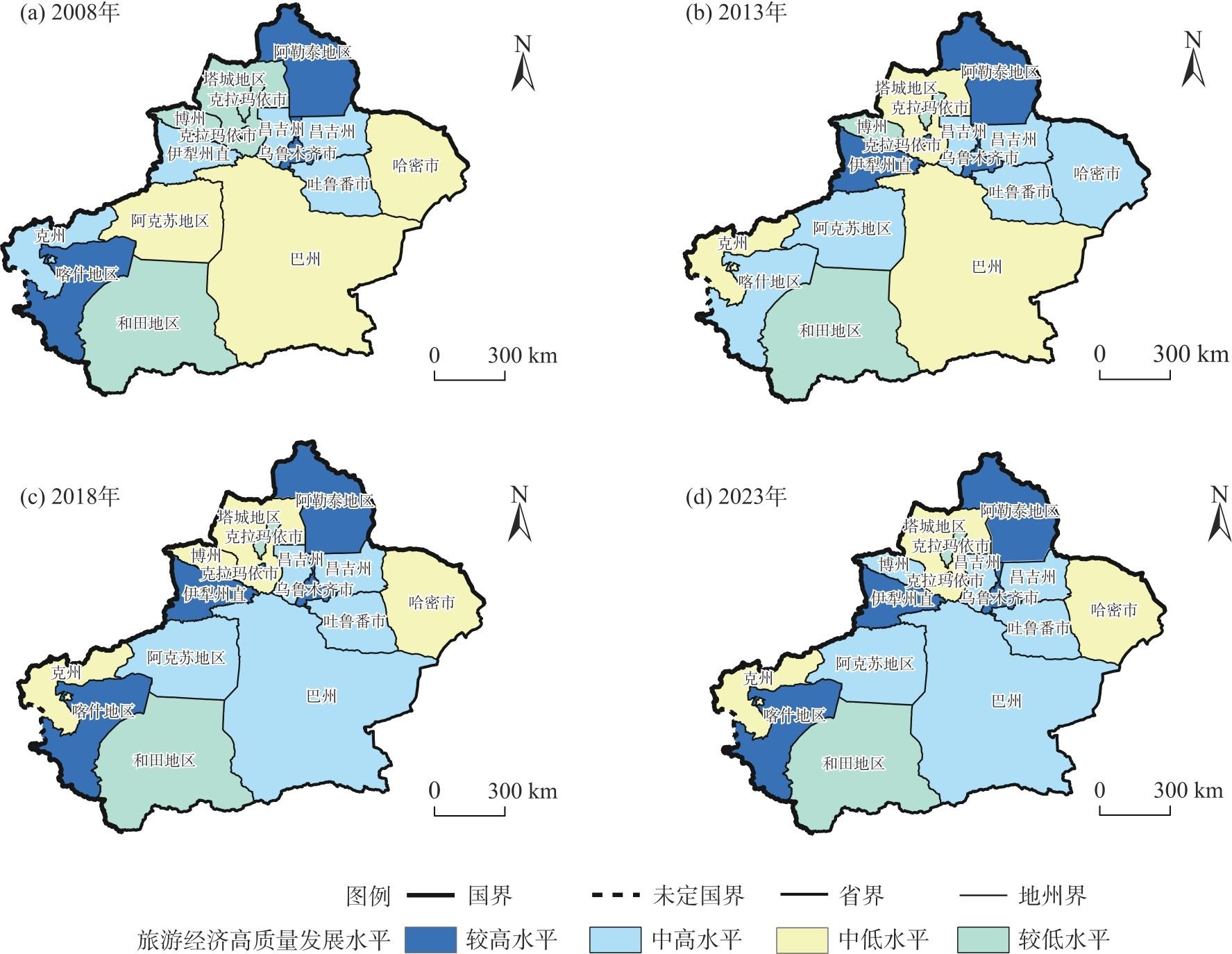
| 2023 | 8.459 | 7.034 | 6.995 | 4.653 | 9.097 | 8.110 | 2.094 | 6.027 |
表3 新疆旅游经济高质量发展主要障碍来源Tab. 3 Sources of obstacle factors to high-quality development of tourism economy in Xinjiang |
| 地区 | 主要障碍来源 | 地区 | 主要障碍来源 | ||
|---|---|---|---|---|---|
| 所在维度 | 障碍度/% | 所在维度 | 障碍度/% | ||
| 新疆总体 | 创新 | 10.961 | 阿克苏地区 | 创新 | 12.637 |
| 乌鲁木齐市 | 协调 | 8.077 | 克州 | 绿色 | 9.778 |
| 克拉玛依市 | 效益 | 12.374 | 喀什地区 | 绿色 | 9.239 |
| 吐鲁番市 | 绿色 | 9.235 | 和田地区 | 效益 | 11.247 |
| 哈密市 | 创新 | 11.162 | 伊犁州直 | 协调 | 8.361 |
| 昌吉州 | 协调 | 9.778 | 塔城地区 | 共享 | 10.542 |
| 博州 | 创新 | 10.039 | 阿勒泰地区 | 协调 | 8.971 |
| 巴州 | 协调 | 9.353 | |||
注:昌吉州、伊犁州直、博州、巴州、克州分别为昌吉回族自治州、伊犁哈萨克自治州直属县市、博尔塔拉蒙古自治州、巴音郭楞蒙古自治州、克孜勒苏柯尔克孜自治州的简称。 |
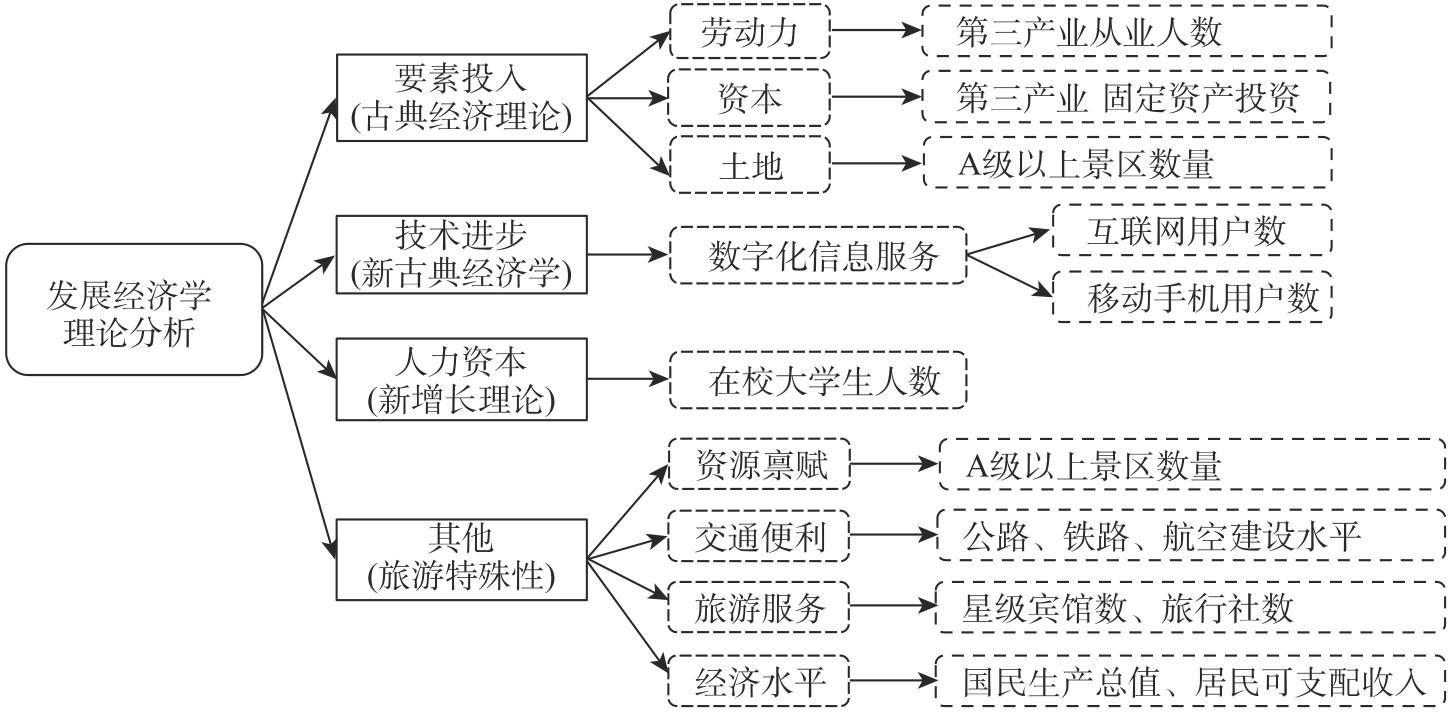
表4 旋转后的因子载荷Tab. 4 Factor loadings after rotation |
| 公因子命名 | 测量项目 | 因子负载 | ||||
|---|---|---|---|---|---|---|
| 公因子1 | 公因子2 | 公因子3 | 公因子4 | 公因子5 | ||
| 旅游交通 | 铁路营业里程 | 0.843 | - | - | - | - |
| 公路里程 | 0.758 | - | - | - | - | |
| 航线航班里程 | 0.639 | - | - | - | - | |
| 旅游服务 | 旅行社数量 | - | 0.695 | - | - | - |
| 星级宾馆数量 | - | 0.765 | - | - | - | |
| 经济支撑 | 国内生产总值 | - | - | 0.729 | - | - |
| 居民可支配收入 | - | - | 0.731 | - | - | |
| 社会固定资产投资 | - | - | 0.799 | - | - | |
| 资源要素 | 在校大学生人数 | - | - | - | 0.830 | - |
| 第三产业从业人数 | - | - | - | 0.695 | - | |
| A级以上景区数量 | - | - | - | 0.793 | - | |
| 信息服务 | 固定互联网宽带接入用户数 | - | - | - | - | 0.885 |
| 移动电话用户 | - | - | - | - | 0.729 | |
表5 影响因素的灰色关联度分析结果Tab. 5 Results of gray correlation analysis of influencing factors |
| 关联目标 | 关联因子 | 关联因素 | |||||
|---|---|---|---|---|---|---|---|
| 因子名称 | 关联度 | 排名 | 因素名称 | 关联度 | 排名 | ||
| 旅游经济高质量发展水平 | 旅游交通 | 0.881 | 3 | 铁路营业里程 | 0.880 | 7 | |
| 公路里程 | 0.895 | 4 | |||||
| 航线航班里程 | 0.868 | 9 | |||||
| 旅游服务 | 0.796 | 5 | 旅行社数量 | 0.730 | 13 | ||
| 星级宾馆数量 | 0.862 | 10 | |||||
| 经济支撑 | 0.897 | 2 | 国内生产总值 | 0.891 | 5 | ||
| 居民可支配收入 | 0.902 | 2 | |||||
| 第三产业固定资产投资 | 0.897 | 3 | |||||
| 资源要素 | 0.842 | 4 | 在校大学生人数 | 0.812 | 12 | ||
| 第三产业从业人数 | 0.840 | 11 | |||||
| A级以上景区数量 | 0.875 | 8 | |||||
| 信息服务 | 0.917 | 1 | 固定互联网宽带接入用户数 | 0.948 | 1 | ||
| 移动电话用户 | 0.886 | 6 | |||||
| [1] |
何建民. 新时代我国旅游业高质量发展系统与战略研究[J]. 旅游学刊, 2018, 33(10): 9-11.
[
|
| [2] |
张军扩, 侯永志, 刘培林, 等. 高质量发展的目标要求和战略路径[J]. 管理世界, 2019, 35(7): 1-7.
[
|
| [3] |
杨伟民. 贯彻中央经济工作会议精神推动高质量发展[J]. 宏观经济管理, 2018(2): 13-17.
[
|
| [4] |
任保平, 李培伟. 黄河流域高质量发展与生态保护耦合协调的现代化治理体系[J]. 人民黄河, 2023, 45(9): 4-11.
[
|
| [5] |
白洋, 谭李娜, 陈春燕, 等. 城际列车对新疆旅游经济高质量发展的影响效应及驱动机制[J]. 干旱区地理, 2023, 46(4): 658-666.
[
|
| [6] |
刘英基, 韩元军. 要素结构变动、制度环境与旅游经济高质量发展[J]. 旅游学刊, 2020, 35(3): 28-38.
[
|
| [7] |
许艺芳, 王松茂. 中国旅游经济高质量发展时空特征及影响因素研究[J]. 统计与决策, 2023, 39(2): 88-92.
[
|
| [8] |
李书昊, 魏敏. 中国旅游业高质量发展: 核心要求、实现路径与保障机制[J]. 云南民族大学学报(哲学社会科学版), 2023, 40(1): 152-160.
[
|
| [9] |
徐晓亮, 刘旭义, 关靖云, 等. 中国西部边疆民族地区文旅融合高质量发展时空演化及驱动因素分析[J]. 干旱区地理, 2024, 47(9): 1596-1605.
[
|
| [10] |
黄子璇, 史达, 马淑花. 中国旅游经济与生态系统服务协调效应及其障碍因素研究[J]. 旅游学刊, 2024, 39(4): 93-108.
[
|
| [11] |
|
| [12] |
|
| [13] |
|
| [14] |
谢霞. 丝绸之路经济带核心区旅游经济系统脆弱性评价[J]. 新疆大学学报(哲学·人文社会科学版), 2019, 47(5): 9-16.
[
|
| [15] |
人民网. 新疆旅游业迎来发展黄金期[EB/OL]. [2023-06-26].
[ People’s Daily Online. Xinjiang tourism ushered in the golden period of development[EB/OL]. [2023-06-26].
|
| [16] |
张建伟, 李国栋, 杨琴. 西藏旅游经济高质量发展: 理论内涵与水平测度[J]. 西藏大学学报(社会科学版), 2022, 37(4): 186-196.
[
|
| [17] |
厉新建, 曾博伟, 张辉, 等. 新质生产力与旅游业高质量发展[J]. 旅游学刊, 2024, 39(5): 15-29.
[
|
| [18] |
丰晓旭, 夏杰长. 中国全域旅游发展水平评价及其空间特征[J]. 经济地理, 2018, 38(4): 183-192.
[
|
| [19] |
李文路. 中国式现代化背景下贵州喀斯特地区生态旅游高质量发展研究[J]. 中国软科学, 2024( 增刊1): 163-171.
[
|
| [20] |
马丽君, 刘聪, 唐盈. 省域旅游业高质量发展促进共同富裕的空间效应分析[J]. 经济地理, 2024, 44(4): 210-219.
[
|
| [21] |
张鹏杨, 章乐文, 乔花飞, 等. 中国旅游经济高质量发展的时空演化与区域差异——基于新发展理念视角[J]. 华中师范大学学报(自然科学版), 2024, 58(4): 470-480.
[
|
| [22] |
田小波, 胡静, 贾垚焱, 等. 高质量发展阶段旅游业发展水平空间分异成因探测——基于因素分解的黄河流域实证[J]. 干旱区地理, 2023, 46(3): 460-470.
[
|
| [23] |
李志远, 夏赞才. 长江经济带旅游业高质量发展水平测度及失配度时空格局探究[J]. 南京师大学报(自然科学版), 2021, 44(4): 33-42.
[
|
| [24] |
张越杰, 张昱. 我国东北地区县域农业生态旅游发展质量评价指标体系构建与应用[J/OL]. 经济地理. [2024-03-12].
[
|
| [25] |
龙顺发, 曹开军, 商宁. 旅游促进乡村发展的空间效应——基于新疆83个县市的实证分析[J]. 地理科学, 2024, 44(8): 1387-1395.
[
|
/
| 〈 |
|
〉 |