



|
陈天好(1999-),女,硕士研究生,主要从事魅力国土空间研究与城市更新研究. E-mail: 15371817982@163.com |
收稿日期: 2024-07-18
修回日期: 2024-11-27
网络出版日期: 2026-03-11
基金资助
国家社科基金项目(21BGL257)
Identification of attractive territorial space in Dunhuang City and spatial optimization strategies
Received date: 2024-07-18
Revised date: 2024-11-27
Online published: 2026-03-11
陈天好 , 方浩舟 . 敦煌魅力国土空间识别与空间优化策略研究[J]. 干旱区地理, 2025 , 48(6) : 1067 -1079 . DOI: 10.12118/j.issn.1000-6060.2024.436
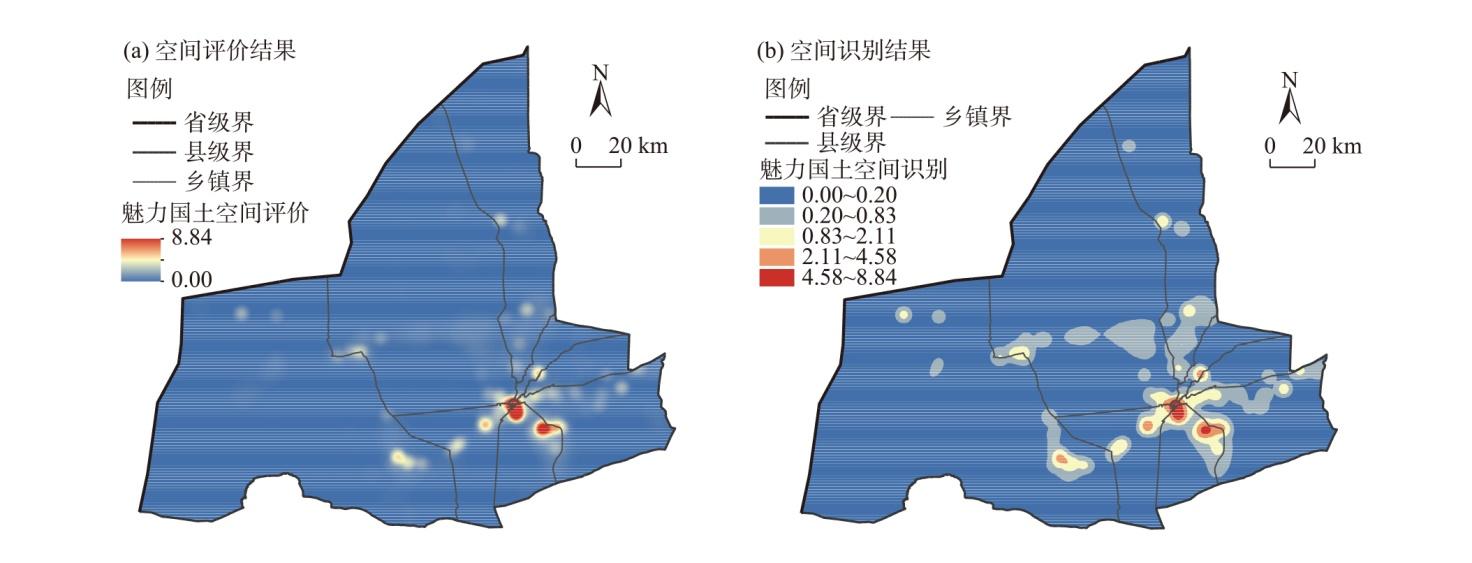
Attractive territorial space research in the context of national spatial planning is an important way to build and improve the new period of national spatial pattern, explore its connotation mechanism and spatial identification path is important for enhancing regional cultural confidence, enriching social life, and protecting the ecological environment. Taking Dunhuang City, a typical city in the desert oasis area of northwest China, as an example, we constructed the evaluation index system for the identification of Dunhuang’s attractive territorial space, used the gray correlation model, kernel density analysis, standard deviation ellipse and other spatial analysis methods to comprehensively identify the attractive territorial space of Dunhuang City, and put forward a spatial development strategy for the identification results. The results of the study show that: (1) Dunhuang’s attractive territorial space is a spatial distribution situation of “large dispersion, small concentration”, and the attractive territorial space is a continuous spatial pattern in the southeast and dispersed spatial pattern in the northwest. (2) Dunhuang’s existing attractive territorial space is closely related to the high-density areas in the attractive territorial space, and the historical and humanistic value is the main evaluation factor affecting the existing attractive land space. Potentially attractive territorial space is positively correlated with the low-density area of attractive territorial space, and the natural ecological value is the main evaluation factor affecting the potentially attractive territorial space. (3) Dunhuang’s attractive territorial space is oriented in an east-west direction, and Dunhuang’s attractive territorial space is most influenced by the Gobi Desert, the oasis water system, and history and culture. (4) Dunhuang’s attractive territorial space has formed a charismatic spatial system structure of “charismatic cities leading development, charismatic corridors linking development, and charismatic nodes shaped by classification”, and the six high-quality attractive spaces constitute Dunhuang’s high-quality territorial spatial development pattern.
表1 指标来源Tab. 1 Sources of indicators |
| 数据名称 | 类型 | 空间分辨率 | 年份 | 来源 |
|---|---|---|---|---|
| 数字高程模型(DEM) | 矢量数据 | 30 m | 2009 | 地理空间数据云GDEMV3 30 m |
| 行政边界 | - | 2021 | 全国地理信息资源目录服务系统 | |
| 文保单位 | - | 2020 | 甘肃省、敦煌市文物普查官方数据 | |
| 旅游景区 | - | 2020 | 敦煌市旅游资源普查数据 | |
| 自然保护地 | - | 2020 | 敦煌市旅游资源普查数据 | |
| 自然资源点 | - | 2021 | 全国地理信息资源目录服务系统 | |
| 游客统计数据 | 非矢量数据 | - | 2023 | 《甘肃省统计年鉴》《敦煌市统计年鉴》 |
| 资源分布 | - | 2023 | 敦煌市文旅部门、自然资源部门官方公开的资源介绍和统计数据 | |
| 资源特征描述 | - | 2023 | 敦煌市文旅部门、自然资源部门官方公开的资源介绍和统计数据 | |
| 游客评价 | - | 近10 a | 网络大数据爬取 |
表2 敦煌魅力国土空间评价指标体系Tab. 2 Evaluation index system of Dunhuang’s attrative territorial space |
| 基准层 | 指标层 | 指标说明 | 权重 |
|---|---|---|---|
| 自然生态价值 | 生态环境价值 | 资源所在地的自然环境优美、气候舒适、生物多样性 | 0.0844 |
| 自然景观价值 | 资源所在地的地貌、水文、气象景观的种类及特殊性,种类越多越特殊自然景观价值越高 | 0.1148 | |
| 生态环境承载力 | 资源所在区域的生态环境脆弱性低,承载的旅游人口越多,生态环境承载能力越高 | 0.0713 | |
| 规模与丰富度 | 资源实体体量越大,或基本类型数量越多,或资源实体越密集,规模与丰富度越大 | 0.0477 | |
| 完整度 | 资源实体越完整无缺,越保持原来形态与结构,完整度越高 | 0.0327 | |
| 历史人文价值 | 人文景观价值 | 人文景价值指资源所在地的人文遗迹奇特、稀缺、建筑艺术高超、地域特色明显,则价值越高 | 0.1135 |
| 历史文化价值 | 历史文化主要评价其历史性,历史意义,以及其承载的科学、文化、艺术价值等 | 0.1528 | |
| 规模与丰富度 | 资源实体体量越大,或基本类型数量越多,或资源实体越密集,规模与丰富度越大 | 0.0569 | |
| 完整度 | 资源实体越完整无缺,越保持原来形态与结构完整度越高 | 0.0431 | |
| 资源影响力价值 | 知名度 | 综合判断资源在世界、国内、省内、地市的知名度,知名范围越大,等级越高;被认定为自然、文化、文保等认定体系的等级越高,知名度越高 | 0.0938 |
| 人群感知度 | 根据网络大数据的游客关注量、评价、照片数量、游客签到及游客消费结构等得到评价值 | 0.0965 | |
| 美誉度 | 游客及专业人员对其评价的高度越高,美誉度越高 | 0.0926 |
表3 魅力资源的识别体系Tab. 3 Identification system of attrative resources |
| 魅力资源 | 资源特性 | 关系解读 | 识别依据 |
|---|---|---|---|
| 既有魅力资源 | 既定性 | 动态持续 开放交互 | 既有魅力资源在等级、规模、影响力和知名度等方面已经占据了相对优势,成为区域空间资源体系结构中的重要组成元素;识别依据为对于现状发展的影响程度及资源的等级、规模 |
| 潜在魅力资源 | 潜在性 | 潜在魅力资源指资源系统中除已经既有的魅力资源外,在未来存在较大发展潜力及开发价值的国土资源。识别依据为对未来发展存的可能性以及资源本身可被开发价值;未来发展的预测性与资源的实体性 |
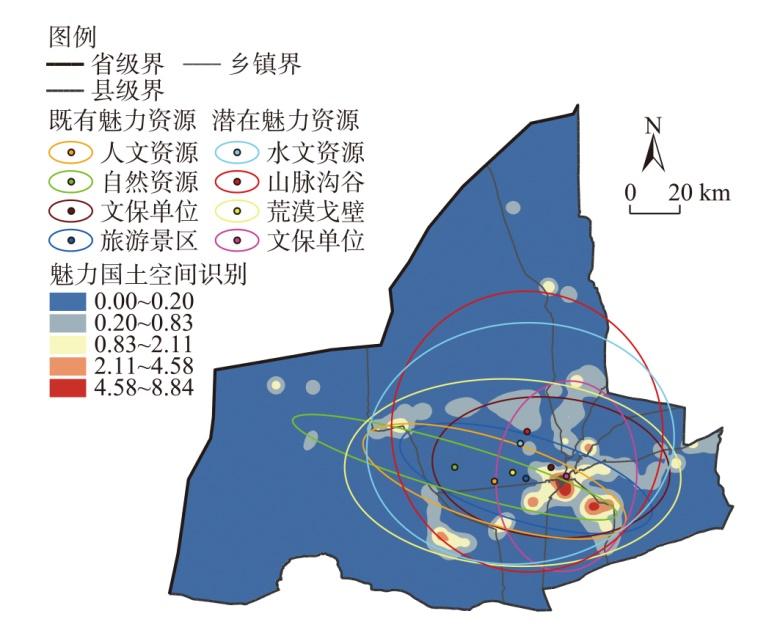
图7 魅力资源点分类标准差椭圆Fig. 7 Attractive resource point classification standard deviation ellipse |
表4 魅力资源点分类标准差椭圆相关参数Tab. 4 Correlation parameters of the standard deviation ellipse of attractive resource point classification |
| 名称 | 经度/°E | 维度/°N | 长半轴/km | 短半轴/km | 角度/(°) | 椭圆面积/104 km2 |
|---|---|---|---|---|---|---|
| 既有人文资源 | 94.32 | 40.14 | 58.27 | 17.83 | 107.57 | 0.33 |
| 既有自然资源 | 94.12 | 40.19 | 71.75 | 10.03 | 106.36 | 0.23 |
| 既有文保单位 | 94.60 | 40.19 | 50.51 | 29.75 | 94.64 | 0.47 |
| 既有旅游资源 | 94.48 | 40.15 | 55.54 | 18.18 | 106.38 | 0.32 |
| 潜在水文资源 | 94.45 | 40.28 | 65.38 | 51.05 | 83.92 | 1.05 |
| 潜在山脉沟谷 | 94.49 | 40.33 | 57.51 | 59.65 | 169.36 | 1.08 |
| 潜在荒漠戈壁 | 94.41 | 40.17 | 71.41 | 39.65 | 92.72 | 0.89 |
| 潜在文保单位 | 94.68 | 40.15 | 29.81 | 40.48 | 4.52 | 0.38 |
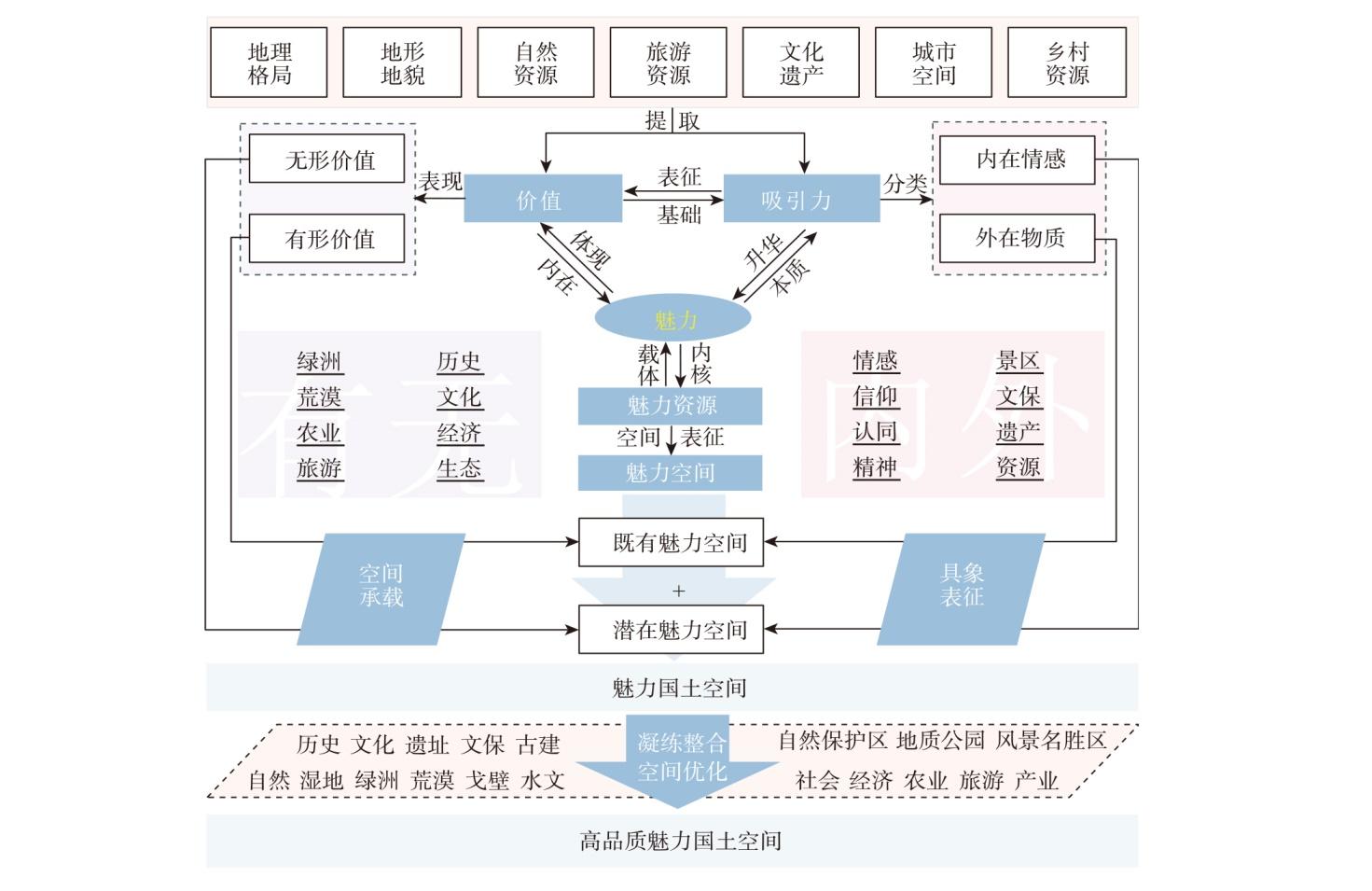
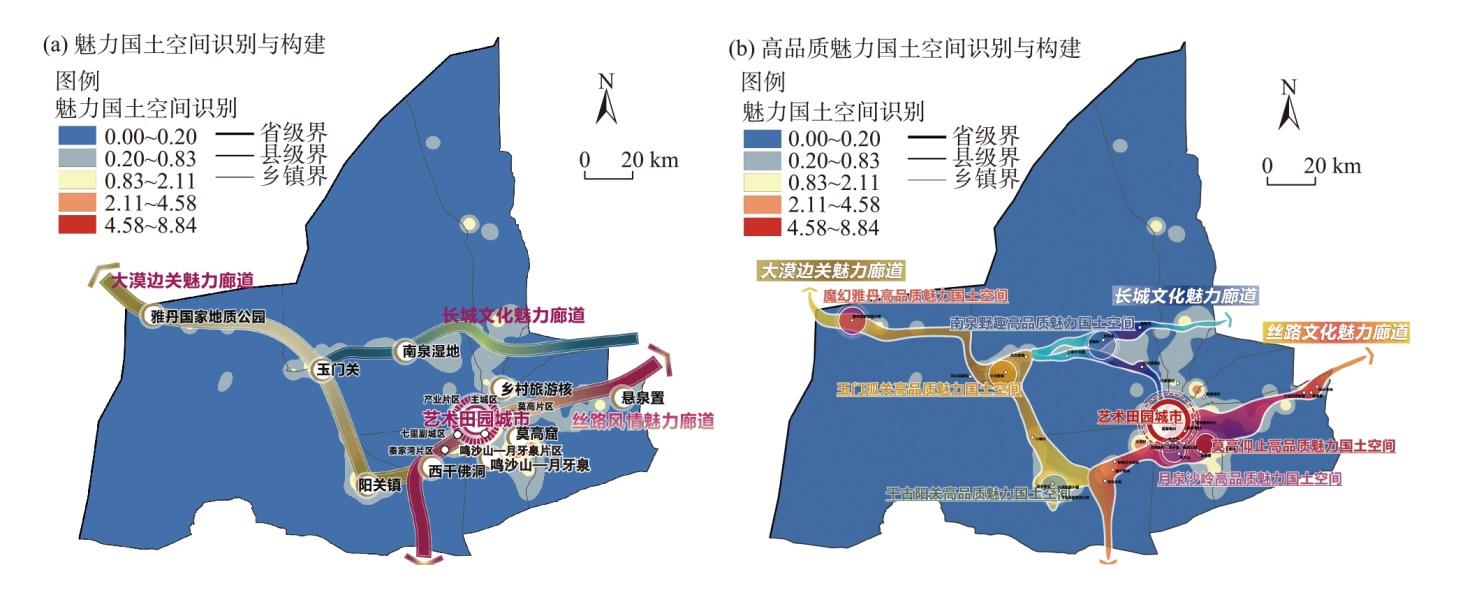
图8 敦煌魅力国土空间和高品质魅力国土空间构建图Fig. 8 Dunhuang’s attractive territorial space and high-quality attractive territorial space construction |
表5 敦煌魅力国土空间识别结果Tab. 5 Results of the spatial identification of Dunhuang’s attractive territorial space |
| 名称 | 类型 | 内容 | 所在地 |
|---|---|---|---|
| 魅力 城市 | 艺术田园 城市 | 城市魅力空间 | 沙洲郡城、敦煌县城、七里副中心、鸣沙山—月牙泉片区、莫高片区 |
| 魅力 廊道 | 风情魅力 廊道 | 丝路风情魅力廊道 | 郭家堡镇、莫高镇、月牙泉镇、七里镇 |
| 大漠边关魅力廊道 | 阳关镇 | ||
| 长城文化魅力廊道 | 肃州镇、转渠口镇 | ||
| 魅力 片区 | 文化魅力 片区 | 莫高窟文化魅力空间 | 莫高镇 |
| 玉门关文化魅力空间 | 肃州镇 | ||
| 汉长城文化魅力空间 | 阳关镇、肃州镇 | ||
| 悬泉置文化魅力空间 | 莫高镇 | ||
| 农业魅力 片区 | 莫高镇农业魅力空间 | 莫高镇 | |
| 月牙泉镇农业魅力空间 | 月牙泉镇 | ||
| 郭家堡镇农业魅力空间 | 郭家堡镇 | ||
| 转渠口镇农业魅力空间 | 转渠口镇 | ||
| 黄渠镇农业魅力空间 | 黄渠镇 | ||
| 肃州镇农业魅力空间 | 肃州镇 | ||
| 七里镇农业魅力空间 | 七里镇 | ||
| 生态魅力 片区 | 阳关国家级自然保护区 | 阳关镇 | |
| 西湖国家级自然保护区 | 阳关镇 | ||
| 东湖自然保护区 | 郭家堡镇、转渠口镇 | ||
| 南泉湿地自然保护区 | 肃州镇 | ||
| 雅丹国家地质公园 | 阳关镇 | ||
| 鸣沙山—月牙泉风景名 胜区 | 月牙泉镇 |
表6 敦煌高品质魅力国土空间识别结果Tab. 6 Results of high-quality attractive territorial space in Dunhuang |
| 空间名称 | 空间载体 |
|---|---|
| 莫高仰止高品质魅力国土空间 | 莫高窟、三危山景区 |
| 月泉沙岭高品质魅力国土空间 | 鸣沙山—月牙泉风景名胜区 |
| 千古阳关高品质魅力国土空间 | 渥洼池湿地公园、野麻湾自然风景区、阳关遗址、阳关博物馆 |
| 玉门孤关高品质魅力国土空间 | 玉门关景区、大小方盘城、汉长城遗址 |
| 梦幻雅丹高品质魅力国土空间 | 雅丹国家地质公园 |
| 南泉野趣高品质魅力国土空间 | 南泉湿地、疏勒河、哈拉湖、胡杨林、汉长城遗址 |
| [1] |
黄金川, 林浩曦, 漆潇潇. 面向国土空间优化的三生空间研究进展[J]. 地理科学进展, 2017, 36(3): 378-391.
[
|
| [2] |
钟敬秋, 高梦凡, 韩增林, 等. 基于生态系统文化服务的人地关系空间重构[J]. 地理学报, 2024, 79(7): 1682-1699.
[
|
| [3] |
郝庆, 彭建, 魏冶, 等. “国土空间”内涵辨析与国土空间规划编制建议[J]. 自然资源学报, 2021, 36(9): 2219-2247.
[
|
| [4] |
习近平. 高举中国特色社会主义伟大旗帜为全面建设社会主义现代化国家而团结奋斗——在中国共产党第二十次全国代表大会上的报告[R]. 北京: 人民出版社, 2022.
[
|
| [5] |
蔡玉梅, 顾林生, 李景玉, 等. 日本六次国土综合开发规划的演变及启示[J]. 中国土地科学, 2008, 22(6): 76-80.
[
|
| [6] |
易鑫, 克里斯蒂安·施耐德. 德国的州域规划与空间秩序规划的发展历程[J]. 城市规划, 2015, 39(1): 105-112.
[
|
| [7] |
余青, 韩淼. 美国国家公园路百年发展历程及借鉴[J]. 自然资源学报, 2019, 34(9): 1850-1863.
[
|
| [8] |
郑德高, 朱雯娟, 陈阳, 等. 区域空间格局再平衡与国家魅力景观区构建[J]. 城市规划, 2017, 41(2): 45-56.
[
|
| [9] |
尹俊, 马晨吴炜, 胡从文, 等. 国土空间规划视角下郊野魅力地区保护利用研究——以金华市区为例[J]. 城市规划学刊, 2022(增刊2): 254-260.
[
|
| [10] |
宋国庆. 州域视角下国土空间特色魅力风貌区塑造方法初探——以伊犁州国土空间特色发展为例[J]. 小城镇建设, 2021, 39(9): 66-77.
[
|
| [11] |
李巍, 杨承兴, 王录仓, 等. 魅力国土空间: 重塑区域特色的国土空间规划策略[J]. 自然资源学报, 2020, 35(3): 501-512.
[
|
| [12] |
张志鑫. 吉林市魅力特色国土空间的识别及体系优化研究[D]. 长春: 长春师范大学, 2023.
[
|
| [13] |
朱睆, 蒋旗, 张汝正, 等. 县级国土空间总体规划中魅力空间的识别方法初探——以四川省九寨沟县为例[J]. 资源与人居环境, 2023(9): 36-47.
[
|
| [14] |
刘清, 杨永春. 基于独特资源的敦煌城市旅游建设及治理过程[J]. 地理科学, 2023, 43(8): 1401-1409.
[
|
| [15] |
李观凤, 焦华富, 王群. 干旱区文化旅游地社会-生态系统恢复力年际变化及影响因素——以甘肃省敦煌市为例[J]. 干旱区地理, 2022, 45(3): 935-945.
[
|
| [16] |
郭晓东, 张启媛, 李莺飞. “一带一路”沿线中小型旅游城市经济系统脆弱性研究——以敦煌市为例[J]. 经济经纬, 2015, 32(4): 1-6.
[
|
| [17] |
张雷. 黄梅县国土空间魅力景观识别评价及营建策略[D]. 武汉: 华中科技大学, 2022.
[Zhang Lei. Identification, evaluation, and construction strategies of charming landscape of territory space in Huangmei County[D]. Wuhan: Huazhong University of Science and Technology, 2022. ]
|
| [18] |
田毅鹏. “社会研究”的魅力——以费孝通为中心[J]. 济南大学学报(社会科学版), 2019, 29(1): 30-37.
[
|
| [19] |
艾里. 经济学的魅力[J]. 当代经理人, 2007(7): 122.
[
|
| [20] |
程刚. 魅力与困惑: 心理学本土化追求的两难处境[J]. 沈阳师范学院学报(社会科学版), 2002, 26(5): 76-79.
[
|
| [21] |
王一丹, 杨永春, 刘清, 等. 基于居民感知的敦煌市旅游全球化路径研究[J]. 干旱区地理, 2023, 46(6): 1024-1037.
[
|
| [22] |
冯斌, 陈晓键, 王录仓. 汉敦煌郡文化空间体系的构成及其历史环境的整体性解析[J]. 干旱区资源与环境, 2019, 33(11): 201-208.
[
|
| [23] |
赵力, 张炜, 刘楠, 等. 国家公园理念下区域生态旅游资源评价——以青海湖与祁连山毗邻区域为例[J]. 干旱区地理, 2021, 44(6): 1796-1809.
[
|
| [24] |
任唤麟. 跨区域线性文化遗产类旅游资源价值评价——以长安-天山廊道路网中国段为例[J]. 地理科学, 2017, 37(10): 1560-1568.
[
|
| [25] |
邵甬, 付娟娟. 以价值为基础的历史文化村镇综合评价研究[J]. 城市规划, 2012, 36(2): 82-88.
[
|
| [26] |
王新民, 漆建武, 李晓鸿, 等. 基于改进灰色关联模型的天水市土地生态安全动态评价[J]. 资源开发与市场, 2018, 34(2): 188-193.
[
|
| [27] |
吴志祥, 张志斌, 赵学伟, 等. 中国西北地区A级旅游景区时空分布格局及影响因素[J]. 干旱区地理, 2023, 46(12): 2061-2073.
[
|
| [28] |
胡炜霞, 梁晓涛, 桑子俞. 山西省3A及以上旅游景区时空演化特征及原因分析[J]. 干旱区资源与环境, 2020, 34(12): 187-194.
[
|
/
| 〈 |
|
〉 |