



|
魏建飞(1995-),女,博士,讲师,硕士生导师,主要从事国土空间规划与实施管理等方面的研究. E-mail: weijianfei0604@163.com |
收稿日期: 2024-10-25
修回日期: 2025-02-14
网络出版日期: 2026-03-11
基金资助
河南省哲学社会科学规划年度项目(2024CJJ022)
Spatio-temporal variation and obstacle factors of territorial spatial efficiency in the Yellow River Basin
Received date: 2024-10-25
Revised date: 2025-02-14
Online published: 2026-03-11
魏建飞 , 袁悠燃 , 李强 , 董佩佩 , 刘玖榕 . 黄河流域国土空间效率时空变化及障碍因子分析[J]. 干旱区地理, 2025 , 48(6) : 1055 -1066 . DOI: 10.12118/j.issn.1000-6060.2024.654
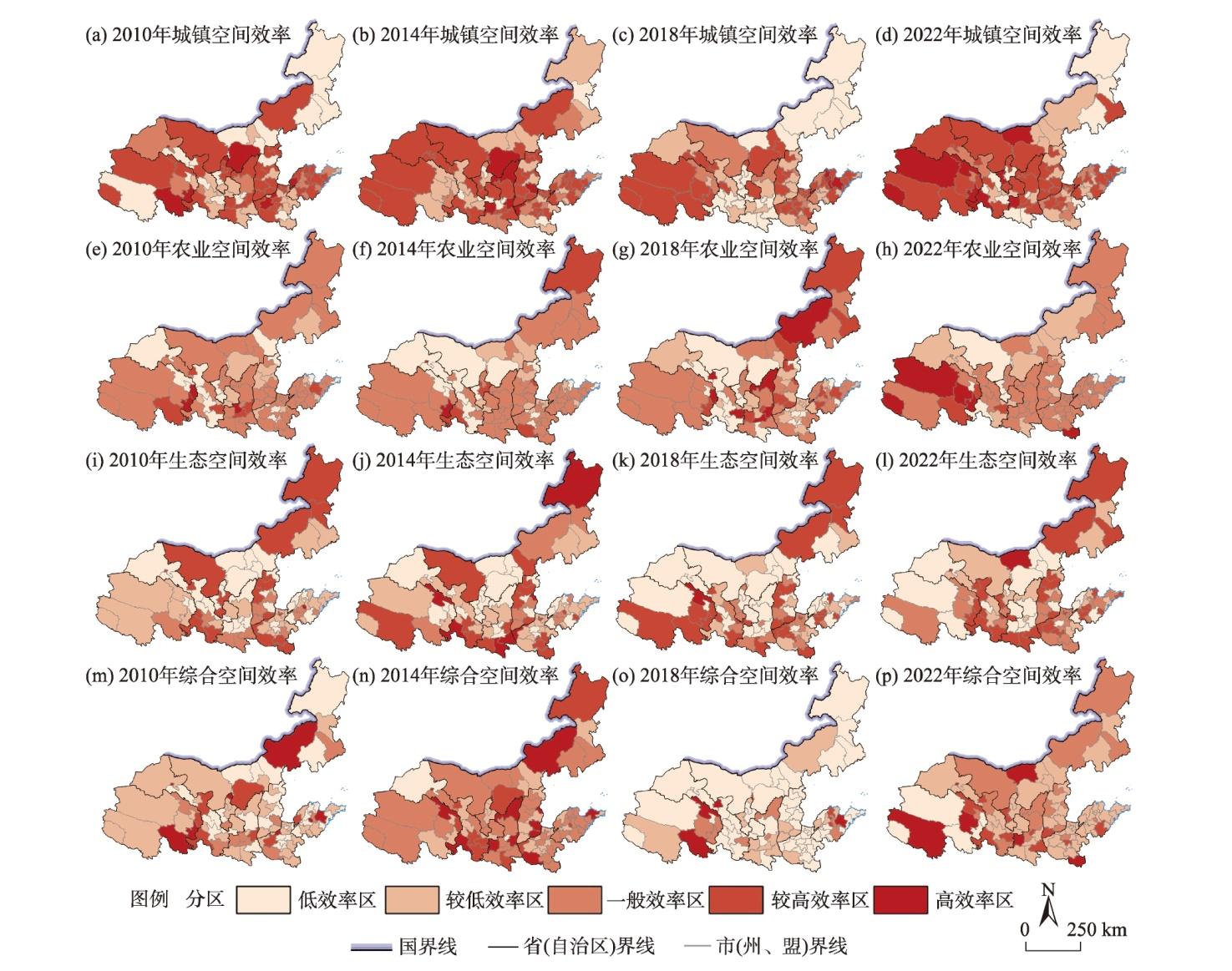
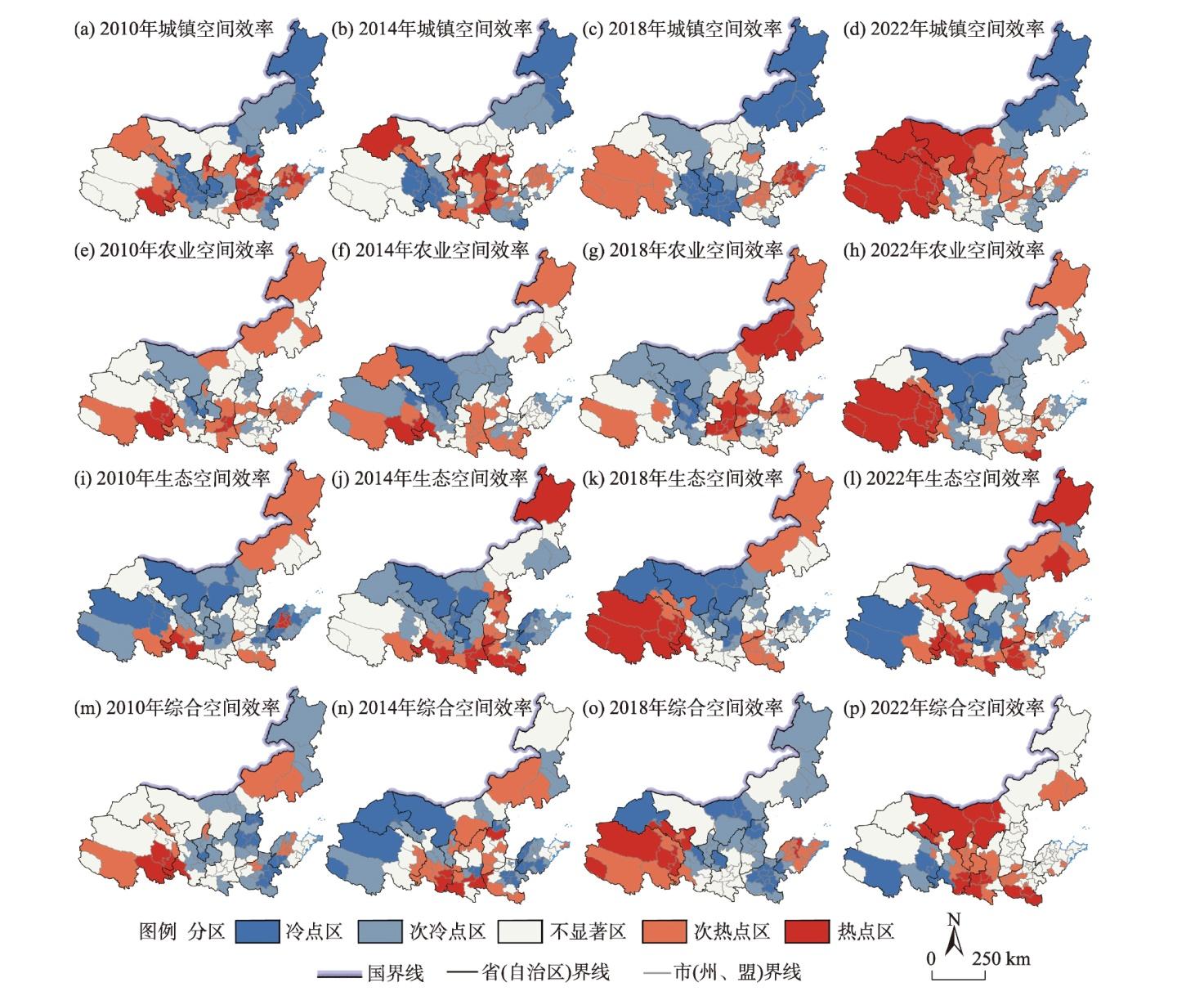
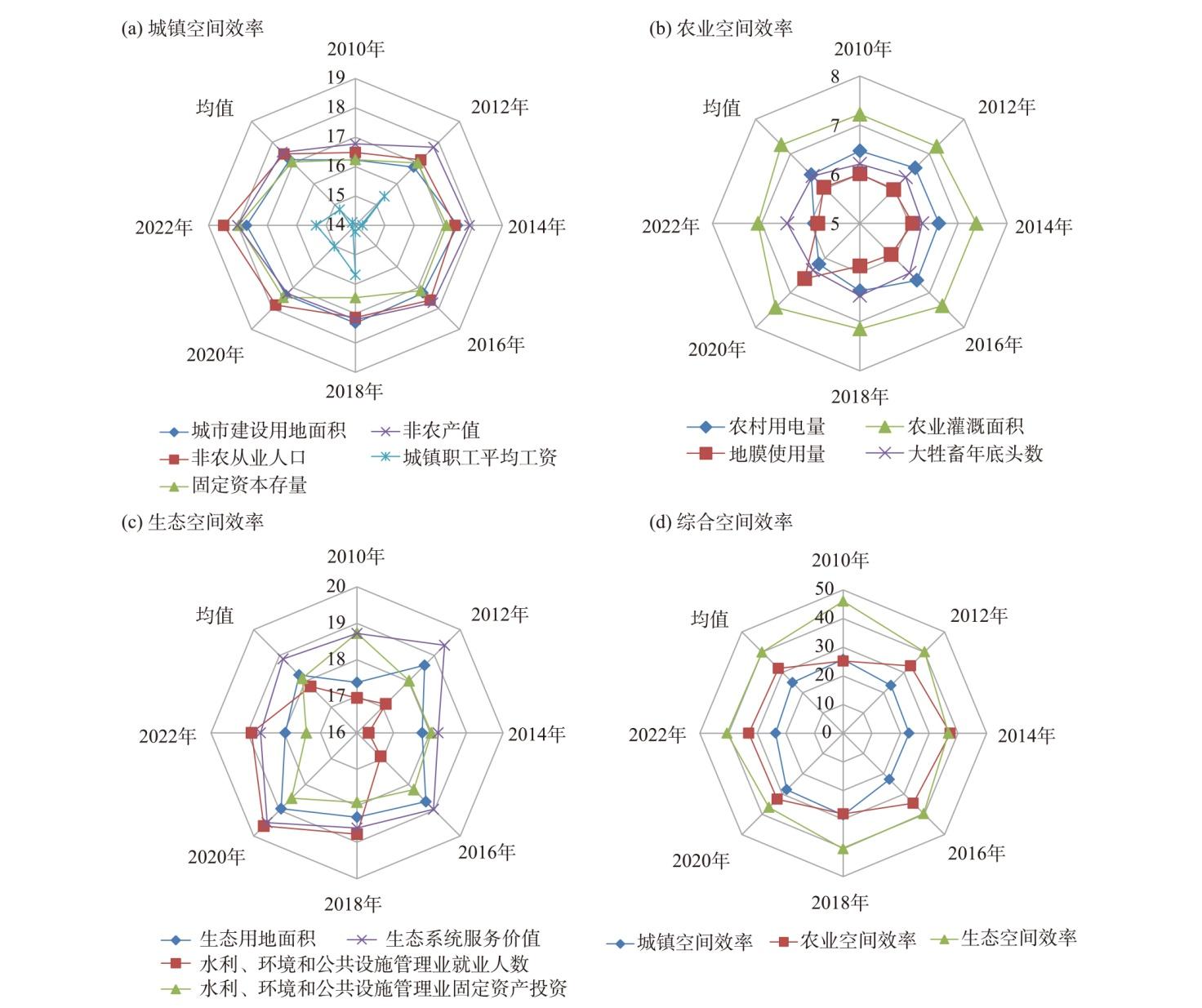
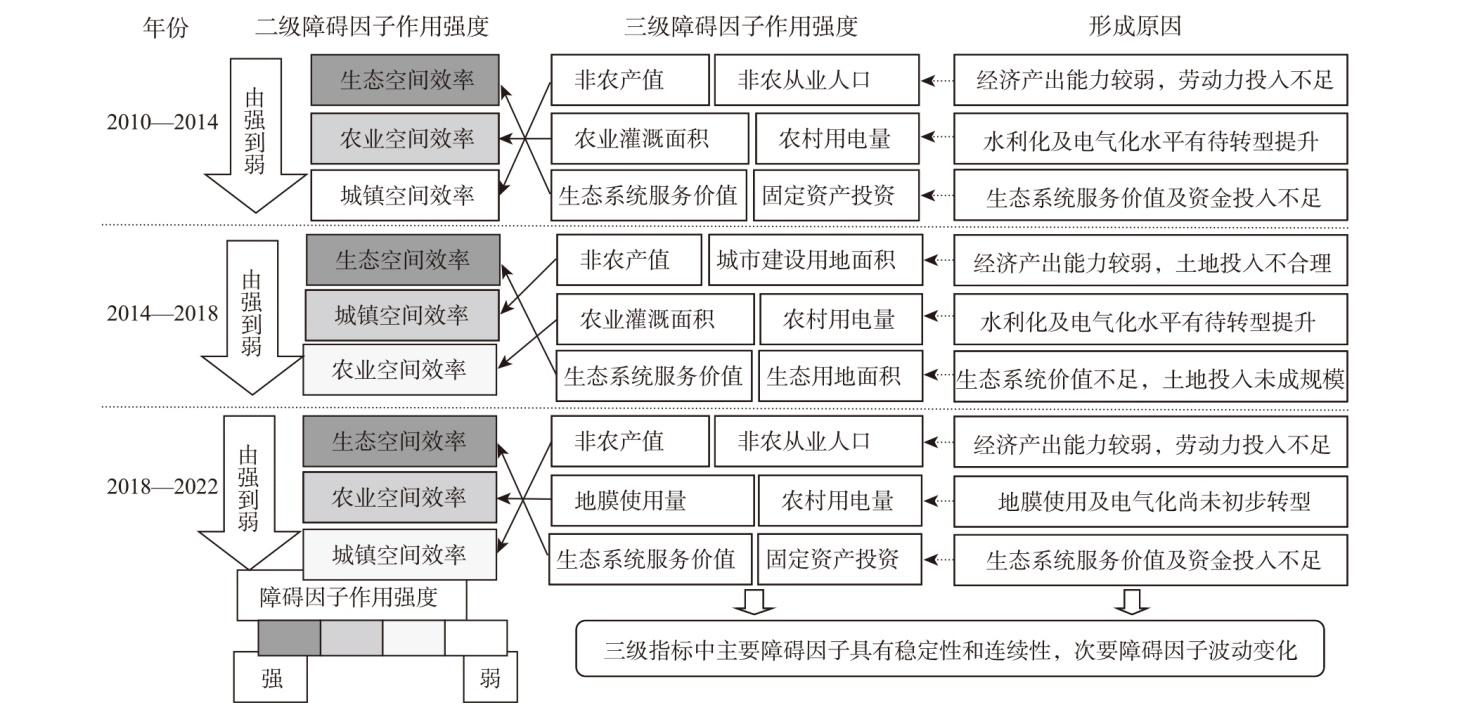
Territorial spatial efficiency analysis in major river basins provides critical insights for developing regionally optimized land use patterns that promote sustainable development. This study investigated the Yellow River Basin’s territorial spatial efficiency by examining 97 cities over 13 years (2010—2022). We employed a methodological framework combining spatial classification techniques, kernel density estimation, and obstacle degree modeling to systematically assess spatiotemporal patterns and limiting factors. The temporal analysis revealed fluctuating efficiency trends throughout the study period, with a consistent hierarchy of performance across spatial categories (ecological space>urban space>agricultural space). Spatially, significant heterogeneity was observed in efficiency distribution, with distinct regional agglomeration patterns. These spatial configurations demonstrated strong temporal inertia and continuity, characterized primarily by “high-high” and “low-low” agglomeration patterns. Our obstacle factor analysis identified ecological spatial efficiency as the primary constraint as the primary constraint to overall territorial spatial improvement in the basin. Further investigation revealed specific limiting factors for each spatial category: Non-agricultural output value (urban spaces), agricultural irrigation area (agricultural spaces), and ecosystem service value (ecological spaces). These findings highlight the need for targeted interventions addressing these specific limitations. The research contributes to the theoretical understanding of territorial spatial efficiency dynamics in major river basins while providing scientific support for optimizing the territorial spatial layout and improving the level of spatial governance in the Yellow River Basin.
表1 国土空间效率指标体系构建及权重计算Tab. 1 Construction and weight calculation of territorial spatial efficiency index system |
| 目标层 | 准则层 | 指标层 | 具体指标 | 权重 | |
|---|---|---|---|---|---|
| 国土空间效率 | 城镇空间效率 | 投入要素 | 土地 | 城市建设用地面积/km2 | 0.118 |
| 劳动力 | 非农从业人口/人 | 0.116 | |||
| 资本 | 固定资本存量/元 | 0.122 | |||
| 期望产出要素 | 经济效益 | 非农产值/元 | 0.120 | ||
| 社会效益 | 城镇职工平均工资/元 | 0.130 | |||
| 非期望产出要素 | 生态效益 | 工业废水排放量/t | 0.132 | ||
| 工业SO2排放量/t | 0.131 | ||||
| 工业烟(粉)尘排放量/t | 0.131 | ||||
| 农业空间效率 | 投入要素 | 土地 | 农作物总播种面积/hm2 | 0.084 | |
| 劳动力 | 农业从业人员/人 | 0.085 | |||
| 机械化水平 | 农业机械总动力/kW | 0.084 | |||
| 化学化水平 | 化肥使用量/t | 0.083 | |||
| 电气化水平 | 农村用电量/kW·h | 0.080 | |||
| 药学化水平 | 农药使用量/t | 0.080 | |||
| 塑料化水平 | 地膜使用量/t | 0.082 | |||
| 灌溉化水平 | 农业灌溉面积/hm2 | 0.085 | |||
| 非机械化水平 | 大牲畜年底头数/头 | 0.081 | |||
| 期望产出要素 | 经济效益 | 农业增加值/元 | 0.084 | ||
| 社会效益 | 粮食产量/t | 0.082 | |||
| 非期望产出要素 | 生态效益 | 农业碳排放量/t | 0.090 | ||
| 生态空间效率 | 投入要素 | 土地 | 生态用地面积/hm2 | 0.152 | |
| 劳动力 | 水利、环境和公共设施管理业就业人数/人 | 0.155 | |||
| 资本 | 水利、环境和公共设施管理业固定资产投资/元 | 0.153 | |||
| 能源 | 能源消费总量/tce | 0.136 | |||
| 期望产出要素 | 生态效益 | 绿化覆盖率/% | 0.167 | ||
| 生态系统服务价值 | 0.124 | ||||
| 非期望产出要素 | 生态环境质量指数 | 0.113 | |||
| [1] |
李强, 魏建飞. 皖江城市带国土空间利用效率与高质量发展的时空耦合[J]. 自然资源学报, 2022, 37(11): 2867-2883.
[
|
| [2] |
逯承鹏, 纪薇, 刘志良, 等. 黄河流域甘肃段县域“三生”功能空间时空格局及影响因素识别[J]. 地理科学, 2022, 42(4): 579-588.
[
|
| [3] |
|
| [4] |
焦庚英, 杨效忠, 黄志强, 等. 县域“三生空间”格局与功能演变特征及可能影响因素分析: 以江西婺源县为例[J]. 自然资源学报, 2021, 36(5): 1252-1267.
[
|
| [5] |
陈美景, 王庆日, 白中科, 等. 基于双碳目标的黄河流域资源型城市国土空间利用效率时空特征及影响因素[J]. 中国土地科学, 2024, 38(4): 101-112.
[
|
| [6] |
顾观海, 吴彬, 张文主, 等. 中国陆地边境地区国土空间功能的区域差异及其驱动机制[J]. 地理研究, 2024, 43(7): 1644-1660.
[
|
| [7] |
杨喜, 卢新海, 陈讲飞. 长江经济带城市土地资源尾效测度及其时空格局演变[J]. 中国土地科学, 2020, 34(3): 66-74.
[
|
| [8] |
刘书畅, 叶艳妹, 肖武. 基于随机前沿分析的中国城市土地利用效率时空分异研究[J]. 中国土地科学, 2020, 34(1): 61-69.
[
|
| [9] |
|
| [10] |
夏四友, 杨宇. 基于主体功能区的京津冀城市群碳收支时空分异与碳补偿分区[J]. 地理学报, 2022, 77(3): 679-696.
[
|
| [11] |
钱昭英, 刘书杰. 黄河流域农业绿色低碳生产效率空间关联网络结构特征及驱动因素识别[J]. 干旱区资源与环境, 2024, 38(2): 27-38.
[
|
| [12] |
周道静, 徐姗. “十四五”时期我国边境地区国土空间发展路径思考[J]. 城市发展研究, 2021, 28(10): 34-38.
[
|
| [13] |
|
| [14] |
|
| [15] |
|
| [16] |
林树高, 诸培新, 陆汝成, 等. 贸易-经济-人口系统对边境地区国土空间格局演变区域差异的影响: 以中越边境带为例[J]. 自然资源学报, 2023, 38(6): 1550-1569.
[
|
| [17] |
樊杰, 王亚飞, 王怡轩. 基于地理单元的区域高质量发展研究——兼论黄河流域同长江流域发展的条件差异及重点[J]. 经济地理, 2020, 40(1): 1-11.
[
|
| [18] |
曲衍波, 王世磊, 李岩, 等. 基于多功能适宜性的黄河三角洲国土空间潜在冲突特征与优化格局研究[J]. 地理科学, 2023, 43(2): 301-312.
[
|
| [19] |
宋永永, 薛东前, 夏四友, 等. 近40 a黄河流域国土空间格局变化特征与形成机理[J]. 地理研究, 2021, 40(5): 1445-1463.
[
|
| [20] |
董寅, 金贵, 邓祥征. 中国国土空间布局优化研究[J]. 地理学报, 2024, 79(3): 672-687.
[
|
| [21] |
朱瑷嫒, 殷颂葵, 刘琼慧. 中国西北地区农业生态效率时空分异及影响因素研究[J]. 干旱区地理, 2024, 47(7): 1210-1219.
[
|
| [22] |
石彩霞, 贺小荣. “双碳”目标下黄河流域城市绿色发展效率测度及提升路径[J]. 干旱区地理, 2024, 47(3): 528-538.
[
|
| [23] |
李云燕, 张硕. 中国区域生态效率的时空特征、分布动态演化与空间差异[J]. 统计与决策, 2024, 40(16): 56-61.
[
|
| [24] |
刘琳轲, 梁流涛, 高攀, 等. 黄河流域生态保护与高质量发展的耦合关系及交互响应[J]. 自然资源学报, 2021, 36(1): 176-195.
[
|
| [25] |
刘佳琪, 周璐红, 席小雅. 2000—2020年黄河流域土地生态质量及其变化趋势预测[J]. 干旱区地理, 2023, 46(10): 1654-1662.
[
|
| [26] |
何昀, 王帅尧, 谢迟. 中国省域共同富裕水平测度、时空分异与障碍因素[J]. 经济地理, 2024, 44(4): 12-21.
[
|
| [27] |
孟广文, 张宁月, 齐宏纲, 等. 天津经济技术开发区转型发展与障碍度研究[J]. 地理学报, 2024, 79(8): 2042-2061.
[
|
| [28] |
高吉喜, 刘晓曼, 王超, 等. 中国重要生态空间生态用地变化与保护成效评估[J]. 地理学报, 2021, 76(7): 1708-1721.
[
|
| [29] |
刘纪远, 宁佳, 匡文慧, 等. 2010—2015年中国土地利用变化的时空格局与新特征[J]. 地理学报, 2018, 73(5): 789-802.
[
|
| [30] |
谢高地, 张彩霞, 张雷明, 等. 基于单位面积价值当量因子的生态系统服务价值化方法改进[J]. 自然资源学报, 2015, 30(8): 1243-1254.
[
|
| [31] |
|
/
| 〈 |
|
〉 |