



中国旅游休闲街区空间差异及成因分析
|
庞家朋(1997-),男,硕士研究生,主要从事旅游地理与区域发展研究. E-mail: pangjiapeng@foxmail.com |
收稿日期: 2024-07-14
修回日期: 2024-09-29
网络出版日期: 2026-03-11
基金资助
国家社会科学基金青年项目(21CTY008)
Spatial differences and causes of tourism and leisure blocks in China
Received date: 2024-07-14
Revised date: 2024-09-29
Online published: 2026-03-11
庞家朋 , 李梦园 . 中国旅游休闲街区空间差异及成因分析[J]. 干旱区地理, 2025 , 48(5) : 905 -915 . DOI: 10.12118/j.issn.1000-6060.2024.419
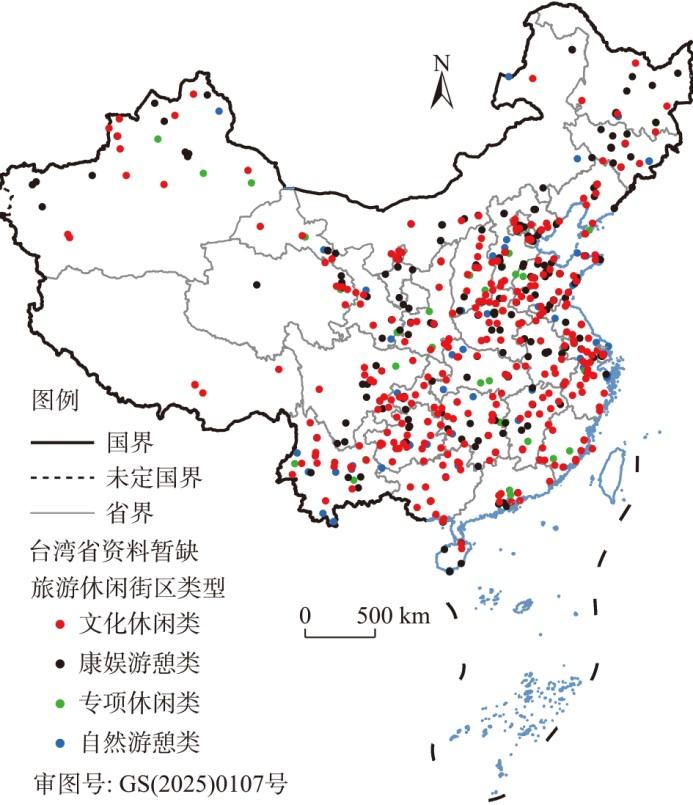
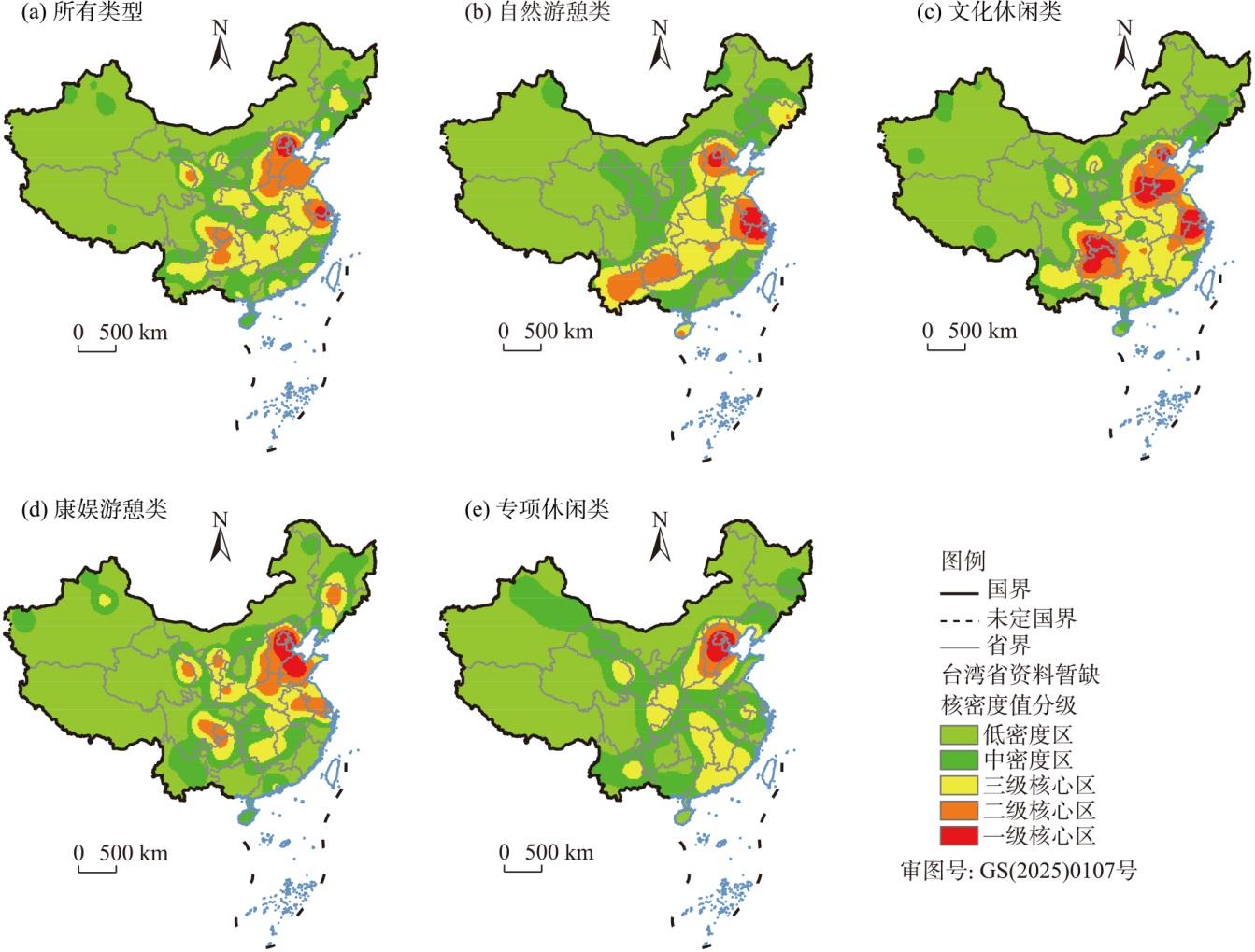
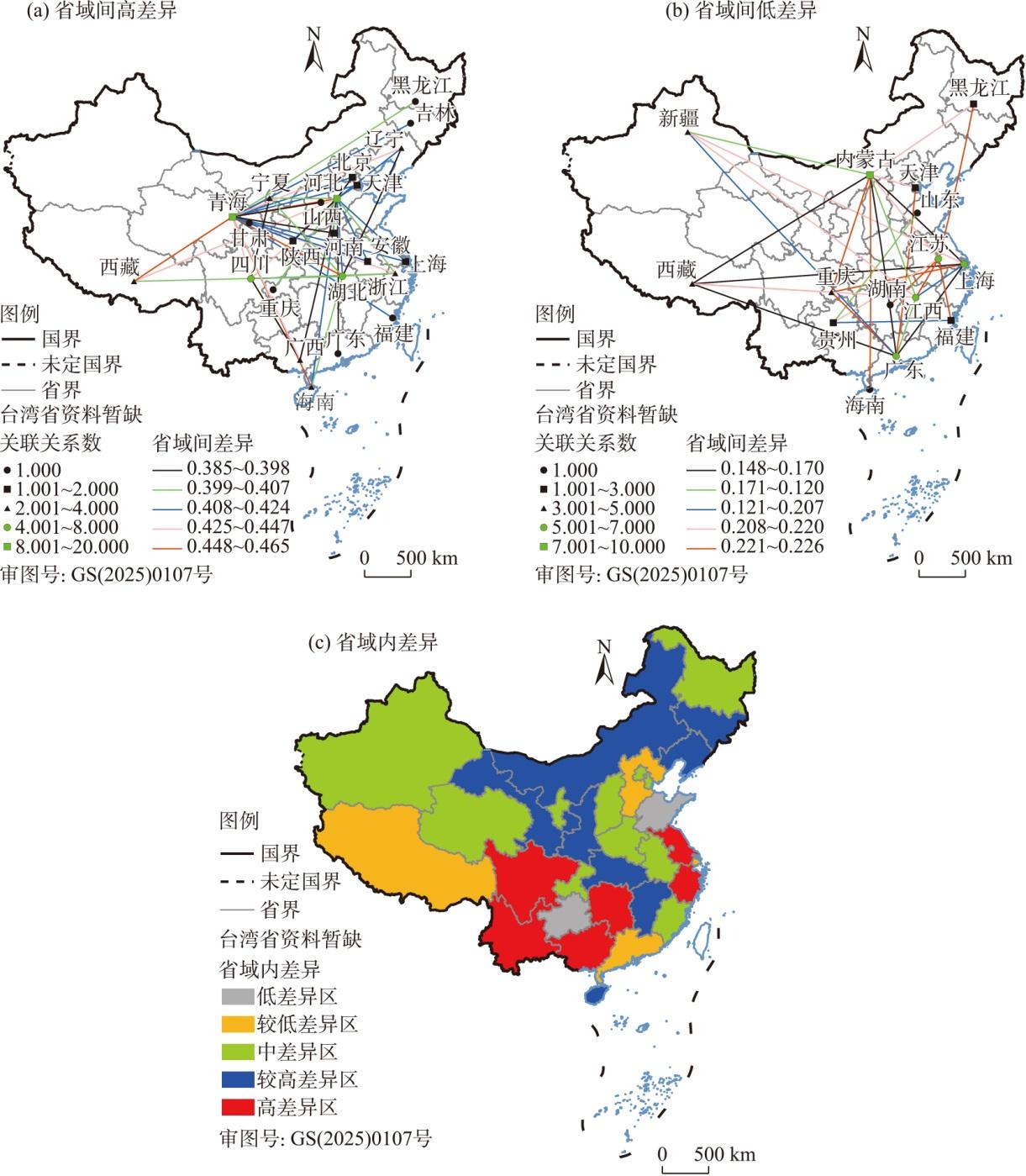
It is of great significance to explore the causes of the spatial distribution of tourism and leisure blocks for the healthy development of blocks. Taking 689 tourism and leisure blocks in China in 2024 as the research object, the spatial distribution and causes of tourism and leisure blocks were analysed by kernel density analysis, Dagum Gini coefficient and geodetector. The results show that: (1) According to the functions and characteristics, tourism and leisure blocks can be divided into natural recreation type, cultural leisure type, entertainment and recreation type, and special leisure type, and the quantitative relationship is sorted in descending order: cultural leisure type>entertainment and recreation type>natural recreation type>special leisure type. (2) The overall pattern of tourism and leisure blocks in the country presents a pattern of “bipolar dispersion and multi-core dot piece”. The poles are mainly distributed according to the urban agglomeration, and the Beijing-Tianjin-Hebei urban agglomeration is in the pole position among all types by virtue of its advantages such as complementary functions and rapid circulation of factors. (3) From the perspective of distribution differences, the various differences of tourism and leisure blocks are ranked in order from large to small: inter-provincial, sub-sample cross-overlapping phenomenon and intra-provincial, most of the differences between regions are paired across regions, and the overall performance is obvious east-west difference, and the distribution difference within the region is characterised by “low east-west and high in the middle”. (4) From the perspective of cause analysis, the degree of influence of production-living-ecology spaces on tourism and leisure blocks is as follows: life function>production function>ecological function, and the interaction of various factors significantly improves the interpretation of tourism and leisure blocks, among which life function is the dominant factor, production function is the key factor, and ecological function is the positive catalytic factor.
表1 旅游休闲街区差异来源及其贡献Tab. 1 Sources of differences in tourism and leisure blocks and their contributions |
| 总体 | 基尼系数 | 贡献率/% | |||||
|---|---|---|---|---|---|---|---|
| 组内 | 组间 | 超变密度 | 组内 | 组间 | 超变密度 | ||
| 0.335 | 0.010 | 0.288 | 0.037 | 3.037 | 85.995 | 10.969 | |
表2 指标体系及其解释力Tab. 2 Index system and its explanatory power |
| 三生空间 | 二级指标 | 三级指标 | 三级指标q值 |
|---|---|---|---|
| 生产功能(X1) | 产业生产水平(X4) | 旅游总收入 | 0.203*** |
| 第三产业增加值 | 0.244*** | ||
| 第三产业增加值占GDP比重 | 0.173*** | ||
| 邮政业务总量 | 0.116*** | ||
| 经济发展效益(X5) | 货物进出口总额 | 0.150*** | |
| 经济密度 | 0.086** | ||
| 人均地区生产总值 | 0.063** | ||
| 公共财政收入占GDP比重 | 0.032 | ||
| 生活空间(X2) | 居民生活质量(X6) | 年末单位从业人员数 | 0.227*** |
| 年末在岗职工工资 | 0.094*** | ||
| 人均社会消费品零售总额 | 0.108*** | ||
| 城镇化率 | 0.126*** | ||
| 社会保障水平(X7) | 万人拥有中小学教师数 | 0.118*** | |
| 医院、卫生院床位数 | 0.297*** | ||
| 城镇基本医疗保险参保人数 | 0.200*** | ||
| 人均一般公共财政支出 | 0.065** | ||
| 生态空间(X3) | 生态压力(X8) | 地均工业SO2排放量 | 0.095** |
| 可吸入细颗粒物年平均浓度 | 0.022 | ||
| 地均工业氮氧化物排放量 | 0.047 | ||
| 万元GDP工业烟粉尘排放量 | 0.014 | ||
| 生态响应(X9) | 人均绿地面积 | 0.073** | |
| 建成区绿地覆盖率 | 0.007 | ||
| 生活垃圾无害化处理率 | 0.013 | ||
| 污水处理厂集中处理率 | 0.018 |
注:q值表示指标解释力;**、***分别表示通过5%、1%显著性检验。 |
表3 三生空间交互探测结果Tab. 3 Interaction detection results of production-living-ecology spaces |
| 三生空间 | X1 | X2 | X3 |
|---|---|---|---|
| X1 | 0.214*** | - | - |
| X2 | 0.297 | 0.226*** | - |
| X3 | 0.337# | 0.347# | 0.070** |
注:#表示非线性增强; |
表4 三生空间二级指标交互探测结果Tab. 4 Interactive detection results of secondary indicators in production-living-ecology spaces |
| 二级指标 | X4 | X5 | X6 | X7 | X8 | X9 |
|---|---|---|---|---|---|---|
| X4 | 0.247*** | - | - | - | - | - |
| X5 | 0.326 | 0.101*** | - | - | - | - |
| X6 | 0.342 | 0.220 | 0.179*** | - | - | - |
| X7 | 0.358 | 0.358# | 0.285 | 0.235*** | - | - |
| X8 | 0.402# | 0.271# | 0.336# | 0.382# | 0.073** | - |
| X9 | 0.375# | 0.220# | 0.304# | 0.351# | 0.250# | 0.078** |
| [1] |
陈波, 涂晓晗. 旅游休闲街区消费场景的模式类型与文旅融合策略[J]. 南京社会科学, 2023(8): 134-145, 166.
[
|
| [2] |
庞玮, 白凯. 我国国家级旅游休闲街区发展实践的学理审视[J]. 陕西师范大学学报(自然科学版), 2024, 52(4): 27-37.
[
|
| [3] |
周滔, 李毓敏, 刘芹君. 街区型商业网点空间分布的影响因素——以重庆市江南片区为例[J]. 城市问题, 2019(1): 48-54.
[
|
| [4] |
|
| [5] |
肖博鸿, 马源. 广州历史街区旅游要素空间分布与交通可达性关联研究[J]. 经济地理, 2024, 44(4): 231-240.
[
|
| [6] |
|
| [7] |
王娟, 赵婕, 封洁洁. 青岛市历史街区街道结构与旅游要素空间分布关联研究[J]. 西北师范大学学报(自然科学版), 2022, 58(6): 61-69.
[
|
| [8] |
朱磊, 李燕楠, 徐佳慧, 等. 中国冰雪旅游地空间分布格局及成因[J]. 干旱区地理, 2024, 47(8): 1399-1410.
[
|
| [9] |
张诗语, 何峰, 胡晓慧, 等. 河北省乡村旅游地空间分布特征及其影响因素[J]. 湖南师范大学自然科学学报, 2023, 46(2): 103-112.
[
|
| [10] |
郑久良. 空间生产视角下非遗旅游街区空间结构演化与动力机制——基于屯溪老街的案例分析[J]. 人文地理, 2023, 38(5): 62-70, 106.
[
|
| [11] |
郭凌, 王志章, 陈丹丹. 旅游影响下城市历史街区的空间再生产研究——基于列斐伏尔空间生产理论视角[J]. 四川师范大学学报(社会科学版), 2016, 43(4): 53-60.
[
|
| [12] |
许春晓, 郭思莹. 历史文化街区业态特征及其影响因素研究——以长沙太平街为例[J]. 中国生态旅游, 2023, 13(1): 152-168.
[
|
| [13] |
吴莞姝, 薛影, 赵凯, 等. 基于复杂网络的鼓浪屿旅游街区关联规则识别与特征分析[J]. 地球信息科学学报, 2024, 26(2): 440-459.
[
|
| [14] |
耿满国, 张伟, 唐相龙, 等. 中国乡村旅游地的空间分布特征及影响因素[J]. 世界地理研究, 2024, 33(2): 151-163.
[
|
| [15] |
张杰, 麻学锋. 湖南省乡村旅游地空间分异及影响因素——以五星级乡村旅游区为例[J]. 自然资源学报, 2021, 36(4): 879-892.
[
|
| [16] |
程佳琦, 林伊琳, 赵俊三, 等. 昆明市“三生空间”功能耦合协调时空特征与影响因素[J]. 水土保持研究, 2024, 31(3): 299-310, 319.
[
|
| [17] |
黄烈佳, 鲁昭, 胡伟艳. 长江经济带城市空间“三生”功能耦合协调时空演化特征及影响因素[J]. 长江流域资源与环境, 2024, 33(4): 687-698.
[
|
| [18] |
雷文韬, 古杰, 谢宏坤. 基于“三生”空间的湖南省土地利用格局及多功能演变[J]. 农业工程学报, 2024, 40(17): 283-293.
[
|
| [19] |
黄震方, 祝晔, 袁林旺, 等. 休闲旅游资源的内涵、分类与评价——以江苏省常州市为例[J]. 地理研究, 2011, 30(9): 1543-1553.
[
|
| [20] |
唐宇, 薛东前, 宋永永, 等. 中国夜间文旅消费集聚区空间格局及影响机理[J]. 干旱区地理, 2024, 47(3): 485-495.
[
|
| [21] |
王钰凯, 郭辉. 新疆旅游业生态效率时空分异与收敛性研究[J]. 干旱区地理, 2022, 45(4): 1320-1331.
[
|
| [22] |
王劲峰, 徐成东. 地理探测器: 原理与展望[J]. 地理学报, 2017, 72(1): 116-134.
[
|
| [23] |
师飞云, 周宝同. 基于“三生”空间的重庆市土地利用演变与城镇化关系研究[J]. 水土保持通报, 2024, 44(1): 227-237.
[
|
| [24] |
杨帆, 熊素文, 雷婷, 等. 城镇化进程中洞庭湖区“三生空间”格局演变与驱动机制[J]. 生态学报, 2022, 42(17): 7043-7055.
[
|
| [25] |
崔红茶, 陈新, 王涛, 等. 长江流域乡村旅游重点村空间分异特征及影响因素[J]. 生态经济, 2024, 40(6): 126-134.
[
|
/
| 〈 |
|
〉 |