



乌鲁木齐市城区大气PM2.5中水溶性离子组分特征及来源解析
|
魏疆(1975-),男,博士,副教授,主要从事区域可持续发展研究. E-mail: weijiang@xjufe.edu.cn |
收稿日期: 2024-06-07
修回日期: 2024-08-22
网络出版日期: 2026-03-11
基金资助
新疆财经大学校地合作招标项目(2024SLC005)
Characteristics and sources of water-soluble ion components in PM2.5 in the urban area of Urumqi City
Received date: 2024-06-07
Revised date: 2024-08-22
Online published: 2026-03-11
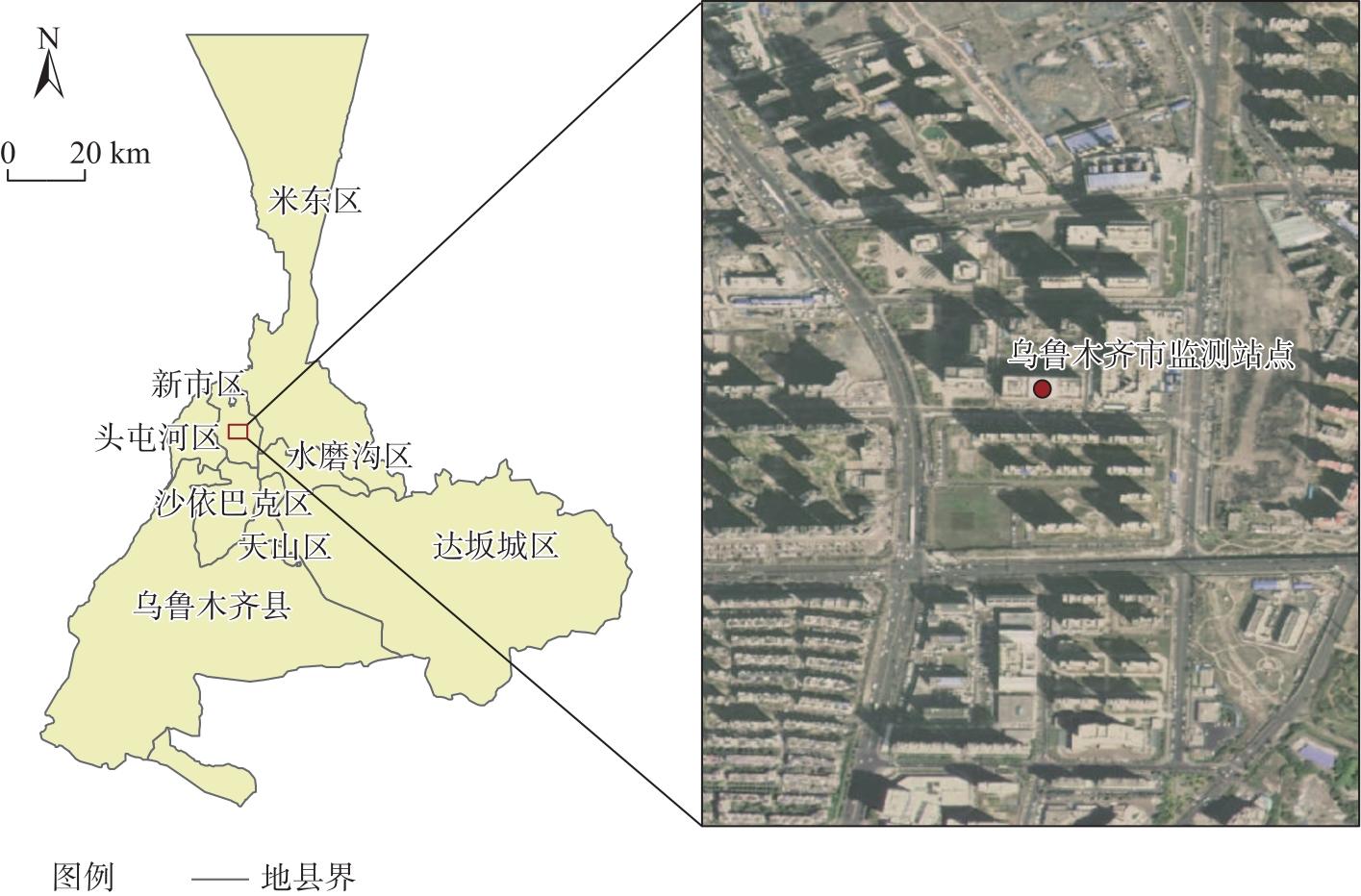
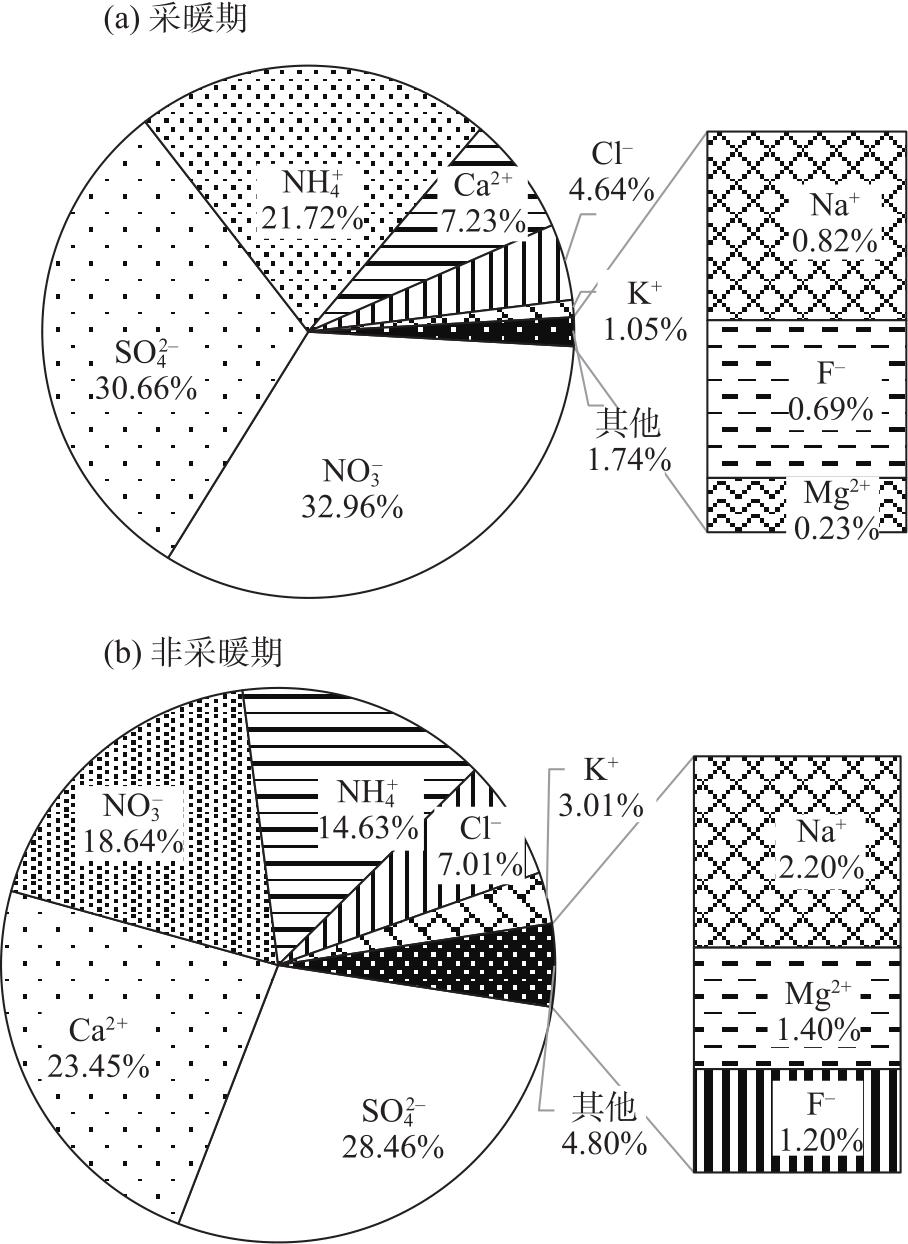
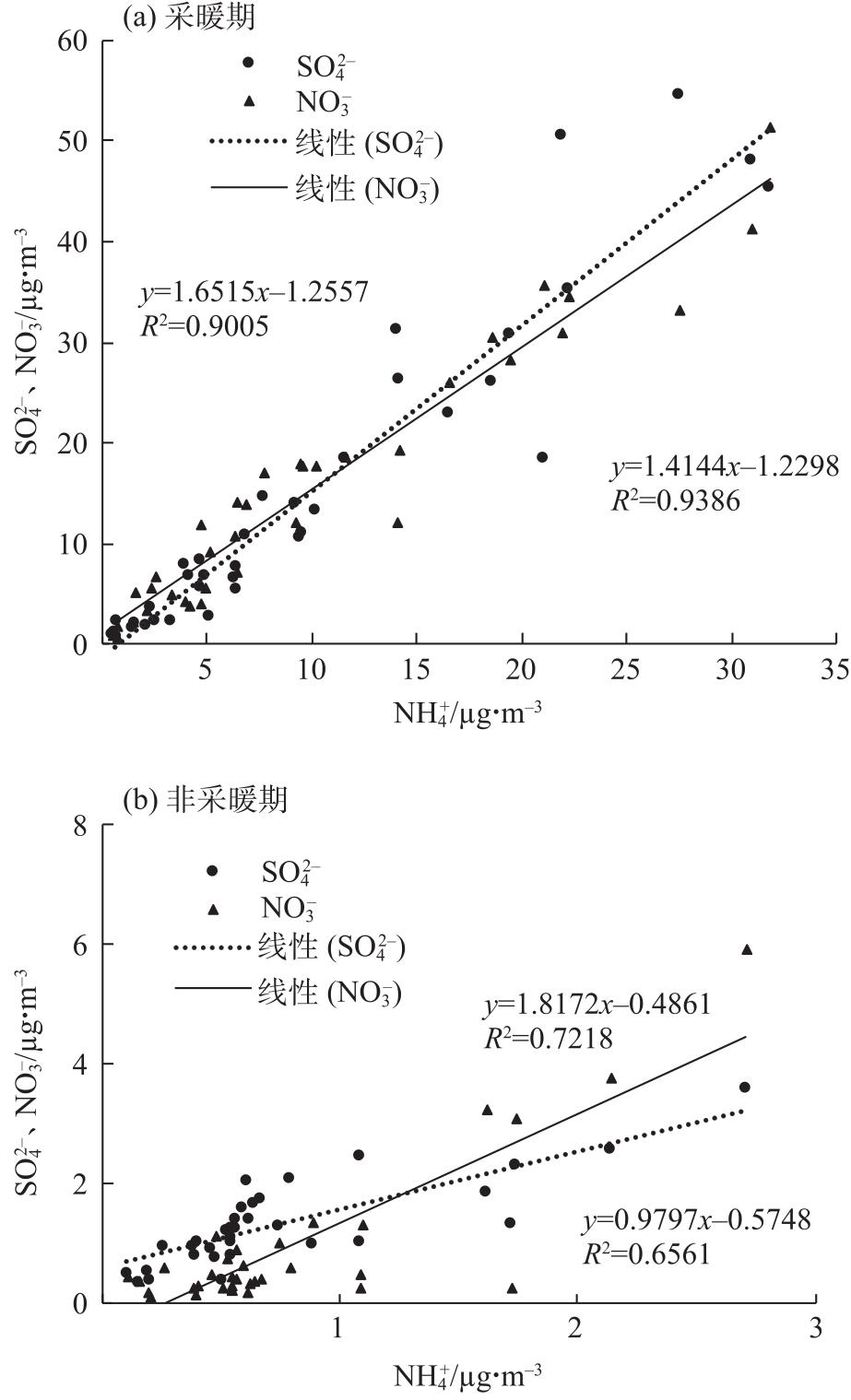
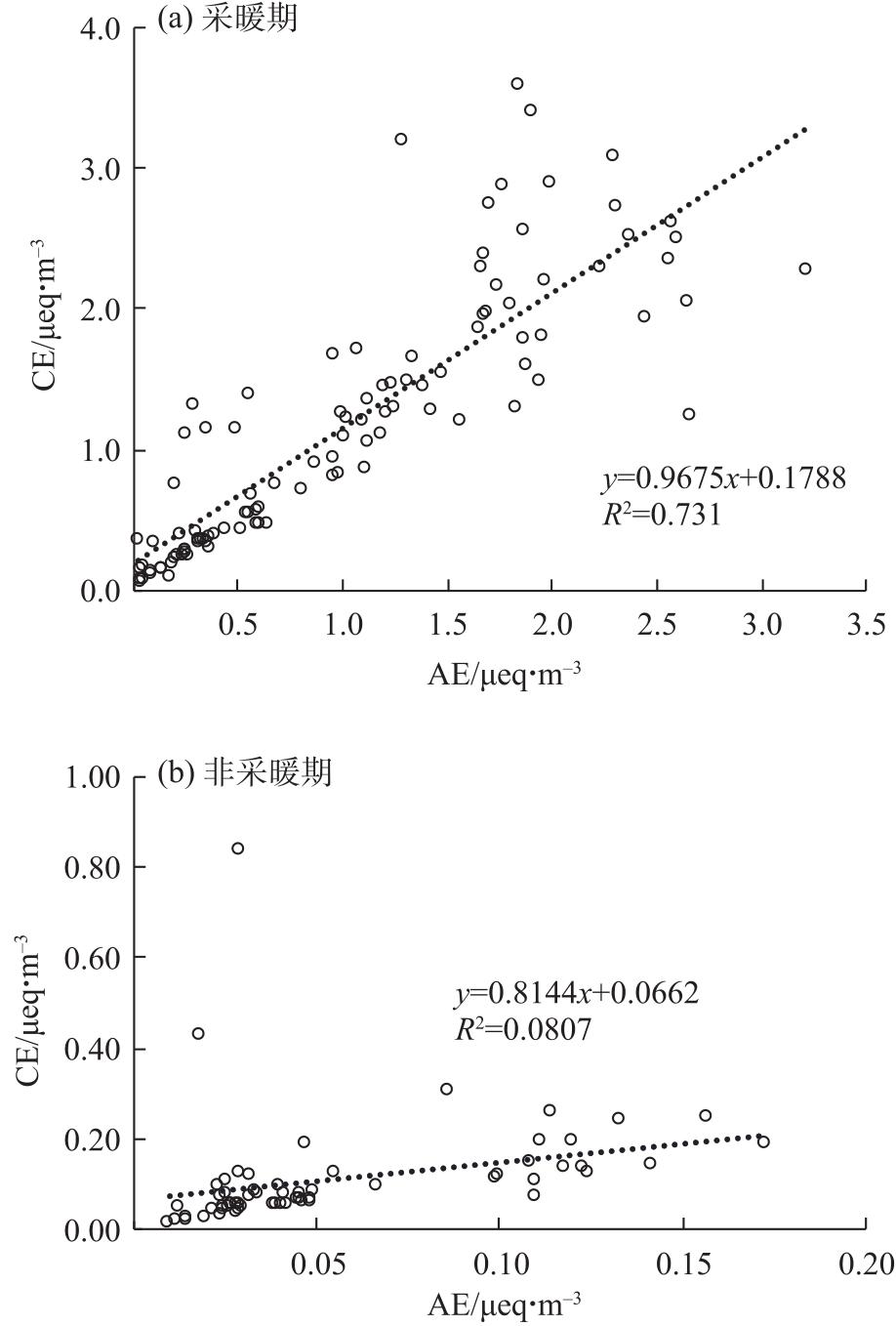
为研究乌鲁木齐市大气环境中主要污染物PM2.5的水溶性离子组分及其来源,2023年在城市中部布置采样点,通过膜采样的方式采集样品164个,按照相关测试标准测定PM2.5的质量浓度及各水溶性离子组分浓度,并分析其来源。结果表明:(1) 采暖期PM2.5质量浓度及各离子组分浓度均大于非采暖期。(2) 采暖期的离子总浓度是非采暖期的15.7倍,采(非)暖期离子总浓度分别占PM2.5浓度的73.84%和26.26%,阴阳离子的比值(AE/CE)分别为0.914和0.600,说明PM2.5化学性质呈碱性。(3) 硫氧化率(SOR)和氮氧化率(NOR)的年均值分别为0.43±0.30和0.15±0.13,说明采暖期气态前体物SO2和NO2在外部气象条件影响下二次转化的几率较大;$\mathrm{NH}_4^{+}$在采暖期主要以(NH4)2SO4和NH4NO3的形式存在,在非采暖期则以NH4NO3的形式存在。(4) 主成分分析结果显示,采暖期污染物的主要来源于二次污染、工业生产和机动车尾气污染,其次为矿物粉尘和燃煤污染,累计贡献率达80.24%;非采暖期主要来源为扬尘和工业生产,其次为二次污染,最后为燃煤产生的污染,累计贡献率为86.34%。可以看出,不同时期PM2.5中水溶性离子的来源存在较大的差异。
魏疆 , 赵彩欣 , 王国华 , 赵丽莉 . 乌鲁木齐市城区大气PM2.5中水溶性离子组分特征及来源解析[J]. 干旱区地理, 2025 , 48(4) : 623 -631 . DOI: 10.12118/j.issn.1000-6060.2024.358
To investigate the water-soluble ion components and their sources in the major air pollutant PM2.5 in atmospheric environment of Urumqi City, Xinjiang, China, sampling points were established in the city center in 2023. A total of 164 samples were collected using membrane sampling, and the mass concentration of PM2.5 along with the concentration of various water-soluble ion components was measured following relevant testing standards. The sources of these components were also analyzed. The results indicate that: (1) The mass concentration of PM2.5 and the concentration of ion components are higher during the heating period than that in the non-heating period. (2) The total ion concentration during the heating period is 15 times of the non-heating period, accounting for 73.84% and 26.26% of the PM2.5 concentration, respectively. The anion-to-cation ratio (AE/CE) is 0.914 in the heating period and 0.600 in the non-heating period, indicating that the chemical properties of PM2.5 tend to be alkaline. (3) The annual average sulfur oxidation ratio (SOR) and nitrogen oxidation ratio (NOR) are 0.43±0.30 and 0.15±0.13, respectively, suggesting a higher probability of secondary transformation pollution of gaseous precursors SO2 and NO2 during the heating period due to external meteorological conditions. $\mathrm{NH}_4^{+}$ primarily exists as (NH4)2SO4 and NH4NO3 during the heating period, whereas in the non-heating period, it mainly exists as NH4NO3. (4) Principal component analysis indicates that during the heating period, the main sources of pollutants are secondary pollution, industrial production, and vehicle exhaust, followed by mineral dust and coal combustion, with a cumulative contribution rate of 80.24%. In the non-heating period, the primary sources are dust and industrial production, followed by secondary pollution and coal combustion, with a cumulative contribution rate of 86.34%. These findings demonstrate significant differences in the sources of water-soluble ions in PM2.5 between the heating and non-heating periods.
表1 采(非)暖期PM2.5、离子浓度及相关指标均值Tab. 1 Mean value of PM2.5,ion concentration and related indicators during the heating period and non-heating period |
| 项目 | 非采暖期 | 采暖期 | |||
|---|---|---|---|---|---|
| N | 均值 | N | 均值 | ||
| PM2.5/μg·m-3 | 61 | 19.11±7.02 | 103 | 106.67±75.26 | |
| SO2/μg·m-3 | 61 | 5.57±0.98 | 103 | 5.93±1.45 | |
| NO2/μg·m-3 | 61 | 22.53±7.67 | 103 | 51.97±19.84 | |
| F-/μg·m-3 | 61 | 0.06±0.05 | 103 | 0.54±0.43 | |
| Cl-/μg·m-3 | 61 | 0.35±0.52 | 103 | 3.63±2.53 | |
| /μg·m-3 | 61 | 1.42±0.79 | 103 | 24.00±19.30 | |
| /μg·m-3 | 61 | 0.93±1.05 | 103 | 25.80±21.10 | |
| Na+/μg·m-3 | 61 | 0.11±0.06 | 103 | 0.64±0.41 | |
| /μg·m-3 | 61 | 0.73±0.52 | 103 | 17.00±13.60 | |
| K+/μg·m-3 | 61 | 0.15±0.18 | 103 | 0.82±0.75 | |
| /μg·m-3 | 61 | 0.07±0.08 | 103 | 0.18±0.20 | |
| /μg·m-3 | 61 | 1.17±2.16 | 103 | 5.66±7.86 | |
| OC/μg·m-3 | 61 | 3.10±0.87 | 103 | 5.23±2.42 | |
| EC/μg·m-3 | 61 | 0.64±0.21 | 103 | 0.99±0.32 | |
| AE/CE | 61 | 0.60±0.25 | 103 | 0.94±0.33 | |
| / | 61 | 0.59±0.42 | 103 | 1.17±0.52 | |
| SNA | 61 | 3.08±0.79 | 103 | 66.80±18.00 | |
| SOR | 61 | 0.14±0.07 | 103 | 0.61±0.24 | |
| NOR | 61 | 0.03±0.03 | 103 | 0.22±0.11 | |
| 总离子浓度/μg·m-3 | 61 | 4.99±0.60 | 103 | 78.27±7.35 | |
注:N为样本量;OC为有机碳;EC为元素碳;AE为阴离子当量;CE为阳离子当量;SNA为二次离子;SOR为硫氧化率;NOR为氮氧化率。 |
表2 采(非)暖期PM2.5中化学组分的主成分分析结果Tab. 2 Results of principal component analysis of chemical components in PM2.5 during the heating and non-heating periods |
| 项目 | 采暖期 | 非采暖 | ||||
|---|---|---|---|---|---|---|
| 主成分1 | 主成分2 | 主成分1 | 主成分2 | 主成分3 | ||
| SO2 | 0.182 | 0.702 | 0.168 | -0.141 | 0.740 | |
| NO2 | 0.927 | -0.173 | 0.162 | 0.758 | -0.323 | |
| F- | 0.937 | -0.165 | 0.899 | -0.178 | -0.049 | |
| Cl- | 0.954 | -0.188 | 0.924 | -0.281 | -0.125 | |
| 0.960 | -0.071 | 0.584 | 0.695 | 0.252 | ||
| 0.893 | -0.147 | 0.380 | 0.843 | -0.010 | ||
| Na+ | 0.864 | -0.108 | 0.847 | 0.134 | 0.042 | |
| 0.966 | -0.071 | 0.143 | 0.955 | 0.153 | ||
| K+ | 0.890 | 0.162 | 0.933 | -0.147 | -0.149 | |
| 0.575 | 0.686 | 0.926 | -0.260 | -0.076 | ||
| 0.519 | 0.643 | 0.818 | -0.339 | 0.078 | ||
| 贡献率/% | 68.94 | 11.30 | 48.53 | 27.56 | 10.25 | |
| 来源 | 二次污染、工业生产和尾气 | 燃煤、矿 物粉尘 | 扬尘、工业生产 | 二次 污染 | 燃煤 污染 | |
| [1] |
唐孝炎, 张远航, 邵敏. 大气环境化学[M](第二版). 北京: 高等教育出版社, 2006.
[
|
| [2] |
郭景宁, 李小飞, 余锋, 等. 渭南市冬季PM2.5化学组成及来源解析[J]. 环境化学, 2023, 44(12): 6474-6483.
[
|
| [3] |
冯炎鹏, 张军科, 黄小娟, 等. 成都夏冬季PM2.5中水溶性无机离子污染特征[J]. 环境科学, 2020, 41(7): 3012-3020.
[
|
| [4] |
刘晓迪, 孟静静, 侯战方, 等. 济南市夏、冬季PM2.5中化学组分的季节变化特征及来源解析[J]. 环境科学, 2018, 39(9): 4014-4025.
[
|
| [5] |
|
| [6] |
|
| [7] |
|
| [8] |
|
| [9] |
|
| [10] |
|
| [11] |
王恬爽, 牛笑应, 文惠, 等. 兰州地区大气污染的化学组成及来源解析[J]. 环境科学学报, 2022, 42(11): 351-360.
[
|
| [12] |
李军, 王京丽, 屈坤. 相对湿度和PM2.5浓度对乌鲁木齐市冬季能见度的影响[J] 中国环境科学, 2020, 40(8): 3322-3331.
[
|
| [13] |
魏疆, 陈学刚, 任泉, 等. 乌鲁木齐市能源结构调整对冬季大气污染物浓度的影响[J]. 干旱区研究, 2015, 31(1): 155-160.
[
|
| [14] |
张俊美, 陈仕霖, 王乾恒, 等. 郑州市大气PM2.5中水溶性离子的污染特征及来源解析[J]. 环境科学, 2023, 44(2): 602-610.
[
|
| [15] |
赵克明, 李娜, 李霞, 等. 乌鲁木齐冬季焚风天气过程大气扩散条件特征分析[J]. 干旱区地理, 2021, 44(6): 1534-1544.
[
|
| [16] |
|
| [17] |
|
| [18] |
|
| [19] |
魏疆. 乌鲁木齐市硫酸盐化速率关键影响因子分析[J]. 中国环境监测, 2012, 28(5): 16-19.
[
|
| [20] |
|
| [21] |
|
| [22] |
刘玥晨, 满睿琪, 裘彦挺, 等. 北京冬季奥运会历史同期大气PM2.5污染特征分析[J]. 环境科学, 2022, 43(8): 3895-3902.
[
|
| [23] |
|
| [24] |
孙有昌, 姜楠, 王申博, 等. 安阳市大气PM2.5中水溶性离子季节特征及来源解析[J]. 环境科学, 2020, 41(1): 75-81.
[
|
| [25] |
王念飞, 陈阳, 郝庆菊, 等. 苏州市PM2.5中水溶性离子的季节变化及来源分析[J]. 环境科学, 2016, 37(12): 4482-4489.
[
|
| [26] |
|
| [27] |
张云峰, 于瑞莲, 胡恭任, 等. 泉州市大气PM2.5中水溶性离子季节变化特征及来源解析[J]. 环境科学, 2017, 38(10): 4044-4053.
[
|
/
| 〈 |
|
〉 |