



甘肃省冷凉区宜农空间识别与开发
|
胡舒云(1997-),女,博士研究生,主要从事农业地理与三农问题等方面的研究. E-mail: 15824981420@163.com |
收稿日期: 2024-04-16
修回日期: 2024-05-22
网络出版日期: 2026-03-11
基金资助
国家自然科学基金项目(42171171)
国家自然科学基金项目(42171173)
Identification and development of arable land in cold and cool areas of Gansu Province
Received date: 2024-04-16
Revised date: 2024-05-22
Online published: 2026-03-11
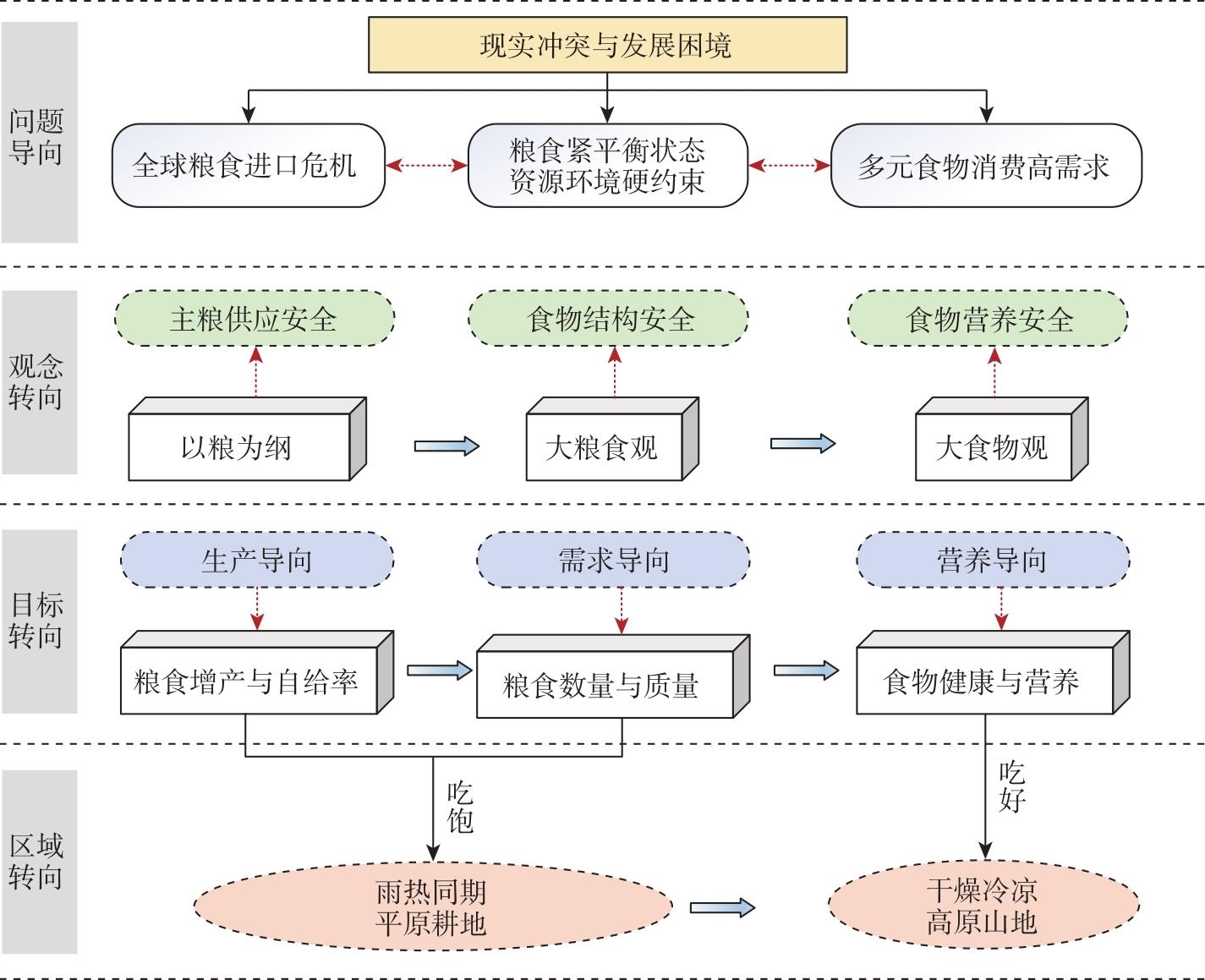
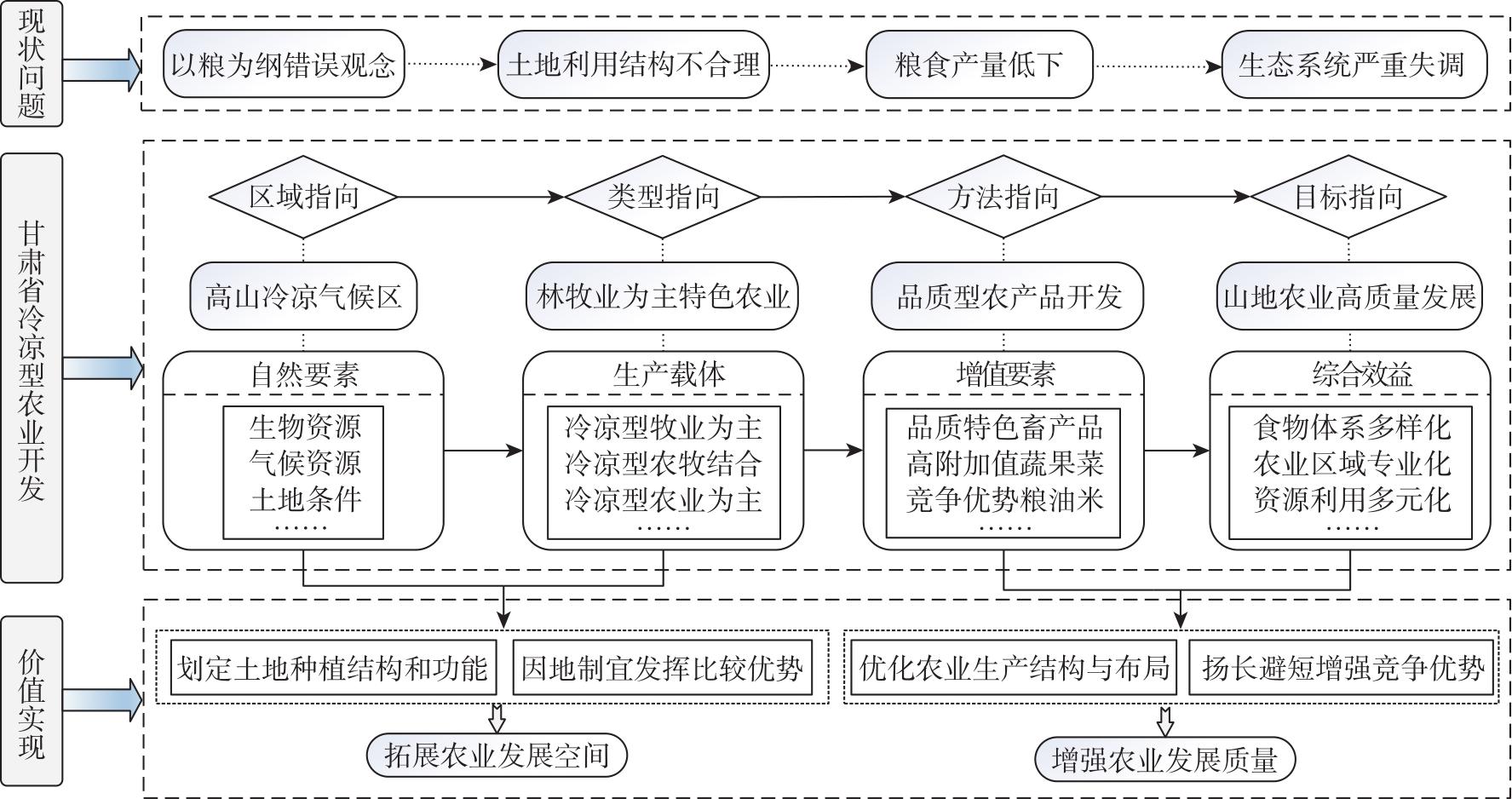
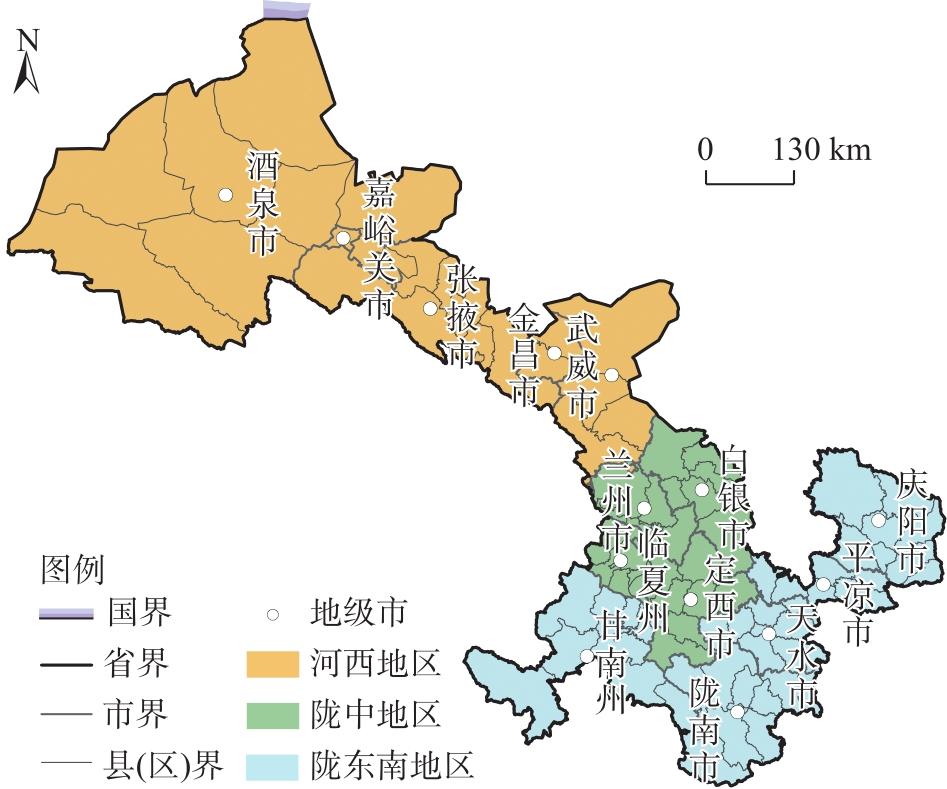
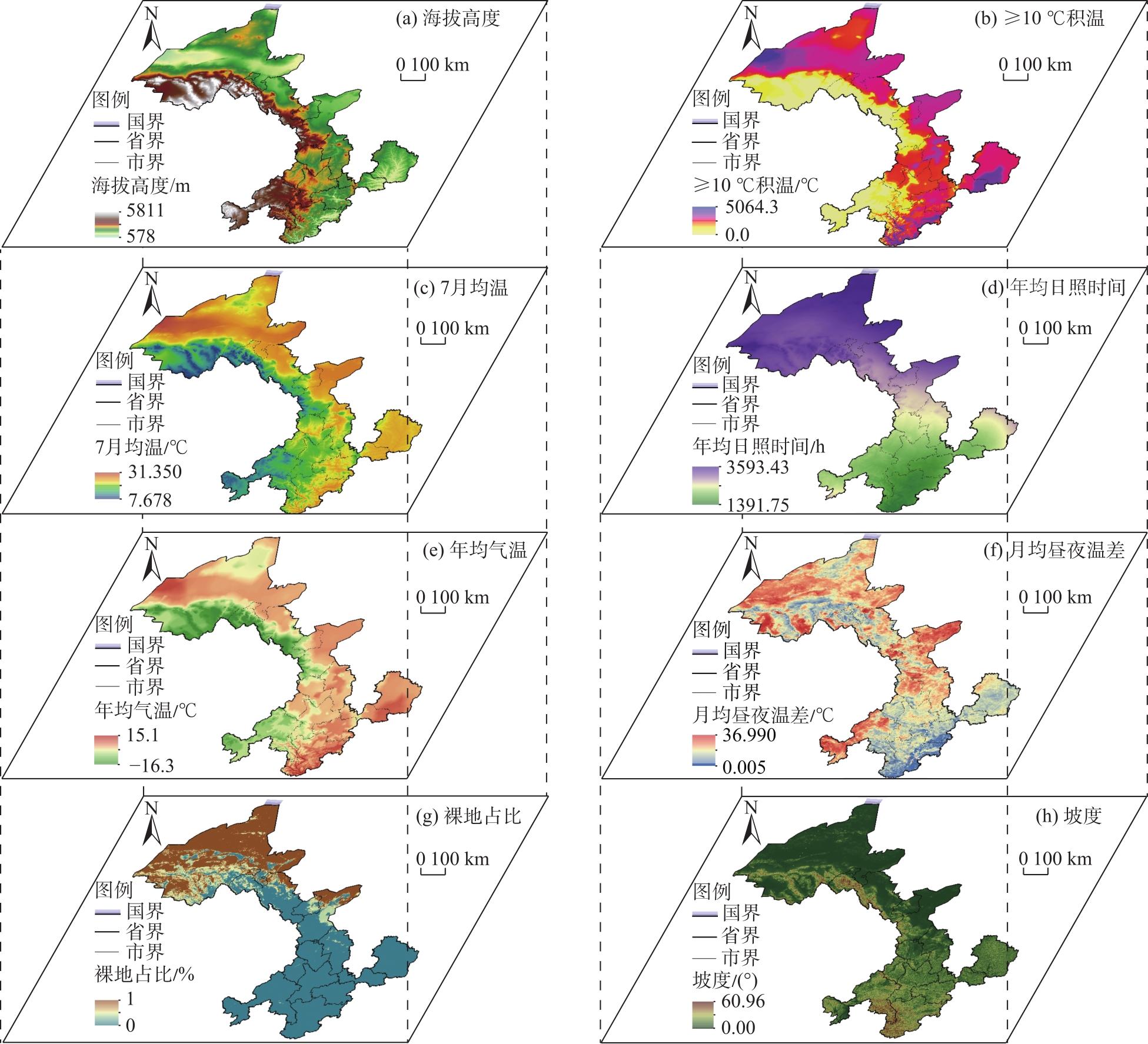
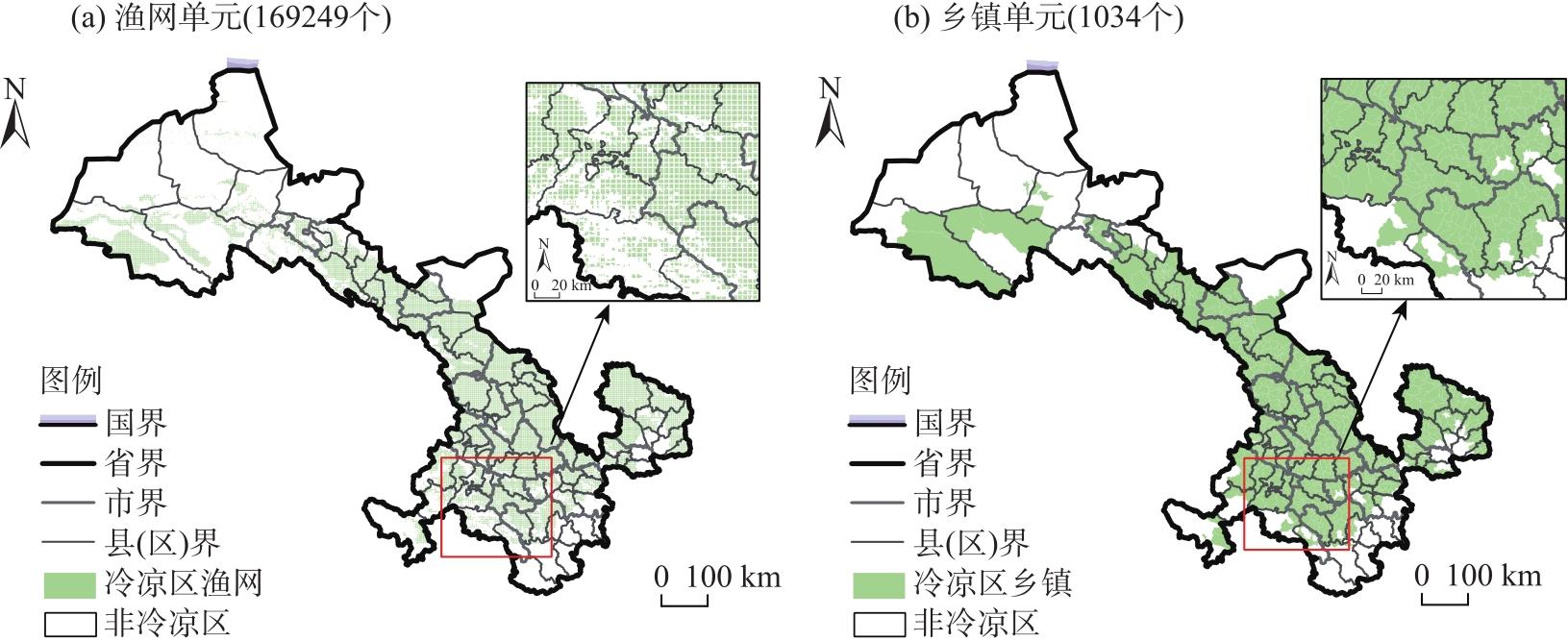
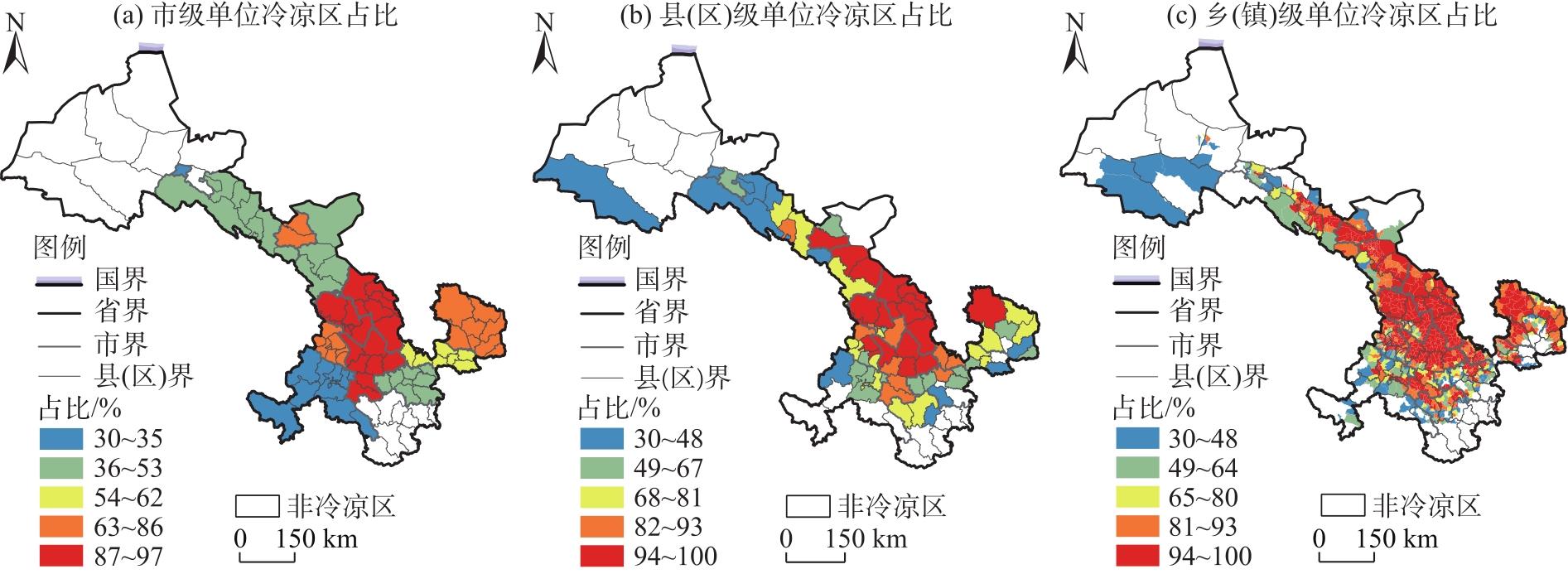
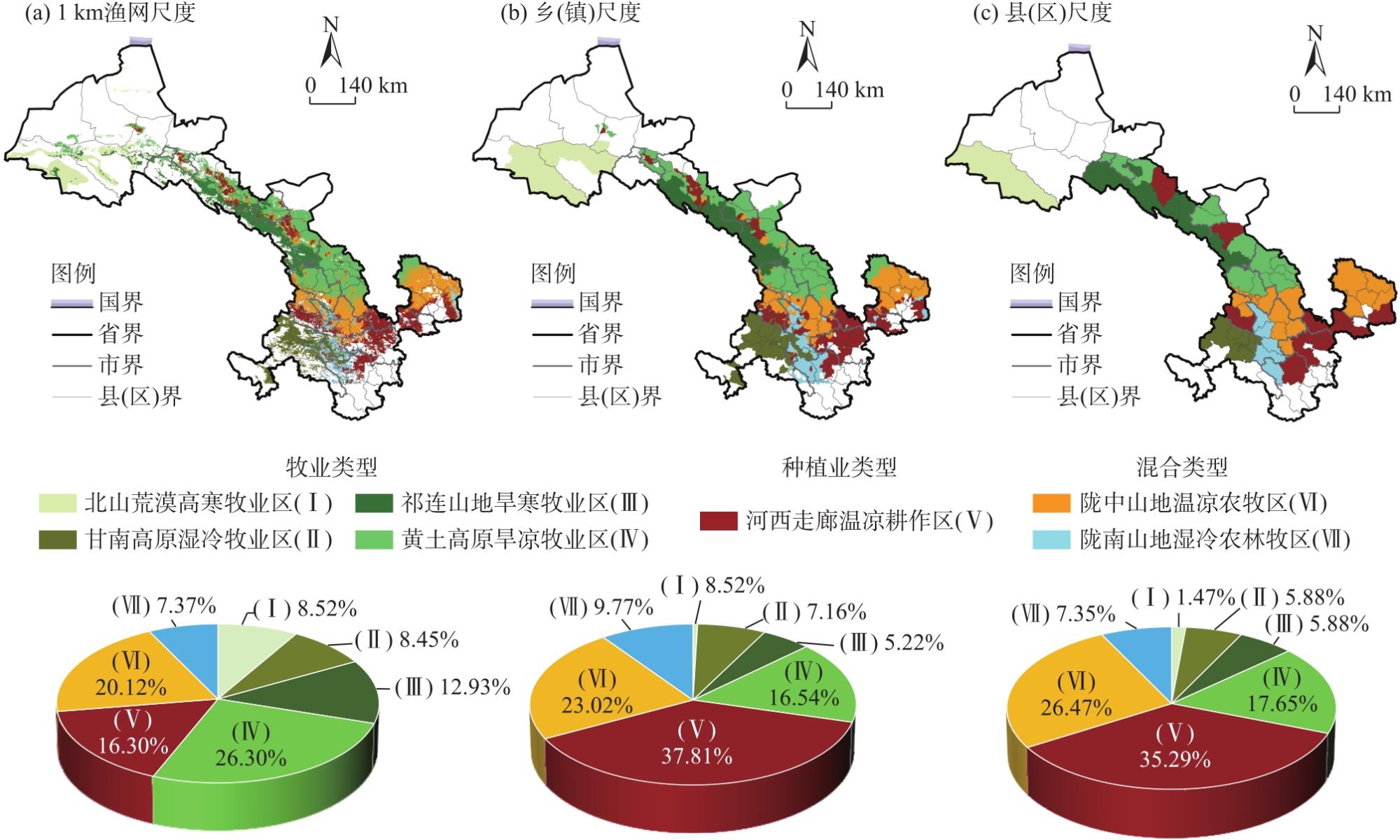
冷凉气候是支撑西北山区农业转型和培育特色经济的重要资源,冷凉区农业综合开发能够有效促进甘肃省发挥区位比较优势,推进农业高质量发展。在论述大食物观背景下冷凉型农业资源的战略意义基础上构建甘肃省冷凉区开发理论框架,根据自然指标叠置分析识别省内冷凉气候的优势区域空间指向,采用K-means聚类方法,对甘肃省冷凉区范围内169249个1 km精度的格网进行农业功能类型分区。结果表明:(1) 甘肃省冷凉区面积约1.69×10⁵ km2,约占全省土地面积41.97%,分布在12市(自治州)、68县(区)、1034乡(镇),其冷凉型农业以畜牧业和种植业为主,特色林业面积较小。(2) 冷凉区可划分为7种农业发展类型,分别为北山荒漠高寒牧业区、祁连山地旱寒牧业区、黄土高原旱凉牧业区、甘南高原湿冷牧业区、河西走廊温凉耕作区、陇中山地温凉农牧区、陇南山地湿冷农林牧区,其中牧业4类,种植业1类,农牧混合型2类。(3) 根据1 km格网单元统计,冷凉型牧业、种植业、混合型农业分别占比56.22%、16.30%和27.49%;而在行政单元尺度,可发展三大类农业类型的占比较为平均,均为30%左右的乡镇和区县数量。
胡舒云 , 陆玉麒 . 甘肃省冷凉区宜农空间识别与开发[J]. 干旱区地理, 2025 , 48(2) : 257 -270 . DOI: 10.12118/j.issn.1000-6060.2024.236
The cold climate of the mountainous areas of northwest China is a vital resource for transforming agriculture and developing a characteristic agricultural economy. In particular, Gansu Province has emerged as an area where the strategic utilization of cold and cool climatic conditions significantly contributes to high-quality advances in agriculture. This study, guided by the holistic “Greater Food” perspective, aims to construct a comprehensive theoretical framework for enhancing the cold and cool-climate agricultural practices in Gansu Province. A robust methodological approach was adopted to identify regions suitable for cold-climate agriculture. This approach integrates eight categories of natural indicators and analyzes their spatial overlap to identify regions in Gansu Province that offer suitable cool climate conditions. For further refining the analysis, K-means clustering was applied to classify 169249 fishing nets, each with 1 km precision, to delineate specific agricultural function zones within these cool areas. This meticulous analysis revealed that the cold and cool regions in Gansu Province together cover an area of approximately 1.69×10⁵ km2, which constitutes about 41.97% of the total land area of the province. These regions are distributed across 12 cities (autonomous prefectures), 68 counties (districts), and 1034 townships. The agricultural activities in these areas are predominantly focused on animal husbandry and plantation, with limited forestry practices, highlighting the potential of this region for specialized agricultural development. These cold and cool areas were further categorized into seven types of agricultural development zones: the alpine pastoral area of the Beishan Desert, the dry and cold pastoral area of the Qilian Mountains, the dry and cold pastoral area of the Loess Plateau, the wet and cold pastoral area of the Gannan Plateau, the warm and cold cultivation area of the Hexi Corridor, the warm and cold agricultural and animal husbandry area of the Longzhong Mountain, and the wet and cold agricultural, forestry, and animal husbandry area of the Longnan Mountain. Among these zones, four are primarily dedicated to pastoral activities, one is primarily used for farming, and two support a mix of agricultural and animal husbandry practices. The statistical analysis based on 1 km fishing net units revealed that cool pastoralism dominates 56.22% of the land use, while plantation agriculture and mixed agriculture account for 16.30% and 27.49%, respectively. On an administrative unit scale, the distribution of these agricultural types is more balanced, with each representing around 30% of the townships and districts. In conclusion, the development of cold- and cool-climate agriculture in Gansu Province presents a strategic opportunity to leverage regional comparative advantages. Effective utilization of these areas can enhance agricultural productivity, promote sustainable land use practices, and foster economic growth in the mountainous regions in Gansu Province. This comprehensive zoning analysis provides a foundational framework for policymakers and stakeholders to implement targeted agricultural strategies, maximizing the benefits of cold-climate agriculture and driving the high-quality development of agriculture in the province.
表 1 甘肃省冷凉区农业类型分区指标体系Tab. 1 Index system of agricultural type zoning in cold and cool area of Gansu Province |
| 指标类别 | 具体指标 | 数据来源 | 权重/% |
|---|---|---|---|
| 地形地貌 | 海拔高度(DEM) | 地理空间数据云(ASTER GDEM V3 版, http://www.gscloud.cn) | 1.86 |
| 坡度 | 基于30 m分辨率DEM地形数据计算 | 5.14 | |
| 地形起伏度 | 3.01 | ||
| 水资源 | 干燥度 | 中国科学院资源环境数据中心(中国气象要素年度空间插值数据集, https://doi.org/10.12078/2022082501) | 4.67 |
| 年均湿润指数 | 0.74 | ||
| 年均降水量 | 3.24 | ||
| 风力资源 | 年均风速 | 中国科学院资源环境数据中心(中国气象要素年度空间插值数据集, https://doi.org/10.12078/2022082501) | 1.50 |
| 光热资源 | ≥10 ℃积温 | 中国科学院资源环境数据中心(中国气象要素年度空间插值数据集, https://doi.org/10.12078/2022082501) | 1.11 |
| 年均日照时间 | 1.30 | ||
| 年均气温 | 1.33 | ||
| 月均昼夜温差 | 全球2010—2020年覆盖陆地表面的0.5°分辨率的月度数据(https://crudata.uea.ac.uk/cru/data/hrg/) | 0.21 | |
| 7月均温 | 0.73 | ||
| 1月均温 | 0.71 | ||
| 植被资源 | 归一化植被指数(NDVI) | 中国科学院资源环境数据中心[中国年度植被指数(NDVI)空间分布数据集, http://www.resdc.cn/10.12078/2018060601] | 3.65 |
| 土地资源 | 草地占比 | 国家青藏高原科学数据中心(中国土地覆被占比数据集, https://doi.org/10.6084/m9.figshare.13147928.v4.) | 6.79 |
| 耕地占比 | 15.05 | ||
| 林地占比 | 25.01 | ||
| 荒地占比 | 10.89 | ||
| 农田资源 | 农田生产潜力 | 中国科学院资源环境数据中心(中国农田生产潜力数据集, http://www.resdc.cn/10.12078/2017122301) | 0.68 |
| 光温生产潜力 | 中国科学院空天信息创新研究院(全球植被光温生产潜力数据集, http://www.aircas.cas.cn/) | 12.38 |
注:年均数据均采用2018、2019、2020年3 a的平均数据。 |
表2 农业类型区分类指标均值Tab. 2 Average values of indicators for agricultural type zones |
| 指标类别 | 具体指标 | Ⅰ | Ⅱ | Ⅲ | Ⅳ | Ⅴ | Ⅵ | Ⅶ |
|---|---|---|---|---|---|---|---|---|
| 地形地貌 | 海拔高度/m | 2987.63 | 3125.55 | 2771.31 | 1784.16 | 1724.22 | 1737.85 | 2347.97 |
| 坡度/(°) | 3.83 | 11.52 | 8.86 | 4.09 | 6.79 | 7.65 | 12.03 | |
| 地形起伏度/(°) | 313.62 | 361.92 | 322.11 | 181.62 | 176.66 | 177.85 | 280.27 | |
| 水资源 | 干燥度 | 10.59 | 0.96 | 2.58 | 2.98 | 1.56 | 1.45 | 1.34 |
| 湿润指数 | -56.78 | 21.05 | -23.77 | -35.95 | -10.32 | -14.88 | -0.64 | |
| 降水量/mm | 82.09 | 550.87 | 264.76 | 223.21 | 457.74 | 417.00 | 507.86 | |
| 风力资源 | 风速/m·s-1 | 3.34 | 2.54 | 3.09 | 2.34 | 1.99 | 2.08 | 2.29 |
| 光热资源 | ≥10 ℃积温/℃ | 1160.83 | 641.53 | 810.29 | 2525.02 | 2452.26 | 2358.31 | 1675.18 |
| 年均日照时间/h | 3171.84 | 2039.97 | 2784.91 | 2668.59 | 2120.78 | 2315.29 | 1973.68 | |
| 月均昼夜温差/℃ | 16.48 | 14.72 | 15.63 | 15.65 | 12.11 | 12.54 | 11.56 | |
| 年均气温/℃ | 0.01 | 1.13 | -0.55 | 6.16 | 6.77 | 6.56 | 4.52 | |
| 7月均温/℃ | 17.49 | 15.06 | 16.72 | 23.14 | 22.61 | 22.39 | 18.63 | |
| 1月均温/℃ | -14.44 | -7.59 | -11.69 | -7.94 | -5.23 | -6.03 | -5.66 | |
| 植被资源 | 归一化植被指数(NDVI) | 0.13 | 0.82 | 0.60 | 0.34 | 0.72 | 0.60 | 0.81 |
| 土地覆被 | 草地占比/% | 0.25 | 0.83 | 0.84 | 0.85 | 0.05 | 0.64 | 0.34 |
| 耕地占比/% | 0.00 | 0.05 | 0.08 | 0.02 | 0.90 | 0.28 | 0.34 | |
| 林地占比/% | 0.00 | 0.11 | 0.07 | 0.00 | 0.03 | 0.06 | 0.32 | |
| 荒地占比/% | 0.74 | 0.00 | 0.01 | 0.12 | 0.00 | 0.00 | 0.00 | |
| 农田资源 | 农田生产潜力 | 52.88 | 39.49 | 48.83 | 72.16 | 62.52 | 66.60 | 52.81 |
| 光温生产潜力 | 0.01 | 0.18 | 0.37 | 0.14 | 0.95 | 0.83 | 0.70 |
注:Ⅰ为北山荒漠高寒牧业区;Ⅱ为甘南高原湿冷牧业区;Ⅲ为祁连山地旱寒牧业区;Ⅳ为黄土高原旱凉牧业区;Ⅴ为河西走廊温凉耕作区;Ⅵ为陇中山地温凉农牧区;Ⅶ为陇南山地湿冷农林牧区。 |
| [1] |
朱晓华, 张燕, 朱媛媛. 大食物观视角下中国耕地保护的分区调控与区间协同[J]. 地理学报, 2023, 78(9): 2147-2162.
[
|
| [2] |
王念, 程昌秀, 林耿. 中国农产品贸易结构演化及对粮食安全的影响[J]. 地理学报, 2022, 77(10): 2599-2615.
[
|
| [3] |
|
| [4] |
|
| [5] |
刘彦随, 陆大道. 中国农业结构调整基本态势与区域效应[J]. 地理学报, 2003, 58(3): 381-389.
[
|
| [6] |
朱晶, 李天祥, 林大燕. 开放进程中的中国农产品贸易: 发展历程、问题挑战与政策选择[J]. 农业经济问题, 2018, 39(12): 19-32.
[
|
| [7] |
张少尧, 邓伟, 胡茂桂, 等. 山区过渡性地理空间人文自然交互性识别与分异解析[J]. 地理学报, 2022, 77(5): 1225-1243.
[
|
| [8] |
关慧明. 气流循环暨冷凉生态对农业的影响及利用[M]. 北京: 群众出版社, 2013.
[
|
| [9] |
索亚林, 兰妮, 兰云峰. 中国北方冷凉气候生态经济带(区)发展分析与展望[J]. 农业展望, 2020, 16(12): 72-77.
[
|
| [10] |
胡舒云, 陆玉麒, 胡国建. 中国中海拔地区冷凉型农业生态资源识别、开发与启示[J]. 自然资源学报, 2024, 39(2): 446-464.
[
|
| [11] |
江小莉, 温铁军, 施俊林. “两山”理念的三阶段发展内涵和实践路径研究[J]. 农村经济, 2021, 39(4): 1-8.
[
|
| [12] |
张义丰, 王又丰, 刘录祥, 等. 河北省阳原县冷凉性气候资源开发与蔬菜产业结构调整[J]. 地理科学进展, 2002, 21(4): 374-382.
[
|
| [13] |
张毅功, 臧士国, 张爱军, 等. 太行山冷凉区域气候资源的农业利用技术——以河北省顺平县复兴村为例[J]. 山地学报, 2001, 19(3): 270-273.
[
|
| [14] |
颜亮东, 伏洋, 李凤霞, 等. 青海省冷凉气候资源分区及其开发利用[J]. 资源科学, 2006, 30(1): 157-162.
[
|
| [15] |
龙花楼, 李秀彬. 中国耕地转型与土地整理: 研究进展与框架[J]. 地理科学进展, 2006, 25(5): 67-76.
[
|
| [16] |
龙花楼, 戈大专, 王介勇. 土地利用转型与乡村转型发展耦合研究进展及展望[J]. 地理学报, 2019, 74(12): 2547-2559.
[
|
| [17] |
李升发, 李秀彬. 中国山区耕地利用边际化表现及其机理[J]. 地理学报, 2018, 73(5): 803-817.
[
|
| [18] |
臧玉珠, 刘彦随, 杨园园. 山区县域土地利用格局变化及其地形梯度效应——以井冈山市为例[J]. 自然资源学报, 2019, 34(7): 1391-1404.
[
|
| [19] |
陈志钢, 徐孟. 大食物观引领下低碳减排与粮食安全的协同发展: 现状、挑战与对策[J]. 农业经济问题, 2023, 44(6): 77-85.
[
|
| [20] |
殷伟, 于会娟, 仇荣山, 等. 陆海统筹视域下的中国食物与营养安全[J]. 资源科学, 2022, 44(4): 674-686.
[
|
| [21] |
中共中央办公厅, 国务院办公厅. 中共中央国务院关于做好2023年全面推进乡村振兴重点工作的意见[EB/OL]. [2024-01-18]. http://www.gov.cn/zhengce/2023-02/13/content_5741370.htm.
[ General Office of the Communist Party of China Central Committee, General Office of the State Council. Opinion of the CPC Central Committee and the State Council on promoting rural revitalization in an all-round way in 2023[EB/OL]. [2024-01-18]. http://www.gov.cn/zhengce/2023-02/13/content_5741370.htm.
|
| [22] |
朱晶, 王容博, 徐亮, 等. 大食物观下的农产品贸易与中国粮食安全[J]. 农业经济问题, 2023, 44(5): 36-48.
[
|
| [23] |
唐园结, 邓俐, 李飞, 等. 山重水复终有路[N/OL]. 农民日报, 2020-12-28[2024-1-21]. https://www.moa.gov.cn/xw/qg/202012/t20201228_6358914.
[
|
| [24] |
张志良, 徐勤, 杨晓鹏. 甘肃农业生产布局[M]. 兰州: 甘肃科学技术出版社, 1990.
[
|
| [25] |
陈明星, 梁龙武, 王振波, 等. 美丽中国与国土空间规划关系的地理学思考[J]. 地理学报, 2019, 74(12): 2467-2481.
[
|
| [26] |
荣丽华, 李伊彤. 国土空间规划背景下畜牧业生产适宜性评价与分区——以锡林郭勒盟镶黄旗为例[J]. 干旱区地理, 2023, 46(7): 1166-1175.
[
|
| [27] |
廖柳文, 高晓路, 龙花楼, 等. 基于农户利用效率的平原和山区耕地利用形态比较[J]. 地理学报, 2021, 76(2): 471-486.
[
|
| [28] |
|
| [29] |
宋乃平, 卞莹莹, 王磊, 等. 农牧交错带农牧复合系统的可持续机制[J]. 生态学报, 2020, 40(21): 7931-7940.
[
|
| [30] |
王新友, 王玉娇. 耕地撂荒的文献计量分析: 脉络和展望[J]. 干旱区地理, 2023, 46(5): 804-813.
[
|
| [31] |
吴风华. 地理信息系统基础[M]. 武汉: 武汉大学出版社, 2014.
[
|
| [32] |
樊杰, 周侃, 盛科荣, 等. 中国陆域综合功能区及其划分方案[J]. 中国科学: 地球科学, 2023, 53(2): 236-255.
[
|
| [33] |
侯志华, 崔晓琪, 樊晓霞. 流域乡村聚落发展潜能评测及分区振兴路径——以汾河流域为例[J]. 干旱区地理, 2023, 46(4): 649-657.
[
|
| [34] |
甘肃省农业区划委员会. 甘肃省农业区域综合开发规划[M]. 北京: 改革出版社, 1993.
[ Agricultural Regionalization Committee of Gansu Province. Comprehensive development plan for agricultural regions of Gansu Province[M]. Beijing: Reform Press, 1993. ]
|
| [35] |
刘升元, 李新文, 刘风会. 市场经济与甘肃农业发展对策[M]. 兰州: 甘肃科学技术出版社, 1995.
[
|
/
| 〈 |
|
〉 |