



|
高瑞翔(1997-),男,硕士,主要从事机器学习碳通量模拟研究. E-mail: gaoruixiang22@mails.ucas.ac.cn |
收稿日期: 2025-02-24
修回日期: 2025-04-01
网络出版日期: 2026-03-11
基金资助
新疆维吾尔自治区自然科学重点基金(2022D01D01)
天山英才项目(2022TSYCLJ0001)
Ecosystem carbon flux inversion method combining LSTM and fuzzy mathematics
Received date: 2025-02-24
Revised date: 2025-04-01
Online published: 2026-03-11
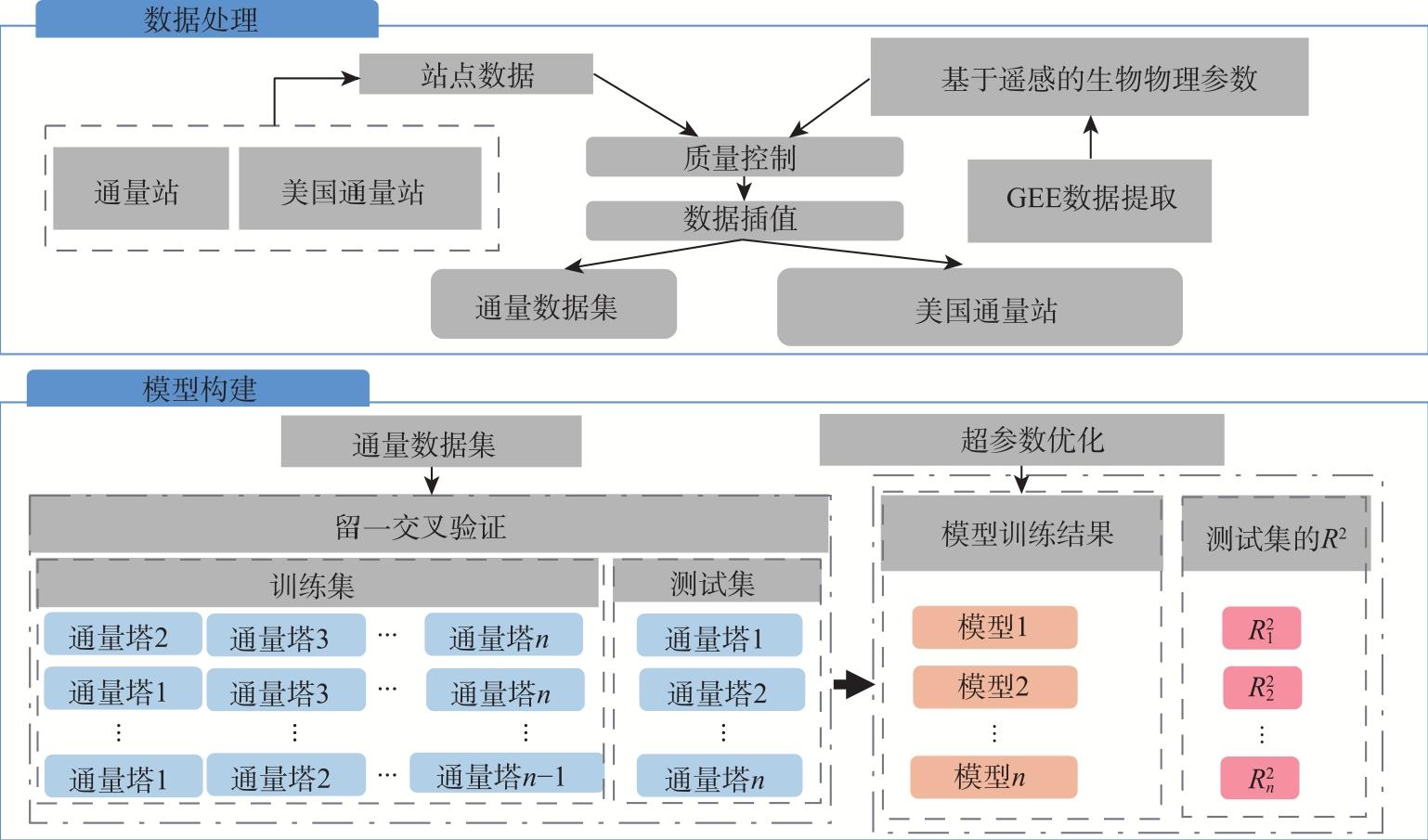
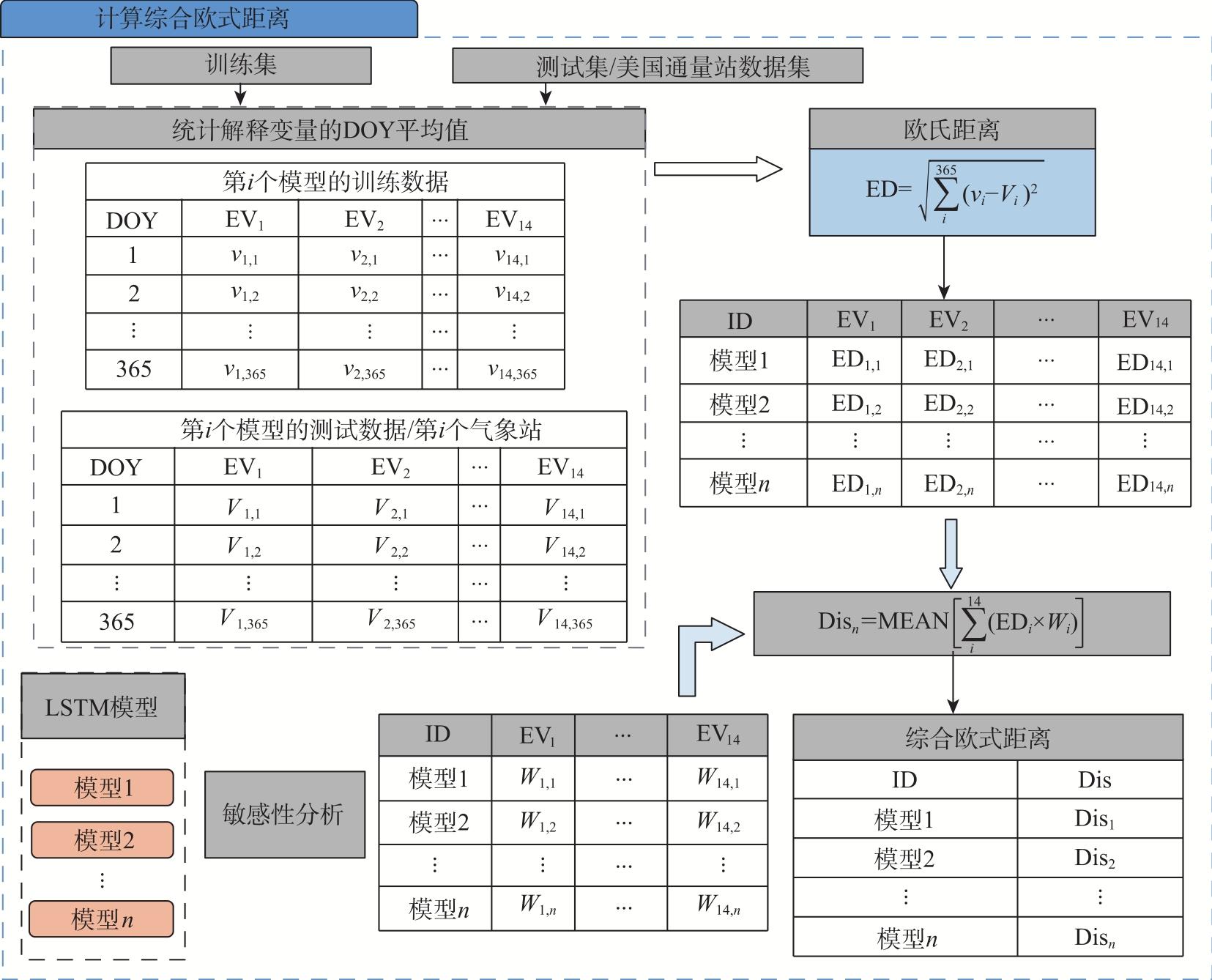
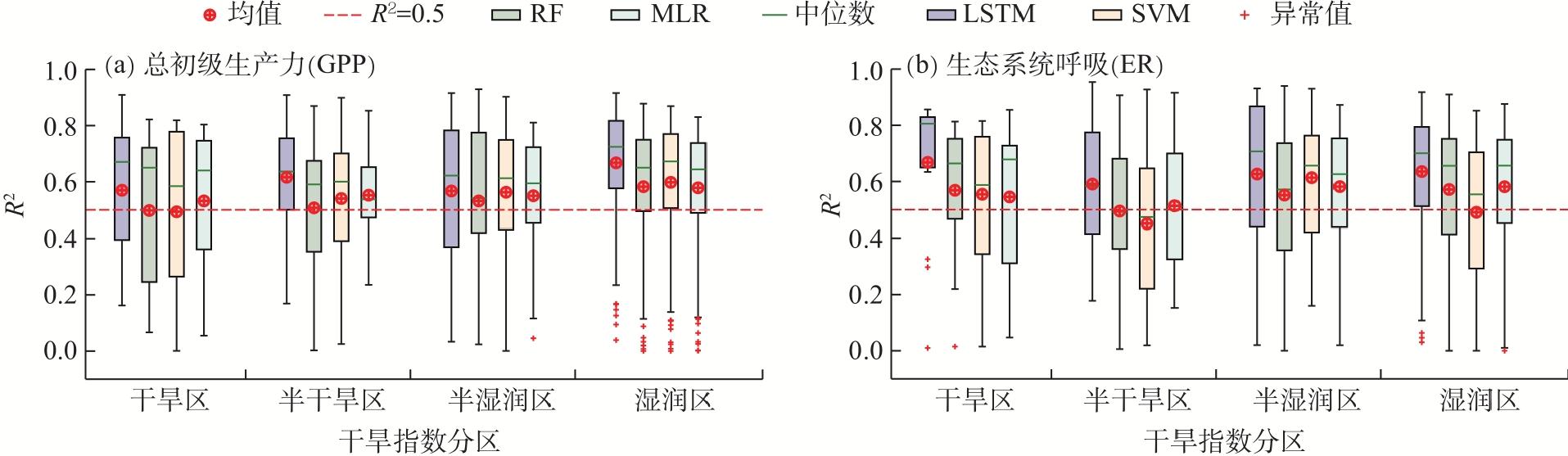
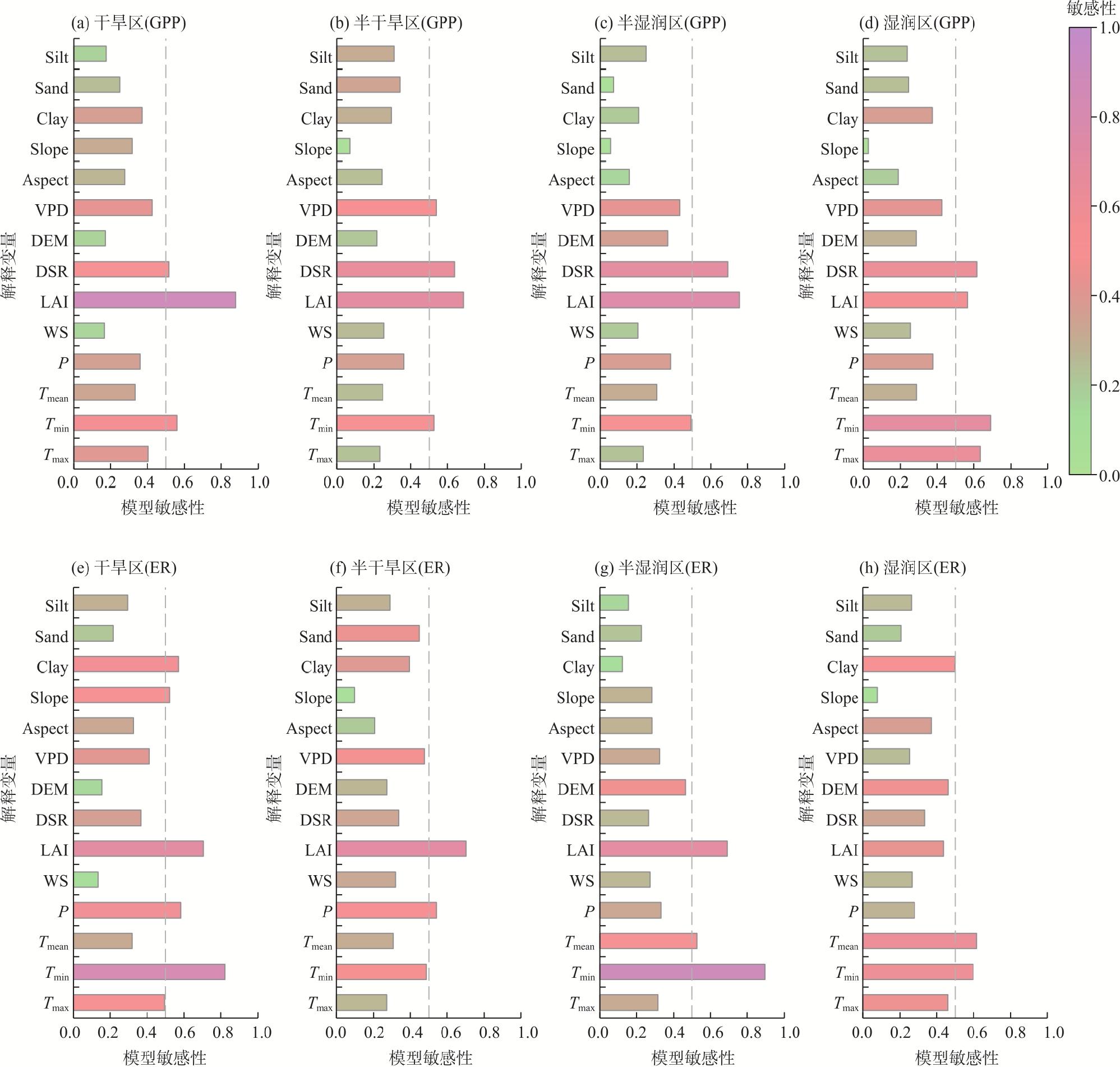
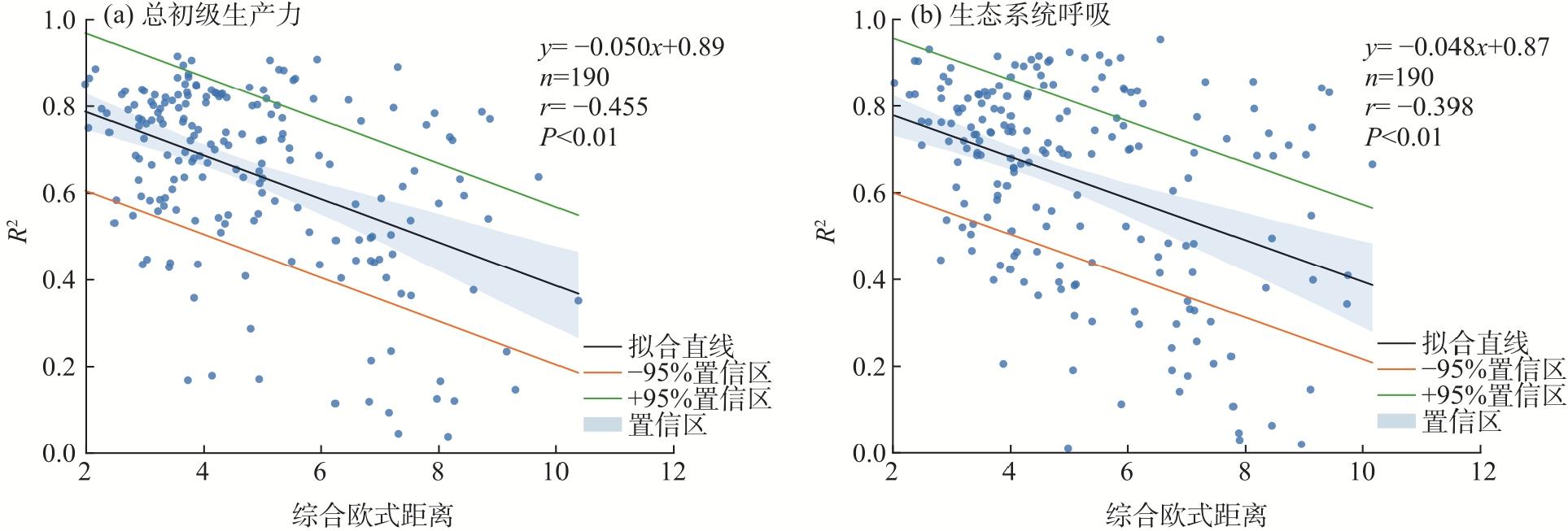
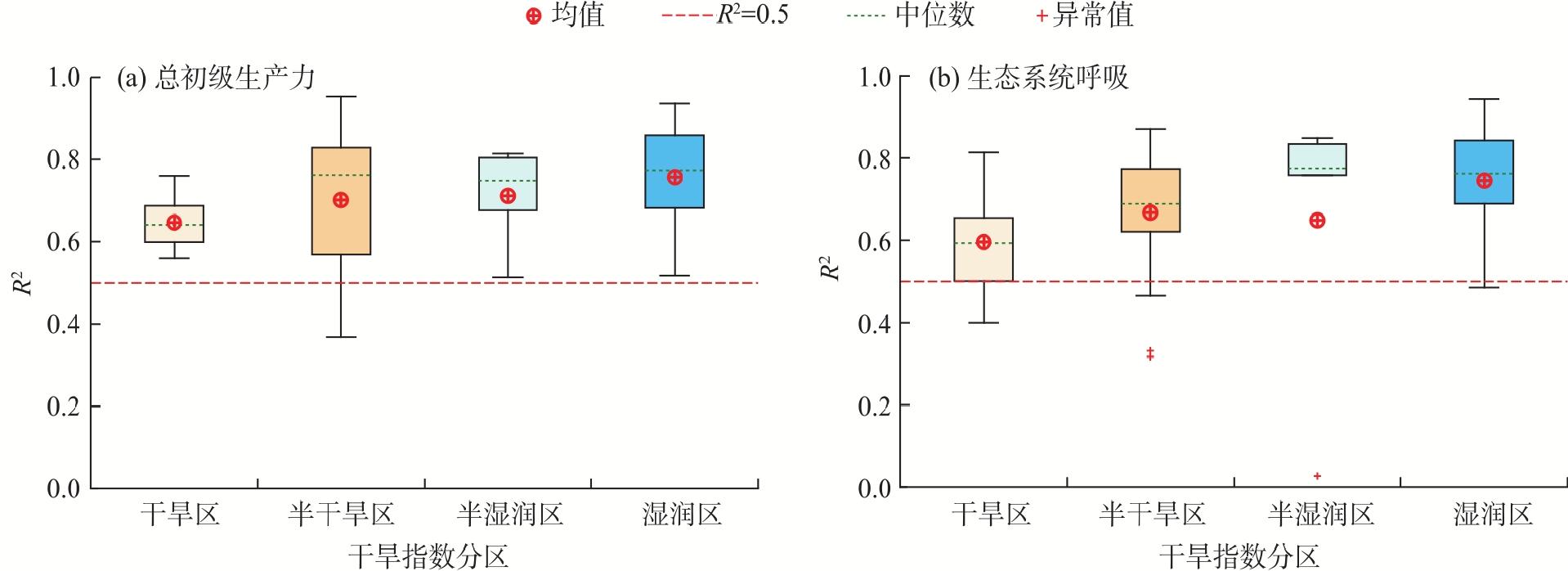
基于长短期记忆网络方法,结合FLUXNET通量站观测数据与对应遥感生物物理参数数据,提出通过综合欧氏距离指数量化训练集与测试集之间数据异质性,并结合模糊数学理论构建碳通量反演模型。结果表明:(1) 通过数据预处理、模型训练,分别利用随机森林、支持向量机、多元线性回归和长短期记忆网络算法建立模型,发现长短期记忆网络在碳通量反演中具有优势。(2) 采用留一交叉验证策略,在不同气候区内构建碳通量反演模型,以反映地表空间异质性,并用决定系数(R2)对模型进行评估,发现综合欧式距离与R2之间为显著负相关。(3) 将构建的模型应用于美国通量站进行验证,总初级生产力和生态系统呼吸的R2均值均为0.72。总体而言,研究结果提出了一种有效的碳通量模拟方法,具有较好的应用潜力。
高瑞翔 , 罗格平 , 张文强 , 谢明娟 , 王渊刚 . 长短期记忆网络在生态系统碳通量反演中的优势与应用[J]. 干旱区地理, 2025 , 48(12) : 2210 -2219 . DOI: 10.12118/j.issn.1000-6060.2025.092
This study proposes a carbon flux inversion model based on the long short-term memory (LSTM) network. A comprehensive Euclidean distance index is introduced by integrating FLUXNET flux tower observation data with corresponding remote-sensing biophysical parameter datasets to quantify data heterogeneity between training and testing sets. Furthermore, a fuzzy mathematics theory is incorporated to develop the inversion model. Models were developed using random forest, support vector machine, multiple linear regression, and LSTM algorithms through data preprocessing and model training. Results revealed that the LSTM network performed better than the other algorithms in carbon flux inversion. In addition, using the leave-one cross-validation strategy, many carbon flux machine learning models were developed to reflect the spatial heterogeneity of the surface, and the determination coefficient R2 was used to evaluate the models. Results revealed that the comprehensive Euclidean distance was significantly negatively correlated with R2. The constructed model was applied to the US flux station for verification, and the mean R2 values of the total primary productivity and ecosystem respiration were both 0.72. Overall, this study proposed an effective carbon flux simulation method, which has good application potential.
表1 通量塔汇总表Tab. 1 Flux tower summary table |
| 干旱指数分区 | 站点数量 |
|---|---|
| 干旱区 | 15 |
| 半干旱区 | 44 |
| 半湿润区 | 20 |
| 湿润区 | 111 |
表2 解释变量汇总表Tab. 2 List of the explanatory variables used in this study |
| 解释变量 | 描述 | 单位 | 时间/空间分辨率 | 来源 |
|---|---|---|---|---|
| Tmax | 最高气温 | ℃ | 日 | 通量塔 |
| Tmin | 最低气温 | ℃ | 日 | 通量塔 |
| Tmean | 平均气温 | ℃ | 日 | 通量塔 |
| P | 降水量 | mm | 日 | 通量塔 |
| WS | 风速 | m·s-1 | 日 | 通量塔 |
| VPD | 大气水气压差 | hPa | 日 | 通量塔 |
| LAI | 叶面积指数 | m2 | 8 d/500 m | MODIS |
| DSR | 向下短波辐射 | W·m-2 | d/5 km | Seoul National |
| DEM | 高程 | m | 静态变量 | GLOBE from NOAA |
| Aspect | 坡向 | (°) | 静态变量 | GLOBE from NOAA |
| Slope | 坡度 | (°) | 静态变量 | GLOBE from NOAA |
| Clay | 表土黏土占比 | % | 静态变量 | HWSD from FAO |
| Sand | 表土砂占比 | % | 静态变量 | HWSD from FAO |
| Silt | 表土粉砂占比 | % | 静态变量 | HWSD from FAO |
表3 模型均方根误差均值和方差Tab. 3 Mean and variance of root mean square error of the model /g C·m-2·d-1 |
| 干旱指数分区 | LSTM模型 | RF模型 | SVM模型 | MLR模型 |
|---|---|---|---|---|
| 干旱区(GPP) | 0.62(±0.37) | 0.80(±0.20) | 0.98(±0.55) | 0.99(±0.32) |
| 干旱区(ER) | 0.78(±0.40) | 0.99(±0.65) | 1.01(±0.69) | 1.17(±0.66) |
| 半干旱区(GPP) | 0.74(±0.50) | 0.81(±0.52) | 0.84(±0.33) | 0.80(±0.51) |
| 半干旱区(ER) | 0.85(±1.13) | 0.96(±1.07) | 0.87(±0.76) | 0.90(±0.91) |
| 半湿润区(GPP) | 1.06(±2.04) | 1.31(±2.90) | 1.29(±2.64) | 2.99(±9.24) |
| 半湿润区(ER) | 0.80(±1.14) | 0.84(±0.94) | 0.90(±1.45) | 1.95(±1.05) |
| 湿润区(GPP) | 0.61(±0.39) | 0.63(±0.34) | 0.78(±0.29) | 0.70(±0.55) |
| 湿润区(ER) | 0.63(±0.45) | 0.64(±0.51) | 0.83(±0.46) | 0.78(±0.70) |
注:RF为随机森林模型;MLR为多元线性回归;LSTM为长短期记忆网络;SVM为支持向量机。括号内数值为RMSE的方差;括号外数值为均值。 |
| [1] |
|
| [2] |
朴世龙, 何悦, 王旭辉, 等. 中国陆地生态系统碳汇估算: 方法、进展、展望[J]. 中国科学: 地球科学, 2022, 52(6): 1010-1020.
[
|
| [3] |
|
| [4] |
|
| [5] |
|
| [6] |
|
| [7] |
|
| [8] |
|
| [9] |
|
| [10] |
|
| [11] |
|
| [12] |
|
| [13] |
|
| [14] |
|
| [15] |
|
| [16] |
|
| [17] |
|
| [18] |
|
| [19] |
|
| [20] |
|
| [21] |
|
| [22] |
|
| [23] |
|
| [24] |
于贵瑞, 王秋凤, 朱先进. 区域尺度陆地生态系统碳收支评估方法及其不确定性[J]. 地理科学进展, 2011, 30(1): 103-113.
[
|
| [25] |
李宏业, 谢惠春. 基于涡度相关法的不同生态系统碳通量研究进展[J]. 青海草业, 2024, 33(3): 33-38.
[
|
| [26] |
|
| [27] |
|
| [28] |
陈世苹, 游翠海, 胡中民, 等. 涡度相关技术及其在陆地生态系统通量研究中的应用[J]. 植物生态学报, 2020, 44(4): 291-304.
[
|
| [29] |
岳斌, 余赛芬, 董晶晶, 等. 温室气体通量测量方法及进展[J]. 光学学报, 2023, 43(18): 90-102.
[
|
| [30] |
|
| [31] |
|
| [32] |
|
| [33] |
|
| [34] |
|
| [35] |
|
| [36] |
|
| [37] |
|
| [38] |
|
| [39] |
|
| [40] |
|
| [41] |
|
| [42] |
|
| [43] |
|
| [44] |
|
| [45] |
|
| [46] |
|
/
| 〈 |
|
〉 |