



|
王伟杰(2000-),女,硕士研究生,主要从事农业干旱方面研究. E-mail: wangweijie2022@163.com |
收稿日期: 2024-12-10
修回日期: 2025-03-13
网络出版日期: 2026-03-11
基金资助
国家自然科学基金青年基金资助项目(E1120103)
中国科学院基础与交叉前沿科研B类先导专项(XDB0720200)
新疆维吾尔自治区重点研发计划项目(2022B01032-4)
Prediction model of water requirements for main crops in typical oases in arid areas based on XGBoost
Received date: 2024-12-10
Revised date: 2025-03-13
Online published: 2026-03-11
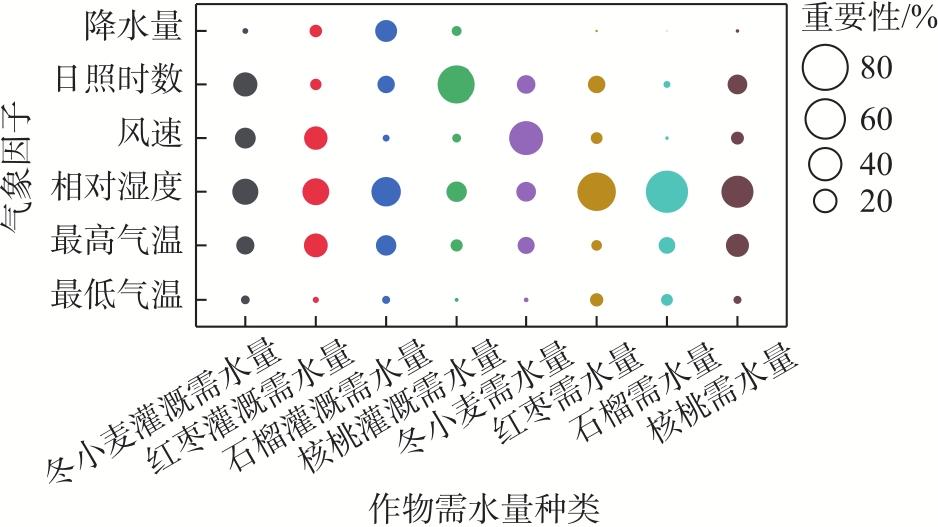
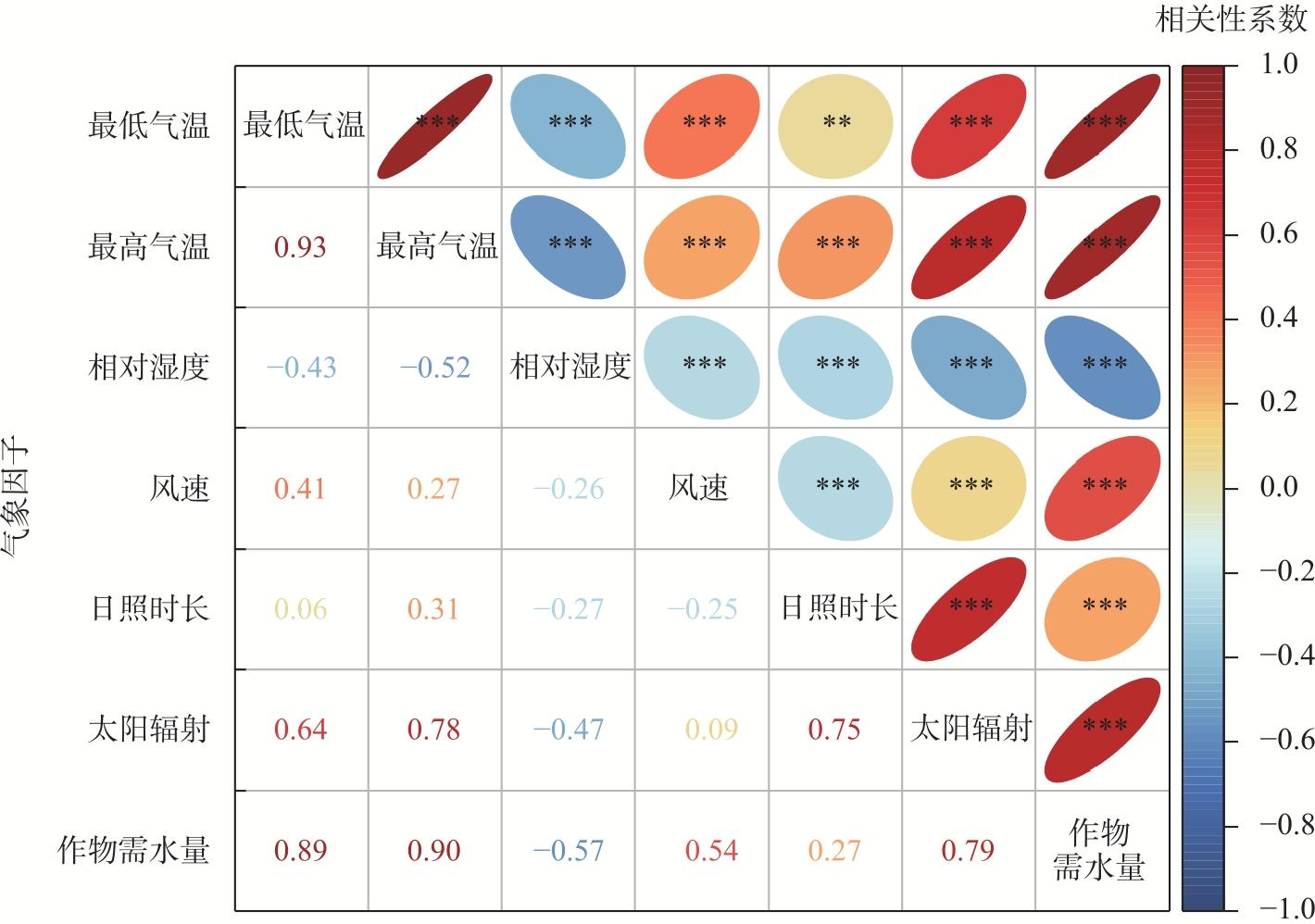
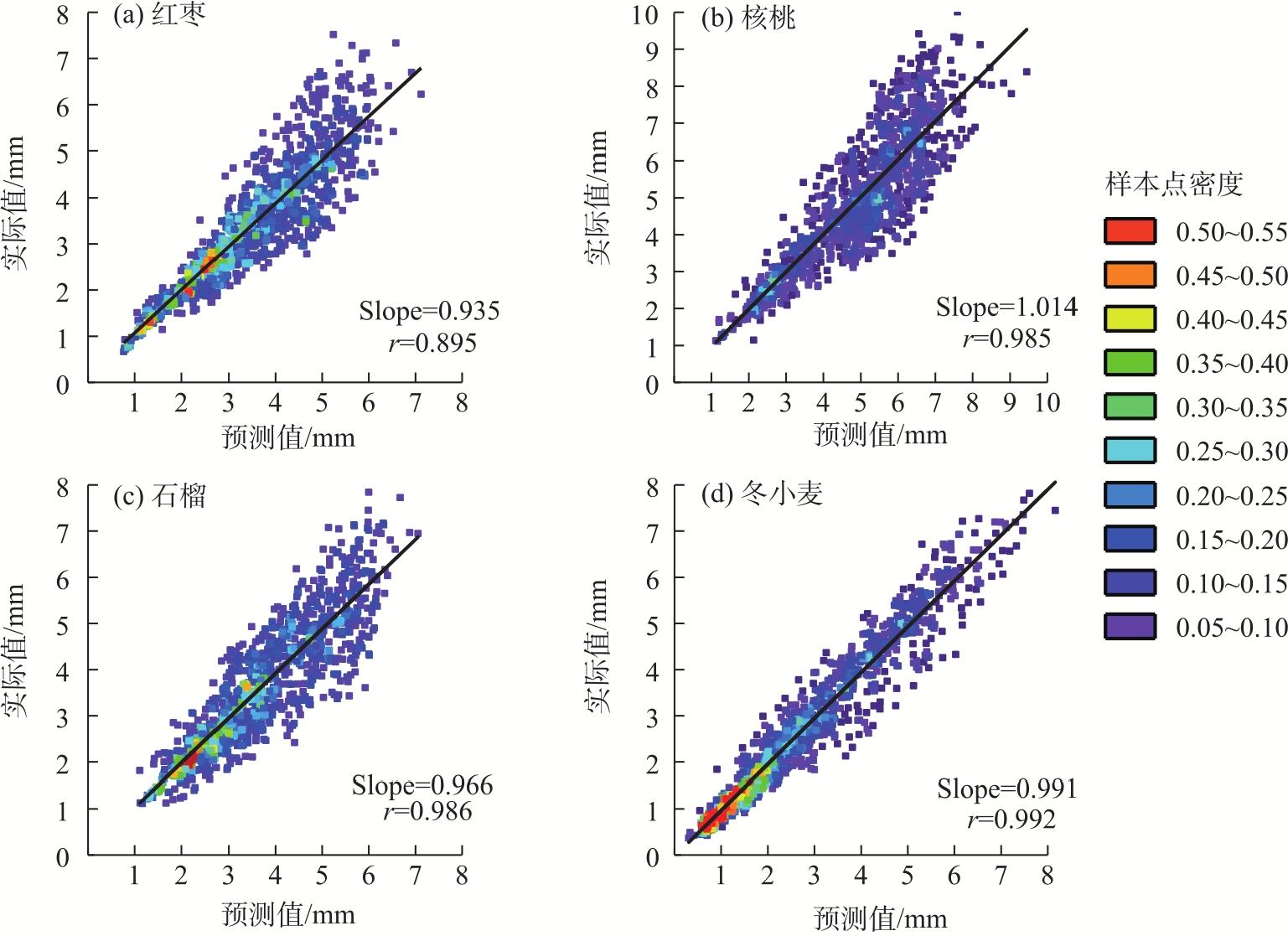
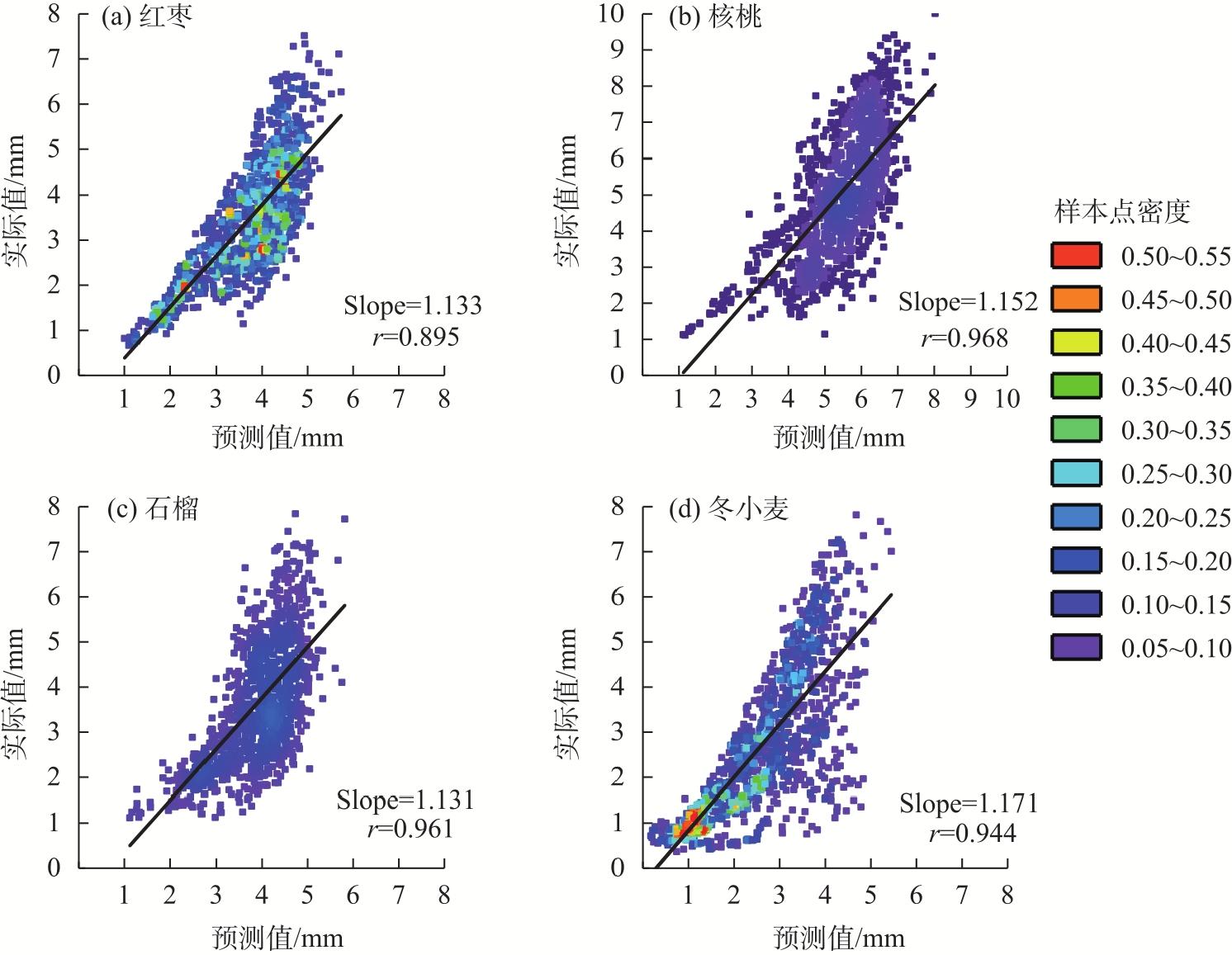
通过探索策勒绿洲主要作物需水量的预测模型,直接建立气象因素与作物生长特性同作物需水量之间的复杂联系,有效克服了应用彭曼公式时所面临的数据获取难题,从而为干旱区域绿洲内作物需水量的估算提供了科学依据。研究结合使用了彭曼公式及作物系数法,以每日作物需水量作为目标变量,并根据归因分析结果选取特定气象参数来构建极限梯度提升树(XGBoost)需水量预测模型,同时确定了最佳的基础学习器类型。结果表明:(1) 基于XGBoost回归算法的分析显示,相对湿度、日照时间和最高温度是影响需水量的关键气象因子,重要性合计占比达到了75.81%。(2) 相较于gblinear-XGBoost模型而言,采用gbtree-XGBoost方法构建的模型表现出更高的准确性,决定系数提升了大约84.35%,而均方根误差则降低了约0.625,表明需水量预测值与实际作物需水量之间存在显著相关性。该预测模型能有效反映作物需水规律,gbtree-XGBoost模型可作为策勒绿洲灌溉指导和水资源调配的有力工具,为干旱区绿洲农业水资源高效管理提供了重要支撑。
王伟杰 , 于洋 , 孙凌霄 , 何婧 , 张凌云 . 基于XGBoost的干旱区典型绿洲主要作物需水量预测模型研究[J]. 干旱区地理, 2025 , 48(12) : 2087 -2098 . DOI: 10.12118/j.issn.1000-6060.2024.756
Climate change and water scarcity significantly threaten agriculture in arid regions. The Cele Oasis, located at the southern margin of the Taklimakan Desert in Xinjiang, China, is a typical arid-area oasis with a fragile ecology. An accurate prediction of the water requirements for cultivating crops in this area is crucial for the rational allocation of water resources and the development of sustainable agricultural practices. This study is dedicated to designing a prediction model applicable to the water requirements of the major crops in the Cele Oasis, revealing the intricate relationships among meteorological factors, crop growth characteristics, and water requirements, and circumventing the data-acquisition challenges associated with the Penman formula. This research integrated the Penman formula with the crop coefficient method. The daily water requirement was designated as the target variable. Based on the attribution analysis results, relevant meteorological parameters such as relative humidity, sunshine hours, and maximum temperature were selected to construct “XGBoost”, a water requirement prediction model. Moreover, different base learner types of XGBoost, including gbtree, gblinear, and dart, were explored to identify which among them was most suitable for the model.The results of this study were remarkable. XGBoost-based regression analysis revealed that relative humidity, sunshine hours, and maximum temperature were the dominant meteorological factors influencing crop water requirements, with a cumulative importance ratio reaching 75.81%. Among them, relative humidity demonstrated the highest impact, with an average feature importance of 39.84%, followed by sunshine hours (20.25%) and maximum temperature (15.72%). In terms of performance, the gbtree-XGBoost model demonstrated superior accuracy compared to the gblinear-XGBoost model. The R2 value of the former increased by ~84.35% relative to the latter, with the root mean square error decreasing by ~0.625. The gbtree-XGBoost model could capture the complex nonlinear relationships between variables more effectively, and its predictions correlated markedly with the actual crop water requirements. In conclusion, this study successfully established a crop water requirement prediction model for the Cele Oasis. It could effectively capture the complex relationships among meteorological factors, crop growth characteristics, and water requirements. Among them, the gbtree-XGBoost model showed excellent performance and can be a reliable tool for guiding irrigation and allocating water resources in the Cele Oasis. It provides a scientific basis for the rational management of agricultural water resources in arid oases, which is conducive to improving water use efficiency, ensuring better crop yields, and promoting the sustainable development of agriculture in arid regions. This research also provides valuable references for similar studies in other arid areas, contributing to global efforts in designing water-saving agriculture methods and sustainable water resource management.
表1 策勒绿洲主要作物生长周期及作物系数Tab. 1 Growth cycle and crop coefficients of major crops in Cele Oasis |
| 作物种类 | 作物系数 | 生育初期/d | 快速发育期/d | 生育中期/d | 成熟期/d | 生育期/d | 生长时间/月 | ||
|---|---|---|---|---|---|---|---|---|---|
| 初始阶段 | 中期阶段 | 最后阶段 | |||||||
| 核桃 | 0.50 | 1.10 | 0.65 | 20 | 10 | 130 | 30 | 190 | 4 |
| 石榴 | 0.60 | 0.95 | 0.75 | 65 | 45 | 50 | 50 | 210 | 4 |
| 红枣 | 0.50 | 0.90 | 0.60 | 45 | 55 | 90 | 30 | 220 | 4 |
| 冬小麦 | 0.70 | 1.15 | 0.25 | 40 | 140 | 30 | 45 | 255 | 4 |
表2 GSCV-XGBoost参数Tab. 2 Parameters of GSCV-XGBoost |
| 参数 | 范围值 |
|---|---|
| n_estimators | [50, 100, 200, 300] |
| max_depth | [3, 5, 7, 9] |
| min_child_weight | [1, 3, 5] |
| learning_rate | 0.1 |
表3 模型数据集分割Tab. 3 Model dataset splitting |
| 作物 | 生育期天数/d | 训练数据集/组 | 测试训练集/组 |
|---|---|---|---|
| 红枣 | 220 | 4224 | 1056 |
| 核桃 | 190 | 3648 | 912 |
| 石榴 | 210 | 4032 | 1008 |
| 冬小麦 | 255 | 4896 | 1224 |
图6 gbtree-XGBoost模型作物需水量预测值与实际值分析Fig. 6 Analysis of predicted and actual crop water requirement values in the gbtree-XGBoost model |
表4 模型精度对比Tab. 4 Comparison of model accuracy |
| 作物 | gbtree-XGBoost模型 | gblinear-XGBoost模型 | dart-XGBoost模型 | |||||
|---|---|---|---|---|---|---|---|---|
| R2 | RMSE | R2 | RMSE | R2 | RMSE | |||
| 红枣 | 0.792 | 0.610 | 0.549 | 0.898 | 0.792 | 0.610 | ||
| 核桃 | 0.723 | 0.936 | 0.344 | 1.441 | 0.723 | 0.936 | ||
| 石榴 | 0.770 | 0.661 | 0.338 | 1.122 | 0.770 | 0.661 | ||
| 冬小麦 | 0.945 | 0.395 | 0.609 | 1.654 | 0.945 | 0.395 | ||
注:RMSE为均方根误差;R2为决定系数。 |
| [1] |
陈亚宁, 李稚, 范煜婷, 等. 西北干旱区气候变化对水文水资源影响研究进展[J]. 地理学报, 2014, 69(9): 1295-1304.
[
|
| [2] |
|
| [3] |
|
| [4] |
|
| [5] |
|
| [6] |
|
| [7] |
|
| [8] |
杜云, 张婧婧, 雷嘉诚, 等. 冬小麦需水量的预测模型对比分析[J]. 新疆农业科学, 2024, 61(7): 1590-1596.
[
|
| [9] |
邵玉. 甘肃地区基于智能算法的灌溉系统节水优化及应用[J]. 农业工程技术, 2024, 44(17): 28-29.
[
|
| [10] |
李启巍. 基于机器学习的蒸散量响应因素权重分析[D]. 北京: 北京林业大学, 2020.
[
|
| [11] |
高宇婷, 于洋, 孙凌霄, 等. 策勒绿洲地下水和地表覆被时空变化的研究[J]. 干旱地区农业研究, 2020, 38(6): 200-208.
[
|
| [12] |
龚栋栋, 高凡, 吴彬, 等. 基于GRACE的新疆平原区地下水干旱时空变化及其对气象干旱的响应[J]. 干旱区地理, 2024, 47(9): 1496-1507.
[
|
| [13] |
周洪华, 杨玉海, 朱成刚, 等. 供需平衡视角下昆仑山北坡县域单元地表水资源开发利用潜力初探[J]. 干旱区地理, 2024, 47(7): 1106-1115.
[
|
| [14] |
周晓兵, 陶冶, 张元明. 塔克拉玛干沙漠南缘荒漠绿洲过渡带不同土地利用影响下优势植物化学计量特征[J]. 草业学报, 2018, 27(5): 15-26.
[
|
| [15] |
何强强, 毛东雷, 徐佳瑞, 等. 策勒绿洲-沙漠过渡带不同沙丘的沉积物粒度特征及沉积环境[J]. 水土保持研究, 2023, 30(3): 135-145.
[
|
| [16] |
|
| [17] |
|
| [18] |
刘钰,
[
|
| [19] |
|
| [20] |
|
| [21] |
|
| [22] |
|
| [23] |
史梦霞, 张佳笑, 石晓宇, 等. 近20年河北省几种高耗水作物的水分利用效率分析[J]. 作物学报, 2021, 47(12): 2450-2458.
[
|
| [24] |
|
| [25] |
|
| [26] |
|
| [27] |
郑芳, 李芳然, 甘义群, 等. 极端气候事件对洞庭湖水文连通性变化的影响[J]. 南水北调与水利科技(中英文), 2024, 22(1): 67-79.
[
|
| [28] |
赵冰茜, 王光焰, 刘毅, 等. 干旱区绿洲用水效率模拟及分析——以策勒绿洲为例[J]. 节水灌溉, 2020(5): 11-15.
[
|
| [29] |
张波. 干旱绿洲区滴灌骏枣需水规律及优化灌溉制度研究[D]. 石河子: 石河子大学, 2022.
[
|
| [30] |
刘昀昊, 李雪冬, 费龙, 等. 基于特征选择与遗传神经网络的土壤水分反演[J]. 中国农业气象, 2024, 45(10): 1095-1108.
[
|
| [31] |
|
| [32] |
|
| [33] |
|
/
| 〈 |
|
〉 |