



内蒙古冰雹特征及基于机器学习的冰雹识别方法研究
|
辛悦(1995-),女,硕士,工程师,主要从事大气物理学与人工影响天气研究. E-mail: xinqzh163@163.com |
收稿日期: 2024-01-25
修回日期: 2024-04-25
网络出版日期: 2026-03-11
基金资助
国家自然科学基金重点项目(42030604)
内蒙古自然科学基金面上项目(2024MS0424)
中国气象局创新发展专项项目(CXFZ 2022J033)
内蒙古自治区气象局科技创新项目(nmqxkjcx202470)
Hail characteristics and hail recognition method based on machine learning in Inner Mongolia
Received date: 2024-01-25
Revised date: 2024-04-25
Online published: 2026-03-11
辛悦 , 苏立娟 , 郑旭程 , 李慧 , 衣娜娜 , 靳雨晨 . 内蒙古冰雹特征及基于机器学习的冰雹识别方法研究[J]. 干旱区地理, 2025 , 48(1) : 11 -19 . DOI: 10.12118/j.issn.1000-6060.2024.057
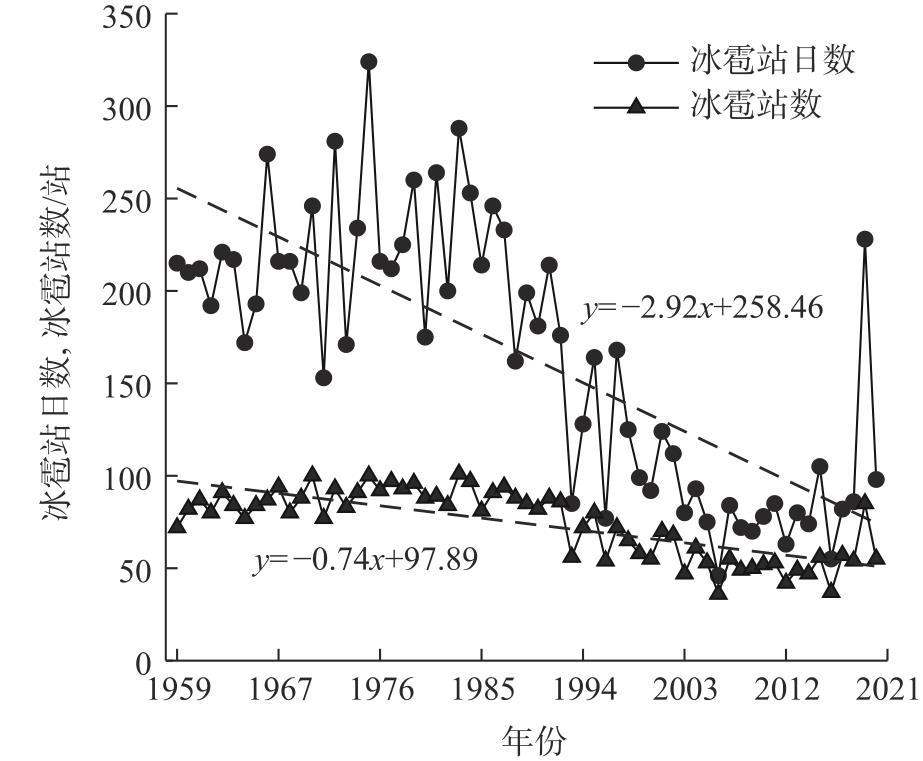
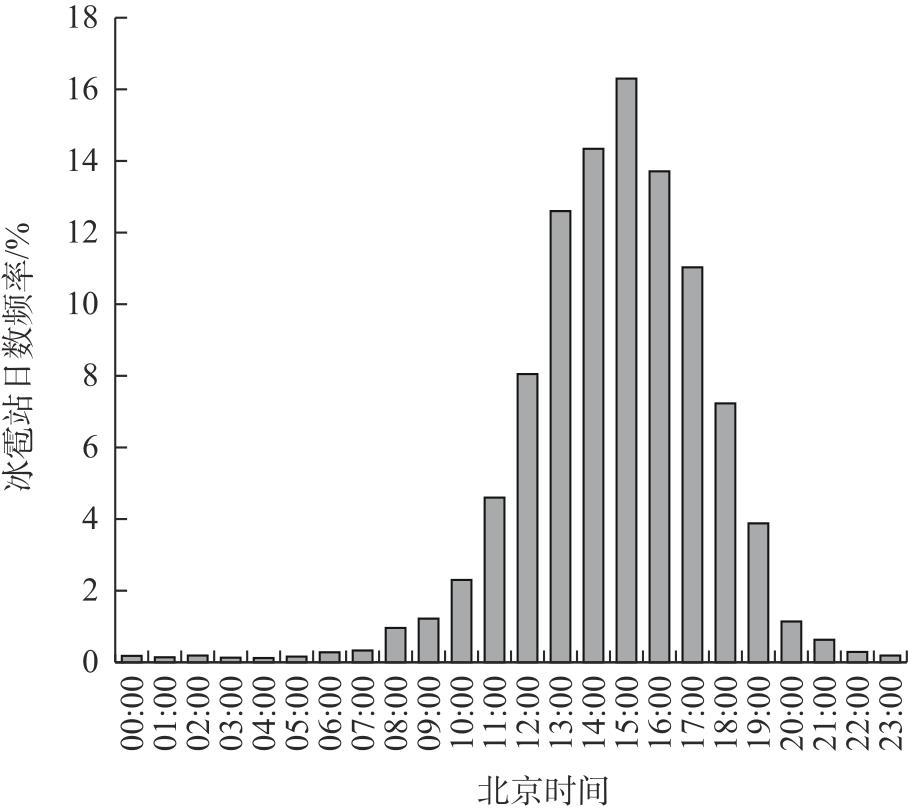
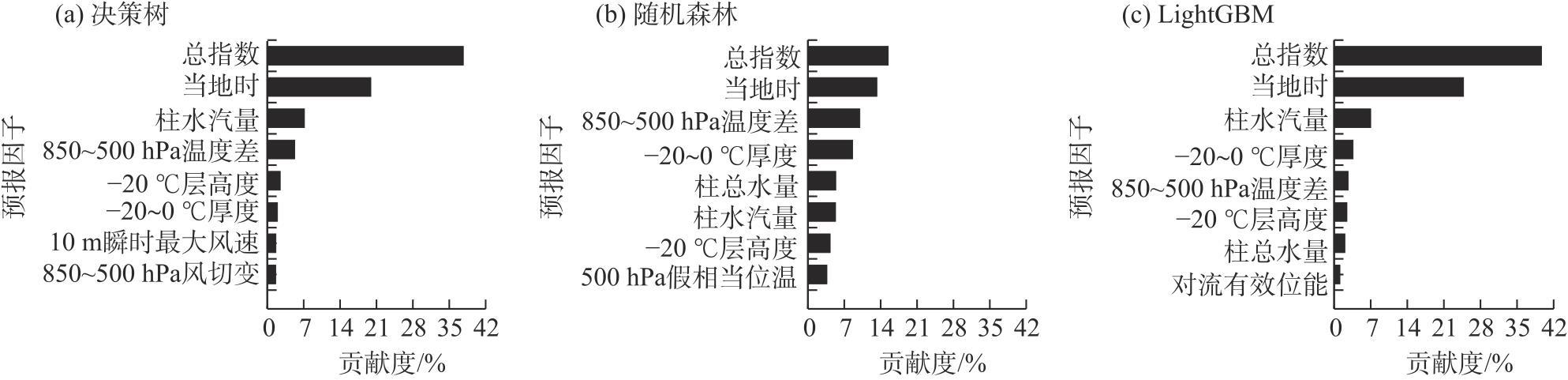
Based on the manual observation of hail records in Inner Mongolia, China, from 1959 to 2021, the spatial and temporal characteristics of hail distribution are analyzed, and a hail recognition method is constructed based on machine learning algorithms. The results are as follows: (1) Regarding temporal distribution, the number of hail days and affected stations in Inner Mongolia shows a decreasing trend. In terms of spatial distribution, hail events are predominantly concentrated in the Yinshan Mountains and the Greater Hinggan Mountains, with hail-prone areas extending along these mountain ranges. (2) Hail exhibits distinct seasonal and diurnal characteristics. The peak hail months in Inner Mongolia are from May to September, accounting for 91.79% of the annual hail days. The most frequent period for hail occurrences is between 12:00 BST and 19:00 BST. (3) Four machine learning algorithms (random forest, LightGBM, K-proximity, and decision tree) are used to model and evaluate hail events in Inner Mongolia through data preprocessing, predictor selection, model training, and tuning. Verification results indicate that machine learning methods effectively identify hail events, with the threat score of each model exceeding 0.83 and hit rates surpassing 92%. Among these, the random forest algorithm demonstrates the best recognition performance on the test set. These findings provide useful references for hail forecasting and artificial hail prevention in Inner Mongolia.
表1 1959—2021年内蒙古冰雹站日数及冰雹站日数频率月变化Tab. 1 Monthly variations of the hail station days number and frequency in Inner Mongolia from 1959 to 2021 |
| 冰雹特征参数 | 1月 | 2月 | 3月 | 4月 | 5月 | 6月 | 7月 | 8月 | 9月 | 10月 | 11月 | 12月 |
|---|---|---|---|---|---|---|---|---|---|---|---|---|
| 冰雹站日数 | 0 | 0 | 30 | 448 | 1419 | 2645 | 2134 | 1697 | 1644 | 364 | 9 | 2 |
| 冰雹站日数频率/% | 0.00 | 0.00 | 0.29 | 4.31 | 13.65 | 25.45 | 20.54 | 16.33 | 15.82 | 3.50 | 0.09 | 0.02 |
表2 机器学习训练的主要预报因子类型和要素Tab. 2 Types and elements of the main predictive factors in machine learning training |
| 预报因子类型 | 预报物理量 |
|---|---|
| 指数类 | K指数、修正K指数、总指数、强天气威胁指数、沙氏指数 |
| 水汽因子 | 柱总水量、柱水汽量、850 hPa相对湿度、700 hPa相对湿度、850 hPa露点温度差、700 hPa露点温度差、瞬时最大湿通量 |
| 动力因子 | 850~500 hPa风切变、850~300 hPa风切变、10 m瞬时最大风速 |
| 高度层因子 | 0 ℃层高度、-20 ℃层高度、-20~0 ℃厚度 |
| 热力因子 | 850~500 hPa温度差、850 hPa假相当位温、700 hPa假相当位温、500 hPa假相当位温、850~500 hPa假相当位温差、700~500 hPa假相当位温差、对流有效位能 |
| 其他信息 | 冰雹发生的年份、月份、日期、当地时、经度、纬度 |
表3 默认参数训练的机器学习算法在测试集上的识别效果Tab. 3 Recognition performance of machine learning algorithms trained with default parameters on the test set |
| 模型名称 | 命中数/个 | 漏报数/个 | 空报数/个 | 命中率/% | 空报率/% | 漏报率/% | TS评分 |
|---|---|---|---|---|---|---|---|
| 随机森林 | 1854 | 137 | 158 | 93.11 | 7.82 | 6.88 | 0.8627 |
| LightGBM | 1820 | 171 | 168 | 91.55 | 8.59 | 8.45 | 0.8429 |
| K近邻 | 1777 | 214 | 154 | 89.25 | 7.97 | 10.74 | 0.8284 |
| 决策树 | 1759 | 232 | 217 | 88.34 | 10.98 | 11.65 | 0.7966 |
表4 机器学习模型超参数调节取值范围Tab. 4 Range of hyperparameter tuning values for machine learning models |
| 超参数 | 初始值 | 取值范围 |
|---|---|---|
| n_neighbors | 3 | [1, 11] |
| n_estimators | 100 | [10, 500] |
| max_depth | 2 | [1, 11] |
| min_sample_leaves | 10 | [1, 50] |
表5 调优后的各机器学习算法在测试集上的识别效果Tab. 5 Recognition performance of optimized machine learning algorithms on the test set |
| 模型名称 | 命中数/个 | 漏报数/个 | 空报数/个 | 命中率/% | 空报率/% | 漏报率/% | TS评分 |
|---|---|---|---|---|---|---|---|
| 随机森林 | 1856 | 135 | 155 | 93.22 | 7.71 | 6.78 | 0.8648 |
| LightGBM | 1848 | 143 | 158 | 92.82 | 7.88 | 7.18 | 0.8599 |
| K近邻 | 1855 | 136 | 196 | 93.17 | 9.56 | 6.83 | 0.8481 |
| 决策树 | 1854 | 137 | 226 | 93.12 | 10.87 | 6.88 | 0.8362 |
表6 2023年5—8月内蒙古冰雹观测记录及机器学习模型识别效果Tab. 6 Hail observation records and machine learning model recognition performance in Inner Mongolia from May to August of 2023 |
| 降雹站点 | 降雹日期 | 降雹时间 | 随机森林 | LightGBM | K近邻 | 决策树 |
|---|---|---|---|---|---|---|
| 正蓝旗 | 5月11日 | 16:25—16:28 | √ | √ | √ | √ |
| 镶黄旗 | 5月12日 | 15:56—15:57 | √ | √ | √ | √ |
| 宁城 | 5月16日 | 15:41—15:44 | √ | √ | √ | √ |
| 正蓝旗 | 6月1日 | 12:16—12:18 | √ | √ | √ | √ |
| 新巴尔虎右旗 | 6月2日 | 13:06—13:17 | √ | √ | √ | √ |
| 扎兰屯 | 6月2日 | 12:30 | × | × | √ | √ |
| 胡尔勒 | 6月14日 | 19:36—19:37 | √ | √ | √ | √ |
| 呼和浩特 | 6月19日 | 15:41—15:44 | √ | √ | √ | √ |
| 乌拉特前旗 | 6月25日 | 17:16—17:24 | √ | √ | √ | √ |
| 扎兰屯 | 6月28日 | 18:44—18:49 | √ | √ | √ | √ |
| 林西 | 7月7日 | 11:10 | × | × | × | × |
| 青龙山 | 7月7日 | 10:07 | √ | √ | √ | √ |
| 科尔沁左翼后旗 | 7月14日 | 14:48—14:50 | × | × | √ | √ |
| 东乌珠穆沁旗 | 7月18日 | 16:46—16:51 | √ | √ | √ | √ |
| 吉兰泰 | 7月20日 | 12:54 | √ | √ | √ | √ |
| 赛罕区 | 7月23日 | 19:23—19:30 | √ | × | √ | √ |
| 呼和浩特 | 7月24日 | 15:22—15:55 | √ | √ | √ | √ |
| 土默特右旗 | 8月2日 | 16:33—16:39 | × | × | × | × |
| 科尔沁左翼中旗 | 8月2日 | 17:06—17:07 | × | × | × | × |
| 察哈尔右翼前旗 | 8月6日 | 19:20 | √ | × | × | × |
| 正蓝旗 | 8月8日 | 16:22 | √ | √ | √ | √ |
| 多伦 | 8月9日 | 15:34—15:45 | × | × | √ | √ |
| 多伦 | 8月20日 | 17:55—18:05 | √ | √ | √ | √ |
注:√表示识别出该次冰雹过程;×表示未识别出该次冰雹过程。 |
| [1] |
姚展予, 屠琦, 安琳, 等. 冰雹形成过程及人工防雹研究综述[J]. 气象学报, 2022, 80(6): 835-863.
[
|
| [2] |
陶涛, 张立新, 桑建人, 等. 六盘山区一次非典型冰雹天气过程微物理量特征的分析[J]. 干旱区地理, 2020, 43(2): 299-307.
[
|
| [3] |
王昀, 谢向阳, 马禹, 等. 天山北侧成灾雹云移动路径及预警指标的研究[J]. 干旱区地理, 2017, 40(6): 1152-1164.
[
|
| [4] |
张芳华, 高辉. 中国冰雹日数的时空分布特征[J]. 南京气象学院学报, 2008, 31(5): 687-693.
[
|
| [5] |
汤兴芝, 黄治勇, 张荣, 等. 2010—2020年全国冰雹灾害事件时空分布特征[J]. 暴雨灾害, 2023, 42(2): 223-231.
[
|
| [6] |
尉英华, 花家嘉, 王莹, 等. 近11年天津冰雹统计特征及对流参数指标分析[J]. 气象, 2023, 49(2): 213-223.
[
|
| [7] |
钟敏, 郭英莲, 陈璇, 等. 基于客观分型的冰雹概率预报方法研究[J]. 高原气象, 2022, 41(4): 934-944.
[
|
| [8] |
刘新伟, 黄武斌, 蒋盈沙, 等. 基于LightGBM算法的强对流天气分类识别研究[J]. 高原气象, 2021, 40(4): 909-918.
[
|
| [9] |
刘新伟, 蒋盈沙, 黄武斌, 等. 基于雷达产品和随机森林算法的冰雹天气分类识别及预报[J]. 高原气象, 2021, 40(4): 898-908.
[
|
| [10] |
汤兴芝, 黄兴友. 冰雹云的多普勒天气雷达识别参量及其预警作用[J]. 暴雨灾害, 2009, 28(3): 261-265.
[
|
| [11] |
韩经纬, 王海梅, 乌兰, 等. 内蒙古雷暴、冰雹灾害的评估分析与防御对策研究[J]. 干旱区资源与环境, 2009, 27(7): 31-38.
[
|
| [12] |
顾润源, 孙永刚, 韩经纬, 等. 内蒙古自治区天气预报手册[M]. 北京: 气象出版社, 2012: 277-281.
[
|
| [13] |
李文娟, 赵放, 郦敏杰, 等. 基于数值预报和随机森林算法的强对流天气分类预报技术[J]. 气象, 2018, 44(12): 1555-1564.
[
|
| [14] |
周康辉. 基于深度卷积神经网络的强对流天气预报方法研究[D]. 北京: 中国气象科学研究院, 2021.
[
|
| [15] |
王芝兰, 陈录元, 尚可政, 等. 青海强对流天气时空特征及其对气候变暖的响应[J]. 干旱气象, 2011, 29(4): 439-445, 454.
[
|
| [16] |
加勇次成, 次旺顿珠, 措姆. 气候变化背景下羌塘自然保护区冰雹日数时空变化特征[J]. 中国农学通报, 2019, 35(18): 103-109.
[Jiayongcicheng, Ciwangdunzhu, Cuomu. Hail days in Qiangtang National Nature Reserve of Tibet: Spatial and temporal variation characteristics under the background of climate change[J]. Chinese Agricultural Science Bulletin, 2019, 35(18): 103-109.]
|
| [17] |
邸强, 穆超, 孔文甲. 呼和浩特地区冰雹时空特征分析[J]. 内蒙古科技与经济, 2023, 4: 92-93, 157.
[
|
| [18] |
哈青辰. 近32年赤峰地区冰雹的分布特征及防御[J]. 农业灾害研究, 2021, 11(7): 83-84.
[
|
| [19] |
罗喜平, 廖波, 张小娟, 等. 1961—2020年贵州冰雹气候特征[J]. 干旱气象, 2022, 40(6): 1024-1032.
[
|
| [20] |
|
| [21] |
张勇, 刘慧, 郑颖菲, 等. 人工智能模型的分类临近预报产品效果检验与分析[J]. 沙漠与绿洲气象, 2023, 17(1): 115-121.
[
|
| [22] |
刘瑞亮, 贾科利, 李小雨, 等. 组合光学和微波遥感的耕地土壤含盐量反演[J]. 干旱区地理, 2024, 47(3): 433-444.
[
|
| [23] |
|
| [24] |
朱思华, 罗继, 曲良璐. 新疆阿克苏地区冰雹时空分布及雷达回波特征[J]. 沙漠与绿洲气象, 2021, 15(2): 81-88.
[
|
| [25] |
虎雅琼, 边宇轩, 黄梦宇, 等. 基于灾情信息的1981—2017年北京地区降雹特征[J]. 应用气象学报, 2019, 30(6): 710-721.
[
|
| [26] |
唐文苑, 周庆亮, 刘鑫华, 等. 国家级强对流天气分类预报检验分析[J]. 气象, 2017, 43(1): 67-76.
[
|
/
| 〈 |
|
〉 |