



|
宋小龙(1991-),男,博士,副教授,主要从事干旱半干旱地区生态环境、旅游资源开发与区域可持续发展研究. E-mail: sxlnxyc@163.com |
收稿日期: 2023-12-27
修回日期: 2024-03-02
网络出版日期: 2026-03-11
基金资助
宁夏自然科学基金项目(2021AAC03191)
Spatial pattern and influencing factors of key rural tourism villages in Ningxia
Received date: 2023-12-27
Revised date: 2024-03-02
Online published: 2026-03-11
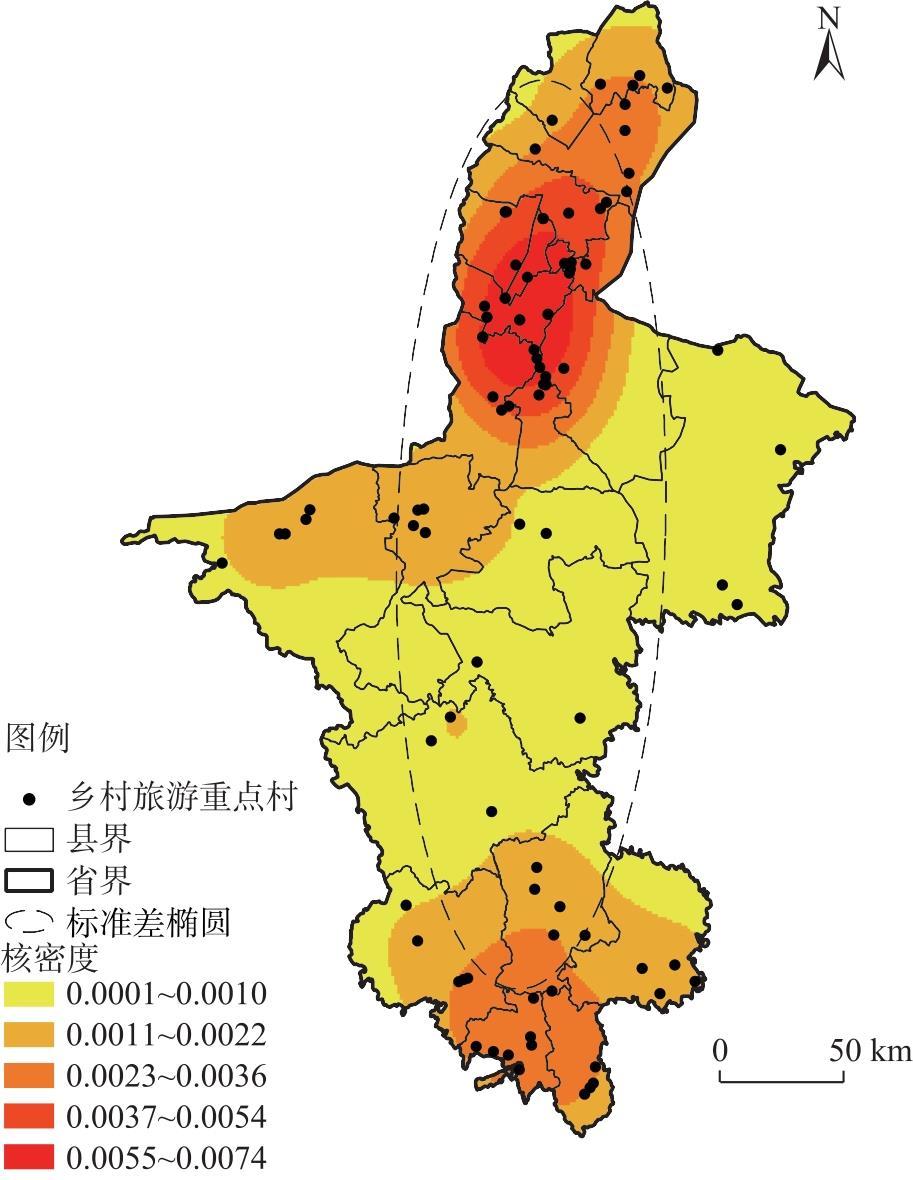
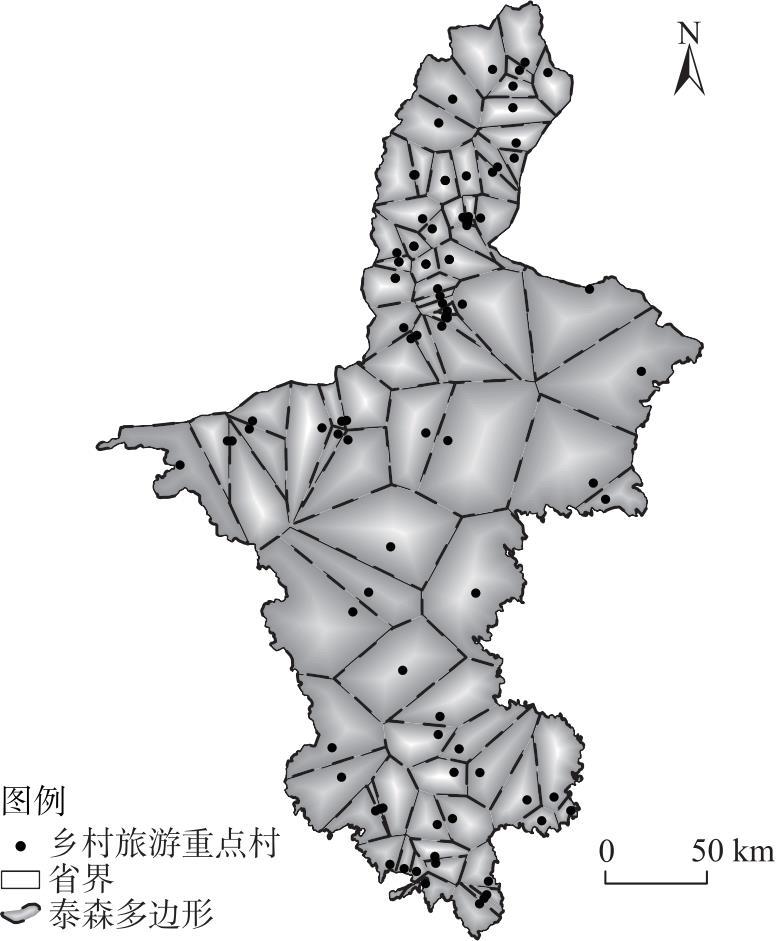
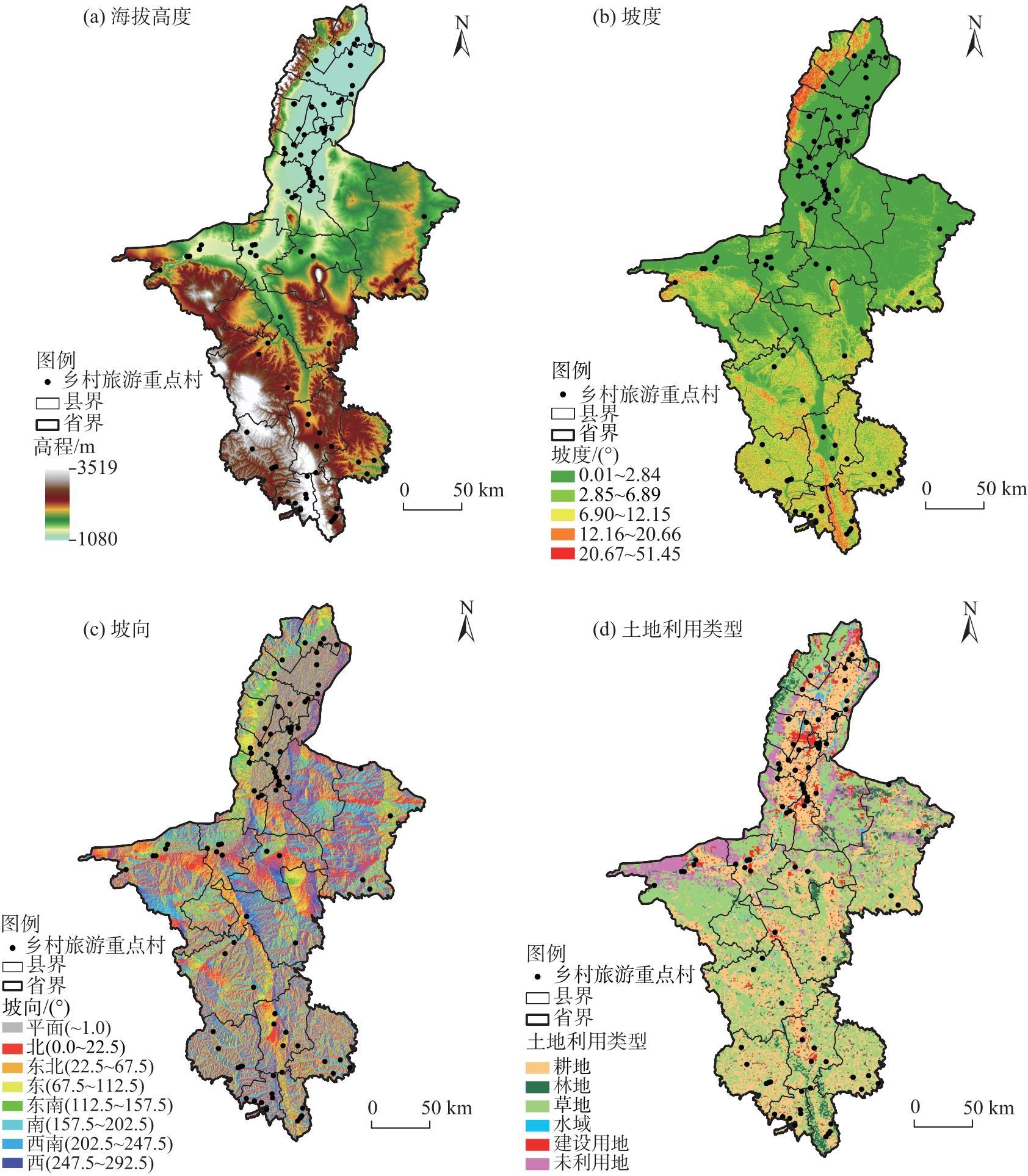
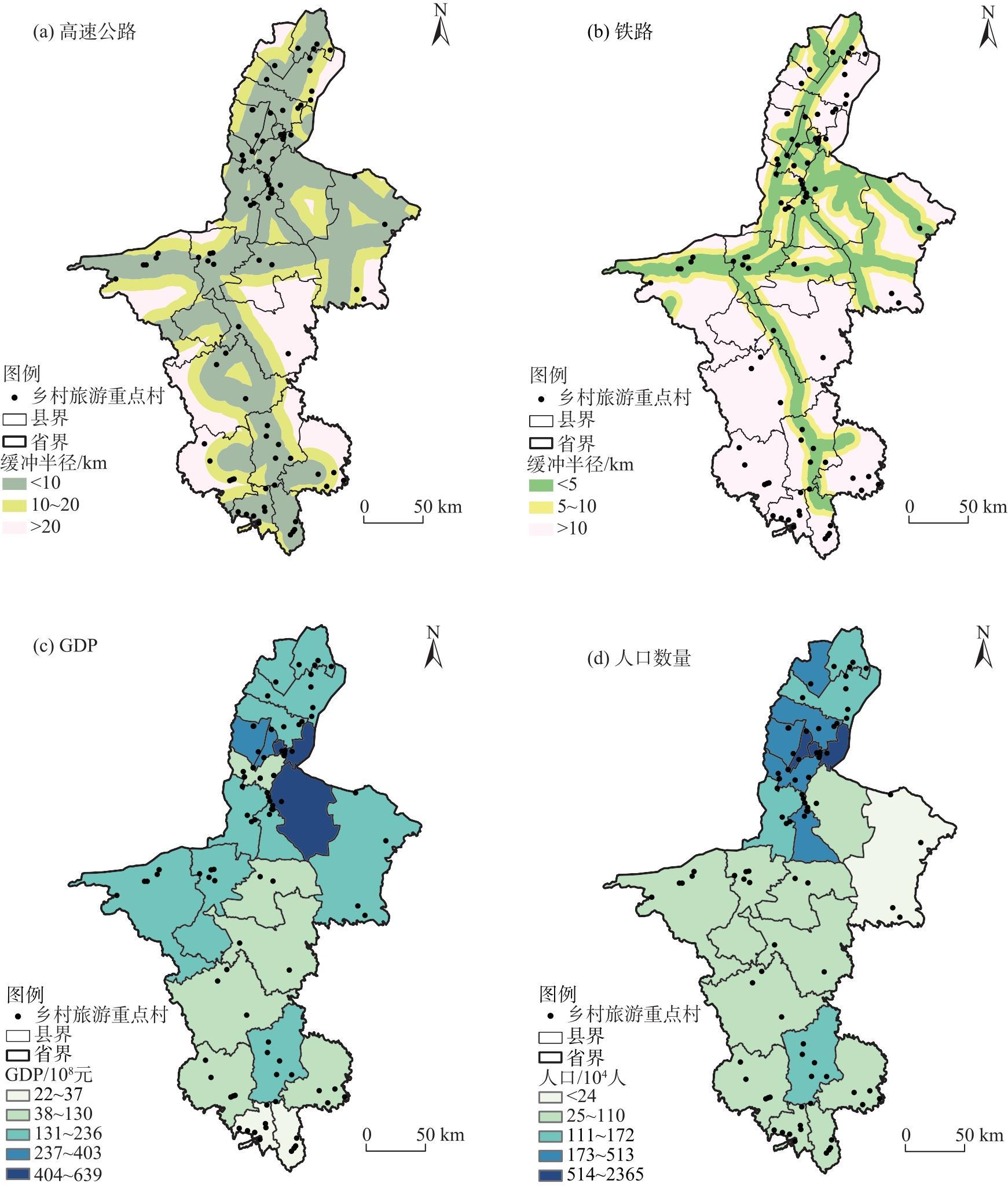
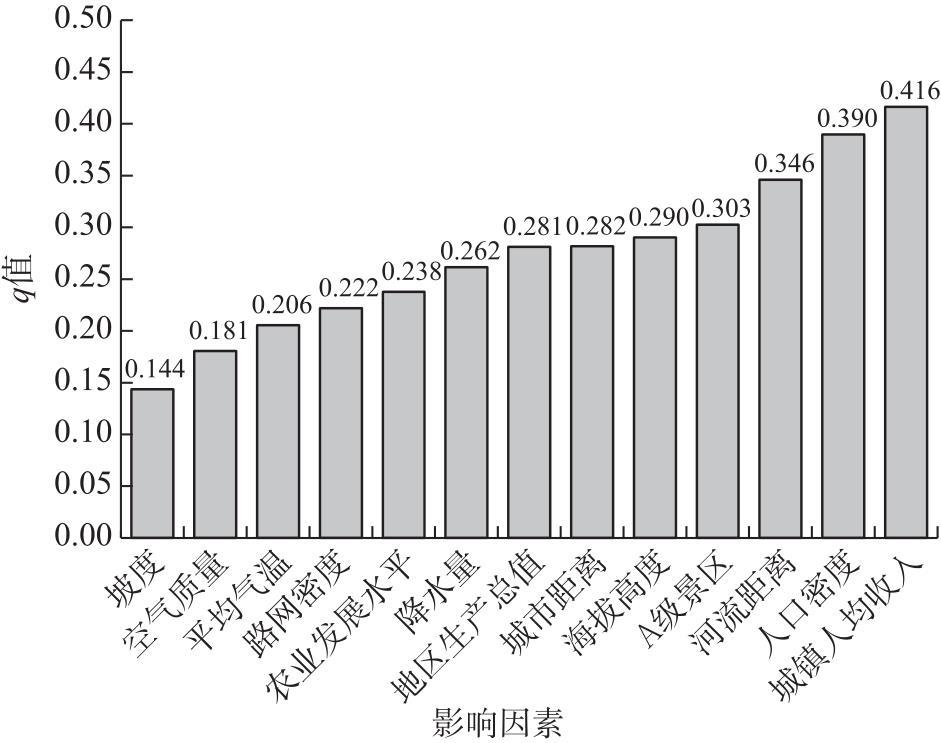
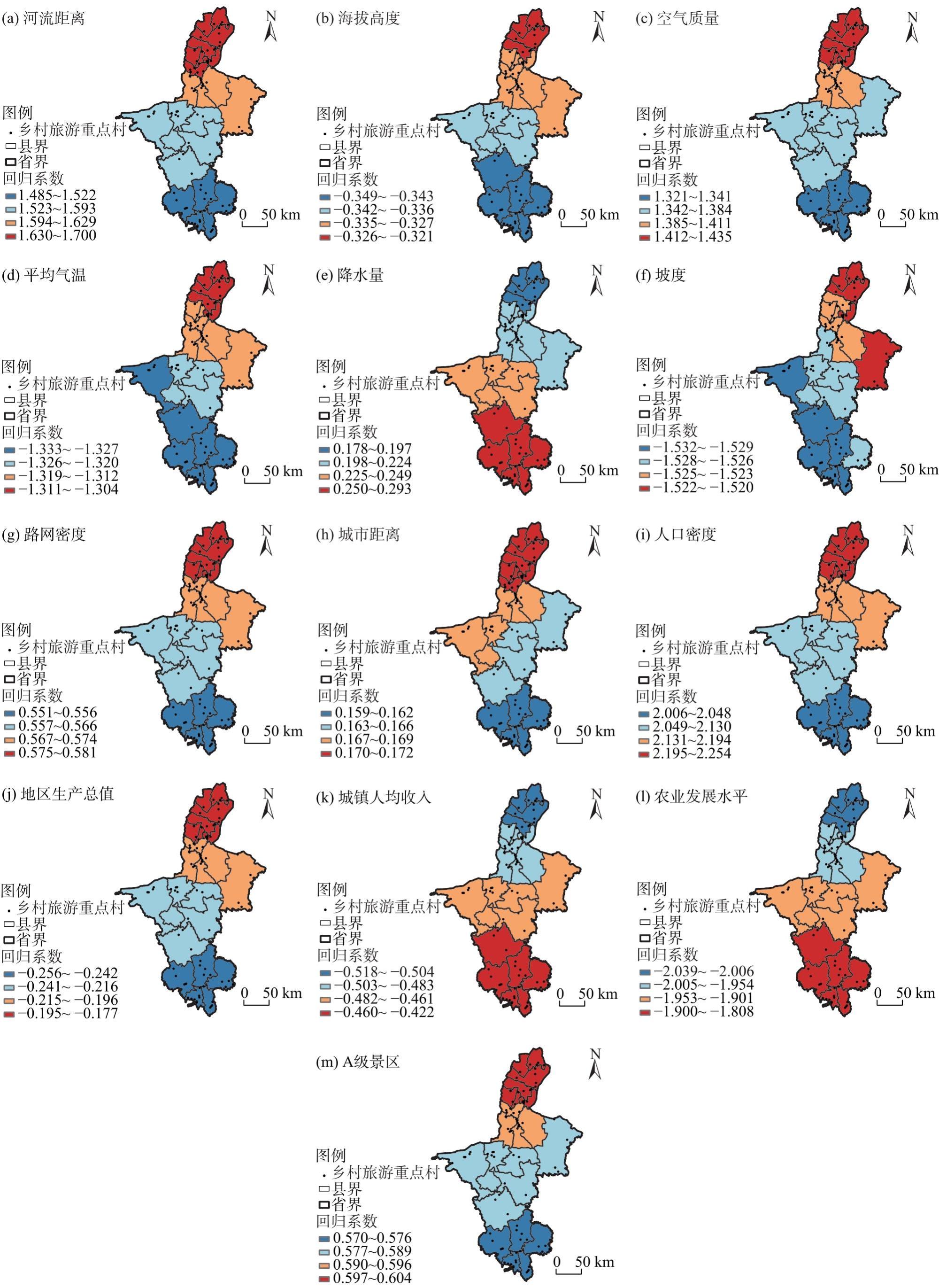
建设乡村旅游重点村是高位推进乡村振兴战略的重要措施,揭示其空间格局与影响因素,能够为提升乡村旅游品质,实现乡村振兴提供科学依据。以宁夏94个自治区级以上乡村旅游重点村为研究对象,基于数字高程模型(DEM)、气象数据、旅游资源、社会经济发展等多源数据,借助ArcGIS软件,集成多种空间分析模型探究了其空间格局与影响因素。结果表明:(1)宁夏乡村旅游重点村落呈集聚型分布,空间分布不均衡,主要集中于偏率为0.71、角度为1.74°的“南-北”两极椭圆形区域内,明显呈北部“一核”成熟增长和南部“一核”雏形发育的“双核”分布特征。(2)宁夏乡村旅游重点村自然地理和人文地理空间差异显著,乡村旅游重点村数量与海拔、坡度呈负相关关系,其土地资源利用方式以耕地为主,且交通以高速公路为主要快速可进入方式,总体上经济发展活跃和人口数量较多的宁夏沿黄城市带和银川平原重点村数量相对较为密集。(3)宁夏乡村旅游重点村是多重因素综合影响的结果,城镇人均收入是主导因素,各因子的交互作用对乡村旅游重点村空间集聚产生影响,地理加权回归模型进一步验证了乡村旅游重点村空间分布格局与自然环境、交通配套、社会经济和资源禀赋有关。
宋小龙 , 马明德 , 李陇堂 , 米文宝 , 王鹏 , 吴月 , 任婕 . 宁夏乡村旅游重点村空间格局与影响因素分析[J]. 干旱区地理, 2024 , 47(11) : 1957 -1969 . DOI: 10.12118/j.issn.1000-6060.2023.731
Establishing key villages as the cornerstone of rural tourism is a pivotal strategy for advancing comprehensive rural revitalization at a higher level. Identifying the spatial pattern and influencing factors of these villages can provide a scientific basis for enhancing rural tourism quality and achieving revitalization goals. This study focuses on 94 key rural tourism villages in the Ningxia Hui Autonomous Region, China, using data from digital elevation models, meteorological data, tourism resources, and socio-economic development indicators. ArcGIS software was employed to integrate various spatial analysis models to explore the spatial patterns and influencing factors of these villages. The results indicate that: (1) The key rural tourism villages in Ningxia exhibit a clustered distribution with significant spatial variability. These villages are predominantly concentrated in an elliptical area with a deviation rate of 0.71 and an angle of 1.74°, forming a “double nucleus” distribution pattern. The northern nucleus shows mature growth, while the southern nucleus is in an embryonic stage of development. (2) There are notable differences in the natural and human geographic spaces among key rural tourism villages in Ningxia. The number of key villages is negatively correlated with altitude and slope. Land resource utilization is primarily focused on agricultural land, and expressways serve as the main mode of rapid and accessible transportation. Generally, key villages are densely distributed in the Ningxia Yellow River Economic Belt and Yinchuan Plain, regions characterized by active economic development and higher population density. (3) The selection of key rural tourism villages in Ningxia results from the combined influence of multiple factors, with per capita urban income identified as the dominant factor. The interaction between these factors influences the spatial agglomeration of the villages. The geographically weighted regression model further confirms that the spatial distribution pattern of key rural tourism villages is associated with the natural environment, transportation infrastructure, socio-economic factors, and resource endowment.
表1 宁夏乡村旅游重点村空间格局影响因素指标体系Tab. 1 Index system of factors influencing the spatial distribution of key rural tourism villages in Ningxia |
| 类型 | 维度 | 变量选取 | 变量解释 | 单位 |
|---|---|---|---|---|
| 被解释变量 | - | 乡村旅游重点村集中度(y) | 重点村落空间格局 | - |
| 解释变量 | 自然环境 | 河流距离(x1) | 重点村距黄河距离 | m |
| 海拔高度(x2) | 重点村海拔高度 | m | ||
| 空气质量(x3) | 重点村PM2.5浓度 | μg·m-3 | ||
| 平均气温(x4) | 各县区年平均气温 | ℃ | ||
| 降水量(x5) | 各县区年平均降雨量 | mm | ||
| 坡度(x6) | 地形倾斜程度 | ° | ||
| 交通配套 | 路网密度(x7) | 各县区内道路总长度/县区面积 | km·(100km)-2 | |
| 城市距离(x8) | 重点村离所在地级市的距离 | m | ||
| 社会经济 | 人口密度(x9) | 各县区人口总量/县区面积 | 人·km-2 | |
| 地区生产总值(x10) | 各县区GDP | 108元 | ||
| 城镇人均收入(x11) | 各县区城镇人口收入 | 元 | ||
| 农业发展水平(x12) | 每平方千米第一产业增加值 | km2·(108元)-1 | ||
| 资源禀赋 | A级景区(x13) | 重点村所在县区A级景区数量 | 个 |
图7 宁夏乡村旅游重点村空间分布影响因素单因子探测结果Fig. 7 Single factor detection results of influencing factors on spatial distribution of key rural tourism villages in Ningxia |
表2 宁夏乡村旅游重点村空间分布影响因素交互探测结果Tab. 2 Interactive detection results of influencing factors on spatial distribution of key rural tourism villages in Ningxia |
| 解释变量 | 地区生产总值 | 农业发展水平 | 人口密度 | 城镇人均收入 | 路网密度 | A级景区 | 河流距离 | 海拔高度 | 空气质量 | 降水量 | 坡度 | 平均气温 | 城市距离 |
|---|---|---|---|---|---|---|---|---|---|---|---|---|---|
| 地区生产总值 | 0.281 | ||||||||||||
| 农业发展水平 | 0.318# | 0.238 | |||||||||||
| 人口密度 | 0.576# | 0.601# | 0.390 | ||||||||||
| 城镇人均收入 | 0.377 | 0.452# | 0.531# | 0.416 | |||||||||
| 路网密度 | 0.323# | 0.760* | 0.482# | 0.791* | 0.222 | ||||||||
| A级景区 | 0.435# | 0.369# | 0.679# | 0.408 | 0.551* | 0.303 | |||||||
| 河流距离 | 0.244 | 0.380# | 0.502# | 0.384 | 0.299 | 0.523# | 0.346 | ||||||
| 海拔高度 | 0.526# | 0.485# | 0.549# | 0.449# | 0.345# | 0.592# | 0.392 | 0.290 | |||||
| 空气质量 | 0.271 | 0.394# | 0.462# | 0.578# | 0.605* | 0.509* | 0.337 | 0.434# | 0.181 | ||||
| 降水量 | 0.105 | 0.326# | 0.507 | 0.318 | 0.338# | 0.402# | 0.409# | 0.400# | 0.263# | 0.262 | |||
| 坡度 | 0.354# | 0.467* | 0.487 | 0.612* | 0.398* | 0.538* | 0.043 | 0.444# | 0.162 | 0.433* | 0.144 | ||
| 平均气温 | 0.404# | 0.428# | 0.521# | 0.573# | 0.414# | 0.551* | 0.215 | 0.444* | 0.223# | 0.497* | 0.209 | 0.206 | |
| 城市距离 | 0.236 | 0.415# | 0.555# | 0.531# | 0.350# | 0.464# | 0.434# | 0.313# | 0.489* | 0.334# | 0.203 | 0.218 | 0.282 |
注:*表示交互作用为非线性增强;#表示交互作用为双因子增强。 |
| [1] |
崔光伟. 河北省乡村旅游点空间分布及其影响因素研究[D]. 保定: 河北农业大学, 2022.
[
|
| [2] |
王爔, 房建恩. 乡村旅游产品同质化问题分析及对策研究[J]. 江苏农业科学, 2020, 48(2): 14-19.
[
|
| [3] |
|
| [4] |
|
| [5] |
|
| [6] |
|
| [7] |
|
| [8] |
|
| [9] |
王国华. 北京郊区乡村旅游产业转型升级的路径与方法[J]. 北京联合大学学报(人文社会科学版), 2013, 11(4): 28-35.
[
|
| [10] |
徐清. 基于点-轴系统理论的宁波乡村旅游空间结构优化[J]. 经济地理, 2009, 29(6): 1042-1046.
[
|
| [11] |
宋晓, 陈水映. 从旅游扶贫到乡村振兴的政策启示: 基于旅游扶贫政策的量化分析[J]. 旅游研究, 2023, 15(5): 1-15.
[
|
| [12] |
张春燕, 资明贵, 周梦, 等. 乡村旅游融合性测度及其影响因素研究——以大别山区潜山市为例[J]. 地理科学进展, 2022, 41(4): 595-608.
[
|
| [13] |
殷章馨, 夏赞才, 唐月亮. 乡村旅游市场细分的统计检验[J]. 统计与决策, 2018, 34(20): 114-117.
[
|
| [14] |
曹开军, 沈曾妮, 杨良健. 中国乡村振兴与旅游发展水平的脱钩状态及影响因素分析[J]. 生态经济, 2022, 38(11): 147-153, 189.
[
|
| [15] |
高楠, 张新成, 王琳艳. 中国乡村旅游公共服务水平时空格局与形成机理[J]. 地理科学, 2021, 41(2): 252-260.
[
|
| [16] |
王秀伟, 李晓军. 中国乡村旅游重点村的空间特征与影响因素[J]. 地理学报, 2022, 77(4): 900-917.
[
|
| [17] |
黄震方, 张圆刚, 贾文通, 等. 中国乡村旅游研究历程与新时代发展趋向[J]. 自然资源学报, 2021, 36(10): 2615-2633.
[
|
| [18] |
马斌斌, 陈兴鹏, 马凯凯, 等. 中国乡村旅游重点村空间分布、类型结构及影响因素[J]. 经济地理, 2020, 40(7): 190-199.
[
|
| [19] |
田彩云, 管祥泰, 田惠文. 黄河流域乡村旅游重点村空间分布特征及其影响因素研究[J]. 旅游学刊, 2023, 38(8): 32-44.
[
|
| [20] |
储祥斋, 严雪心, 盛富斌. 浙江省重点村落的空间分异及其影响因素分析——基于3类国家级村落[J]. 湖北农业科学, 2023, 62(8): 127-132, 139.
[
|
| [21] |
李晓瑞, 刘俭, 达海莉, 等. 宁夏六盘山区乡村旅游扶贫模式与提升策略研究[J]. 宁夏农林科技, 2021, 62(10): 57-59.
[
|
| [22] |
李军, 冯晶晶. 共生视域下宁夏红色旅游与乡村旅游协同发展研究[J]. 环渤海经济瞭望, 2021(8): 65-68.
[
|
| [23] |
邓爽. 宁夏乡村旅游与乡村振兴耦合协调发展研究[D]. 银川: 宁夏大学, 2023.
[
|
| [24] |
顾芳芳, 樊学秀, 江可申. 长江经济带全国乡村旅游重点村空间格局及其影响因素分析[J]. 湖北农业科学, 2023, 62(4): 63-68.
[
|
| [25] |
鲁承琨. 东北地区乡村旅游重点村空间分布及其影响因素分析[J]. 水土保持研究, 2022, 29(6): 425-430.
[
|
| [26] |
苏小明, 骆培聪, 叶珊珊, 等. 青海省乡村旅游重点村空间分布及其影响因素[J]. 海南师范大学学报(自然科学版), 2021, 34(4): 453-461.
[
|
| [27] |
翁钢民, 盛开, 潘越. 国内乡村旅游地空间分异特征及形成机理——基于全国1000个乡村旅游重点村[J]. 地理与地理信息科学, 2021, 37(4): 99-105, 136.
[
|
| [28] |
曹开军, 商宁, 王秘秘. 中国西北五省乡村旅游重点村时空分布格局与可达性分析[J]. 干旱区地理, 2023, 46(7): 1196-1205.
[
|
| [29] |
高文静, 肖大威, 卓晓岚. 云南少数民族特色村寨的分布特征及影响因素[J]. 经济地理, 2022, 42(9): 228-238.
[
|
| [30] |
湛东升, 张文忠, 余建辉, 等. 基于地理探测器的北京市居民宜居满意度影响机理[J]. 地理科学进展, 2015, 34(8): 966-975.
[
|
| [31] |
|
| [32] |
唐黎, 黄舒琪. 福建省全国乡村旅游重点村空间分布及影响因素[J]. 中南林业科技大学学报, 2023, 43(9): 181-190.
[
|
| [33] |
王萍. 宁夏乡村旅游现状与发展[J]. 智慧农业导刊, 2024, 4(2): 97-100.
[
|
/
| 〈 |
|
〉 |