



Characteristics of Changes in Macrobenthos Community Structure after Mowing and Ploughing of Spartina alterniflora in Luannan Wetland
Received date: 2023-03-09
Revised date: 2023-11-04
Online published: 2024-04-24
Copyright
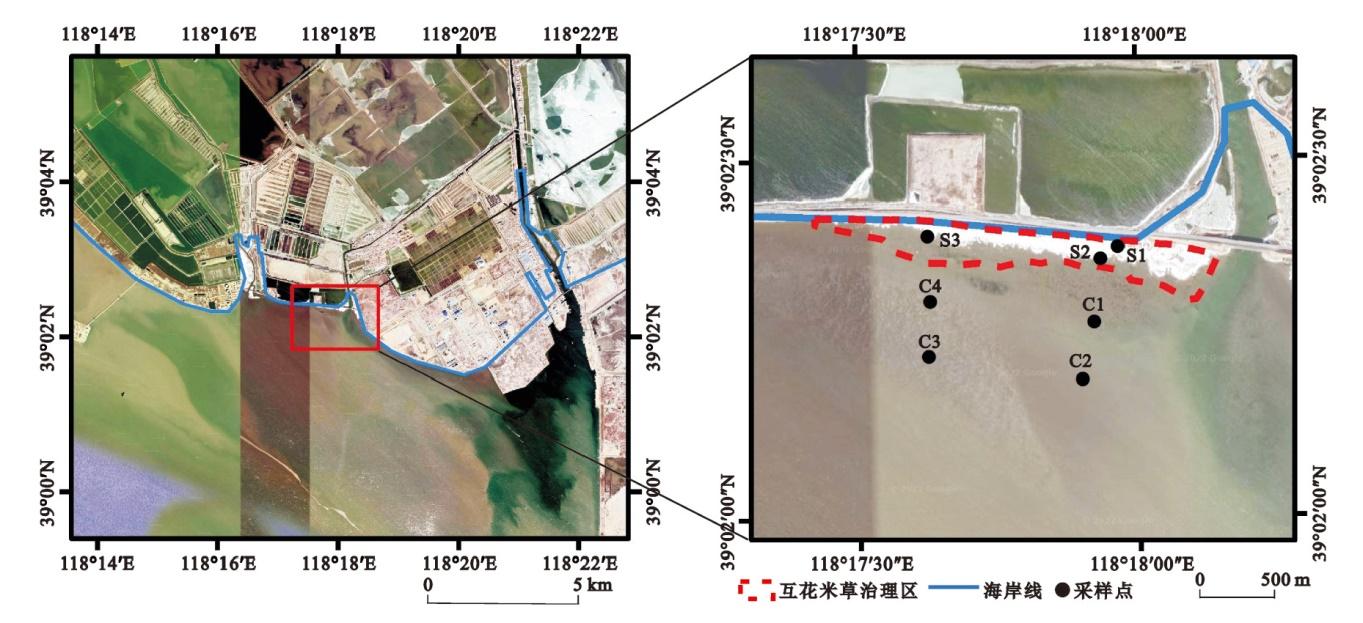
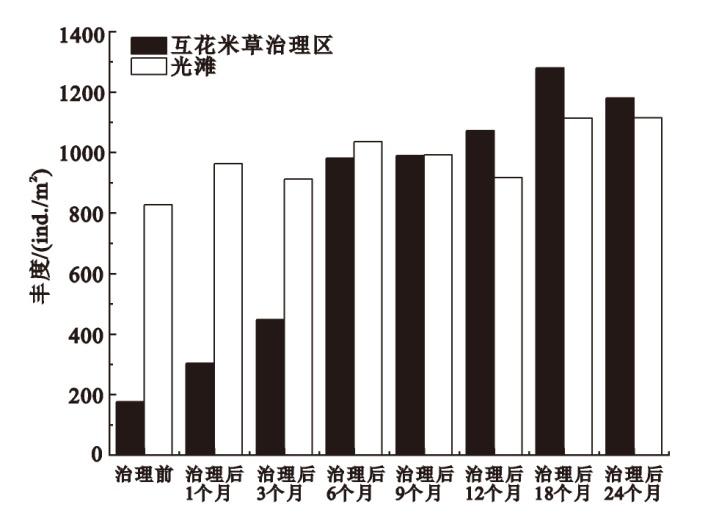
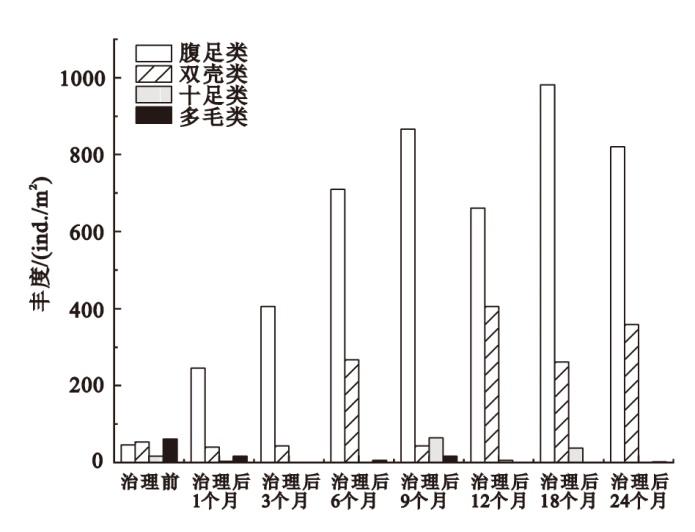
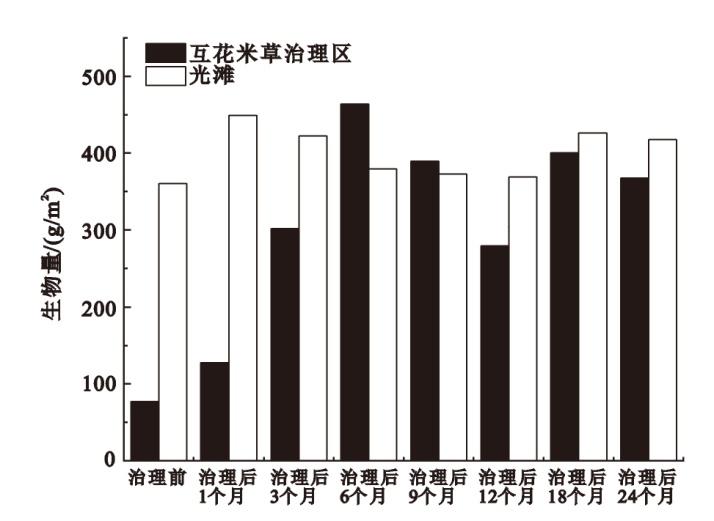
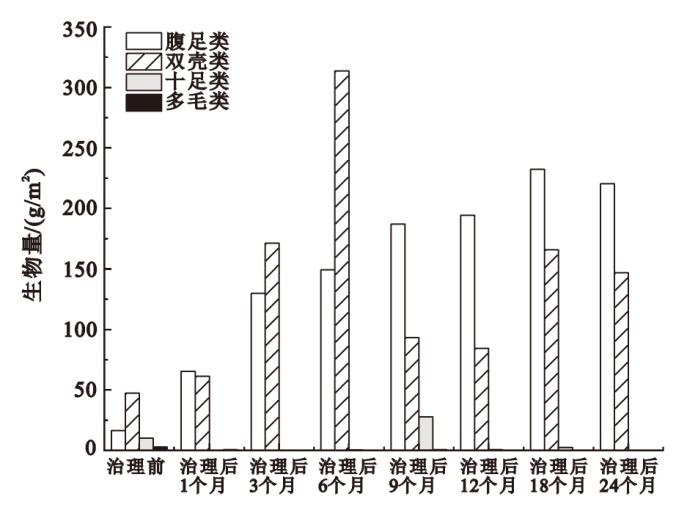
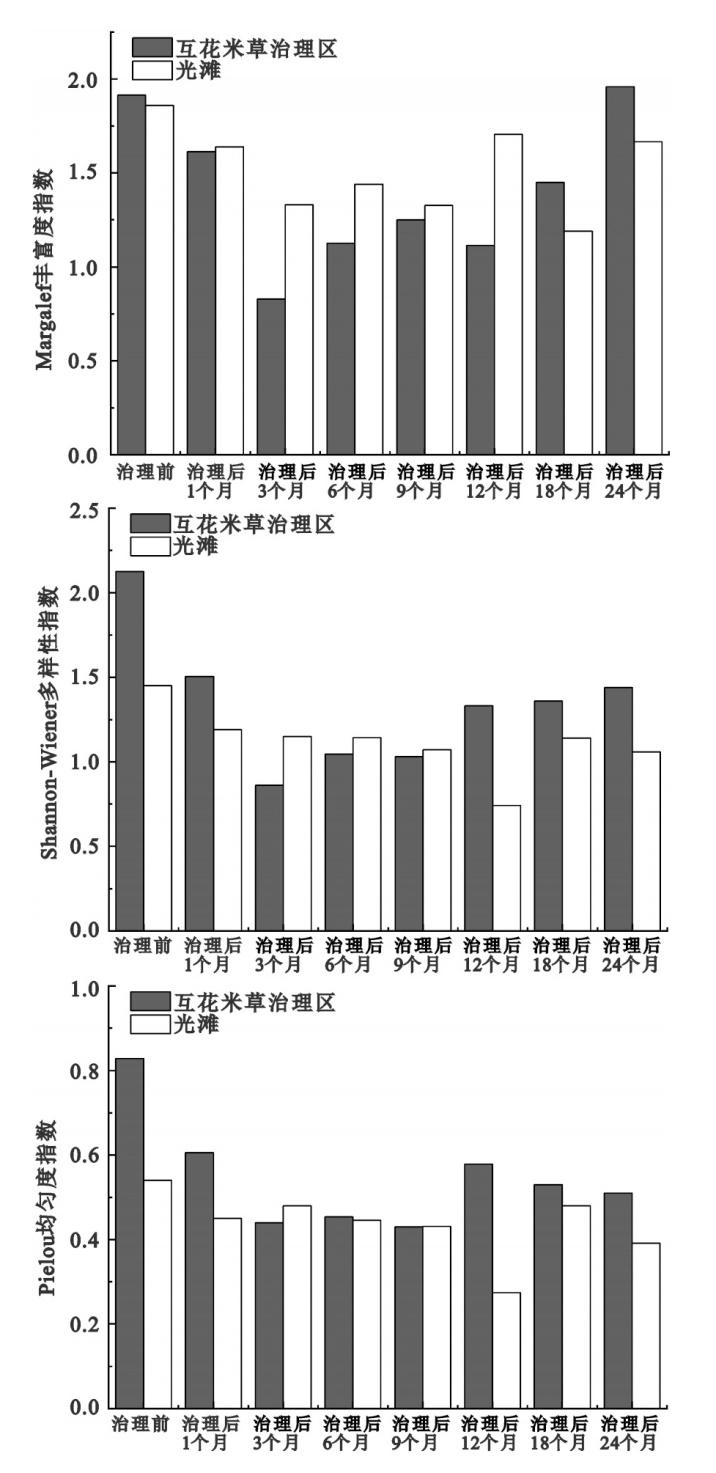
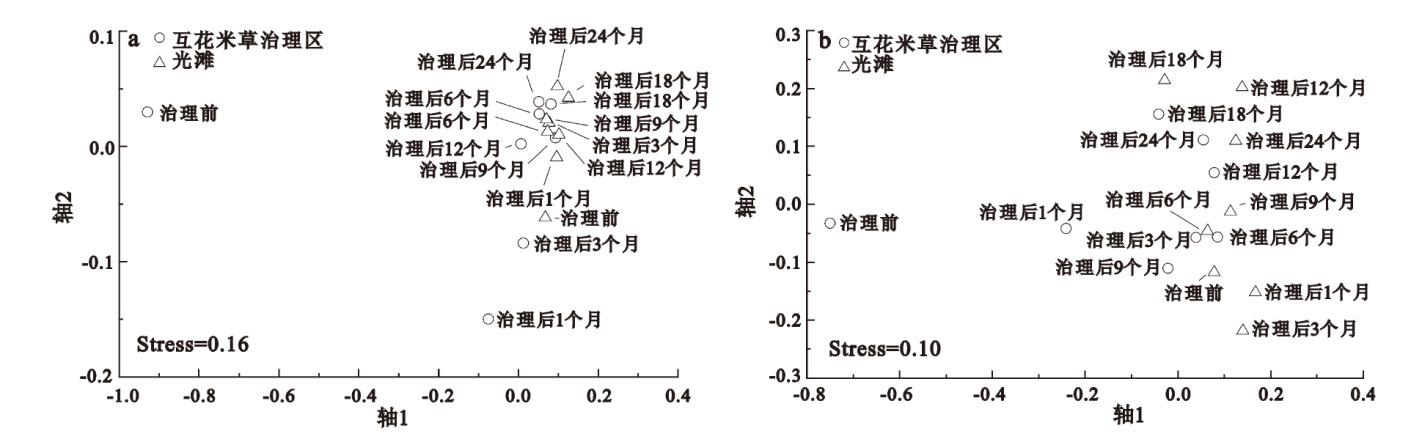
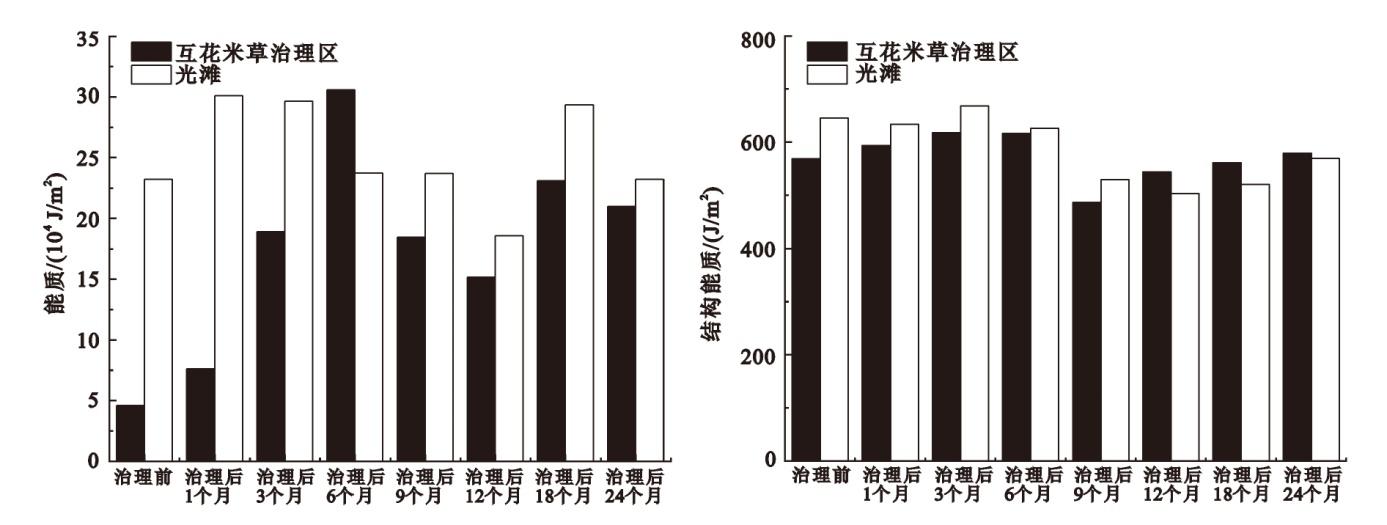
Using the Spartina alterniflora management area in Luannan Wetland, Hebei province as the research area, a variety of ecological indicators, including macrobenthos abundance, biomass, species diversity, and specific exergy were analyzed to investigate the successional characteristics of intertidal macrobenthos after the removal of Spartina alterniflora using the “mowing and ploughing” method. The results showed that six months after management of Spartina alterniflora, the abundance and biomass of macrobenthos in the management area gradually recovered and reached a level comparable to that of the mudflats. Additionally, non-metric multidimensional scaling ordination results indicated that the macrobenthos community structure in the management area could recover to a state similar to that of the mudflats after six months of management. Species diversity indexes in the management area began to increase after three months of management, and exceeded that of the mudflats after twelve months of management. Changes observed in various ecological indicators indicated three stages of macrobenthos succession: growth of biomass/energy, improvement of species diversity, and an increase in specific exergy. These changes signified the establishment, improved stability, and increased maturity of macrobenthos community structure. The study elucidated the complexity of successional characteristics of intertidal ecosystems and emphasized the importance of using multiple ecological indicators to comprehensively describe ecosystem changes when assessing succession processes of macrobenthos community.
LI Jiajun , JIN Shuang , LI Rujia , SHAO Sihui , YANG Wen . Characteristics of Changes in Macrobenthos Community Structure after Mowing and Ploughing of Spartina alterniflora in Luannan Wetland[J]. Wetland Science, 2024 , 22(3) : 349 -358 . DOI: 10.13248/j.cnki.wetlandsci.2024.03.003
1 滦南湿地治理区内互花米草种群的生长特征Growth characteristics of Spartina alterniflora population in the Luannan wetland management area |
| 盖度/% | 密度/(株/m2) | 高度/cm | 根状茎深度/cm | 须根深度/cm | |
| 变化范围 | 37.50~100.00 | 130.00~630.00 | 30.00~62.00 | 11.00~27.00 | 17.00~38.00 |
| 平均值 | 64.90±21.64 | 301.50±148.23 | 48.00±8.15 | 18.35±3.41 | 24.40±4.98 |
2 用于估算能质(Ex)的权重转换因子(βi)值Values for the weighting conversion factors(βi) to estimate exergy(Ex) |
| 大型底栖动物 | 权重转换因子βi |
| 环节动物 | 50 |
| 软甲纲 | 230 |
| 腹足纲 | 450 |
| 双壳纲 | 760 |
3 滦南湿地大型底栖动物名录List of macrobenthos in Luannan wetland |
| 门/纲/目/物种名称 | 门/纲/目/物种名称 | 门/纲/目/物种名称 |
| 注:拉丁名右上角标注了1和2的物种分别表示治理前和治理后记录到的物种;拉丁名右上角标注了a和b的物种分别表示在互花米草治理区和光滩记录的物种。 | ||
| 一 软体动物门Mollusca | 一 软体动物门Mollusca | 二 节肢动物门Arthropoda |
| (一)腹足纲Gastropoda | (一)腹足纲Gastropoda | (三)软甲纲Malacostraca |
| 1 原始腹足目Archaeogastropoda | 4新腹足目Neogastropoda | 7 十足目Decapoda |
| (1)托氏䗉螺Umbonium thomasi1a,1b,2a,2b | (16)织纹螺Nassarius sp.2b | (32)豆形拳蟹Philyra pisum2a,2b |
| 2 头楯目 Cephalaspidea | (17)纵肋织纹螺Nassarius variciferus2a,2b | (33)鼓虾Alpheus sp. 2a |
| (2)黑纹斑捻螺Punctacteon yamamurae2a,2b | (二)双壳纲Bivalvia | (34)尖齿拳蟹Philyra acutidens1b |
| (3)经氏壳蛞蝓Philine kinglipini2a,2b | 5 帘蛤目Veneroida | (35)宽身大眼蟹Macrophthalmus dilatatum2a |
| (4)细小拟捻螺Acteocina gracilis2b | (18)薄壳理蛤Theora lata1a | (36)日本大眼蟹Macrophthalmus japonicus2a,2b |
| 3 中腹足目 Mesogastropoda | (19)彩虹明樱蛤Moerella iridescens 2a,2b | (37)绒螯近方蟹Hemigrapsus penicillatus1a |
| (5)扁玉螺Glossaulax didyma1b,2a,2b | (20)苍白亮樱蛤Nitidotellina pallidula2a,2b | 8 端足目Amphipoda |
| (6)短滨螺Littoraria brevicula1a,2a | (21)等边浅蛤Gomphina aequilatera2a | (38)独眼钩虾Monoculode sp. 1a,1b,2a,2b |
| (7)光滑狭口螺Stenothyra glabra1b,2b | (22)文蛤Meretrix meretrix1b,2a,2b | 三 环节动物门 Annelida |
| (8)尖高旋螺Acrilla acuminata2b | (23)菲律宾蛤仔Ruditapes philippinarum2a,2b | (四)多毛纲 Polychaeta |
| (9)微黄镰玉螺Euspira gilva2a,2b | (24)红明樱蛤Moerella rutila1a,1b,2a,2b | 9沙蚕目 Nereidida |
| (10)纵带滩栖螺Batillaria zonalis2b | (25)江户明樱蛤Moerella jedoeusis1a,1b,2a,2b | (39)日本刺沙蚕Neanthes japonica2a,2b |
| 4新腹足目 Neogastropoda | (26)青蛤Cyclina sinensis1a,1b,2a,2b | (40)沙蚕Nereididae sp. 2a,2b |
| (11)红带织纹螺Nassarius succinctus2a,2b | (27)日本镜蛤Dosinia japonica2a | (41)双齿围沙蚕Perinereis aibuhitensis1a,2b |
| (12)丽小笔螺Mitrella bella1a,1b,2a,2b | (28)四角蛤蜊Mactra veneriformis1a,1b,2a,2b | 10 叶须虫目 Phyllodocida |
| (13)群栖织纹螺Nassarius pauperus1a,2a | (29)凸卵蛤Pelecyora sp. 2b | (42)异足索沙蚕Lumbricomereis heeropoda1a,1b,2a,2b |
| (14)香螺Neptunea cumingi2a,2b | (30)异白樱蛤Macoma incongrua1a,2a | (43)吻沙蚕Glycera unicornis1a,1b,2a,2b |
| (15)秀丽织纹螺Nassarius festivus1a,1b,2a,2b | 6 海螂目 Myoida | |
| (31)光滑河篮蛤Potamocorbula laevis1a,1b,2a,2b | ||
4 滦南湿地大型底栖动物优势物种及其优势度指数值Dominant species and dominance index values of macrobenthos in Luannan wetland |
| 阶段 | 互花米草治理区优势物种(优势度指数) | 光滩优势物种(优势度指数) |
| 治理前 | 双齿围沙蚕(0.23)、光滑河蓝蛤(0.10)、托氏䗉螺(0.06)、秀丽织纹螺(0.04)、青蛤(0.03)、绒毛近方蟹(0.03)、短滨螺(0.03)、四角蛤蜊(0.02)、红明樱蛤(0.02) | 托氏䗉螺(0.65)、红明樱蛤(0.08)、吻沙蚕(0.05)、秀丽织纹螺(0.04)、四角蛤蜊(0.03)、江户明樱蛤(0.03)、青蛤(0.02) |
| 治理后 1个月 | 托氏䗉螺(0.61)、秀丽织纹螺(0.06)、丽小笔螺(0.04)、吻沙蚕(0.04)、江户明樱蛤(0.03) | 托氏䗉螺(0.70)、红明樱蛤(0.06)、秀丽织纹螺(0.05)、四角蛤蜊(0.03)、江户明樱蛤(0.03) |
| 治理后 24个月 | 托氏䗉螺(0.59)、秀丽织纹螺(0.07)、红明樱蛤(0.05)、苍白亮樱蛤(0.03) | 托氏䗉螺(0.76)、秀丽织纹螺(0.09)、红明樱蛤(0.05) |
| 1 |
| 2 |
| 3 |
| 4 |
| 5 |
| 6 |
| 7 |
| 8 |
| 9 |
| 10 |
| 11 |
| 12 |
| 13 |
| 14 |
| 15 |
| 16 |
| 17 |
| 18 |
| 19 |
| 20 |
| 21 |
| 22 |
| 23 |
| 24 |
| 25 |
| 26 |
| 27 |
| 28 |
| 29 |
| 30 |
| 31 |
| 32 |
| 33 |
| 34 |
| 35 |
| 36 |
| 37 |
| 38 |
/
| 〈 |
|
〉 |