2000—2022年北京市植被春季物候期变化特征分析
|
谢宜嘉(2000-),女,硕士研究生,主要从事遥感植被物候与干旱监测研究。Email: 2017302590075@whu.edu.cn。 |
Copy editor: 陈庆
收稿日期: 2023-12-13
修回日期: 2024-01-18
网络出版日期: 2026-06-03
基金资助
国家重点研发计划“水利工程建设与运行期遥感监测监督与风险预警”(2021YFB3900603)
Analysis of the changes in spring phenology of vegetation in Beijing City from 2000 to 2022
Received date: 2023-12-13
Revised date: 2024-01-18
Online published: 2026-06-03
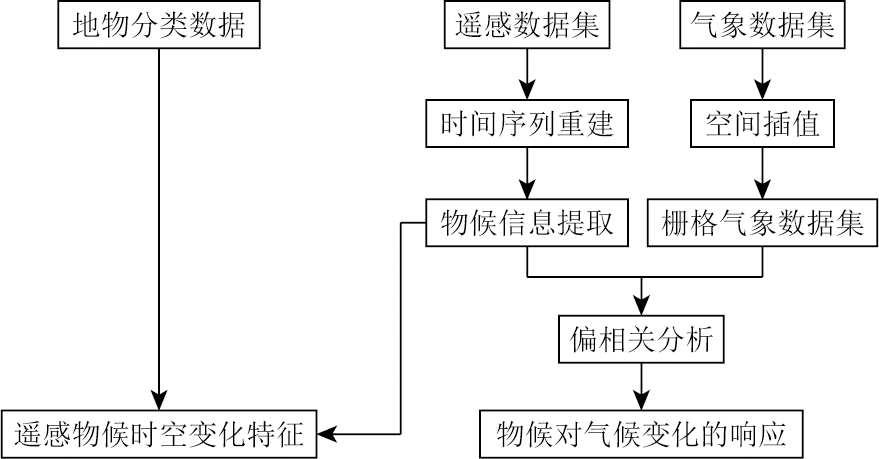
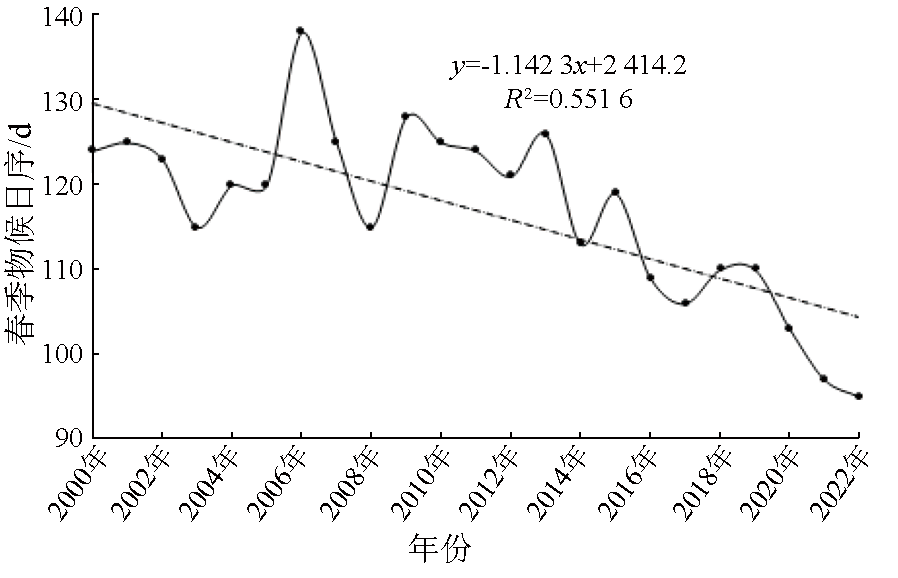
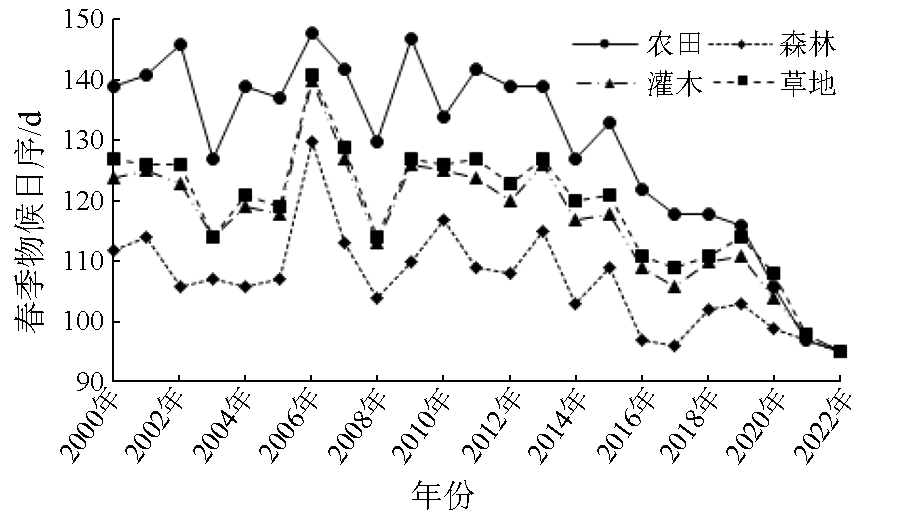
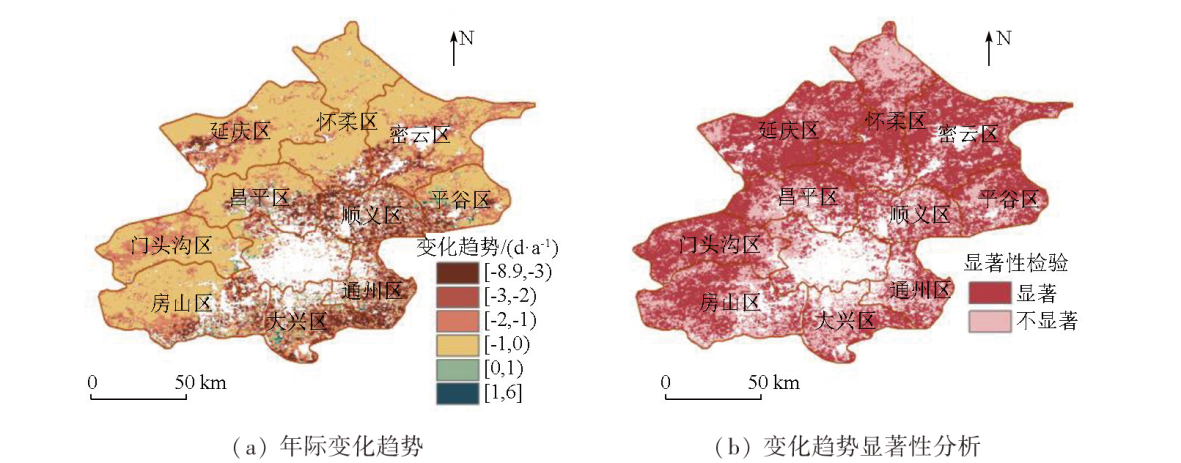
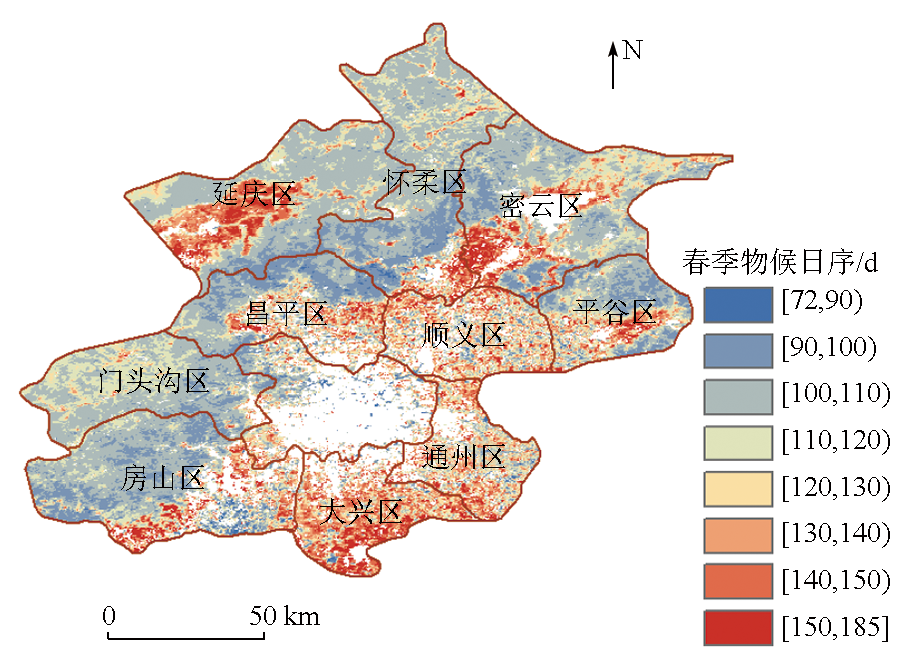
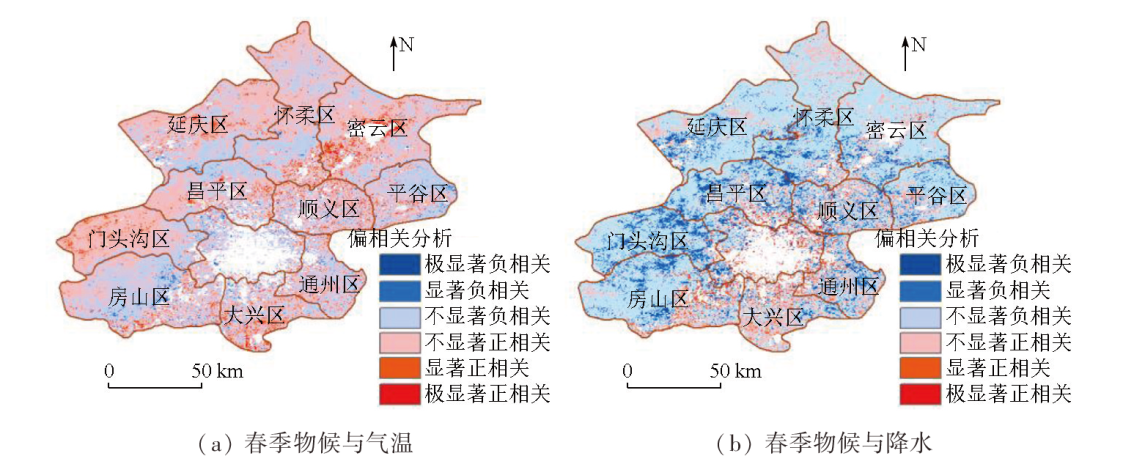
春季物候的研究对于了解植被生长发育周期、探索其对气候环境变化的响应机制有着重要的意义,也为指导农业生产、保护和恢复生态系统提供了重要参考。该文对2000—2022年北京市的MOD13Q1数据进行时间序列重建,基于动态阈值法提取出23 a内北京市植被的春季物候,进一步通过Mann-Kendall趋势检验法对北京市的春季物候进行时空变化特征分析,最后使用偏相关分析方法分析了春季物候对气候变化的响应差异。主要结论如下: ①北京市植被的春季物候平均在第117天(四月下旬),在过去近20 a约以1.14 d/a的变化速率逐渐提前; ②不同植被类型的春季物候呈现层级差异,其中森林的春季物候最早,为第107天,灌木和草地次之,分别为第117天和第119天,农田最晚,为第130天; ③年均温度对春季物候的影响存在显著的区域差异,其中河流、水库等水源充沛地区呈正相关关系,在房山区东部存在显著的负相关关系; ④从月尺度来看,11,12,1,2月气温对春季物候的影响最大,随着冬季气温的上升,植物春季物候表现出提前的趋势。该研究探索了北京市植被春季物候对于气温和降水的响应机制,为气候变化背景下植被生产指导提供了参考。
谢宜嘉 , 杨倍倍 , 张镇 , 陈佳 , 王喆 , 孟令奎 . 2000—2022年北京市植被春季物候期变化特征分析[J]. 自然资源遥感, 2025 , 37(2) : 185 -193 . DOI: 10.6046/zrzyyg.2023378
Investigating spring phenology is critical for understanding the growth and development cycles of vegetation and the response mechanisms to climate and environmental changes. It also provides significant insights for guiding agricultural production and protecting and restoring ecosystems. This study reconstructed the time series of MOD13Q1 data for Beijing City from 2000 to 2022. Based on dynamic thresholding, this study extracted the spring phenology of vegetation in Beijing City over the past 23 years. Furthermore, this study analyzed the spatiotemporal changes in spring phenology in Beijing City using the Mann-Kendall (M-K) trend test. Finally, this study examined the differential responses of spring phenology to climate change through partial correlation analysis. The results of this study indicate that the average spring phenology of vegetation in Beijing City occurred on the 117th day of a year (in late April), advancing at an average rate of approximately 1.14 days per year over the past 23 years. Different duo exhibited distinct hierarchical variations in spring phenology. Forests showed the earliest spring phenology starting from the 107th day, followed by shrubs (the 117th day) and grasslands (the 119th day), with the latest being farmland (the 130th day). The impacts of average annual temperature on spring phenology exhibited significant spatial variations. A positive correlation was observed in water-rich areas such as rivers and reservoirs, whereas a significant negative correlation occurred in eastern Fangshan District. On a monthly scale, temperatures in November, December, January, and February significantly influenced spring phenology. As winter temperatures rose, the spring phenology of vegetation tended to advance. This study explores the response mechanisms of spring phenology of vegetation in Beijing City to temperature and precipitation, providing valuable insights for vegetation management under climate change.
表1 春季物候与11—4月气温、降水量的相关性分析Tab.1 Correlation analysis between temperature, precipitation from November to April and spring phenology |
| 月份 | 气温 | 降水 |
|---|---|---|
| 11月 | -0.231 | 0.047* |
| 12月 | -0.664** | -0.033 |
| 1月 | -0.208 | 0.096 |
| 2月 | -0.234 | -0.265 |
| 3月 | -0.248 | -0.039 |
| 4月 | -0.351 | -0.195 |
表2 春季物候与气温和降水的累积月相关性Tab.2 Monthly correlation between spring phenology and cumulative precipitation of temperature and precipitation |
| 月份 | 气温 | 降水 |
|---|---|---|
| 4月 | -0.351 | -0.195 |
| 3—4月 | -0.374 | -0.135 |
| 2—4月 | -0.498* | -0.226 |
| 1—4月 | -0.606** | -0.140 |
| 上一年12月—4月 | -0.562** | -0.117 |
| 上一年11月—4月 | -0.512* | -0.098 |
| [1] |
陆佩玲, 于强, 贺庆棠. 植物物候对气候变化的响应[J]. 生态学报, 2006, 26(3):923-929.
|
| [2] |
付永硕, 张晶, 吴兆飞, 等. 中国植被物候研究进展及展望[J]. 北京师范大学学报(自然科学版), 2022, 58(3):424-433.
|
| [3] |
|
| [4] |
|
| [5] |
|
| [6] |
|
| [7] |
李军, 朱慧. 重庆地区MODIS/NDVI时间序列数据重建研究[J]. 地理科学, 2017, 37(3):437-444.
|
| [8] |
王敏钰, 罗毅, 张正阳, 等. 植被物候参数遥感提取与验证方法研究进展[J]. 遥感学报, 2022, 26(3):431-455.
|
| [9] |
|
| [10] |
范德芹, 赵学胜, 朱文泉, 等. 植物物候遥感监测精度影响因素研究综述[J]. 地理科学进展, 2016, 35(3):304-319.
|
| [11] |
|
| [12] |
|
| [13] |
谭静, 陈正洪, 肖玫. 武汉大学樱花花期长度特征及预报方法[J]. 生态学报, 2021, 41(1):38-47.
|
| [14] |
|
| [15] |
赵心睿, 刘冀, 杨少康, 等. 北方地区典型林草地物候时空变化特征及其对气象因子的响应[J]. 生态学报, 2023, 43(9):3744-3755.
|
| [16] |
张港栋, 包刚, 元志辉, 等. 2001—2020年蒙古高原昼夜非对称变暖对植被返青期的影响[J]. 干旱区地理, 2023, 46(5):700-710.
|
| [17] |
|
| [18] |
梁晨, 安菁, 范雅倩, 等. 北京松山国家级自然保护区典型植被类型表层土壤碳密度及周转速率特征[J]. 地球与环境, 2020, 48(6):672-679.
|
| [19] |
|
| [20] |
|
| [21] |
|
| [22] |
李儒, 张霞, 刘波, 等. 遥感时间序列数据滤波重建算法发展综述[J]. 遥感学报, 2009, 13(2):335-341.
|
| [23] |
王刚, 严登华, 黄站峰, 等. 近52年来滦河流域气候变化趋势分析[J]. 干旱区资源与环境, 2011, 25(7):134-139.
|
| [24] |
姜萍, 潘新民, 曾雪莹. 中国不同农业区气温和降水时空演变格局分析[J]. 水土保持研究, 2020, 27(4):270-278.
|
| [25] |
高弋斌, 路春燕, 钟连秀, 等. 1951—2016年中国沿海地区气温与降水量的时空特征[J]. 森林与环境学报, 2019, 39(5):530-539.
|
| [26] |
陈洪滨, 范学花. 2006年极端天气和气候事件及其他相关事件的概要回顾[J]. 气候与环境研究, 2007, 12(1):100-112.
|
| [27] |
|
| [28] |
徐韵佳, 葛全胜, 戴君虎, 等. 近50年中国典型木本植物展叶始期温度敏感度变化及原因[J]. 生态学报, 2019, 39(21):8135-8143.
|
| [29] |
|
| [30] |
|
| [31] |
卜亚勤, 丁海勇. 北京植被物候时空变化及其对城市化的响应[J]. 遥感信息, 2022, 37(2):112-118.
|
| [32] |
孟丹, 刘芯蕊, 张聪聪. 北京市植物物候对热岛效应的响应[J]. 生态学杂志, 2021, 40(3):844-854.
|
| [33] |
|
| [34] |
张港栋, 包刚, 黄晓君, 等. 蒙古国冬春季气候非对称变暖及其对植被返青期和春季NDVI的影响[J]. 干旱区地理, 2023, 46(8):1238-1249.
|
| [35] |
|
| [36] |
|
/
| 〈 |
|
〉 |