Application of one-way wave equation illumination analysis in the design of seismic observation system
|
LI Jinxin,male,born in 1998,assistant engineer,focusing on seismic exploration for mineral prospecting. E-mail: 787234017@qq.com |
Received date: 2025-03-31
Revised date: 2025-05-07
Online published: 2025-11-06
Supported by
CNNC Key Laboratory of Nuclear Uranium Resource Geophysical Exploration(WDZC-2024-)
Seismic Exploration Project in the Hulihaixiushui area from Hulihai,Tongliao city,Inner Mongolia to Xiushui,Shuangliao city, Jilin province by China Nuclear Industry Geological Bureau(202311-2)
Seismic Exploration Project in the Xinzhao-Yihewusu area,Ordos city,Inner Mongolia(202401-10)
High-quality field seismic data are fundamental to the refined processing of seismic signals and the accurate interpretation of geological information. A scientifically designed observation system is essential to ensure data quality and imaging effectiveness. In complex geological settings,traditional acquisition systems are prone to insufficient energy coverage and imaging shadow zones,which hinder the identification of reflection signals and the detailed delineation of target structures. To enhance seismic imaging performance under such conditions,this study conducts a systematic investigation into acquisition parameter optimization for observation systems in structurally complex areas,based on an illumination analysis approach using the one-way wave equation. Forward illumination analysis is first employed to optimize the layout of sources and receivers, thereby improving energy coverage over target horizons. Subsequently,reverse illumination analysis is used to refine shot point densification,receiver array length,and channel spacing,aiming to enhance energy acquisition and wavefield coverage. A two-dimensional geological model is constructed,and forward modeling is performed to quantitatively compare the illumination energy distribution before and after optimization,leading to the determination of acquisition parameters that meet imaging requirements. Results show that the optimized observation system effectively reduces imaging shadows in complex structural zones,improves profile continuity and reflection energy response,and exhibits strong adaptability and engineering feasibility. The proposed optimization workflow has been applied and validated in an actual survey area,demonstrating consistent improvements in imaging performance. This work confirmed the practical value of illumination-based analysis in the acquisition design for complex geological conditions and established a parameter configuration methodology suitable for fault-intensive zones and sand body development areas,which will provide a replicable design reference and technical path for future seismic exploration.
LI Jinxin , ZHAO Wei , NING Yuanli , YANG Xiaoliu , ZHU Shengwei , WANG Ruowen . Application of one-way wave equation illumination analysis in the design of seismic observation system[J]. World Nuclear Geoscience, 2025 , 42(3) : 582 -595 . DOI: 10.3969/j.issn.1672-0636.2025.03.009
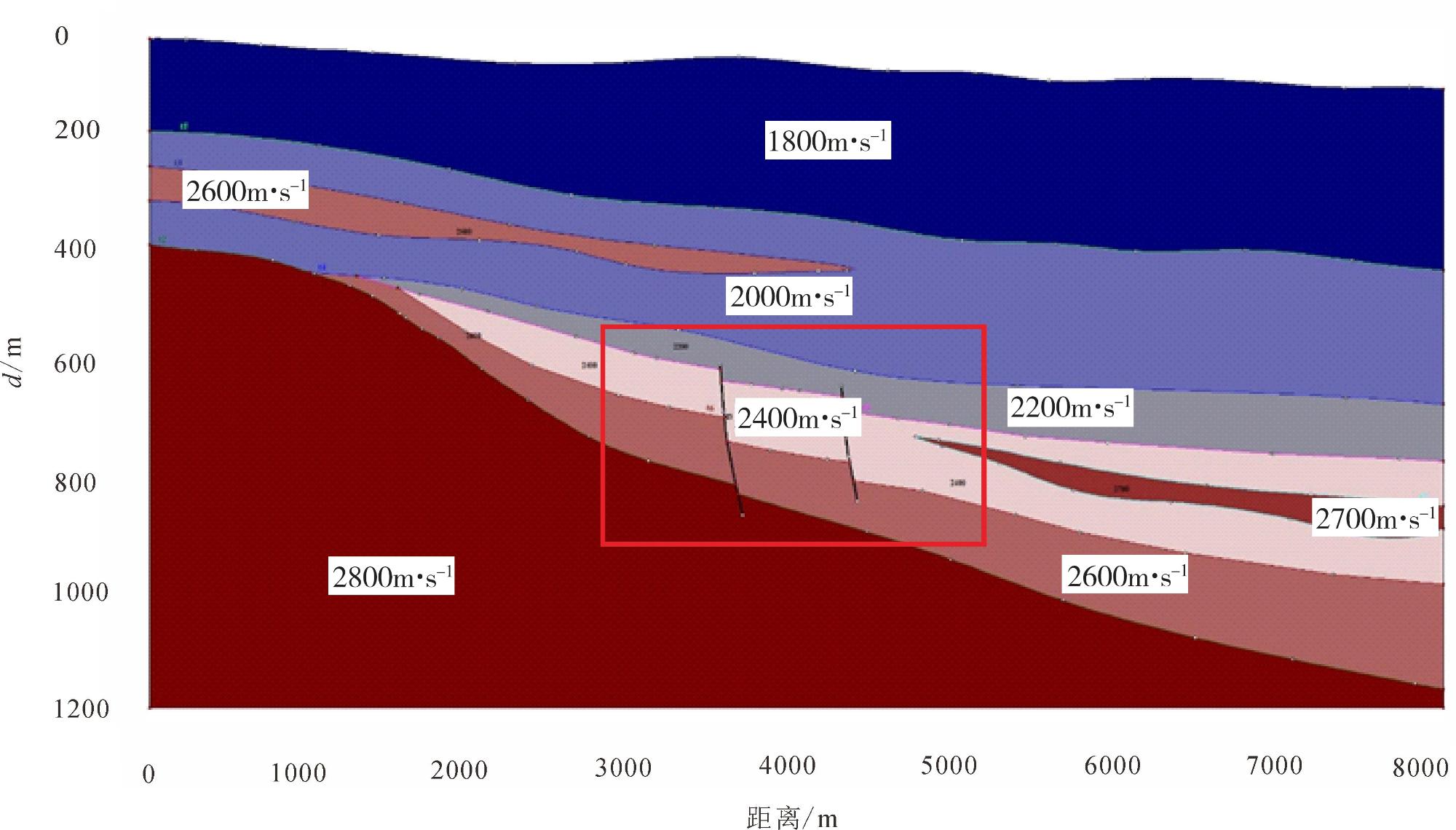
表1 工作区各地层地球物理模型参数Table 1 Geophysical model parameters of the various layers of the work area |
| 层位 | 双程时/ms | 均方根速度/(m·s-1) | 层速度/(m·s-1) | 深度/m | 主频/Hz |
|---|---|---|---|---|---|
| T1 | 295 | 1 585 | 1 585 | 234 | 60 |
| T2 | 420 | 1 775 | 2 158 | 373 | 45 |
| T3 | 605 | 1 980 | 2 381 | 599 | 45 |
| T4 | 800 | 2 185 | 2 725 | 874 | 40 |
| T5 | 955 | 2 310 | 2 870 | 1 103 | 40 |
| T6 | 1 210 | 2 470 | 2 994 | 1 494 | 35 |
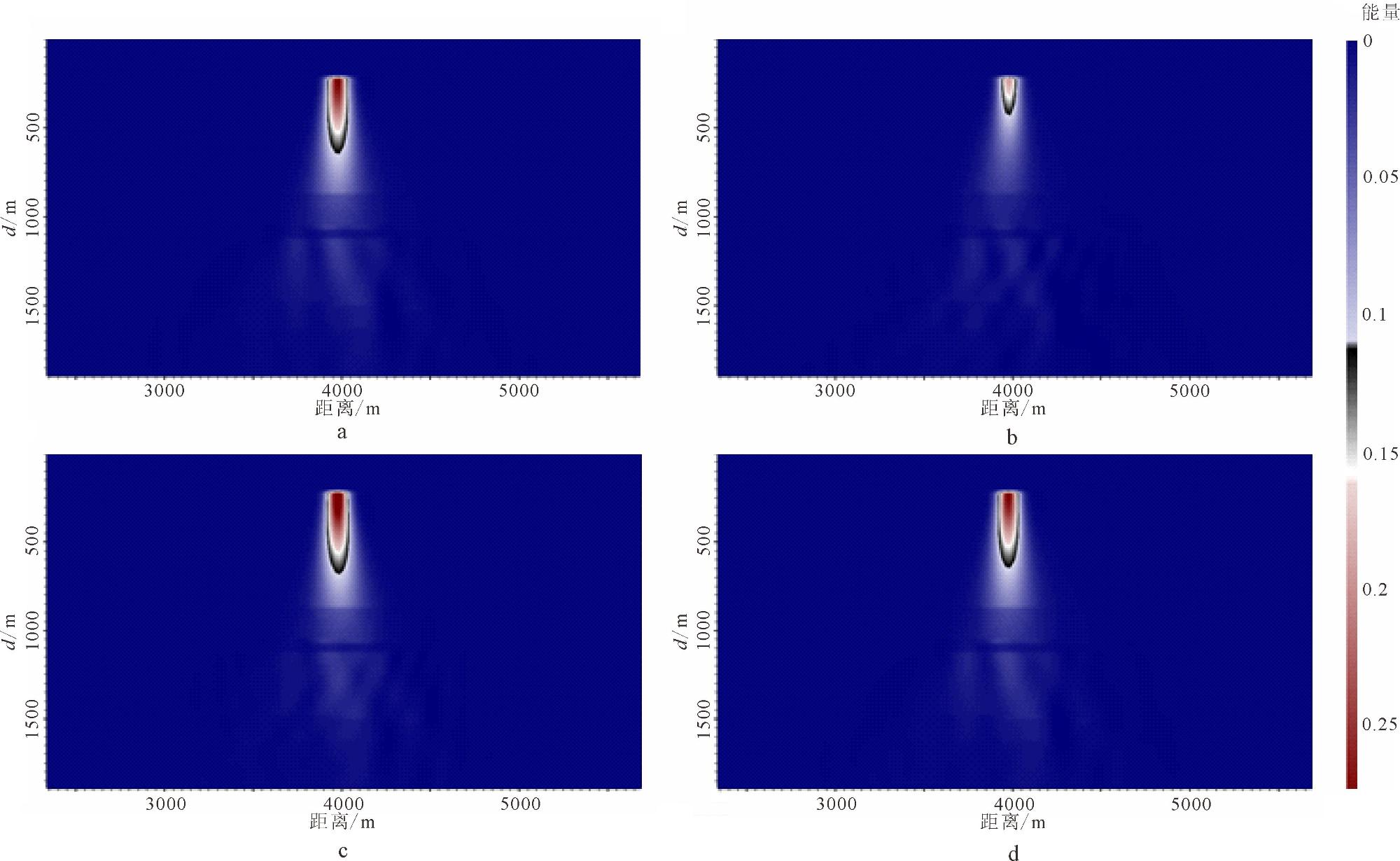
图2 道间距激发能量试验图a—道间距5 m激发能量;b—道间距10 m激发能量;c—道间距15 m激发能量;d—道间距20 m激发能量。 Fig. 2 Test diagram of channel spacing excitation energy a-Excitation energy with 5 m trace interval;b-Excitation energy with 10 m trace interval;c-Excitation energy with 15 m trace interval;d-Excitation energy with 20 m trace interval. |
图3 最大偏移距激发能量差异试验图a—2.0 km与2.4 km偏移距时差异值;b—2.0 km与2.2 km偏移距时差异值;c—2.0 km与1.8 km偏移距时差异值;d—2.0 km与1.6 km偏移距时差异值。 Fig. 3 Test diagram of energy difference for maximum offset distance excitation a-Difference between 2.0 km and 2.4 km offset;b-Difference between 2.0 km and 2.2 km offset;c-Difference between 2.0 km and 1.8 km offset;d-Difference between 2.0 km and 1.6 km offset. |
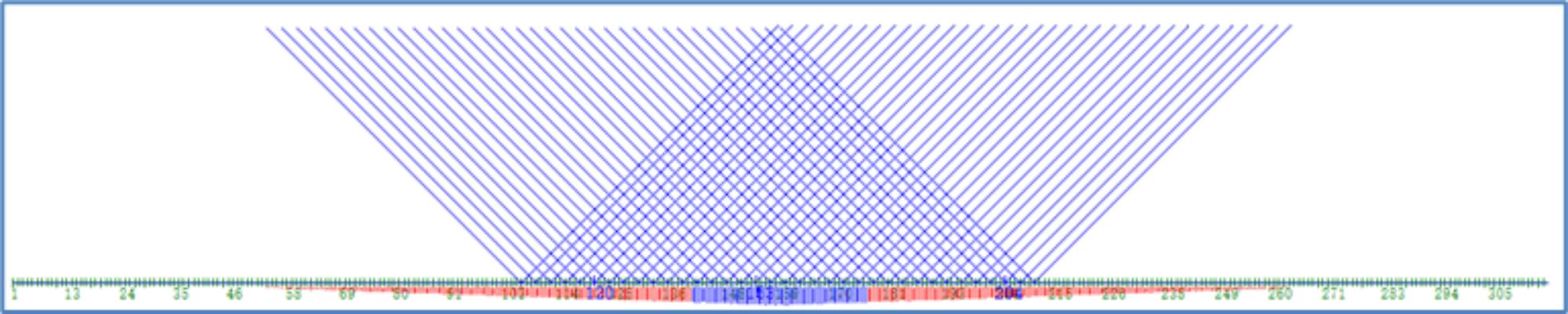
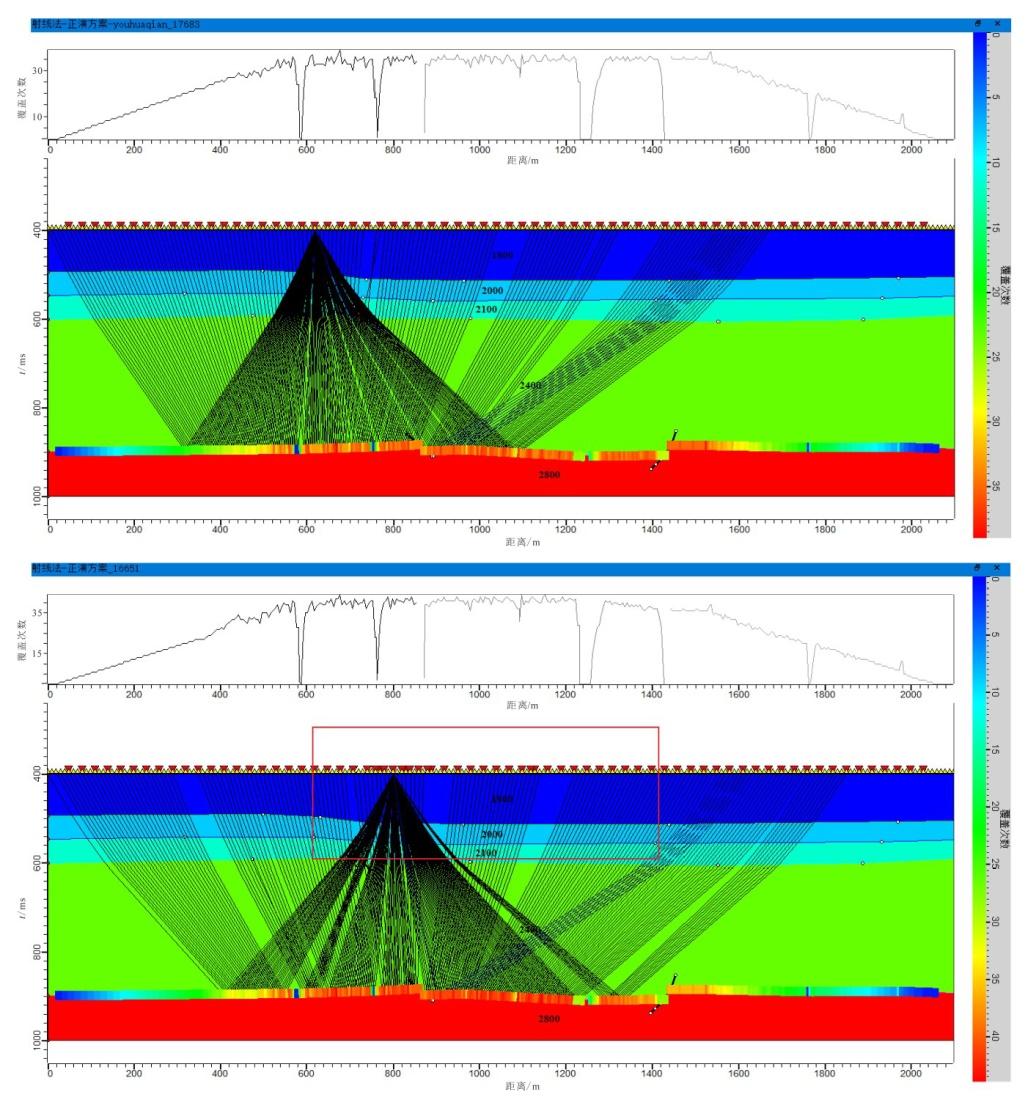
图10 基于照明分析观测系统优化前后对比图Fig.10 Comparison of observation system configurations before and after optimization based on illumination analysis |
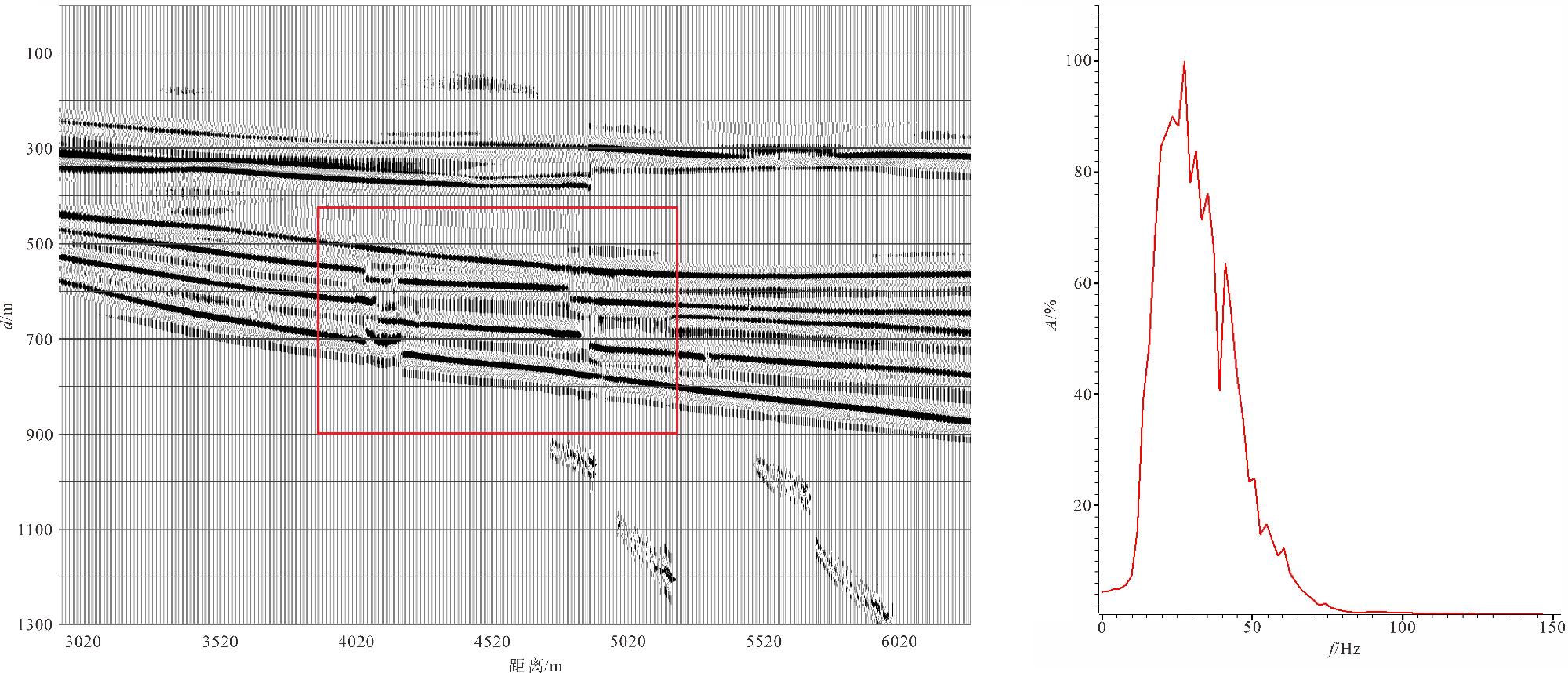
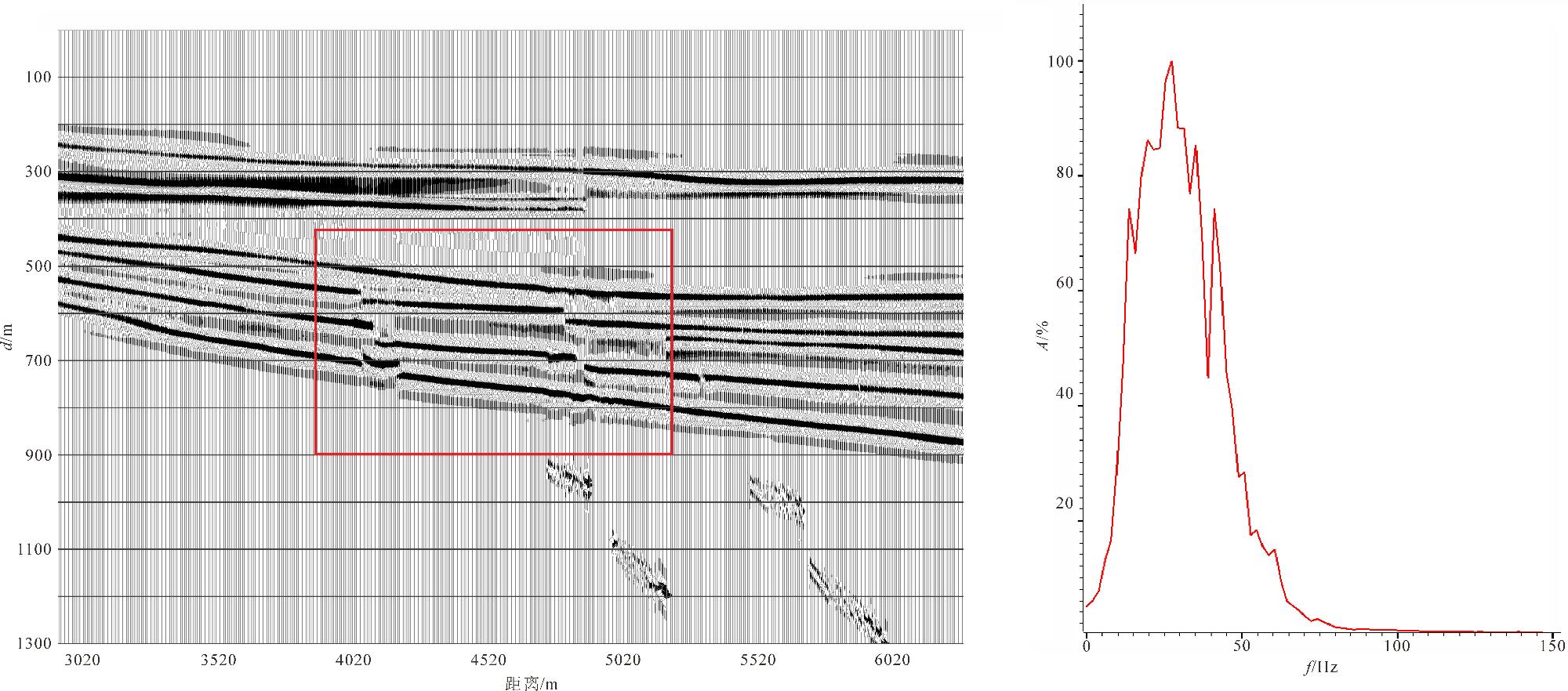
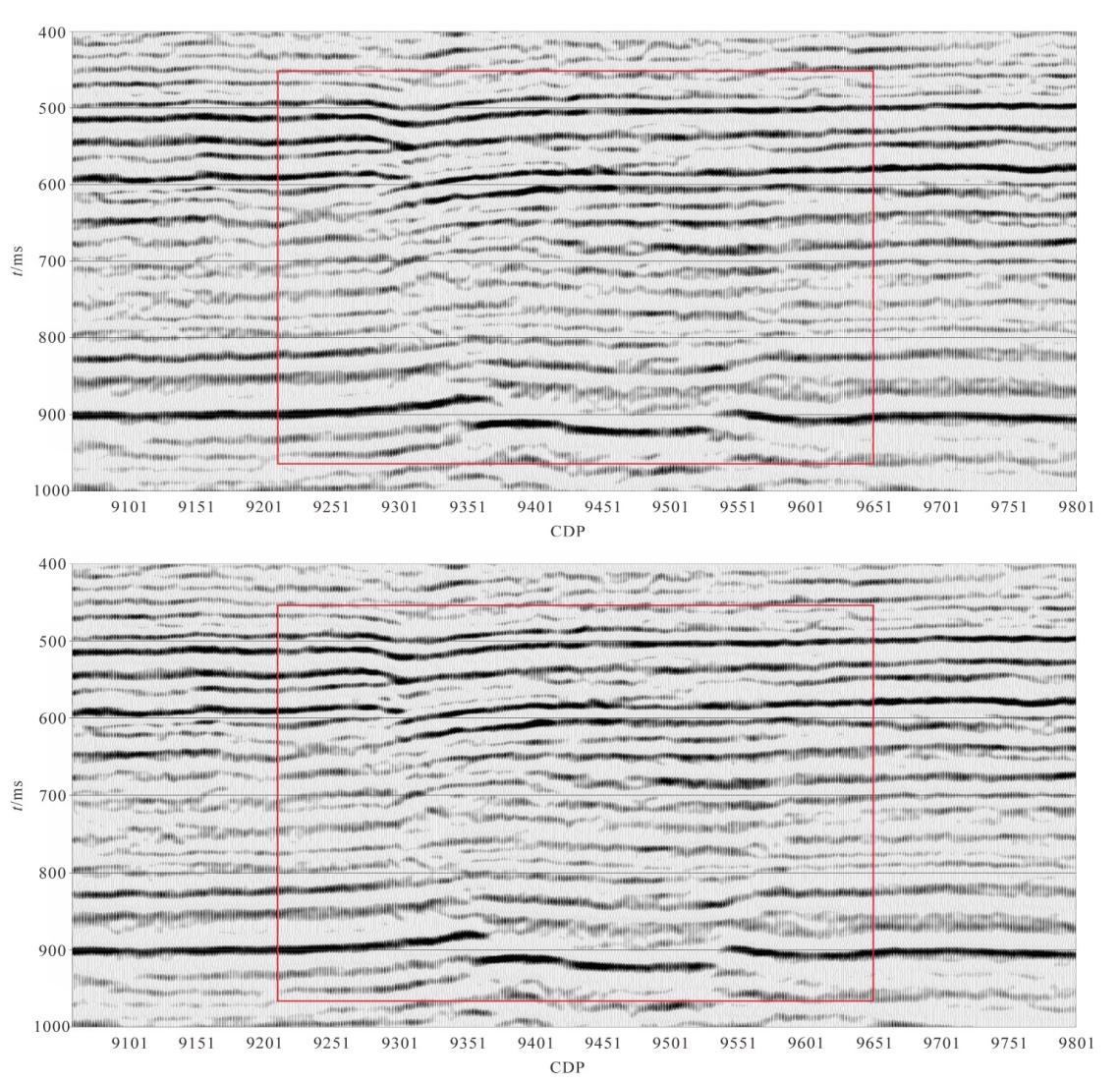
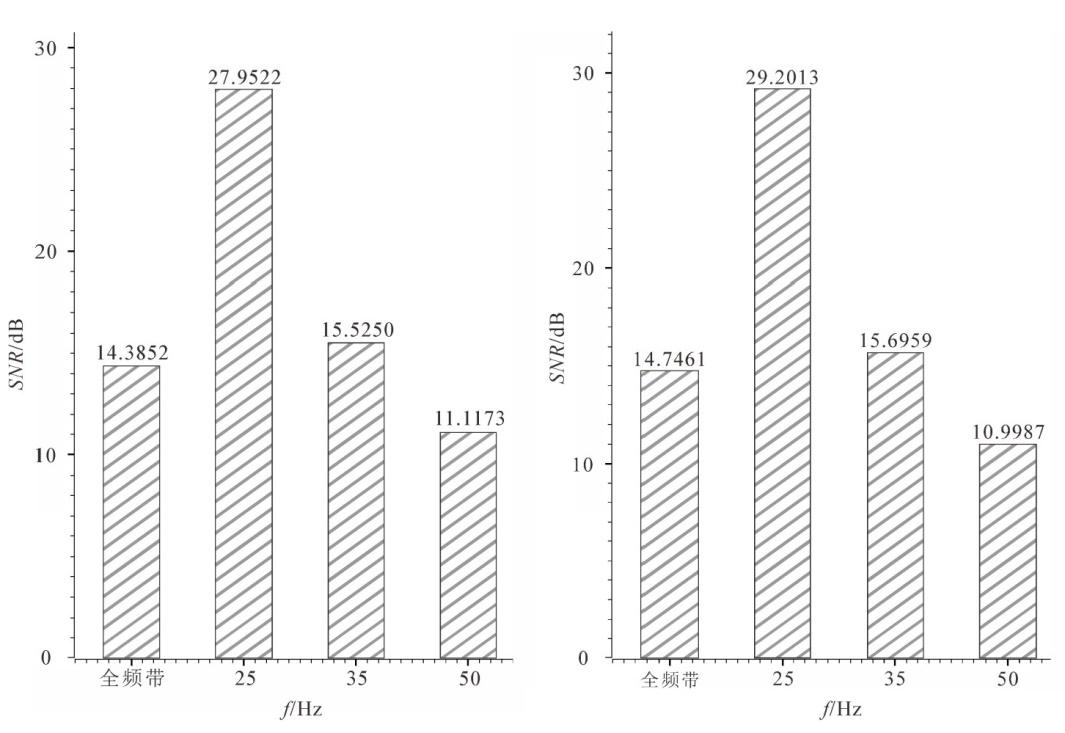
图11 观测系统优化前后叠加剖面对比图Fig. 11 Comparison of stacked sections before and after observation system optimization |
| 1 |
秦明宽, 刘祜, 叶发旺, 等. 铀资源勘查技术国际科技前沿动态[J]. 世界核地质科学, 2024, 41(1):1-11.
|
| 2 |
庞新明, 李振春, 张敏, 等. 照明分析方法的研究进展综述[J]. 地球物理学进展, 2016, 31(1):285-294.
|
| 3 |
陈生昌, 王汉闯. 基于平面波照明的偏移成像补偿[J]. 地球物理学报, 2010, 53(7):1710-1715.
|
| 4 |
朱峰. 照明分析技术在复杂地区地震采集参数优化中的应用[J]. 石油天然气学报, 2012, 34(10):43-46+168.
|
| 5 |
吕公河, 尹成, 周星合, 等. 基于采集目标的地震照明度的精确模拟[J]. 石油地球物理勘探, 2006, 41(3): 258-261+I.
|
| 6 |
薛志恒. 浅层地震在砂岩型铀矿勘查中的应用[J]. 国外铀金地质(现名:世界核地质科学), 2002, 19(4):217-219.
|
| 7 |
张海新. 地震数据采集观测系统的设计与实现[D]. 大连: 大连理工大学, 2005.
|
| 8 |
董良国, 吴晓丰, 唐海忠, 等. 逆掩推覆构造的地震波照明与观测系统优化[J]. 石油物探, 2006, 45(1):40-47+5.
|
| 9 |
卢占武, 李文辉, 陈明春, 等. 羌塘盆地内部结构与反射地震勘探技术分析[J]. 矿产勘查, 2024, 15(5):803-810.
|
| 10 |
侯嵩, 尹军杰, 王赟. 道间距对地震偏移的影响[J]. 石油地质与工程, 2009, 23(4):32-34+134.
|
| 11 |
白志宏, 许银坡, 潘英杰, 等. 基于覆盖次数均匀的激发点优化技术[C]//西安石油大学,成都理工大学,陕西省石油学会. 2020油气田勘探与开发国际会议论文集. 东方地球物理公司采集技术中心, 2020:185-191.
|
| 12 |
吴昱. 基于正演模拟的地震观测系统实验分析[D]. 北京: 中国石油大学(北京), 2018.
|
| 13 |
李章波. 基于波动方程和地震照明度的渝西山地煤炭资源二维地震勘探研究[J]. 矿业安全与环保, 2017, 44(2):84-87.
|
| 14 |
宋亮, 陶建, 郭天智. VTI介质地震成像技术在地质勘查中的应用[J]. 矿产勘查, 2019, 10(3):621-624.
|
| 15 |
张健男, 李三福, 张敏, 等. 基于双程波方程走时的克希霍夫深度偏移技术[J]. 工程地球物理学报, 2023, 20(4):500-508.
|
| 16 |
刘文峰, 李蒙, 王亮, 等. 照明分析在常州地区地震采集观测系统优化设计中的应用[J]. 河南理工大学学报(自然科学版), 2019, 38(2):58-64.
|
| 17 |
裴正林. 波动方程地震定向照明分析[J]. 石油地球物理勘探, 2008, 43(6):645-651+607+742.
|
| 18 |
刘伟. 波动方程地震照明模拟与观测系统优化设计方法研究[D]. 成都: 西南石油大学, 2015.
|
| 19 |
杨晶. 面向复杂地质目标的地震采集观测系统优化方法及应用[J]. 石油地球物理勘探, 2024, 59(3):404-414.
|
| 20 |
宋亚民, 戴朝强, 姜建, 等. 南海东部地区断层阴影带构造落实方法及其应用研究[J]. 物探化探计算技术, 2021, 43(3):296-303.
|
| 21 |
张延章, 尹寿鹏, 张巧玲, 等. 地震分频技术的地质内涵及其效果分析[J]. 石油勘探与开发, 2006, 33(1):64-66+71.
|
/
| 〈 |
|
〉 |