An interpretative high-resolution seismic data processing method based on multi-level fractional calculus
|
GAO Lijun,male,born in 1988,senior engineer,PhD’s candidate,focusing on seismic imaging process. E-mail:gaolij.xbsj@sinopec.com |
Received date: 2025-05-26
Revised date: 2025-05-31
Online published: 2025-11-06
Supported by
Study on identification,description and evaluation technology of ultra-deep and super-deep carbonate rock traps(P24136)
Integrated research and application of ultra-deep and super-deep drilling geological engineering(P24009)
In seismic exploration,high-resolution seismic reflection imaging data volumes are critical tools for achieving fine identification of thin sandstone bodies and fault structures in sedimentary basins. However,actual seismic imaging profiles often face the loss of low- and high-frequency signals,leading to low seismic imaging resolution and ineffective identification of oil,gas,uranium,coal,and other mineral resources. In signal processing,integral and differential algorithms of effective signals respectively reflect their low- and high-frequency components. Based on this principle,this paper proposes an interpretative high-resolution processing method using multi-level fractional calculus. By separately calculating different fractional-order components of effective signals,the missing low- and high-frequency components in seismic imaging profiles are obtained. Through the introduction of multivariate Gaussian theory,Bayesian theory,and statistical inversion to improve the solving process of weighting coefficients,a broadband high-resolution seismic imaging profile is established. Compared with traditional calculus-based high-resolution processing methods,this method effectively enhances the accuracy of weighting coefficient determination and avoids the impact of calculation errors on precision. Processing results from both onshore and offshore actual data demonstrate that the proposed method significantly improves the resolution and frequency bandwidth of seismic data,thereby enhancing high-resolution identification of sand bodies and related structures.
GAO Lijun , LI Haiying , YANG Wei , GONG Wei , LI Qingqing . An interpretative high-resolution seismic data processing method based on multi-level fractional calculus[J]. World Nuclear Geoscience, 2025 , 42(3) : 552 -564 . DOI: 10.3969/j.issn.1672-0636.2025.03.007
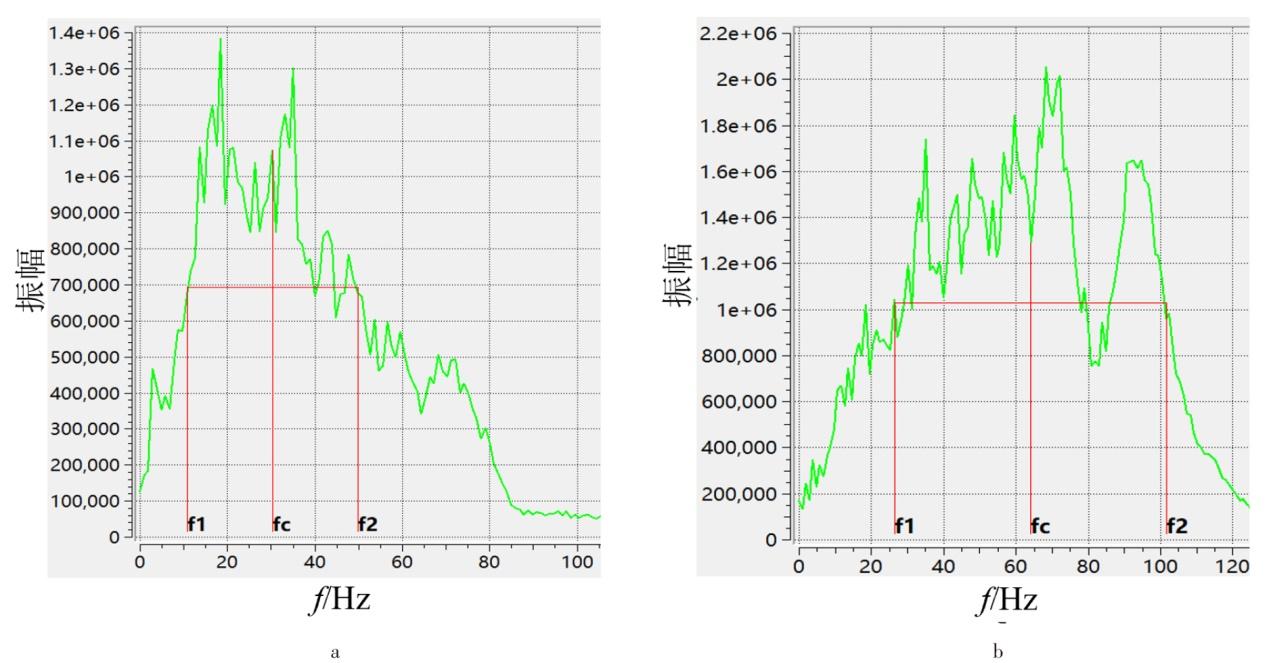
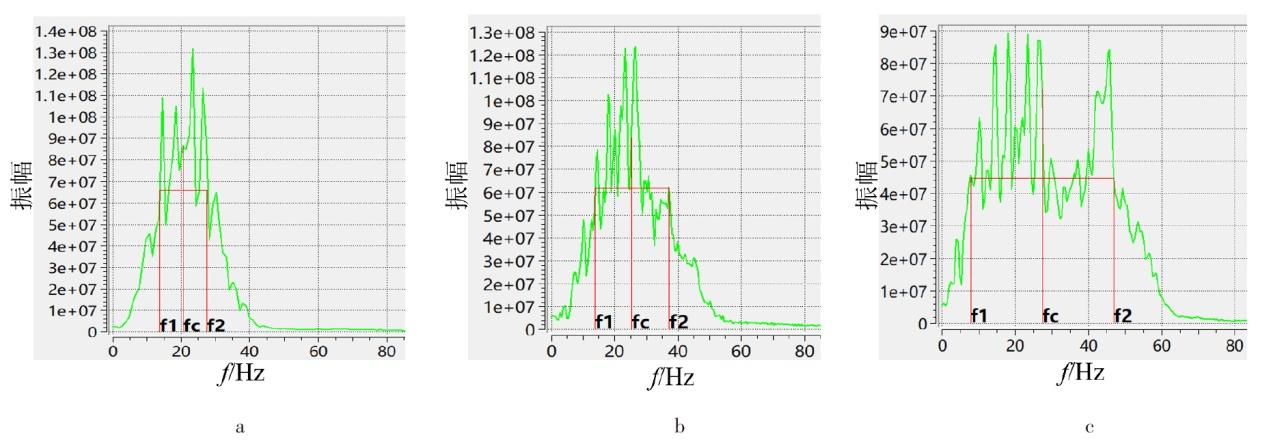
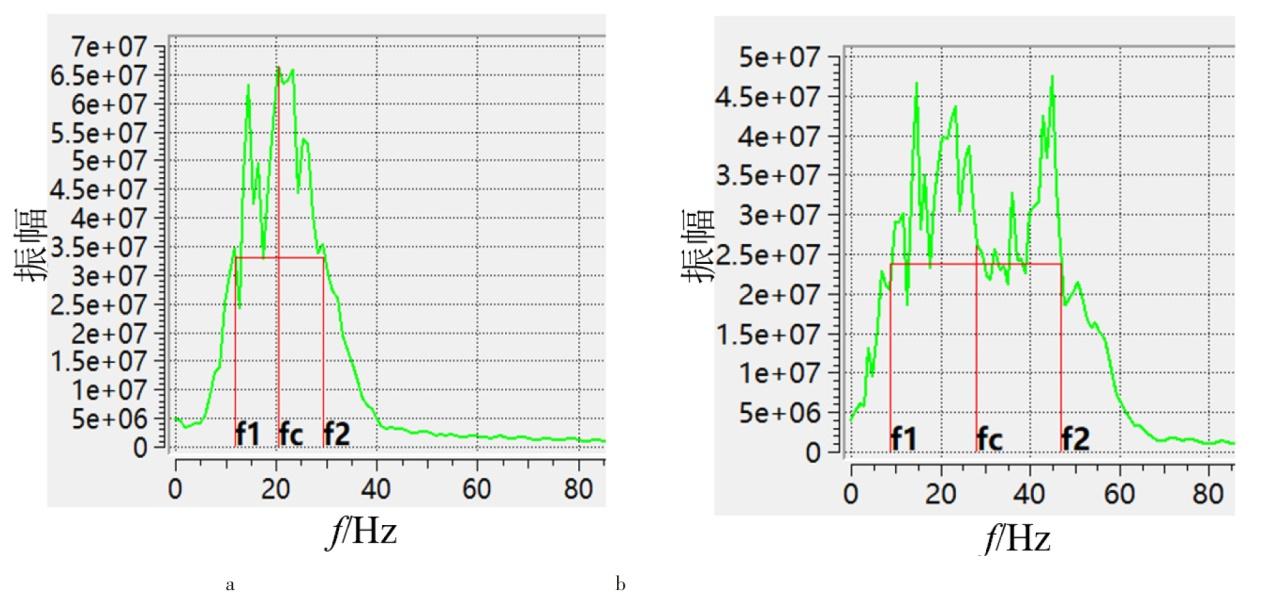
图6 提频前后频谱对比a—原始数据频谱;b—常规提频方法数据频谱;c—多级分数阶提频方法数据频谱。 Fig. 6 Spectrum comparison before and after frequency enhancement a-Frequency spectrum of the original seismic data;b-Frequency spectrum of seismic data using conventional method;c-Frequency spectrum of seismic data after multi-level fractional calculus. |
| 1 |
|
| 2 |
李子颖, 秦明宽, 郭庆银, 等. 渗出砂岩型铀矿成矿预测与找矿标志[J]. 铀矿地质, 2024, 40(1):1-15.
|
| 3 |
宁媛丽, 李金鑫, 赵威, 等. 砂岩型铀矿高精度三维地震勘探砂体识别关键技术研究——以松辽盆地 HLJ 地区为例[J]. 世界核地质科学, 2024, 41(6):1156-1167.
|
| 4 |
乔宝平, 潘自强, 程纪星, 等. 砂岩型铀矿地震反射波高精度成像关键问题分析[J]. 世界核地质科学, 2024, 41(6):1065-1075.
|
| 5 |
|
| 6 |
|
| 7 |
|
| 8 |
|
| 9 |
|
| 10 |
|
| 11 |
|
| 12 |
|
| 13 |
汪小将, 陈宝书, 曹思远. HHT振幅频率恢复处理技术研究与应用[J]. 中国海上油气, 2009, 21(1):19-22.
|
| 14 |
高静怀, 汪玲玲, 赵伟. 基于反射地震记录变子波模型提高地震记录分辨率[J]. 地球物理学报, 2009, 52(5):1289-1300.
|
| 15 |
尚新民, 刁瑞, 冯玉苹, 等. 谱模拟方法在高分辨率地震资料处理中的应用[J]. 物探与化探, 2014, 38(1):75-80.
|
| 16 |
|
| 17 |
王元君, 周怀来. 时频域动态反褶积方法研究[J]. 西南石油大学学报(自然科学版), 2015, 37(1):1-10.
|
| 18 |
张彬彬, 张军华, 吴永亭. 地震数据低频信号保护与拓频方法研究[J]. 地球物理学进展, 2019, 34(3): 1139-1144.
|
| 19 |
赵圣亮, 王晓明, 王建华. 一种简易的频率补偿方法[J]. 石油地球物理勘探, 1994, 29(2):231-235
|
| 20 |
云美厚, 纪陈宇, 崔景涛. 求导能否提高地震记录的分辨率[J]. 石油地球物理勘探, 1997, 32(5): 740-748
|
| 21 |
佘德平, 曹辉, 王咸彬. 相干数据体及其在三维地震解释中的应用[J]. 石油物探, 1998, 37(4):75-79
|
| 22 |
|
| 23 |
郭欣, 雍学善, 高建虎, 等. 基于二阶谱及多阶微分融合的频谱拓展方法[J]. 地球物理学进展, 2016, 31(5): 2095-2102.
|
| 24 |
廖科. 分数阶微积分运算数字滤波器设计与电路实现及其应用[D]. 成都: 四川大学, 2006.
|
/
| 〈 |
|
〉 |