Review on the shape and thickness design of the canister for high-level radioactive waste in Japan
|
PENG Liyuan,female,born in 1990,engineer,PhD,focusing on the research of the canister of high-level radioactive waste. E-mail: 17824033690@163.com |
Received date: 2024-11-27
Revised date: 2024-12-28
Online published: 2025-11-07
Supported by
CAEA Innovation Center for Geological Disposal of High level Radioactive Waste(WDZC-2023-HDYY-102)
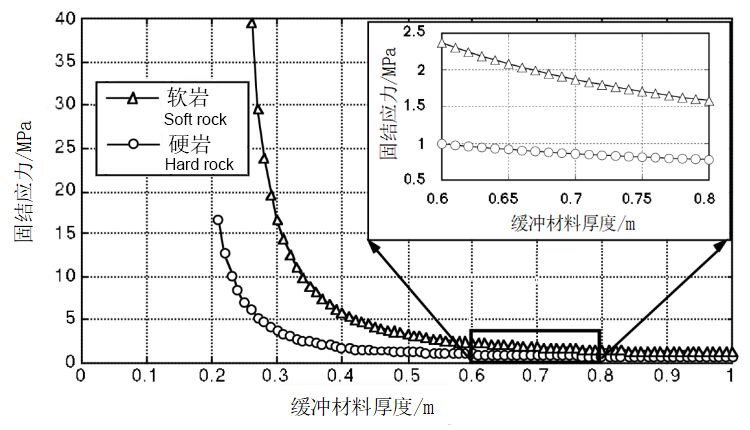
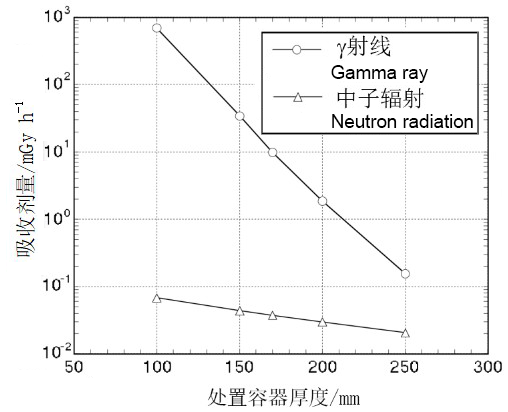
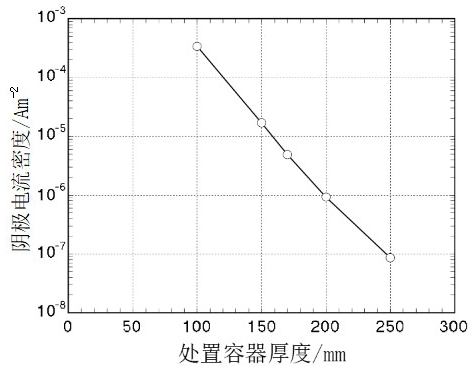
To appropriate deal the high-level radioactive waste with internationally recognized method, deep geological disposal repository with multibarrier system is being planned to construct in China. As one of the most important engineering barriers,the canister should maintain integrity and avoid any deformation to meet the safety functions of containing radioactive waste and isolating it from groundwater over the design lifetime. Therefore,it is crucial to reasonably design the shape and thickness of the canister. The properties of the canister materials are important factors affecting the shape and thickness design of the canister. Carbon steel is one of the candidate materials for high-level waste canister in China. Since Japan has chosen carbon steel as the canister material and has completed the trial production of the canister, this paper mainly systematically introduced the design concept about basic shape and thickness of the canister for high-level radioactive in Japan,and analyzed the key factors that need to be considered in the design of the shape and thickness for the canister. Also, emphasis was placed on the determination of the pressure thickness parameter and radiation shielding thickness parameter to provide guidance for the design of the canister for high-level radioactive in China.
Liyuan PENG , Jingli XIE , Shengfei CAO , Qi ZHANG , Jianfeng CHENG , Yufeng GAO . Review on the shape and thickness design of the canister for high-level radioactive waste in Japan[J]. World Nuclear Geoscience, 2025 , 42(1) : 134 -145 . DOI: 10.3969/j.issn.1672-0636.2025.01.011
表2 处置容器抗压所需的厚度Table 2 The thickness required to resistant the pressure on canister |
| 处置容器组成部分 | 抗压厚度/mm |
|---|---|
| 上下底面 | 110 |
| 圆筒壁 | 50 |
表4 碳钢处置容器的厚度Table 4 Thickness of the carbon steel canister |
| 上下底面 | 圆筒壁 | |
|---|---|---|
| 腐蚀厚度/mm | 40 | |
| 抗压厚度/mm | 110 | 50 |
| 辐射屏蔽厚度/mm | 150 | |
| 总厚度[① + max (②, ③)]/ mm | 190 |
| 1 |
|
| 2 |
|
| 3 |
|
| 4 |
|
| 5 |
王驹, 陈亮, 周志超, 等. 我国高放废物地质处置新突破[J]. 原子能科学技术(增刊2), 2024, 58(增刊2)217-230.
|
| 6 |
Nuclear Waste Management Organization of Japan. Supporting Report 3:Safety assessment of the geological disposal system,H12:Project to establish the scientific and technical basis for HLW disposal in Japan:JNC TN 1400 2000-004[R]. Tokyo: Japan Nuclear Cycle Development Institute, 2000b.
|
| 7 |
Nuclear Waste Management Organization of Japan. Supporting Report 1:The geological environment of Japan, H12:Project to establish the scientific and technical basis for HLW disposal in Japan:JNC TN 1400 2000-002[R]. Tokyo: Japan Nuclear Cycle Development Institute, 2000a.
|
| 8 |
Final Report of Kamaishi In situ Experiment:JNC TN7410 99-001[R]. Tokyo: Japan Nuclear Cycle Development Institute,1999.
|
| 9 |
|
| 10 |
|
| 11 |
|
| 12 |
|
| 13 |
KRISTALLIN-I. Safety assessment report[R]. 1993.
|
| 14 |
Nuclear Waste Management Organization of Japan. Supporting report 2:Repository design and engineering technology,H12:Project to establish the scientific and technical basis for HLW disposal in Japan[R]. Japan Nuclear Cycle Development Institute, 2000.
|
| 15 |
|
| 16 |
|
| 17 |
|
| 18 |
|
| 19 |
|
| 20 |
|
| 21 |
|
| 22 |
|
| 23 |
|
| 24 |
|
| 25 |
|
| 26 |
|
| 27 |
|
| 28 |
|
| 29 |
|
| 30 |
|
| 31 |
|
| 32 |
|
| 33 |
|
| 34 |
|
| 35 |
|
| 36 |
|
| 37 |
|
| 38 |
|
| 39 |
|
| 40 |
|
| 41 |
|
| 42 |
|
| 43 |
|
| 44 |
彭立园, 谢敬礼, 曹胜飞, 等. 日本高放废物处置容器腐蚀厚度设计研究进展[J]. 中国腐蚀与防护学报, 2024: 1-20.
|
| 45 |
田霄, 王驹, 李亚伟, 等. 北山花岗岩裂隙围岩蚀变矿物学及地球化学特征[J]. 世界核地质科学, 2023, 40 (增刊1): 497-503.
|
| 46 |
周志超, 赵敬波, 季瑞利, 等. 高放废物地质处置新场候选场址水文地质特征研究[J]. 世界核地质科学, 2023, 40 (4): 879-888.
|
| 47 |
孙健, 陈亮, 马洪素, 等. 完整极硬岩TBM施工辅助破岩方法研究现状及展望[J]. 世界核地质科学, 2024, 41 (1):141-163.
|
| 48 |
张海洋, 马利科, 陈亮. 放射性废物治理公众宣传方法初探[J]. 世界核地质科学, 2023, 40 (增刊1):660-665.
|
| 49 |
|
| 50 |
|
| 51 |
|
| 52 |
|
| 53 |
|
| 54 |
张鹏. 高含量铝基碳化硼中子吸收材料的制备及性能研究[D]. 太原: 太原理工大学, 2014.
|
| 55 |
李奎江, 伦佳琪, 孙瑞瑞, 等. 基于Al-B4C中子吸收材料的Monte Carlo模拟[J]. 河南科技, 2023, 42 (20):84-87.
|
| 56 |
李刚, 简敏, 王美玲, 等. 反应堆乏燃料贮运用中子吸收材料的研究进展[J]. 材料导报, 2011, 25 (13): 110-113.
|
| 57 |
|
| 58 |
|
| 59 |
|
| 60 |
|
| 61 |
|
| 62 |
|
| 63 |
|
| 64 |
|
| 65 |
|
| 66 |
|
| 67 |
|
| 68 |
|
| 69 |
|
| 70 |
|
/
| 〈 |
|
〉 |