
• Gadir BAYRAMLI a ,
  • Turan KARIMLI , a, b, c, *
展开

收稿日期: 2024-02-19

  修回日期: 2024-06-12

  录用日期: 2024-11-14

  网络出版日期: 2025-08-13

Driving factors of CO2 emissions in South American countries: An application of Seemingly Unrelated Regression model

  • Gadir BAYRAMLI a ,
  • Turan KARIMLI , a, b, c, *
Expand
  • aAzerbaijan State Economic University, University of Economic, Baku, AZ1007, Azerbaijan
  • bIstanbul University, Department of Economics, Istanbul, 34126, Turkey
  • cKarabakh University, Khankendi, AZ2600, Azerbaijan
*E-mail address: (Turan KARIMLI).

Received date: 2024-02-19

  Revised date: 2024-06-12

  Accepted date: 2024-11-14

  Online published: 2025-08-13

本文引用格式

Gadir BAYRAMLI , Turan KARIMLI . [J]. Regional Sustainability, 2024 , 5(4) : 100182 . DOI: 10.1016/j.regsus.2024.100182

Abstract

Carbon emissions have become a critical concern in the global effort to combat climate change, with each country or region contributing differently based on its economic structures, energy sources, and industrial activities. The factors influencing carbon emissions vary across countries and sectors. This study examined the factors influencing CO2 emissions in the 7 South American countries including Argentina, Brazil, Chile, Colombia, Ecuador, Peru, and Venezuela. We used the Seemingly Unrelated Regression (SUR) model to analyse the relationship of CO2 emissions with gross domestic product (GDP), renewable energy use, urbanization, industrialization, international tourism, agricultural productivity, and forest area based on data from 2000 to 2022. According to the SUR model, we found that GDP and industrialization had a moderate positive effect on CO2 emissions, whereas renewable energy use had a moderate negative effect on CO2 emissions. International tourism generally had a positive impact on CO2 emissions, while forest area tended to decrease CO2 emissions. Different variables had different effects on CO2 emissions in the 7 South American countries. In Argentina and Venezuela, GDP, international tourism, and agricultural productivity significantly affected CO2 emissions. In Colombia, GDP and international tourism had a negative impact on CO2 emissions. In Brazil, CO2 emissions were primarily driven by GDP, while in Chile, Ecuador, and Peru, international tourism had a negative effect on CO2 emissions. Overall, this study highlights the importance of country-specific strategies for reducing CO2 emissions and emphasizes the varying roles of these driving factors in shaping environmental quality in the 7 South American countries.

1. Introduction

The increases of anthropogenic greenhouse gas emissions is primarily caused by human activities such as fossil fuel combustion and deforestation. Climate change is currently among the most researched topics (Wang et al., 2024). The ongoing rise in carbon emissions adversely affects the environment and society. To ensure sustainable development and combat climate change, it is crucial to cut carbon emissions and improve environmental conditions (Du et al., 2023). The 21st century has seen rapid economic growth, urbanization, industrialization, and tourism development, especially in developing countries. South America, rich in natural resources and cultural heritage, is no exception (Sohag et al., 2019; Ma and Zhu, 2024). However, these developments have come at the cost of increasing carbon emissions, damaging the environment, and exacerbating climate change. Spanning from the Amazon rainforest to the Andes mountains, South America holds great potential for economic development and environmental conservation (Apergis and Payne, 2015; Silva et al., 2024).
Sustainable economic growth is critical to sustainable development, offering the potential to reduce environmental costs. This interaction between economic growth and environmental and sustainable development helps create a balanced socio-economic framework. As South American economies expand, they are moving from outdated and harmful production practices to modern and eco-friendly production techniques (Arango et al., 2020), which improves environmental quality. Key driving factors of this change include new product structures, adoption of cleaner technologies, stricter environmental regulations, and increased environmental awareness (Raihan et al., 2022). With ongoing energy shortages and climate change, the importance of renewable energy has grown in South America (Sohag et al., 2019, 2021; Sharif et al., 2021). Renewable energy, recognized as a carbon-neutral option, enhances energy security and is crucial for meeting the global carbon emission reduction goal of 50.00% by 2050 (Pastore et al., 2022).
The literature shows that while there are existing studies in the South American countries, they are inadequate (Córdova et al., 2018; Sohag et al., 2019; Sharif et al., 2021; Sohag et al., 2021). Carbon emissions have been well researched, but a comprehensive analysis of the factors influencing carbon emissions is lacking. This study investigated the complex relationship of CO2 emissions with GDP, renewable energy use, urbanization, industrialization, international tourism, agricultural productivity, and forest area in the 7 South American countries. This study seeks to understand the contribution of GDP, urbanization, and industrialization on CO2 emissions, the role of renewable energy use in reducing CO2 emissions, the contribution of urbanization and industrialization to CO2 emission reduction, and how forest area management can aid in carbon sequestration.
This study can inform the development of strategies that align economic growth with ecological sustainability and contribute to the international conversation on climate change mitigation and support a sustainable future for South America.

2. Literature review

The issue of climate change has garnered significant attention in the 21st century. Human activities, particularly the burning of fossil fuels and deforestation, release large amounts of CO2, posing a serious threat to climate system and human well-being. Understanding how socioeconomic factors interact with CO2 emissions is essential for formulating effective emission reduction policymaking and achieving sustainable development (Yoro and Daramola, 2020).
Carbon emissions are increasingly concerning in South America, with countries striving for climate-smart development through the adoption of sustainable energy and transport systems, the implementation of nature-based climate solutions, and the construction of resilient cities (Mehmood et al., 2020; Rehman et al., 2021). Despite South America accounting for less than 10.00% of global greenhouse gas emissions, the region is significantly impacted by climate change. Human activities significantly increase CO2 emissions, posing a substantial threat to future climate security. It is essential to examine the factors influencing CO2 emissions for developing effective carbon mitigation policies (Kazemzadeh et al., 2024).
The relationship between economic development and environment is intricate. Traditionally, economic growth can lead to higher carbon emissions from industries, transport, and energy production (Koengkan et al., 2019). However, this relationship is not straightforward and varies with several conditions (Li et al., 2021). The Environmental Kuznets Curve (EKC) hypothesis posits an inverted U-shaped relationship between economic growth and environmental degradation. Initially, economic growth leads to higher CO2 emissions, but after reaching a certain income level, economic growth may lead to lower CO2 emissions due to technological improvements, the adoption of cleaner energy sources, and the enhanced environmental policies (Koengkan et al., 2018; Tatoğlu and Polat, 2021; Karimli et al., 2024). Research on the EKC hypothesis has shown varying results. Lee et al. (2010) observed this pattern in Americas and Europe, while de Groot et al. (2001) identified an N-shaped relationship in China. Narayan et al. (2016) confirmed the EKC hypothesis in 21 out of 181 countries wordwide, suggesting that higher income levels could mitigate CO2 emissions in some instances. However, Schröder and Storm (2020) noted that in the Organisation for Economic Co-operation and Development (OECD) countries, a higher GDP per capita leads to greater CO2 emissions, indicating the complexity of this relationship.
Moreover, renewable energy use is key to curbing carbon emissions. Dogan and Seker (2016) found that renewable energy use reduces carbon emissions and corroborated the EKC hypothesis in the OECD countries with strong renewable energy policies. Saidi and Omri (2020) identified a long-term bidirectional relationship between carbon economic growth and emissions and highlighted the role of renewable energy use in sustainable development.
Urbanization leads to the migration of populations from rural to urban areas, significantly impacting carbon emissions. Urban areas, which are economic activity centres, have higher energy demands and produce more carbon emissions from industries, transportation, and resident activities. Additionally, urban expansion alters land use type, often diminishing carbon sinks and boosting transportation-related emissions (Musah et al., 2021; Khan and Su, 2021).
Industrialization requires substantial energy, mostly sourced from fossil fuels, which significantly contributes to carbon emissions. The process of industrialization is energy-intensive, adding to the release of greenhouse gases like methane and nitrous oxide. Furthermore, industrialization spurs urbanization, thereby indirectly increasing emissions (Majeed and Tauqir, 2020; Dong et al., 2021). While industrialization promotes economic growth, it often raises carbon emissions due to the energy demands of production processes (Shahbaz and Lean, 2012; Congregado et al., 2016). Some studies point to an inverted U-shaped relationship between industrialization and carbon emissions, where investment in carbon emission reduction technology counteracts the carbon emissions of production processes (Shahbaz et al., 2014; Xu and Lin, 2015). Wang and Su (2019) emphasized the considerable influence of urbanization and industrialization on carbon emissions in China and the importance of establishing policies to balance economic development and environmental concerns.
The domestical and international tourism contributes to economic development and results in climate change through activities related to transportation, accommodations, and leisure. Akram et al. (2020) and Kumail et al. (2023) emphasized the need for achieving carbon emission reduction targets and sustainable tourism. Tourism significantly affects the environment through carbon emissions linked to transportation. The United Nations World Tourism Organization (UNWTO) noted that tourism significantly contributes to transportation emissions, particularly from air travel (Blomberg-Nygard and Anderson, 2016). Maritime travel has also been shown to be a major source of carbon emissions (Howitt et al., 2010). However, the impact of tourism on carbon emissions can vary. Ben Aïssa et al. (2014) observed that renewable energy and tourist arrivals might reduce carbon emissions, whereas Solarin (2014) reported a positive correlation between tourist arrivals and carbon emissions. These findings emphasize the necessity for policies that accommodate tourism growth while protecting the environment.
Agriculture acts as both a source and a sink for greenhouse gases, responsible for about 11.00% of global carbon emissions. Agricultural techniques such as cover cropping, agroforestry, and no-till farming can increase soil carbon storage. Li et al. (2023) found that a resilient and low-carbon agricultural sector is very important to reduce carbon emissions. Technological advances increase agricultural productivity but also raise CO2 emissions due to higher energy consumption (Nasreen et al., 2017). Shahbaz et al. (2018) observed a positive correlation between agricultural productivity and carbon emissions in China and India, and highlighted the importance of renewable energy use. Koondhar et al. (2021) suggested exploring modern agricultural technologies to reduce carbon emissions and conserve the environment. Agricultural productivity is known to contribute to CO2 emissions in the long term, whereas renewable energy use and forest area increasing can mitigate CO2 emissions in the short term (Waheed et al., 2018; Xiong and Qi, 2018).
Forests serve a dual role in the carbon cycle, both as a source of carbon emissions and a crucial carbon sink. Natural forests, with their complex structures, store a significant number of carbon, helping to mitigate climate change. Effective forest management policies are key to maximizing the role of forests in carbon sequestration (Cao et al., 2023; Ke et al., 2023). The dynamics between CO2 emissions and forest area are intricate; deforestation increases CO2 emissions, whereas well-managed forests serve as a carbon sink (Luo et al., 2017; Zafeiriou and Azam, 2017).

3. Data sources and methodology

3.1. Data sources

This study aims to empirically investigate the driving factors of CO2 emissions in the 7 South American countries, including Argentina, Brazil, Chile, Colombia, Ecuador, Peru, and Venezuela. The analysis focused on the 7 South American countries to ensure research robustness and data quality. The data, spanning from 2000 to 2022, underwent logarithmic transformation to ensure normality. All variables were sourced from the World Bank (2023) and were cross-referenced with other databases (CEPAL, 2023; FRED, 2023; OECD, 2023) to ensure reliability. Table 1 shows the description of the selected variables.
Table 1 Description of the selected variables.
Variable Unit Description Data sources
CO2 emissions 103 t The total amount of CO2 emissions World Bank (2023)
Gross domestic product (GDP) USD The total value of all final goods and services produced by a country or region in a given period of time
Renewable energy use % Percentage of the total final energy use
Urbanization persons Number of urban population
Industrialization % Industrial value added as a percentage of GDP
International tourism persons Number of tourist arrivals
Agricultural productivity % Agricultural value added as a percentage of GDP
Forest area km2 -

Note: - means no description.

3.2. Methodology

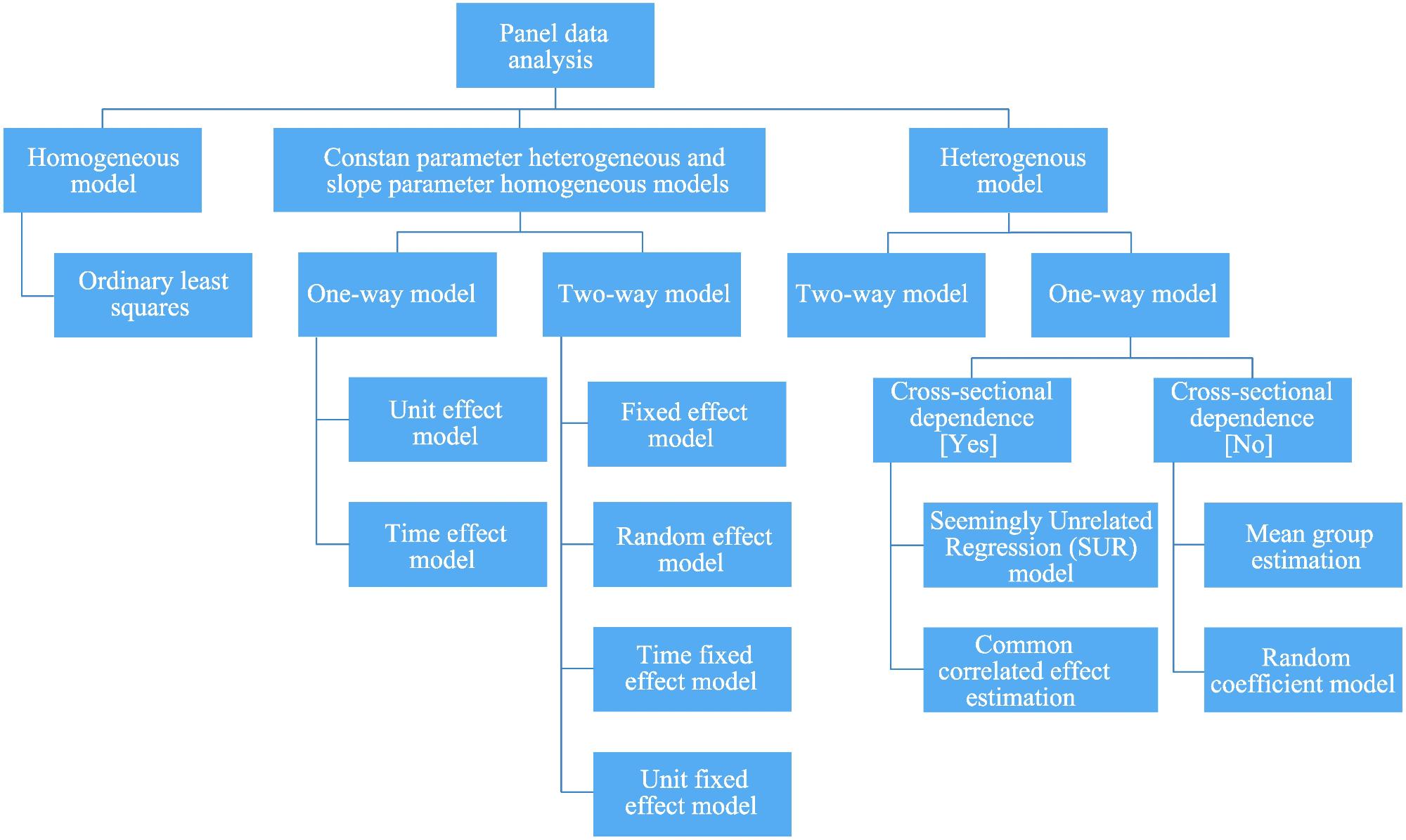
This study used panel data analysis to examine the driving factors of CO2 emissions. Panel data analysis allows for comprehensive data manipulation and provides insights at both the aggregate and individual levels (Bersalli et al., 2020). Figure 1 depicts the conceptual framework of this study.
Fig. 1. Conceptual framework of the empirical research.
The Seemingly Unrelated Regression (SUR) model was used in this study (Fig. 1). The SUR model comprises multiple linear multivariate regression equations, often uncorrelated. Omitting a variable from an equation can cause the misrepresentation of that variable’s influence in the error term. If the omitted variable is significantly correlated with explanatory variables in other equations, it can strengthen a new or existing relationship between the error terms (Elhorst, 2003).
The SUR model incorporates multiple dependent variables and at least one independent variable (Bulut et al., 2024). This matrix describes the SUR model that includes n observations, with each observation corresponding to one dependent variable (y) and one independent variable (x).
$\left[\begin{array}{c} y_{1} \\ y_{2} \\ \vdots \\ y_{n} \end{array}\right]=\left[\begin{array}{cccc} x_{1} & 0 & \cdots & 0 \\ 0 & x_{2} & \cdots & 0 \\ \vdots & \vdots & \vdots & \vdots \\ 0 & 0 & \cdots & x_{n} \end{array}\right]\left[\begin{array}{c} \beta_{1} \\ \beta_{2} \\ \vdots \\ \beta_{n} \end{array}\right]\left[\begin{array}{c} u_{1} \\ u_{2} \\ \vdots \\ u_{n} \end{array}\right],$,
${{Y}_{it}}=\widehat{\beta }{{X}_{it}}+{{u}_{it}}$,
where β is the coefficient of variables in the SUR model; u is the error term; Yit is the dependent variable for the ith country at time t; Xit denotes the independent variable for the ith country at time t; $\hat{\beta }$ is the coefficient that measures the impact of the independent variable on the dependent variable; and uit represents the error term for the ith country at time t, capturing the effects of all omitted variables and random disturbances.
The generalized least squares (GLS) estimation was employed to estimate the SUR model, accounting for the variance-covariance matrix of the error terms. According to Guliyev (2022), the elements of this matrix are typically unknown in practical applications. Zellner (1962) therefore used the residuals from individual ordinary least squares (OLS) estimation to approximate this matrix. Subsequently, the GLS estimation for the SUR model is derived from this approximation:
${{\hat{\beta }}_{\text{GLS}}}={{({X}'{{\Omega }^{-1}}X)}^{-1}}{X}'{{\Omega }^{-1}}Y$,
where ${{\hat{\beta }}_{\text{GLS}}}$ is the GLS estimation for the SUR model; X is the matrix of independent variables; ${X}'$ is the transpose of the matrix X; Ω is the covariance matrix of the error terms, which accounts for heteroskedasticity and autocorrelation; Ω–1 is the inverse of the covariance matrix; and Y is the vector of the dependent variable.
This study used the Stata 18.0 programme (StataCorp, Texas, the USA) to perform econometric analysis.

4. Results and discussion

The logarithmic transformations of the selected variables were applied in this study. Table 2 presents the descriptive statistics for the variables in the 7 South American countries (Argentina, Brazil, Chile, Colombia, Ecuador, Peru, and Venezuela) from 2000 to 2022.
Table 2 Descriptive statistics of the selected variables.
Variable Mean Minimum Maximum Standard Deviation
CO2 emissions (×108 t) 1.306 0.221 5.116 1.208
GDP (×1011 USD) 5.130 0.663 36.300 7.720
Renewable energy use (%) 25.475 7.650 50.050 11.982
Urbanization (×107 persons) 4.470 0.761 18.900 5.130
Industrialization (%) 31.244 18.189 53.089 7.759
International tourism (×107 persons) 0.331 0.043 0.762 0.218
Agricultural productivity (%) 6.283 3.275 15.405 2.126
Forest area (km2) 1,083,250 124,335 5,510,886 1,683,224
Table 3 details the correlation matrix for the error terms from the SUR model in the 7 South American countries and the result of the Breusch-Pagan Lagrange Multiplier test, which detects cross-sectional dependence (Breusch and Pagan, 1980). The Breusch-Pagan Lagrange Multiplier test results indicated that the correlation between the error terms of these models is statistically significant. Consequently, using the SUR model would be more appropriate in this context.
Table 3 Correlation matrix of the error terms for the 7 South American countries.
Model 1 Model 2 Model 3 Model 4 Model 5 Model 6 Model 7
Model 1 1.000
Model 2 -0.043 1.000
Model 3 -0.244 0.482 1.000
Model 4 -0.275 0.107 -0.223 1.000
Model 5 -0.159 -0.481 -0.237 0.554 1.000
Model 6 -0.135 0.229 0.732 -0.089 0.219 1.000
Model 7 0.305 -0.406 0.095 -0.396 0.330 0.431 1.000
Breusch-Pagan Lagrange Multiplier test: Chi2(45)=340.781; P-value=0.000

Note: Models 1-7 mean that the Seemingly Unrelated Regression (SUR) model was used to Argentina, Brazil, Chile, Colombia, Ecuador, Peru, and Venezuela, respectively.

Examining the correlation matrix for the error terms from these models, we found that Peru and Chile show a significant correlation of 0.732. Additionally, the correlation between Chile and Brazil is 0.482 and the correlation between Brazil and Ecuador is -0.481, indicating economic interdependence.
The high correlations among country-specific error terms suggested that conventional regression models may be inadequate. Moreover, the results of the Breusch-Pagan Lagrange Multiplier test refuted the assumption of independence among these models. Therefore, the SUR method is suitable here, as it accounts for related error components in the 7 South American countries (Tatoğlu, 2012).
This study also utilized the variance inflation factor (VIF) test to check the multicollinearity of independent variables. Multicollinearity can lead to bias estimation results, which is problematic. Table 4 shows that all independent variables have no multicollinearity, with both VIF and mean VIF values well below the thresholds of 10.000 and 6.000, respectively.
Table 4 Variance inflation factor (VIF) statistic values of the independent variables.
Independent variable VIF 1/VIF Mean VIF
GDP 4.566 0.219 2.534
Renewable energy use 3.215 0.311
Urbanization 2.841 0.352
Industrialization 2.212 0.452
International tourism 2.203 0.454
Agricultural productivity 1.531 0.653
Forest area 1.200 0.833
The Pesaran test (Pesaran and Yamaga, 2008) was used to evaluate variable homogeneity. The null hypothesis of this test is that variables are homogeneous. However, the test results led to the rejection of the null hypothesis, indicating that variables are heterogeneous. Consequently, constant parameter heterogeneous and slope parameter homogeneous models were excluded as shown in Figure 1.
To differentiate among the heterogeneous models, examining cross-sectional dependence is essential. The cross-sectional dependence test (Pesaran et al., 2004) was employed to determine the presence of cross-sectional dependence in the selected variables. The null hypothesis of this test is the absence of cross-sectional dependence of the selected variables. This study rejected the null hypothesis based on the findings presented in Table 5, confirming the existence of cross-sectional dependence of the selected variables.
Table 5 Cross-dectional dependence test results of the selected variables.
Variable Cross-sectional dependence test P-value Variable Cross-sectional dependence test P-value
CO2 emissions 13.944 0.000 Industrialization 8.893 0.000
GDP 11.891 0.000 International tourism 11.664 0.000
Renewable energy use 11.092 0.000 Agricultural productivity 3.825 0.000
Urbanization 20.613 0.000 Forest area 9.316 0.000
The null hypothesis positing cross-sectional dependence of the selected variables was not supported. Consequently, the mean group estimation and the random coefficient model were excluded as presented in Figure 1. The SUR model and the common correlated effect estimation are suitable for this study. However, given the small number of dataset (i.e., 7), the SUR model was selected as the more suitable approach.
This study used the SUR model to examine the driving factors of CO2 emissions in the 7 South American countries. The model allows for analysis at both the aggregate and individual (i.e., country) levels. Initial findings from the SUR model for each country were detailed in Table 6, where the 7 South American countries showed statistically significant results (P-value=0.000). We also observed that Chi2 values of all models are statistically significant and R2 of all models are robust.
Table 6 Overall statistical significance of the 7 models.
Model RMSE R2 Chi2 P-value Model RMSE R2 Chi2 P-value
Model 1 0.030 0.945 444.482 0.000 Model 5 0.023 0.987 1847.552 0.000
Model 2 0.016 0.989 2180.511 0.000 Model 6 0.025 0.991 3178.612 0.000
Model 3 0.056 0.933 337.414 0.000 Model 7 0.054 0.949 524.887 0.000
Model 4 0.046 0.898 205.637 0.000

Note: RMSE, Root Mean Square Error.

The estimation results of the SUR model for the 7 South American countries were summarized in Table 7. GDP has a significant impact in CO2 emissions in the 7 South American countries except Chile. Specifically, an increase in GDP led to the increases of CO2 emissions in Argentina, Brazil, Colombia, and Venezuela, but an increase in GDP decreased CO2 emissions in Ecuador and Peru. Renewable energy use reduced CO2 emissions in the 7 South American countries, with the SUR model affirming its statistical significance across these countries. Urbanization, while being critically important in Argentina and Ecuador, showed a statistically significant correlation with CO2 emissions at the 10% significance level in the 7 South American countries. The impact of industrialization in CO2 emissions was deemed insignificant in Brazil, while it generally resulted in the increases of CO2 emissions according to other findings (Majeed and Tauqir, 2020; Dong et al., 2021). International tourism significantly influenced CO2 emissions across the 7 South American countries, leading to an increase in CO2 emissions in these countries except for Brazil, where international tourism led to a reduction in CO2 emissions. Agricultural productivity did not affect CO2 emissions in Argentina and Colombia, but in other countries, it led to the changes of CO2 emissions. Specifically, agricultural productivity increased CO2 emissions in Venezuela, whereas it resulted reductions in CO2 emissions in Brazil, Chile, Ecuador, and Peru. Moreover, forest area significantly reduced CO2 emissions across the 7 South American countries.
Table 7 Estimation result of the Seemingly Unrelated Regression (SUR) model for the 7 South American countries.
Country Dependent variable Independent variable Coefficient Z-value P-value
Argentina CO2 emissions GDP 0.253 2.426 0.016
Renewable energy use -0.014 -2.045 0.042
Urbanization 0.009 1.741 0.089
Industrialization 0.024 3.868 0.000
International tourism 4.102 6.992 0.000
Agricultural productivity 0.054 0.723 0.473
Forest area -7.747 -6.476 0.000
Constant 10.505 7.026 0.000
Brazil CO2 emissions GDP 0.002 2.354 0.018
Renewable energy use -0.033 -18.612 0.000
Urbanization 0.009 2.139 0.033
Industrialization 0.007 1.151 0.252
International tourism -0.480 -2.850 0.039
Agricultural productivity -0.082 -1.762 0.078
Forest area -6.413 -5.474 0.000
Constant 11.115 4.288 0.000
Chile CO2 emissions GDP -0.003 -0.832 0.404
Renewable energy use -0.017 -2.039 0.042
Urbanization 0.002 2.292 0.047
Industrialization 0.099 2.320 0.020
International tourism 1.643 2.911 0.037
Agricultural productivity -0.117 -2.961 0.034
Forest area -6.312 -1.893 0.059
Constant -34.991 -2.887 0.004
Colombia CO2 emissions GDP 0.003 2.753 0.045
Renewable energy use -0.002 -4.180 0.024
Urbanization 0.025 3.533 0.000
Industrialization 0.107 4.074 0.000
International tourism 0.723 4.446 0.000
Agricultural productivity -0.051 -1.558 0.120
Forest area -1.035 -4.673 0.004
Constant 0.816 0.281 0.779
Ecuador CO2 emissions GDP -0.002 -3.193 0.014
Renewable energy use -0.039 -16.021 0.000
Urbanization 0.003 1.669 0.097
Industrialization 0.007 2.465 0.044
International tourism 0.543 3.574 0.069
Agricultural productivity -0.158 -3.435 0.001
Forest area -1.417 -4.385 0.017
Constant 16.593 0.289 0.778
Peru CO2 emissions GDP -0.001 -2.852 0.040
Renewable energy use -0.052 -16.241 0.000
Urbanization 0.004 2.267 0.021
Industrialization 0.007 0.423 0.676
International tourism 0.036 3.040 0.024
Agricultural productivity -0.003 -2.145 0.041
Forest area -1.604 -3.223 0.026
Constant 34.584 0.386 0.765
Venezuela CO2 emissions GDP 0.001 3.393 0.069
Renewable energy use -0.045 -9.274 0.000
Urbanization 0.002 3.557 0.058
Industrialization 0.012 4.479 0.035
International tourism 3.781 10.273 0.000
Agricultural productivity 0.078 2.072 0.038
Forest area -12.409 -8.488 0.000
Constant -24.935 -8.834 0.000
From Table 8 we can see that GDP, urbanization, industrialization, and agricultural productivity have positively impacted in CO2 emissions in the 7 South American countries. Specifically, a 1.00% increase in GDP was associated with a 0.39% rise in CO2 emissions. This study showed a negative and statistically significant relationship between renewable energy use and CO2 emissions, suggesting that a 1.00% increase in renewable energy use can lead to a 0.03% reduction CO2 emissions. This study underscored the importance of balancing economic growth with renewable energy use to reduce CO2 emissions because of the critical role of renewable energy use in improving environmental quality, which suggested that substituting fossil fuels with renewable sources could boost economic growth and give the 7 South American countries a competitive edge globally.
Table 8 Estimation results of the SUR model for the independent variables.
Independent variable Coefficient Standard error t-statistic Independent variable Coefficient Standard error t-statistic
Forest area -5.277 0.568 -9.284*** Renewable energy use -0.029 0.010 -2.843***
International tourism 1.401 0.151 9.309*** Urbanization 0.008 0.002 5.193***
Industrialization 0.038 0.015 2.577*** Agricultural productivity -0.040 0.075 -0.532
GDP 0.036 0.015 2.385*** Constant 1.955 18.612 0.105

Note: *** denotes statistical significance at the P≤0.01 level.

Urbanization, industrialization, and international tourism caused the increase of CO2 emissions, leading to the growing environmental pressure. A rise in urban populations has shown to compromise long-term environmental quality (Wang et al., 2021). Urbanization increases energy consumption and CO2 emissions, largely due to the reliance on non-renewable fossil fuels. These findings are consistent with the studies by Azam and Khan (2016) and Ali et al. (2017) but differ from the finding of Saidi and Ben Mbarek (2017). The urbanization process, involving construction, infrastructure development, and public transport, predictably increases CO2 emissions. Rapid urbanization boosts energy demands, escalates greenhouse gas emissions, and degrades urban environments.
Furthermore, the dense use of electricity in urban areas, particularly for electronic devices such as air conditioners, appliances, and lighting, exacerbates CO2 emissions. Several studies underscore that forests can reduce CO2 emissions, hence preserving and expanding forest area is essential for CO2 emission reduction (Waheed et al., 2018; Raihan et al., 2022; Sun et al., 2022; Ke et al., 2023).
This study also suggested that industrialization contributes to the increase of CO2 emissions in the 7 South American countries. The initial phases of industrialization typically involved shifts from handicraft industry to resource-intensive heavy industry, increasing the demand for energy and rising CO2 emissions due to the lack of energy-efficient technologies. This finding contradicted the results of Waheed et al. (2018) but it was consistent with the conclusions of Dogan and Seker (2016), who observed no significant environmental impact of industrialization. Over time, there can be a shift to less polluting industries and cleaner manufacturing, which reflects the evolution of industrialization.
Table 8 shows that the coefficient of international tourism in the 7 countries is significantly positive at the 1% level. Specifically, a 1.00% increase in international tourism can lead to a 1.40% increase in CO2 emissions. This study indicated that higher tourist activities impair air quality and worsen environmental degradation. A rise in international tourism boosts energy demand, negatively impacting environmental quality. The international tourism is a major driving factor of CO2 emissions through transportation, heating, and electricity generation. Deforestation is a major environmental impact of international tourism expansion. Furthermore, waste accumulation from international tourism can transform beautiful landscapes into polluted sites. Additionally, flights, hotel operations, and motorized water transport significantly contribute to CO2 emissions (Sun et al., 2022).
Moreover, this study indicated that forest area has a positive impact on environmental quality by preserving vegetation and soil. This finding aligned with several studies, which demonstrated that forest area contributes to reducing CO2 emissions (Raihan et al., 2019; Raihan and Tuspekova, 2022). Forests are crucial for mitigating climate change through carbon sequestration and preventing its release into the atmosphere. Consequently, forest-based mitigation efforts, such as conservation, afforestation, and natural regeneration, are vital for addressing climate change and offer additional benefits including biodiversity conservation, ecosystem restoration, and social goods and services. Thus, expanding forest area is an effective strategy for reducing CO2 emissions in the 7 South American countries.

5. Conclusions and policy implications

5.1. Conclusions

This study examined the driving factors of CO2 emissions in the 7 South American countries. Specifically, we explored the impacts of GDP, renewable energy use, urbanization, industrialization, international tourism, agricultural productivity, and forest area on CO2 emissions. Results showed that the increase of GDP leads to the increase of CO2 emissions in these countries. The findings also indicated that urbanization, industrialization, and international tourism in these countries accelerate environmental deterioration by increasing CO2 emissions.
Agricultural productivity, a critical source of employment in rural area of the 7 South America countries, was also studied for its impact on CO2 emissions. The results suggested that agricultural productivity does not significantly impact CO2 emissions overall, though it is a significant factor in the all selected countries except Argentina and Colombia. In Venezuela, agricultural productivity had a positive impact on CO2 emissions.
At the country level, the growth of GDP was linked to the increase of CO2 emissions in Argentina, Brazil, Colombia, and Venezuela, while it led to the decreases of CO2 emissions in Ecuador and Peru, indicating that the latter countries are experiencing economic growth with greater environmental consciousness.
Finally, this research has the following contributions: (i) conducting a thorough review of the driving factors of CO2 emissions; and (ii) focusing on the 7 South American countries, which have received less attention previously.
Moreover, this study has certain constraints: (i) the temporal scope of this study is limited due to the availability of data; and (ii) the study scope of this research is limited and does not incorporate all South American countries. However, future research may encompass more countries according to data availability and increase the number of driving factors.

5.2. Policy implications

Policies are needed to reduce CO2 emissions and address global warming. This study emphasizes the vital role of renewable energy use in reducing CO2 emissions in the 7 South American countries. Policymakers should focus on developing and expanding sources like wind, solar, and geothermal energy. Policies that encourage investments in renewable energy infrastructure are crucial in the 7 South American countries with abundant natural resources. These policies will not only reduce CO2 emissions but also boost economic growth in the 7 South American countries.
Urbanization also presents significant environmental sustainability challenges in the 7 South American countries. Rapid urbanization contributes to the increase of CO2 emissions, underlining the need for comprehensive urban planning that includes green infrastructure. Urban development should aim to enhance energy efficiency, promote sustainable lifestyles, and incorporate green areas such as parks and tree-lined streets. Moreover, improving public transit, establishing car-free zones, and promoting alternative transport methods like cycling and walking can greatly decrease CO2 emissions in the urban areas. Policymakers should support the adoption of green technologies and infrastructures to achieve urban sustainable development.
Industries need to adopt clean technologies to lessen their environmental impact in the 7 South American countries. Government incentives like tax breaks or subsidies can promote the use of renewable energy, waste reduction, and energy-efficient machinery. Strict environmental regulations and standards are crucial to ensure compliance and encourage eco-friendly practices. Collaborative efforts among governments, industries, and research institutions can help develop innovative and sustainable technologies. Additionally, industries should prioritize sustainable supply chain management and perform life cycle assessments to reduce their CO2 emissions. Transitioning to a circular economy, where waste from one process serves as input for another process, can notably decrease process emissions and waste.
International tourism, a significant driving factor to the economy of the 7 South America countries, also faces environmental challenges. It is essential to promote sustainable tourism practices to reduce CO2 emissions. Governments should implement policies that promote eco-friendly practices in international tourism. Encouraging tourists to use public transportation and engage in carbon offset programs can also reduce environmental impacts. By promoting sustainable tourism, the 7 South American countries can achieve their goals of economic growth without damaging the environment.

Authorship contribution statement

Gadir BAYRAMLI: conceptualization, resources, visualization, and writing - review & editing; and Turan KARIMLI: conceptualization, data curation, formal analysis, and methodology. All authors approved the manuscript.

Declaration of conflict of interest

The authors declare that they have no known competing financial interests or personal relationships that could have appeared to influence the work reported in this paper.

Acknowledgements

We would like to express our gratitude to Mr. Ahsen Emir BULUT, research assistant from the Department of Economics Dokuz Eylül University, for supporting this research.
[1]
Akram, R., Chen, F.Z., Khalid, F., et al., 2020. Heterogeneous effects of energy efficiency and renewable energy on carbon emissions: Evidence from developing countries. J. Clean. Prod. 247, 119122, doi: 10.1016/j.jclepro.2019.119122.

[2]
Ali, H.S., Abdul-Rahim, A.S., Ribadu, M.B., 2017. Urbanization and carbon dioxide emissions in Singapore: Evidence from the ARDL approach. Environ. Sci. Pollut. Res. 24(2), 1967-1974.

[3]
Apergis, N., Payne, J.E., 2015. Renewable energy, output, carbon dioxide emissions, and oil prices: Evidence from South America. Energy Source Part B. 10(3), 281-287.

[4]
Arango, J., Ruden, A., Martinez-Baron, D., et al., 2020. Ambition meets reality: Achieving GHG emission reduction targets in the livestock sector of Latin America. Front. Sustain. Food Syst. 4, 65, doi: 10.3389/fsufs.2020.00065.

[5]
Azam, M., Khan, A.Q., 2016. Urbanization and environmental degradation: Evidence from four SAARC Countries—Bangladesh, India, Pakistan, and Sri Lanka. Environ. Prog. Sustain. Energy. 35(3), 823-832.

[6]
Ben Aïssa, M.S., Ben Jebli, M., Ben Youssef, S., 2014. Output, renewable energy consumption and trade in Africa. Energy Policy. 66, 11-18.

[7]
Bersalli, G., Menanteau, P., El-Methni, J., 2020. Renewable energy policy effectiveness: A panel data analysis across Europe and Latin America. Renew. Sust. Energ. Rev. 133, 110351, doi: 10.1016/j.rser.2020.110351.

[8]
Blomberg-Nygard, A., Anderson, C.K., 2016. United Nations World Tourism Organization study on online guest reviews and hotel classification systems: An integrated approach. Serv. Sci. 8(2), 139-151.

[9]
Breusch, T.S., Pagan, A.R., 1980. The Lagrange multiplier test and its applications to model specification in econometrics. The Review of Economic Studies. 47(1), 239-253.

[10]
Bulut, A.E., Acar Balaylar, N., Karimli, T., 2024. How does ownership structure affect the profitability of Turkish banks? A comparative analysis of determinants. Public Sector Economics. 48(3), 337-361.

[11]
Cao, J.X., Zhang, J., Chen, Y., et al., 2023. Current status, future prediction and offset potential of fossil fuel CO2 emissions in China. J. Clean. Prod. 426, 139207, doi: 10.1016/j.jclepro.2023.139207.

[12]
CEPAL (Economic Commission for Latin America), 2023. National Environmental Profile. [2023-12-05]. https://statistics.cepal.org/portal/cepalstat/national-profile.html?theme=3&country=atg&lang=en.

[13]
Congregado, E., Feria-Gallardo, J., Golpe, A.A., et al., 2016. The environmental Kuznets curve and CO2 emissions in the USA. Environ. Sci. Pollut. Res. 23(18), 18407-18420.

[14]
Córdova, C., Zorio-Grima, A., Merello, P., 2018. Carbon emissions by South American companies: Driving factors for reporting decisions and emissions reduction. Sustainability. 10(7), 2411, doi: 10.3390/su10072411.

[15]
de Groot, H.L.F.M., Withagen, C.A., Minliang, Z., 2001. Dynamics of China’s Regional Development and Pollution. Amsterdam: Tinbergen Institute, 1-36.

[16]
Dogan, E., Seker, F., 2016. The influence of real output, renewable and non-renewable energy, trade and financial development on carbon emissions in the top renewable energy countries. Renew. Sust. Energ. Rev. 60, 1074-1085.

[17]
Dong, H.M., Xue, M.G., Xiao, Y.J., et al., 2021. Do carbon emissions impact the health of residents? Considering China’s industrialization and urbanization. Sci. Total Environ. 758, 143688, doi: 10.1016/j.scitotenv.2020.143688.

[18]
Du, Y.Y., Liu, H.B., Huang, H., et al., 2023. The carbon emission reduction effect of agricultural policy—Evidence from China. J. Clean Prod. 406, 137005, doi: 10.1016/j.jclepro.2023.137005.

[19]
Elhorst, J.P., 2003. Specification and estimation of spatial panel data models. Int. Reg. Sci. Rev. 26(3), 244-268.

[20]
FRED (Federal Reserve Economic Data), 2023. Latin America - Economic Data Series. [2023-12-05]. https://fred.stlouisfed.org/tags/series?t=latin+america.

[21]
Guliyev, H., 2022. The effect of global financial markets and local shocks on Turkey airlines market; new evidence from structural break cointegration and causality tests. Research in Globalization. 5, 100096, doi: 10.1016/j.resglo.2022.100096.

[22]
Howitt, O.J.A., Revol, V.G.N., Smith, I.J., et al., 2010. Carbon emissions from international cruise ship passengers’ travel to and from New Zealand. Energy Policy. 38(5), 2552-2560.

[23]
Karimli, T., Mirzaliyev, N., Guliyev, H., 2024. The globalization and ecological footprint in European countries: Correlation or causation? Research in Globalization. 8, 100208, doi: 10.1016/j.resglo.2024.100208.

[24]
Kazemzadeh, E., Fuinhas, J.A., Salehnia, N., et al., 2024. Factors driving CO2 emissions: The role of energy transition and brain drain. Environ. Dev. Sustain. 26(1), 1673-1700.

[25]
Ke, S.F., Zhang, Z., Wang, Y.M., 2023. China’s forest carbon sinks and mitigation potential from carbon sequestration trading perspective. Ecol. Indic. 148, 110054, doi: 10.1016/j.ecolind.2023.110054.

[26]
Khan, K., Su, C.W., 2021. Urbanization and carbon emissions: a panel threshold analysis. Environ. Sci. Pollut. Res. 28(20), 26073-26081.

[27]
Koengkan, M., Fuinhas, J.A., Marques, A.C., 2018. Does financial openness increase environmental degradation? Fresh evidence from MERCOSUR countries. Environ. Sci. Pollut. Res. 25(30), 30508-30516.

[28]
Koengkan, M., Losekann, L.D., Fuinhas, J.A., 2019. The relationship between economic growth, consumption of energy, and environmental degradation: Renewed evidence from Andean community nations. Environment Systems & Decisions. 39(1), 95-107.

[29]
Koondhar, M.A., Tan, Z.X., Alam, G.M., et al., 2021. Bioenergy consumption, carbon emissions, and agricultural bioeconomic growth: A systematic approach to carbon neutrality in China. J. Environ. Manage. 296, 113242, doi: 10.1016/j.jenvman.2021.113242.

[30]
Kumail, T., Ali, W., Sadiq, F., 2023. A step toward tourism development: do economic growth, energy consumption and carbon emissions matter? Evidence from Pakistan. Environ. Dev. Sustain. 25(5), 3985-4005.

[31]
Lee, C.C., Chiu, Y.B., Sun, C.H., 2010. The environmental Kuznets curve hypothesis for water pollution: Do regions matter? Energy Policy. 38(1), 12-23.

[32]
Li, M., Peng, J.Y., Lu, Z.X., et al., 2023. Research progress on carbon sources and sinks of farmland ecosystems. Resour. Environ. Sustain. 11, 100099, doi: 10.1016/j.resenv.2022.100099.

[33]
Li, R.R., Wang, Q., Liu, Y., et al., 2021. Per-capita carbon emissions in 147 countries: The effect of economic, energy, social, and trade structural changes. Sustain. Prod. Consump. 27, 1149-1164.

[34]
Luo, Y.S., Long, X.L., Wu, C., et al., 2017. Decoupling CO2 emissions from economic growth in agricultural sector across 30 Chinese provinces from 1997 to 2014. J. Clean. Prod. 159, 220-228.

[35]
Ma, D., Zhu, Y.J., 2024. The impact of economic uncertainty on carbon emission: Evidence from China. Renew. Sust. Energ. Rev. 191, 114230, doi: 10.1016/j.rser.2023.114230.

[36]
Majeed, M.T., Tauqir, A., 2020. Effects of urbanization, industrialization, economic growth, energy consumption, financial development on carbon emissions: An extended STIRPAT model for heterogeneous income groups. Pakistan Journal of Commerce and Social Sciences. 14(3), 652-681.

[37]
Mehmood, I., Bari, A., Irshad, S., et al., 2020. Carbon cycle in response to global warming. In: Fahad, S., Hasanuzzaman, M., Alam, M., et al., (eds.). Environment, Climate, Plant and Vegetation Growth. Cham: Springer Int. Publication, 1-15.

[38]
Musah, M., Kong, Y.S., Mensah, I.A., et al., 2021. The connection between urbanization and carbon emissions: A panel evidence from West Africa. Environ. Dev. Sustain. 23(8), 11525-11552.

[39]
Narayan, P.K., Saboori, B., Soleymani, A., 2016. Economic growth and carbon emissions. Econ. Model. 53, 388-397.

[40]
Nasreen, S., Anwar, S., Ozturk, I., 2017. Financial stability, energy consumption and environmental quality: Evidence from South Asian economies. Renew. Sust. Energ. Rev. 67, 1105-1122.

[41]
OECD (Organisation for Economic Co-operation and Development) , 2023. Reference Series Latin American Countries. [2024-01-16]. https://stats.oecd.org/Index.aspx?QueryId=33369.

[42]
Pastore, L.M., Lo Basso, G., Cristiani, L., et al., 2022. Rising targets to 55% GHG emissions reduction—The smart energy systems approach for improving the Italian energy strategy. Energy. 259, 125049, doi: 10.1016/j.energy.2022.125049.

[43]
Pesaran, M.H., Schuermann, T., Weiner, S.M., 2004. Modeling regional interdependencies using a global error-correcting macroeconometric model. J. Bus. Econ. Stat. 22(2), 129-162.

[44]
Pesaran, M.H., Yamagata, T., 2008. Testing slope homogeneity in large panels. J. Econom. 142(1), 50-93.

[45]
Raihan, A., Begum, R.A., Said, M.N.M., et al., 2019. A review of emission reduction potential and cost savings through forest carbon sequestration. Asian J. Water Environ. Pollut. 16(3), 1-7.

[46]
Raihan, A., Muhtasim, D.A., Pavel, M.I., et al., 2022. Dynamic impacts of economic growth, renewable energy use, urbanization, and tourism on carbon dioxide emissions in Argentina. Environ. Process. 9(2), 38, doi: 10.1007/s40710-022-00590-y.

[47]
Raihan, A., Tuspekova, A., 2022. Nexus between economic growth, energy use, agricultural productivity, and carbon dioxide emissions: New evidence from Nepal. Energy Nexus. 7, 100113, doi: 10.1016/j.nexus.2022.100113.

[48]
Rehman, A., Ma, H.Y., Ahmad, M., et al., 2021. Towards environmental Sustainability: Devolving the influence of carbon dioxide emission to population growth, climate change, Forestry, livestock and crops production in Pakistan. Ecol. Indic. 125, 107460, doi: 10.1016/j.ecolind.2021.107460.

[49]
Saidi, K., Ben Mbarek, M., 2017. The impact of income, trade, urbanization, and financial development on CO2 emissions in 19 emerging economies. Environ. Sci. Pollut. Res. 24(14), 12748-12757.

[50]
Saidi, K., Omri, A., 2020. The impact of renewable energy on carbon emissions and economic growth in 15 major renewable energy-consuming countries. Environ. Res. 186, 109567, doi: 10.1016/j.envres.2020.109567.

[51]
Schröder, E., Storm, S., 2020. Economic growth and carbon emissions: The road to “Hothouse Earth” is paved with good intentions. Int. J. Polit. Econ. 49(2), 153-173.

[52]
Shahbaz, M., Lean, H.H., 2012. Does financial development increase energy consumption? The role of industrialization and urbanization in Tunisia. Energy Policy. 40, 473-479.

[53]
Shahbaz, M., Uddin, G.S., Rehman, I.U., et al., 2014. Industrialization, electricity consumption and CO2 emissions in Bangladesh. Renew. Sust. Energ. Rev. 31, 575-586.

[54]
Shahbaz, M., Zakaria, M., Shahzad, S.J.H., et al., 2018. The energy consumption and economic growth nexus in top ten energy-consuming countries: Fresh evidence from using the quantile-on-quantile approach. Energy Econ. 71, 282-301.

[55]
Sharif, A., Meo, M.S., Chowdhury, M.A.F., et al., 2021. Role of solar energy in reducing ecological footprints: An empirical analysis. J. Clean. Prod. 292, 126028, doi: 10.1016/j.jclepro.2021.126028.

[56]
Silva, N., Fuinhas, J.A., Koengkan, M., et al., 2024. What are the causal conditions that lead to high or low environmental performance? A worldwide assessment. Environ. Impact Assess. Rev. 104, 107342, doi: 10.1016/j.eiar.2023.107342.

[57]
Sohag, K., Taşkın, F.D., Malik, M.N., 2019. Green economic growth, cleaner energy and militarization: Evidence from Turkey. Resour. Policy. 63, 101407, doi: 10.1016/j.resourpol.2019.101407.

[58]
Sohag, K., Chukavina, K., Samargandi, N., 2021. Renewable energy and total factor productivity in OECD member countries. J. Clean. Prod. 296, 126499, doi: 10.1016/j.jclepro.2021.126499.

[59]
Solarin, S.A., 2014. Tourist arrivals and macroeconomic determinants of CO2 emissions in Malaysia. Anatolia. 25(2), 228-241.

[60]
Sun, Y., Li, H., Andlib, Z., et al., 2022. How do renewable energy and urbanization cause carbon emissions? Evidence from advanced panel estimation techniques. Renewable Energy. 185, 996-1005.

[61]
Tatoğlu, F.Y., 2012. Advanced Panel Data Analysis: Stata Applied. Istanbul: Beta, 142 (in Turkish).

[62]
Tatoğlu, F.Y., Polat, B., 2021. Occurrence of turnig points on environmental Kuznets curve: Sharp breaks or smooth shifts? J. Clean. Prod. 317, 128333, doi: 10.1016/j.jclepro.2021.128333.

[63]
Waheed, R., Chang, D.F., Sarwar, S., et al., 2018. Forest, agriculture, renewable energy, and CO2 emission. J. Clean. Prod. 172, 4231-4238.

[64]
Wang, Q., Su, M., 2019. The effects of urbanization and industrialization on decoupling economic growth from carbon emission-A case study of China. Sust. Cities Soc. 51, 101758, doi: 10.1016/j.scs.2019.101758.

[65]
Wang, Q., Zhang, F.Y., Li, R.R., 2024. Free trade and carbon emissions revisited: The asymmetric impacts of trade diversification and trade openness. Sustain. Dev. 32(1), 876-901.

[66]
Wang, W.Z., Liu, L.C., Liao, H., et al., 2021. Impacts of urbanization on carbon emissions: An empirical analysis from OECD countries. Energy Policy. 151, 112171, doi: 10.1016/j.enpol.2021.112171.

[67]
World, Bank, 2023. World Development Indicators. [2024-01-13]. https://databank.worldbank.org/source/world-development-indicators.

[68]
Xiong, L., Qi, S.Z., 2018. Financial development and carbon emissions in Chinese provinces: A spatial panel data analysis. Singap. Econ. Rev. 63(2), 447-464.

[69]
Xu, B., Lin, B.Q., 2015. How industrialization and urbanization process impacts on CO2 emissions in China: Evidence from nonparametric additive regression models. Energy Econ. 48, 188-202.

[70]
Yoro, K.O., Daramola, M.O., 2020. CO2 emission sources, greenhouse gases, and the global warming effect. In: Rahimpour, M.R., Farsi, M., Makarem, M.A., (eds.). Advances in Carbon Capture. Cambridge: Woodhead Publishing, 3-28.

[71]
Zafeiriou, E., Azam, M., 2017. CO2 emissions and economic performance in EU agriculture: Some evidence from Mediterranean countries. Ecol. Indic. 81, 104-114.

[72]
Zellner, A., 1962. An efficient method of estimating seemingly unrelated regressions and tests for aggregation bias. Journal of the American statistical Association. 57(298), 348-368.

文章导航

/