Assessing future drought evolution and driving mechanisms in the Weigan River Basin under CMIP6 climate scenarios
Received date: 2025-07-30
Revised date: 2026-01-08
Accepted date: 2026-01-30
Online published: 2026-03-12
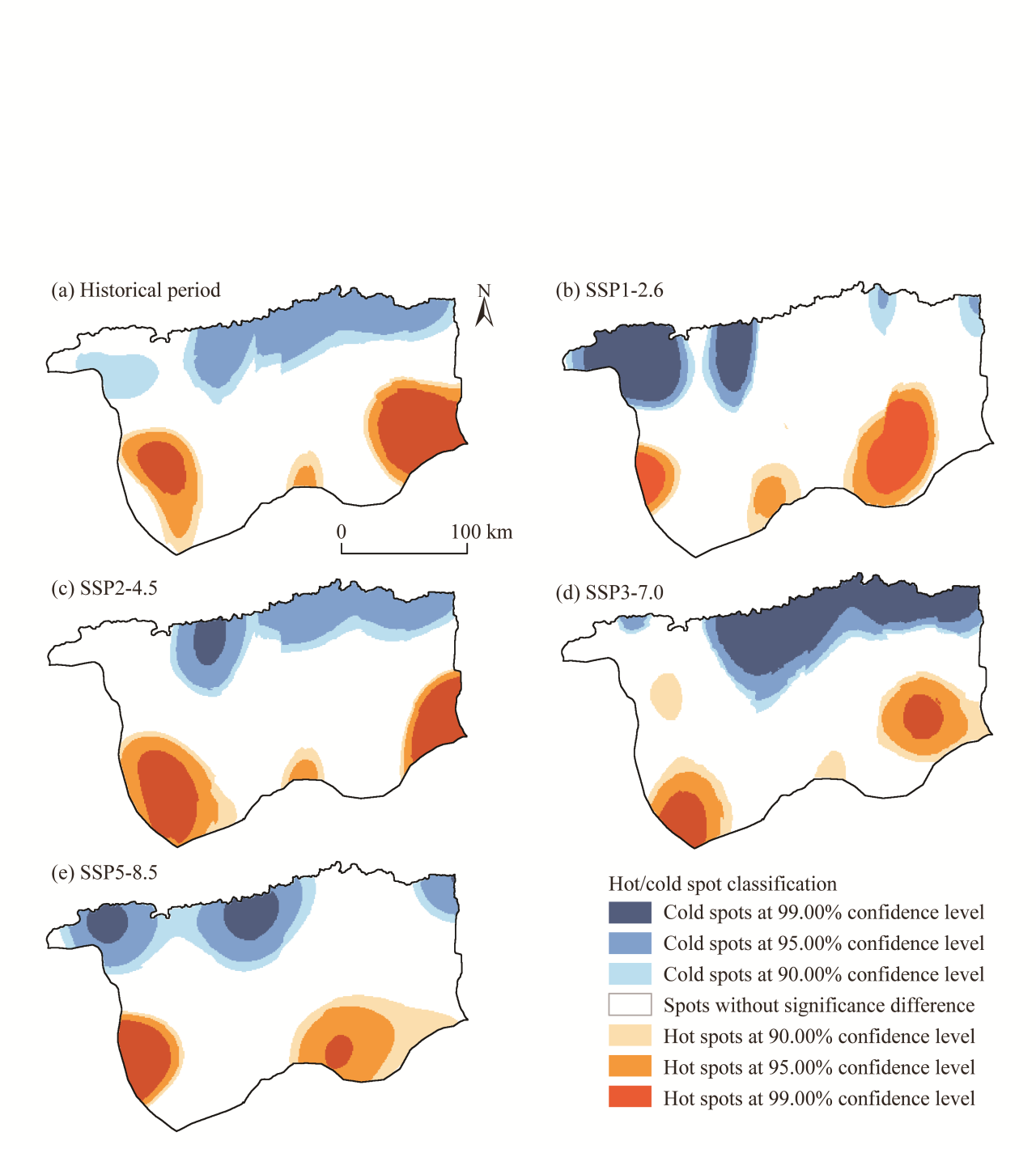
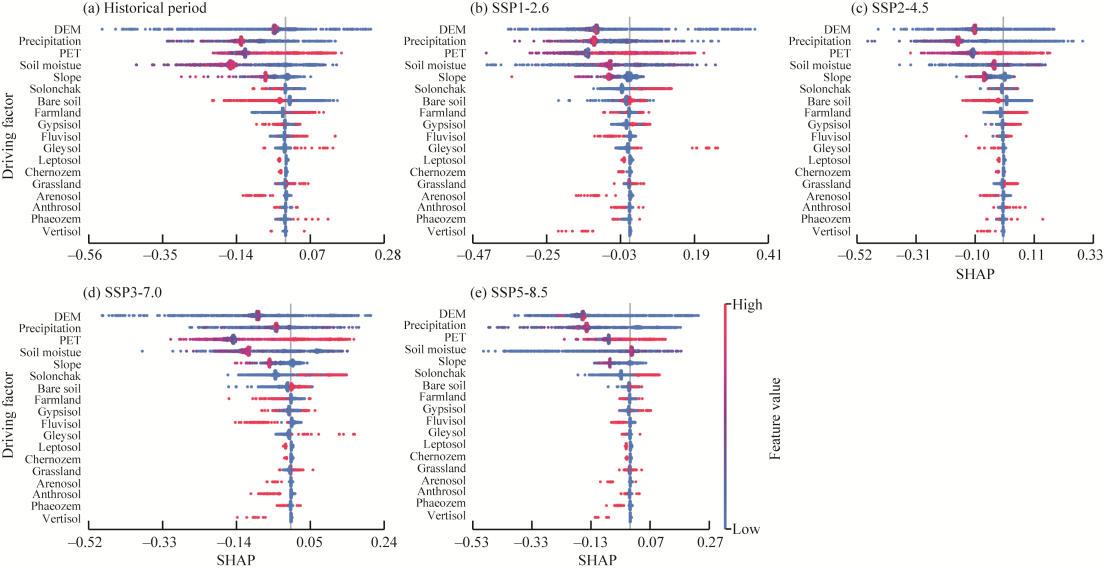
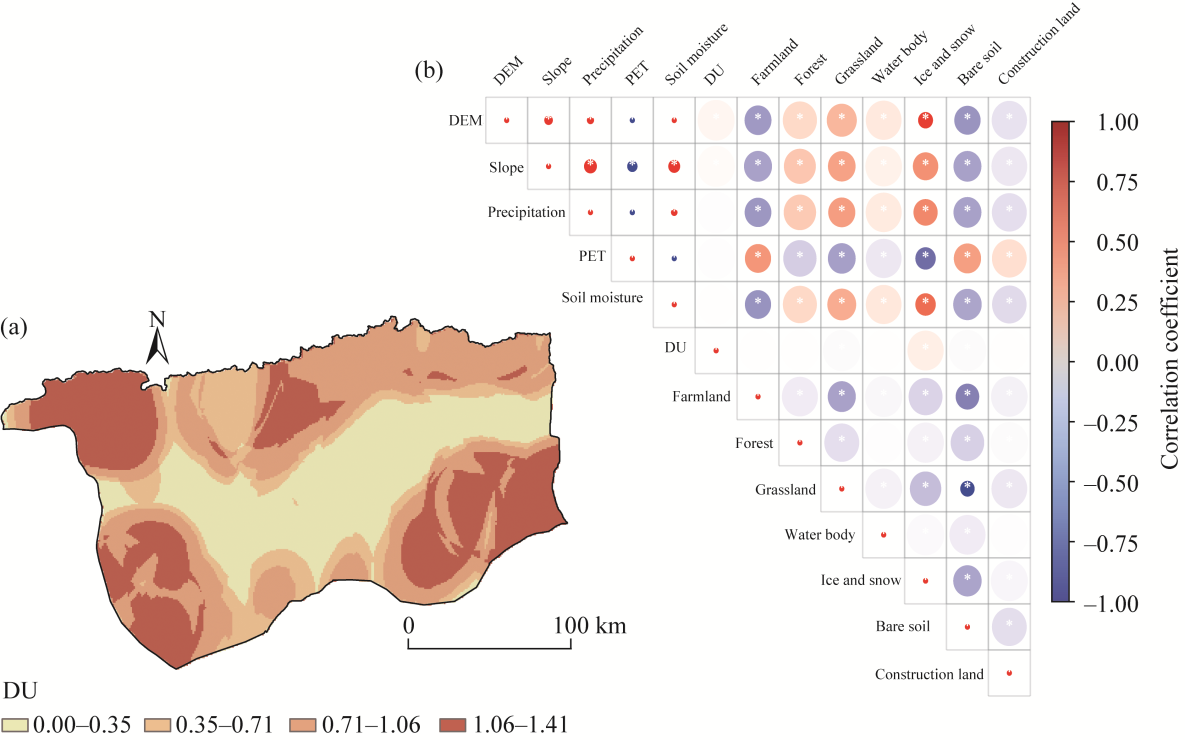
In the northern Tarim River Basin, the Weigan River Basin is a critical endorheic system characterized by extreme aridity, where drought poses a major natural hazard to agricultural production and ecological stability. This study assessed the future evolution of drought under climate change by employing the standardized moisture anomaly index (SZI) on the basis of multi-model the Coupled Model Intercomparison Project Phase 6 (CMIP6) simulations under historical conditions (1970-2014) and future scenarios (shared socioeconomic pathway (SSP)1-2.6, SSP2-4.5, SSP3-7.0 and SSP5-8.5 for 2015-2100). The results show that precipitation-evapotranspiration anomalies are projected to first decline but then increase over time, with increased fluctuations and uncertainty under high-emission scenarios (SSP5-8.5). These trends indicate intensifying drought risks and reveal a strong influence of emission pathways on regional water cycling. Temporal analysis of SZI indicates a transition from wetting to drying under low- and medium-emission pathways (SSP1-2.6 and SSP2-4.5), whereas high-emission scenarios are characterized by persistent drying and increased variability. The significant lower-tail dependence (0.271) observed under SSP2-4.5 and SSP5-8.5 suggests that extreme droughts may be subject to nonlinear co-amplification across scenarios. The frequency of moderate and more severe drought events is expected to increase substantially, especially under SSP5-8.5, where drought occurrence is predicted to extend into spring and autumn and become more evenly distributed throughout the year. Spatially, drought duration shows significant positive autocorrelation across all scenarios, with hot spots consistently concentrated in the southern and southeastern regions of the basin. Random forest analysis, interpreted as association-based pattern attribution, indicates that meteorological variables (precipitation and potential evapotranspiration (PET)) make the greatest contributions to the hot spot pattern, followed by topography and soil moisture. Among land use categories, farmland generally shows higher drought sensitivity than other land use types, as reflected by its relative contribution patterns across scenarios. The spatial pattern of drought is statistically structured by climatic forcing, surface conditions, and soil moisture status, reflecting their coupled associations with hot spot occurrence. In addition, a drought spatial uncertainty index was constructed from multi-scenario hot spot maps, revealing spatially heterogeneous structural variability throughout the basin. Correlation analysis further highlights strong internal couplings among environmental variables (e.g., elevation-linked hydroclimatic gradients and grassland-bare soil contrasts). These findings offer a scientific basis for developing region-specific drought monitoring and adaptation strategies under future climate change conditions.
WANG Wenbo , LIN Li , CHEN Dandan , YANG Jiayun . Assessing future drought evolution and driving mechanisms in the Weigan River Basin under CMIP6 climate scenarios[J]. Journal of Arid Land, 2026 , 18(2) : 235 -262 . DOI: 10.1016/j.jaridl.2026.02.003
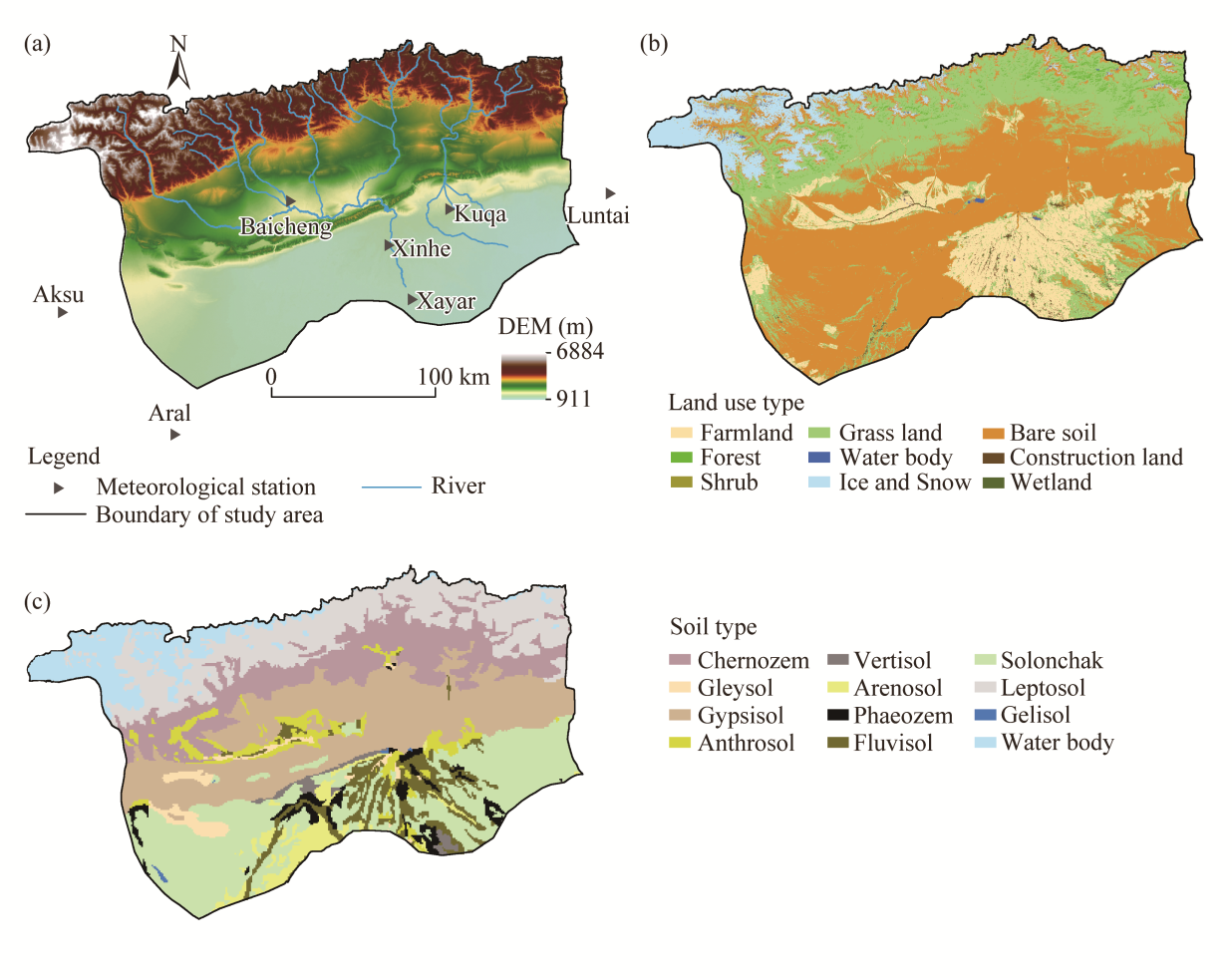
Fig. 1 Regional overview of the digital elevation model (DEM) (a) and distribution of land use types (b) and soil types (c) in the Weigan River Basin |
Table 1 Basic information on the seven global climate models (GCMs) of the Coupled Model Intercomparison Project Phase 6 (CMIP6) |
| GCMs | Country | Institute | Spatial resolution |
|---|---|---|---|
| CanESM5-1 | Canada | Canadian Centre for Climate Modelling and Analysis (CCCma) | 2.800°×2.800° |
| FGOALS-g3 | China | Chinese Academy of Sciences (CAS) | 2.000°×2.000° |
| INM-CM4-8 | Russia | Institute of Numerical Mathematics, Russian Academy of Sciences (INMRAS) | 1.875°×1.241° |
| INM-CM5-0 | |||
| MIROC6 | Japan | Japan Agency for Marine-Earth Science and Technology (JAMSTEC) | 1.400°×1.400° |
| MRI-ESM2-0 | Meteorological Research Institute (MRI) | 1.125°×1.125° | |
| MPI-ESM1-2-LR | Germany | Max Planck Institute for Meteorology (MPI-M) | 1.875°×1.875° |
Table 2 Geographic information of meteorological stations |
| Station | Latitude | Longitude | Elevation (m) |
|---|---|---|---|
| Kuqa | 41°43′12″N | 83°04′12″E | 1082 |
| Luntai | 41°46′48″N | 84°15′00″E | 977 |
| Baicheng | 41°46′48″N | 81°54′00″E | 1230 |
| Aksu | 41°10′12″N | 80°13′48″E | 1105 |
| Aral | 40°30′00″N | 81°03′00″E | 1013 |
| Xinhe | 41°31′48″N | 82°37′12″E | 1014 |
| Xayar | 41°13′48″N | 82°46′48″E | 981 |
Table 3 Drought classification using the standardized moisture anomaly index (SZI) |
| Drought level | SZI |
|---|---|
| No drought | SZI> -0.5 |
| Light drought | -1.0<SZI≤ -0.5 |
| Moderate drought | -1.5<SZI≤ -1.0 |
| Severe drought | -2.0<SZI≤ -1.5 |
| Extreme drought | SZI≤ -2.0 |
Table 4 Z score thresholds and significance levels used to identify hot/cold spots in the Getis-Ord ${\text{G}}_{i}^{\text{*}}$ analysis |
| Z score range | Significance level | Spatial interpretation |
|---|---|---|
| Z≥2.58 | P<0.010 (Confidence=99.00%) | Hot spot (high-value cluster) |
| 1.96≤Z<2.58 | P<0.050 (Confidence=95.00%) | |
| 1.65≤Z<1.96 | P<0.100 (Confidence=90.00%) | |
| -1.96<Z≤ -1.65 | P<0.100 (Confidence=90.00%) | Cold spot (low-value cluster) |
| -2.58<Z≤ -1.96 | 𝑃<0.050 (Confidence=95.00%) | |
| Z≤ -2.58 | 𝑃<0.010 (Confidence=99.00%) | |
| -1.65<Z<1.65 | Not significant | No significant spatial clustering |
Note: Z score is the standardized test statistic of the Getis-Ord ${\text{G}}_{i}^{\text{*}}$ analysis. |
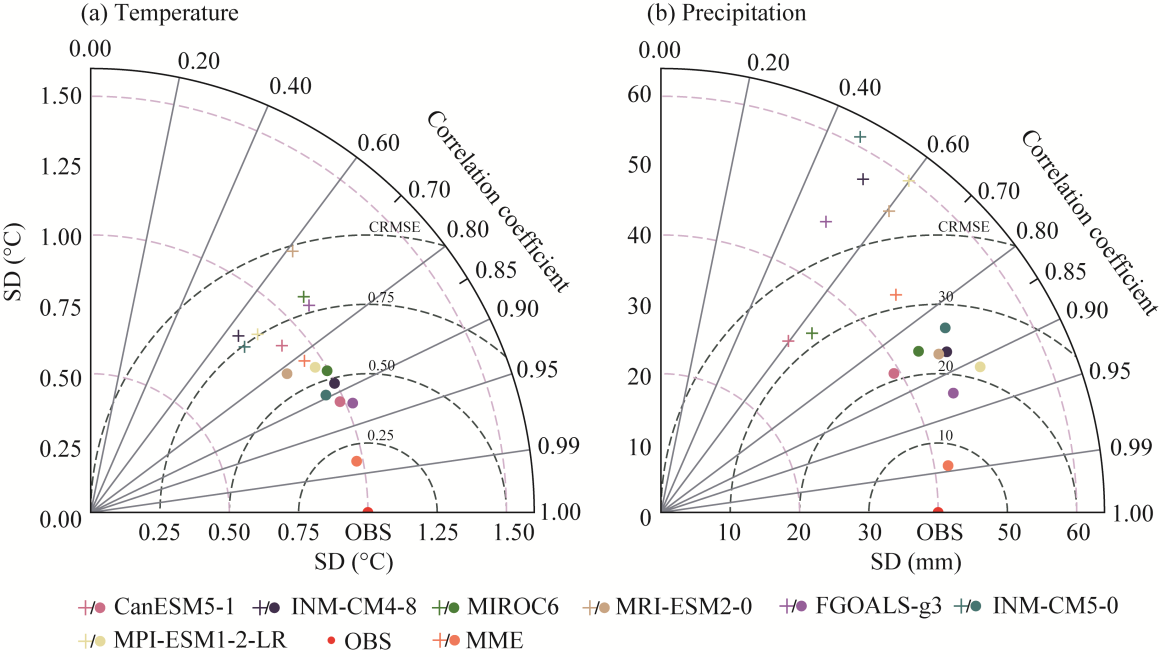
Fig. 2 Taylor diagrams for temperature (a) and precipitation (b) after deviation correction for the single and ensemble modes. Filled circles denote bias-corrected simulations, whereas "+" markers indicate raw simulations before bias correction. CRMSE, centered root mean square error; OBS, observation (reference dataset); MME, multi-model ensemble; SD, standard deviation. |
Table 5 Performance evaluation of the multi-model ensemble (MME)-simulated daily meteorological variables |
| Variable | Percent bias (PBIAS; %) | Root mean square error (RMSE) | Nash-Sutcliffe efficiency (NSE) |
|---|---|---|---|
| Precipitation | 5.62 | 0.391 mm | 0.9103 |
| Temperature | 5.21 | 1.999°C | 0.9695 |
| Relative humidity | 0.33 | 7.58% | 0.7471 |
| Wind speed | 8.10 | 1.23 m/s | 0.6893 |
| Solar radiation | 11.83 | 27.3 W/m2 | 0.6876 |
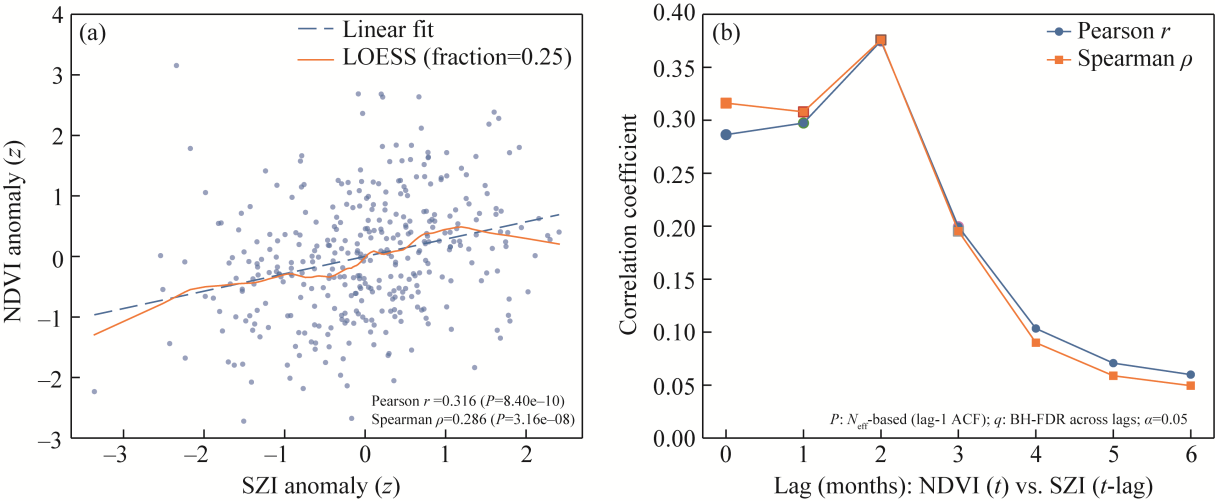
Fig. 3 Scatterplot of calendar-month standardized anomalies (z anomalies) between the basin-mean normalized difference vegetation index (NDVI) and standardized moisture anomaly index (SZI; a) and lagged correlations between NDVI (t) and SZI (t lag) for lags of 0-6 months (b) during 1985-2014. LOESS, locally estimated scatterplot smoothing; ACF, autocorrelation function; qFDR, Benjamini-Hochberg false discovery rate (BH-FDR) adjusted q-values. |
Table 6 Autocorrelation- and multiplicity-controlled lagged correlations between normalized difference vegetation index (NDVI) and SZI anomalies |
| Lag | Pearson r | Neff-based autocorrelation-adjusted P-value | Spearman ρ | Benjamini-Hochberg false discovery rate (BH-FDR) adjusted q-value (qFDR) |
|---|---|---|---|---|
| 0 | 0.286 | <0.001 | 0.316 | <0.001 |
| 1 | 0.297 | <0.001 | 0.308 | <0.001 |
| 2 | 0.375 | <0.001 | 0.376 | <0.001 |
| 3 | 0.200 | <0.001 | 0.195 | <0.001 |
| 4 | 0.103 | <0.001 | 0.090 | 0.165 |
| 5 | 0.071 | 0.220 | 0.059 | 0.359 |
| 6 | 0.060 | 0.298 | 0.049 | 0.390 |
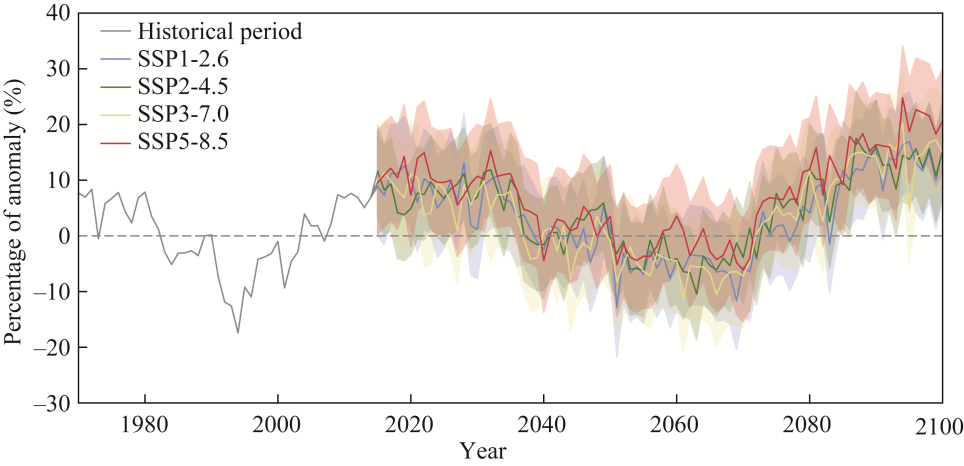
Fig. 4 Anomaly percentages representing the differences between annual precipitation and potential evapotranspiration (PET) in the Weigan River Basin from 1970 to 2100. The shaded envelopes indicate SD. SSP, shared socioeconomic pathway. |
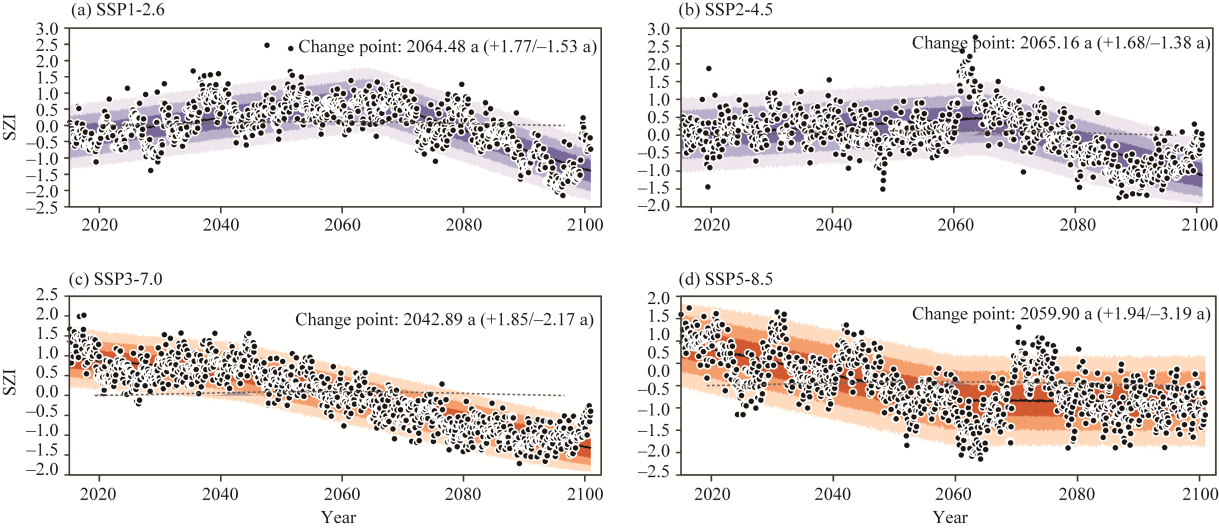
Fig. 5 Fitting diagram from the Bayesian piecewise regression model and interannual variation trend of the SZI under different scenarios in 2015-2100. (a), SSP1-2.6; (b), SSP2-4.5; (c), SSP3-7.0; (d), SSP5-8.5. Shaded areas indicate posterior predictive intervals at multiple credibility levels: the darkest shading corresponds to the 50.00% credible interval, intermediate shading represents the 80.00% credible interval, and the lightest shading denotes the 95.00% credible interval. |
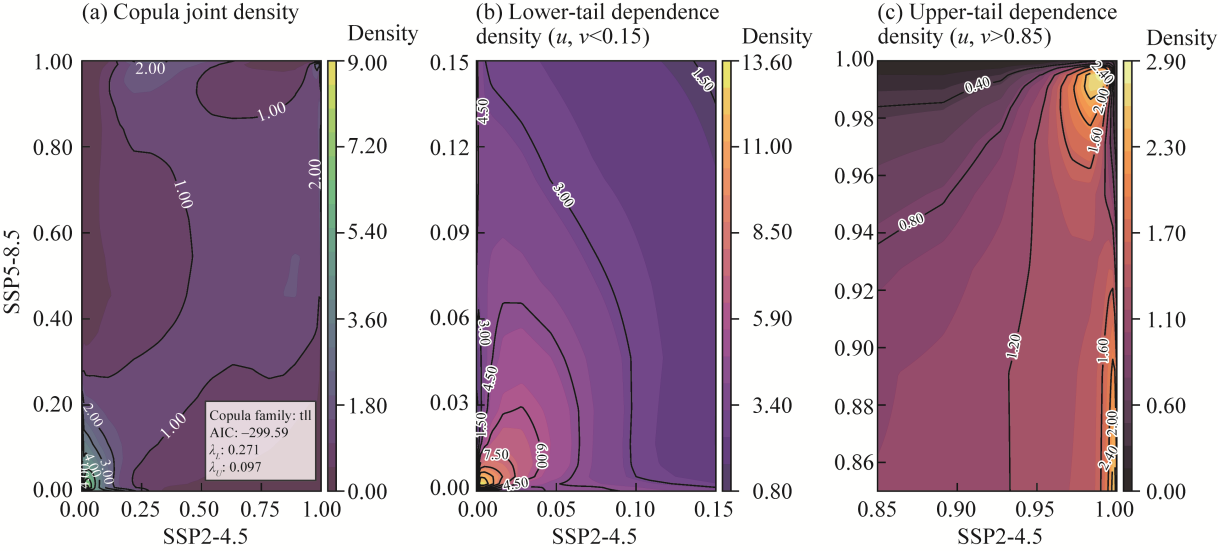
Fig. 6 Two-dimensional vine copula model results from the copula joint density (a), lower-tail dependence density for u, v<0.15 (b), and upper-tail dependence density for u, v>0.85 (c) between SSP2-4.5 and SSP5-8.5. tll denotes a Student's t copula with nonzero lower- and upper-tail dependence. AIC, Akaike information criterion; u and v, pseudo-observations (uniform margins) used in copula modeling; λL, lower-tail dependence coefficient; λU, upper-tail dependence coefficient. |
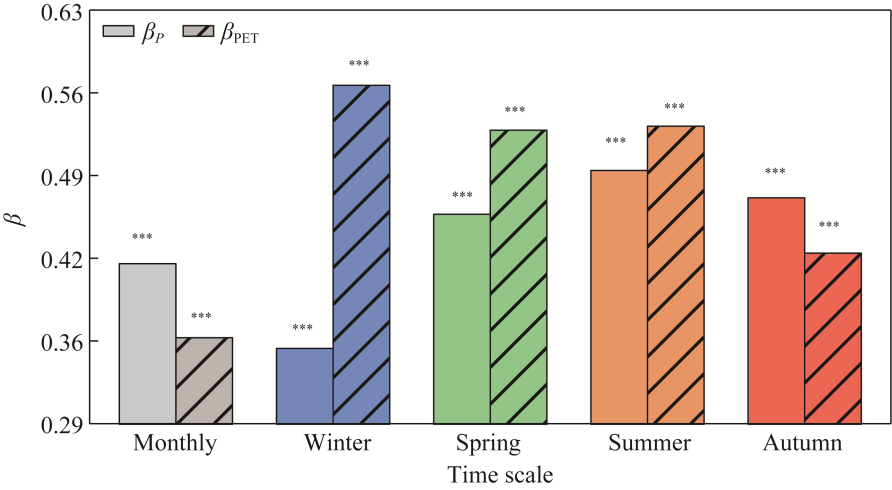
Fig. 7 Standardized regression coefficients of precipitation (βP) and PET (βPET) anomalies for explaining historical SZI variability at the monthly and seasonal scales during 1970-2014. β, standardized regression coefficient; ***, significance at P<0.001 level. |
Table 7 Monthly and seasonal regression results for basin-mean SZI with precipitation and potential evapotranspiration (PET) anomalies during 1970-2014 |
| Scale | βP | βPET | R2 |
|---|---|---|---|
| Monthly | 0.419*** | 0.359*** | 0.582 |
| Winter | 0.351*** | 0.561*** | 0.649 |
| Spring | 0.458*** | 0.525*** | 0.603 |
| Summer | 0.493*** | 0.528*** | 0.490 |
| Autumn | 0.471*** | 0.427*** | 0.579 |
Note: βP, standardized regression coefficient for precipitation; βPET, standardized regression coefficient for PET; ***, statistical significance at P<0.001 level. |
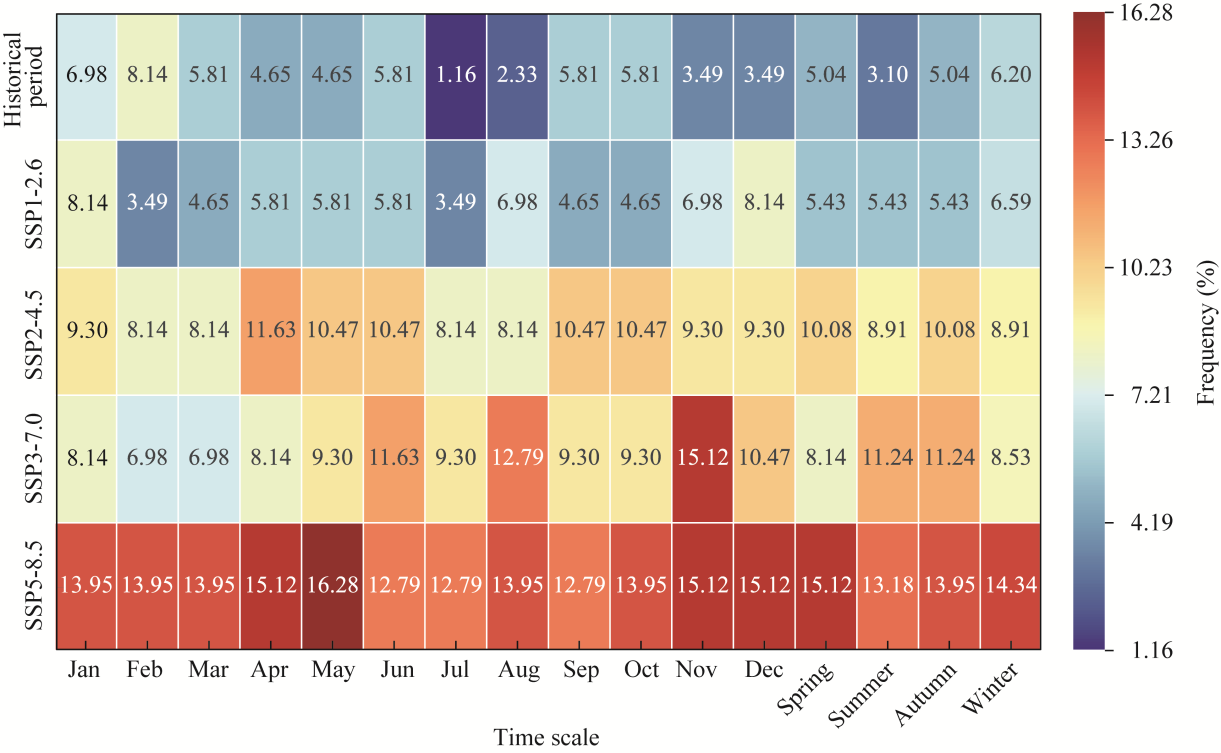
Fig. 8 Monthly and seasonally frequency of moderate and above drought events |
Table 8 Results of spatial autocorrelation analysis in the Weigan River Basin under different scenarios |
| Historical period | SSP1-2.6 | SSP2-4.5 | SSP3-7.0 | SSP5-8.5 | |
|---|---|---|---|---|---|
| Moran's I | 0.877 | 0.841 | 0.837 | 0.865 | 0.859 |
| Z score | 292.33 | 280.79 | 279.51 | 288.22 | 286.53 |
| P | <0.001 | <0.001 | <0.001 | <0.001 | <0.001 |
Note: SSP, shared socioeconomic pathway. Z score is the standardized test statistic associated with Moran's I under a normal approximation. |
Fig. 9 Spatially aggregated significance distribution of drought duration in the Weigan River Basin from the Getis-Ord ${\text{G}}_{i}^{\text{*}}$ analysis for the historical period (a) and future scenarios SSP1-2.6 (b), SSP2-4.5 (c), SSP3-7.0 (d), and SSP5-8.5 (e) |
Table 9 Quantification of statistically significant drought-duration hot spots/cold spots and their persistence across scenarios |
| Scenario | Type | A sig (km2) | F sig (%) | ΔF sig (pp) | O HIS | O Scen | Jaccard |
|---|---|---|---|---|---|---|---|
| Historical period | Hot spot | 5760.72 | 13.34 | 0.00 | |||
| Cold spot | 6538.32 | 15.15 | 0.00 | ||||
| SSP1-2.6 | Hot spot | 7566.21 | 17.56 | 4.21 | 0.349 | 0.266 | 0.178 |
| Cold spot | 6268.59 | 14.55 | -0.60 | 0.449 | 0.468 | 0.297 | |
| SSP2-4.5 | Hot spot | 5806.89 | 13.48 | 0.13 | 0.593 | 0.588 | 0.419 |
| Cold spot | 5991.57 | 13.90 | -1.24 | 0.544 | 0.593 | 0.396 | |
| SSP3-7.0 | Hot spot | 7110.99 | 16.47 | 3.12 | 0.419 | 0.340 | 0.231 |
| Cold spot | 6598.26 | 15.28 | 0.13 | 0.384 | 0.381 | 0.236 | |
| SSP5-8.5 | Hot spot | 5188.86 | 12.04 | -1.30 | 0.188 | 0.209 | 0.110 |
| Cold spot | 9361.98 | 21.72 | 6.58 | 0.652 | 0.456 | 0.367 |
Note: A sig is the total area of statistically significant cells (Z≥1.65 for hot spots and Z≤ -1.65 for cold spots) of the specified type within the basin; F sig is the corresponding fraction of the basin area (computed over valid basin cells); ΔF sig is the change in fraction relative to the historical baseline, expressed in percentage points (pp); O HIS is the overlap fraction of the historical mask retained in the scenario (intersection area divided by historical significant area); O Scen is the overlap fraction of the scenario mask covered by the historical mask (intersection area divided by the scenario significant area); and Jaccard is the Jaccard similarity index (intersection/union) between historical and scenario masks. |
Fig. 10 Scenario-wise Shapley Additive exPlanations (SHAP) beeswarm plots of feature attributions for drought hot spot patterns from the random forest classifier (RFC) for the historical period (a) and future scenarios SSP1-2.6 (b), SSP2-4.5 (c), SSP3-7.0 (d), and SSP5-8.5 (e). For clarity, only the top 18 features ranked by mean absolute SHAP values are shown in each panel. |
Fig. 11 Spatial distribution of drouth uncertainty (DU; a) and Pearson correlation matrix between DU and potential driving factors (b) across the Weigan River Basin. The magnitude of the ellipse reflects the strength of the relationship; large ellipses imply strong correlations. Blue ellipses denote negative correlations, whereas red ellipses indicate positive correlations. *, statistical significance at P<0.05 level. |
| [1] |
|
| [2] |
|
| [3] |
|
| [4] |
|
| [5] |
|
| [6] |
|
| [7] |
|
| [8] |
|
| [9] |
|
| [10] |
|
| [11] |
|
| [12] |
|
| [13] |
|
| [14] |
|
| [15] |
|
| [16] |
|
| [17] |
|
| [18] |
|
| [19] |
|
| [20] |
|
| [21] |
|
| [22] |
|
| [23] |
|
| [24] |
|
| [25] |
|
| [26] |
|
| [27] |
|
| [28] |
|
| [29] |
|
| [30] |
|
| [31] |
|
| [32] |
|
| [33] |
|
| [34] |
|
| [35] |
|
| [36] |
|
| [37] |
|
| [38] |
|
| [39] |
|
| [40] |
|
| [41] |
|
| [42] |
|
| [43] |
|
| [44] |
|
| [45] |
|
| [46] |
|
| [47] |
|
| [48] |
|
/
| 〈 |
|
〉 |