Prior-year climate and fuel availability shape fire occurrence in the semi-arid woody lands of Argentina
Received date: 2025-06-21
Revised date: 2025-12-11
Accepted date: 2025-12-18
Online published: 2026-03-12
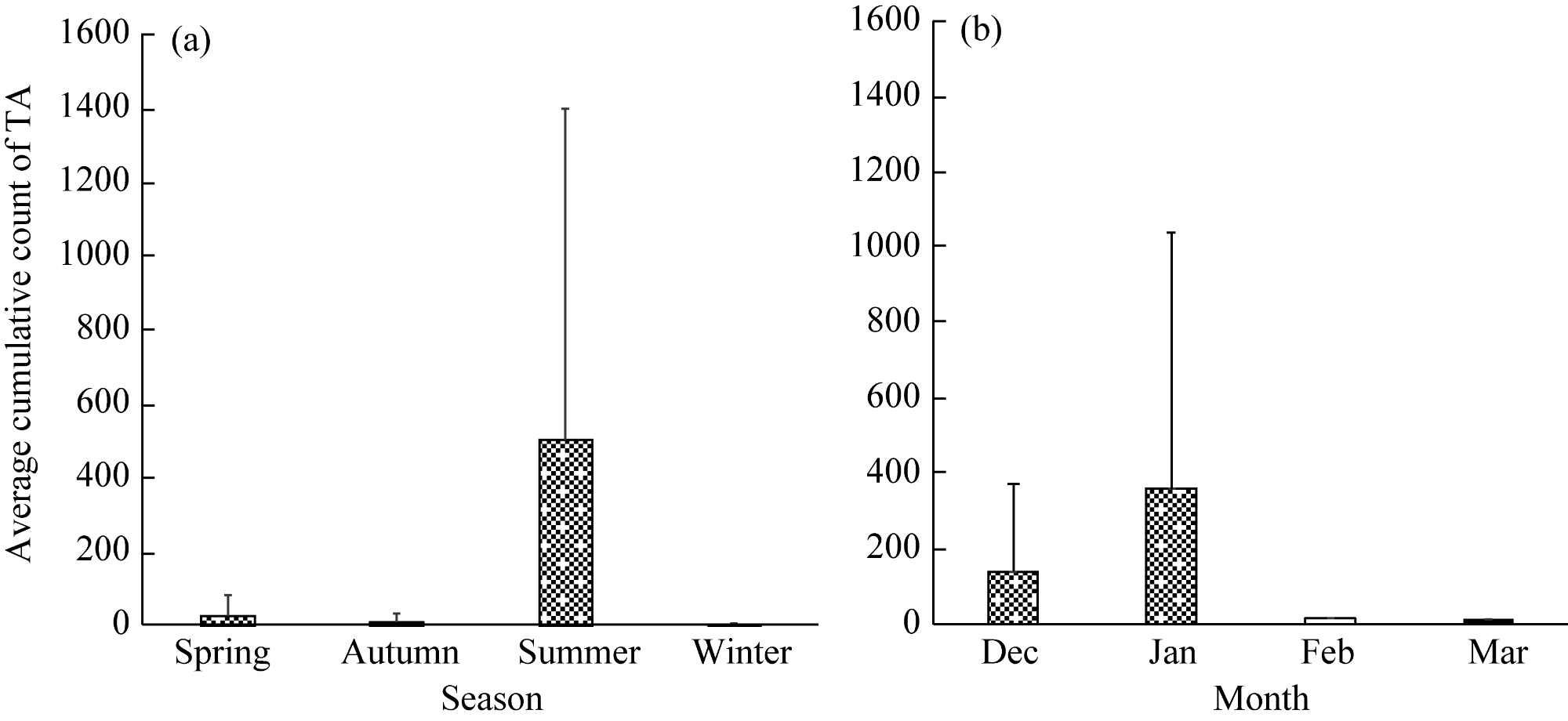
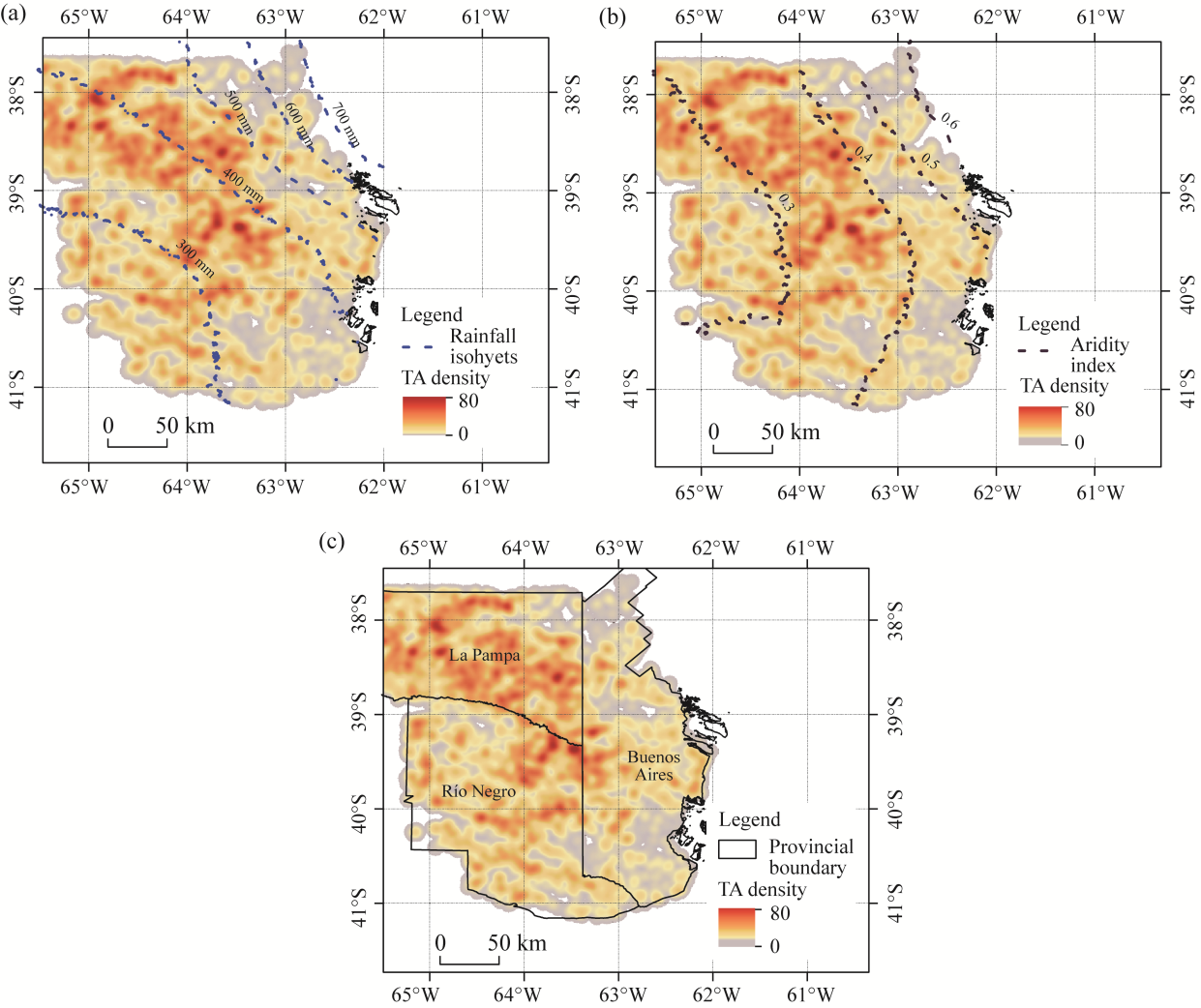
Fire is a fundamental ecological driver shaping natural vegetation patterns. In the semi-arid southern Espinal-Monte ecotone of Argentina, the spatiotemporal patterns of fire occurrence related to and modulated by climatic gradients and antecedent conditions are not well researched. This study examined fire occurrence in the semi-arid southern Espinal-Monte ecotone (southeastern La Pampa, northeastern Río Negro, and southwestern Buenos Aires with an area of 68×103 km2) of Argentina, a key environmental transition zone with pronounced climatic and vegetation gradients. The objective was to identify the spatiotemporal patterns of fire occurrence and their relationship with climatic variables. Thermal anomaly (TA) data from the MODIS (Moderate Resolution Imaging Spectrometer; MOD14) sensor (November 2000-March 2020) with confidence levels >65.0% were analyzed. Climatic variables (rainfall isohyets and aridity indices) were obtained from the WorldClim datasets, and annual meteorological conditions (rainfall and potential evapotranspiration) were calculated using the climatic research unit (CRU) database. Monthly data and moving averages of rainfall and aridity indices from distinct periods (two and three years preceding fire events) were integrated. Spatial analysis was conducted using kernel density estimation on a 10 km×10 km grid to correlate TA with climatic gradients, while linear regression examined relationships between summer TA and meteorological variables over different periods. Results showed that the highest fire occurrence was recorded in summer, with peaks in December and January. Spatially, 55.0% of TA occurred in areas with annual rainfall of 300-400 mm, and 64.5% in areas with an aridity index of 0.3-0.4, forming an arc-like distribution in the center of the ecotone. The highest TA densities were observed in southeastern La Pampa and northeastern Río Negro, decreasing toward southwestern Buenos Aires. Significant correlations (R2>0.700) were found among TA accumulation, aridity index values, and cumulative rainfall from previous two and three years, at both vegetation unit and provincial levels. Summer was the critical season for fire occurrence, with spatial distribution primarily determined by the interaction between climatic conditions and woody biomass availability. The lower fire incidence in southwestern Buenos Aires was linked to sparse woody vegetation and agricultural expansion, which reduced fuel load. These findings reinforce that fuel availability, modulated by climatic conditions from previous years, is a key limiting factor for fire dynamics in this area, and that human activities such as agriculture and grazing alter fire regimes by affecting fuel structure and continuity.
Laura B RODRÍGUEZ , Silvia S TORRES-ROBLES , Néstor I GASPARRI . Prior-year climate and fuel availability shape fire occurrence in the semi-arid woody lands of Argentina[J]. Journal of Arid Land, 2026 , 18(2) : 202 -215 . DOI: 10.1016/j.jaridl.2026.02.002
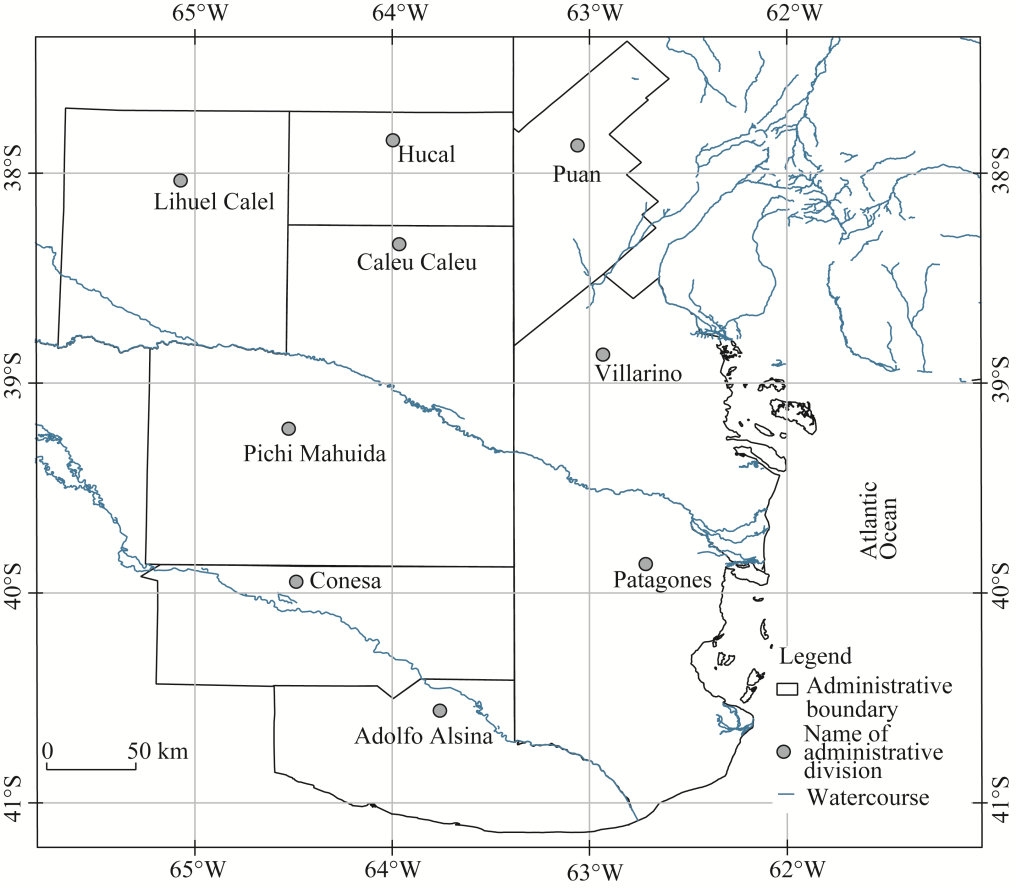
Fig. 1 Location of the study area and its administrative division |
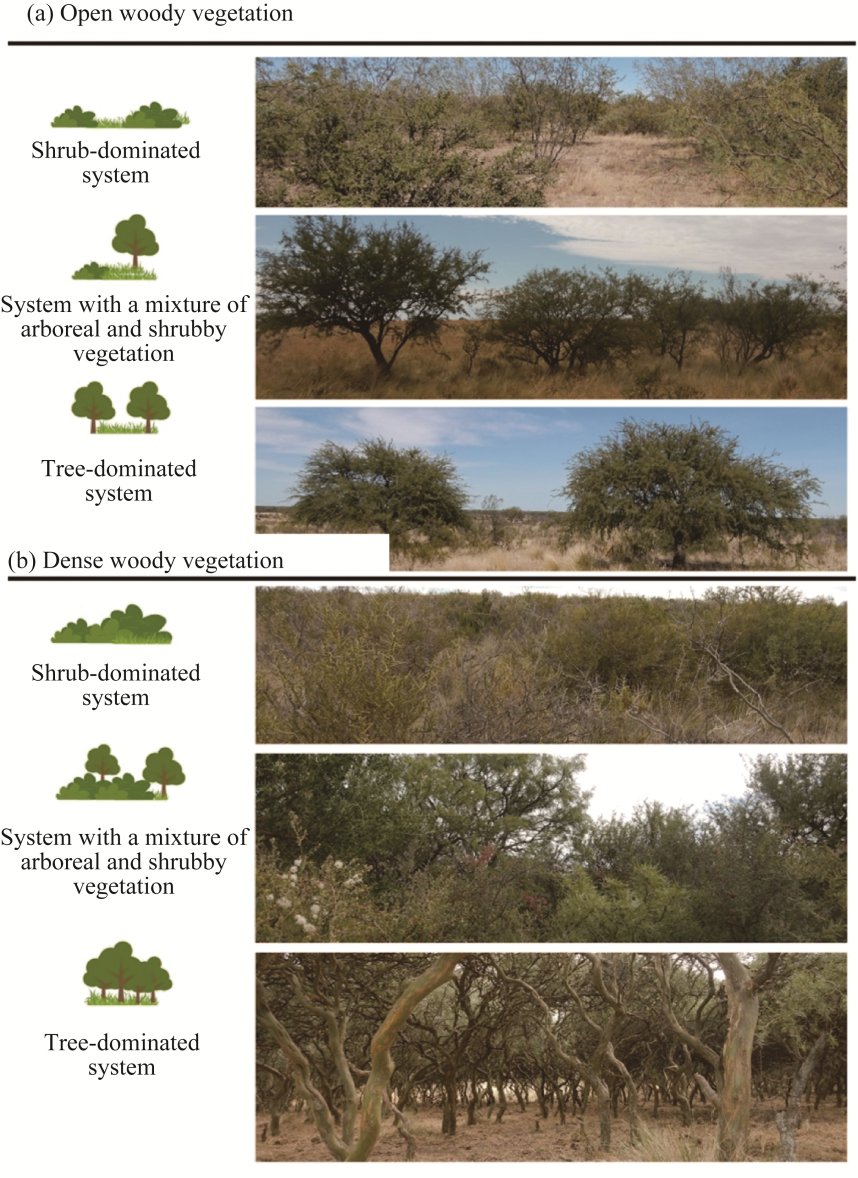
Fig. 2 Forest formations from open (a) to dense (b) woody vegetation structures. Both formations encompass shrub-dominated vegetation, mixed shrub-tree system, and tree-dominated system. |
Fig. 3 Average cumulative count of thermal anomaly (TA) for different seasons (a) and months in the summer (b). Bars are standard deviations. |
Fig. 4 Relation of annual rainfall (a) and arid index (b) with TA density and its spatial distribution at provincial level (c) |
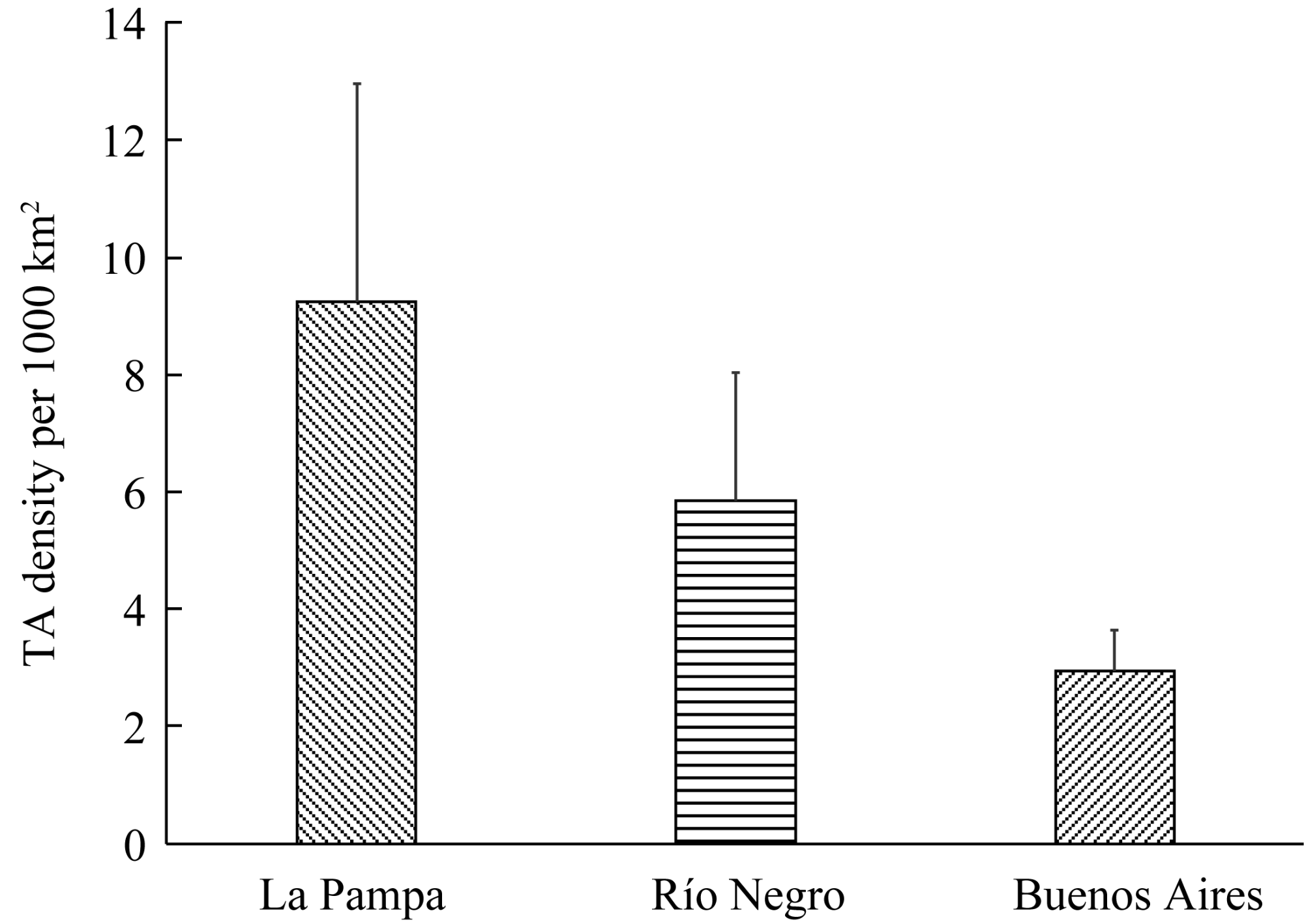
Fig. 5 Average density of TA per 1000 km2 in different provinces. Bars are standard deviations. |
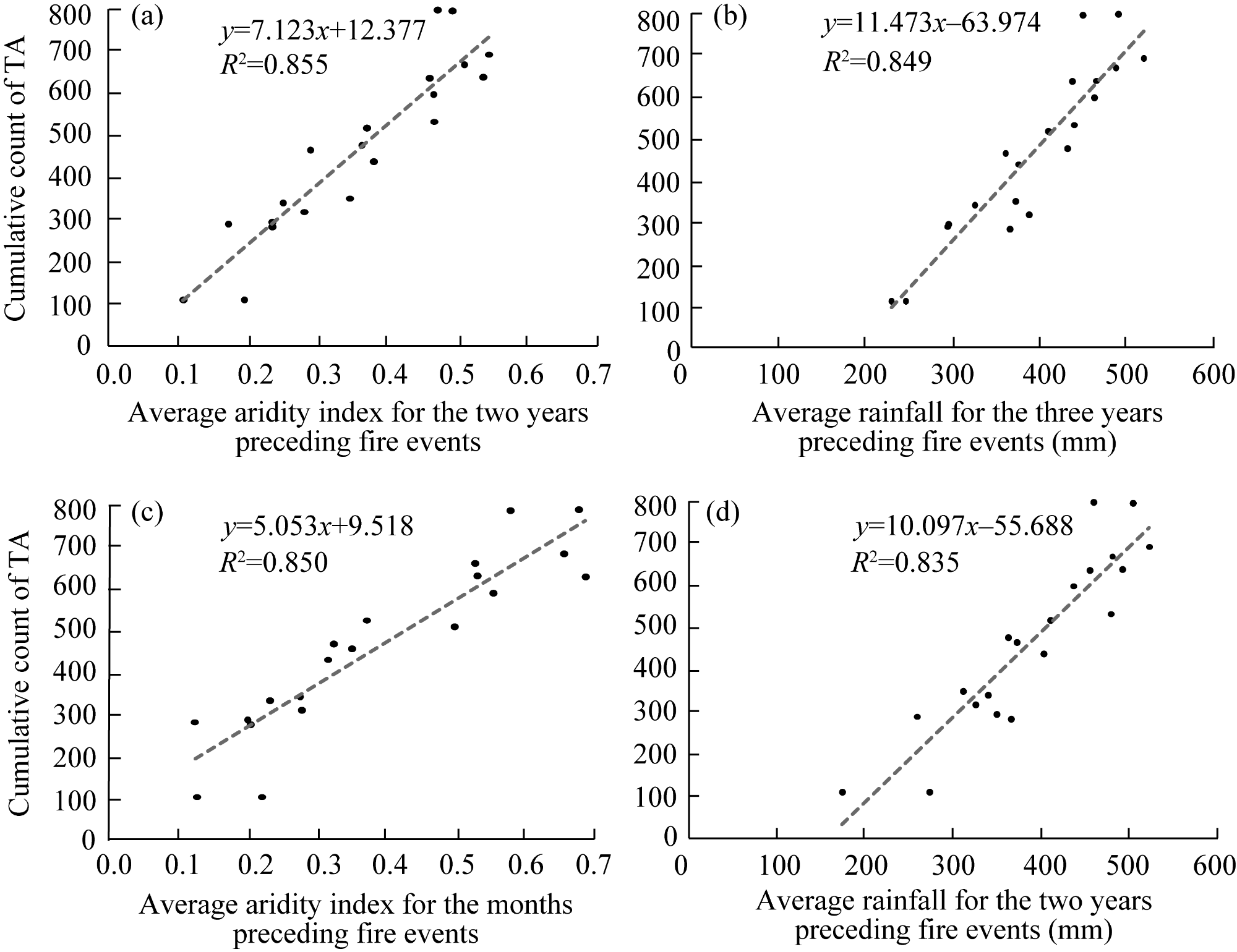
Fig. 6 Relationships between accumulative count of TA in the summer and climatic variables in the southern Espinal-Monte ecotone. (a), average aridity index for the two years preceding fire events; (b), average rainfall for the three years preceding fire events; (c), average aridity index for the months preceding fire events; (d), average rainfall for the two years preceding fire events. |
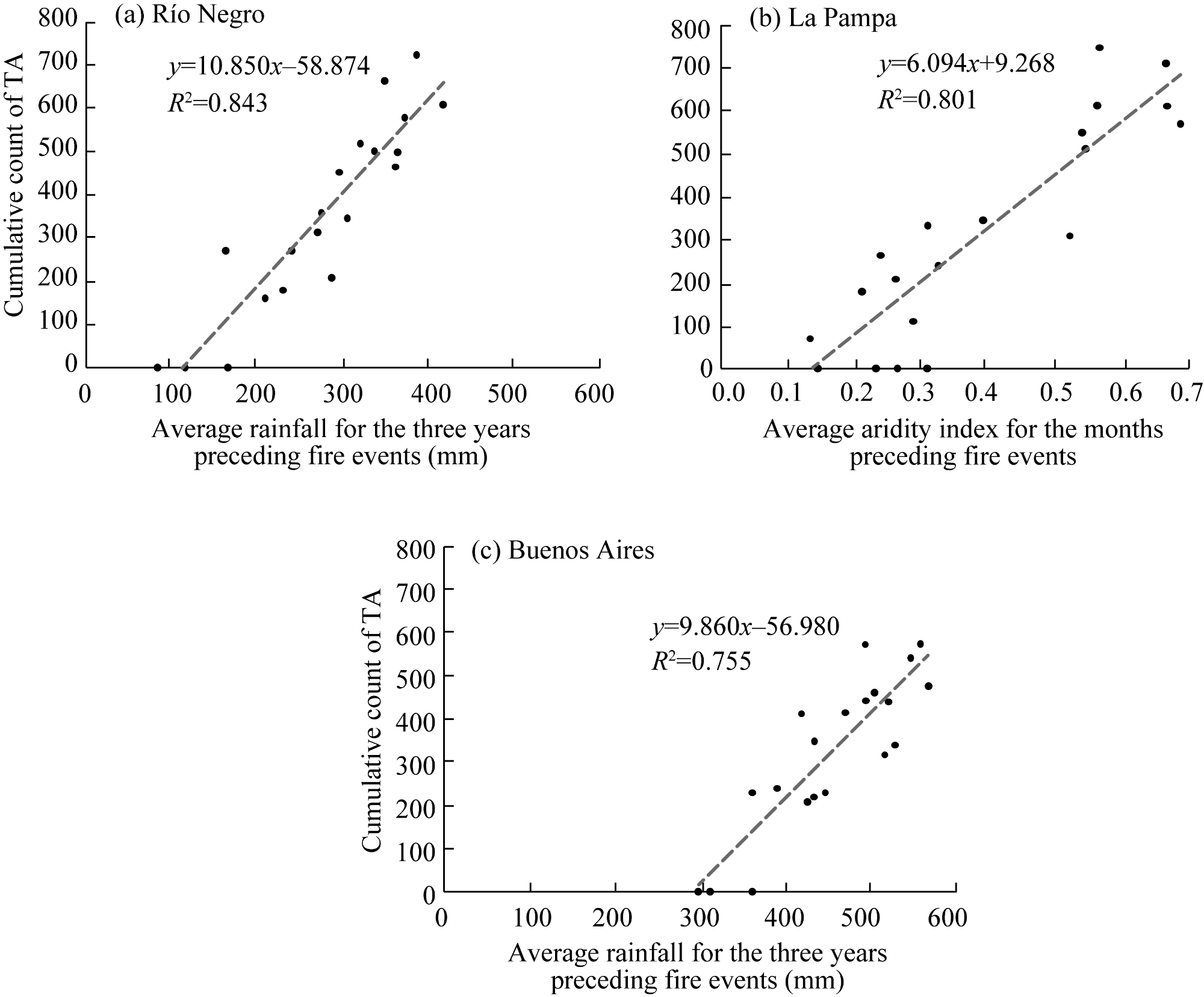
Fig. 7 Relationships between cumulative count of TA in the summer and climatic variables in different provinces. (a), average rainfall for the three years preceding fire events in Río Negro; (b), average aridity index of the months preceding fire events in La Pampa; (c), average rainfall for the three years preceding fire events in Buenos Aires. |
| [1] |
|
| [2] |
|
| [3] |
|
| [4] |
|
| [5] |
|
| [6] |
|
| [7] |
|
| [8] |
|
| [9] |
|
| [10] |
|
| [11] |
|
| [12] |
|
| [13] |
|
| [14] |
|
| [15] |
FAO (Food and Agriculture Organization of the United Nations). 2007. Land evaluation: Towards a revised framework. Roma, Italy. [2025-04-19]. ftp://ftp.fao.org/docrep/fao/011/a1080e/a1080e00.pdf.
|
| [16] |
|
| [17] |
|
| [18] |
|
| [19] |
|
| [20] |
|
| [21] |
|
| [22] |
|
| [23] |
|
| [24] |
|
| [25] |
|
| [26] |
|
| [27] |
|
| [28] |
|
| [29] |
IPCC (Intergovernmental Panel on Climate Change). 2019. Summary for policymakers. In: Shukla P R, Skea J, Calvo B, et al. Climate Change and Land: An IPCC Special Report on Climate Change, Desertification, Land Degradation, Sustainable Land Management, Food Security, and Greenhouse Gas Fluxes in Terrestrial Ecosystems. Cambridge: Cambridge University Press.
|
| [30] |
|
| [31] |
|
| [32] |
|
| [33] |
|
| [34] |
|
| [35] |
|
| [36] |
|
| [37] |
|
| [38] |
|
| [39] |
|
| [40] |
|
| [41] |
|
| [42] |
|
| [43] |
|
| [44] |
|
| [45] |
|
| [46] |
|
| [47] |
|
| [48] |
|
| [49] |
|
| [50] |
|
| [51] |
|
| [52] |
|
| [53] |
|
| [54] |
|
| [55] |
|
/
| 〈 |
|
〉 |