Research article

Projection and reclassification of land use types in Lanzhou, Northwest China

  • ZHU Rong 1, 2 ,
  • JIANG Youyan , 3, * ,
  • LEI Runzhi 3
Expand
  • 1Gansu Key Laboratory for Environmental Pollution Prediction and Control, College of Earth and Environmental Sciences, Lanzhou University, Lanzhou 730000, China
  • 2Gansu Institute of Architectural Design and Research, Lanzhou 730020, China
  • 3Lanzhou Regional Climate Center, Lanzhou 730020, China
*JIANG Youyan (E-mail: )

Received date: 2025-07-15

  Revised date: 2025-11-18

  Accepted date: 2025-11-25

  Online published: 2026-02-04

Abstract

Land use in arid and semi-arid regions has a substantial effect on climate, environment, and biodiversity, thereby projecting the spatiotemporal changes in land use and the subsequent effects. This study employed the locally calibrated Future Land Use Simulation (FLUS) model, which coupled system dynamics with cellular automata and integrated an artificial neural network algorithm and a roulette wheel selection mechanism. We projected future land use (2020-2100) dynamics of Lanzhou, a typical river valley city in Northwest China, under three different Shared Socioeconomic Pathway (SSP) scenarios (SSP1-2.6, SSP2-4.5, and SSP5-8.5). The simulation results were validated and subsequently reclassified using the International Geosphere Biosphere Programme (IGBP) system to produce a dataset suitable for driving climatic and environmental models. Under the SSP1-2.6 scenario, urban and built-up land expanded consistently, whereas irrigated cropland and pasture as well as grassland contracted continuously. Conversely, the SSP5-8.5 scenario was characterized by a contraction of urban and built-up land, and relative stability of irrigated cropland and pasture as well as grassland. The SSP2-4.5 scenario presented a more complex trade-off, where urban and built-up land and grassland increased first and then decreased, whereas irrigated cropland and pasture followed an opposite trajectory. A significant inverse relationship between urban and built-up land and irrigated cropland and pasture was observed under all scenarios, underscoring the fundamental spatial competition that prevailed in this land-constrained valley city. Furthermore, the negative correlation of grassland with urban and built-up land, coupled with the positive correlation of grassland with irrigated cropland and pasture under both the SSP1-2.6 and SSP5-8.5 scenarios, indicated an evolution from broad confrontation to intricate internal trade-offs within the urban-agricultural-ecological system. This study underscored the critical influence of regional topographic and hydrological constraints on land-use evolution in arid regions, providing guidance for water resource management and ecosystem protection in Lanzhou, with applications for sustainable land-use planning in other arid and semi-arid river valley cities.

Cite this article

ZHU Rong , JIANG Youyan , LEI Runzhi . Projection and reclassification of land use types in Lanzhou, Northwest China[J]. Journal of Arid Land, 2026 , 18(1) : 17 -33 . DOI: 10.1016/j.jaridl.2026.01.005

1 Introduction

Land use reflects the spatial aspects of all human activities on land. Land use changes—how the land surface is adapted, or could be adapted, to serve human needs—can substantially affect the Earth's climate, environment, and biodiversity (Foley et al., 2005; Winkler et al., 2021; Best, 2024). Land use changes alter the thermal and physical characteristics of land surfaces, such as roughness, thermal inertia, and albedo (Zhao et al., 2020a; Pongratz et al., 2021), as well as triggers new dynamic and thermodynamic processes (Bühne et al., 2021; Sun et al., 2023). In arid regions, low precipitation, soil desertification, and water scarcity consistently lead to homogenous land use types (Zheng et al., 2005; Manat et al., 2012; Wei et al., 2012). Addressing the intertwined challenges of water constraints, ecosystem fragility, and development demand remains an urgent priority. These challenges in arid environments are compounded by global warming, leading to extreme climate events and declining ecological carrying capacity (Huang et al., 2016).
Existing land use prediction research in China has focused on developed cities in the eastern humid regions, such as the Yangtze River Delta and Pearl River Delta, while paying insufficient attention to underdeveloped cities in the northwestern arid regions (e.g., Wu et al., 2018; Wang et al., 2020; Zhao et al., 2020b). Moreover, these studies remain relatively limited in terms of land use projections under multiple scenarios, comparison of spatiotemporal changes, and adaptation strategies (Wang, 2020; Liu and Liu, 2024; Wang et al., 2025). There are also limitations with classification systems—most studies directly adopt the original Land Use Harmonization 2 (LUH2) categories and seldom perform reclassification based on International Geosphere Biosphere Programme (IGBP) schemes, making it difficult to directly drive climate and environment simulations and impact assessments (Ma et al., 2020; Hoffmann et al., 2023; Qiu et al., 2023). Quantifying the impacts of land use relies on models that simulate interactions within the land use system and that can unravel the driving factors within dynamic systems and project possible future development (Parker et al., 2003; Noszczyk, 2019; Briassoulis, 2020). The Future Land Use Simulation (FLUS) model was developed to capture the nonlinear complexities of path-dependence and positive feedback in actual processes (Liu et al., 2017). However, the FLUS model posits that transition rules remain consistent throughout the simulation, despite the likelihood that such rules are subject to alteration over extended periods in real-world scenarios. If this model could be combined with future land use scenarios, it would effectively avoid the propagation of errors and provide reasonable model operation and high simulation accuracy (e.g., Liang et al., 2021; Gao et al., 2022).
As a core node of the important ecological barrier in the upper reaches of the Yellow River in China, Lanzhou City undertakes critical ecological functions such as water conservation, soil retention, and windbreak and sand fixation, serving as a vital safeguard for ecological security in the arid and semi-arid regions of China (Chen, 2024). Lanzhou, a typical river-valley city in Northwest China, faces multiple challenges, including limited valley land availability, restrictive land use mechanisms for ecosystem protection, and the critical need to preserve agricultural land under the conflicting pressures of rapid urbanization and ecological conservation (Gao and O'Neill, 2020; Wu et al., 2025). In recent years, while promoting urban expansion, Lanzhou has actively pursued low-carbon industrial transformation. These intersecting socioeconomic development pathways collectively drive land use changes, making the city an ideal case for analyzing the evolution of land use under multiple scenarios (Wang, 2020; Wang, 2023; Wang et al., 2023; Feng et al., 2025).
This study took the land use data for Lanzhou in 2015 and 2020 as the baseline, and selected 12 types of standardized data, such as gross domestic product (GDP), population density, distance to roads, and elevation, as driving factors of land use changes. Next, this study projected the future land use at a 1-km resolution under different Shared Socioeconomic Pathways (SSPs) using the FLUS model, which was reclassified based on the IGBP system to drive a Weather Research & Forecasting (WRF) model. Then, the land use changes among different periods were analyzed using a transition matrix. The objectives of this study were to: (1) project the spatiotemporal patterns of land use in Lanzhou from 2020 to 2100 under three SSP scenarios, and reveal the trade-offs within the urban-agricultural-ecological system; (2) produce an input dataset based on the IGBP classification system for driving climate and environment simulations (e.g., WRF model); and (3) provide a scientific basis for land use planning in Lanzhou and ecological protection of the Yellow River Basin. Through remote sensing monitoring and the IGBP classification system, this work produced a refined land use classification driven by multiple SSP scenarios.
The approach revealed the dynamic trade-offs within the urban-agricultural-ecological system under different development patterns, directly supporting the simulation and assessment of climatic and environmental effects influenced by land use changes and the formulation of adaptation strategies. The results of this study have direct implications for water resource allocation in the upper Yellow River region and local ecosystem stability, and can offer scientific insights for land use optimization and sustainable development in similar river valley cities in Northwest China, such as Yinchuan and Xining.

2 Data sources and methods

2.1 Study area

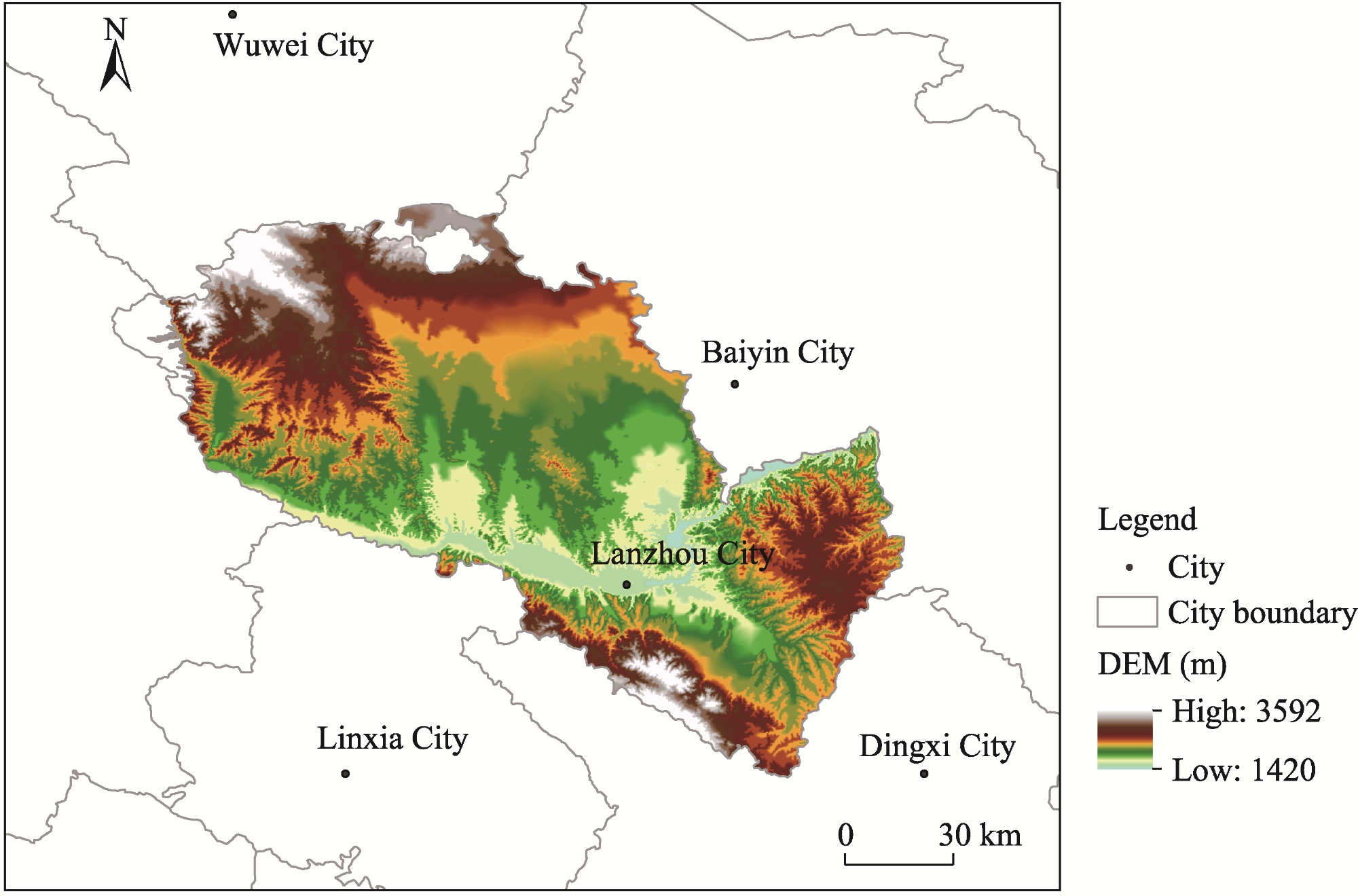
Lanzhou City (35°20′24′′-37°07′12′′N, 102°21′36″-104°34′12″E; Fig. 1) is located at the geometric center in China, with a total area of 13,100 km2. The Yellow River flows through the city from the southwest to the northeast, creating a unique topography of mountains on both sides and a river in between. The southern part of the city consists of mountainous areas such as the Xinglong Mountain and Maxian Mountain, while the northern part is characterized by the hills of the eastern Qilian Mountains. The urban area stretches along the Yellow River in an east-west direction and has an elevation ranging from 1500 to 2000 m. It features complex terrain as a transitional zone between the Qinghai-Xizang Plateau and the Loess Plateau, including diverse geomorphological units such as alluvial basins (e.g., Qinwangchuan Basin), gorges (Bapan Gorge and Sangyuan Gorge), and loess tablelands and ridges. The climate is classified as temperate continental, with an average annual temperature of 10.4°C, an average annual precipitation of 293-327 mm, an average annual sunshine of 2372 h, and an average annual frost-free period of 183 d. The approximately 151 km section of the Yellow River flowing through the city provides an ecological foundation of converging rivers and towering mountains, making Lanzhou as a typical city in the arid and semi-arid regions of Northwest China that combines valley oasis and loess plateau landscapes.
Fig. 1 Location of Lanzhou City and overview of Lanzhou based on DEM (digital elevation model)
In 2020, Lanzhou had an urbanization rate of 83.54%, a permanent resident population of 4.3594×10⁶, and a regional GDP of 323.129×10⁹ CNY. Secondary industry, dominated by petrochemical and equipment manufacturing, accounted for 38.20% of GDP, while tertiary industry occupied 59.10%. The three major environmental protection projects implemented in Lanzhou include the Northern Ecological Barrier Construction, the Southern Mountain Area Protection, and the Ecological Corridor Development along the Yellow River, strictly restricting urban expansion into mountainous and ecological lands.

2.2 Data sources

2.2.1 Historical land use data

Historical land use data in 2015 and 2020 were obtained from the Chinese land use remote sensing monitoring dataset on the Resource and Environmental Science Data Platform (https://www.resdc.cn). The dataset was generated by manual visual interpretation of Landsat remote sensing images, with a spatial resolution of 1 km. To accurately capture the recently stabilized urban-ecological coupling in Lanzhou and maximize prediction accuracy, this study calibrated the FLUS model in 2015 and 2020. This period was selected because it achieved the highest Kappa coefficient and Figure of Merit (FoM) performance while avoiding the heterogeneous and more chaotic expansion mechanism characteristic of earlier phases.

2.2.2 LUH2

The LUH2 project aims to provide harmonized land use scenarios for Earth system models. The harmonized dataset of global land use and land cover change (LUCC) was produced by integrating historical data and future scenario simulations, thereby providing reliable data support for studying the impacts of land use changes on the climate and ecosystems. As part of the Coupled Model Intercomparison Project Phase 6 (CMIP6), the LUH2 dataset was designed in accordance with the framework of the Sixth Assessment Report of the Intergovernmental Panel on Climate Change (IPCC, 2021). The framework was generated from the comprehensive SSP scenarios and representative concentration pathways. The spatial resolution of the LUH2 dataset is 0.25°, which is not sufficiently fine to reflect the land use types distributed along the Yellow River in cities like Lanzhou. In this study, essential statistical downscaling of the LUH2 dataset was achieved through spatial interpolation and subsequently corrected using local data (Zhang et al., 2017; Hurtt et al., 2020).

2.2.3 SSPs

SSPs are frameworks used to describe future socioeconomic development trajectories and reflect different socioeconomic conditions and policy environments. The classification criteria for the SSP scenarios, which are based on the relative change rate of carbon emissions in 2100 compared with 2020, were proposed by Riahi et al. (2017) and have been widely used in global arid land use studies (Dong et al., 2018; Qiu et al., 2023; Guo et al., 2024; Li et al., 2024). SSPs contain seven scenarios (SSP1-1.9, SSP1-2.6, SSP2-4.5, SSP3-7.0, SSP4-3.4, SSP4-6.0, and SSP5-8.5), with a spatial resolution of 0.25°×0.25° (https://luh.umd.edu/). The SSP scenarios are categorized into three types: low-carbon development (SSP1), intermediate-path development (SSP2 and SSP4), and high-carbon development (SSP3 and SSP5). The low-carbon development scenario is dedicated to environmental sustainability and social equity, while the intermediate-path development scenarios combine both low- and high-carbon characteristics, aimed at achieving a balance between environmental protection, social equity, and economic growth. The high-carbon development scenarios lead to increased carbon emissions owing to a lack of international cooperation, inequality, and dependence on fossil fuels (Chen et al., 2020). This study selected three scenarios, namely SSP1-2.6, SSP2-4.5, and SSP5-8.5, to represent the low-carbon development, intermediate-path development, and high-carbon development, respectively. The study considered multiple uncertainties in current research on future land use changes and comprehensively explored the impacts of different socioeconomic development modes on future land use changes.

2.2.4 Local driving data

According to the substantial influences of economic, topographic, transportation, and climatic factors of land use types in arid regions (Zhang and Fang, 2002; Gao et al., 2021), this study selected 12 indicators to drive the FLUS model to ensure the applicability and accuracy of the results. The details of the 12 driving factors are shown in Table 1.
Table 1 Description of the driving factors of land use changes in Lanzhou
Data name Year Resolution Source
GDP 2020 1 km Resource and Environmental Science Data Platform (https://www.resdc.cn)
Population 2020 1 km Resource and Environmental Science Data Platform (https://www.resdc.cn)
DEM 2015 30 m Geospatial Data Cloud (https://www.gscloud.cn)
Slope 2020 1 km Calculated based on DEM
Aspect 2020 1 km Calculated based on DEM
Distance from railway 2020 1 km OSM road data (https://www.openstreetmap.org/) processed based on Euclidean distance
Distance from first-order stream 2020 1 km OSM road data (https://www.openstreetmap.org/) processed based on Euclidean distance
Distance from downtown 2020 1 km OSM road data (https://www.openstreetmap.org/) processed based on Euclidean distance
Distance from highway 2020 1 km OSM road data (https://www.openstreetmap.org/) processed based on Euclidean distance
Distance from provincial road 2020 1 km OSM road data (https://www.openstreetmap.org/) processed based on Euclidean distance
Precipitation 2020 1 km Resource and Environmental Science Data Platform (https://www.resdc.cn)
Air temperature 2020 1 km Resource and Environmental Science Data Platform (https://www.resdc.cn)

Note: GDP, gross domestic product; DEM, digital elevation model; OSM, OpenStreetMap.

2.3 Methods

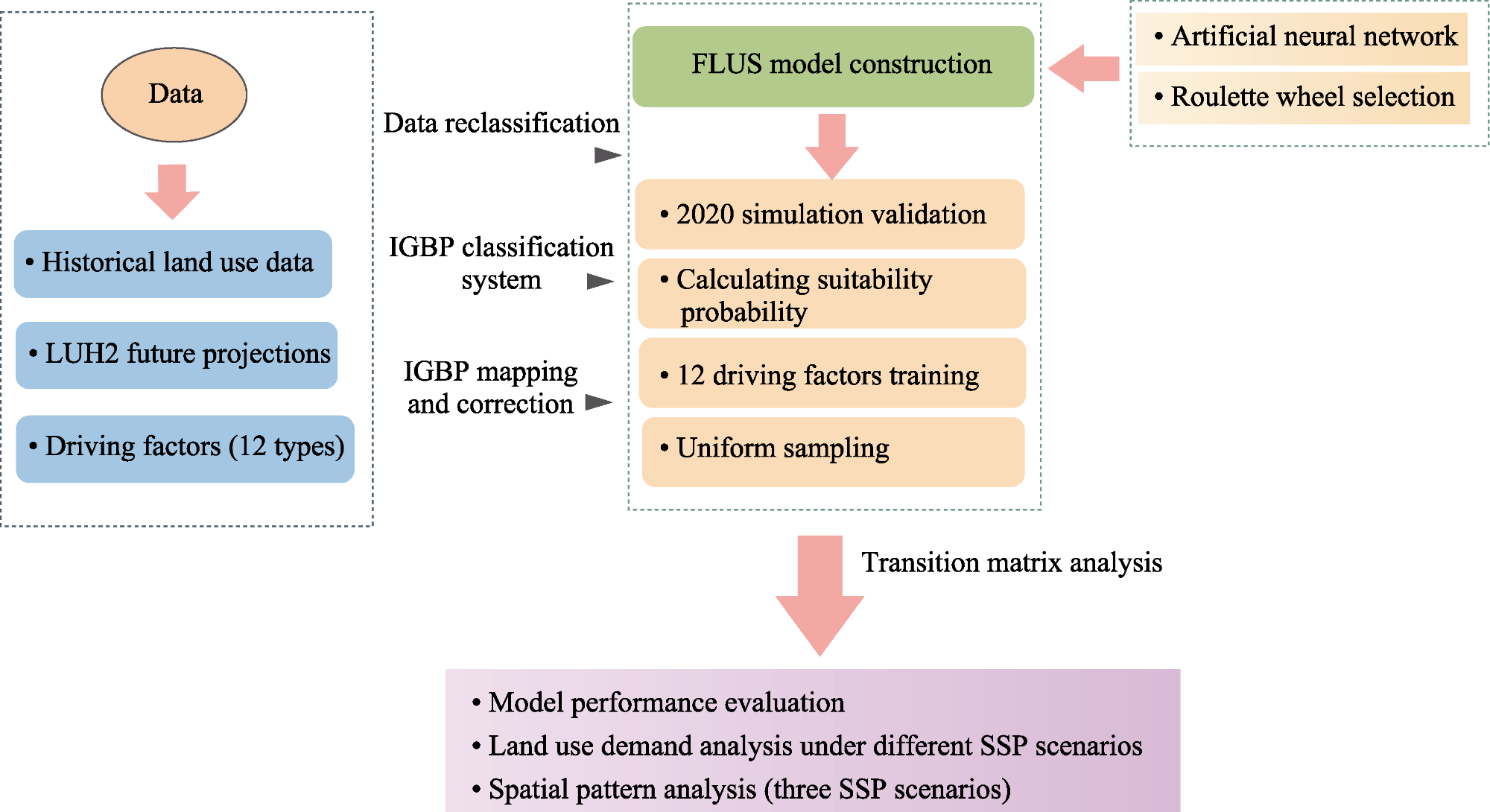
First, the original land use data under the three SSP scenarios for the years 2035, 2050, and 2100 were run through the FLUS model. Then, a mapping relationship was established between the original land use types and the IGBP land use types, based on the IGBP classification system. Using the area proportion method, this study allocated the area of the original land use types to the corresponding IGBP land use types to generate reclassified data. These reclassified data were directly applied to the land use input of the WRF model (Lal et al., 2021). Technology framework used in this study is shown in Figure 2.
Fig. 2 Technology workflow used in this study. LUH2, Land Use Harmonization 2; IGBP, International Geosphere Biosphere Programme; FLUS, Future Land Use Simulation; SSP, Shared Socioeconomic Pathway.

2.3.1 Reclassification of land use types

According to the current land use classification (SAC and AQSIQ, 2017), we defined bare land as sandy areas or bare rocks with vegetation cover of less than 5%, and unused land as wasteland with vegetation cover ranging from 5% to 30%. The main surface water bodies in Lanzhou are the Yellow River, which has a relatively stable channel width. As the area of water bodies remained essentially unchanged during the study period, this type was modeled as a constant land use type and excluded from the land use conversion processes in the following simulation. The dataset was reclassified and reintegrated, with land use types being divided into five categories as follows: farmland, forest, grassland, urban land, and bare land (Table 2).
Table 2 Reclassification of land use types in Lanzhou
Initial land use type in LUH2 Reclassification of land use type LUCC classification code
C3 annual crops Farmland 1
C3 perennial crops
C4 annual crops
C4 perennial crops
C3 nitrogen-fixing crops
Primary forest Forest 2
Potential secondary forest
Anthropogenically managed rangeland Grassland 3
Rangeland
Urban land Urban land 5
Non-forested primary land Bare land 6
Potentially non-forested secondary land

Note: LUH2, Land Use Harmonization 2; LUCC, land use and land cover change.

We calculated the area of each land use type according to the IGBP system. Specifically, the areas of the six land use categories were first calculated through the mapping relationship between the LUH2 classification and the six land use categories (Table 3). Assuming that the area percentage of IGBP land use type within each of the six land use categories remained constant over time, the area of each IGBP land use type can be obtained by first calculating the average area percentage of each category of the IGBP land use types in the six categories in 2020 and then multiplying it by the corresponding area of the six land use categories. For example, under the SSP2-4.5 scenario in the LUH2, the area percentage of forest in 2100 was 34.44%. Based on the average area percentage of forest (including evergreen needleleaf forest, evergreen broadleaf forest, deciduous needleleaf forest, deciduous broadleaf forest, mixed forest, and woody savannah) in IGBP classification system in 2020, the evergreen broadleaf forest accounted for 10.54% of the forest area (assuming no change during 2020-2100). Thus, the area percentage of evergreen broadleaf forest was approximately 3.63% (34.44%×10.54%) under the SSP2-4.5 scenario. The area of future land cover for 11 IGBP land use types during 2020-2100 was calculated for the three SSP scenarios in the same way.
Table 3 Mapping relationship between IGBP and LUCC classification in Lanzhou
Land use type IGBP land use type classification code Land use change classification code
Urban and built-up land 1 51, 53, 54
Dry cropland and pasture 2
Irrigated cropland and pasture 3 11, 12, 52
Mixed dry/irrigated cropland and pasture 4
Cropland/grassland mosaic 5
Cropland/woodland mosaic 6
Grassland 7 31, 32, 33, 34
Shrubland 8 23, 22
Mixed shrubland/grassland 9 24, 25
Savannah 10
Deciduous broadleaf forest 11
Deciduous needleleaf forest 12
Evergreen broadleaf forest 13
Evergreen needleleaf forest 14 21
Mixed forest 15
Water bodies 16 41, 42, 43, 46, 99
Herbaceous wetland 17 45, 64
Wooden wetland 18
Barren or sparsely vegetated land 19 61, 62, 63, 65, 67
Herbaceous tundra 20
Wooded tundra 21
Mixed tundra 22
Bare ground tundra 23 66
Snow or ice 24 44

Note: IGBP, International Geosphere Biosphere Programme.

Although the area of land use types under IGBP classification was calculated through the mapping relationship at a 1-km resolution, large disparities existed between the area of IGBP land use types directly calculated from LUH2 and the area of land use types using historical LUCC data. In fact, the LUH2 land use products have some limitations in expressing land use changes at the regional scale. Therefore, we first used the LUH2-based amount divided by the LUCC-based amount in 2020 as a correction factor, and then multiplied this by the LUH2-based IGBP land use demand to obtain the corrected amount of land use cover for each IGBP land use type. In other words, the projected amount of each IGBP land use type is the result of multiplying the amount of the corresponding IGBP land use type in 2020 by the LUH2-based annual variation rate of IGBP land use types in the target year relative to 2020. In this way, the corrected IGBP land use demand can better reflect the trends of land use types over time under various scenarios for LUH2, while ensuring the accuracy of the future land use cover amount and spatial patterns.

2.3.2 FLUS model

The FLUS model uses system dynamics and cellular automata model to integrate an artificial neural network (ANN) algorithm and a roulette wheel selection mechanism. These approaches are applicable to high precision and accurate scenario prediction and analysis of land use driven by natural, social, and economic factors (Liu et al., 2017). In this study, the FLUS model was adopted to simulate land use distribution in 2020 for model verification.
ANNs were used to obtain a suitability probability for various land use types within the study area from certain phases of land use data and multiple driving factors, including anthropogenic activities and natural factors (e.g., transportation, location, policy, air temperature, precipitation, soil, and topography). The ANNs consist of three layers, i.e., the input layer, the hidden layer, and the output layer, which can be used to train and evaluate the probability of land use conversion in each raster. The expression is as follows:
$s p(p, i, t)=\sum_{j} w_{j, t} \times 1 /\left(1+\mathrm{e}^{-n e t_{j}(p, t)}\right)$,
$\sum_{i} s p(p, i, t)=1$,
where p is the raster; i is the land use type; t is the training time; sp(p, i, t) is the probability of suitability; j is the hidden layer; wj, t is the adaptive weight; and -netj(p, t) is the received signal. In Equation 2, the sum of the probability of suitability for conversion of various land use types computed by the ANN model should equal to 1.
In this study, 12 driving factors, including population, GDP, elevation, etc., were selected, and uniform sampling was performed to train the ANN for each land use type and obtain the training probability. The hyperparameter settings of the ANN in this study can be referred to the research by Yang et al. (2017) and She (2024).
The adaptive inertia competition model adopts a roulette wheel selection mechanism with stochastic characteristics. Using land use raster data as the initial inputs, a conversion matrix between different land use types can be empirically determined by inputting the preset demand of various land use types. Then, the land use data of the preset year can be obtained using the probability of suitability, the weight of neighborhood for land use types, and other parameters, which can be expressed as follows:
$T P_{p, i}^{t}=s p(s, p, t) \times \operatorname{Inertia}_{i}^{t}\left(1-s c_{c \rightarrow i}\right) \times \frac{\sum_{N \times N} \operatorname{con}\left(c_{p}^{t-1}=i\right)}{N \times(N-1)} \times W_{i}$,
where $T P_{p, i}^{t}$ represents the total probability of conversion to land use type i at time t of the iteration; sp(s, p, t) denotes the probability of suitability; $\text { Inertia }{ }_{i}^{t}$ indicates the adaptive inertia coefficient; $S c_{c \rightarrow i}$ signifies the cost of spatial type conversion; N is the Moore neighborhood window; $\operatorname{con}\left(c_{p}^{t-1}=i\right)$ is the number of raster cells generated by land use type i at the end of iterations; and Wi is the weight of neighborhood for land use type i.

2.3.3 Transition matrix method

A transition matrix is a commonly used method for investigating the direction and magnitude of changes between different land use types (Zhu et al., 2024). In this work, ArcGIS 10.8 was used to calculate the transition matrix, giving higher computational efficiency and accuracy in raster data overlay analysis and area statistics.
$A_{x y}=\left[\begin{array}{ccc} A_{11} & \cdots & A_{1 n} \\ \vdots & \ddots & \vdots \\ A_{n 1} & \cdots & A_{n n} \end{array}\right]$,
where Axy represents the transition area from land use type x to land use type y; and n is the number of land use type classifications.

3 Results

3.1 Model performance

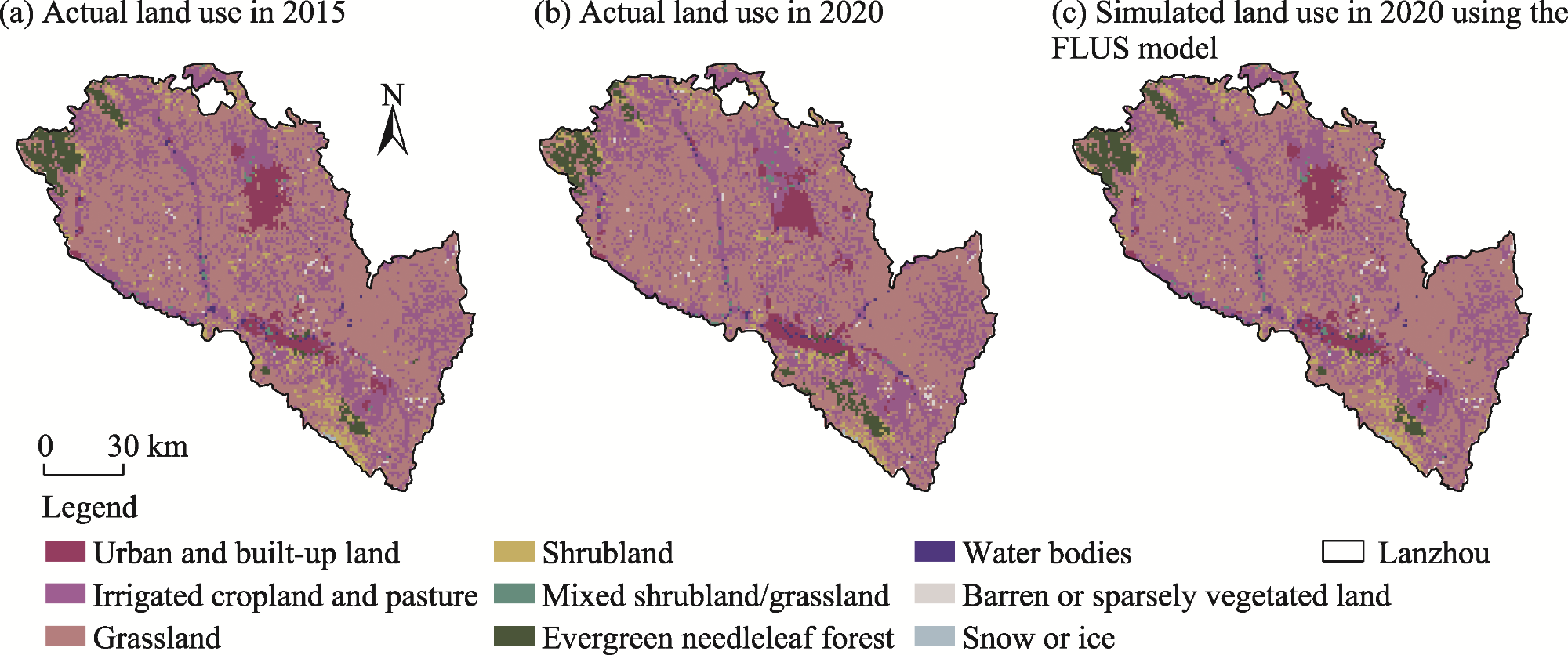
The land use patterns in 2020 simulated by the FLUS model were compared with the actual land use distribution. According to the rating criteria of Kappa (Landis and Koch, 1977) and FoM (Pontius et al., 2008), we ranked the simulation with Kappa coefficient (0.50) and FoM (0.03) as good. The FLUS simulation results were in good agreement with the observation data, and could accurately reflect the characteristics of land use changes in Lanzhou, providing support for the subsequent prediction and analysis of land use changes.
Grassland dominated land use types in Lanzhou, contracting marginally from approximately 7932 km2 in 2015 to 7831 km2 in 2020 (Fig. 3). Irrigated cropland and pasture, principally distributed in the northwestern and southeastern regions, ranked second with an area of 3682 km2 in 2020, which was slightly less than the area of 3869 km2 in 2015. The area of evergreen needleleaf forest increased from 348 km2 in 2015 to 428 km2 in 2020, mainly concentrated in the southeastern and northwestern mountainous regions. Urban and built-up land expanded substantially, growing to 595 km2 in 2020. This land use type was distributed in the core urban area of Lanzhou and its surroundings, reflecting the rapid urbanization process. Grassland and shrubland exhibited a relatively stable spatial distribution, but farmland in localized regions decreased, indicating a compression effect of urban expansion on agricultural lands and natural ecosystems. As shown in Table 4, from 2015 to 2020, irrigated cropland and pasture was transformed into grassland and urban and built-up land, with areas of 1590 and 159 km2, respectively. Conversely, grassland was transformed into irrigated cropland and pasture, shrubland, urban and built-up land, and evergreen needleleaf forest, with areas of 1566, 170, 121, and 112 km2, respectively. In addition, 196 km2 of shrubland was converted to grassland.
Fig. 3 Land use distribution patterns in Lanzhou. (a), actual land use in 2015; (b), actual land use in 2020; (c), simulated land use in 2020 using the FLUS model.
Table 4 Transformation matrix of land use types between 2015 and 2020 (unit: km2)
2020 2015
Urban and built-up land Irrigated cropland and pasture Grassland Shrubland Mixed shrubland/grassland Evergreen needleleaf forest Water bodies Barren or sparsely vegetated land Snow or ice
Urban and built-up land 267 159 121 5 13 5 6 19 0
Irrigated cropland and pasture 32 1939 1566 55 27 16 32 15 0
Grassland 13 1590 5913 196 9 66 9 34 1
Shrubland 0 65 170 179 2 29 0 0 5
Mixed shrubland/grassland 2 31 7 0 18 0 3 0 0
Evergreen needleleaf forest 2 24 112 56 0 232 1 0 0
Water bodies 12 39 10 1 2 0 9 1 0
Barren or sparsely vegetated land 0 22 31 3 0 0 0 20 0
Snow or ice 0 0 2 2 0 0 0 0 2

3.2 Land use demand under SSP scenarios

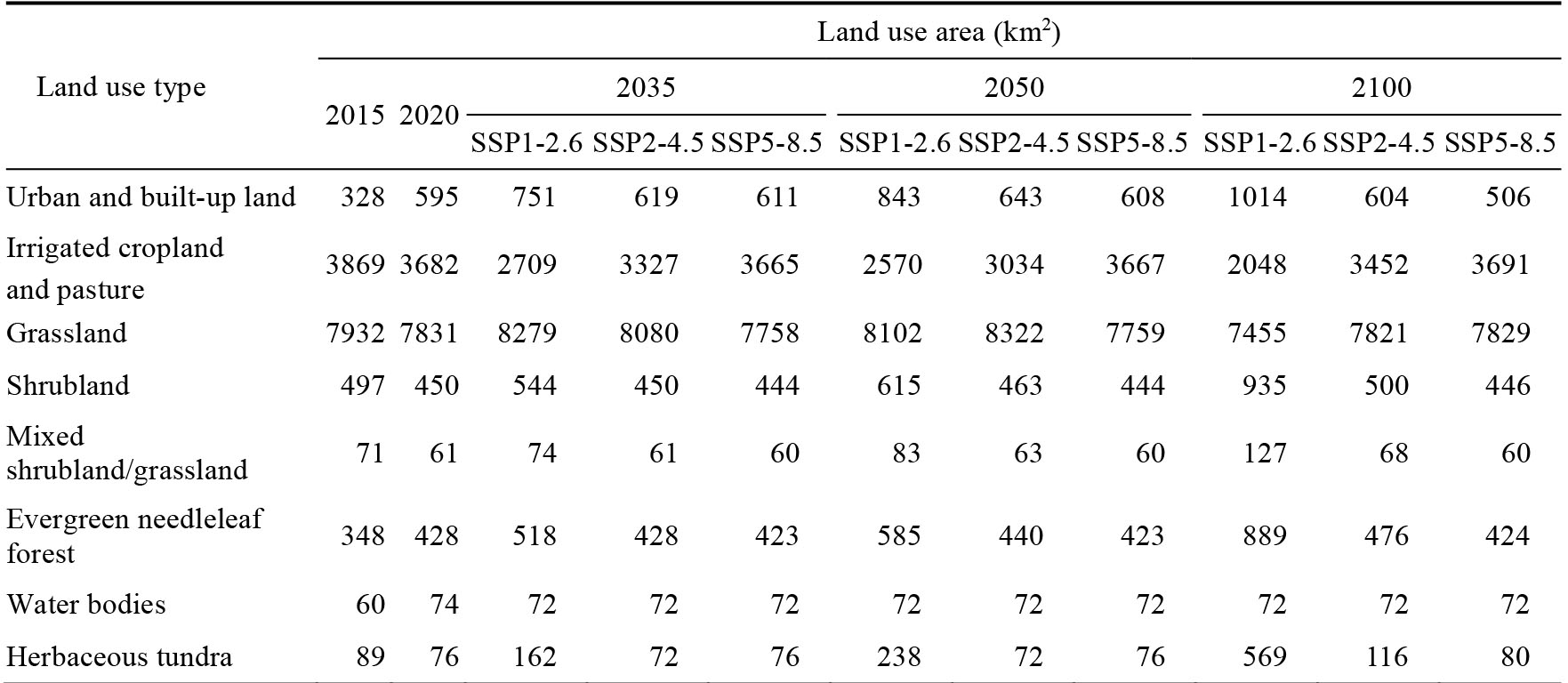
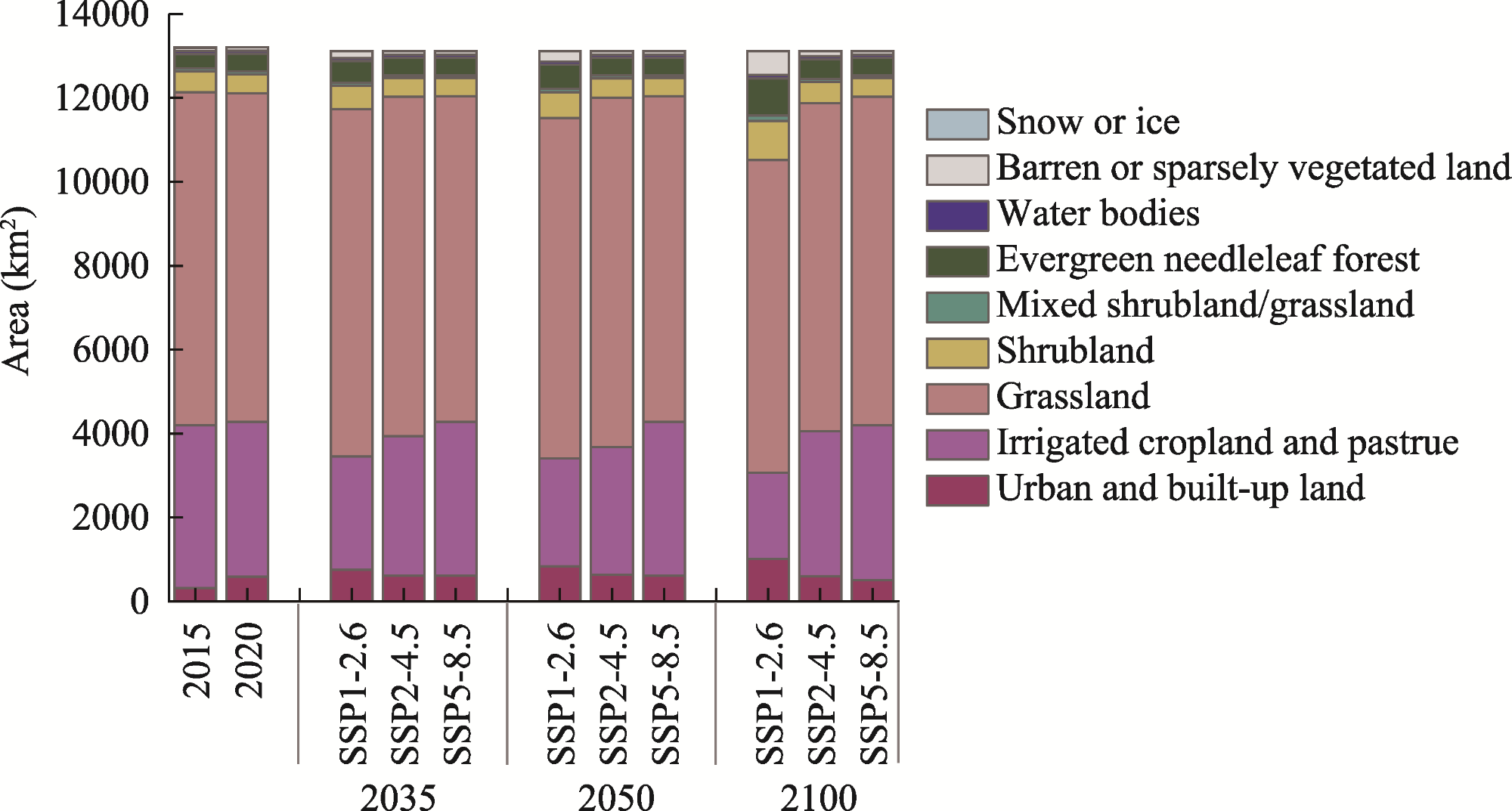
The changes in land use types in the future under different SSP scenarios became increasingly diversified in comparison with 2020 (Table 5; Fig. 4). During the three distinct periods of 2020-2035, 2035-2050, and 2050-2100, urban and built-up land consistently expanded with an increasing area of 419 km2 under the SSP1-2.6 scenario, whereas irrigated cropland and pasture as well as grassland exhibited a continuous decline of 1634 and 376 km2, respectively. Under the SSP2-4.5 scenario, urban and built-up land as well as grassland initially increased before decreasing, while irrigated cropland and pasture first decreased and then increased. Under the SSP5-8.5 scenario, urban and built-up land contracted by 89 km2, whereas irrigated cropland and pasture as well as grassland remained relatively stable.
Table 5 Estimated areas of various land use types in Lanzhou in the future under different SSP scenarios
Fig. 4 Land use demand in Lanzhou in the future under different SSP scenarios
Across all scenarios and time periods, urban and built-up land exhibited a significant inverse relationship with irrigated cropland and pasture, reflecting the substantial impact of limited land resources and economic transformation on both land use types. Grassland, by contrast, was negatively correlated with urban and built-up land but positively correlated with irrigated cropland and pasture under both the SSP1-2.6 and SSP5-8.5 scenarios, indicating a fundamental spatial competition among natural (grassland), semi-natural (irrigated cropland and pasture), and constructed (urban and built-up land) ecosystems. Under the SSP2-4.5 scenario, the alignment of grassland with urban and built-up land, and its inverse relationship with irrigated cropland and pasture, suggested that land use management would shift from overall confrontation to internal trade-off in the context of limited resources and multiple policy objectives.

3.3 Spatial patterns of land use types under SSP scenarios

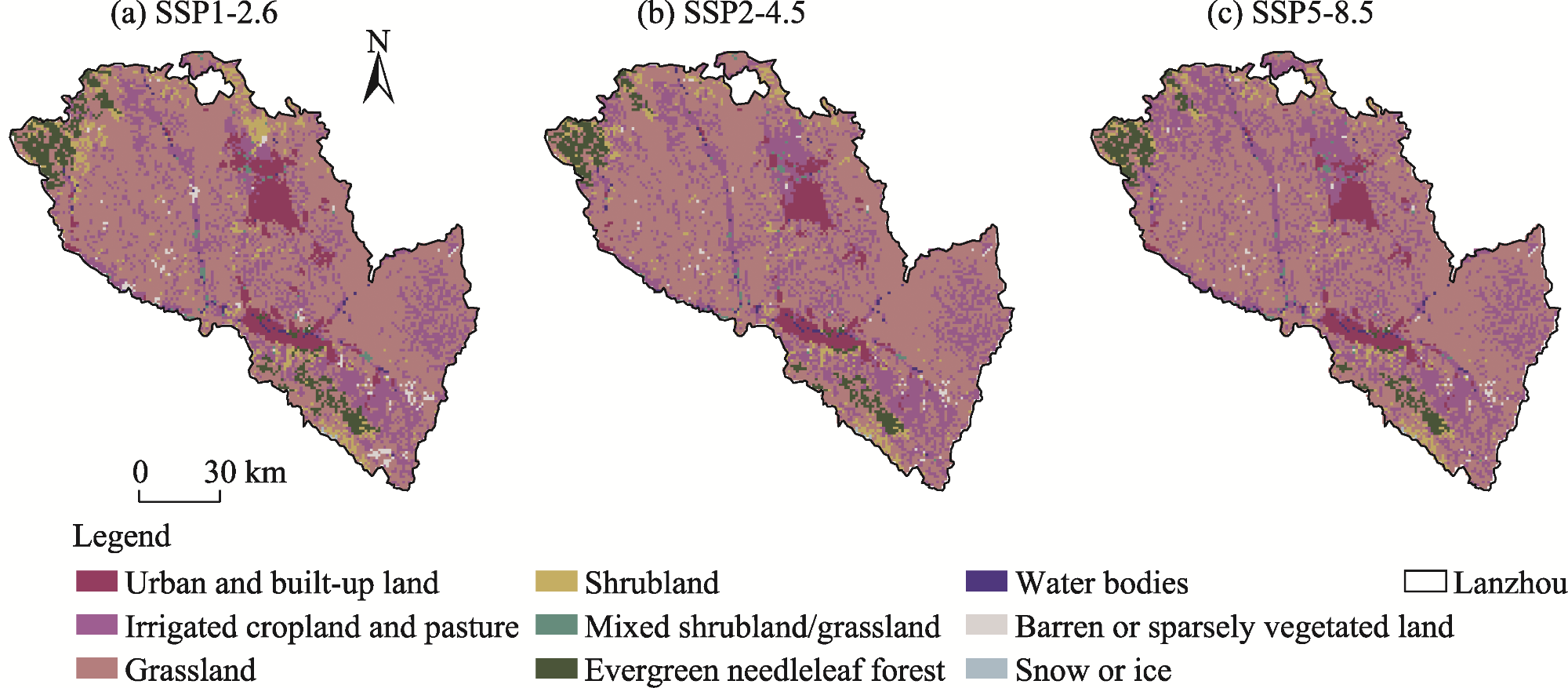
By 2035, the area of urban and built-up land was projected to expand further under all three scenarios, with the most pronounced expansion under the SSP1-2.6 scenario (Fig. 5). The area of irrigated cropland and pasture continued to decrease under the SSP1-2.6 scenario, although it remained at relatively high emission levels under the SSP5-8.5 scenario. Areas of both grassland and shrubland were generally stable under all three scenarios, with a slight increase mainly distributed in the central and southern regions under the SSP1-2.6 scenario. The area of water bodies grew slightly under the three scenarios, especially under the SSP2-4.5 scenario. There was a relative increase of barren and sparsely vegetated land area under the SSP1-2.6 scenario, in contrast to a decrease under the SSP5-8.5 scenario. Overall, urban expansion was evident under the SSP1-2.6 scenario, which focused more on ecological conservation. The SSP5-8.5 scenario maintained agricultural production while controlling urban expansion.
Fig. 5 Spatial patterns of land use types in Lanzhou in 2030 under different SSP scenarios. (a), SSP1-2.6; (b), SSP2-4.5; (c), SSP5-8.5.
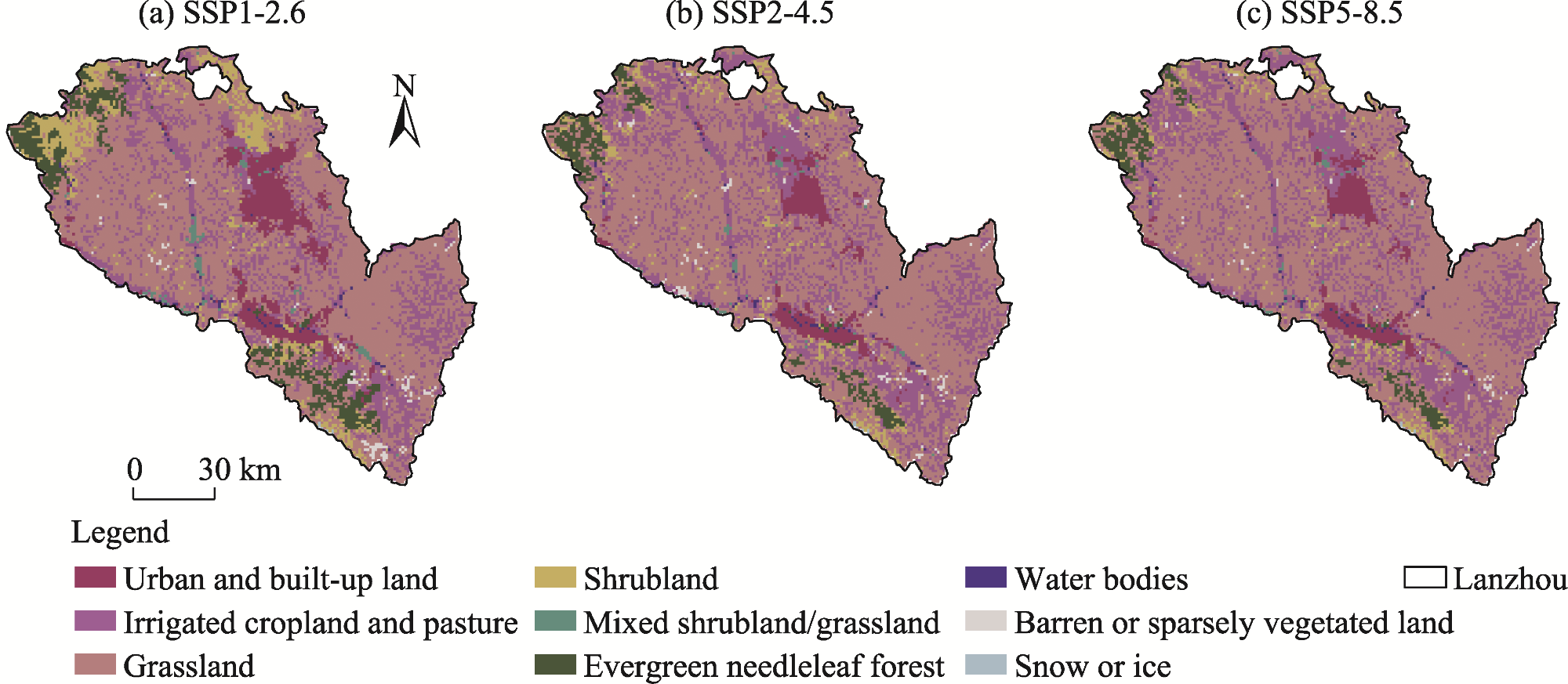
By 2050, the expansion of urban and built-up land was prominent under the SSP1-2.6 scenario, with the area growing from 595 km2 in 2020 to 843 km2 in 2050 (Fig. 6). Under the SSP2-4.5 and SSP5-8.5 scenarios, urban expansion was relatively steady, with less pronounced growth than that under the SSP1-2.6 scenario. The area of farmland fluctuated notably under the future scenarios. Specifically, under the SSP5-8.5 scenario, the farmland area remained at a relatively high level, only decreasing from 3682 km2 in 2020 to 3667 km2 in 2050. However, the farmland area decreased substantially to 2570 km2 under the SSP1-2.6 scenario. The areas of grassland and shrubland were relatively stable in 2050. Whereas the grassland changed minimally under different scenarios, it showed a small increase under the SSP1-2.6 scenario, from 7831 km2 in 2020 to 8102 km2 in 2050. There was also a distinct increase in shrubland under the SSP1-2.6 scenario, reflecting the higher concern under this scenario for natural ecosystems. Overall, the urbanization trend, farmland protection, and ecological restoration in 2050 substantially differed under the various socioeconomic scenarios compared with those in 2020. The balance between ecological conservation and urban expansion was emphasized under the SSP1-2.6 scenario, whereas economic development with higher levels of agricultural land use were prioritized under the SSP5-8.5 scenario. These changes manifested the far-reaching impacts of future climate and socioeconomic policies on land use patterns.
Fig. 6 Spatial patterns of land use types in Lanzhou in 2050 under different SSP scenarios. (a), SSP1-2.6; (b), SSP2-4.5; (c), SSP5-8.5.
By 2100, the urban and built-up land grew to 1014 km2 under the SSP1-2.6 scenario, which showed the most significant expansion among the three scenarios (Fig. 7). In contrast, the farmland area substantially decreased to 2048 km2. The areas of grassland and shrubland were still maintained at a large scale—7455 and 935 km2, respectively—which reflected the protection of natural ecosystems under this scenario. Under the SSP2-4.5 scenario, the area of urban and built-up land was 604 km2, indicating a relatively moderate expansion. There was a large increase in irrigated cropland and pasture, from 3682 km2 in 2020 to 3452 km2 in 2100, showing the higher emphasis on agricultural production under this scenario. The areas of grassland and shrubland decreased slightly, indicating a relatively balanced effort towards ecological conservation. Under the SSP5-8.5, the area of urban and built-up land expanded slightly by 506 km2, suggesting less urban expansion pressure. The farmland area remained at a high level, reaching 3691 km2, which reflected the high priority given to economic growth and agricultural needs under this scenario. The grassland and shrubland showed similar patterns with those under the SSP2-4.5 scenario and basically remained stable.
Fig. 7 Spatial patterns of land use types in Lanzhou in 2100 under different SSP scenarios. (a), SSP1-2.6; (b), SSP2-4.5; (c), SSP5-8.5.

4 Discussion

The Patch-generating Land Use Simulation (PLUS) model has been widely used to simulate land use changes (Liang et al., 2021). However, the FLUS model used in this study has advantages in both simulation accuracy and adaptability to the complexity of the land use system of oasis cities in arid and semi-arid regions. For example, the traditional PLUS model weakly responds to water resources as the core constraint factor in arid and semi-arid regions, and needs to be additionally coupled with a hydrological model (Bao et al., 2022; Liu et al., 2022). In contrast, the adaptive inertia coefficient of the FLUS model can be directly embedded into the weight of the distance to the Yellow River and can simulate the constraining effect of water resources on land use. In terms of classification compatibility, the output results of the FLUS model can be directly reclassified into the IGBP classification system through matrix mapping. However, the PLUS model, with its original classification system focusing on the binary division of constructed and unconstructed land, requires three format conversions to match the IGBP standard, and errors may occur during the conversion process (Zhang et al., 2017). Reclassifying the PLUS model outputs into IGBP categories highlights the strong dependence of regional climate-environment simulations on standardized IGBP land use data (Ma et al., 2020).
Investigation into land use changes in Lanzhou under the three SSP scenarios comprehensively revealed the synergistic influence of three constraints—limited water, ecosystem fragility, and development demand—as well as socio-economic development paradigms and policy trajectories (Foley et al., 2005). Under the SSP1-2.6 scenario, the vigorously developed low-carbon industries, which rely on compact urban expansion to provide supporting services, led to urban expansion. Under the SSP5-8.5 scenario, the primary development of heavy-chemical industries, which have large land use scales but low spatial agglomeration degrees, did not require synchronous urban expansion. Moreover, the high-intensity farmland protection policy further restricted the encroachment of urban and built-up land onto farmland, leading to a reduction (Riahi et al., 2017; Pirani et al., 2024).
Differences in methods, data processing, and classification in land use projections across different regions can make it difficult to compare different simulations. Here, the simulation results based on the FLUS model were compared within the same framework. We also unified the data according to the area percentage of each land use type during the same period. This approach facilitated comparison by linking the percentage area of each land use type to both its actual extent and the number of classifications, thereby allowing a degree of regional difference analysis. For example, the projected area percentages of irrigated cropland and pasture in Lanzhou in 2035 under the SSP1-2.6 (5.73%), SSP2-4.5 (4.72%), and SSP5-8.5 (4.66%) scenarios were significantly lower than those projected for the Weihe River Basin (SSP1-2.6: 43.13%, SSP2-4.5: 42.92%, and SSP5-8.5: 43.59%), Wuhan City (SSP1-2.6: 39.14%, SSP2-4.5: 39.43%, and SSP5-8.5: 39.13%), and Guangzhou City (SSP1-2.6: 7.92% and SSP5-8.5: 25.06%) in China, as well as the Asarsuyu watershed in Turkey (32.4%) (Lin et al., 2020; Liang et al., 2021; Şenik and Kaya, 2022; Wu et al., 2022). This was primarily due to the influence of urbanization processes, industrial structure, and land use policies (Lin et al., 2020; Liang et al., 2021), further confirming the decisive influence of regional characteristics on land use patterns.
Land use changes in Lanzhou were increasingly steered by industry restructuring. For instance, cropland was simultaneously pressured by natural factors (e.g., temperature and precipitation) and human activities (e.g., irrigation infrastructure and irrigation technology), while grassland growth remained precipitation-dependent—supplemental drip or sprinkler systems provided only localized relief constrained by total water availability. The Cropland Redline Policy has curtailed opportunities for converting farmland to forest or grassland; moreover, in some areas, woodlands already established are suffering from degradation due to poor site conditions and inadequate management, which undermines the intended gains in ecological services (Sun et al., 2021). Nested in a valley with an arid and semi-arid climate, the cities face rigid topographic and hydrological limits (Han et al., 2017; Yang et al., 2024)—a stark contrast to eastern cities in humid regions where abundant water resources and looser farmland protection allow sprawling, economically driven encroachment on cropland with a much higher conversion threshold (Wang et al., 2020; Liang et al., 2021; Gao et al., 2022). This comparison thus highlights the necessity for Lanzhou to reconcile development demands with hard resource constraints. Scientific quantification of these trade-offs is essential for orderly land stewardship and sustainable regional planning (Long et al., 2025).

5 Conclusions

This study used the land use data of Lanzhou in 2015 and 2020 as the baseline, and selected 12 types of standardized indicators, such as GDP, population density, distance to roads, and elevation, as driving factors. Next, we projected future land use (2020-2100) at a 1-km resolution under three different SSPs using the FLUS model, and reclassified the simulation results based on the IGBP system to drive a climatic and environmental model. Then, land use changes among different periods were analyzed using a transition matrix. Key findings reveal divergent land use trajectories under different development paradigms.
Under the SSP1-2.6 scenario, the urban and built-up land consistently expanded, whereas the irrigated cropland and pasture as well as grassland all exhibited a continuous decline. Under the SSP5-8.5 scenario, urban and built-up land contracted, while irrigated cropland and pasture as well as grassland remained relatively stable. Under the SSP2-4.5 scenario, urban and built-up land as well as grassland initially increased before decreasing, while irrigated cropland and pasture first decreased and then subsequently increased. Across all scenarios and time periods, urban and built-up land exhibited a significant inverse relationship with irrigated cropland and pasture, reflecting the significant impact of limited land resources and economic transformation on both land use types. Grassland, by contrast, was negatively correlated with urban and built-up land but positively correlated with irrigated cropland and pasture under both the SSP1-2.6 and SSP5-8.5 scenarios, which indicated a fundamental spatial competition among natural, semi-natural, and constructed ecosystems. Under the SSP2-4.5 scenario, the alignment of grassland with urban and built-up land and its conflict with irrigated cropland and pasture suggested that land use management had shifted from overall confrontation to internal trade-offs in the context of limited resources and multiple policy objectives.
In this study, when simulating land use types at a 1-km spatial resolution using LUH2 data, local driving factors such as slope and water accessibility were introduced to constrain land use allocation. Meanwhile, this study established the mapping rules of future projection based on the historical trajectory of land use changes, which helped to ensure temporal consistency. This represents the optimal approach for identifying land use changes. In the future, we will integrate insights from relevant literature (e.g., Meyer et al., 2022; Sun et al., 2024) with multi-source data to enhance the model's robustness and reduce uncertainties. In addition, land use transition rules may evolve with policy shifts in long-term projections, necessitating the integration of dynamic policy data to further optimize results.

Conflict of interest

The authors declare that they have no known competing financial interests or personal relationships that could have appeared to influenced the work reported in this paper.

Acknowledgements

This study was supported by the Soft Science Special Project of Gansu Basic Research Plan (25JRZA206), the Longyuan Youth Talent Project of Gansu Province (ZHU Rong), the Innovation Development Special Project of China Meteorological Administration (CXFZ2025J036), and the Program of the State Key Laboratory of Cryospheric Science and Frozen Soil Engineering, Chinese Academy of Sciences (CSFSE-KF-2402).

Author contributions

ZHU Rong: Formal analysis, Funding acquisition, Investigation, Methodology, Project administration, Software, Validation, Visualization, Writing - original draft; JIANG Youyan: Conceptualization, Funding acquisition, Data curation, Methodology, Project administration, Resources, Supervision, Writing - review and editing; LEI Runzhi: Investigation, Software, Visualization. All authors approved the manuscript.
[1]
Bao Q L, Ding J L, Han L J, et al. 2022. Predicting land change trends and water consumption in typical arid regions using multi-models and multiple perspectives. Ecological Indicators, 141: 109110, doi: 10.1016/j.ecolind.2022.109110.

[2]
Best R H. 2024. Land Use and Living Space (2nd ed.). London: Routledge, 1-224.

[3]
Briassoulis H. 2020. Analysis of Land Use Change: Theoretical and Modeling Approaches (2nd ed.). Morgantown: West Virginia University, 1-247.

[4]
Bühne H S, Tobias J, Durant S, et al. 2021. Improving predictions of climate change-land use change interactions. Trends in Ecology & Evolution, 36(1): 29-38.

DOI

[5]
Chen G Z, Li X, Liu X P, et al. 2020. Global projections of future urban land expansion under shared socioeconomic pathways. Nature Communications, 11(1): 537, doi: 10.1038/s41467-020-14386-x.

[6]
Chen W. 2024. National ecological security shield in the process of western region's large-scale development in the new era. Journal of South-Central Minzu University (Humanities and Social Sciences), 44(10): 89-101, 184-185. (in Chinese)

[7]
Dong N, You L, Cai W J, et al. 2018. Land use projections in China under global socioeconomic and emission scenarios: Utilizing a scenario-based land-use change assessment framework. Global Environmental Change, 50: 164-177.

DOI

[8]
Feng H, Tang X L, Tao H J, et al. 2025. Ecological and environmental effects of river valley cities based on multi-scenario simulations of national land space: A case study of Lanzhou City. Environmental Science, 46(11): 7142-7155. (in Chinese)

DOI

[9]
Foley J, DeFries R, Asner G P, et al. 2005. Global consequences of land use. Science, 309(5734): 570-574.

DOI PMID

[10]
Gao J, O'Neill B. 2020. Mapping global urban land for the 21st century with data-driven simulations and Shared Socioeconomic Pathways. Nature Communications, 11(1): 2302, doi: 10.1038/s41467-020-15788-7.

[11]
Gao L, Tao F, Liu R R, et al. 2022. Multi-scenario simulation and ecological risk analysis of land use based on the PLUS model: A case study of Nanjing. Sustainable Cities and Society, 85: 104055, doi: 10.1016/j.scs.2022.104055.

[12]
Gao Y T, Yu Y, Sun L X, et al. 2021. Land coverage change and driving forces of an oasis in the southern margin of Tarim Basin. Arid Zone Research, 38(4): 1172-1183. (in Chinese)

DOI

[13]
Guo W, Teng Y J, Li J, et al. 2024. A new assessment framework to forecast land use and carbon storage under different SSP-RCP scenarios in China. Science of the Total Environment, 912: 169088, doi: 10.1016/j.scitotenv.2023.169088.

[14]
Han Q F, Luo G P, Li C F, et al. 2017. Modeling the grazing effect of grassland on the carbon source/sink in Xinjiang. Acta Ecologica Sinica, 37(13): 4392-4399. (in Chinese)

[15]
Hoffmann P, Reinhart V, Rechid D, et al. 2023. High-resolution land use and land cover dataset for regional climate modelling: Historical and future changes in Europe. Earth System Science Data, 15(9): 3819-3852.

DOI

[16]
Huang J P, Yu H P, Guan X D, et al. 2016. Accelerated dryland expansion under climate change. Nature Climate Change, 6(2): 166-171.

DOI

[17]
Hurtt G C, Chini L, Sahajpal R, et al. 2020. Harmonization of global land-use change and management for the period 850-2100 (LUH2) for CMIP6. Geoscientific Model Development Discussions, 13: 5425-5464.

[18]
Intergovernmental Panel on Climate Change (IPCC). 2021. Climate Change 2021:The Physical Science Basis. Contribution of Working Group I to the Sixth Assessment Report of the Intergovernmental Panel on Climate Change. Cambridge, United Kingdom and New York, USA: Cambridge University Press.

[19]
Lal P, Shekhar A, Kumar A. 2021. Quantifying temperature and precipitation change caused by land cover change: a case study of India using the WRF model. Frontiers in Environmental Science, 9: 766328. doi: 10.3389/fenvs.2021.766328.

[20]
Landis J R, Koch G G. 1977. The measurement of observer agreement for categorical data. Biometrics, 33(1): 159-174.

PMID

[21]
Li S Y, Zhou Y Y, Yue D X, et al. 2024. Scenario simulation of ecosystem services based on land use/land cover change in the Bailong River Basin, in China. Land, 14(1): 25, doi: 10.3390/land14010025.

[22]
Liang X, Guan Q F, Clarke K C, et al. 2021. Understanding the drivers of sustainable land expansion using a patch-generating land use simulation (PLUS) model: A case study in Wuhan, China. Computers, Environment and Urban Systems, 85: 101569, doi: 10.1016/j.compenvurbsys.2020.101569.

[23]
Lin W B, Sun Y M, Nijhuis S, et al. 2020. Scenario-based flood risk assessment for urbanizing deltas using future land-use simulation (FLUS): Guangzhou Metropolitan Area as a case study. Science of the Total Environment, 739: 139899, doi: 10.1016/j.scitotenv.2020.139899.

[24]
Liu X, Liu H L. 2024. The application of ANN-FLUS model in reconstructing historical cropland distribution changes: A case study of Vietnam from 1885 to 2000. Journal of Natural Resources, 39(6): 1473-1492. (in Chinese)

DOI

[25]
Liu X P, Liang X, Li X, et al. 2017. A future land use simulation model (FLUS) for simulating multiple land use scenarios by coupling human and natural effects. Landscape and Urban Planning, 168: 94-116.

DOI

[26]
Liu X Q, Liu Y S, Wang Y S, et al. 2022. Evaluating potential impacts of land use changes on water supply-demand under multiple development scenarios in dryland region. Journal of Hydrology, 610: 127811, doi: 10.1016/j.jhydrol.2022.127811.

[27]
Long H L, Ma L, Zhou G P. 2025. Land use transition research in China: Progress, challenges and prospect. Acta Geographica Sinica, 80(8): 1993-2015. (in Chinese)

DOI

[28]
Ma L, Hurtt G C, Chini L P, et al. 2020. Global rules for translating land-use change (LUH2) to land-cover change for CMIP6 using GLM2. Geoscientific Model Development, 13(7): 3203-3220.

DOI

[29]
Manat A, Halik W, Halimulati G, et al. 2012. Assessment of residential environment suitability for southern Xinjiang based on GIS. Journal of Arid Land Resources and Environment, 26(4): 11-17. (in Chinese)

[30]
Meyer R, Zhang W M, Kragh S J, et al. 2022. Exploring the combined use of SMAP and Sentinel-1 data for downscaling soil moisture beyond the 1 km scale. Hydrology and Earth System Sciences Discussions, 26(13): 3337-3357.

[31]
Noszczyk T. 2019. A review of approaches to land use changes modeling. Human and Ecological Risk Assessment: An International Journal, 25(6): 1377-1405.

DOI

[32]
Parker D C, Manson S M, Janssen M A, et al. 2003. Multi-agent systems for the simulation of land-use and land-cover change: a review. Annals of the association of American Geographers, 93(2): 314-337.

DOI

[33]
Pirani A, Fuglestvedt J S, Byers E, et al. 2024. Scenarios in IPCC assessments: Lessons from AR6 and opportunities for AR7. npj Climate Action, 3: 1, doi: 10.1038/s44168-023-00082-1.

[34]
Pongratz J, Schwingshackl C, Bultan S, et al. 2021. Land use effects on climate: current state, recent progress, and emerging topics. Current Climate Change Reports, 7: 99-120.

DOI

[35]
Pontius R G, Boersma W, Castella J C, et al. 2008. Comparing the input, output, and validation maps for several models of land change. The Annals of Regional Science, 42(1): 11-37.

DOI

[36]
Qiu Y, Feng J M, Yan Z W, et al. 2023. Assessing the land-use harmonization (LUH2) dataset in Central Asia for regional climate model projection. Environmental Research Letters, 18(6): 064008, doi: 10.1088/1748-9326/accfb2.

[37]
Riahi K, Van Vuuren D V, Kriegler E, et al. 2017. The Shared Socioeconomic Pathways and their energy, land use, and greenhouse gas emissions implications: An overview. Global Environmental Change, 42: 153-168.

DOI

[38]
Şenik B, Kaya H S. 2022. Landscape sensitivity-based scenario analysis using flus model: a case of Asarsuyu watershed. Landscape and Ecological Engineering, 18(2): 139-156.

DOI

[39]
She W, Li Y, Zhong L H, et al. 2024. Hyperparameter optimization for neural network based on improved real coding genetic algorithm. Journal of Computer Applications, 44(3): 671-676. (in Chinese)

DOI

[40]
Standardization Administration of China (SAC) and the General Administration of Quality Supervision, Inspection and Quarantine of China (AQSIQ). 2017. Current Land Use Classification Standard (GB/T 21010-2017). Beijing: Standards Press of China. (in Chinese)

[41]
Sun L, Yu H J, Sun M X, et al. 2023. Coupled impacts of climate and land use changes on regional ecosystem services. Journal of Environmental Management, 326: 116753, doi: 10.1016/j.jenvman.2022.116753.

[42]
Sun M M, Zhao X, Zhao J C, et al. 2024. A new spatial downscaling method for long-term AVHRR NDVI by multiscale residual Convolutional Neural Network. IEEE Journal of Selected Topics in Applied Earth Observations and Remote Sensing, 17: 7068-7088.

DOI

[43]
Sun S L, Zhang X P, Zhang Z B. 2021. Spatiotemporal changes and driving forces of landuse in Shaanxi Province during 2000-2018. Bulletin of Soil and Water Conservation, 41(4): 339-349. (in Chinese)

[44]
Wang F L. 2020. Land use change and simulation in Longnan City based on FLUS model. Master Thesis. Lanzhou: Northwest Normal University. (in Chinese)

[45]
Wang R. 2023. Analysis on land use change and landscape ecological risk in Gansu section of the mainstream of the Yellow River. Master Thesis. Lanzhou: Lanzhou University. (in Chinese)

[46]
Wang W J, Zhao Z K, Zhao D F. 2025. Analysis of the spatiotemporal pattern evolution of land use and carbon storage in the Yellow River Basin from 1980 to 2035 based on the FLUS-InVEST model. Ecological Economy, 41(8): 201-210. (in Chinese)

[47]
Wang X, Ma B W, Li D, et al. 2020. Multi-scenario simulation and prediction of ecological space in Hubei Province based on FLUS model. Journal of Natural Resources, 35(1): 230-242. (in Chinese)

DOI

[48]
Wang Z Y, Shi P J, Shi J, et al. 2023. Ecological effect of urban spatial expansion in river valleys: A case study in the main urban area of Lanzhou City. Resources Science, 45(12): 2385-2399. (in Chinese)

DOI

[49]
Wei W, Shi P J, Feng H H, et al. 2012. Study on the suitability evaluation of the human settlement's environment in arid inland river basin—A case study on the Shiyang River basin. Journal of Natural Resources, 27(11): 1940-1950. (in Chinese)

[50]
Winkler K, Fuchs R, Rounsevell M, et al. 2021. Global land use changes are four times greater than previously estimated. Nature Communications, 12(1): 2501, doi: 10.1038/s41467-021-22702-2.

[51]
Wu J Y, Luo J G, Zhang H, et al. 2022. Projections of land use change and habitat quality assessment by coupling climate change and development patterns. Science of the Total Environment, 847: 157491, doi: 10.1016/j.scitotenv.2022.157491.

[52]
Wu K J, Wu M T, An Z H, et al. 2025. Evaluation of tourism ecological security and its obstacles in semi-arid river valley urban: a case study of Lanzhou, China. Scientific Reports, 15(1): 3943, doi: 10.1038/s41598-025-88157-3.

[53]
Wu X X, Liu X P, Liang X, et al. 2018. Multi-scenarios simulation of urban growth boundaries in Pearl River Delta based on FLUS-UGB. Journal of Geo-Information Science, 20(4): 532-542. (in Chinese)

[54]
Yang R H, Yang Q Y, Zeng L, et al. 2017. Evaluation on ecological security and analysis of influence factors of rural land based on BP-ANN model: A case study of Fengdu County in Chongqing. Research of Soil and Water Conservation, 24(3): 206-213. (in Chinese)

[55]
Yang Y, Zhang X Y, Su W, et al. 2024. Soil organic carbon storage and its influencing factors in farmland and desert ecosystems in Xinjiang. Acta Ecologica Sinica, 44(14): 6174-6185. (in Chinese)

[56]
Zhang C G, Fang C L. 2002. Driving mechanism analysis of ecological-economic-social capacity interactions in oasis systems of arid lands. Journal of Natural Resources, 17(2): 181-187. (in Chinese)

DOI

[57]
Zhang M, Ma M G, De Maeyer P D, et al. 2017. Uncertainties in classification system conversion and an analysis of inconsistencies in global land cover products. ISPRS International Journal of Geo-Information, 6(4): 112, doi: 10.3390/ijgi6040112.

[58]
Zhao J C, Zhao X, Lian, S L, et al. 2020a. Assessing the thermal contributions of urban land cover types. Landscape and Urban Planning, 204: 103927, doi: 10.1016/j.landurbplan.2020.103927.

[59]
Zhao L F, Liu X P, Liu P H, et al. 2020b. Urban expansion simulation and early warning based on geographical partition and FLUS model. Journal of Geo-Information Science, 22(3): 517-530. (in Chinese)

[60]
Zheng J, Chen Z X, Wang Y, et al. 2005. Evaluation of urban human settlements development in Northwest China. Journal of Ningxia University (Natural Science Edition), 26(2): 171-175. (in Chinese)

[61]
Zhu R, Ao Z J, Jiang Y Y. 2024. Assessment of ecological environment vulnerability in Tianshui City based on the CRITIC objective weighting method. Journal of Desert Research, 44(3): 321-331. (in Chinese)

DOI

Outlines

/