Research article

Changes and determinants of belowground bud banks of a rhizomatous clonal plant Sophora alopecuroides L. in the desert steppe, northern China

  • ZHANG Dongmei 1 ,
  • LUO Weicheng 1 ,
  • KANG Jianjun , 1, * ,
  • REN Heng 1 ,
  • GAO Jinlong 2
Expand
  • 1Linze Inland River Basin Research Station, Chinese Ecosystem Research Network, Key Laboratory of Ecological Safety and Sustainable Development in Arid Lands, Northwest Institute of Eco-Environment and Resources, Chinese Academy of Sciences, Lanzhou 730000, China
  • 2College of Pastoral Agriculture Science and Technology, Lanzhou University, Lanzhou 730000, China
*KANG Jianjun (E-mail: )

Received date: 2025-05-01

  Revised date: 2025-11-06

  Accepted date: 2025-11-21

  Online published: 2026-02-04

Abstract

Belowground bud banks are essential for the regeneration of plant population in arid desert areas, and their response to environmental changes could reflect adaptive strategies of plants to desert habitats. However, the size and composition of belowground bud banks and their response to environmental factors in the desert steppe zone remain poorly understood, challenging desertification control efforts in arid desert areas. This study examined the density and vertical distribution of horizontal and vertical rhizome buds of a rhizomatous legume herb Sophora alopecuroides L., its population characteristics, and soil physical-chemical properties in three habitats (interdune lowland (IL), flat sandy land (FSL), and desert steppe (DS)) in a desert steppe zone, northern China. Our findings revealed that: (1) total and horizontal rhizome bud densities of S. alopecuroides differed significantly among the three habitats (P<0.05), with the largest total rhizome bud density (177 buds/m2) in IL and the smallest (63 buds/m2) in DS; (2) horizontal rhizome buds distributed in the deep soil layer were dominant in IL, while vertical rhizome buds in the top soil layer were predominant in DS; and (3) soil coarse sand, nutrient content, and population density were the primary factors affecting bud bank density of S. alopecuroides. Specifically, horizontal rhizome buds were dependent largely on soil coarse sand content, and vertical rhizome buds tended to be more related to soil organic matter content and population density. Our results indicated that horizontal rhizome buds were more important in IL with frequent aeolian disturbance, whereas vertical rhizome buds were more important in DS with abundant water and nutrient resources. The plastic responses and survival strategies of S. alopecuroides bud bank to different habitats provide valuable information for the effective implementation of desertification control measures and the management of desert steppe ecosystems.

Cite this article

ZHANG Dongmei , LUO Weicheng , KANG Jianjun , REN Heng , GAO Jinlong . Changes and determinants of belowground bud banks of a rhizomatous clonal plant Sophora alopecuroides L. in the desert steppe, northern China[J]. Journal of Arid Land, 2026 , 18(1) : 150 -166 . DOI: 10.1016/j.jaridl.2026.01.001

1 Introduction

Clonal plants are widely distributed across various ecosystems, and predominate in those with harsh natural conditions, such as drought, poor nutrition or low productivity (Klimeš et al., 1997; Hartnett et al., 2006). Clonal plants spread through sexual reproduction and vegetative propagation (Benson and Hartnett, 2006). Vegetative propagation has been demonstrated to be more advantageous for plant population recruitment and vegetation development in desert ecosystems than sexual reproduction (Liu et al., 2014; Luo and Zhao, 2019). As a potential source of vegetative propagation of clonal plants, the belowground bud bank is the foundation for desert plant population regeneration and maintenance, and plays a vital role in post-disturbance vegetation restoration and reconstruction in arid desert areas (Yu et al., 2002; Wu et al., 2021a; Luo et al., 2023).
Different types of bud banks serve distinct ecological functions and exhibit diverse adaptive strategies in response to disturbances (Wang et al., 2010; Qian et al., 2017). Rhizome buds, serving as reserve resources for horizontally oriented colonization, represent the guerilla growth form of clonal plants, while tiller buds, acting as vertically oriented growth potential, represent the phalanx growth form (Liu et al., 2014; Dong et al., 2023). Changes in the number and proportion of the two types of bud banks can reflect the shifts in clonal growth architectures (guerilla or phalanx). Clonal plants modulate growth patterns to adapt the resource heterogeneity and environmental disturbances by regulating bud bank size and composition (Hutchings and Kroon, 1994; Chen et al., 2011). Environmental factors influence and even determine the formation and development of belowground buds in plants (Tomlinson and O'Connor, 2004; Wu et al., 2020). Therefore, analyzing the size and composition of belowground bud banks and their environmental drivers holds significant importance for elucidating adaptation mechanisms and reproductive strategies of clonal plants in desert ecosystems.
Recent research has increasingly examined the influence of environmental factors on belowground bud banks of plants in arid desert areas (Li et al., 2023). Soil moisture is a critical factor determining the density and composition of belowground bud banks (Carter et al., 2012; Qian et al., 2022), and higher soil moisture levels have been shown to significantly increase the density of belowground bud banks (Wu et al., 2021a), for example, rhizome buds of Leymus chinensis (Trin.) Tzvelev were more sensitive to soil water status than tiller buds (Wang et al., 2008). Soil nutrient availability is another key factor influencing the establishment of belowground bud banks and increased nutrient levels can effectively enhance their density (Dalgleish et al., 2008; Yu et al., 2022). Aeolian disturbance can also affect plant belowground bud banks, and moderate aeolian disturbance significantly increases the density of belowground bud banks. The impact of aeolian disturbance on bud banks is also related to the type of buds. Root-sprouting buds exhibited greater adaptability to severe wind erosion disturbance, whereas tiller buds were predominant in habitats prone to sand burial disturbance. Rhizome buds were adapted to low levels of disturbance (Ma et al., 2019). Additionally, the density of plant belowground bud banks is also affected by aboveground vegetation (Klimešová and Klimeš, 2007; Zhang et al., 2019). Therefore, at a local scale, the density and composition of plant belowground bud banks may be affected by factors such as soil physical-chemical properties, aeolian disturbance, and aboveground vegetation. However, the response of plant belowground bud demography to environmental changes in a desert steppe has remained largely unexplored.
Desert steppe is located in the transitional zone between desert and steppe, and the ecosystem in this area is extremely sensitive to global climate change and human activities (Safriel, 2009; Rudgers et al., 2018). Scant precipitation and strong aeolian activities, coupled with frequent anthropogenic disturbances such as overgrazing, lead to vegetation degradation and widespread desertification in the desert steppe zone (Yao et al., 2019). Some studies have shown that most of the dominant species distributed in the desert steppe zone (such as Leymus leymus (Georgi) Tzvelev and Sophora alopecuroides L.) are clonal plants, which have strong vegetative reproduction capabilities (Dong and Alaten, 1999; Yang, 2005; Sui et al., 2011; Luo et al., 2016). These clonal plants play critical roles in desertification prevention and vegetation restoration of degraded areas (Yu et al., 2004, 2008; Zhang et al., 2019). Furthermore, the desert steppe exhibits diverse habitat types, significantly spatiotemporal heterogeneity in soil properties (e.g., moisture and nutrients), and pronounced variability in aboveground vegetation characteristics, all of which affect the size and distribution of belowground bud bank of clonal plants (Buxbaum and Vanderbilt, 2007; An et al., 2019). Therefore, studying the size of belowground bud banks and their responses to environmental factors in typical clonal plants is crucial for vegetation restoration and the maintenance of ecosystem stability in the desert steppe.
S. alopecuroides, a perennial leguminous herb, is widely distributed in the desert steppe. The species is a typical rhizomatous clonal plant. Due to a thick and leathery seed coat, and deep physical dormancy, the species exhibits low germination rates, making clonal propagation as the main means of population expansion and persistence (Yang, 2005; Hu et al., 2009). S. alopecuroides exhibits excellent tolerance to wind-blown sand, drought, and salinity, and grows well across diverse habitat conditions. Its strong belowground rhizome system can rapidly expand locally, facilitating the expansion of offspring ramets via clonal integration, stabilizing drifting sand, and enhancing vegetation cover, thereby making a major contribution to desertification control and soil erosion mitigation (Zhao et al., 2023). Additionally, this species is a vital medicinal plant resource in the northern desert area of China; however, its wild resources have declined sharply in recent years due to excessive harvesting and grazing (Wang et al., 2020).
In a previous investigation, we found that S. alopecuroides was mainly distributed in interdune lowland, flat sandy land, and desert steppe habitats within the desert steppe, with population exhibiting distinct variation patterns across these three habitats. Furthermore, a previous study has also documented significant differences in soil texture, moisture, nutrient, and salinity among these habitats (Xu et al., 2008). However, it remains unclear how environmental factors (population characteristics and soil properties) influence the density and distribution patterns of belowground bud banks of S. alopecuroides. Therefore, in this study, we measured the density and vertical distribution of various types of rhizome buds, population density (PD), plant height (PH), and soil physical-chemical properties across different habitats, aiming to elucidate the influence of environmental factors on the belowground bud bank density of typical clonal plant S. alopecuroides in the desert steppe. This study aimed to answer the following questions: (1) do the density, composition, and distribution pattern of belowground bud banks of S. alopecuroides differ among different habitat types? and (2) how do environmental factors influence the density of belowground bud banks? These findings will enhance our understanding of vegetative reproduction of rhizomatous leguminous herbaceous plants and provide a valuable reference for exploring environmental adaptation mechanisms of clonal plants and for the conservation and utilization of wild resources in the desert steppe.

2 Materials and methods

2.1 Study area

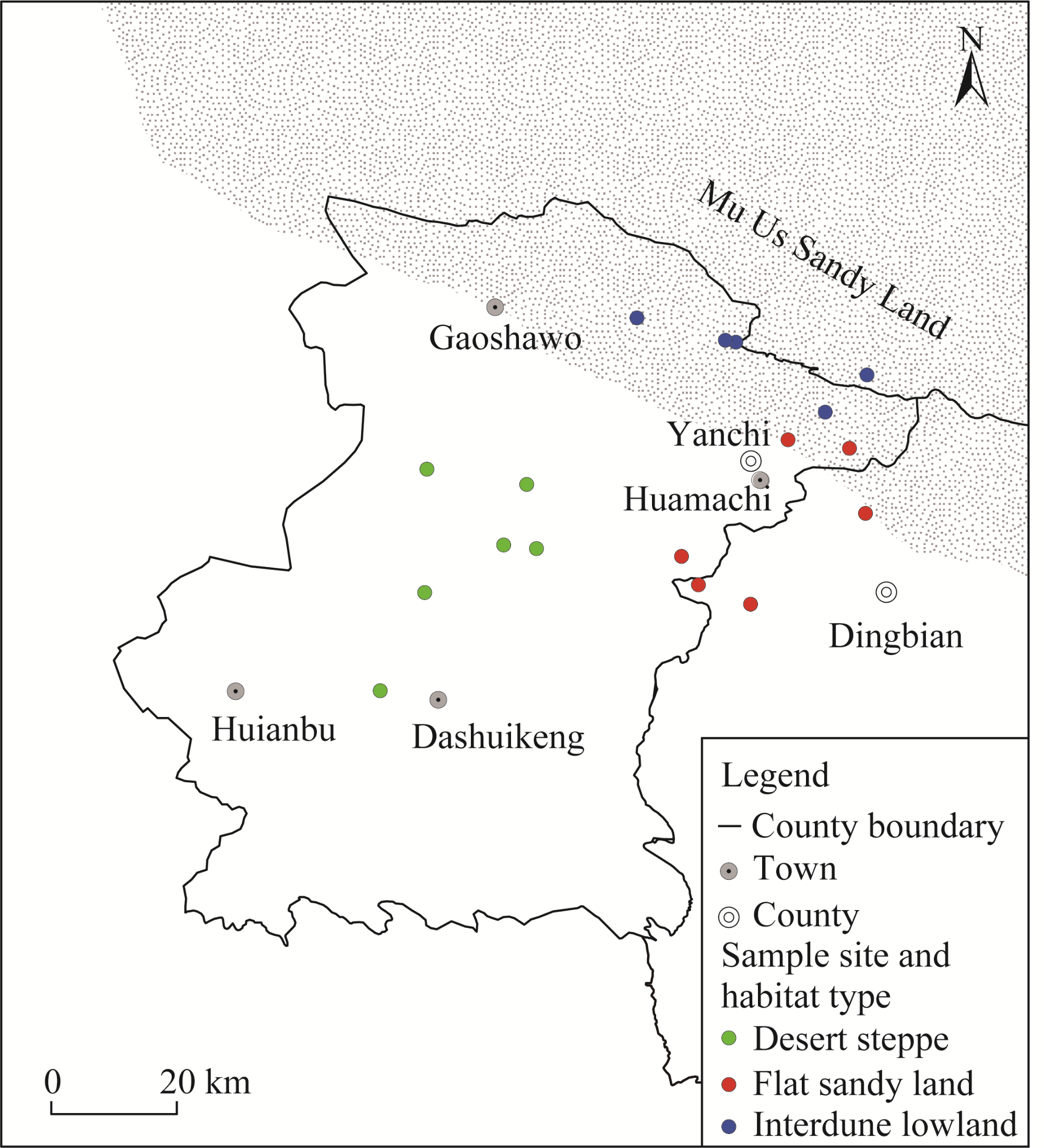
The study area is mainly located in the desert steppe zone in Yanchi County, China (37°35′- 38°04′N, 106°57′-107°58′E) at an altitude of 1270-1590 m a.s.l. (Fig. 1). The study area lies in a transitional ecotone between the Loess Plateau and the Ordos Platform, exhibiting a typical continental monsoonal climate in the mid-temperate zone. Annual average temperature was 8.3°C during 1958-2017, with large differences between winter and summer. Average annual precipitation was 297 mm, with most rainfall occurring from July to September, while the potential evaporation reaches 2136 mm (Du et al., 2021). Average annual sunshine duration is 2876 h, and average frost-free period is 139 d. Windy season spans from March to May, and average wind velocity is 2.8 m/s. The main vegetation types include desert steppe, psammophytic vegetation, and halophytic vegetation. The main soil types are aeolian sand, sierozem, and saline-alkali soils. S. alopecuroides in Yanchi County accounts for more than 50.00% of the total distribution area (Zhang et al., 2006).
Fig. 1 Map of the study area with sampling sites and habitat types

2.2 Experimental design

Preliminary field investigations and literature reviews revealed that three habitat types of S. alopecuroides in the study area was included: interdune lowland (IL), flat sandy land (FSL), and desert steppe (DS) (Li, 2007; Shao and Li, 2016). A total of 17 populations of S. alopecuroides were investigated in the three types of habitats, including 6 populations in FSL, 6 populations in DS, and 5 populations in IL (Fig. 1). At each sampling site, 2 plots with an area of 20 m×20 m were established. We established 5 quadrats with an area of 1 m×1 m in each plot according to the five-point method (4 in the corners and 1 in the center of the plot). Vegetation cover, PD, and height of S. alopecuroides were measured in each quadrat. Vegetation cover was assessed using quadrats method. PD of S. alopecuroides was obtained through counting the number of ramets (Qian et al., 2021). Mean height of S. alopecuroides was determined by randomly selecting several ramets within each quadrat and measuring their heights with a ruler under natural conditions.

2.3 Bud bank investigation

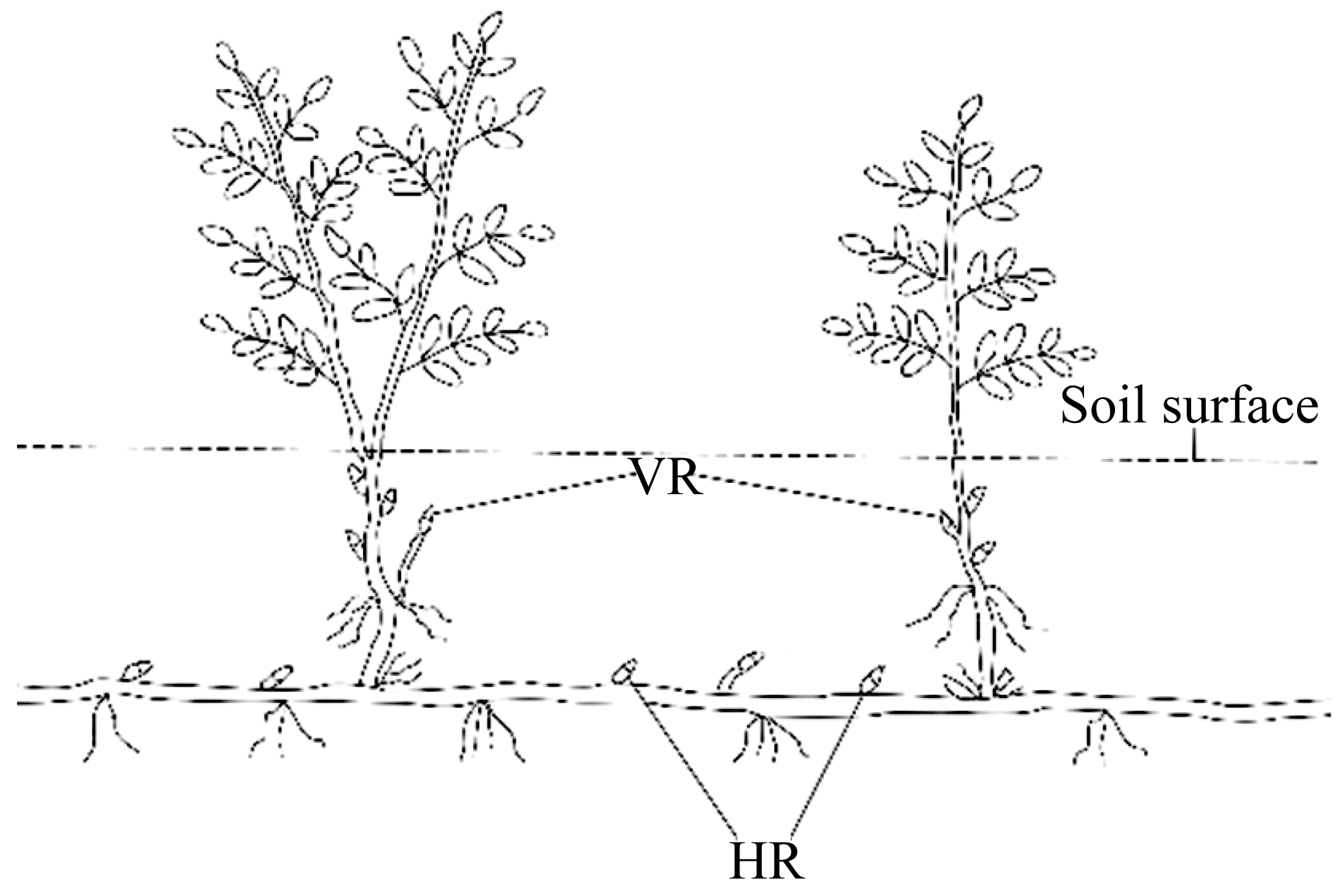
All belowground rhizomes of S. alopecuroides in each established 1 m×1 m quadrat were excavated to a depth of 50 cm. During the sampling process, we preserved the connection between aboveground stems and belowground rhizomes to facilitate the identification of rhizome bud types based on their location. Soil attached to the rhizomes was gently removed. The bud bank samples were then placed in labeled plastic bags, and transferred to the laboratory promptly for counting (Kleyer et al., 2008). As preliminary survey results showed that more than 90.00% of the rhizome buds of S. alopecuroides were distributed within 0-30 cm soil depth in all three habitat types, counts of different types of rhizome buds were conducted at 10-cm depth intervals within the same depth range. Only turgid and light-colored bud were counted, while necrotic (decayed or withered) tissues were discarded. Rhizome buds of S. alopecuroides were divided into horizontal and vertical rhizome buds following the classification of Phragmites australis (Cav.) Trin. ex Steud. bud types (Liu et al., 2014). Horizontal rhizome buds refer to the bud situated on the nodes and top of a horizontal rhizome exhibiting an angle ≤90° relative to the rhizome axis, which can develop into a new rhizome and daughter ramet. Vertical rhizome buds refer to the bud located on the vertical rhizome (including the tip of vertical rhizome), form acute angles or aligns linearly with the rhizome axis (Fig. 2). Vertical rhizome buds are located at the apex of vertical rhizome, and most of them develop into a new daughter ramet. Similar to the buds of P. australis, rhizome buds of S. alopecuroides are morphologically identifiable and can be counted directly (Liu et al., 2014). In addition, dry weights of horizontal rhizomes, buds, and roots on horizontal rhizomes were summed to calculate the total horizontally oriented biomass (horizontal biomass), and those of vertical rhizomes, buds, and roots on vertical rhizomes were summed to calculate the total vertically oriented biomass (vertical biomass) (Liu et al., 2014). The spacer length of rhizomes was measured with a ruler.
Fig. 2 Schematic representation of belowground rhizome bud in Sophora alopecuroides L. HR, horizontal rhizome bud; VR, vertical rhizome bud.

2.4 Measurement of soil properties

Soil samples were collected using a soil corer from three quadrats along the diagonal of each plot in a depth of 0-30 cm during the bud bank investigation. After removing stones and root material, we air-dried, crushed, and sieved soil samples for subsequent analysis. Soil particle size fractions were obtained with a laser particle sizer (Mastersizer-3000, Malvern Instruments Ltd., Worcestershire, UK) to determine coarse sand (CS; 0.25-2.00 mm) content. Total nitrogen (TN) content was quantified with an elemental analyzer (Flash 2000 CHNS/O, Thermo Scientific™, Carlsbad, USA). Soil electrical conductivity (EC) was determined with a conductivity meter (MC 5021, INESA Scientific Instrument, Shanghai, China) at a 5:1 (v:w) ratio of deionized water to soil. Soil organic matter (SOM) content was assessed by the potassium dichromate oxidation-titration method (Bao, 2000). In addition, undisturbed soil was collected from two depths (0-10 and 10-30 cm) to measure soil water content (SWC) and bulk density (BD). SWC and BD were measured using the oven-drying method.

2.5 Data analysis

A one-way analysis of variance (ANOVA) was used to assess differences in the densities of horizontal, vertical, and total rhizome buds of S. alopecuroides across the three habitat types. The same statistical approach was applied to compare soil physical-chemical properties (CS, SOM, EC, BD, SWC, and TN content) among the three habitat types. Prior to analysis, data were log-transformed to conform to the normal distribution assumption of ANOVA. Fisher's least significant difference (LSD) tests at the 0.05 significance level were used for post hoc comparisons between means. Statistical data are expressed as mean±standard error. Figures presenting data were performed using Origin v.2025 software. One-way ANOVA was carried out with SPSS v.27.0 software.
Redundancy analysis (RDA) was employed to assess the relationships between belowground bud banks and environmental factors (population characteristics and soil physical-chemical properties). Bud bank density data were log-transformed and standardized prior to analysis. The analysis was used to calculate the explanatory power and relative contribution of individual environmental factor. RDA and graphing were conducted using CANOCO v.5.0 software.

3 Results

3.1 Bud density and composition

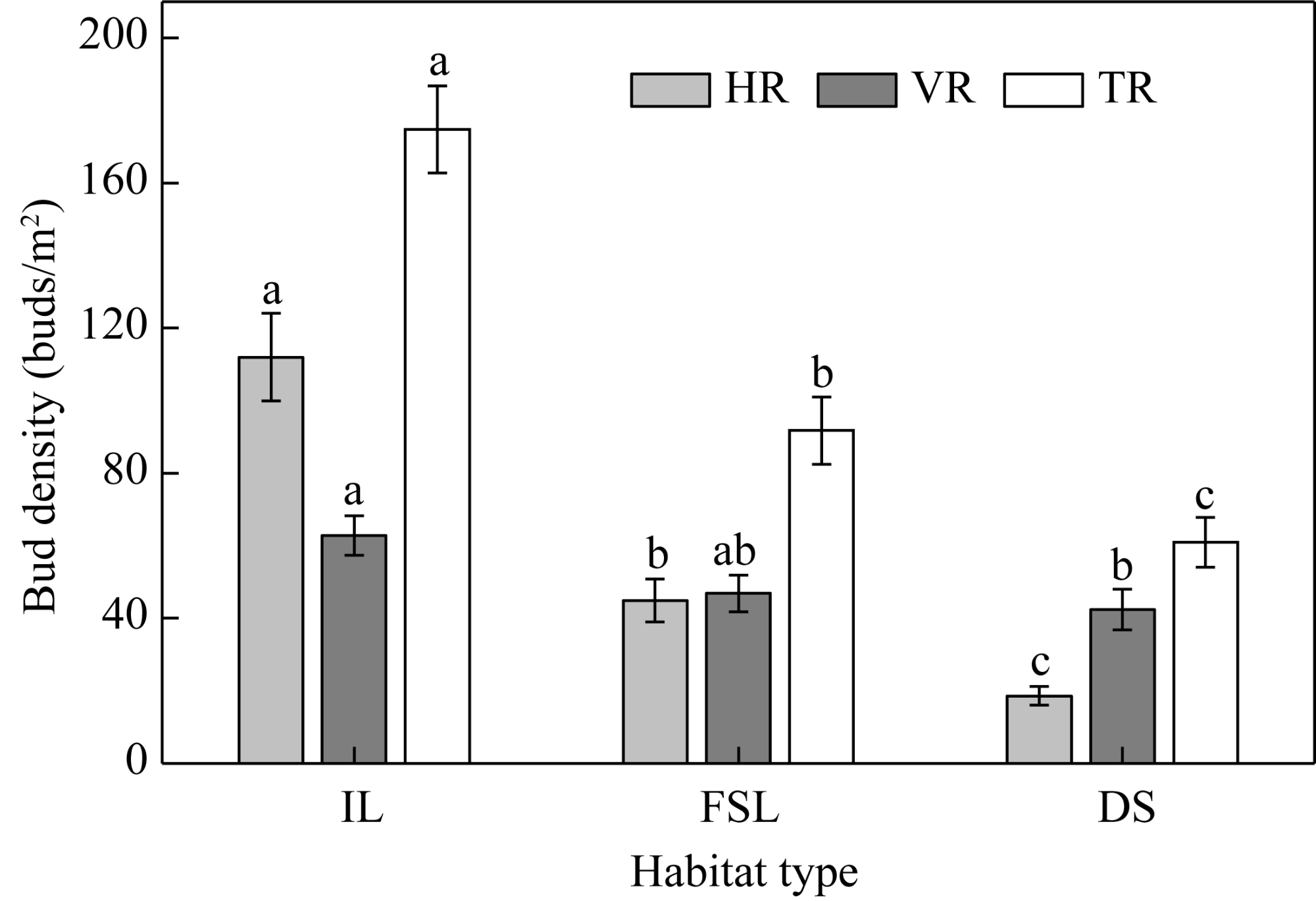
Total and horizontal rhizome bud densities of S. alopecuroides at the population level showed significant differences among different habitat types (Fig. 3). Total rhizome bud density in IL (175 buds/m2) was significantly greater than those in FSL (92 buds/m2) and DS (61 buds/m2), and there was also a significant difference between the latter two habitats (P<0.05). Horizontal rhizome bud density in IL (112 buds/m2) was significantly greater than those in FLS (45 buds/m2) and DS (19 buds/m2), and it significantly differed between the latter two habitats (P<0.05). No significant differences were observed in the vertical rhizome bud density among the three habitats (P>0.05).
Fig. 3 Bud densities of HR, VR, and total rhizome bud (TR) of S. alopecuroides at the population level. IL, interdune lowland; FSL, flat sandy land; DS, desert steppe. Different lowercase letters within the same type of rhizome bud indicate significant differences among the three habitats at P<0.05 level. Bars are standard errors.
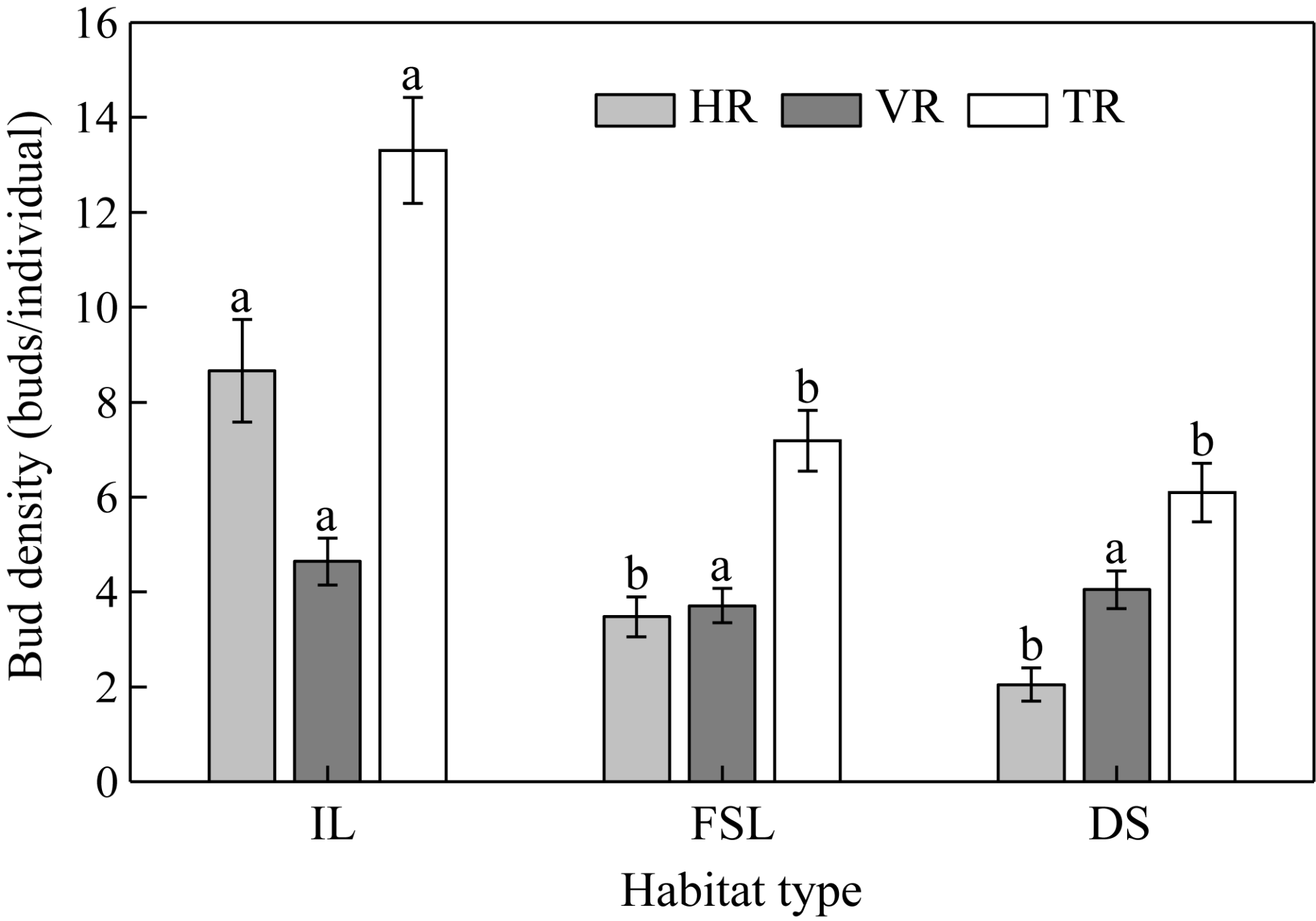
Densities of total, horizontal, and vertical rhizome buds of S. alopecuroides at the individual level showed similar differences among the three habitats as those observed at the population level (Fig. 4). Total rhizome bud density at the individual level in IL (13 buds/individual) was significantly greater than those in FSL (7 buds/individual) and DS (6 buds/individual) (P<0.05), whereas it did not show significant differences between the latter two habitats (P>0.05). The horizontal rhizome bud density at the individual level in IL (9 buds/individual) was significantly greater than those in FSL (4 buds/individual) and DS (2 buds/individual), and there was also no significant difference between the latter two habitats (P>0.05). Vertical rhizome bud density at the individual level did not show significant differences among the three habitats (P>0.05).
Fig. 4 Bud densities of HR, VR, and TR of S. alopecuroides at the individual level. Different lowercase letters within the same type of rhizome bud indicate significant differences among the three habitats at P<0.05 level. Bars are standard errors.
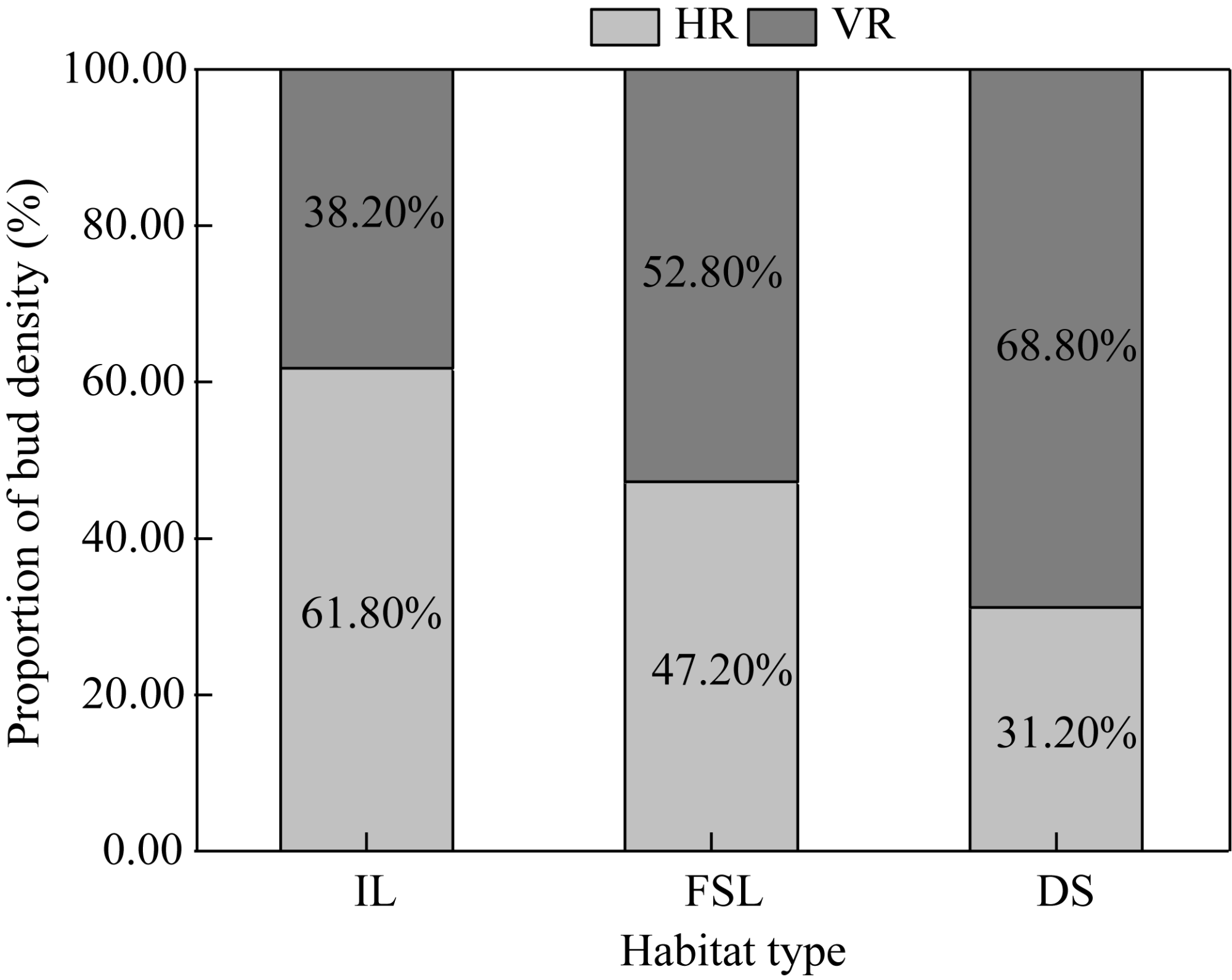
We detected differences in the composition of rhizome buds of S. alopecuroides among the three habitats (Fig. 5). Horizontal rhizome buds constituted the majority (61.80%) of the total rhizome buds in IL. Proportion of vertical rhizome buds in the total rhizome buds was slightly higher than that of horizontal rhizome buds in FSL. In DS, vertical rhizome buds were the predominant type, accounting for 68.80% of the total rhizome buds.
Fig. 5 Proportions of HR and VR density in the three habitats

3.2 Vertical distribution of bud bank

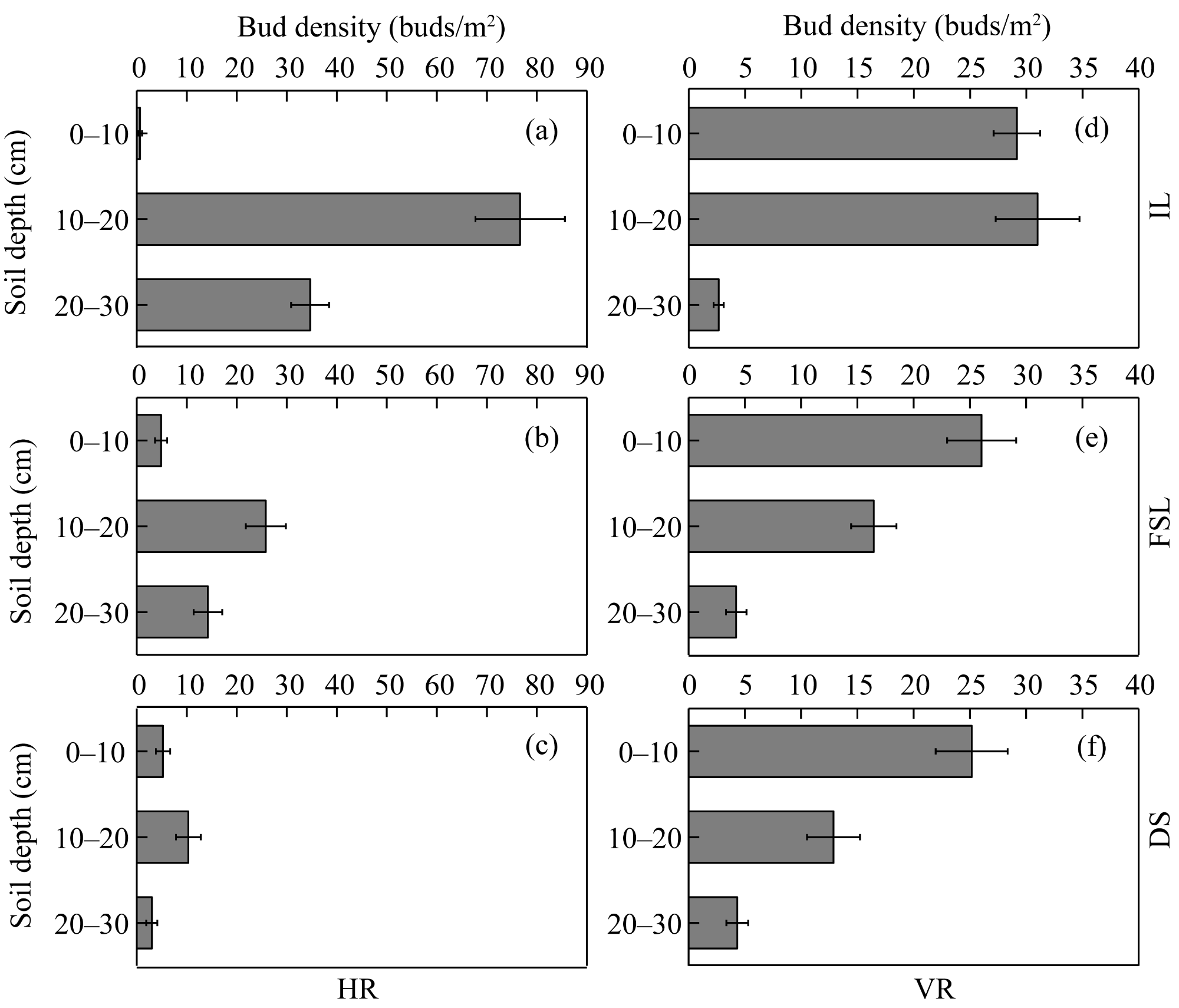
Horizontal rhizome buds were primarily concentrated in 10-30 cm soil depth of IL and FSL, and in 0-20 cm soil depth in DS. Vertical rhizome buds, on the other hand, were primarily concentrated in 0-20 cm soil depth across all the three habitats (Fig. 6).
Fig. 6 Bud densities of HR (a-c) and VR (d-f) in different soil depths in the three habitats. Bars are standard errors.
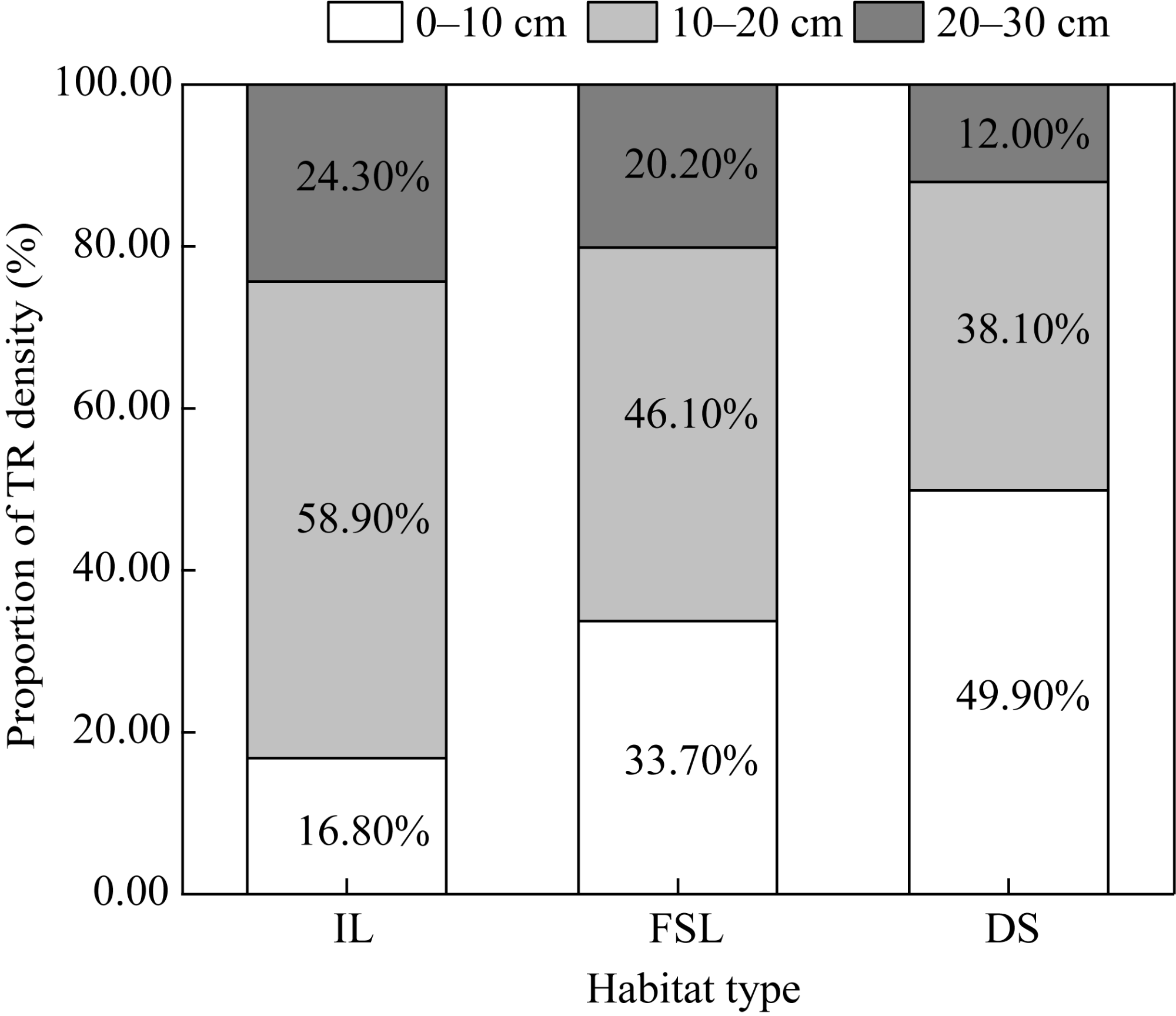
We detected differences in the proportion of total rhizome bud density in 0-10, 10-20, and 20-30 cm soil depths among the three habitats. In DS, about 50.00% of the buds were distributed in 0-10 cm surface soil with a high proportion of vertical rhizome buds. In FSL, about 30.00% of buds were distributed in 0-10 cm soil depth. However, in IL, more than 80.00% of the buds were distributed in 10-30 cm soil depth, including almost all horizontal rhizome buds (Figs. 6 and 7).
Fig. 7 Proportions of TR density in different soil depths in the three habitats

3.3 Effect of environmental factors on bud bank

We detected differences in population characteristics and soil physical-chemical properties among the three habitats (Table 1). PD did not exhibit significant differences among the three habitats (P>0.05), whereas PH was significantly higher in IL than in FSL and DS (P<0.05). CS content and EC in IL were significantly higher than those in FSL and DS (P<0.05). CS content in FSL was significantly higher than that in DS, while the trend of EC was the opposite. SWC in 0-10 cm and 10-30 cm soil depths in DS were significantly higher than those in IL and FSL, but there was no significant difference between the latter two habitats. SOM and TN contents in IL and DS were significantly higher than those in FSL, but there was no significant difference between the former two habitats. Soil BD did not exhibit significant differences among the three habitats (P>0.05).
Table 1 One-way analysis of variation (ANOVA) of vegetation and soil properties in the three habitats
Environmental factor Parameter Habitat type F P
IL FSL DS
Vegetation
properties
PD (buds/m2) 14±1.30a 13±0.70ab 11±0.90b 2.592 0.084
PH (cm) 37.12±1.72a 32.24±0.91b 30.42±1.43b 3.733 0.030
Soil
properties
CS (%) 36.74±3.44a 19.69±1.94b 12.59±1.07c 17.414 <0.001
BD (g/cm3) 1.57±0.02a 1.57±0.01a 1.55±0.01a 0.368 0.694
SWC1 (0-10 cm) (%) 3.30±0.43b 3.74±0.22ab 4.67±0.43a 3.239 0.039
SWC2 (10-30 cm) (%) 6.27±1.00ab 5.65±0.34b 7.08±0.46a 3.494 0.048
EC (dS/m) 0.25±0.03a 0.10±0.00c 0.15±0.02b 15.057 <0.001
SOM (g/kg) 2.59±0.25a 2.31±0.12b 2.68±0.06a 6.091 0.037
TN (g/kg) 0.373±0.021a 0.336±0.007b 0.370±0.012a 3.671 0.041

Note: PD, population density; PH, plant height; CS, coarse sand; BD, bulk density; SWC, soil water content; EC, electrical conductivity; SOM, soil organic matter; TN, total nitrogen; IL, interdune lowland; FSL, flat sandy land; DS, desert steppe. Different lowercase letters with the same row indicate significant differences among different habitat types at P<0.05 level. Mean±SE. The abbreviations are the same in the following figure and tables.

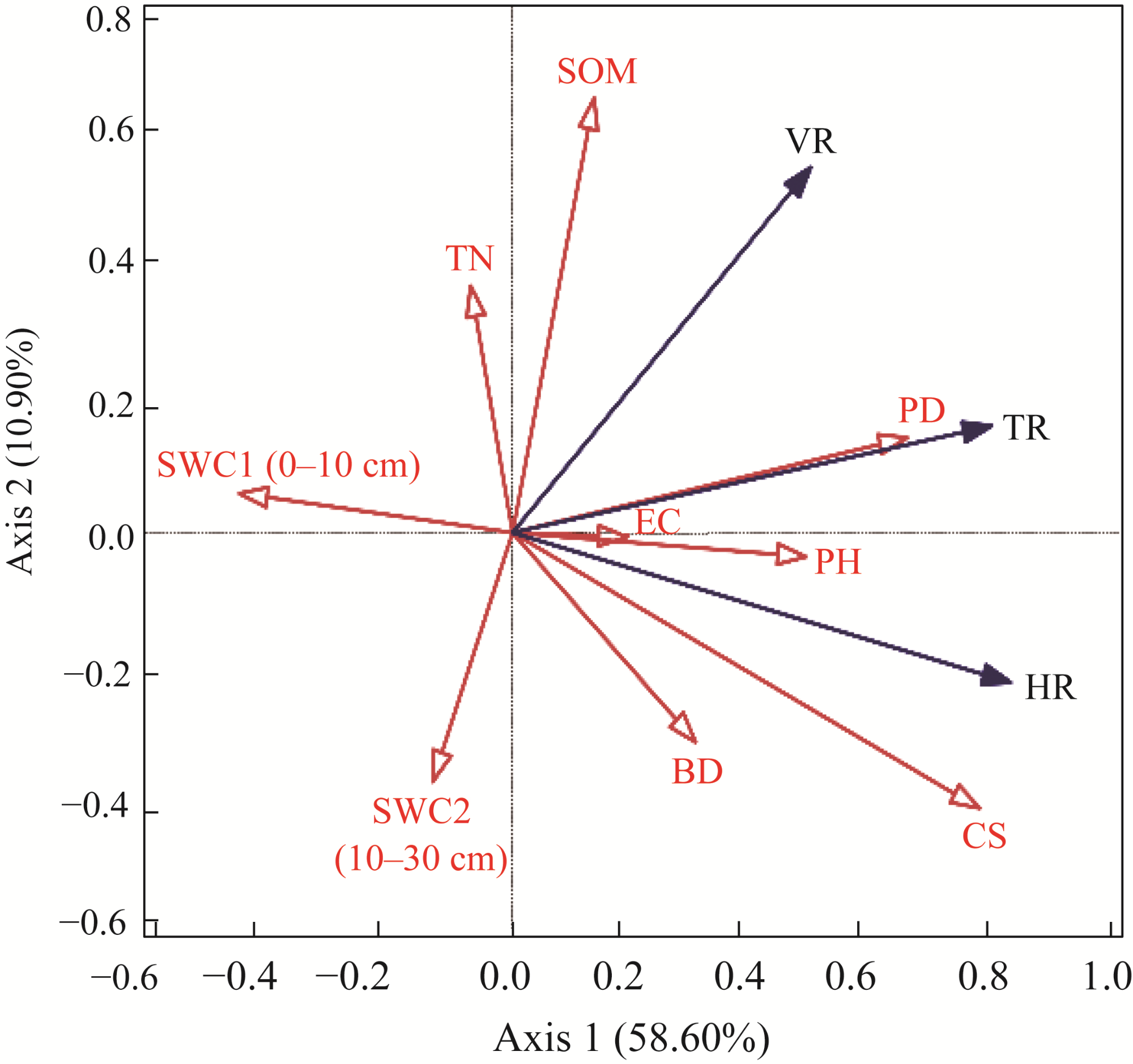
Environmental factors, including aboveground vegetation and soil properties, together explained 69.50% of the total variation in belowground bud bank density of S. alopecuroides in the whole desert steppe zone. We found that CS content, PD, and SOM content were correlated significantly with the bud bank density (P<0.05). Among these, CS content was the most influential factor, accounting for 38.20% of the variation, followed by PD and SOM content, which explained 10.10% and 9.10%, respectively. Collectively, soil and vegetation properties contributed 83.00% and 17.00%, respectively, to the total variation of bud bank (Fig. 8; Table 2).
Fig. 8 Redundancy analysis (RDA) for the relationship between bud densities of HR, VR, and TR of S. alopecuroides and environmental factors. The red arrows denote environmental variables, and the blue arrows denote bud types.
Table 2 Explanatory power and contribution of environmental factors to the total variation in bud density of S. alopecuroides
Environmental factor Parameter Explanatory power (%) Contribution (%) F P
Soil properties
CS 38.20 54.90 14.900 0.002**
SOM 9.10 13.10 4.700 0.028*
EC 6.10 8.70 3.500 0.060
SWC1 (0-10 cm) 2.70 3.90 1.600 0.222
BD 0.90 1.20 0.500 0.568
SWC2 (10-30 cm) 0.50 0.70 0.300 0.750
TN 0.30 0.40 0.200 0.808
Vegetation properties PD 10.10 14.40 4.500 0.032*
PH 1.80 2.60 1.100 0.364

Note: *, P<0.05 level; **, P<0.01 level.

Aboveground vegetation and soil properties also affected the densities of different bud types. Horizontal rhizome bud density showed a significantly positive correlation with CS content, whereas vertical rhizome bud density showed a significantly positive correlation with SOM and PD. Additionally, the total rhizome bud density exhibited a significantly positive correlation with CS content, PD, and SOM content (Fig. 8; Table 3).
Table 3 Explanatory power and contribution of environmental factors to the total variation in horizontal rhizome bud (HR), vertical rhizome bud (VR), and total rhizome bud (TR) densities of S. alopecuroides
Bud type Environmental factor Parameter Explanatory
power (%)
Contribution
(%)
F P
HR Soil properties CS 57.20 75.40 32.000 0.002**
SWC2 4.70 6.20 3.300 0.086
SOM 3.50 4.70 2.700 0.108
EC 2.00 2.60 1.400 0.274
SWC1 0.40 0.50 0.300 0.638
BD 0.20 0.30 0.200 0.676
TN 0.20 0.30 0.200 0.712
Vegetation properties PD 6.10 8.00 3.800 0.066
PH 1.60 2.00 1.000 0.358
Total 75.90 100.00
VR Soil properties SOM 20.80 36.10 6.300 0.020*
SWC2 8.30 14.40 3.600 0.056
BD 5.90 10.30 2.700 0.096
EC 1.30 2.20 0.600 0.426
CS 1.10 2.00 0.500 0.542
TN 0.30 0.70 0.200 0.631
SWC1 0.10 0.20 <0.100 0.814
Vegetation properties PD 19.70 34.10 7.600 0.016*
PH <0.10 <0.10 <0.100 1.000
Total 57.50 100.00
TR Soil properties CS 33.00** 48.50 11.800 0.004**
SOM 11.50 16.90 6.000 0.026*
EC 7.20 10.60 4.300 0.062
SWC1 1.10 1.60 0.600 0.438
BD 0.30 0.50 0.200 0.678
SWC2 0.10 0.20 0.100 0.728
TN <0.10 0.10 <0.100 0.848
Vegetation properties PD 13.20 19.30 5.600 0.030*
PH 1.60 2.30 0.900 0.334
Total 68.00 100.00

Note: *, P<0.05 level; **, P<0.01 level.

4 Discussion

4.1 Bud density and composition

In sandy land ecosystems, rhizomatous clonal plants have dense rhizomes and strong vegetative spread, forming a large rhizome network system (Maun, 1998; Yu et al., 2004; Liu et al., 2016). Soil particle size fraction is a critical factor determining rhizome expansion, with the higher sand content increasing soil porosity and reducing resistance to rhizome extension (Yu et al., 2008). Our findings revealed that total and horizontal rhizome bud densities in IL and FSL were significantly greater than those in DS. This result can be attributed to the significantly higher CS content in IL and FSL than in DS, which facilitates the diffuse growth of rhizomes and favors the formation and development of belowground buds in these habitats. Our results were consistent with those of Yang (2005), who found that sandy soil was more conducive to the spread growth of rhizomes than clay and sandy-clay soils, and increased bud density, rhizome branching number, and branching intensity of S. alopecuroides. We also found that total and horizontal rhizome bud densities of S. alopecuroides in IL were significantly greater than that in FSL. In contrast to FSL, IL are usually located in low-lying areas between dunes. The sparse rainfall rarely forms runoff on the surface of the dunes, and while it infiltrates, it also seeps laterally into IL (Jansen et al., 2001; Bakker et al., 2006; Liu et al., 2007; Wu et al., 2021b). High groundwater level and low surface wind speed result in superior habitat conditions such as high soil nutrients and SWC in a depth of 10-30 cm in IL (Table 2). Adequate soil water and nutrient conditions can promote the growth of plant belowground buds, and increase significantly the density of belowground bud banks (Klimeš and Klimešová, 1999; Qian et al., 2021; Zuo et al., 2023). Therefore, S. alopecuroides exhibited greater bud bank density in IL than in FSL.
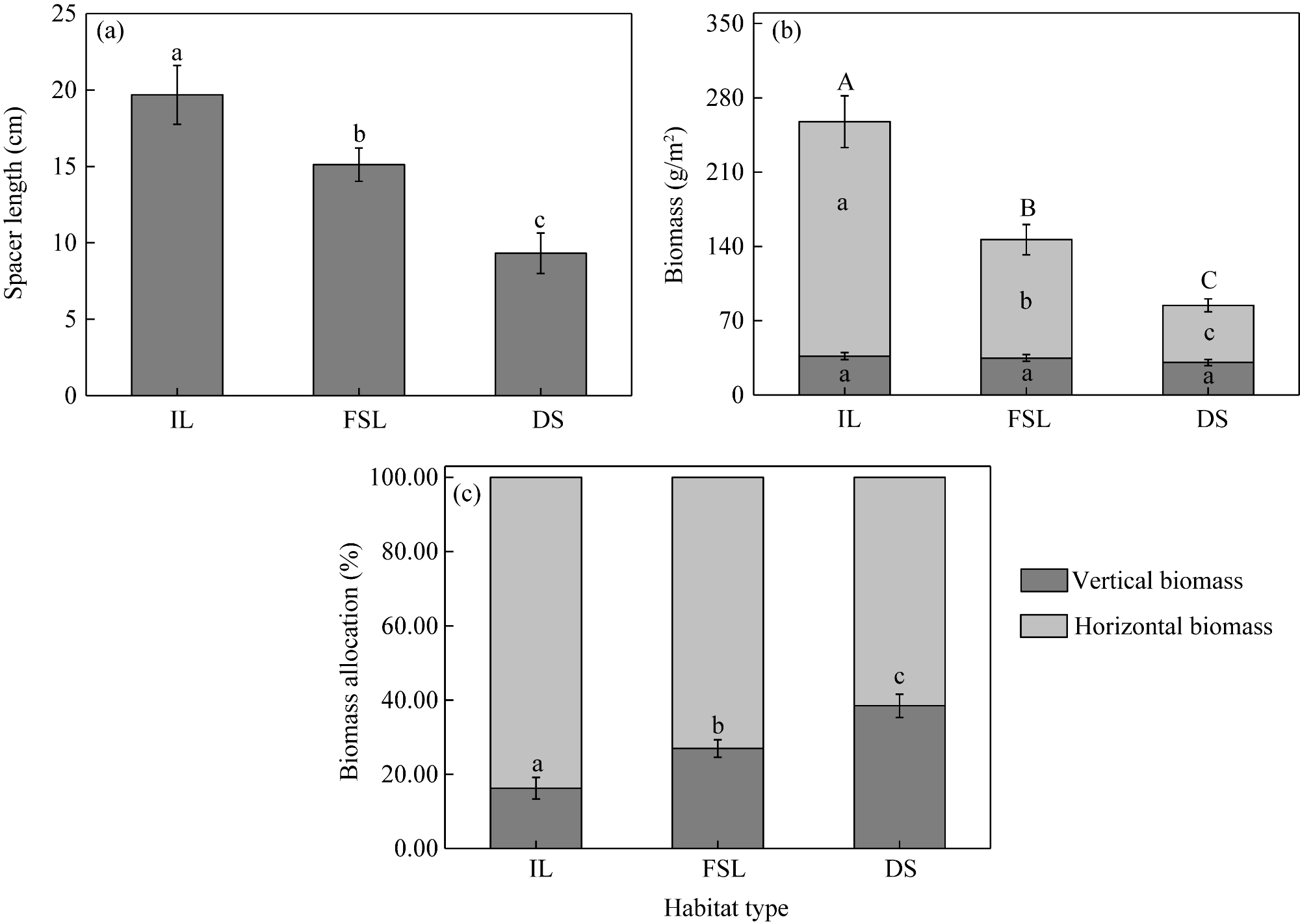
Rhizomatous clonal plants have the advantage of morphological plasticity, which enables them to produce rhizomes of varying lengths under heterogeneous resources, thereby forming a continuum of clonal configurations from phalanx to guerrilla, and even producing two extreme configurations within the same species (Schmid and Harper, 1985; Ye et al., 2006; Ott and Hartnett, 2015; Zuo et al., 2023). Previous research has shown that the rhizomatous grass P. australis exhibited plasticity in horizontal rhizome extension and vertical ramet growth under aeolian disturbance. Specifically, under sand burial conditions, P. australis tended to expand horizontally and produced rhizome-based ramets. While, under severe wind erosion conditions, the species exhibited a phalanx growth pattern characterized by reduced rhizomes length, increased biomass allocation to vertical rhizomes, and a shift toward tiller-derived ramets formation (Liu et al., 2014). In this study, S. alopecuroides exhibited the highest proportion of vertical rhizome biomass to the total rhizome biomass and the shortest rhizome spacer length in DS, and the lowest corresponding proportion and maximum spacer length in IL and moderate levels for both traits in FSL (Fig. S1). These results indicated that morphological plasticity existed between horizontal extension and vertical growth of S. alopecuroides in the whole desert steppe zone, which allowed the phalanx growth form in DS, and guerrilla growth form in IL. Research has demonstrated that the size and composition of belowground bud bank can reflect and even determine the clonal growth configuration of the plant (Klimešová and Klimeš, 2007; Zhang et al., 2009). Horizontal rhizome buds, serving as reserve resources for horizontally oriented expansion, represent the guerilla growth form, while vertical rhizome buds, acting as vertically oriented growth potential, represent the phalanx growth form. Therefore, vertical rhizome buds were dominant in DS, while horizontal rhizome buds predominated in IL. This distribution pattern of rhizome buds may also be a strategy for S. alopecuroides to adapt to variable environment of the desert steppe transition zone. In IL, horizontal rhizome buds could help S. alopecuroides spread laterally to escape stressful microsites and find favorable ones; in DS, vertical rhizome buds are conducive to making a better use of local resources and outcompeting other species.
Fig. S1 Spacer length (a), biomass (b), and biomass allocation (c) for Sophora alopecuroides L. in the three habitats. IL, interdune lowland; FSL, flat sandy land; DS, desert steppe. Lowercase letters indicate significant differences in spacer length, horizontal and vertical biomass, and biomass allocation among the three habitats at P<0.05 level, while uppercase letters indicate significant differences in total biomass (horizontal biomass+vertical biomass) among the three habitats at P<0.05 level. Bars are standard errors.

4.2 Vertical distribution of bud bank

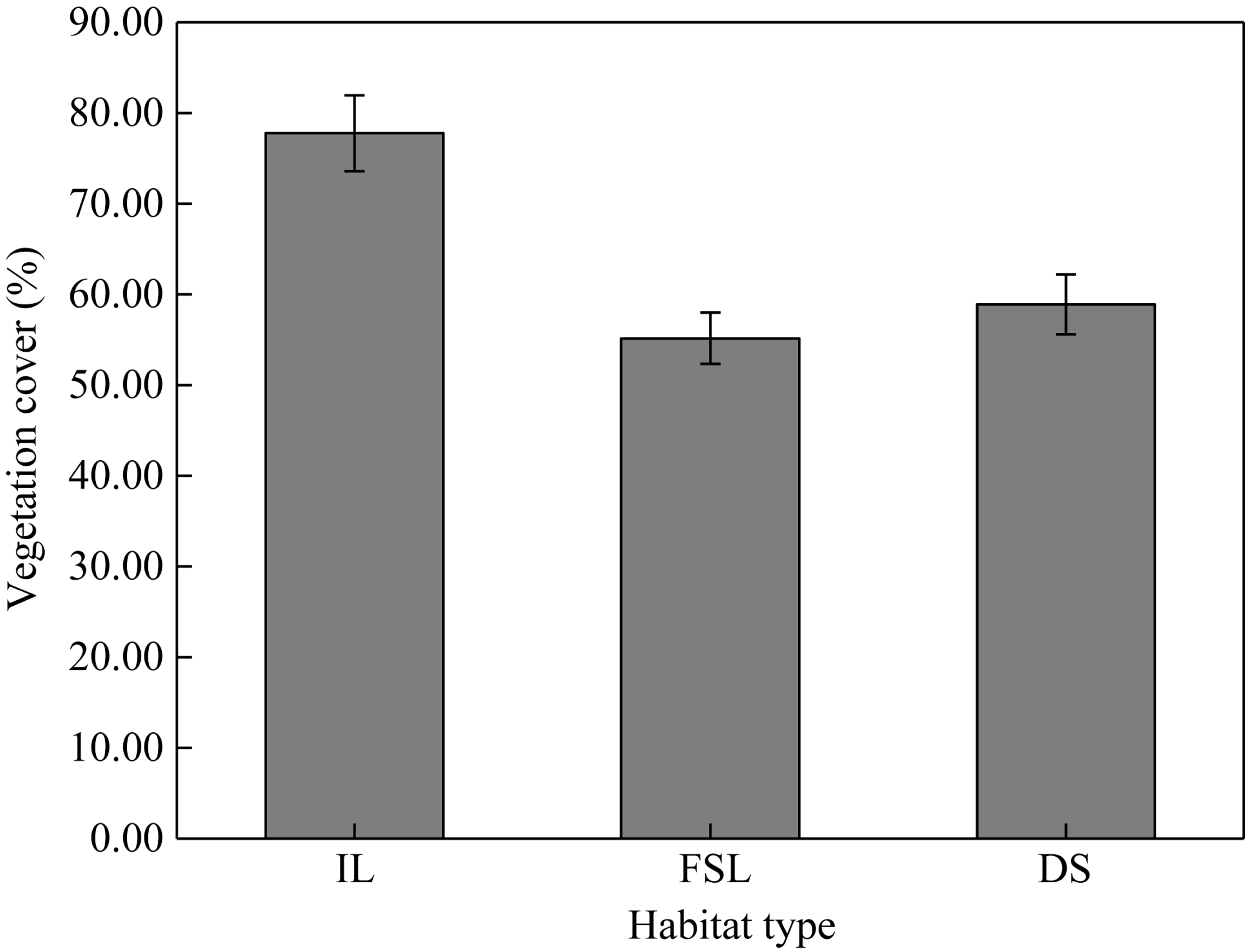
In this study, more than 80.00% of the total rhizome buds in IL distributed in 10-30 cm soil depth. By contrast, the same depth accounted for a lower proportion of total rhizome buds in FSL and DS, with 66.30% and 50.10%, respectively (Fig. 7). This observed difference in rhizome bud distribution among the three habitats may be caused by the different degrees of desertification impact in the study area. Changes in soil particle size fractions can, to a certain extent, indicate the severity of soil desertification. The higher the CS in the soil is, the more severe the soil desertification becomes, and the more frequent wind erosion and sand burial disturbance occur (Su et al., 2004; Xu et al., 2008). Vegetation cover in the study area exceeded 40.00% (Fig. S2), and the disturbance from sand burial was greater than that from wind erosion. In this study, IL had the highest CS content, followed by FSL, while DS had the lowest. Therefore, IL had the deepest distribution of belowground buds, followed by FSL, while DS had the shallowest distribution of belowground buds. In addition, frequent human activities such as overgrazing and indiscriminate harvesting by digging in recent decades have severely affected the growth of plants, making belowground buds easily exposed to shallow soil layers. This impact of human activities may be another reason for the shallow distribution of buds observed in DS (Klimešová and Klimeš, 2007; Dalgleish and Hartnett, 2009).
Fig. S2 Vegetation cover in the three habitats. Bars are standard errors.

4.3 Factors affecting bud density

Aboveground vegetation and soil characteristics are recognized as the two primary drivers shaping bud bank dynamics (Rusch et al., 2011; Li et al., 2023). In this study, habitat-specific population traits and soil physical-chemical properties influenced the bud bank demography of S. alopecuroides. Our results indicated that soil CS, SOM, and PD were the principal factors influencing bud bank size and composition of S. alopecuroides. Specifically, horizontal rhizome buds showed greater dependence on soil CS content, whereas vertical rhizome buds were more dependent on SOM content and PD. Similar to rhizomatous grasses, the rhizomes of S. alopecuroides grow in both horizontal and vertical directions. The horizontal rhizomes have a stronger expansion capacity, and are responsible for spreading clones into benign patches to escape from adverse ones, while vertical rhizomes primarily function to utilize local resources and to maintain population persistence (Marbà and Duarte 1998; van Kleunen and Fischer, 2001; Zhang et al., 2009). The clonal organ (rhizome, tiller, or root) on which buds are borne serves as an important indicator for characterizing the resource acquisition potential of plants (Ott and Hartnett, 2012; Clarke et al., 2013; Klimešová et al., 2018). Buds on horizontal rhizome are usually situated deeper in the soil and are mainly used to extend the rhizomes (Combroux and Bornette, 2004). Soils with a higher CS content could reduce the resistance to rhizome expansion. Thus, horizontal rhizome buds are more adaptive to IL with severe aeolian activities. In contrast, buds on vertical rhizome are generally situated in the upper layer of soil and primarily function in using local resources due to their limited expansion capacity. Vertical rhizome buds show greater sensitivity to the nutrient content in the surrounding habitats (Passioura, 1988). Thus, vertical rhizome buds are more adaptive to DS with abundant nutrient resources. Numerous studies have demonstrated that vegetation density is a key factor influencing belowground bud bank density, although this effect varies and depends on specific habitat and bud bank types (Zhang et al., 2019; Qian et al., 2021; Wu et al., 2022; Te et al., 2025). For example, Wu et al. (2020) identified vegetation density as the primary determinant of bud bank dynamics in the interdune lowlands of fixed sand dunes, with tiller buds showing a stronger correlation with vegetation density. Our study also revealed that, in addition to SOM content, vertical rhizome buds were highly associated with PD.
Furthermore, SWC is the primary factor limiting plant growth and reproduction in the whole desert steppe zone (Alamusa et al., 2017). However, our study revealed that SWC contributes little to the belowground bud bank of S. alopecuroides. This limited contribution may be attributed to the high vegetation coverage in the study area, which maintains elevated and relatively uniform soil moisture conditions (Wu et al., 2020). Therefore, SWC does not appear to be a key limiting factor for plant vegetative propagation in the study area. Similar conclusions were reported in the analysis of the relationship between plant belowground bud banks and environmental factors in the fixed dunes of Horqin Sandy Land in China (Zhang et al., 2019; Wu et al., 2020).

4.4 Limitations and prospects

Although this study characterized the density and vertical distribution of belowground bud bank of S. alopecuroides, and preliminarily identified the key environmental drivers, the results are still subject to certain limitations. First, bud bank density is strongly influenced by factors such as precipitation and plant phenology, and therefore exhibits pronounced inter-annual and seasonal variability (Klimešová and Klimeš, 2007; Zhang et al., 2009; Ferraro et al., 2022; He et al., 2025). However, our analysis relied on a single static survey during the peak growing season, which limited our ability to capture the dynamic patterns of bud bank gains and losses across seasons and years. Second, the use of RDA allowed us to examine only linear relationships between environmental factors and bud bank density, preventing a deeper exploration of potential nonlinear responses and complex regulatory networks. Given these limitations, future work should incorporate continuous, multi-seasonal or multi-year monitoring to quantify how seasonal and inter-annual fluctuations shape bud bank density. In parallel, increasing the sample size will improve the statistical power needed for advanced analytical approaches such as structural equation modeling (SEM). Based on such datasets, we can use SEM to construct more comprehensive causal pathways linking soil properties and vegetation characteristics, thereby disentangling the direct effects of soil properties on the bud bank from the indirect effects mediated by vegetation characteristics, and ultimately elucidating the regulatory mechanisms of underlying changes in S. alopecuroides bud bank density.

5 Conclusions

The belowground bud bank of S. alopecuroides differed significantly among the three habitats, and exhibited habitat-specific differentiation of horizontal and vertical rhizome buds in the whole desert steppe zone. Specifically, horizontal rhizome buds predominated in IL, where they were positively associated with soil CS content, suggesting adaptation for lateral expansion and resource foraging under frequent wind disturbance. In contrast, vertical rhizome buds were more abundant in DS, where they were positively associated with SOM content and PD, underscoring their role in local resource utilization and competitive persistence. This functional differentiation reflects a key adaptive mechanism supporting species persistence in heterogeneous desert environments. Accordingly, future desertification control and ecosystem management efforts should adopt habitat-specific strategies. In IL, maintaining higher CS content and reducing disturbance would facilitate lateral spread and sand stabilization; in DS, enhancing soil carbon would enlarge bud bank size, thereby strengthening vegetation resilience and stability.

Conflict of interest

The authors declare that they have no known competing financial interests or personal relationships that could have appeared to influence the work reported in this paper.

Acknowledgements

This study was funded by the National Natural Science Foundation of China (42207539, 42377470) and the Key Research and Development Project of Science and Technology Plan of Gansu Province in China International Science and Technology Cooperation Project (25YFWA009). We gratefully acknowledge the anonymous reviewers and editors for their insightful comments and constructive suggestions that significantly improved the quality of the manuscript. We also thank Dr. Kathryn B PIATEK for providing English language editing support on this article.

Author contributions

Conceptualization: ZHANG Dongmei, KANG Jianjun; Methodology: ZHANG Dongmei, LUO Weicheng; Investigation and formal analysis: ZHANG Dongmei, REN Heng; Visualization: GAO Jinlong; Writing - original draft preparation: ZHANG Dongmei; Writing - review and editing: ZHANG Dongmei, LUO Weicheng, KANG Jianjun; Funding acquisition: ZHANG Dongmei, KANG Jianjun; Resources: LUO Weicheng. All authors approved the manuscript.
[1]
Alamusa, Yang T T, Cao J, et al. 2017. Soil moisture influences vegetation distribution patterns in sand dunes of the Horqin Sandy Land, Northeast China. Ecological Engineering, 105: 95-101.

DOI

[2]
An H, Tang Z S, Keesstra S, et al. 2019. Impact of desertification on soil and plant nutrient stoichiometry in a desert grassland. Scientific Reports, 9(1): 9422, doi: 10.1038/s41598-019-45927-0.

[3]
Bakker C, Van Bodegom P M, Nelissen H J M, et al. 2006. Plant responses to rising water tables and nutrient management in calcareous dune slacks. Plant Ecology, 185: 19-28.

DOI

[4]
Bao S D. 2000. Soil and Agricultural Chemistry Analysis. Beijing: China Agriculture Press. (in Chinese)

[5]
Benson E J, Hartnett D C. 2006. The role of seed and vegetative reproduction in plant recruitment and demography in tallgrass prairie. Plant Ecology, 187: 163-178.

DOI

[6]
Buxbaum C A Z, Vanderbilt K. 2007. Soil heterogeneity and the distribution of desert and steppe plant species across a desert-grassland ecotone. Journal of Arid Environments, 69(4): 617-632.

DOI

[7]
Carter D L, VanderWeide B L, Blair J M. 2012. Drought‐mediated stem and below‐ground bud dynamics in restored grasslands. Applied Vegetation Science, 15(4): 470-478.

DOI

[8]
Chen X S, Xie Y H, Deng Z M, et al. 2011. A change from phalanx to guerrilla growth form is an effective strategy to acclimate to sedimentation in a wetland sedge species Carex brevicuspis (Cyperaceae). Flora, 206(4): 347-350.

[9]
Clarke P J, Lawes M J, Midgley J J, et al. 2013. Resprouting as a key functional trait: how buds, protection and resources drive persistence after fire. New Phytologist, 197(1): 19-35.

DOI PMID

[10]
Combroux I, Bornette G. 2004. Propagule banks and regenerative strategies of aquatic plants. Journal of Vegetation Science, 15(1): 13-20.

DOI

[11]
Dalgleish H J, Kula A R, Hartnett D C, et al. 2008. Responses of two bunchgrasses to nitrogen addition in tallgrass prairie: the role of bud bank demography. American Journal of Botany, 95(6): 672-680.

DOI PMID

[12]
Dalgleish H J, Hartnett D C. 2009. The effects of fire frequency and grazing on tallgrass prairie productivity and plant composition are mediated through bud bank demography. Plant Ecology, 201: 411-420.

DOI

[13]
Dong M, Alaten B. 1999. Clonal plasticity in response to rhizome severing and heterogeneous resource supply in the rhizomatous grass Psammochloa villosa in an Inner Mongolian dune, China. Plant Ecology, 141: 53-58.

DOI

[14]
Dong Y W, Guo Z Y, Ma Q, et al. 2023. Soil moisture rather than soil nutrient regulates the belowground bud bank of rhizomatous species Psammochloa villosa in arid sand dunes. Phyton-International Journal of Experimental Botany, 92(5): 1301-1309.

[15]
Du L T, Zeng Y J, Ma L L, et al. 2021. Effects of anthropogenic revegetation on the water and carbon cycles of a desert steppe ecosystem. Agricultural and Forest Meteorology, 300: 108339, doi: 10.1016/j.agrformet.2021.108339.

[16]
Ferraro A, Silva G S, Martins A R, et al. 2022. Seasonality affects the below‐ground bud bank dynamics of the Cerrado. Journal of Vegetation Science, 33(6): e13165, doi: 10.1111/jvs.13165.

[17]
Hartnett D C, Setshogo M P, Dalgleish H J. 2006. Bud banks of perennial savanna grasses in Botswana. African Journal of Ecology, 44(2): 256-263.

DOI

[18]
He K Y, Zhou Q Q, He L, et al. 2025. Phenological stage and nitrogen input coordinately regulate bud bank dynamics and shoot allocation in an alpine clonal perennial grass. Plants, 14(14): 2164, doi: 10.3390/plants14142164.

[19]
Hu X W, Wu Y P, Wang Y R. 2009. Different requirements for physical dormancy release in two populations of Sophora alopecuroides relation to burial depth. Ecological Research, 24: 1051-1056.

DOI

[20]
Hutchings M J, Kroon H. 1994. Foraging in plants: The role of morphological plasticity in resource acquisition. Advances in Ecological Research, 25: 159-238.

[21]
Jansen A J M, Eysink F T W, Maas C. 2001. Hydrological processes in a Cirsio-Molinietum fen meadow: Implications for restoration. Ecological Engineering, 17(1): 3-20.

DOI

[22]
Kleyer M, Bekker R M, Knevel I C, et al. 2008. The LEDA Traitbase: A database of life-history traits of the Northwest European flora. Journal of Ecology, 96(6):1266-1274.

DOI

[23]
Klimeš L, Klimešová J, Hendricks R, et al. 1997. Clonal plant architecture:A comparative analysis of form and function. In: DeKroon H, VanGroenendael J. The Ecology and Evolution of Clonal Plants. Leiden: Backhuys Publishers, 1-29.

[24]
Klimeš L, Klimešová J. 1999. Root sprouting in Rumex acetosella under different nutrient levels. Plant Ecology, 141: 33-39.

DOI

[25]
Klimešová J, Klimeš L. 2007. Bud banks and their role in vegetative regeneration-A literature review and proposal for simple classification and assessment. Perspectives in Plant Ecology Evolution & Systematics, 8(3): 2115-2126.

[26]
Klimešová J, Martínková J, Ottaviani G. 2018. Belowground plant functional ecology: Towards an integrated perspective. Functional Ecology, 33(6): 995-1009.

[27]
Li R. 2007. Grassland vegetation dynamics in the farming-pastoral ecotones in the north of China:Taking Yanchi County in Ningxia as an example. PhD Dissertation. Beijing: Beijing Forestry University. (in Chinese)

[28]
Li W C, Huang A P, Zhou T C, et al. 2023. Patterns and drivers of the belowground bud bank in alpine grasslands on the Qinghai-Tibet Plateau. Frontiers in Plant Science, 13: 1095864, doi: 10.3389/fpls.2022.1095864.

[29]
Liu B, Liu Z M, Wang L X, et al. 2014. Responses of rhizomatous grass Phragmites communis to wind erosion: Effects on biomass allocation. Plant and Soil, 380: 389-398.

DOI

[30]
Liu F H, Liu J, Dong M. 2016. Ecological consequences of clonal integration in plants. Frontiers in Plant Science, 7: 770, doi: 10.3389/fpls.2016.00770.

PMID

[31]
Liu Z M, Li X L, Yan Q L, et al. 2007. Species richness and vegetation pattern in interdune lowlands of an active dune field in Inner Mongolia, China. Biological Conservation, 140(1-2): 29-39.

DOI

[32]
Luo W C, Zhao W Z, Liu B. 2016. Growth stages affect species richness and vegetation patterns of nebkhas in the desert steppes of China. CATENA, 137: 126-133.

DOI

[33]
Luo W C, Zhao W Z. 2019. Adventitious roots are key to the development of nebkhas in extremely arid regions. Plant and Soil, 442: 471-482.

DOI

[34]
Luo W T, Muraina T O, Griffin-Nolan R J. 2023. High below‐ground bud abundance increases ecosystem recovery from drought across arid and semiarid grasslands. Journal of Ecology, 111(9): 2038-2048.

DOI

[35]
Ma Q, Qian J Q, Tian L, et al. 2019. Responses of belowground bud bank to disturbance and stress in the sand dune ecosystem. Ecological Indicators, 106: 105521, doi: 10.1016/j.ecolind.2019.105521.

[36]
Marbà N, Duarte C M. 1998. Rhizome elongation and seagrass clonal growth. Marine Ecology Progress Series, 174: 269-280.

DOI

[37]
Maun M A. 1998. Adaptations of plants to burial in coastal sand dunes. Canadian Journal of Botany, 76: 713-738.

DOI

[38]
Ott J P, Hartnett D C. 2012. Contrasting bud bank dynamics of two co-occurring grasses in tallgrass prairie: Implications for grassland dynamics. Plant Ecology, 213: 1437-1448.

DOI

[39]
Ott J P, Hartnett D C. 2015. Bud bank dynamics and clonal growth strategy in the rhizomatous grass, Pascopyrum smithii. Plant Ecology, 216: 395-405.

[40]
Passioura J B. 1988. Water transport in and to roots. Annual Review of Plant Physiology and Plant Molecular Biology, 39: 245-265.

DOI

[41]
Qian J Q, Wang Z W, Klimešová J, et al. 2017. Differences in below-ground bud bank density and composition along a climatic gradient in the temperate steppe of northern China. Annals of Botany, 120(5): 755-764.

DOI PMID

[42]
Qian J Q, Wang Z W, Klimešová J, et al. 2021. Belowground bud bank and its relationship with aboveground vegetation under watering and nitrogen addition in temperate semiarid steppe. Ecological Indicators, 125: 107520, doi: 10.1016/j.ecolind.2021.107520.

[43]
Qian J Q, Guo Z Y, Muraina T O, et al. 2022. Legacy effects of a multi-year extreme drought on belowground bud banks in rhizomatous vs bunchgrass-dominated grasslands. Oecologia, 198(3): 763-771.

DOI PMID

[44]
Rudgers J A, Chung Y A, Maurer G E, et al. 2018. Climate sensitivity functions and net primary production: A framework for incorporating climate mean and variability. Ecology, 99(3): 576-582.

DOI PMID

[45]
Rusch G M, Wilmann B, Klimešová J, et al. 2011. Do clonal and bud bank traits vary in correspondence with soil properties and resource acquisition strategies? Patterns in alpine communities in the Scandian Mountains. Folia Geobotanica, 46: 237-254.

DOI

[46]
Safriel U. 2009. Deserts and desertification: Challenges but also opportunities. Land Degradation & Development, 20(4): 353-366.

DOI

[47]
Schmid B, Harper J L. 1985. Clonal growth in grassland perennials: I. Density and pattern-dependent competition between plants with different growth forms. The Journal of Ecology, 73(3): 793-808.

DOI

[48]
Shao W S, Li G Q. 2016. Plant community composition and characteristics of Sophora alopecuroides and Achnatherum splendens in Yanchi County of Ningxia. Guizhou Agricultural Sciences, 44(6): 159-163. (in Chinese)

[49]
Su Y Z, Zhao H L, Zhao W Z, et al. 2004. Fractal features of soil particle size distribution and the implication for indicating desertification. Geoderma, 122(1): 43-49.

DOI

[50]
Sui Y, He W M, Pan X, et al. 2011. Partial mechanical stimulation facilitates the growth of the rhizomatous plant Leymus secalinus: Modulation by clonal integration. Annals of Botany, 107(4): 693-697.

DOI

[51]
Te N W, Griffin‐Nolan R J, Slette I J, et al. 2025. Grassland bud and shoot demographic responses to single and recurrent droughts vary across an aridity gradient. Ecology, 106(2): e70002, doi: 10.1002/ecy.7000.

[52]
Tomlinson K W, O'Connor T G. 2004. Control of tiller recruitment in bunchgrasses: Uniting physiology and ecology. Functional Ecology, 18(4): 489-496.

DOI

[53]
van Kleunen M, Fischer M. 2001. Adaptive evolution of plastic foraging responses in a clonal plant. Ecology, 82(12): 3309-3319.

DOI

[54]
Wang J F, Gao S, Lin J X, et al. 2010. Summer warming effects on biomass production and clonal growth of Leymus chinensis. Crop and Pasture Science, 61: 670-676.

DOI

[55]
Wang R Z, Deng X X, Gao Q X, et al. 2020. Sophora alopecuroides L.: An ethnopharmacological, phytochemical, and pharmacological review. Journal of Ethnopharmacology, 248: 112172, doi: 10.1016/j.jep.2019.112172.

[56]
Wang Z W, Xu A K, Zhu T C. 2008. Plasticity in bud demography of a rhizomatous clonal plant Leymus chinensis L. in response to soil water status. Journal of Plant Biology, 51: 102-107.

DOI

[57]
Wu J, Wang Y C, Ma Q, et al. 2020. Roles of aboveground vegetation, soil properties, and disturbance in determining belowground bud bank in sand dune ecosystems. Environmental and Experimental Botany, 178: 104155, doi: 10.1016/j.envexpbot.2020.104155.

[58]
Wu J, Chen X, Xu L, et al. 2021a. The spatial pattern of the belowground bud bank and its responses to soil water status in the interdune lowlands of active sand dunes of Inner Mongolia, China. Restoration Ecology, 29(2): e13223, doi: 10.1111/rec.13223.

[59]
Wu J, Zhou Q L, Yu F H, et al. 2022. Changes and determinants of belowground bud banks along an interdune lowland sequence. Flora, 289: 152026, doi: 10.1016/j.flora.2022.152026.

[60]
Wu X, Zheng X J, Mu X H, et al. 2021b. Differences in allometric relationship of two dominant woody species among various terrains in a desert region of central Asia. Frontiers in Plant Science, 12: 754887, doi: 10.3389/fpls.2021.754887.

[61]
Xu D M, Wang K, Long S P. 2008. Vegetation characteristics and soil properties in the transitional zone in south fringe of Mu Us Sandy Land. Bulletin of Soil and Water Conservation, 28(5): 39-47. (in Chinese)

[62]
Yang H. 2005. The biological and ecological basis of population diffusion of Sophora alopecuroides. MSc Thesis. Urumqi: Xinjiang University. (in Chinese)

[63]
Yao Y F, Zhao Z N, Wei X R, et al. 2019. Effects of shrub species on soil nitrogen mineralization in the desert-loess transition zone. CATENA, 173: 330-338.

DOI

[64]
Ye X H, Yu F H, Dong M. 2006. A trade-off between guerrilla and phalanx growth forms in Leymus secalinus under different nutrient supplies. Annals of Botany, 98(1): 187-191.

DOI

[65]
Yu D F, Zheng X Y, Mu C S, et al. 2022. Irrigation and nitrogen application promote population density through altered bud bank size and components in Leymus chinensis. Agronomy, 12(6): 1436, doi: 10.3390/agronomy12061436.

[66]
Yu F H, Chen Y F, Dong M. 2002. Clonal integration enhances survival and performance of Potentilla anserina, suffering from partial sand burial on Ordos Plateau, China. Evolutionary Ecology, 15: 303-318.

DOI

[67]
Yu F H, Dong M, Krüsi B. 2004. Clonal integration helps Psammochloa villosa survive sand burial in an inland dune. New Phytologist, 162(3): 697-704.

DOI

[68]
Yu F H, Wang N, He W M, et al. 2008. Adaptation of rhizome connections in drylands: Increasing tolerance of clones to wind erosion. Annals of Botany, 102(4): 571-577.

DOI

[69]
Zhang D M, Zhao W Z, Luo W C. 2019. Effect of the population density on belowground bud bank of a rhizomatous clonal plant Leymus secalinus in Mu Us sandy land. Journal of Plant Research, 132(1): 69-80.

DOI

[70]
Zhang J T, Mu C S, Wang D L, et al. 2009. Shoot population recruitment from a bud bank over two seasons of undisturbed growth of Leymus chinensis. Botany, 87(12): 1242-1249.

DOI

[71]
Zhang Q Y, Zhang G R, Yin C A, et al. 2006. Protection and utilization of Sophora alopecuroides L. as medicinal plants resource. World Science and Technology-Modernization of Traditional Chinese Medicine, 8(1): 104-108. (in Chinese)

[72]
Zhao J D, Shi C Y, Wang D Y, et al. 2023. Sand burial, rather than salinity or drought, is the main stress that limits the germination ability of Sophora alopecuroides L. seed in the desert steppe of Yanchi, Ningxia, China. Plants, 12(15): 2766, doi: 10.3390/plants12152766.

[73]
Zuo S N, Liu L, Zhou C Y, et al. 2023. Effects of nitrogen limitation on Leymus chinensis clonal growth form and bud bank. Flora, 298: 152186, doi: 10.1016/j.flora.2022.152186.

Outlines

/