• Haq S MARIFATUL , 1, * ,
  • Darwish MOHAMMED 1 ,
  • Waheed MUHAMMAD 1 ,
  • Kumar MANOJ 2 ,
  • Siddiqui H MANZER 3 ,
  • Bussmann W RAINER 1, 4
展开

收稿日期: 2024-01-29

  修回日期: 2024-05-28

  录用日期: 2024-06-21

  网络出版日期: 2025-08-14

Predicting potential invasion risks of Leucaena leucocephala (Lam.) de Wit in the arid area of Saudi Arabia

  • Haq S MARIFATUL , 1, * ,
  • Darwish MOHAMMED 1 ,
  • Waheed MUHAMMAD 1 ,
  • Kumar MANOJ 2 ,
  • Siddiqui H MANZER 3 ,
  • Bussmann W RAINER 1, 4
Expand
  • 1Department of Ethnobotany, Institute of Botany, Ilia State University, Tbilisi 0162, Georgia
  • 2The Centre of Excellence on Sustainable Land Management (CoE-SLM), Indian Council of Forestry Research and Education, Dehradun 248006, India
  • 3Department of Botany and Microbiology, College of Science, King Saud University, Riyadh 11451, Saudi Arabia
  • 4Department of Botany, State Museum for Natural History, Karlsruhe 76133, Germany
* Haq S MARIFATUL (E-mail: )

Received date: 2024-01-29

  Revised date: 2024-05-28

  Accepted date: 2024-06-21

  Online published: 2025-08-14

本文引用格式

Haq S MARIFATUL , Darwish MOHAMMED , Waheed MUHAMMAD , Kumar MANOJ , Siddiqui H MANZER , Bussmann W RAINER . [J]. Journal of Arid Land, 2024 , 16(7) : 983 -999 . DOI: 10.1007/s40333-024-0020-4

Abstract

The presence of invasive plant species poses a substantial ecological impact, thus comprehensive evaluation of their potential range and risk under the influence of climate change is necessary. This study uses maximum entropy (MaxEnt) modeling to forecast the likelihood of Leucaena leucocephala (Lam.) de Wit invasion in Saudi Arabia under present and future climate change scenarios. Utilizing the MaxEnt modeling, we integrated climatic and soil data to predict habitat suitability for the invasive species. We conducted a detailed analysis of the distribution patterns of the species, using climate variables and ecological factors. We focused on the important influence of temperature seasonality, temperature annual range, and precipitation seasonality. The distribution modeling used robust measures of area under the curve (AUC) and receiver-operator characteristic (ROC) curves, to map the invasion extent, which has a high level of accuracy in identifying appropriate habitats. The complex interaction that influenced the invasion of L. leucocephala was highlighted by the environmental parameters using Jackknife test. Presently, the actual geographic area where L. leucocephala was found in Saudi Arabia was considerably smaller than the theoretical maximum range, suggesting that it had the capacity to expand further. The MaxEnt model exhibited excellent prediction accuracy and produced reliable results based on the data from the ROC curve. Precipitation and temperature were the primary factors influencing the potential distribution of L. leucocephala. Currently, an estimated area of 216,342 km2 in Saudi Arabia was at a high probability of invasion by L. leucocephala. We investigated the potential for increased invasion hazards in the future due to climate change scenarios (Shared Socioeconomic Pathways (SSPs) 245 and 585). The analysis of key climatic variables, including temperature seasonality and annual range, along with soil properties such as clay composition and nitrogen content, unveiled their substantial influence on the distribution dynamic of L. leucocephala. Our findings indicated a significant expansion of high risk zones. High-risk zones for L. leucocephala invasion in the current climate conditions had notable expansions projected under future climate scenarios, particularly evident in southern Makkah, Al Bahah, Madina, and Asir areas. The results, backed by thorough spatial studies, emphasize the need to reduce the possible ecological impacts of climate change on the spread of L. leucocephala. Moreover, the study provides valuable strategic insights for the management of invasion, highlighting the intricate relationship between climate change, habitat appropriateness, and the risks associated with invasive species. Proactive techniques are suggested to avoid and manage the spread of L. leucocephala, considering its high potential for future spread. This study enhances the overall comprehension of the dynamics of invasive species by combining modeling techniques with ecological knowledge. It also provides valuable information for decision-making to implement efficient conservation and management strategies in response to changing environmental conditions.

1 Introduction

Invasive plant species represent a significant threat to ecosystems globally, with profound implications for biodiversity and ecosystem functioning (Hughes et al., 2020; Dubyna et al., 2023). Among these invaders, Leucaena leucocephala (Lam.) de Wit stands out for its aggressive growth and adaptability to various environments, including arid areas (Sharma et al., 2022). Understanding the potential distribution patterns of L. leucocephala is paramount for effective management and conservation efforts, particularly in areas susceptible to invasion (Kariyawasam et al., 2020). Researchers choose the maximum entropy (MaxEnt) model for its effectiveness in predicting species distribution based on environmental variables, making it a suitable tool for assessing the potential spread of invasive species like L. leucocephala (Mainali et al., 2015). In many taxonomic groups, the number of established alien species has increased over the past few centuries. Changes in land use, increased commerce and transportation, and the availability of new source pools have all contributed to these patterns in biological invasions (Dubyna et al., 2023). Biological invasions are not only a result of globalization but also a primary driver of global biodiversity change, and are aggravated by global climate change. Thus, researchers must comprehend upcoming developments in alien species dynamics (Pyšek et al., 2020). L. leucocephala native to Mexico and Central America, is now widely naturalized in tropical and subtropical areas globally (Sharma et al., 2022). Despite its ornamental value, it poses ecological challenges as an invasive species, rapidly spreading and outcompeting native flora (Raghu et al., 2005). Its prolific seed production and adaptability contribute to its invasive nature (Chiou et al., 2013), impacting biodiversity and soil quality. Managing its spread is crucial to mitigate ecological harm (Sharma et al., 2022).
Alien invasive species have significant negative effects on biodiversity and human livelihoods, and their prevalence is still growing around the world (Waheed et al., 2023b). Comprehending the anticipated paths of alien invasion, their implications, and the underlying factors has not received much attention in the arid areas of Saudi Arabia (Alharthi et al., 2023). Evaluation and comprehension of the potential future effects of alien species on biodiversity and human livelihoods, however, are still inadequate. In contrast, extensive evaluations of the likely future implications have been created for other factors that contribute to the global loss of biodiversity, such as land use changes and climate change. For several reasons, this gap still exists. Biological invasions are complex and always depend on specific circumstances, similar to other aspects of global change (Kumar et al., 2019; Dubyna et al., 2023). The scarcity of data has posed significant limitations to the construction of generic prediction models, particularly when considering huge geographic areas, extended periods, and the multitude of alien species spanning several taxonomic categories and habitat types (Mainali et al., 2015). Different invaded locations have different consequences of alien species on human livelihoods and biodiversity. The invasion of plants is made more context-specific by altitudinal shifts, climate fluctuations, and the use values of invasive species. As a result, measuring and modeling the spread of these plants become challenging. Hence, across scales, management of biological invasion becomes more difficult (Kourantidou et al., 2022). Finally, there are generally significant uncertainties regarding the range and abundance of a given alien species (or group of alien species) in response to specific environmental or human induced changes. The extent to which variations in distribution will impact interactions with local biota and human activities is also uncertain (Linders et al., 2019). Thus, quantitative predictions of how biological invasions would develop in the coming decades under various trajectories of environmental change are lacking.
With environmental data derived from meteorological stations, ground observation, satellite imaging, multivariate statistics, and rule-based techniques have been frequently employed (Martinez et al., 2020). Species' potential geographic distribution under present or future conditions is projected using these models (Arshad et al., 2022). Despite significant variations among models for predicting changes in ranges of the same species in response to environmental changes, these findings have been used to influence policy (Beas-Luna et al., 2020; Waheed et al., 2023a). In this study, we utilized the MaxEnt v.3.4.4 to analyze and predict optimal habitats for L. leucocephala within the studied area. We present an assessment of how specific causes may affect biological invasions in different situations and under different climate change scenarios. Employing the MaxEnt model, this study aimed to elucidate pivotal inquiries concerning the distribution dynamics of L. leucocephala within Saudi Arabia, we specifically address the following issues: (1) what is the proportional increase in biological invasions of L. leucocephala in the area from the existing habitat in recent years? (2) which environmental variable has the most influence on the future spread of L. leucocephala? and (3) how fast would L. leucocephala spread in the future climate change scenarios? By answering these questions, the study aims to shed light on the existing and future distribution patterns of L. leucocephala in Saudi Arabia. It also explains the factors that influence its invasion.

2 Materials and methods

2.1 Species occurrence data

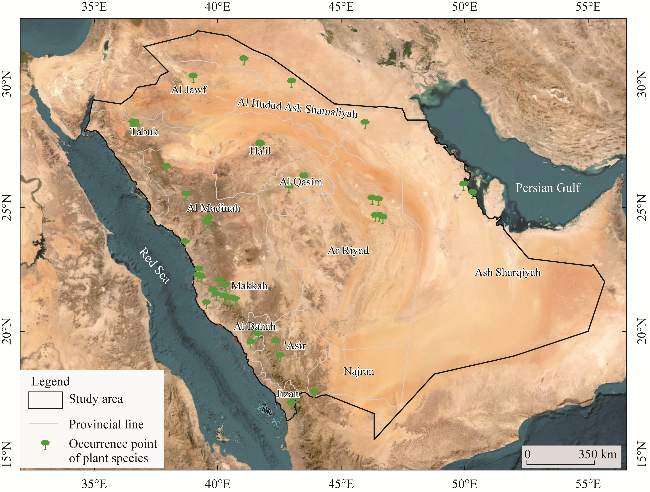
Comprehensive datasets of 95 distribution records for L. leucocephala in Saudi Arabia were collected during the period from May 2021 to December 2023 (Fig. 1). The data were sourced from various reliable references, including the Global Biodiversity Information Facility (GBIF; https://www.gbif.org/), pertinent literature, and field investigation. To record the distribution and prevalence of L. leucocephala, we carried out the field survey. Using the quadrat method, we conducted a thorough assessment of L. leucocephala invasion areas. To fully understand the patterns of spread, our survey included both places that had been previously identified as invasive as well as nearby areas. Within the examined areas, we set up 10 m×10 m field plots and randomly positioned them to guarantee representative sampling of the terrain. The amount of L. leucocephala cover inside these plots was recorded. To ensure data accuracy, we filtered out duplicate and ambiguous entries and cross-referenced coordinate information. To enhance prediction accuracy and prevent overfitting due to closely distribution points, we constructed a buffer area with a radius equivalent to the resolution of environment variables at each distribution point. As a result, we guaranteed that each 5 km×5 km grid contained only one distribution point. Finally, the datasets contained 53 longitude and latitude coordinates of L. leucocephala, which were all evenly converted to decimal format (Fig. 2).
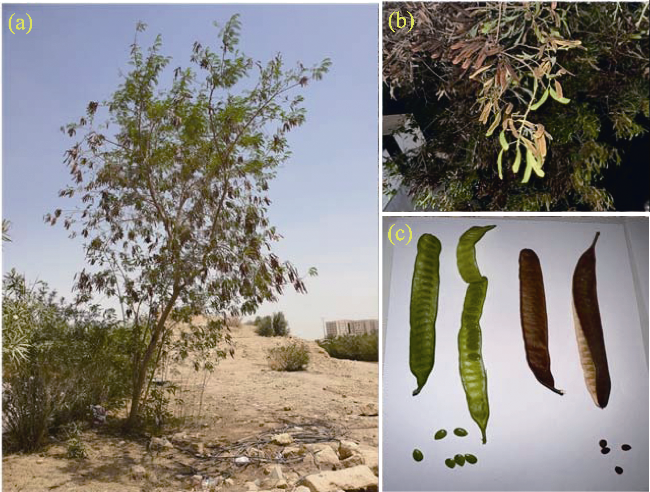
Fig. 1 Leucaena leucocephala (Lam.) de Wit tree in Saudi Arabia. (a), invaded in degraded habitat; (b), mature tree with saplings; (c), seeds and fruit.
Fig. 2 Occurrence points of L. leucocephala in Saudi Arabia

2.2 Environmental data and variable collection

The study selected 19 bioclimatic variables and elevation data from WorldClim (www.worldclim. org). Additionally, we integrated 10 edaphic variables into our analysis from https://soilgrids.org/ (Table S1). Notably, the investigation focused on flat terrains with an elevation range from 150 to 500 m, including topographic elements such as altitude, slope, and aspect.
Table S1 Environmental predictors used in the species distribution model (SDM) for Leucaena leucocephala (Lam.) de Wit
Name of variable & description Code Unit Resolution Database
Annual mean temperature bio1 °C 30 arc s WorldClim
Mean diurnal range of temperature bio2 °C 30 arc s WorldClim
Isothermality ((Bio2/Bio7)×100%) bio3 % 30 arc s WorldClim
Temperature seasonality bio4 °C 30 arc s WorldClim
Maximum temperature of the warmest month bio5 °C 30 arc s WorldClim
Minimum temperature of the coldest month bio6 °C 30 arc s WorldClim
Temperature annual range bio7 °C 30 arc s WorldClim
Mean temperature of the wettest quarter bio8 °C 30 arc s WorldClim
Mean temperature of the driest quarter bio9 °C 30 arc s WorldClim
Mean temperature of the warmest quarter bio10 °C 30 arc s WorldClim
Mean temperature of the coldest quarter bio11 °C 30 arc s WorldClim
Annual precipitation bio12 mm 30 arc s WorldClim
Precipitation of the wettest month bio13 mm 30 arc s WorldClim
Precipitation of the driest month bio14 mm 30 arc s WorldClim
Precipitation seasonality (CV) bio15 % 30 arc s WorldClim
Precipitation of the wettest quarter bio16 mm 30 arc s WorldClim
Precipitation of the driest quarter bio17 mm 30 arc s WorldClim
Precipitation of the warmest quarter bio18 mm 30 arc s WorldClim
Precipitation of the coldest quarter bio19 mm 30 arc s WorldClim
Bulk density BD cg/cm3 30 arc s SoilGrids
Cation exchange capacity (pH=7) CEC mmol/kg 30 arc s SoilGrids
Volumetric fraction of coarse fragments (>2 mm) cfvo cm3/dm3 30 arc s SoilGrids
Clay content clay g/kg 30 arc s SoilGrids
Total nitrogen nitrogen cg/kg 30 arc s SoilGrids
Organic carbon density OCD μg/dm3 30 arc s SoilGrids
Soil pH phh2o - 30 arc s SoilGrids
Sand content sand g/kg 30 arc s SoilGrids
Silt content silt g/kg 30 arc s SoilGrids
Soil organic carbon SOC dg/kg 30 arc s SoilGrids
Land cover LC - 30 arc s http://www-modis.bu.edu/landcover
Population density PD - 30 arc s http://www.ornl.gov/sci/landscan

Note: - means no unit.

To address both anthropogenic and environmental factors, the study integrated two key variables, i.e., land cover and population density. Land cover data, consisting of 9 categories, were sourced from the International Geosphere-Biosphere Programme Data (http://www.modis.bu.edu/landcover). Simultaneously, population density data were extracted from the Oak Ridge National Laboratory (http://www.ornl.gov/sci/landscan) as an independent layer, given its recognized influence on species dispersion. Future simulations were based on two distinct Shared Socioeconomic Pathways (SSPs 245 and SSPs 585), which were retrieved from the Coupled Model Intercomparison Project, Phase 6 (CMIP6), spanning the 2041-2060 and 2061-2080 periods. These simulations utilized the global climate model (BCC-CSM2-MR). BCC-CSM2-MR stands out for its high resolution and improved representation of key climatic processes, making it a valuable tool for assessing future climate scenarios. Moreover, BCC-CSM2-MR offers enhanced accuracy in simulating regional climate patterns and variability, which is particularly relevant for our study in arid areas of Saudi Arabia. Additionally, the model incorporates updated parameters and feedback mechanisms, providing more realistic projections of climatic conditions under different scenarios.
Following the exclusion of variables that did not meet the criterion, the refined set of variables underwent a comprehensive pairwise assessment for Pearson's correlation coefficient (r). This step aimed to discern and eliminate any potential spatial associations among retained variables. The introduction of a threshold value (r≥±0.80) further enhanced the precision of the analysis by focusing on significant associations. In cases where two variables exhibited an r value surpassing this established threshold, a systematic process was implemented to omit the variable with the lesser contribution, ensuring that only variables with strong and distinct associations were retained for the subsequent stages of the analysis. This two-step approach not only ensured data independence but also enhanced the robustness of the analysis, allowing for a more accurate and reliable examination of the relationships among selected variables (Hijmans et al., 2005; Bosso et al., 2016).

2.3 Preliminary variable processing

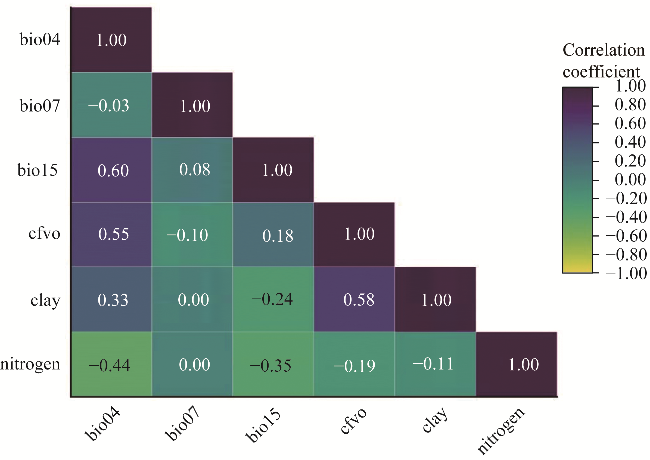
In this study, the identification of crucial bioclimatic and edaphic variables was achieved through the application of contribution and Pearson's correlation coefficient. The selected variables encompass temperature seasonality (bio04), temperature annual range (bio07), precipitation seasonality (bio15), total nitrogen (nitrogen), volumetric fraction of coarse fragments (>2 mm) (cfvo), and clay content (clay) (Graham, 2003). For further insight, Figure 3 visually presents the pairwise correlation among variables, offering a comprehensive understanding of their interrelationships.
Fig. 3 Pairwise correlation among biophysical and climatic variables in the distribution modeling of L. leucocephala. bio04, temperature seasonality; bio07, temperature annual range; bio15, precipitation seasonality; cfvo, volumetric fraction of coarse fragments (>2 mm). The abbreviations are the same in the following figures.

2.4 Optimization and calibration of model

The calibration and optimization of the MaxEnt model is needed. In this study, regularization multiplier (RM) value and feature classes (FC) were used to improve prediction reliability and avoid overfitting in the MaxEnt model. We used six RM values (ranging from 1.00 to 4.00 with a 0.50 interval) and five FCs (linear, quadratic, hinge, product, and threshold) to determine the most effective model settings (Anderson and Gonzalez, 2011; Bao et al., 2022). We employed the R package ''ENMEval'' to produce a bias file by combining occurrence and environmental data. This facilitated the evaluation of the model. Leveraging presence data, this model excels in precisely forecasting the potential distribution of a species within a defined area, as substantiated by Bai et al. (2018). Acknowledged for its precision, the MaxEnt model stands out prominently as a leading technique in species distribution model (SDM), recognized by scholars such as Summers et al. (2012), Merow et al. (2013), and Fourcade et al. (2014). Our investigative focus, rooted in the desire to unveil the nexus between environmental conditions and L. leucocephala distribution, led us to employ the MaxEnt model. This dependable machine-learning technique for SDM, as proposed by Elith et al. (2006), aimed to establish a correlation between climatic variables and the occurrence of target species. The enhancement of model accuracy and performance was pursued through specific MaxEnt configurations, including the determination of the 10th percentile presence probability, a 10-fold cross-validation approach, the use of a complementary log-log (clog-log) output format, consideration of 10,000 background points, execution of 10 repeat runs, 500 iterations, generation of response curves, and a comprehensive analysis of Jackknife importance in all finalized optimized SDMs.

2.5 Model evaluation and invasion risk assessment

The evaluation of improved SDMs was conducted using receiver-operator characteristic (ROC) curves with area under the curve (AUC) measurements serving as the primary metric. A higher AUC-ROC value, ideally 0.90 or above, indicates improved model prediction accuracy (Phillips et al., 2006; Phillips et al., 2009; Elith et al., 2011; Fourcade et al., 2014). The AUC score, as highlighted by Phillips et al. (2006) and Elith et al. (2011), reflects the model's agreement with test data and its ability to differentiate between species distribution under hypothetical future climatic scenarios. An AUC value of 0.50 signifies performance at the chance level, while values close to 1.00 indicate superior model performance (Elith et al., 2011). Utilizing the MaxEnt predictions ranging from 0.00 to 1.00, we forecasted the potential presence of L. leucocephala in the study area. Employing a standard threshold prediction probability range of 0.00-0.20, consistent with accepted standards in SDMs, we identified unsuitable locations (Yang et al., 2013). To enhance interpretability and significance, we adopted a classification scheme comprising four equal-sized probability classes with a threshold of 0.20, following the recommendation of Yang et al. (2013). This classification scheme categorized habitat suitability into four invasion risk levels, i.e., no risk zones (NRZ) for values between 0.00 and 0.40, low risk zones (LRZ) for values between 0.40 and 0.60, moderate risk zones (MRZ) for values between 0.60 and 0.80, and high risk zones (HRZ) for values between 0.60 and 1.00 (Yang et al., 2013).

3 Results

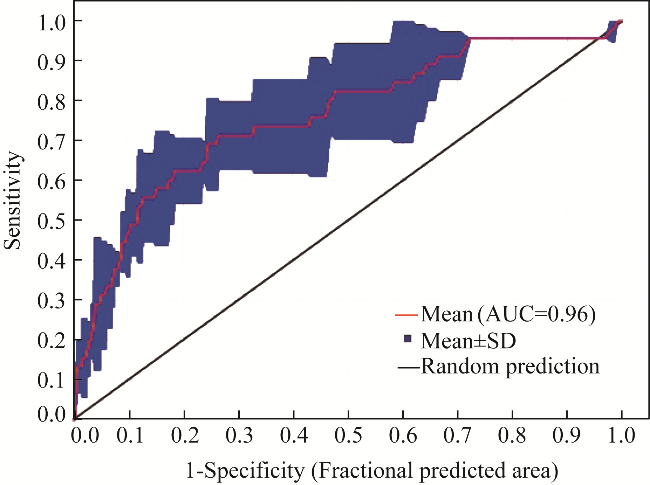
Utilizing the MaxEnt model, we predicted the habitat appropriateness score for L. leucocephala in Saudi Arabia, presenting scores from 0.00 to 0.99, indicating anticipated suitability across diverse areas. The optimal model, with an AUC score of 0.96, incorporated LQH (linear quadratic hinge) as FC along with an RM value of 1.50 (Fig. 4). The AUC value played a crucial role in assessing the model's predictive performance, indicating its ability to differentiate between presence and absence locations. Additionally, the ROC curve visually demonstrated the model's proficiency in accurately identifying true positives while minimizing false positives. With an average AUC value of 0.96, surpassing the AUC of 0.50 for random predictions, our model exhibited high accuracy in delineating the expected and actual distribution areas of the species.
Fig. 4 Graphical representation of the receiver-operator characteristic (ROC) curve, which serves as a visualization of the predictive performance of the MaxEnt model. The precision of the model, quantified by an area under the curve (AUC) score of 0.96, is indicative of its ability to effectively discriminate between true positives and false positives. SD, standard errors.

3.1 Environmental factors responsible for L. leucocephala invasion particle

Our investigation into the ecological determinants of L. leucocephala invasion revealed several key environmental factors that play a substantial role in shaping the habitat appropriateness of this invasive species. Among them, the prominent contributors are bio04, bio07, and bio15. These climatic variables exert a significant influence on the suitability of habitats for L. leucocephala, indicating their pivotal role in facilitating the invasion process. Conversely, certain factors exhibited minimal contributions to the SDMs of L. leucocephala. These include the cfvo, clay, and nitrogen. Despite their presence in the environmental context, these variables do not significantly contribute to the predictive models for L. leucocephala distribution, suggesting a lesser impact on the invasion dynamics of this species. Our findings underscore the importance of specific climatic factors in determining the invasion success of L. leucocephala, shedding light on the nuanced interplay between environmental variables and the spread of this invasive shrub. The identified factors provide valuable insights for understanding and managing the ecological impact of L. leucocephala in different areas (Table 1).
Table 1 Weighing the importance of various factors
Description Code Percentage of contribution (%)
Temperature seasonality bio04 41.30
Temperature annual range bio07 21.40
Precipitation seasonality bio15 12.70
Volumetric fraction of coarse fragments (>2 mm) cfvo 10.80
Clay content clay 7.20
Total nitrogen nitrogen 6.60
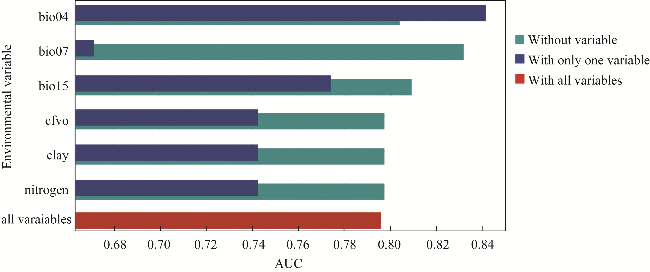
The outcomes of the Jackknife test elucidate the nuanced interplay between environmental conditions and distribution patterns of L. leucocephala. Notably, the examination identified bio04 and bio07 as pivotal variables significantly influencing the distribution of this species. Leveraging the Jackknife test, we meticulously assessed the suitability of each environmental variable concerning L. leucocephala distribution, elucidating the contribution rate of each variable. We executed validation of the current distribution of L. leucocephala based on the selected variables, incorporating field observations and known distribution data. The Jackknife test revealed substantial contributions to the MaxEnt model, with bio04 and bio07 accounting for 41.30% and 21.40%, respectively (Fig. 5).
Fig. 5 Analysis result of the MaxEnt model for L. leucocephala using the Jackknife test to evaluate the predictive effectiveness of environmental parameters. AUC, area under the curve.
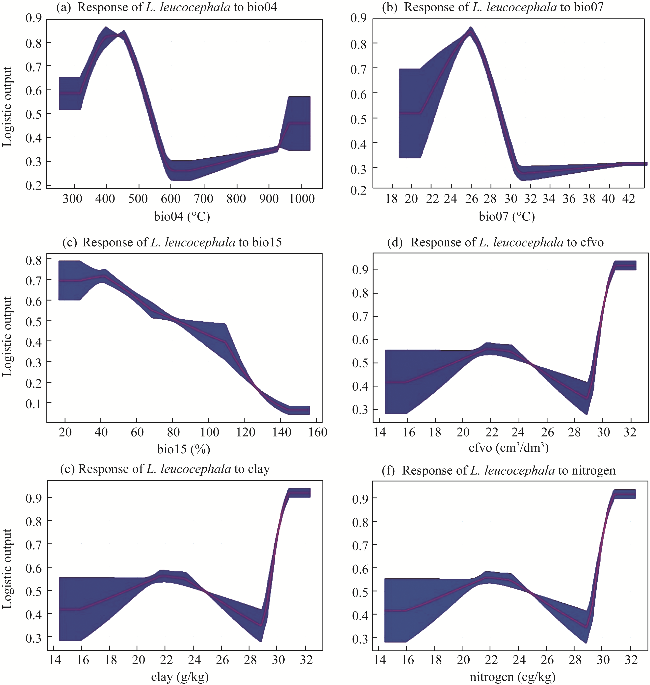
A focused study on the influence of bio04 and bio07 individually illustrated intriguing dynamics. As bio04 increased, the threshold of L. leucocephala presence initially ascended, followed by a subsequent decline (Fig. 6). Similarly, an initial rise in the threshold of L. leucocephala presence was observed with an increase in bio07, subsequently diminishing with the rising isothermality percentage. This intricate relationship suggests the complexity of temperature's impact on the species presence, warranting further in-depth investigation. Critical thresholds were identified, such as bio04 exceeding 300°C indicating highly suitable locations with a probability greater than 0.80, peaking at temperatures above 400°C. Moreover, bio07 for habitats deemed highly suitable ranged from 24°C to 26°C. These findings offer valuable insights into the ecological nuances governing the distribution of L. leucocephala (Fig. 6).
Fig. 6 Parameters influencing the distribution of L. leucocephala. (a), bio04; (b), bio07; (c), bio15; (d), cfvo; (e), clay; (f), nitrogen.

3.2 Current invasion risks

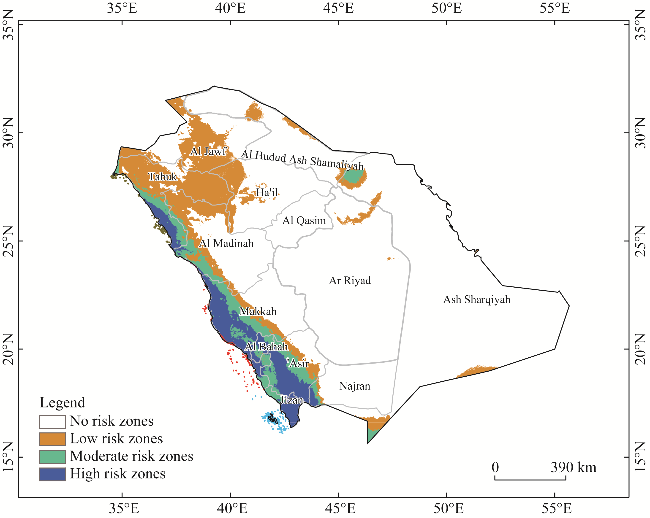
In the exploration of L. leucocephala invasion risks in Saudi Arabia, the MaxEnt results underwent meticulous reclassification and formatting. Employing ArcGIS, an extensive calculation revealed that HRZ for L. leucocephala invasion covered a substantial area of 216,342 km2, equivalent to 10.00% of the nation's total expanse. Figure 7 illustrates the existence of suitable habitats including Tabuk, Al Jawf, Ha'il, Najran, 'Asir, Makkah, and Al Riyad provinces. HRZ of L. leucocephala included eastern Jizan, south-western 'Asir, southern Najran, central Al Bahah, and coastal Makkah provinces (Fig. 7). MRZ, including north-eastern Al Riyad, central 'Asir, northwestern Al Hudud Ash Shamaliyah, coastal Tabuk, central and southern Jizan, central Makkah, and coastal AL Madinah provinces.
Fig. 7 MaxEnt prediction result showing the distributed areas of L. leucocephala under current climate circumstances

3.3 Potential invasion risks under future climate change scenarios

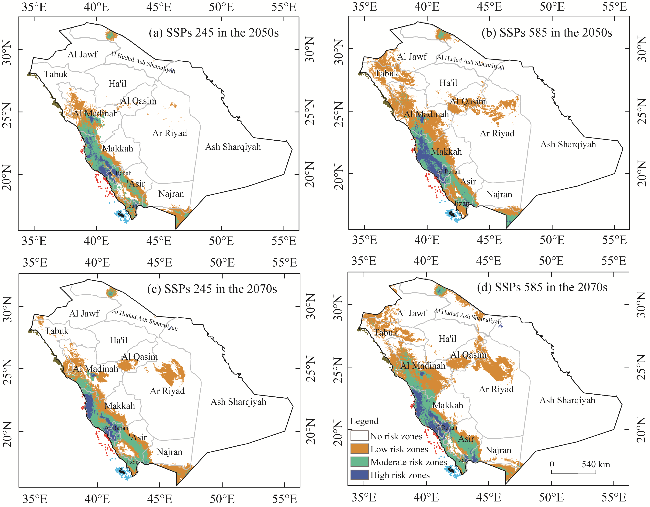
Under the consequences of climate change, analysis reveals a gradual disappearance of current habitats for L. leucocephala. Under SSPs 245 and SSPs 585 scenarios, the habitat towards southeastern area of Saudi Arabia might expand. This shift in habitats is expected to result in a contiguous distribution pattern of HRZ, notably concentrating in central and eastern Makkah, Al Bahah, 'Asir, and their adjacent areas. Specifically, the central and southern areas will witness a pronounced relocation towards southeastern areas, as illustrated in Figure 8. The geospatial transformation of L. leucocephala habitat signifies a response to the evolving climatic conditions in the future. This dynamic shift underscores the urgency of understanding and mitigating the potential ecological consequences of global warming on the spread and invasive behavior of this plant species.
Fig. 8 MaxEnt prediction result showing the distributed areas of L. leucocephala under several climate change scenarios. (a), shared socioeconomic pathways (SSPs) 245 in the 2050s; (b), SSPs 585 in the 2050s; (c), SSPs 245 in the 2070s; (d), SSPs 585 in the 2070s.
The analysis indicates a prospective increase in the total invasion area (P>0.20). The distribution is increased at a rate of 3.98%. We forecast a possible habitat area of 810,660 km² under SSPs 245 in the 2050s, and a 6.30% decrease under SSPs 585 in the same period (860,338 km²). Projections extend to the 2070s, indicating an expected 4.37% increase (819,172 km²) under SSPs 245 and 7.16% increase (878,459 km²) under SSPs 585. Furthermore, an analysis of HRZ reveals a marginal increase from 216,342 to 256,820 km² (1.90%) under SSPs 245 in the 2050s. Within HRZ, the estimated potential suitable areas increase up to 277,363 km² (2.86%) under SSPs 585 in the 2050s, 262,316 km² (2.15%) under SSPs 245 in the 2070s, and 292,331 km² (3.56%) under SSPs 585 in the 2070s (Table 2).
Table 2 Area variation in L. leucocephala invasion under diverse climate change projections
Climate change scenario Area of invasion of L. leucocephala
under different evaluated invasion risk classes (km2)
Total area under invasion risks (km2)
No risk zones Low risk zones Moderate risk zones High risk zones
Current climate 1,404,315 205,320 304,235 216,342 725,897
SSPs 245 in the 2050s 1,319,352 218,303 335,737 256,820 810,860
Rate of change (%) -3.98 0.60 1.47 1.90 3.98
SSPs 585 in the 2050s 1,269,874 250,363 332,612 277,363 860,338
Rate of change (%) -6.31 2.11 1.33 2.86 6.31
SSPs 245 in the 2070s 1,311,040 232,259 324,597 262,316 819,172
Rate of change (%) -4.37 1.26 0.95 2.15 4.37
SSPs 585 in the 2070s 1,251,753 241,514 344,614 292,331 878,459
Rate of change (%) -7.16 1.69 1.89 3.56 7.16

Note: SSPs, Shared Socioeconomic Pathways.

This study evaluates the potential distribution under future climatic scenarios (SSPs 245 and SSPs 585). The findings suggested a notable increase in HRZ by the 2070s, particularly in southern Makkah, Al Bahah, Al Madinah, and 'Asir provinces. These areas are vulnerabile to environmental challenges. Furthermore, the study indicated a significant spatial shift in western Makkah, southern 'Asir, and central Al Bahah provinces. This shift is projected to manifest towards southeast in the 2050s and 2070s, encompassing both current suitable and highly suitable habitats. In addition to the aforementioned areas, areas with invasion risks are predicted for Tabuk, Al Hudud Ash Shamaliyah, and southern Najran provinces. This increased invasion risk is expected to present in arid areas between the 2050s and 2070s, posing significant challenges to the ecological balance in these areas (Fig. 8).

4 Discussion

The invasive alien plants pose a substantial threat to both local ecosystems and economic development. It is crucial to identify and predict the invasion by alien plants, as early prediction is considered to be a more cost-efficient approach than controlling and removing them after an outbreak has already happened (de Groot et al., 2020). Understanding the ecology of invasive species, as well as conservation and management plans, requires knowledge about their invasion ranges. SDM, exemplified by the MaxEnt model, establishes statistical links between reference locations within a study area and predictor variables at locations where a species has been documented. The MaxEnt model's adaptability and capacity to intricately match observed data are contingent on the incorporation of numerous changes of initial influencing factors, known as FC. However, this flexibility introduces a critical concern—overfitting. As flexibility increases, the risk of overfitting grows, emphasizing the need for thoughtful consideration in model construction (Townsend Peterson et al., 2007). To analyze the intricate link between predictor factors and species occurrences, we employed an automated selection of FC in the MaxEnt model based on the dataset's occurrence. Despite this automated process, the model integrates regularization techniques, as proposed by Merow et al. (2013), to mitigate overfitting risks. Users can fine-tune regularization through a single RM parameter, allowing adjustment of the regularization level and specification of permissible FC. Notably, practical constraints often lead users to rely on default settings, potentially introducing bias into methodologies during empirical research (Phillips and Dudík, 2008). In this investigation, the MaxEnt model was employed to simulate the prospective spread of L. leucocephala across historical and projected future climate conditions. The model demonstrated high simulation accuracy, aligning with prior studies reporting the MaxEnt model prediction indicators exceeding 0.90 (Xiong et al., 2019). The model's utility extends to investigating potential plant distributions and anticipated climate variations (Liu et al., 2022). However, it is crucial to note that a substantial correspondence in the MaxEnt fitting findings does not unconditionally confirm precision simulations of present and possible species distributions, emphasizing the importance of cautious interpretation (Cotto et al., 2017).
The application of the MaxEnt model has significantly contributed to understanding the dynamics of invasive plant species (Seebens et al., 2015). Our study reveals a projected increase of 3.98% in the invasion of L. leucocephala compared with its existing range, emphasizing that there would be marginal increase in the present spread of invasion. The present and anticipated spread poses ecological threat and demands an urgent attention to eradicate it. Studies focusing on specific ecosystems highlight the intricate relationship between climate factors and invasive species dynamics, both in the coastal environment (Liu et al., 2017) and terrestrial ecosystems (Gu et al., 2021). Furthermore, global studies on invasive plant species demonstrate the broad potential distribution and environmental drivers influencing their spread, both on land and in aquatic environments (Zhu et al., 2017). Our findings contribute to the broader understanding of invasive species distribution, reinforcing the need for proactive management and conservation strategies (Vilà et al., 2010; Amiri et al., 2022).
The interplay of human activities, specifically urbanization and transportation networks, emerges as a pivotal factor in fostering the proliferation of invasive plant species (Rashid et al., 2021). These activities create chances for the spread of invasive plants, emphasizing the intricate relationship between anthropogenic influences and ecological phenomena. Researchers utilized the MaxEnt model to predict the spread of invasive species under diverse climatic shifts, illuminating the need to incorporate ecological and evolutionary processes for a comprehensive understanding of plant invasion. This integration of the MaxEnt model with climate variables underscores its significance as a robust tool for projecting the expected impacts of changing environmental conditions on invasive plant dynamics. The collective findings from these studies showed the versatility of the MaxEnt model in providing crucial insights into potential invasion risks, unveiling intricate distribution patterns and identifying key factors steering the propagation of invasive species (Gobeyn et al., 2019). Consequently, these results become valuable components in the decision-making process for crafting informed strategies aimed at preventing, controlling, and managing the impacts of invasive plants on native ecosystems and biodiversity. The synergy of the MaxEnt model and ecological research contributes to a more holistic approach to addressing the challenges posed by invasive plant species.
Climate warming, as investigated by Sun et al. (2022), is anticipated to exert adverse effects on biological control mechanisms, potentially fostering invasions of L. leucocephala. This underscores the critical role of interactions between ecological processes in shaping the fate of this species. Temperature and precipitation, among various climatic factors, emerge as pivotal determinants governing the distribution dynamics of L. leucocephala. Bio4 and bio7 as predominant influencers, constituting 41.30% and 21.40% of the total contribution, respectively. Zhang et al. (2022) emphasized the significant role of temperature seasonality in invasive plant distribution, which is also supported by Abbas et al. (2023)'s findings on CO2 concentration and night temperature impact on L. leucocephala growth. Precipitation factors including seasonality and soil composition also shape distribution dynamics, as noted by Thomas et al. (2016). L. leucocephala thrives in the arid areas of Saudi Arabia, as was already observed by Abbas et al. (2023), underscoring regional preferences for invasive species. However, the temperate continental climate, characterized by specific temperature and precipitation parameters, imposes constraints on the normal growth of L. leucocephala. The amalgamation of these insights accentuates the intricate interplay of precipitation and temperature influencing the distribution patterns of L. leucocephala, providing a nuanced understanding for informed ecological management.
Soil properties also exert a significant influence on the distribution of L. leucocephala, particularly the cfvo, clay, and total nitrogen contents. Invasive plant species enhance litter deposition, soil nitrogen mineralization, and nitrification (Ashton et al., 2005). This underscores the pivotal role of soil dynamics in invasive species establishment and proliferation. Moreover, traits inherent to invasive plants, such as accelerated growth, enhanced photosynthetic rates, and efficient nutrient uptake (Ehrenfeld et al., 2001; Ehrenfeld 2004), contributing significantly to their impact on ecosystem properties, compared with native species. However, Rout and Callaway (2009) provide a more nuanced perspective, suggesting that although these traits are important, they may not exclusively drive invasion outcomes. This highlights the complex interplay between species traits and environmental factors, necessitating a comprehensive understanding for effective invasive species management.
The prospective habitat for L. leucocephala is expanding due to the growth in emission concentrations. In the four future climatic scenarios (SSPs 245 in the 2050s, SSPs 585 in the 2050s, SSPs 245 in the 2070s, and SSPs 585 in the 2070s), the distribution pattern of L. leucocephala showed a transient expansion. Analyses of these four scenarios revealed a marginal expansion in the overall distribution of L. leucocephala. Our study indicated that the expansion of L. leucocephala increased, and the risks were located in eastern Makkah, 'Asir, and the majority of Al Madinah. However, the reduction of L. leucocephala might be observed in the coastal areas of 'Asir, Al Bahah, and Najran provinces. In the context of sustainable development, the proliferation of L. leucocephala could be sustained by fortifying measures to prevent and control its invasion in the areas of Makkah, Al Madinah, 'Asir, Najran, and Al Bahah provinces. The elevation has positively influenced the growth and maturation of L. leucocephala. This phenomenon highlights the potential difficulty in curtailing the extensive spread of L. leucocephala within a developmental trajectory reliant on fossil fuels. Notably, pronounced expansion of L. leucocephala in the Makkah has occurred under diverse climatic conditions. The expansion of L. leucocephala habitat in the Makkah may be influenced by various factors, including climate change and anthropogenic activities. Further research is needed to elucidate the specific drivers contributing to the expansion of L. leucocephala in this area. However, our investigation did not identify a specific human factor that could precisely respond to these environmental shifts. This remains speculative and could be verified by anthropogenic factors in future studies. Except for the SSP245 scenario, the risk area tends to migrate southeast in both models. In the case of the SSP245 scenario, the risk area initially migrates northeast and then south, leading to an overall southeastern migration of L. leucocephala.
According to our model, the expansion of the species under future climate change scenarios could pose a threat to local ecosystems. Assessing the impact of invasive species in conjunction with climate change is crucial for conserving and managing biological diversity. To effectively address this issue, it is essential to understand the potential and future geographical distribution of these species before implementing control measures. The key criteria for identifying areas where invasive plant species may further spread include understanding the species' ecological requirements and past land-use patterns (Calinger et al., 2015). Invasive species often present a threat to natural ecosystems, agricultural areas, pastures, secondary shrub lands, and forest lands. While mountain ecosystems are currently relatively occupied by L. leucocephala compared with lowland ecosystems. Climate change and human-induced disturbances could potentially accelerate the process of invasion. To address this challenge, further research and careful planning are necessary. Early monitoring and habitat suitability assessments of the species are essential to promptly implement appropriate measures to prevent further propogation.
To effectively prevent and control the invasion of L. leucocephala, we suggested that a diverse range of strategies should be applied to the specific adaptation areas. Areas with high suitability for L. leucocephala invasion should be the focus of prevention and control efforts. Biological and ecological researches and survey of L. leucocephala are essential in HRZ. Understanding the species' ecological traits and transmission mechanisms is crucial for developing effective preventive and control measures in places with significant invasion risks. Considering the wide distribution of medium and low areas of potential invasion for L. leucocephala, people should initiate the public particication and education efforts in those areas. Eradicating and managing the current population of L. leucocephala is crucial to limit the effective colonization of the species and prevent further infestations. By adopting a comprehensive and proactive approach, it is possible to effectively prevent and control the invasion of L. leucocephala and safeguard the ecological balance and biodiversity in the affected areas.

5 Conclusions

This study provides a comprehensive analysis of current and prospective distribution patterns of L. leucocephala in Saudi Arabia, with a particular emphasis on the influence of climatic variables under future climate change scenarios. The integration of the MaxEnt model, environmental parameters, and climate projections has yielded valuable insights into the ecological dynamics of this invasive species. The robustness of the MaxEnt model, as evidenced by a high AUC score of 0.96, underscores its efficacy in predicting habitat suitability for L. leucocephala. The identified key climatic factors, such as temperature seasonality and temperature annual range, contribute significantly to the species distribution, providing nuanced insights into the intricate interplay between environmental variables and invasion success. Furthermore, the study extends its analysis to assess the potential invasion risks under future climate change scenarios, revealing a notable expansion of HRZ, particularly in southern Makkah, Al Bahah, Al Madina, and 'Asir. The anticipated shift in L. leucocephala habitat towards the southeast signifies the ecological consequences of climate change on invasive species dynamics. The findings emphasize the urgency of proactive management strategies to address the impending challenges posed by the species' projected expansion. The study contributes to the broader field of invasive species research by highlighting the importance of considering climate change in assessing distribution patterns. The implications of climate warming on biological control mechanisms and the adaptability of invasive species underscore the need for adaptive management strategies. Future research endeavors should focus on refining predictive models, incorporating additional predictor variables, and conducting long-term ecological studies to assess the cumulative impacts of L. leucocephala invasion.

Conflict of interest

The authors declare that they have no known competing financial interests or personal relationships that could have appeared to influence the work reported in this paper.

Acknowledgements

The authors would like to extend their sincere appreciation to the Researchers Supporting Project (RSP2024R347), King Saud University, Riyadh, Saudi Arabia.

Author contributions

Conceptualization: Haq S MARIFATUL; Methodology: Darwish MOHAMMED, Waheed MOHAMMED; Data collection: Darwish MOHAMMED, Haq S MARIFATUL, Siddiqui H MANZER; Formal analysis: Haq S MARIFATUL, Waheed MOHAMMED; Investigation: Haq S MARIFATUL; Validation: Waheed MOHAMMED; Writing - original draft preparation: Haq S MARIFATUL, Waheed MOHAMMED; Data curation: Kumar MANOJ; Waheed MOHAMMED, Kumar MANOJ, Bussmann W RAINER, Siddiqui H MANZER; Writing - review and editing: Darwish MOHAMMED, Kumar MANOJ, Bussmann W RAINER; Visualization: Wahed MOHAMMED, Kumar MANOJ; Funding acquisition: Siddiqui H MANZER; Resources: Darwish MOHAMMED, Kumar MANOJ; Supervision: Bussmann W RAINER, Waheed MOHAMMED. All authors approved the manuscript.
[1]
Abbas A M, Soliman W S, Alomran M M, et al. 2023. Four invasive plant species in Southwest Saudi Arabia have variable effects on soil dynamics. Plants, 12(6): 1231, doi: 10.3390/plants12061231.

[2]
Alharthi S T, El-Sheikh M A, Alfarhan A A. 2023. Biological change of western Saudi Arabia: Alien plants diversity and their relationship with edaphic variables. Journal of King Saud University-Science, 35(2): 102496, doi: 10.1016/j.jksus.2022.102496.

[3]
Amiri M, Tarkesh M, Shafiezadeh M. 2022. Modelling the biological invasion of Prosopis juliflora using geostatistical-based bioclimatic variables under climate change in arid zones of southwestern Iran. Journal of Arid Land, 14(2): 203-224.

[4]
Anderson R P, Gonzalez Jr I. 2011. Species-specific tuning increases robustness to sampling bias in models of species distributions: an implementation with Maxent. Ecological Modelling, 222(15): 2796-2811.

[5]
Arshad F, Waheed M, Fatima K, et al. 2022. Predicting the suitable current and future potential distribution of the native endangered tree Tecomella undulata (Sm.) Seem. in Pakistan. Sustainability, 14(12): 7215, doi: 10.3390/su14127215.

[6]
Ashton I W, Hyatt L A, Howe K M, et al. 2005. Invasive species accelerate decomposition and litter nitrogen loss in a mixed deciduous forest. Ecological Applications, 15(4): 1263-1272.

[7]
Bai D F, Chen P J, Atzeni L, et al. 2018. Assessment of habitat suitability of the snow leopard (Panthera uncia) in Qomolangma National Nature Reserve based on MaxEnt modeling. Zoological Research, 39(6): 373-386.

[8]
Bao R, Li X, Zheng J. 2022. Feature tuning improves Maxent predictions of the potential distribution of Pedicularis longiflora Rudolph and its variant. PeerJ, 10: e13337, doi: 10.7717/peerj.13337.

[9]
Beas-Luna R, Micheli F, Woodson C B, et al. 2020. Geographic variation in responses of kelp forest communities of the California Current to recent climatic changes. Global Change Biology, 26(11): 6457-6473.

[10]
Bosso L, Di Febbraro M, Cristinzio G, et al. 2016. Shedding light on the effects of climate change on the potential distribution of Xylella fastidiosa in the Mediterranean basin. Biological Invasion, 18: 1759-1768.

[11]
Calinger K, Calhoon E, Chang H C, et al. 2015. Historic mining and agriculture as indicators of occurrence and abundance of widespread invasive plant species. PLoS ONE, 10(6): e0128161, doi: 10.1371/journal.pone.0128161.

[12]
Chiou C R, Wang H H, Chen Y J, et al. 2013. Modeling potential range expansion of the invasive shrub Leucaena leucocephala in the Hengchun Peninsula, Taiwan. Invasive Plant Science Management, 6(4): 492-501.

[13]
Cotto O, Wessely J, Georges D, et al. 2017. A dynamic eco-evolutionary model predicts slow response of alpine plants to climate warming. Nature Communication, 8(1): 15399, doi: 10.1038/ncomms15399.

[14]
de Groot M, O'hanlon R, Bullas-Appleton E, et al. 2020. Challenges and solutions in early detection, rapid response and communication about potential invasive alien species in forests. Management of Biological Invasions, 11(4): 637-660.

[15]
Dubyna D V, Iemelianova S M, Dziuba T P. 2023. Alien plant invasion across coastal dunes of Ukraine. Biologia, 78(5): 1401-1414.

[16]
Ehrenfeld J G, Kourtev P, Huang W. 2001. Changes in soil functions following invasions of exotic understory plants in deciduous forests. Ecological applications, 11(5): 1287-1300.

[17]
Ehrenfeld J G. 2004. Implications of invasive species for belowground community and nutrient processes. Weed Technology, 18(Suppl.1): 1232-1235.

[18]
Elith J, H Graham C, P Anderson R, et al. 2006. Novel methods improve prediction of species' distributions from occurrence data. Ecography, 29(2): 129-151.

[19]
Elith J, Phillips S J, Hastie T, et al. 2011. A statistical explanation of MaxEnt for ecologists. Diversity Distribution, 17(1): 43-57.

[20]
Fourcade Y, Engler J O, Rödder D, et al. 2014. Mapping species distributions with MAXENT using a geographically biased sample of presence data: a performance assessment of methods for correcting sampling bias. PLoS ONE, 9(5): e97122, doi: 10.1371/journal.pone.0097122.

[21]
Gobeyn S, Mouton A M, Cord A F, et al. 2019. Evolutionary algorithms for species distribution modelling: A review in the context of machine learning. Ecological Modelling, 392: 179-195.

[22]
Graham M H. 2003. Confronting multicollinearity in ecological multiple regression. Ecology, 84(11): 2809-2815.

[23]
Gu C, Tu Y, Liu L, et al. 2021. Predicting the potential global distribution of Ageratina adenophora under current and future climate change scenarios. Ecology and Evolution, 11(17): 12092-12113.

[24]
Hijmans R J, Cameron S E, Parra J L, et al. 2005. Very high resolution interpolated climate surfaces for global land areas. International Journal of Climatology, 25(15): 1965-1978.

[25]
Hughes K A, Pescott O L, Peyton J, et al. 2020. Invasive non-native species likely to threaten biodiversity and ecosystems in the Antarctic Peninsula region. Global Change Biology, 26(4): 2702-2716.

[26]
Kariyawasam C S, Kumar L, Ratnayake S S. 2020. Potential risks of plant invasions in protected areas of Sri Lanka under climate change with special reference to threatened vertebrates. Climate, 8(4): 51, doi: 10.3390/cli8040051.

[27]
Kourantidou M, Verbrugge L N, Haubrock P J, et al. 2022. The economic costs, management and regulation of biological invasions in the Nordic countries. Journal of Environmental Management, 324: 116374, doi: 10.1016/j.jenvman.2022.116374.

[28]
Kumar M, Padalia H, Nandy S, et al. 2019. Does spatial heterogeneity of landscape explain the process of plant invasion? A case study of Hyptis suaveolens from Indian Western Himalaya. Environmental Monitoring and Assessment, 191(Suppl. 3): 794, doi: 10.1007/s10661-019-7682-y.

[29]
Linders T E W, Schaffner U, Eschen R, et al. 2019. Direct and indirect effects of invasive species: Biodiversity loss is a major mechanism by which an invasive tree affects ecosystem functioning. Journal of Ecology, 107(6): 2660-2672.

[30]
Liu X, Liu H, Gong H, et al. 2017. Appling the one-class classification method of maxent to detect an invasive plant Spartina alterniflora with time-series analysis. Remote Sensing, 9(11): 1120, doi: 10.3390/rs9111120.

[31]
Liu Z L, Hu L L. 2022. Prediction of potential distribution and climate change of rare species Cephalotaxus oliveri. Forest Resources Management, 90(1): 35-42. (in Chinese)

[32]
Mainali K P, Warren D L, Dhileepan K, et al. 2015. Projecting future expansion of invasive species: Comparing and improving methodologies for species distribution modeling. Global Change Biology, 21(12): 4464-4480.

[33]
Martinez B, Reaser J K, Dehgan A, et al. 2020. Technology innovation: Advancing capacities for the early detection of and rapid response to invasive species. Biological Invasion, 22(1): 75-100.

[34]
Merow C, Smith M J, Silander Jr J A. 2013. A practical guide to MaxEnt for modeling species' distributions: What it does, and why inputs and settings matter. Ecography, 36(10): 1058-1069.

[35]
Phillips S J, Anderson R P, Schapire R E. 2006. Maximum entropy modeling of species geographic distributions. Ecological Modelling, 190(3-4): 231-259.

[36]
Phillips S J, Dudík M. 2008. Modeling of species distributions with Maxent: New extensions and a comprehensive evaluation. Ecography, 31(2): 161-175.

[37]
Phillips S J, Dudík M, Elith J, et al. 2009. Sample selection bias and presence-only distribution models: Implications for background and pseudo-absence data. Ecological Application, 19(1): 181-197.

[38]
Pyšek P, Hulme P E, Simberloff D, et al. 2020. Scientists' warning on invasive alien species. Biological Review, 95(6): 1511-1534.

[39]
Raghu S, Wiltshire C, Dhileepan K. 2005. Intensity of pre-dispersal seed predation in the invasive legume Leucaena leucocephala is limited by the duration of pod retention. Austral Ecology, 30(3): 310-318.

[40]
Rashid I, Haq S M, Lembrechts J J, et al. 2021. Railways redistribute plant species in mountain landscapes. Journal of Applied Ecology, 58(9): 1967-1980.

[41]
Rout M E, Callaway R M. 2009. An invasive plant paradox. Science, 324(5928): 734-735.

[42]
Seebens H, Essl F, Dawson W, et al. 2015. Global trade will accelerate plant invasions in emerging economies under climate change. Global Change Biology, 21(11): 4128-4140.

[43]
Sharma P, Kaur A, Batish D R, et al. 2022. Critical insights into the ecological and invasive attributes of Leucaena leucocephala, a tropical agroforestry species. Frontiers in Agronomy, 4: 890992, doi: 10.3389/fagro.2022.890992.

[44]
Summers D M, Bryan B A, Crossman N D, et al. 2012. Species vulnerability to climate change: Impacts on spatial conservation priorities and species representation. Global Change Biology, 18(7): 2335-2348.

[45]
Sun Y, Züst T, Silvestro D, et al. 2002. Climate warming can reduce biocontrol efficacy and promote plant invasion due to both genetic and transient metabolomic changes. Ecological Letter, 25(6): 1378-1400.

[46]
Thomas J, El-Sheikh M A, Alfarhan A H, et al. 2016. Impact of alien invasive species on habitats and species richness in Saudi Arabia. Journal of Arid Environments, 127: 53-65.

[47]
Townsend Peterson A, Papeş M, Eaton M. 2007. Transferability and model evaluation in ecological niche modeling: A comparison of GARP and Maxent. Ecography, 30(4): 550-560.

[48]
Vilà M, Basnou C, Pyšek P, et al. 2010. How well do we understand the impacts of alien species on ecosystem services? A pan-European, cross-taxa assessment. Frontier in Ecology Environment, 8(3): 135-144.

[49]
Waheed M, Arshad F, Majeed M, et al. 2023a. Potential distribution of a noxious weed (Solanum viarum Dunal), current status, and future invasion risk based on MaxEnt modeling. Geology, Ecology, and Landscape, 8: 2179752, doi: 10.1080/24749508.2023.2179752.

[50]
Waheed M, Haq S M, Arshad F, et al. 2023b. Phyto-ecological distribution patterns and identification of alien invasive indicator species about edaphic factors from the semi-arid region. Ecological Indicator, 148: 110053, doi: 10.1016/j.ecolind.2023.110053.

[51]
Xiong Q L, He Y L, Deng F Y, et al. 2019. Assessment of alpine mean response to climate change in Southwest China based on MaxEnt Model. Acta Ecologica Sinicia, 39(24): 9033-9043. (in Chinese)

[52]
Yang X Q, Kushwaha S P S, Saran S, et al. 2013. Maxent modeling for predicting the potential distribution of medicinal plant, Justicia adhatoda L. in Lesser Himalayan foothills. Ecological Engineering, 51: 83-87.

[53]
Zhang X, Zhao J, Wang M, et al. 2022. Potential distribution prediction of Amaranthus palmeri S. Watson in China under current and future climate scenarios. Ecology and Evolution, 12(12): e9505, doi: 10.1002/ece3.9505.

[54]
Zhu J, Xu X, Tao Q, et al. 2017. High invasion potential of Hydrilla verticillata in the Americas predicted using ecological niche modeling combined with genetic data. Ecology and Evolution, 7(13): 4982-4990.

文章导航

/