



青藏高原高寒草甸草原土壤冻融过程中地-气水热交换特征
|
曹晓云(1993-),女,硕士,工程师,主要从事青藏高原气候与环境研究. E-mail: xiaoyun_cao@126.com |
收稿日期: 2025-04-19
修回日期: 2025-07-24
网络出版日期: 2026-03-12
基金资助
国家自然科学基金项目(U21A2021)
国家重点研发计划项目(2022YFF1302601)
Characteristics of land-atmospheric water and heat exchange during soil freezing-thawing process of alpine grassland soils on the Qinghai-Xizang Plateau
Received date: 2025-04-19
Revised date: 2025-07-24
Online published: 2026-03-12
曹晓云 , 周秉荣 , 颜玉倩 , 权晨 , 赵全宁 , 李全平 , 王秀英 , 李甫 . 青藏高原高寒草甸草原土壤冻融过程中地-气水热交换特征[J]. 干旱区研究, 2025 , 42(12) : 2195 -2206 . DOI: 10.13866/j.azr.2025.12.04
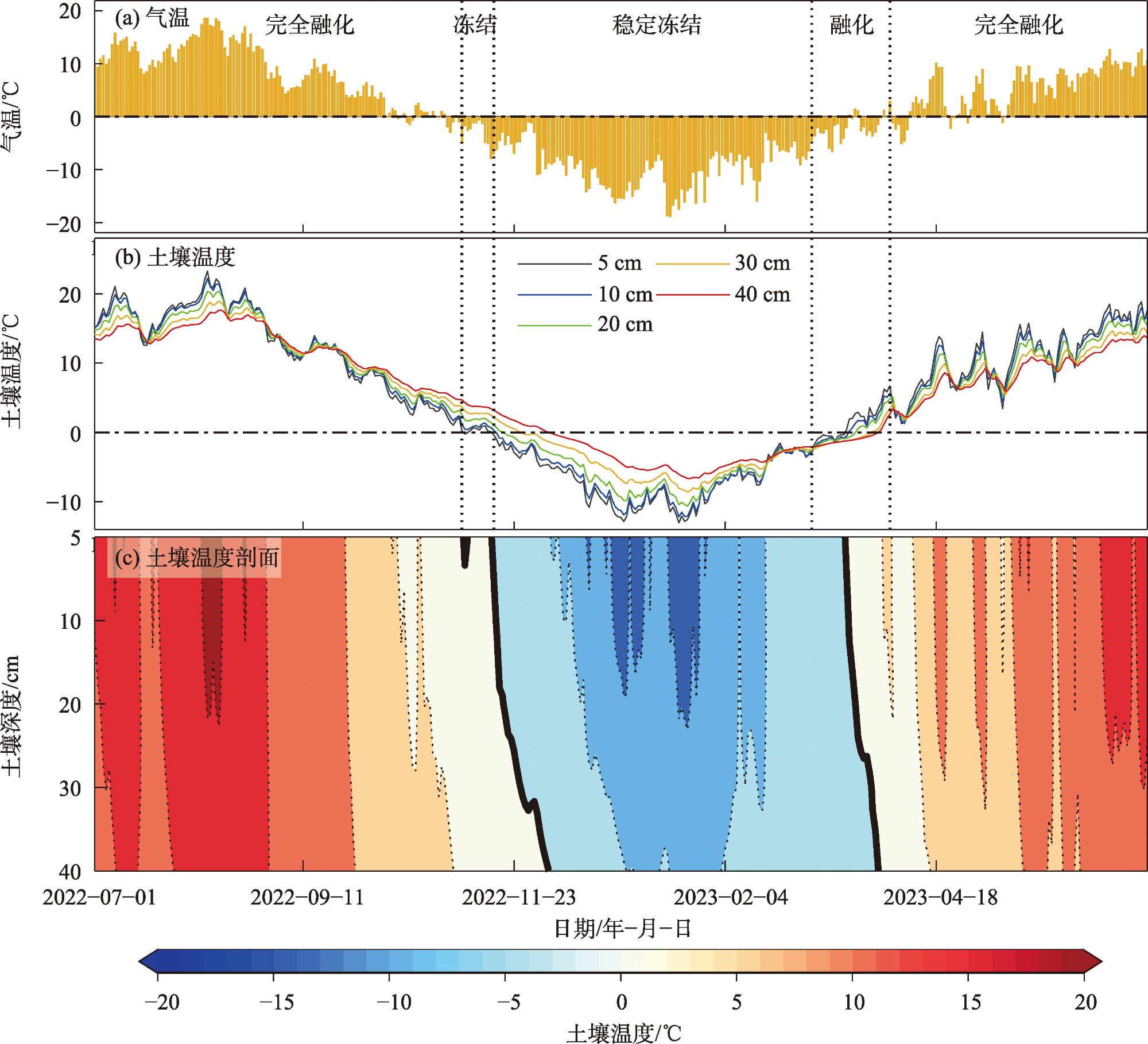
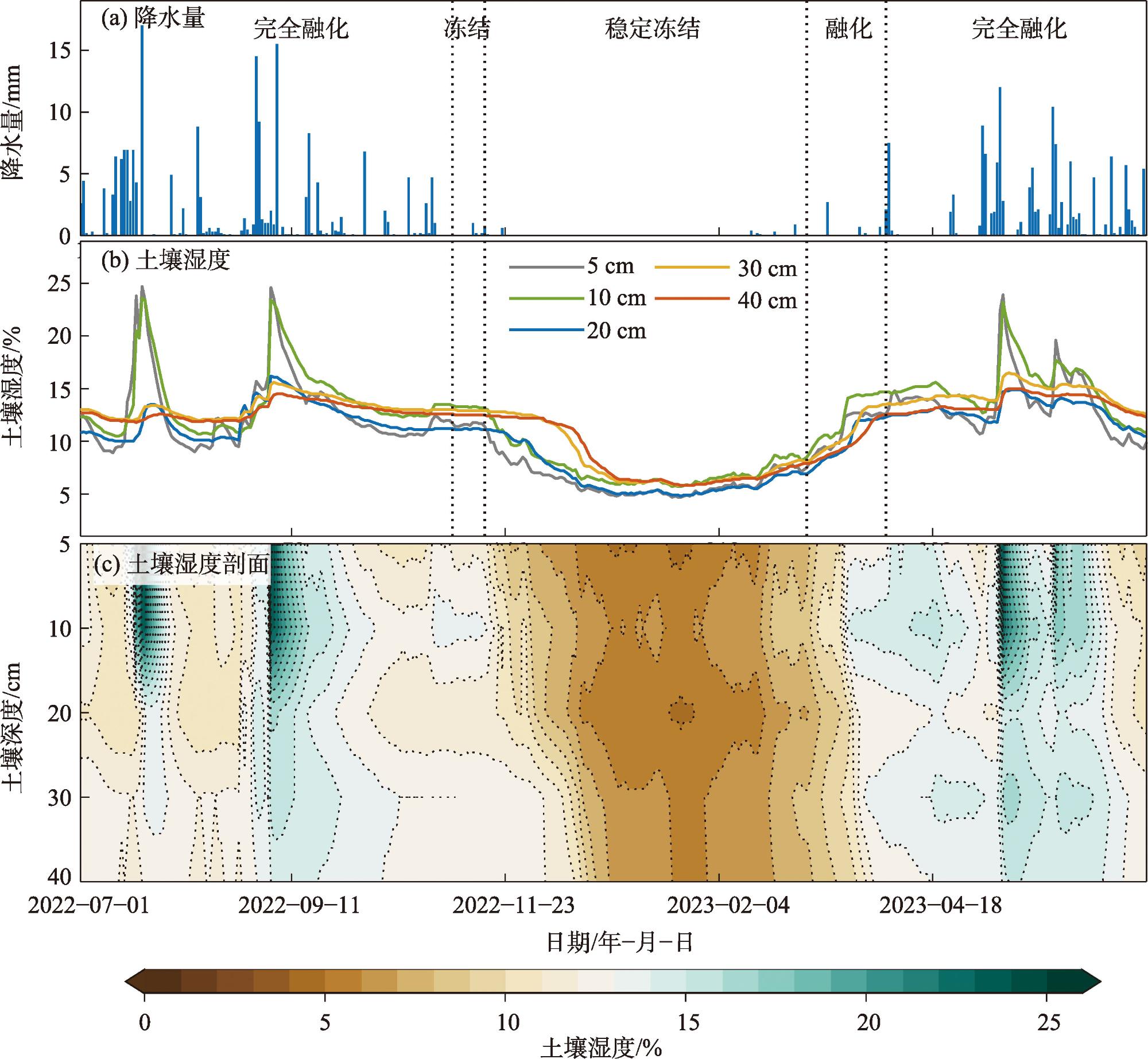
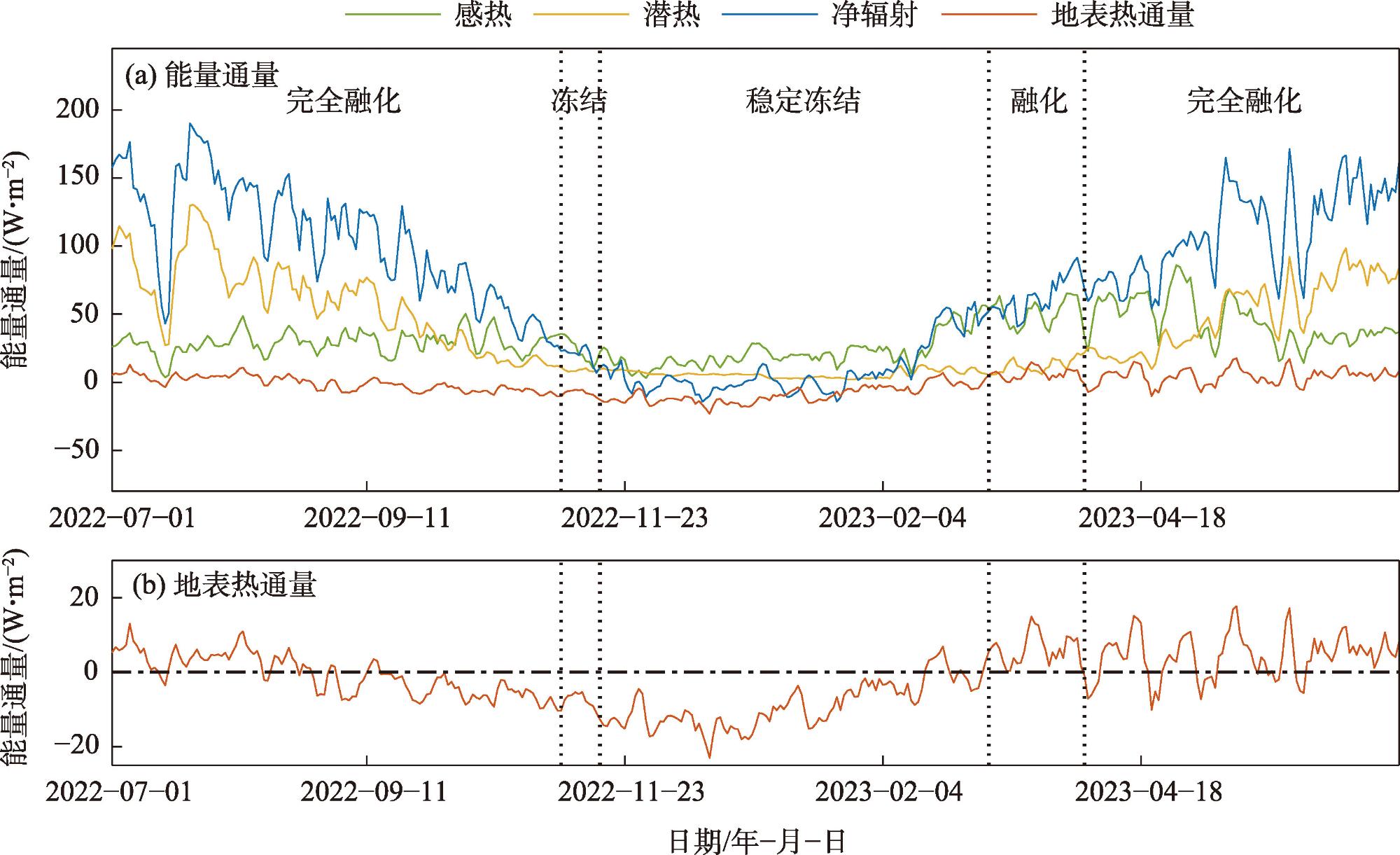
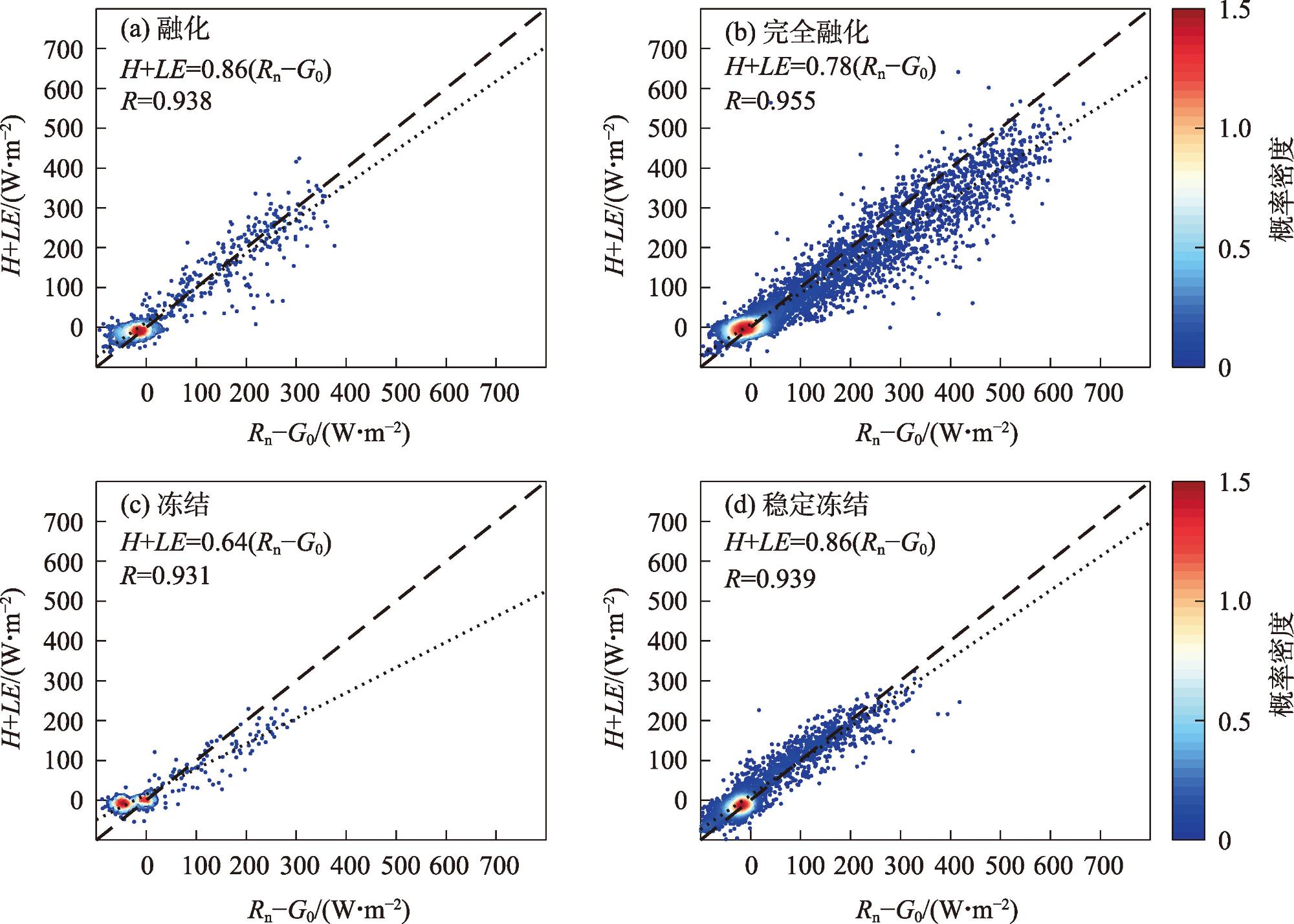
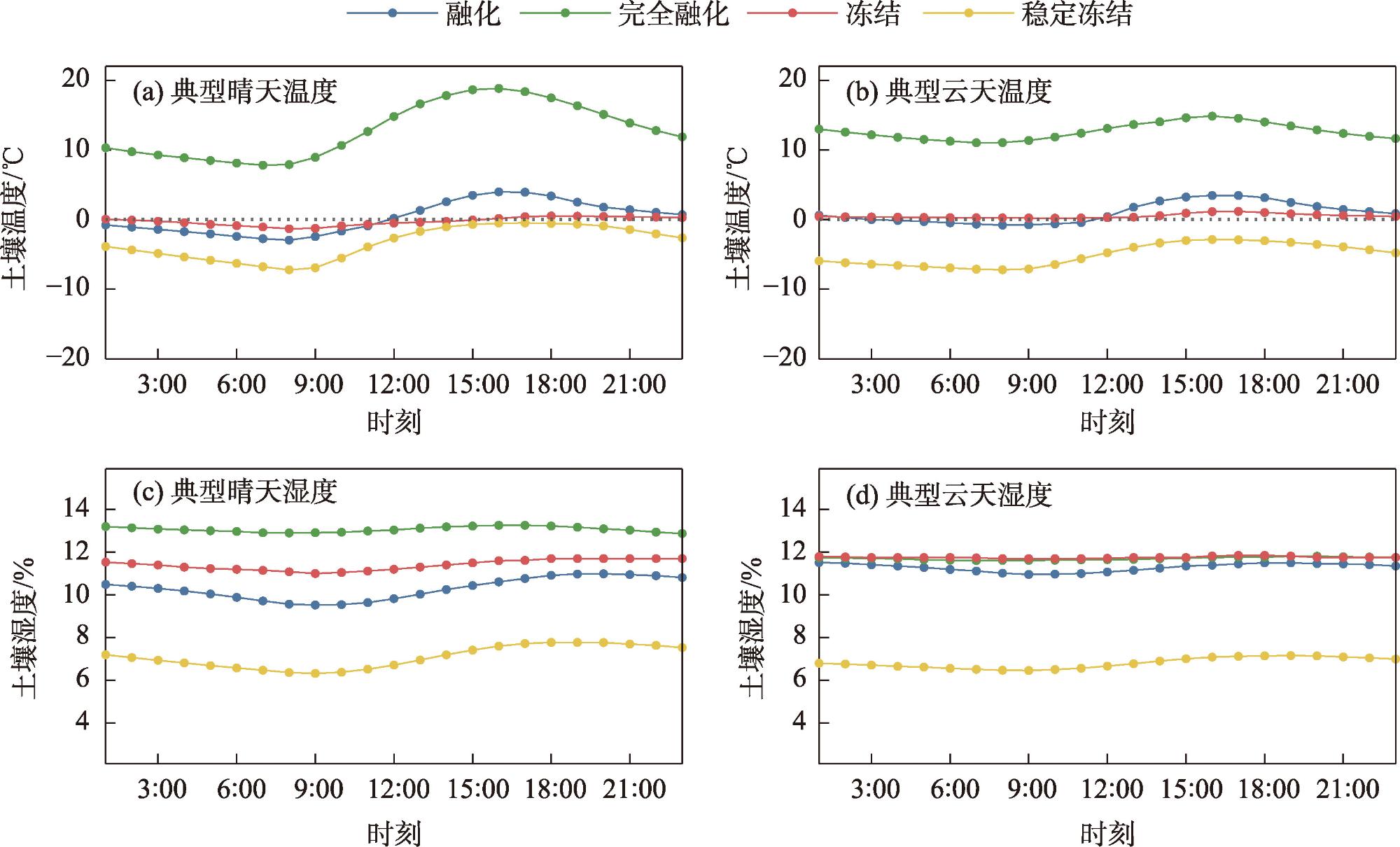
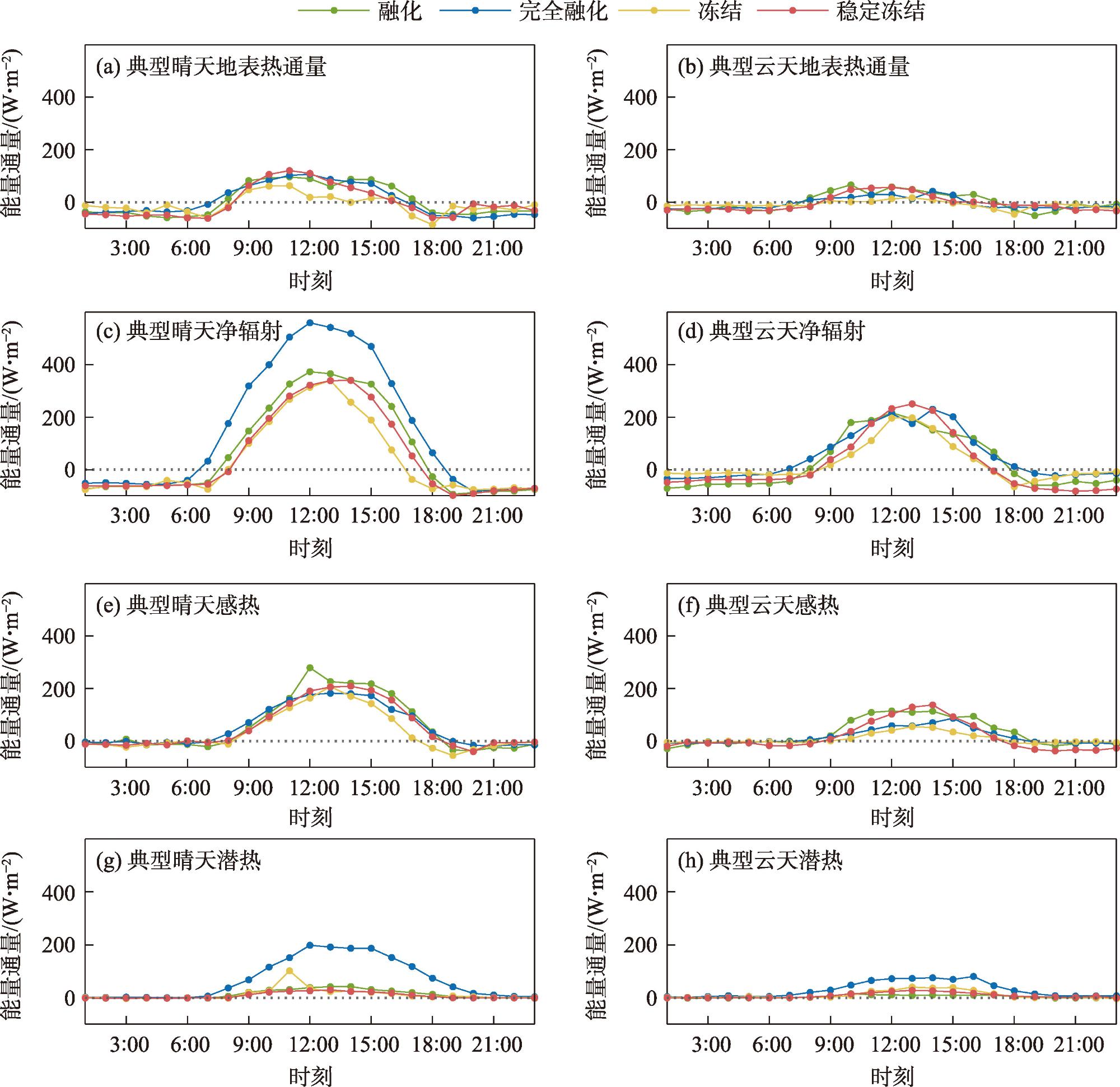
Using soil temperature, humidity and eddy observation data from the Haibei Pastoral Experiment Station of the China Meteorological Administration (hereinafter referred to as Haibei station), we analysed the characteristics of land-atmospheric water and heat exchange during soil freezing-thawing process of typical alpine meadowed grassland soils on the Qinghai-Xizang Plateau. The results showed that: (1) the soil freezing and thawing process significantly affected the shallow soil temperature and humidity. The soil temperature was the lowest during the stable freezing period (-13.8 ℃) and the highest during the complete thawing period (23.3 ℃), while soil humidity decreased to 5.7% during the stable freezing period and increased to 24.7% during the complete thawing period. (2) Soil freezing and thawing processes significantly changed the surface energy distribution, especially during the freeze-thaw transition season. Net radiation was highest during the complete thaw period (107.1 W·m-2) and lowest during the stable freeze period (8.9 W·m-2), and was mainly consumed by sensible and latent heat, accounting for 45.1% and 49.7% of the year, respectively. During the complete thaw (stable freeze) period, latent heat (sensible) fluxes predominated, whereas during the thaw (freeze) period, both were dominated by sensible heat fluxes. During the complete melting (stable freezing) period, the latent heat (sensible heat) flux was dominant, while during the ablation (freezing) period, the sensible heat flux was dominant. (3) The daily changes of temperature, humidity and energy fluxes in the shallow soil showed a single-peak pattern. The daily variation of soil temperature was the largest (10.9 ℃) during the complete melting period on sunny day and the smallest (1.8 ℃) during the freezing period, the daily variation of soil humidity was small, with a maximum of 1.5% during the melting period. The daily variation of net radiation was the largest (635.7 W·m-2) during the complete melting period, and the variation of latent heat fluxes was the largest (197.5 W·m-2), the variation of sensible heat flux reached its maximum during the melting period (315.1 W·m-2), while the variation of surface heat flux peaked during the stable freeze period (180.0 W·m-2). The weather type and the freeze-thaw phase jointly regulate the soil temperature and humidity changes, and influence the energy distribution by regulating the radiation input and the soil phase change.
表1 海北站观测仪器说明Tab. 1 Description of observation instruments at Haibei station |
| 观测项目 | 观测仪器 | 架设高度(埋深)/m | 观测频率/min |
|---|---|---|---|
| 三维超声风速 | IRGASON | 4 | 30 |
| 水汽/CO2通量 | IRGASON | ||
| 辐射分量 | NR01 | 1.5 | |
| 空气温度 | HMP45C | 2 | |
| 降水量 | SL3-1 | 0.75 | |
| 土壤温度 | 109 | 0.05、0.1、0.2、0.3、0.4 | |
| 土壤湿度 | CS616 | ||
| 土壤热通量 | HFP01 | 0.05 |
表2 土壤冻融阶段划分判据Tab. 2 Soil freezing and thawing stage classification criteria |
| 阶段 | 划分判据 |
|---|---|
| 冻结 | |
| 稳定冻结 | |
| 融化 | |
| 完全融化 | |
表3 海北站2022年7月—2023年6月浅层土壤冻融阶段信息Tab. 3 Information on the freeze-thaw stages of shallow soil at Haibei station from July 2022 to June 2023 |
| 土壤状态 | 开始时间 /年-月-日 | 结束日期 /年-月-日 | 日数/d | 典型晴天 /年-月-日 | 典型云天 /年-月-日 |
|---|---|---|---|---|---|
| 冻结 | 2022-11-05 | 2022-11-16 | 12 | 2022-11-05 | 2022-11-11,2022-11-13 |
| 稳定冻结 | 2022-11-17 | 2023-03-06 | 109 | 2023-02-19,2023-02-25,2023-03-03,2023-03-04 | 2022-11-21,2022-12-11,2023-01-16,2023-02-17,2023-03-02 |
| 融化 | 2023-03-07 | 2023-04-02 | 26 | 2023-03-10,2023-03-13,2023-03-27 | 2023-03-15,2023-03-22 |
| 完全融化 | 2022-07-01, 2023-04-03 | 2022-11-04, 2023-06-30 | 219 | 2022-07-11,2022-08-01,2022-09-06,2022-10-16,2023-04-28,2023-05-13,2023-06-18 | 2022-07-15,2022-08-22,2022-09-18,2022-10-05,2023-04-13,2023-05-27,2023-06-17 |
图4 海北站2022年7月—2023年6月平均能量通量的季节变化Fig. 4 Seasonal variation of daily mean energy fluxes from July 2022 to June 2023 at Haibei station |
表4 研究区各冻融期平均地表能量参数Tab. 4 Surface energy parameters for each freeze-thaw period in the study area |
| 时期 | 净辐射 /(W·m-2) | 潜热通量 /(W·m-2) | 感热通量 /(W·m-2) | 地表热通量 /(W·m-2) | 波文比 |
|---|---|---|---|---|---|
| 全年 | 71.4 | 35.5 | 32.2 | -1.6 | 0.9 |
| 完全融化 | 107.1 | 54.8 | 35.6 | 1.4 | 0.7 |
| 融化 | 63.9 | 12.5 | 50.7 | 5.9 | 4.1 |
| 冻结 | 20.0 | 9.0 | 23.4 | -7.9 | 2.6 |
| 稳定冻结 | 8.9 | 6.0 | 22.0 | -8.7 | 3.7 |
注:表中加粗数字代表该能量分支在对应时期占比较大。 |
| [1] |
|
| [2] |
潘保田, 李吉均. 青藏高原: 全球气候变化的驱动机与放大器—Ⅲ.青藏高原隆起对气候变化的影响[J]. 兰州大学学报(自然科学版), 1996, 32(1): 108-115.
[
|
| [3] |
|
| [4] |
|
| [5] |
范广洲, 吕世华, 华维, 等. 青藏高原地-气水热交换特征及影响研究综述[J]. 气象科技进展, 2021, 11(4): 64-71.
[
|
| [6] |
王澄海, 杨凯, 张飞民, 等. 青藏高原土壤冻融过程的气候效应:进展和展望[J]. 高原气象, 2021, 40(6): 1318-1336.
[
|
| [7] |
|
| [8] |
赵林, 程国栋, 李述训, 等. 青藏高原五道梁附近多年冻土活动层冻结和融化过程[J]. 科学通报, 2000, 45(11): 1205-1211.
[
|
| [9] |
武月月, 文军, 王作亮. 黄河源高寒草原下垫面土壤冻融过程中陆-气间的水热交换特征分析[J]. 高原气象, 2022, 41(1): 132-142.
[
|
| [10] |
张戈, 赖欣, 刘康. 黄河源区玛曲土壤冻融过程中地表水热交换特征分析[J]. 高原气象, 2023, 42(3): 575-589.
[
|
| [11] |
|
| [12] |
|
| [13] |
黄凌昕, 陈婕, 阳坤, 等. 现代青藏高原亚洲夏季风气候北界及其西风区和季风区划分[J]. 中国科学: 地球科学, 2023, 53(4): 866-878.
[
|
| [14] |
|
| [15] |
王力, 张强. 近20年青藏高原典型高寒草甸草原植物物候变化特征[J]. 高原气象, 2018, 37(6): 1528-1534.
[
|
| [16] |
|
| [17] |
周幼吾, 郭东信, 程国栋, 等. 中国冻土[M]. 北京: 科学出版社, 2000.
[
|
| [18] |
谷星月, 马耀明, 马伟强, 等. 青藏高原地表辐射通量的气候特征分析[J]. 高原气象, 2018, 37(6): 1458-1469.
[
|
| [19] |
齐木荣, 马千惠, 杨清华, 等. 青藏高原冻结期地表热储分析——以鄂陵湖畔草地为例[J]. 高原气象, 2020, 39(6): 1270-1281.
[
|
| [20] |
葛骏, 余晔, 李振朝, 等. 青藏高原多年冻土区土壤冻融过程对地表能量通量的影响研究[J]. 高原气象, 2016, 35(3): 608-620.
[
|
| [21] |
范新岗, 汤懋苍. 土壤传导—对流热通量计算的初步结果[J]. 高原气象, 1994, 13(1): 14-19.
[
|
| [22] |
|
| [23] |
|
| [24] |
|
| [25] |
戴黎聪, 柯浔, 张法伟, 等. 青藏高原季节冻土区土壤冻融过程水热耦合特征[J]. 冰川冻土, 2020, 42(2): 390-398.
[
|
| [26] |
马晶晶, 王佩, 邓钰婧, 等. 青海湖流域高寒草甸季节冻土土壤温湿变化特征[J]. 土壤, 2022, 54(3): 619-628.
[
|
| [27] |
张海宏, 肖宏斌, 祁栋林, 等. 青藏高原湿地土壤冻结、融化期间的陆面过程特征[J]. 气象学报, 2017, 75(3): 481-491.
[
|
| [28] |
乌艺恒, 赵鹏武, 周梅, 等. 季节性冻土区土体冻融过程及其对水热因子的响应[J]. 干旱区研究, 2019, 36(6): 1568-1575.
[
|
| [29] |
郭浩楠, 汪少勇, 叶虎林, 等. 长江源区典型高寒沼泽草甸地表能量平衡特征及其影响因素[J]. 冰川冻土, 2023, 45(5): 1501-1515.
[
|
| [30] |
王澄海, 师锐, 左洪超. 青藏高原西部冻融期陆面过程的模拟分析[J]. 高原气象, 2008, 27(2): 239-248.
[
|
| [31] |
罗栋梁, 金会军, 吕兰芝, 等. 黄河源区多年冻土活动层和季节冻土冻融过程时空特征[J]. 科学通报, 2014, 59(14): 1327-1336.
[
|
| [32] |
李述训, 南卓铜, 赵林. 冻融作用对地气系统能量交换的影响分析[J]. 冰川冻土, 2002, 24(5): 506-511.
[
|
/
| 〈 |
|
〉 |