



西北干旱区近30 a植被覆盖的时空变化及其对气候因子的响应
|
张秀霞(1985-),女,博士,副教授,主要从事3S技术的干旱区环境监测. E-mail: zhangxx@lut.edu.cn |
收稿日期: 2024-11-05
修回日期: 2024-12-30
网络出版日期: 2025-08-12
基金资助
甘肃省自然科学基金(24JRRA176)
Spatiotemporal changes in vegetation coverage in the arid regions of Northwest China over the past 30 years and their response to climatic factors
Received date: 2024-11-05
Revised date: 2024-12-30
Online published: 2025-08-12
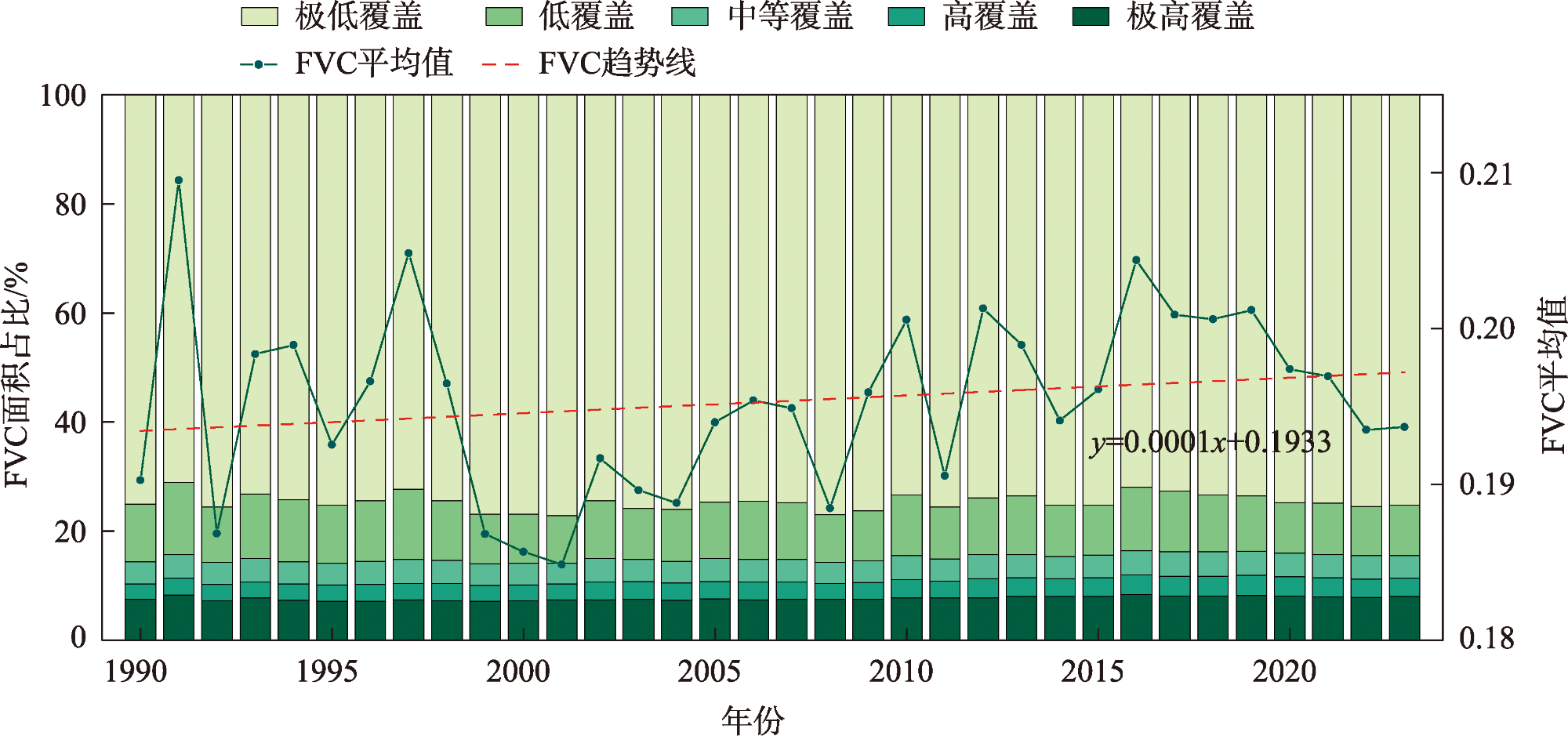
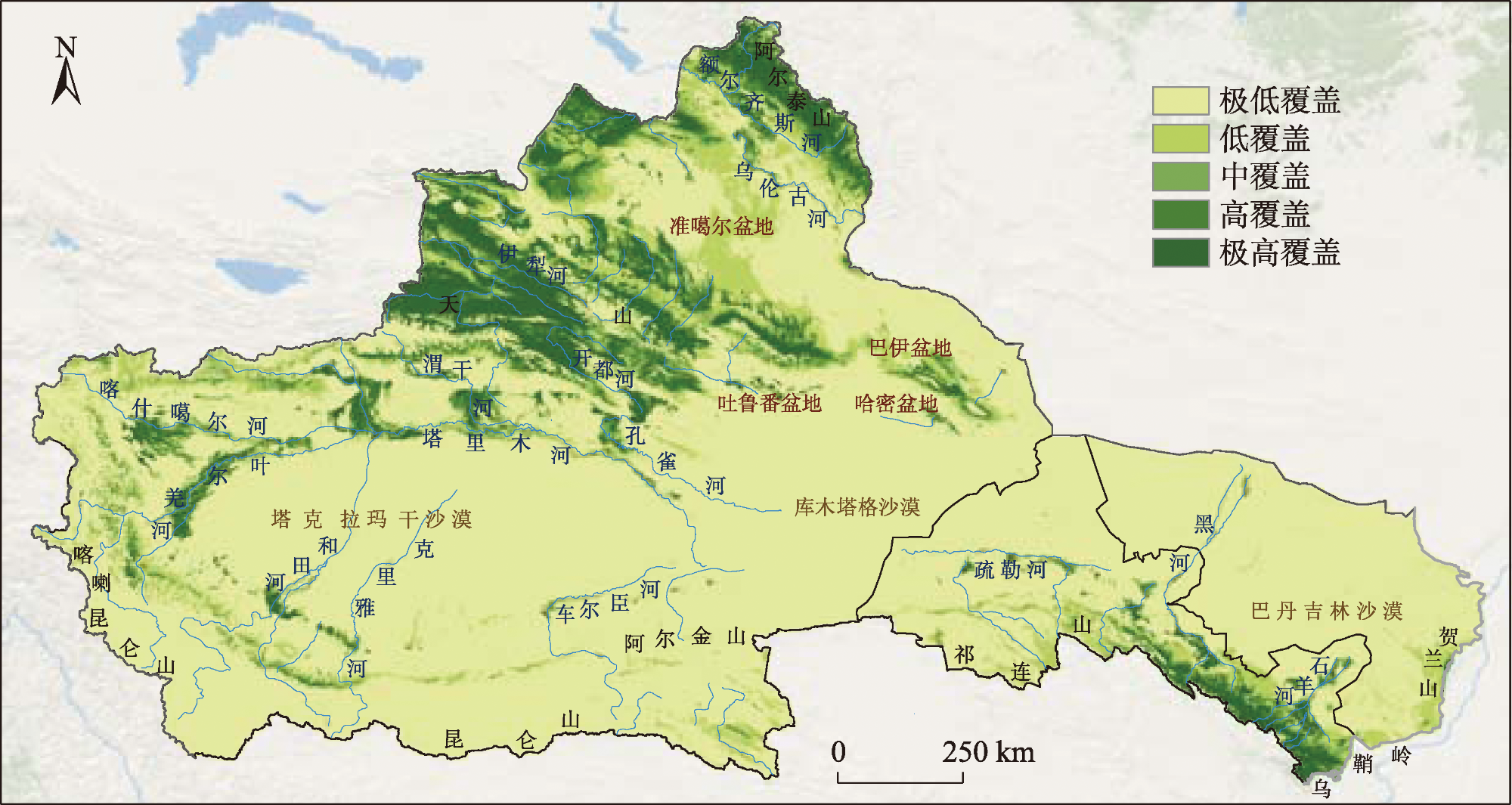
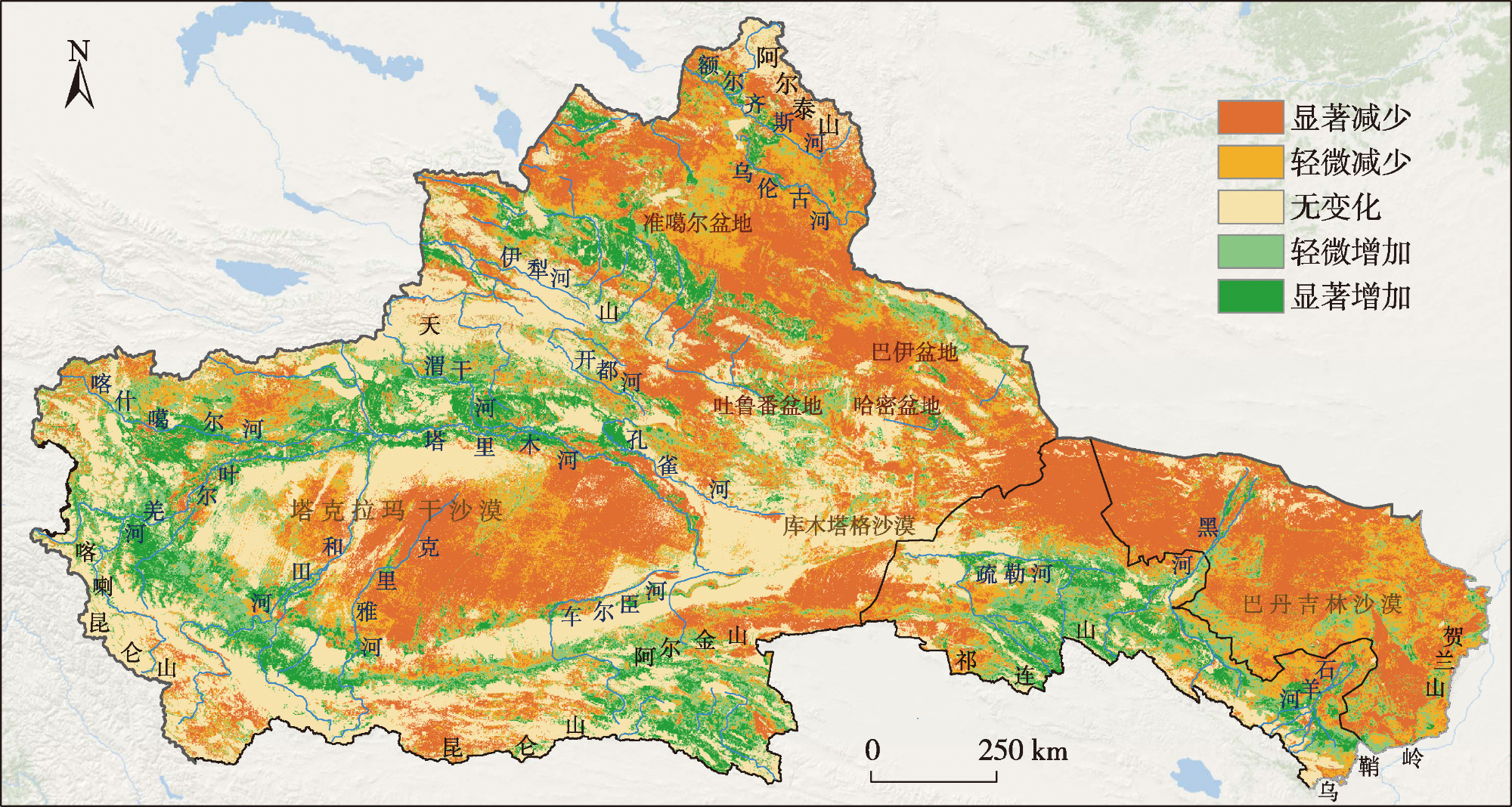
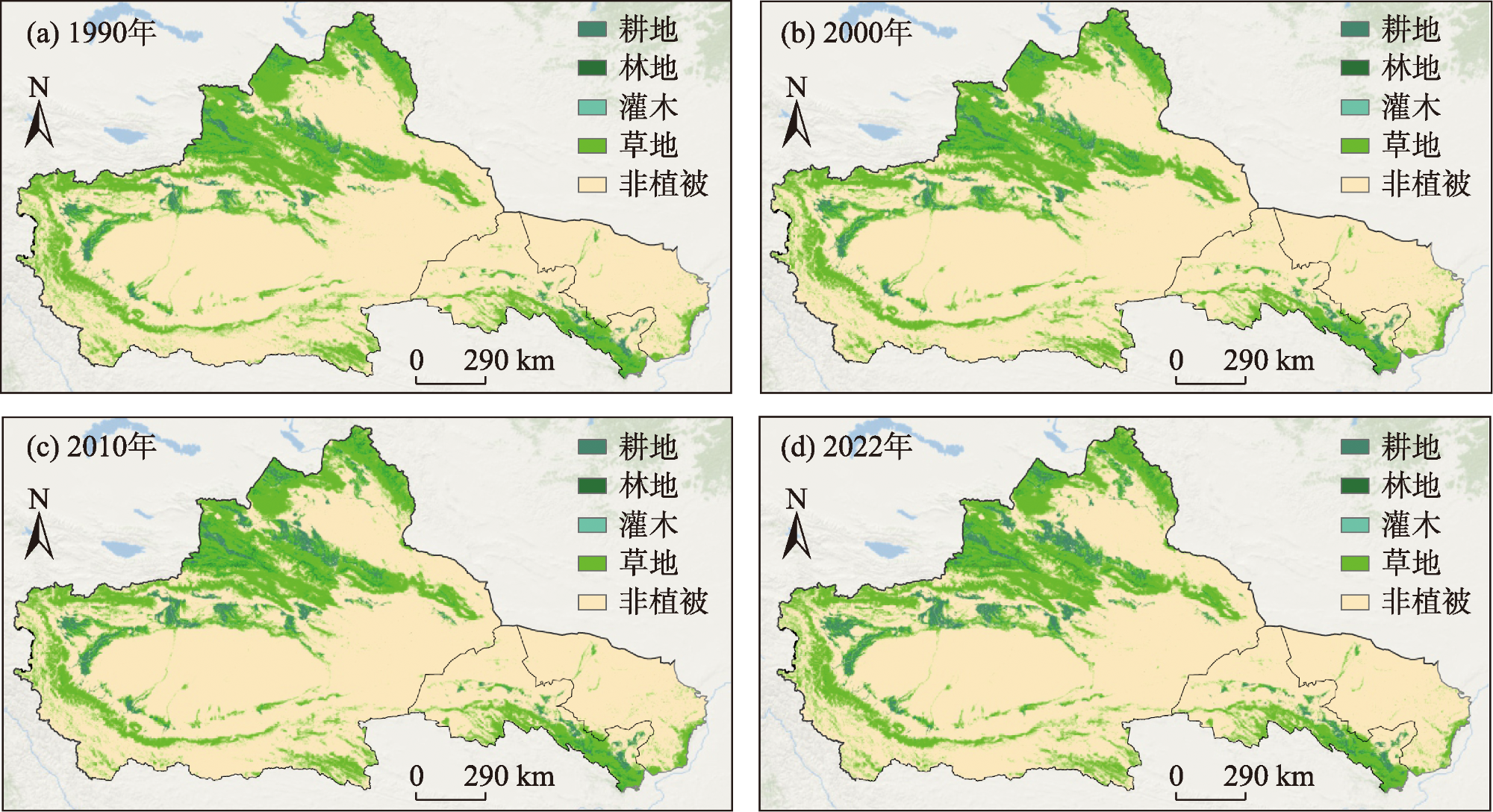
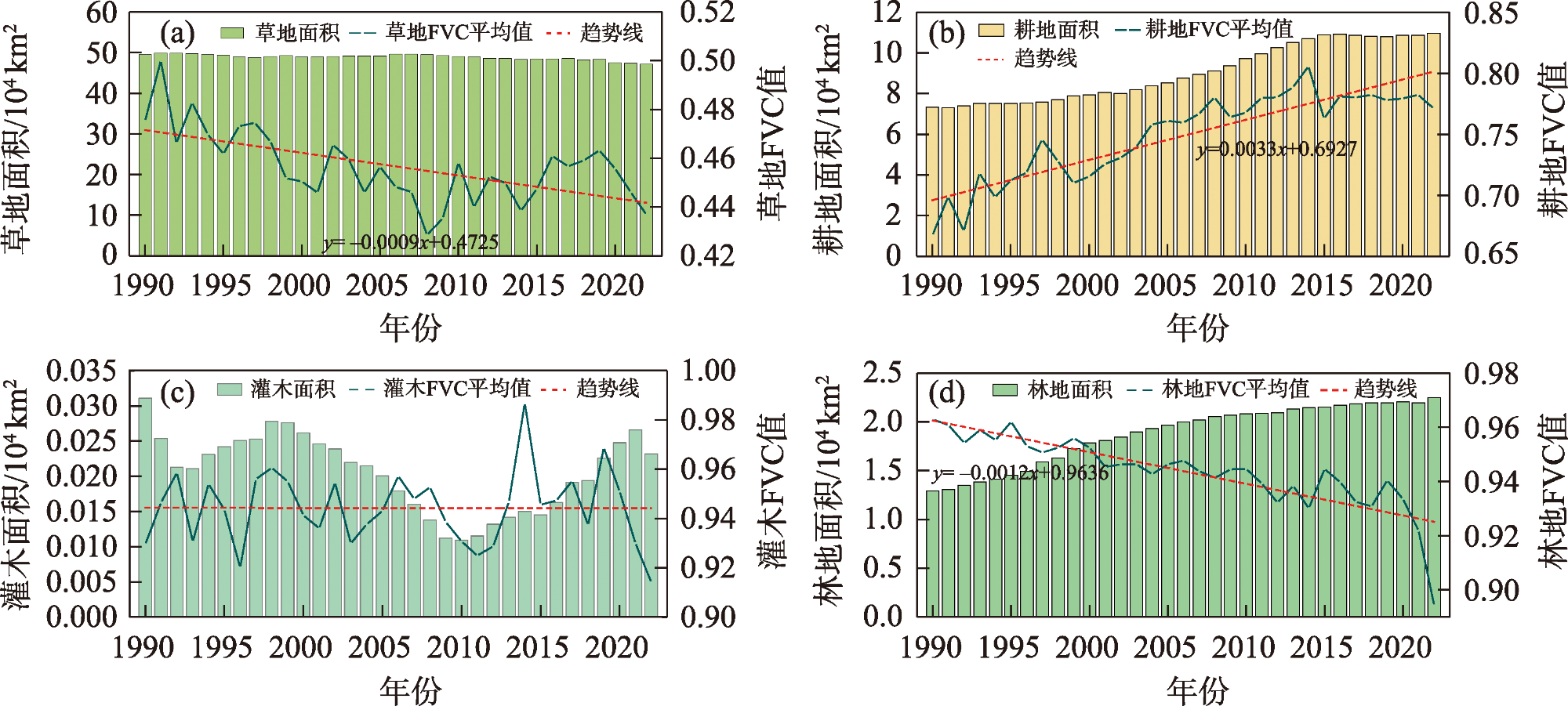
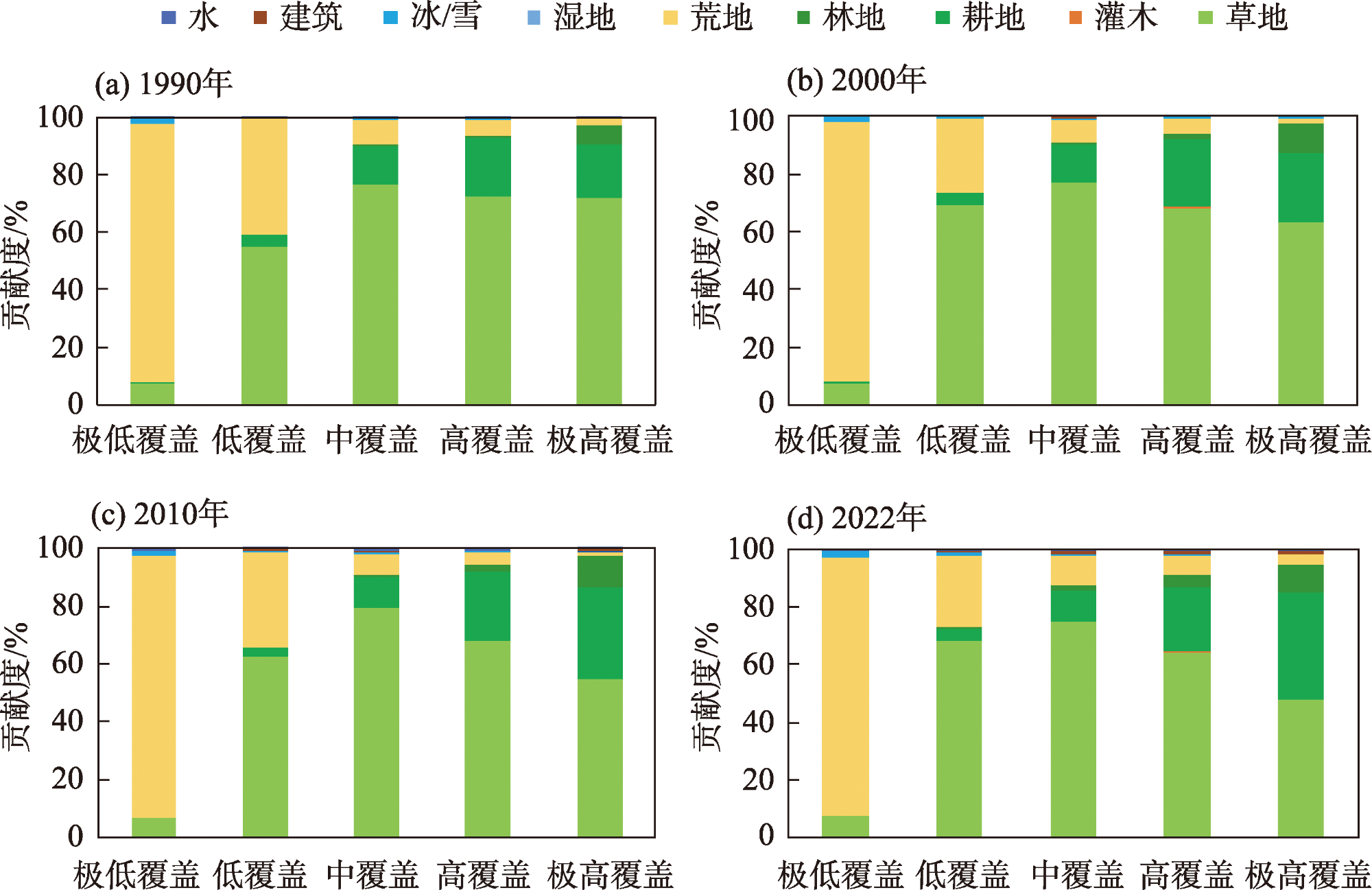
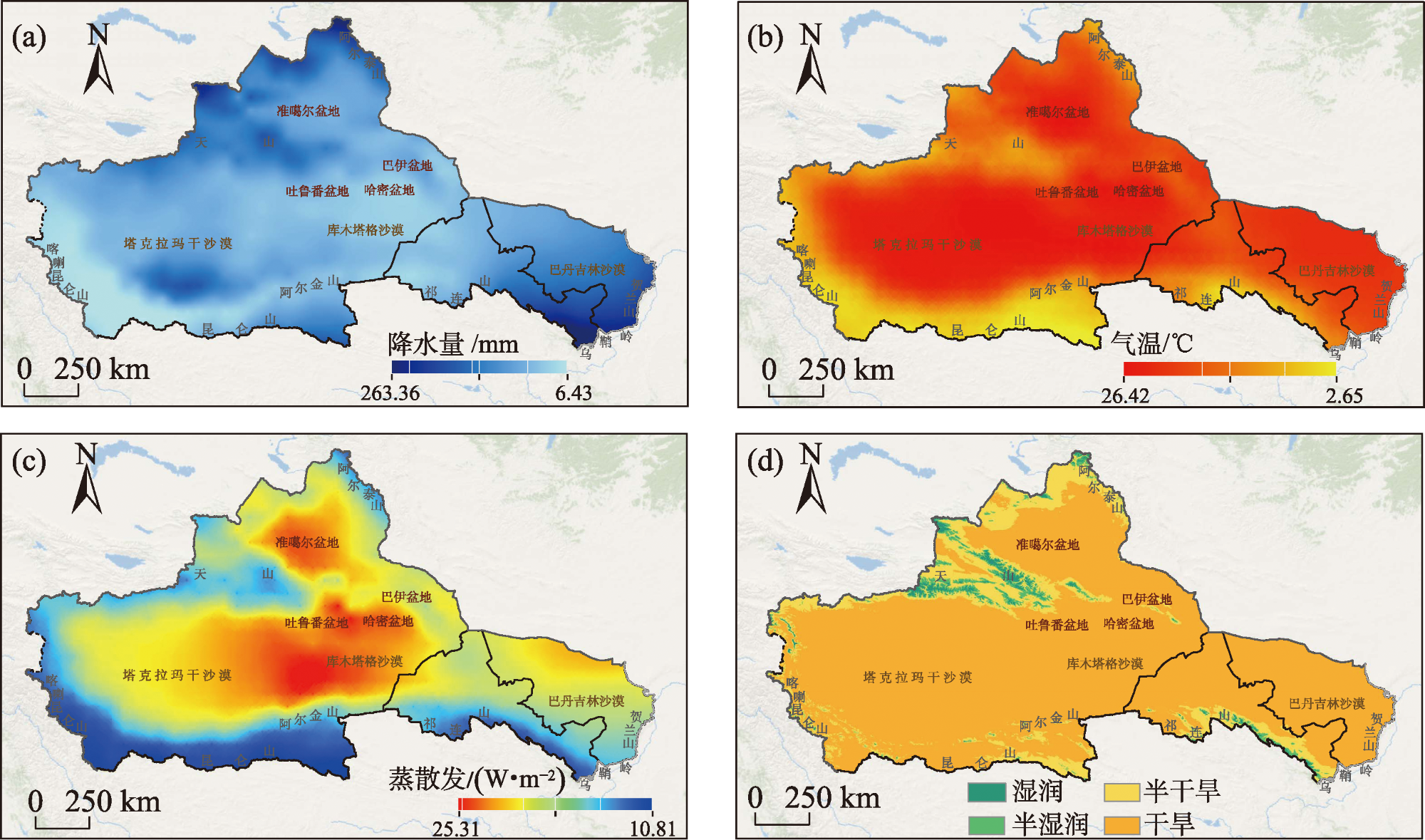
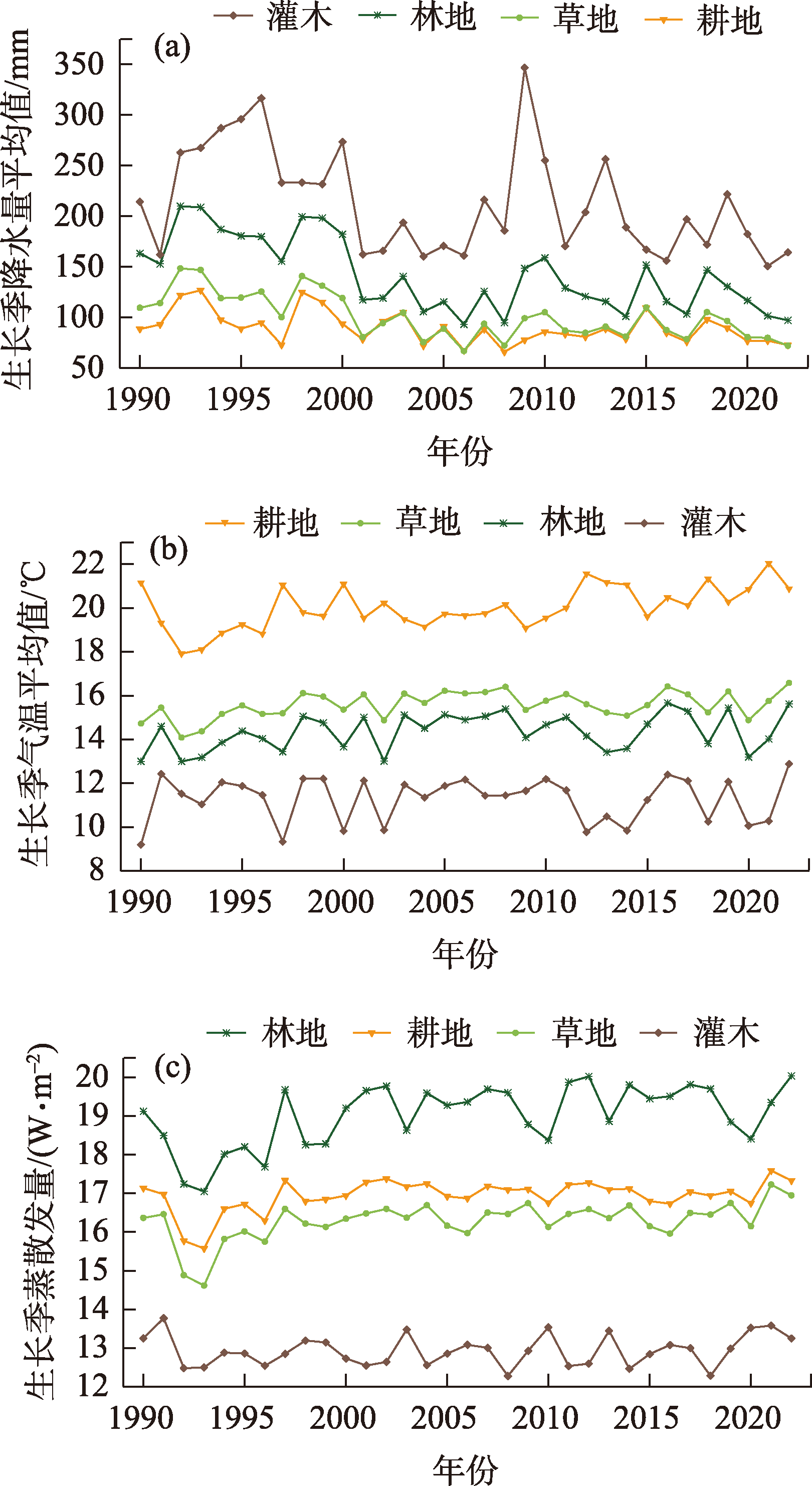
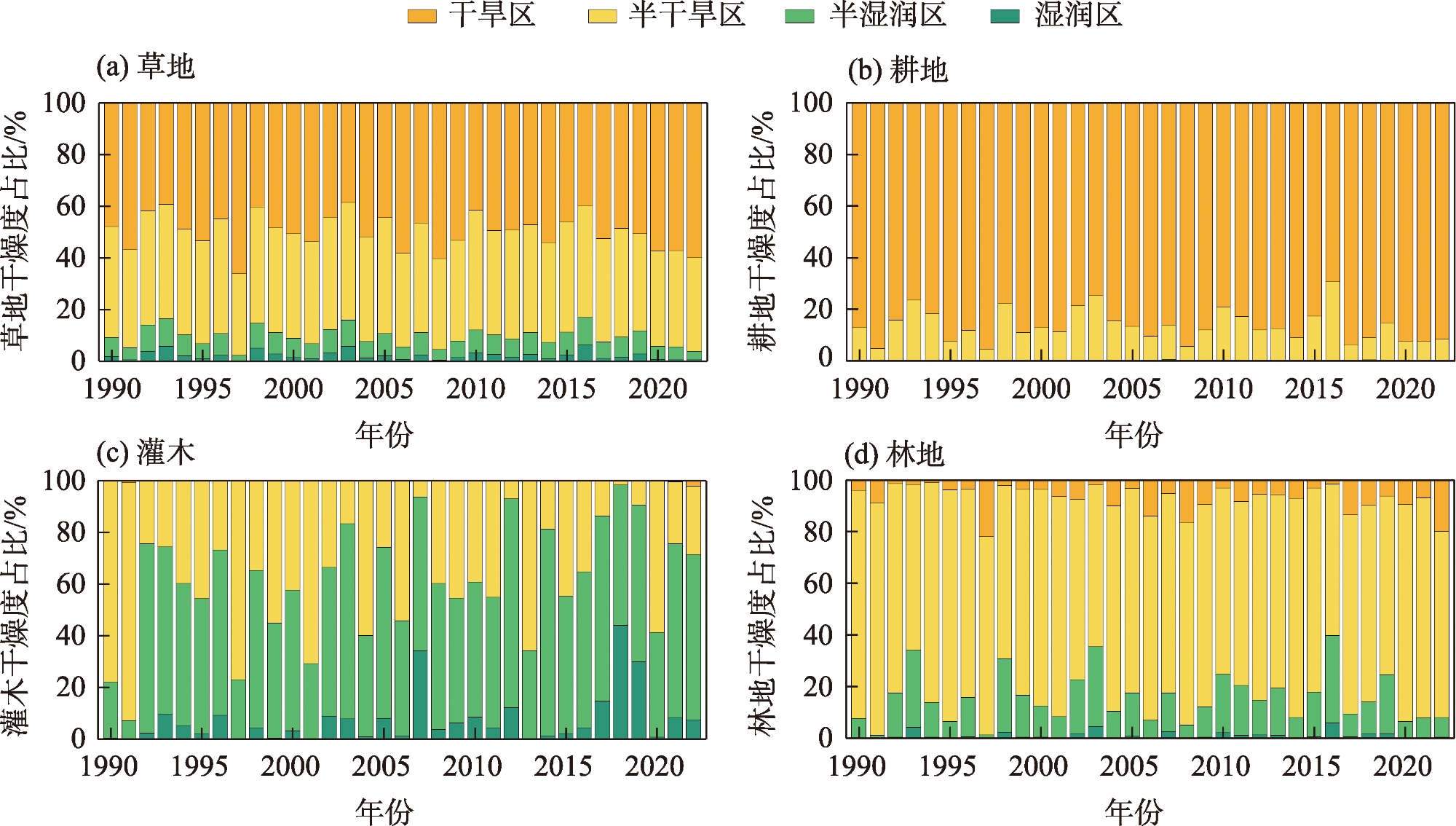
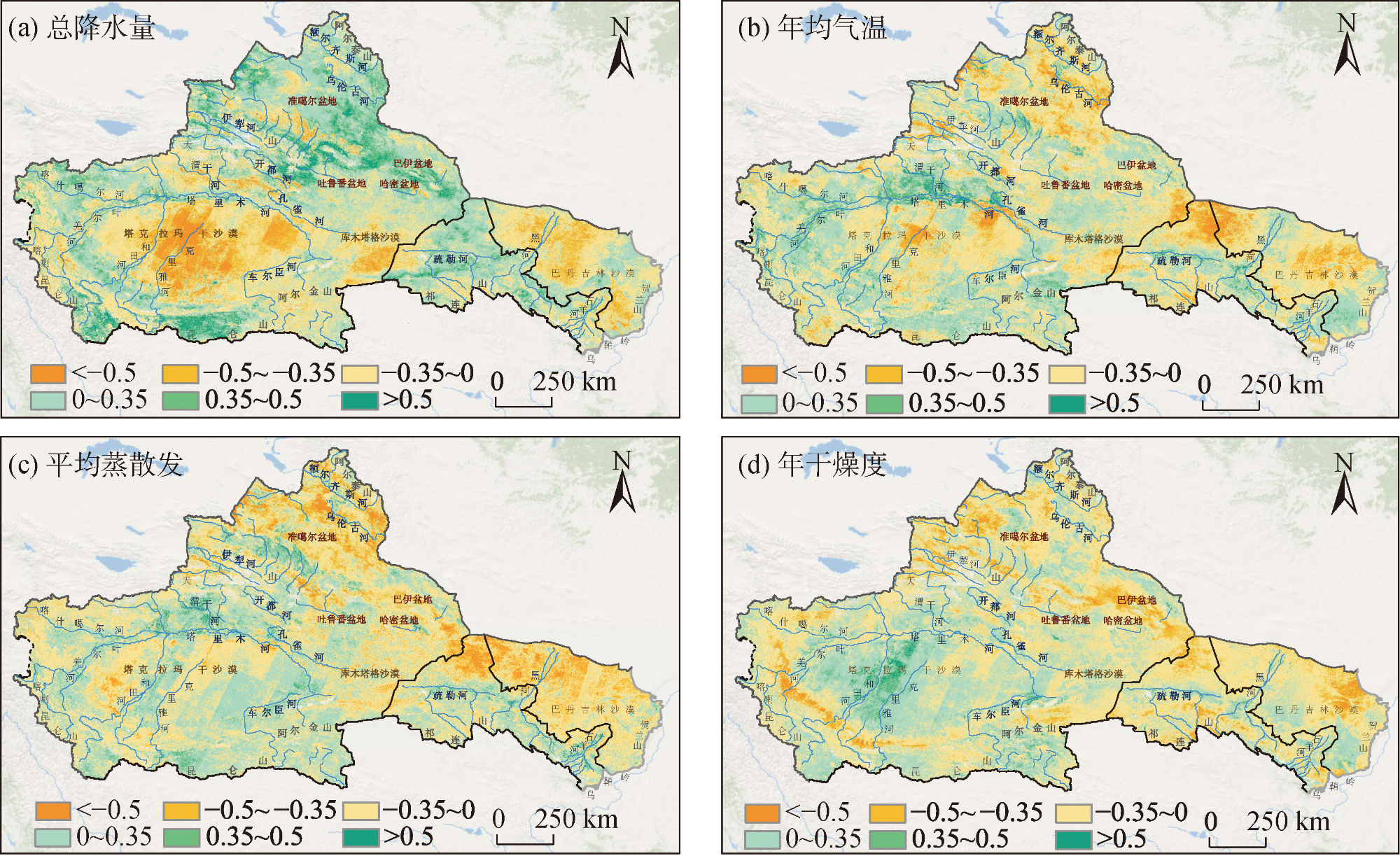
西北干旱区是我国典型的植被脆弱区,植被覆盖在维持该地区独特的陆地生态系统中发挥着关键作用。本研究利用Landsat数据和像元二分模型分析1990—2022年西北干旱区植被覆盖度(Fractional Vegetation Cover,FVC)的时空变化规律,综合应用土地利用数据,Sen斜率估计、Mann-Kendall检验以及相关性分析等方法分析不同植被类型FVC时空变化特征以及对气候变化因子的响应。 结果表明:(1) 研究区FVC呈现波动上升趋势,上升速率每年为0.98×10⁻⁴,空间分异性特征显著,以极低植被覆盖为主,流域区域FVC较高。(2) 土地利用转型驱动FVC格局演变,林地和耕地面积增加,对FVC极高覆盖区的贡献随之增加(分别增加了3.0%、18.8%),草地仍是各覆盖等级的优势载体(平均占比>47.7%)。(3) 植被生长季平均降水量排序为灌木>林地>草地>耕地,气温变化趋势与之相反。蒸散发量依次为林地>耕地>草地>灌木。灌木覆盖区年均湿润面积占比达61.03%,耕地区不足5%。植被覆盖度与降水(52.0%)、气温(60.2%)、蒸散发及干燥度(63%)均呈负相关关系,植被对气候变化表现出显著敏感性。研究结果为西北干旱区的生态管理与恢复提供了重要依据。
张秀霞 , 韩丽莎 , 党星海 , 汪孝贤 , 林庆润 , 邓灵芝 , 杨明航 , 张喜来 . 西北干旱区近30 a植被覆盖的时空变化及其对气候因子的响应[J]. 干旱区研究, 2025 , 42(6) : 1067 -1079 . DOI: 10.13866/j.azr.2025.06.10
The arid region of Northwest China is an area of notable vegetation vulnerability, where vegetation cover plays a crucial role in sustaining unique terrestrial ecosystems. This study utilized Landsat data and the pixel dichotomy model to analyze spatiotemporal variation patterns of Fractional Vegetation Cover (FVC) in the arid region of Northwest China from 1990-2022. Integrating land use data, the research employed Sen’s slope estimation, the Mann-Kendall test, and correlation analysis to investigate FVC characteristics across different vegetation types and their responses to climatic factors. The results indicate that: (1) FVC exhibited a fluctuating upward trend, with an annual increase rate of 0.98×10⁻⁴; spatial heterogeneity was significant, with areas predominantly characterized by very low vegetation coverage, while river basin regions displayed higher FVC values. (2) Land use transformation has driven the evolution of FVC patterns, with increases in forestland and cultivated land contributing to the expansion of areas with very high FVC coverage (increasing by 3.0% and 18.8%, respectively); grassland remains the dominant cover across all levels, with an average proportion exceeding 47.7%. (3) Average precipitation during the vegetation growing season ranks as follows: shrubland>forestland>grassland>cropland, whereas temperature trends are reversed; evapotranspiration follows the order: forestland>cropland>grassland>shrubland; the average annual humid area proportion is 61.03% in shrubland regions, compared to less than 5% in cropland regions. FVC shows negative correlations with precipitation (52.0%), temperature (60.2%), evapotranspiration, and aridity index (63%). Vegetation demonstrates significant sensitivity to climate change. The findings provide an important basis for ecological management and restoration in the arid regions of Northwest China.
表1 数据详情Tab. 1 Data details |
| 数据集 | 空间分辨率 | 时间范围 | 数据来源 |
|---|---|---|---|
| Landsat 5 SR | 30 m | 1990—2011年 | 美国地质调查局(https://www.usgs.gov/) |
| Landsat 7 SR | 30 m | 1999—2012年 | 美国地质调查局(https://www.usgs.gov/) |
| Landsat 8 SR | 30 m | 2013—2022年 | 美国地质调查局(https://www.usgs.gov/) |
| 土地覆被数据 | 30 m | 1990—2022年 | 武汉大学30 m分辨率中国土地覆被数据集(https://zenodo.org/record/8176941/) |
| 气温数据 | 0.5° | 1990—2022年 | CRU TS(https://crudata.uea.ac.uk/cru/data/hrg/) |
| 降水数据 | 0.5° | 1990—2022年 | CRU TS(https://crudata.uea.ac.uk/cru/data/hrg/) |
| 蒸散发数据 | 0.0083333° | 1990—2022年 | 国家青藏高原科学数据中心(https://data.tpdc.ac.cn/) |
| 干燥度数据 | 0.0083333° | 1990—2022年 | 国家青藏高原科学数据中心(https://data.tpdc.ac.cn/) |
表2 FVC变化等级趋势Tab. 2 Trend of FVC change grade |
| β | Z | 趋势特征 |
|---|---|---|
| β>0 | Z>1.96 | 显著增加 |
| Z<1.96 | 轻微增加 | |
| β=0 | Z=0 | 无变化 |
| β<0 | Z>-1.96 | 轻微减少 |
| Z<-1.96 | 显著减少 |
| [1] |
|
| [2] |
|
| [3] |
|
| [4] |
|
| [5] |
|
| [6] |
|
| [7] |
|
| [8] |
张倩, 曹广超, 张乐乐, 等. 祁连山南坡植被绿度时空变化及其对气候变化和人类活动的响应[J]. 干旱区研究, 2024, 41(12): 2143-2153.
[
|
| [9] |
杨鹏辉, 田佳, 张楠, 等. 1990—2022年黄河流域植被时空变化特征及未来趋势预测[J]. 生态学报, 2024, 44(19): 8542-8553.
[
|
| [10] |
李卓忆, 杨庆, 马柱国, 等. 中国北方干旱半干旱区植被对气候变化和人类活动的响应[J]. 大气科学, 2024, 48(3): 859-874.
[
|
| [11] |
|
| [12] |
赵晶, 周耀治, 邓兴耀. 西北干旱区植被覆盖时空动态特征[J]. 林业资源管理, 2017(1): 118-126.
[
|
| [13] |
王玮, 冯琦胜, 郭铌, 等. 基于长时间序列NDVI资料的我国西北干旱区植被覆盖动态监测[J]. 草业科学, 2012, 32(12): 1969-1979.
[
|
| [14] |
|
| [15] |
阿多, 赵文吉, 宫兆宁, 等. 1981—2013华北平原气候时空变化及其对植被覆盖度的影响[J]. 生态学报, 2017, 37(2): 576-592.
[
|
| [16] |
|
| [17] |
李茂华, 都金康, 李皖彤, 等. 1982—2015年全球植被变化及其与温度和降水的关系[J]. 地理科学, 2020, 40(5): 823-832.
[
|
| [18] |
|
| [19] |
|
| [20] |
|
| [21] |
|
| [22] |
张学渊, 魏伟, 周亮, 等. 西北干旱区生态脆弱性时空演变分析[J]. 生态学报, 2021, 41(12): 4707-4719.
[
|
| [23] |
陈亚宁, 李忠勤, 徐建华. 中国西北干旱区水资源与生态环境变化及保护建议[J]. 中国科学院院刊, 2023, 38(3): 385-393.
[
|
| [24] |
赵楠, 赵颖慧, 邹海凤. 1990—2020年黑龙江省植被覆盖度的时空变化趋势及驱动力[J]. 应用生态学报, 2023, 34(5): 1320-1330.
[
|
| [25] |
陈以恒, 玉素甫江·如素力, 阿卜杜热合曼·吾斯曼. 2001—2020年天山新疆段草地植被覆盖度时空变化及驱动因素分析[J]. 植物生态学报, 2024, 48(5): 561-576.
[
|
| [26] |
刘坤, 袁新, 肖寒予, 等. 2000—2019年西藏草地植被覆盖度对气温和降水变化的响应[J]. 中国资源综合利用, 2022, 40(5): 95-100.
[
|
| [27] |
闫志远, 张圣微, 王怡璇. 基于GEE的1982—2021年内蒙古地区植被覆盖度时空动态及气候响应特征[J]. 农业工程学报, 2023, 39(15): 94-102.
[
|
| [28] |
杨靖, 戴君虎, 姚华荣, 等. 1992—2020年横断山区植被分布与植被活动变化[J]. 地理学报, 2022, 77(11): 2787-2802.
[
|
| [29] |
黄豪奔, 徐海量, 林涛, 等. 2001—2020年新疆阿勒泰地区归一化植被指数时空变化特征及其对气候变化的响应[J]. 生态学报, 2022, 42(7): 2798-2809.
[
|
| [30] |
|
| [31] |
肖建勇, 王世杰, 白晓永, 等. 喀斯特关键带植被时空变化及其驱动因素[J]. 生态学报, 2018, 38(24): 8799-8812.
[
|
| [32] |
沈贝贝, 魏一博, 马磊超, 等. 内蒙古草原植被覆盖度时空格局变化及驱动因素分析[J]. 农业工程学报, 2022, 38(12): 118-126.
[
|
| [33] |
苏泽琛, 邵战林. 干旱区土地利用变化对耕地空间的影响及预测——以昌吉市为例[J]. 干旱区研究, 2024, 41(11): 1936-1945.
[
|
| [34] |
潘竟虎, 李真. 2001—2012年西北干旱区植被净初级生产力时空变化[J]. 生态学杂志, 2015, 34(12): 3333-3340.
[
|
| [35] |
马海云, 张林林, 魏学琼, 等. 2000—2015年西南地区土地利用与植被覆盖的时空变化[J]. 应用生态学报, 2021, 32(2): 618-628.
[
|
| [36] |
|
| [37] |
|
/
| 〈 |
|
〉 |