



Spatiotemporal patterns of cropland water use efficiency in the Aksu River Basin
Received date: 2025-05-15
Revised date: 2025-07-07
Online published: 2026-03-11
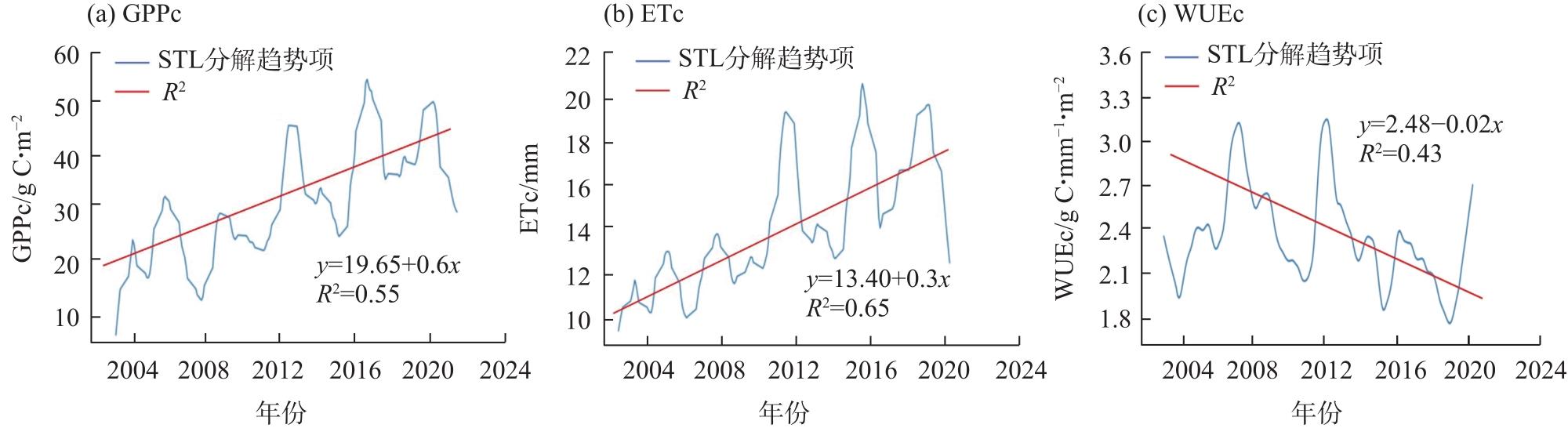
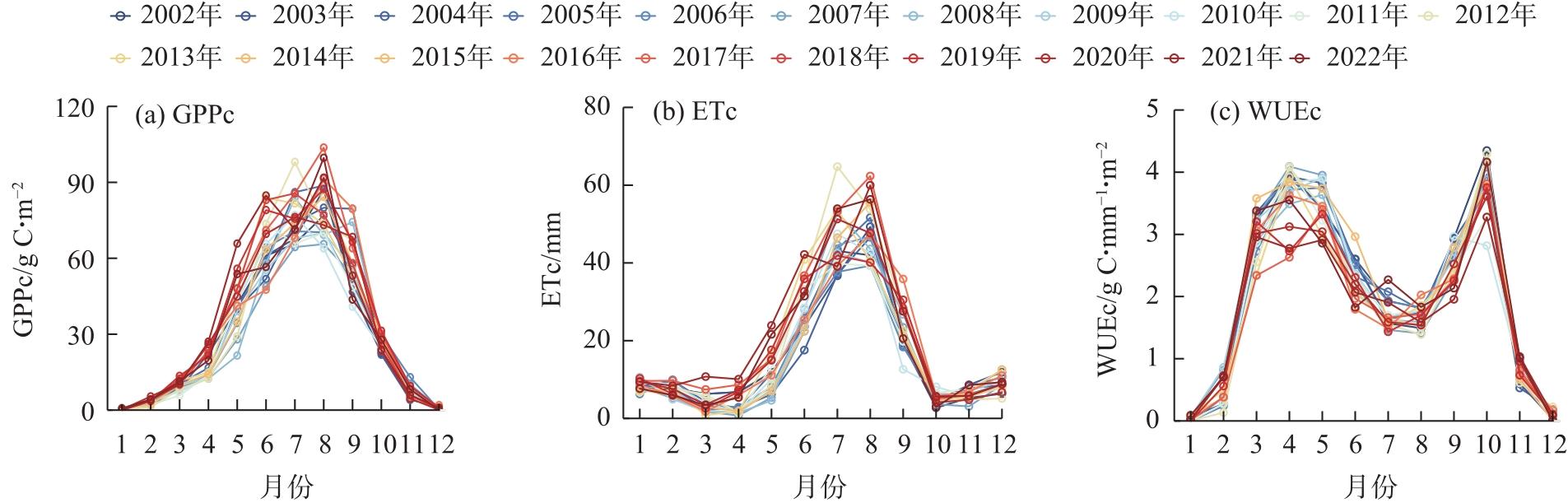
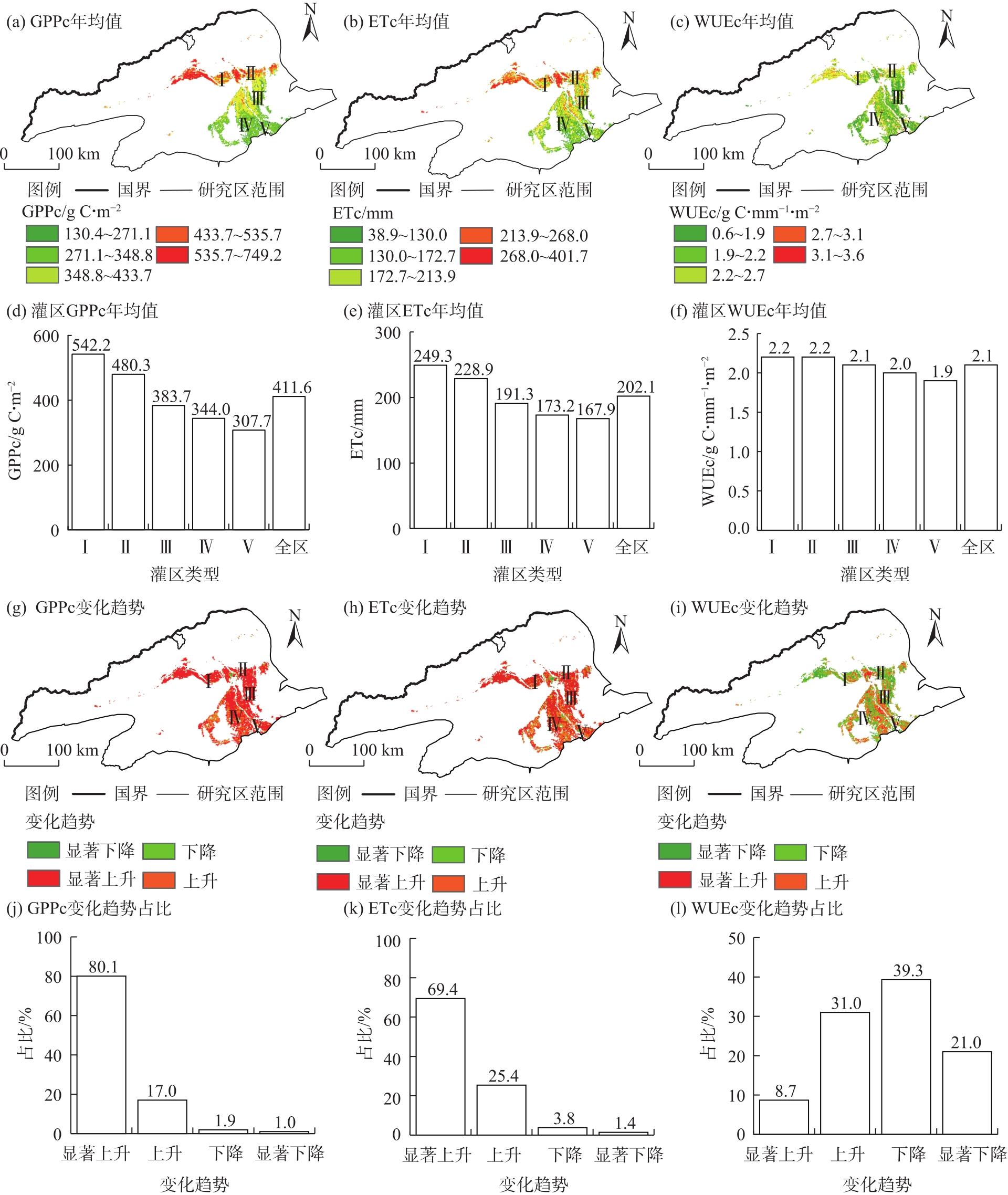
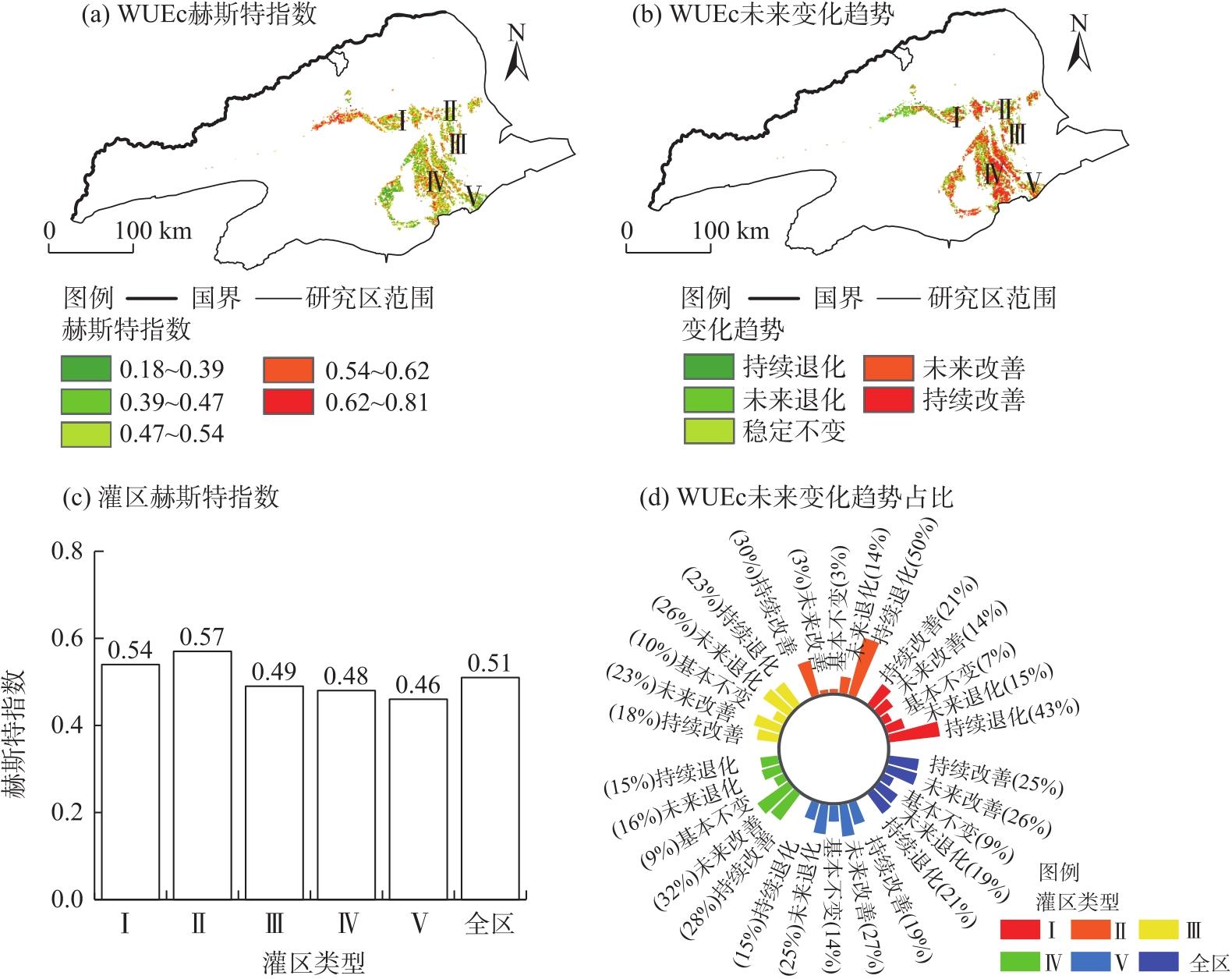
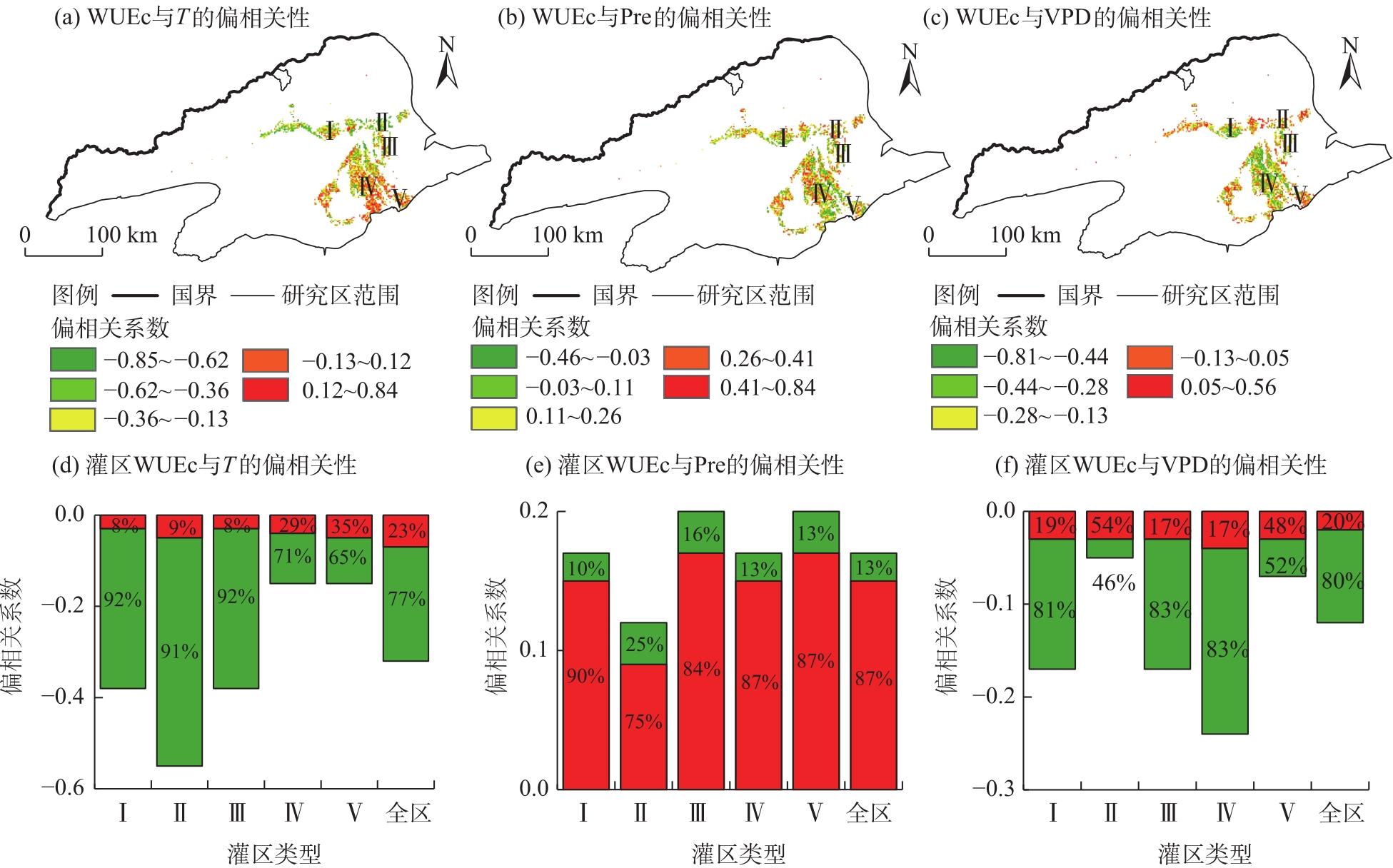
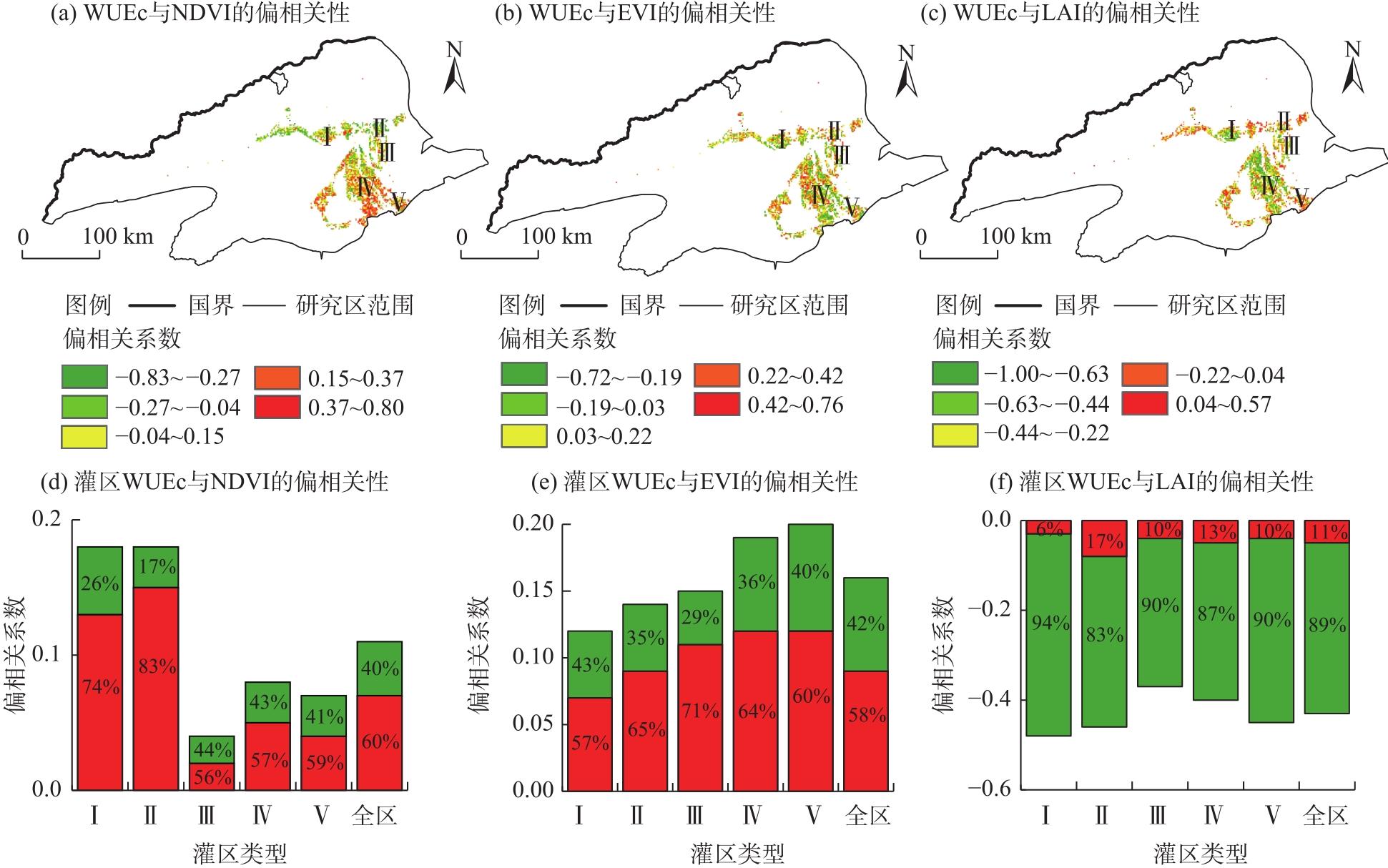
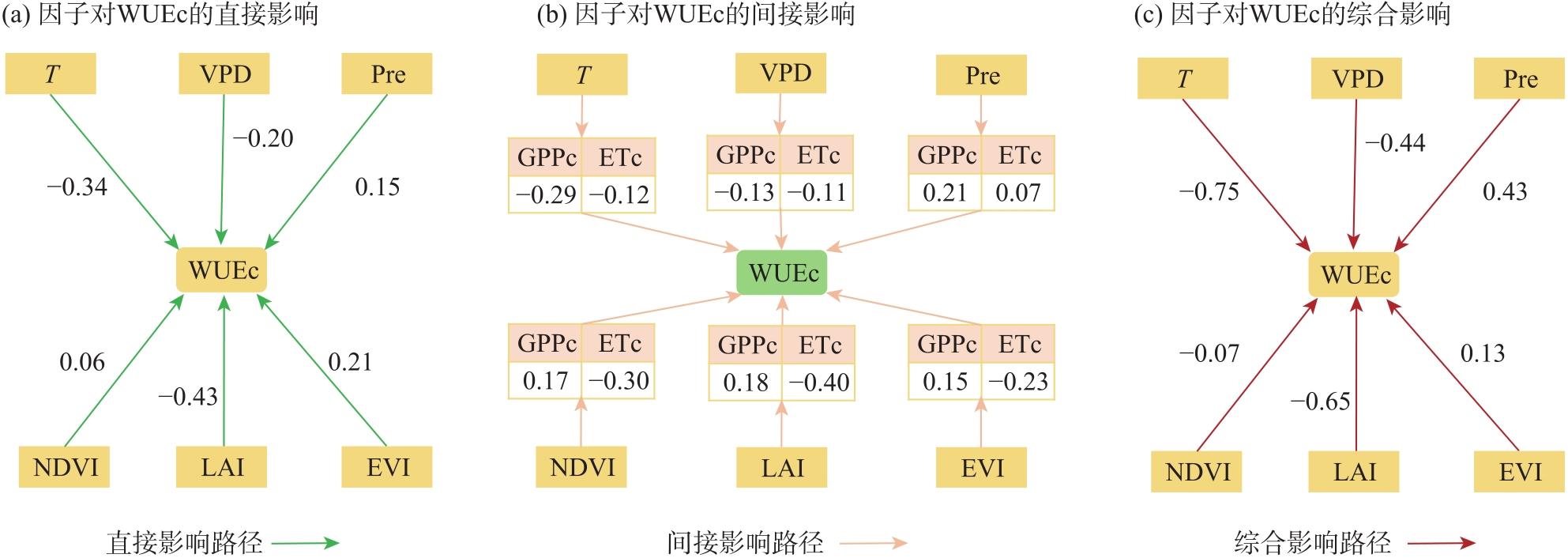
Quantitative assessment of the long-term variations in cropland water use efficiency (WUEc) is crucial for optimizing water resource utilization and achieving high yields as well aseffective water-saving in irrigated agriculture in arid regions. This research integrates gross primary productivity of crops (GPPc), grop evapotranspiration (ETc), WUEc, and meteorological as well as vegetation data in the Aksu River Basin from 2002 to 2022, a typical arid region, and systematically identifies the spatiotemporal patterns of WUEc and the synergistic effects of multiple driving factorsby applying Sen’s slope, the Mann-Kendall trend test, seasonal and trend decomposition using loess, partial correlation analysis, and path analysis. The results indicate the following: (1) Temporal characteristics: GPPc and ETc in the basin increased significantly at rates of 0.6 g C·m-2·a-1 and 0.3 mm·a-1, respectively, while WUEc declined at a rate of 0.02 g C·mm-1·m-2·a-1. Intraannual dynamics showed a unimodal pattern for GPPc and ETc (peaking in August), and a bimodal pattern for WUEc (with peaks in April and October). (2) Spatial patterns: Regions with declining WUEc accounted for 60.3% of the area under consideration, while those with increasing GPPc and ETc covered 97.1% and 94.8%, respectively, highlighting a widespread phenomenon of “increased production without efficiency gains” in the basin. (3) Driving factor analysis: WUEc was significantly negatively correlated with temperature (T), vapor pressure deficit, and leaf area index (LAI), with the negatively correlated areas corresponding to 77%-89%, and positively correlated with precipitation (Pre), corresponding to 87% of the total area. (4) Path analysis: T and Pre primarily influenced WUEc by regulating GPPc, whereas LAI affected WUEc via ETc. Normalized difference vegetation index and enhanced vegetation index impacted WUEc through the combined regulation of both ETc and GPPc. T and LAI were identified as dominant drivers, suggesting a dual-stress mechanism acting on agroecosystems in arid regions. This study elucidates the multi-scale evolution patterns of WUEc in arid regions and its nonlinear driving mechanisms, providing a scientific basis for optimizing agricultural water resource management under climate change.
Qiu ZHAO , Fan GAO , Bing HE , Ying LI , Jiacheng ZHANG . Spatiotemporal patterns of cropland water use efficiency in the Aksu River Basin[J]. Arid Land Geography, 2026 , 49(2) : 369 -380 . DOI: 10.12118/j.issn.1000-6060.2025.270
表1 主要数据类型及来源Tab. 1 Main data types and sources |
| 分类 | 名称 | 英文缩写 | 空间分辨率/m | 年份 | 来源 |
|---|---|---|---|---|---|
| 土地利用类型数据 | 中国年度土地覆盖数据 | CLCD | 30 | 2002—2022 | ChinaLandCoverDataset |
| 农田植被数据 | 植被总初级生产力/g C·m-2 | GPP | 500 | 2002—2022 | MODISMYD17A2H |
| 蒸散发/mm | ET | 500 | 2002—2022 | MODISMOD16A2 | |
| 归一化植被指数 | NDVI | 500 | 2002—2022 | MODISMOD13C1 | |
| 增强植被指数 | EVI | 1000 | 2002—2022 | MODISMOD13A1 | |
| 叶面积指数 | LAI | 500 | 2002—2022 | MODISMOD13A1 | |
| 气象数据 | 温度/℃ | T | 1000 | 2002—2022 | 国家地球系统科学数据中心 |
| 降水/mm | Pre | 1000 | 2002—2022 | 国家地球系统科学数据中心 | |
| 饱和水气压差/kPa | VPD | 1000 | 2002—2022 | TerraClimate |
| [1] |
刘婵, 刘冰, 赵文智, 等. 黑河流域植被水分利用效率时空分异及其对降水和气温的响应[J]. 生态学报, 2020, 40(3): 888-899.
[
|
| [2] |
|
| [3] |
|
| [4] |
|
| [5] |
张沛, 龙爱华, 海洋, 等. 1988—2015年新疆农业用水时空变化与政策驱动研究: 基于农作物水足迹的统计分析[J]. 冰川冻土, 2021, 43(1): 242-253.
[
|
| [6] |
|
| [7] |
利辉, 刘铁军, 王少慧, 等. 2001—2021年内蒙古荒漠草原水分利用效率时空变化特征及影响因素研究[J]. 干旱区地理, 2024, 47(6): 993-1003.
[
|
| [8] |
|
| [9] |
|
| [10] |
|
| [11] |
|
| [12] |
|
| [13] |
|
| [14] |
|
| [15] |
|
| [16] |
|
| [17] |
|
| [18] |
魏光辉, 李江, 巴音达拉, 等. 阿克苏河流域水资源开发利用探析[J]. 水利技术监督, 2024(6): 49-51.
[
|
| [19] |
王福红, 夏咏. 干旱区主要农作物生产时空格局演化及影响因素分析——以新疆地区为例[J]. 干旱区地理, 2025, 48(3): 444-454.
[
|
| [20] |
赵轶琳, 刘文丰, 李政, 等. 基于STL时序分解的天然径流演变规律与影响因素分析[J]. 水利学报, 2025, 56(2): 216-226, 239.
[
|
| [21] |
|
| [22] |
邹杰, 丁建丽, 杨胜天. 近15年中亚及新疆生态系统水分利用效率时空变化分析[J]. 地理研究, 2017, 36(9): 1742-1754.
[
|
| [23] |
高晓宇, 郝海超, 张雪琪, 等. 中国西北干旱区植被水分利用效率变化对气象要素的响应——以新疆为例[J]. 干旱区地理, 2023, 46(7): 1111-1120.
[
|
| [24] |
周雄, 孙鹏森, 张明芳, 等. 西南高山亚高山区植被水分利用效率时空特征及其与气候因子的关系[J]. 植物生态学报, 2020, 44(6): 628-641.
[
|
| [25] |
|
| [26] |
位贺杰, 张艳芳, 董孝斌, 等. 渭河流域植被WUE遥感估算及其时空特征[J]. 自然资源学报, 2016, 31(8): 1275-1288.
[
|
| [27] |
|
| [28] |
|
| [29] |
肖春旺. 模拟降水量对毛乌素沙柳幼苗蒸发蒸腾的潜在影响[J]. 草地学报, 2001, 9(2): 121-127.
[
|
/
| 〈 |
|
〉 |